
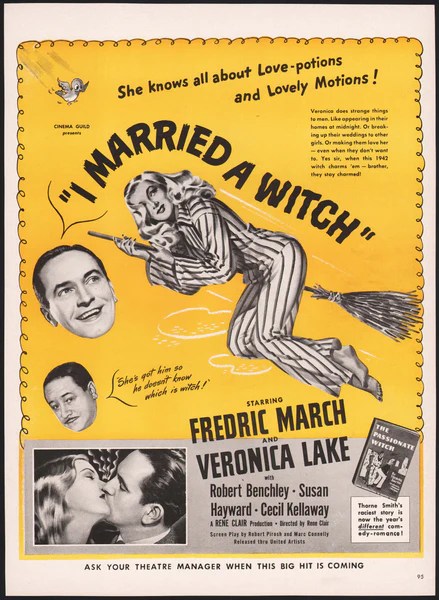
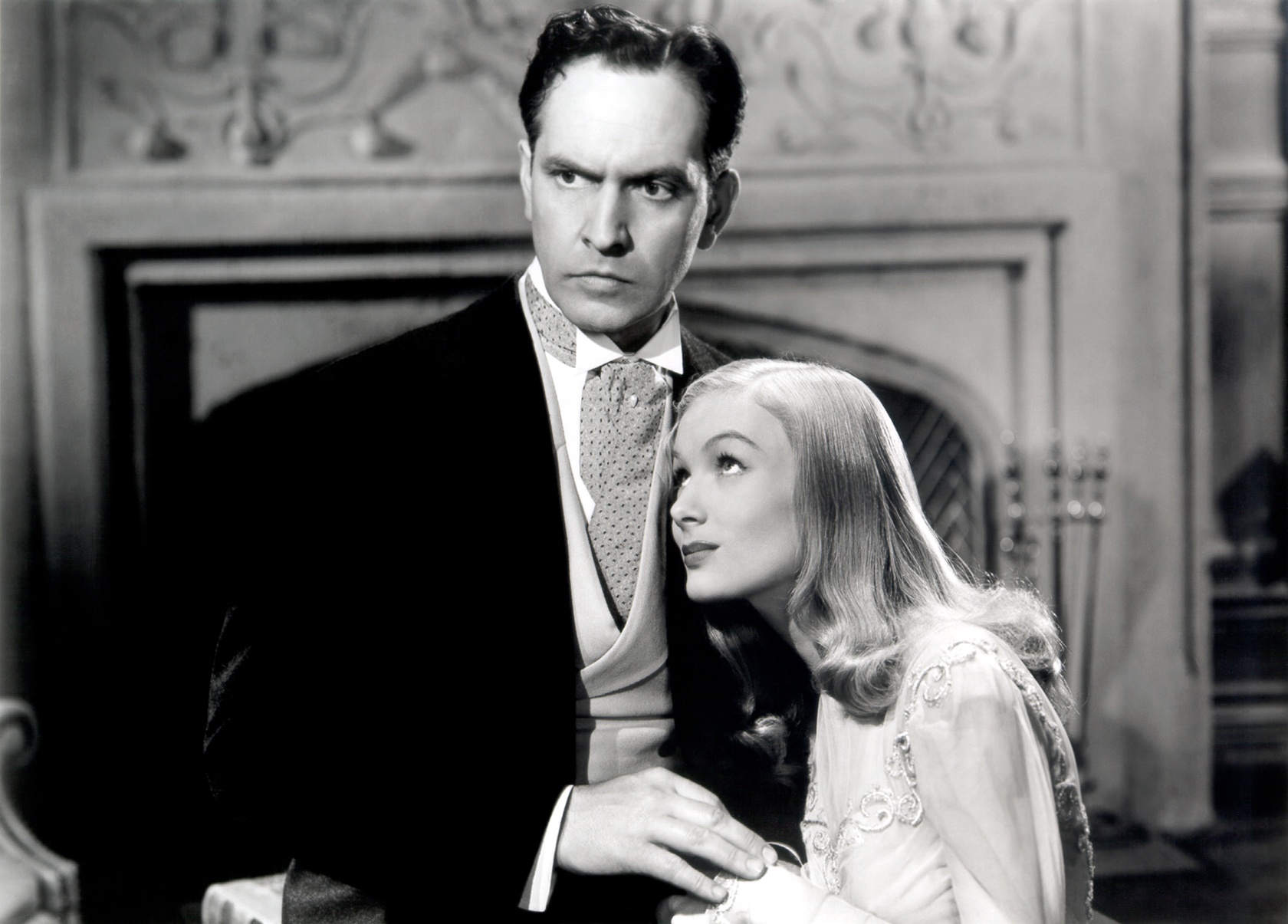
Want to know what great acting is? It’s when two actors who loathe each other in real life have to perform a convincing love scene on film. And watching I Married a Witch (1942) starring Veronica Lake and Fredric March, you’d never guess that this romantic duo feuded constantly during the making of the film. On the surface, I Married a Witch is a tale of the supernatural, played for laughs, and uses its premise to poke fun at American politics, the institution of marriage, and New England’s puritan ancestors.
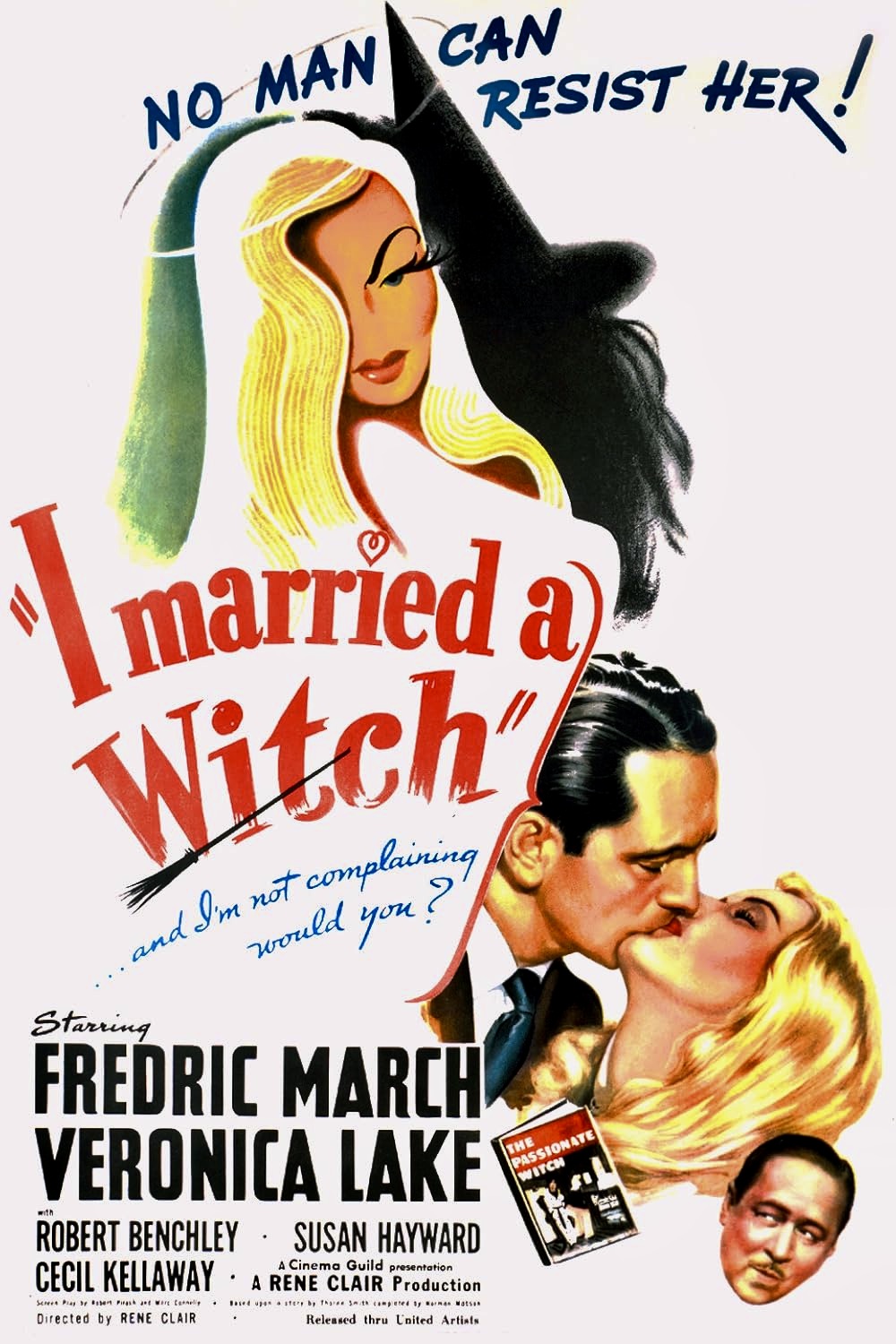
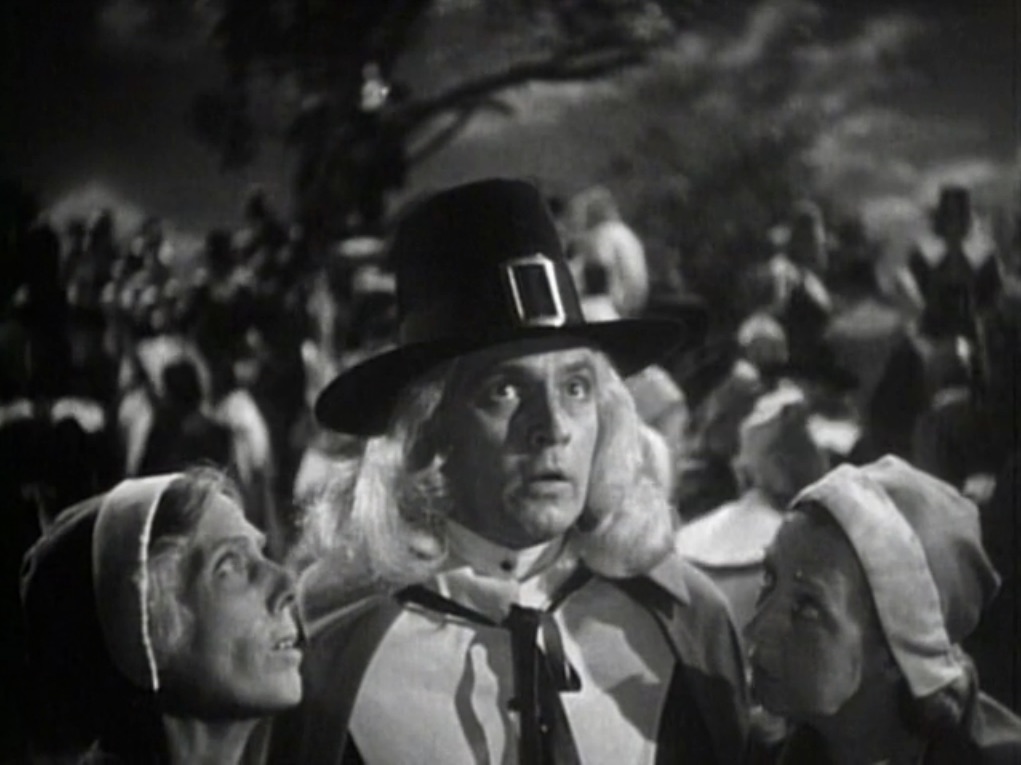
Opening with a double witch burning sanctioned by the Wooley clan in 1690, the film proceeds swiftly through the centuries up to 1942 where Wallace Wooley (Fredric March), a political candidate for governor, inherits the family curse when lightning releases the two witches from their imprisonment in an ancient tree. Jennifer (Veronica Lake), the female witch, takes the form of a curvaceous blonde with an eye toward wrecking Wooley’s impending marriage to Estelle (Susan Hayward), while her father, Daniel (Cecil Kellaway), creates all sorts of mischief when he isn’t indulging his fondness for booze.
Rene Clair, the acclaimed French director of such comic masterpieces as The Italian Straw Hat (1927) and A Nous La Liberte (1931), had just completed his first American film – The Flame of New Orleans (1941) – for Universal Studios but was not offered a second film due to the poor commercial reception of the first. According to Clair in an interview with R.C. Dale for Film Quarterly, “My agent, Myron Selznick, had sent me a book, The Passionate Witch. I read it and thought I could do something with it. I met Preston (Sturges), who eventually became a good friend of mine – he spoke French as well as I do – and who was then the leading director at Paramount. We talked over the project and he agreed to produce it for me. Paramount had been trying to find something right for Veronica Lake, who had been receiving lots of publicity partly because of her beautiful hair. They didn’t want an ordinary role for her, and Preston convinced them that I Married a Witch was just what they needed. That’s what did it: Veronica Lake got me that job; she was a lot more important to Paramount than I was, believe me.”

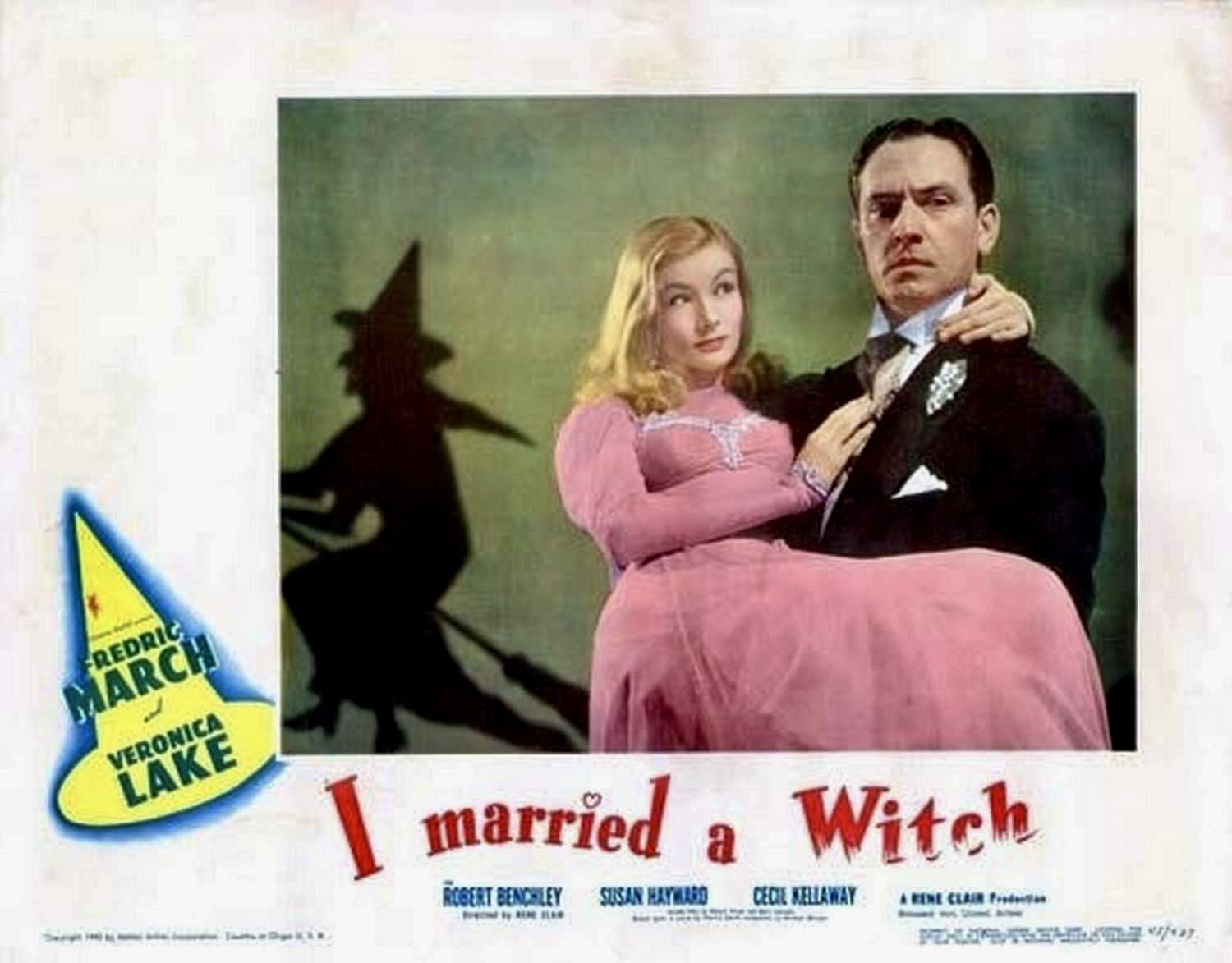
Almost from the beginning of production, there was friction between the two leads. One thing that couldn’t have helped matters was the fact that prior to meeting his co-star, Fredric March had reportedly said Lake was “a brainless little blonde sexpot, void of any acting ability,” a comment that made its way back to her. In retaliation, Lake called March a “pompous poseur” and their adversarial working relationship proceeded from there. Lake became fond of playing pranks on March; in scenes like the hotel fire where March had to pick her up and carry her, the actress placed a forty-pound weight under her dress which affected March’s physical stamina when several takes were required of the scene.
In her autobiography, Veronica, she relates another incident involving a two shot of the couple from the waist up: “He was standing directly in front of the chair. I carefully brought my foot up between his legs. And I moved my foot up and down, each upward movement pushing it ever so slightly into his groin. Pro that he is, he never showed his predicament during the scene. But it wasn’t easy for him, and I delighted in knowing what was going through his mind. Naturally, when the scene was over, he laced into me. I just smiled.”
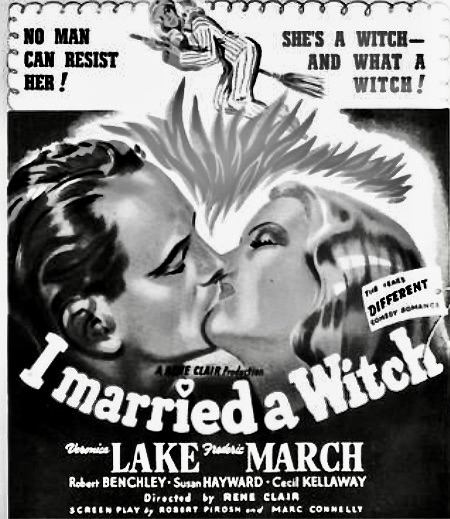
In addition to his antagonistic leads, Clair had to contend with their dissimilar acting styles; Lake was usually best on her first take while March’s performance improved with each retake. In Fredric March: Craftsman First, Star Second by Deborah C. Peterson, Clair revealed that “the discrepancy between the two actors’ best takes on any given shot led me to devise all sorts of tricks, including actually shooting Veronica when she thought we were still rehearsing.”
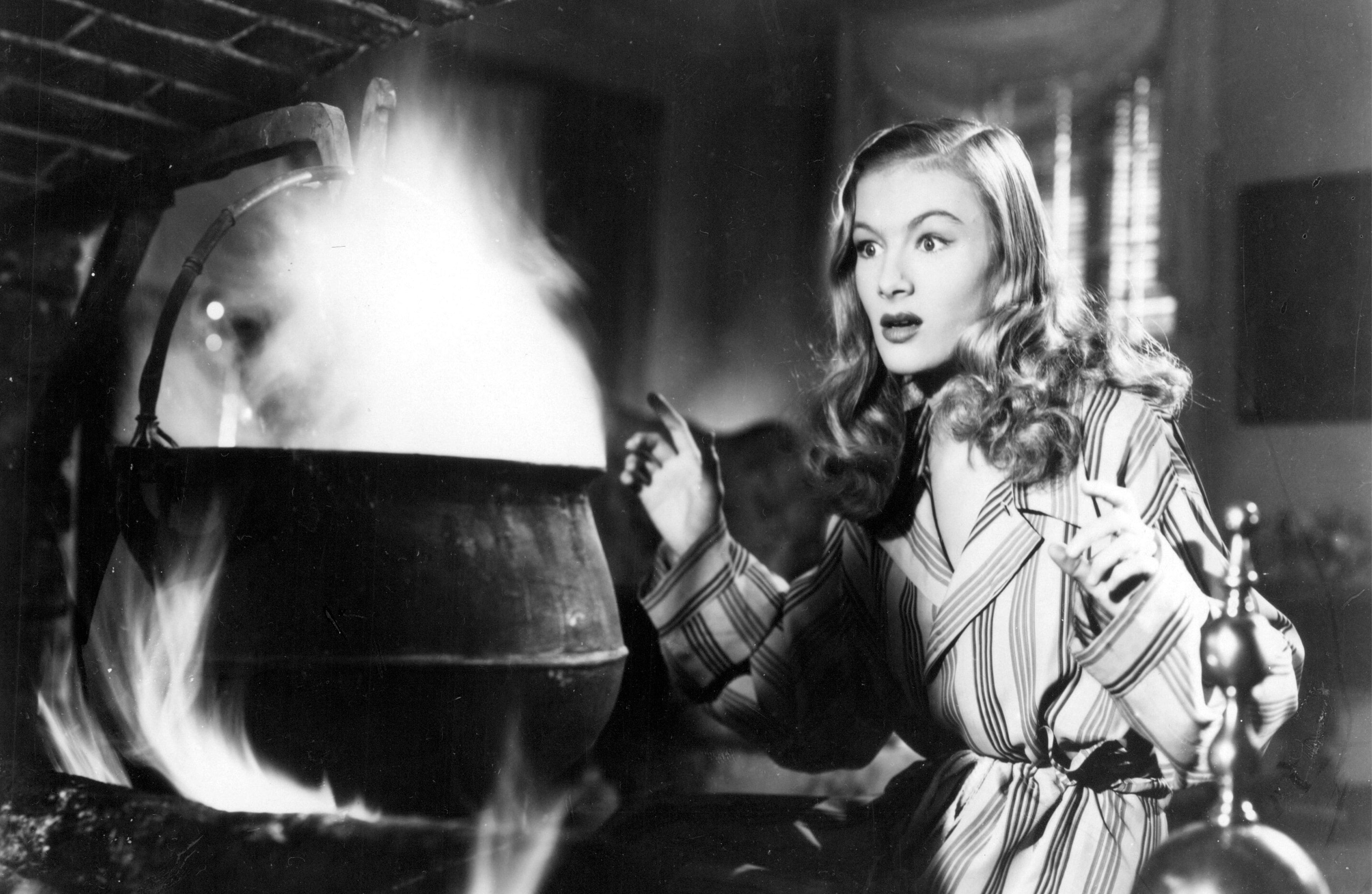
Clair also ran into trouble over Lake’s first appearance in I Married a Witch: “The censors protested because when the witch comes through the smoke, she is nude. I told them that the audience would see no more of Veronica Lake than if she were wearing an evening gown. We see only her shoulder; the rest of her is in smoke. They replied that the audience might not see her, but March would!” It should also be noted that Dalton Trumbo abandoned the film before completing a script but received a contributing writer credit while Preston Sturges left the project early on but still received a credit.
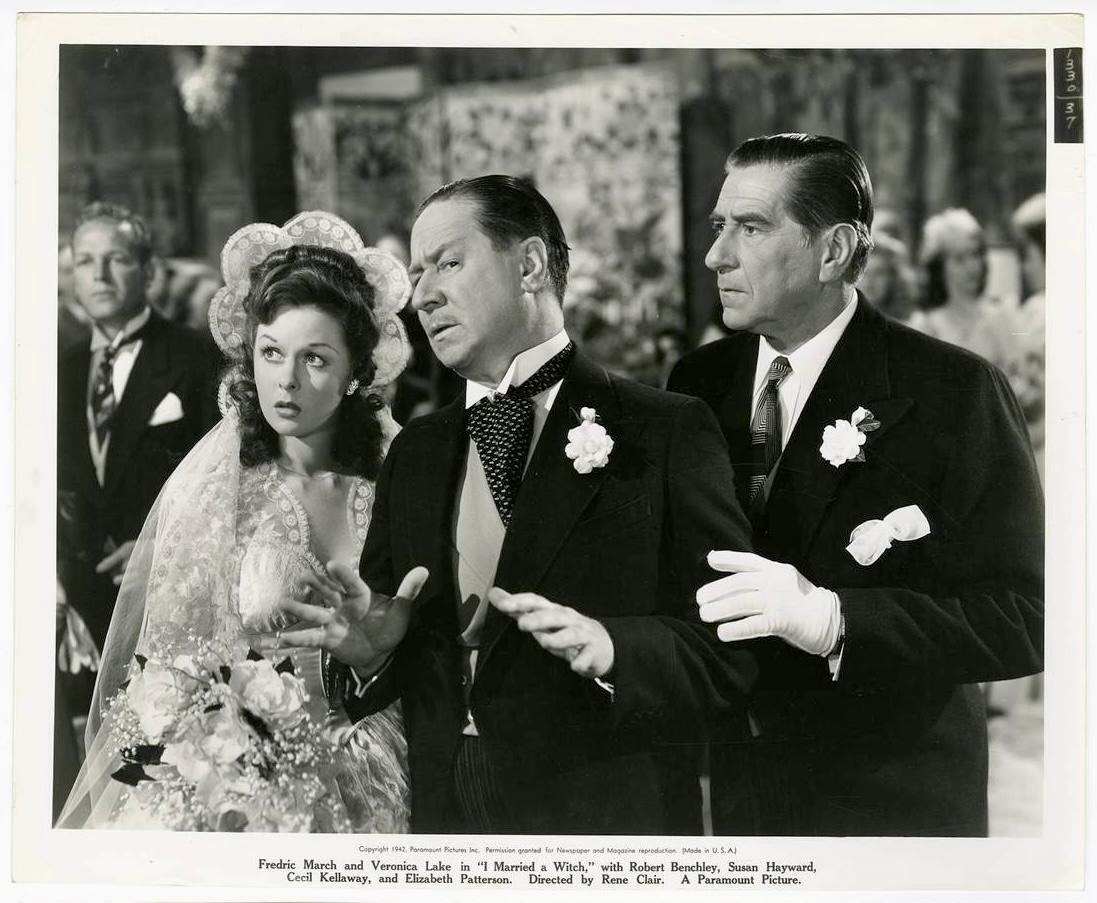
None of the behind-the-scenes drama affected the final results and maybe it actually helped the movie! In the grand tradition of The Ghost Goes West (1935) and Topper (1937), I Married a Witch became a much-loved and welcome addition to the somewhat specialized genre of comic supernatural fantasies and would later serve as the inspiration for the long-running TV series, Bewitched (1964-1972).
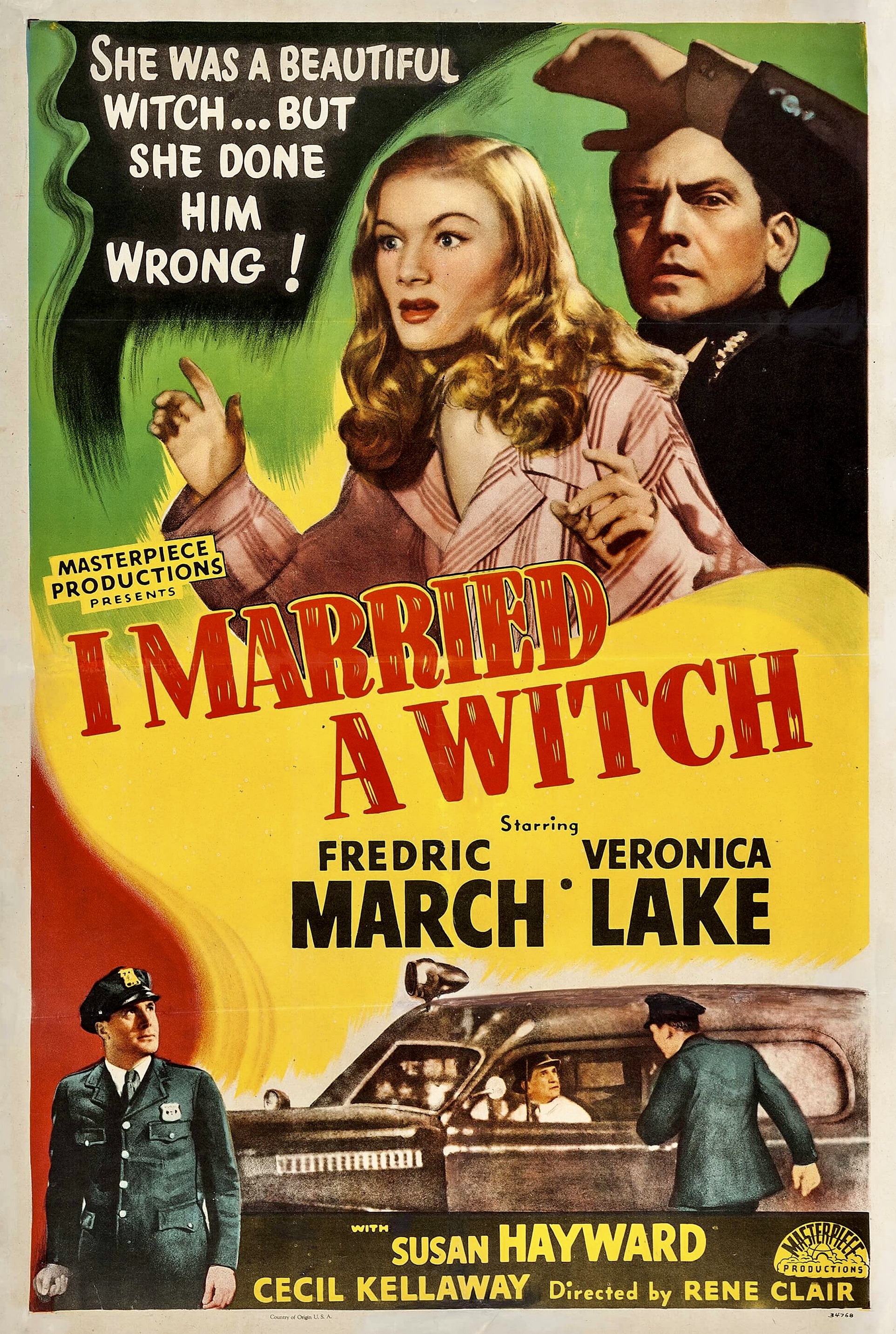
In addition to the witty script by Robert Pirosh, Marc Connelly, and Dalton Trumbo and the spirited performances of the entire cast, the film benefits greatly from a non-stop barrage of sight gags that run the gamut from hex-induced hurricanes to spirits imprisoned in bottles to taxicabs that float in the air. Unfortunately, the only Oscar attention the film received was a Best Scoring of a Dramatic or Comedy Picture nomination for composer Roy Webb (Marty, I Remember Mama). He lost to Max Steiner for Now, Voyager [1942]).
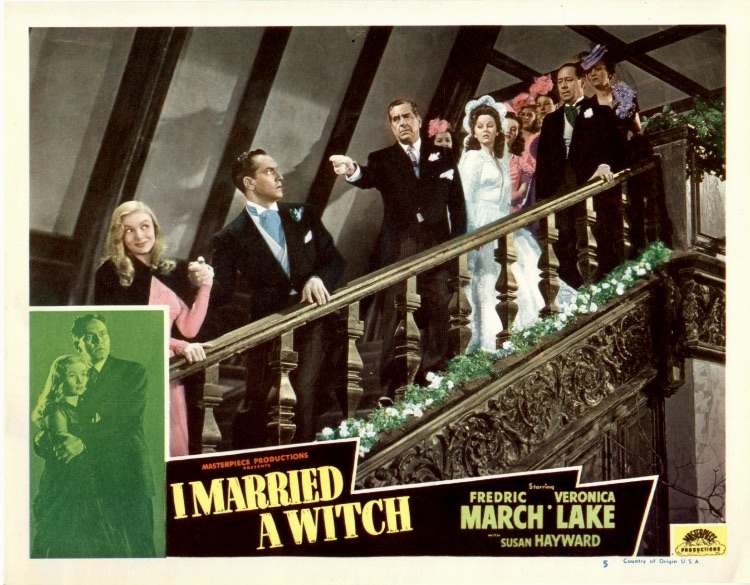
When I Married a Witch opened in 1942, it received mostly positive reviews though few, if any, critics regarded this romantic comedy/fantasy as anything more than a pleasant entertainment. Bosley Crowther of The New York Times wrote,” I Married A Witch is spiritualism in a vein of knockabout farce. It is more oh-boy than occult. But its humor is Clair enough.” The New York World Telegram noted the film’s “delightful sense of oddity and enchantment.” And The Chicago Tribute stated, “I Married a Witch is bizarre but beguiling. Under Rene Clair’s delicately preposterous direction it unreels a story of modern witchcraft, the like of which has not been seen on any screen.”
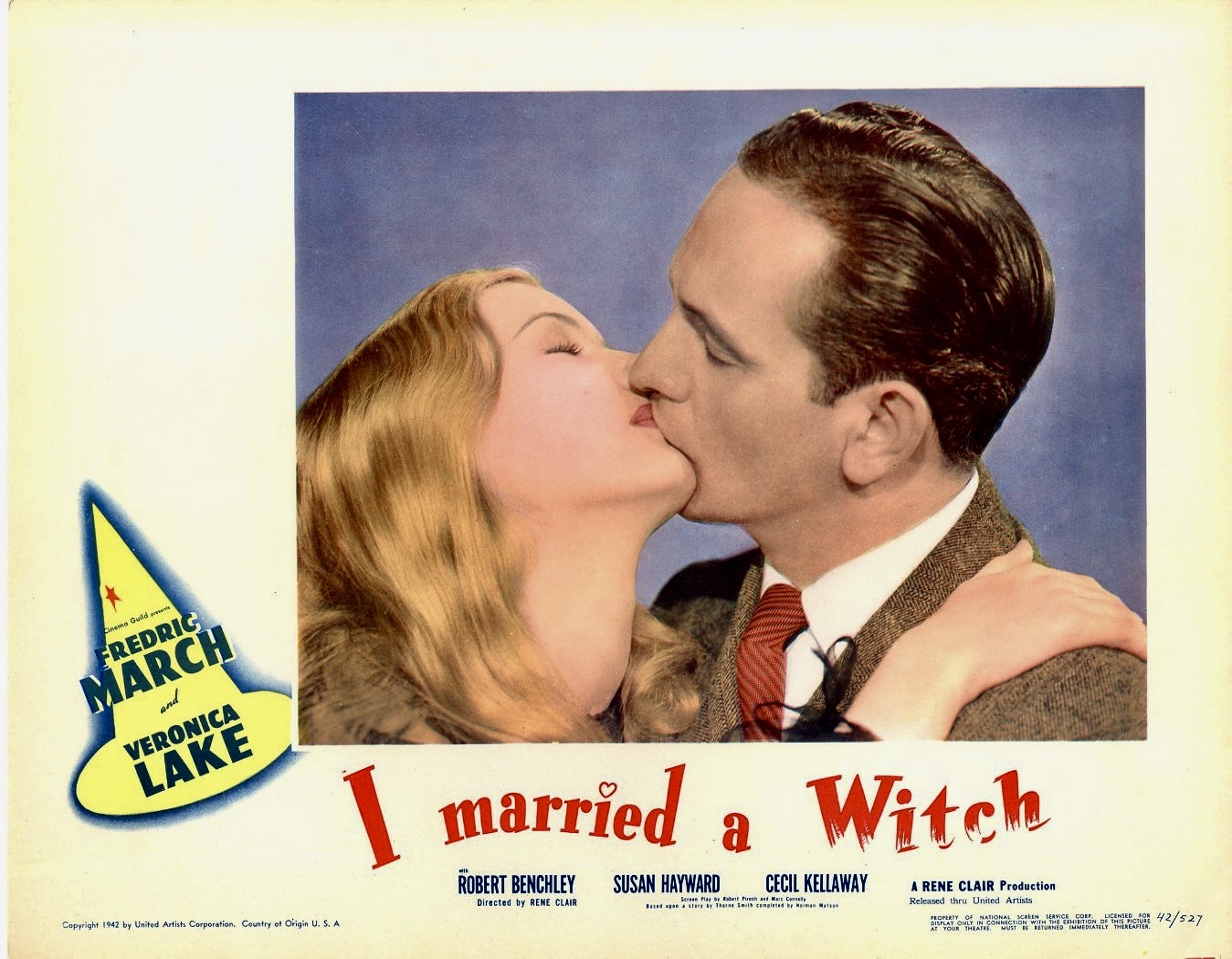
In comparison, The Variety review was downright insulting. The writer dismissed I Married a Witch as “generally tepid,” adding, “Neither March nor Veronica Lake impresses very importantly, while Robert Benchley has not been well equipped with material designed to afford comic relief.” Flash forward some eighty years or so and I Married a Witch is considered one of the high points of Rene Clair’s Hollywood career and a classic romantic fantasy in the vein of Here Comes Mr. Jordan (1941), Heaven Can Wait (1943) and The Ghost and Mrs. Muir (1947). As Geoff Andrew states so succinctly in his TimeOut review: “Clair’s ’30s musical comedies have always been acclaimed as enormously original, innovative classics, far superior to his American films. But where those French films now seem dated and Chaplinesque in their twee sentimentality and naïve desire to make a serious point, the American films remain delightful: unpretentious, pacy and genuinely witty. I Married a Witch sees Clair at his peak…”
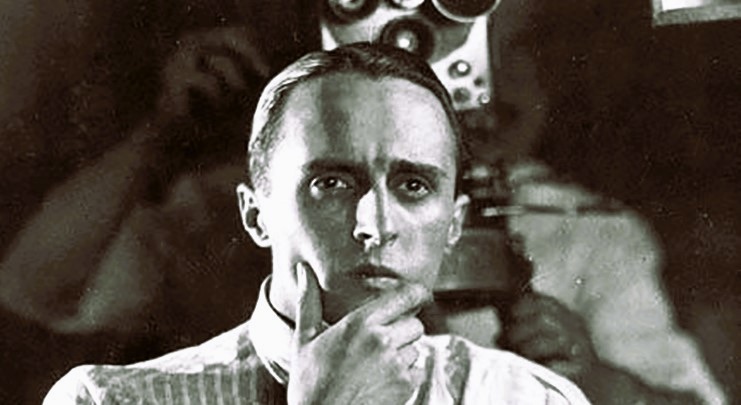
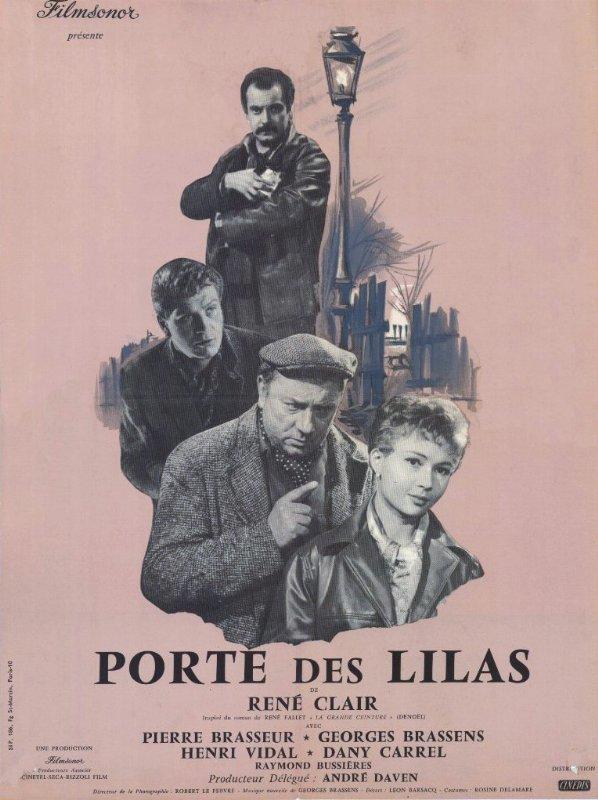
Clair would make only one more film in Hollywood after I Married a Witch – It Happened Tomorrow (1944), another romantic fantasy – and then returned to his native France where he enjoyed a critical revival of his work and a string of critically acclaimed films including La Beaute du Diable (English title: Beauty and the Devil, 1950), Beauties of the Night (1952), The Grand Maneuver (1955) and The Gates of Paris (1957), which was nominated for an Oscar for Best Foreign Language Film.
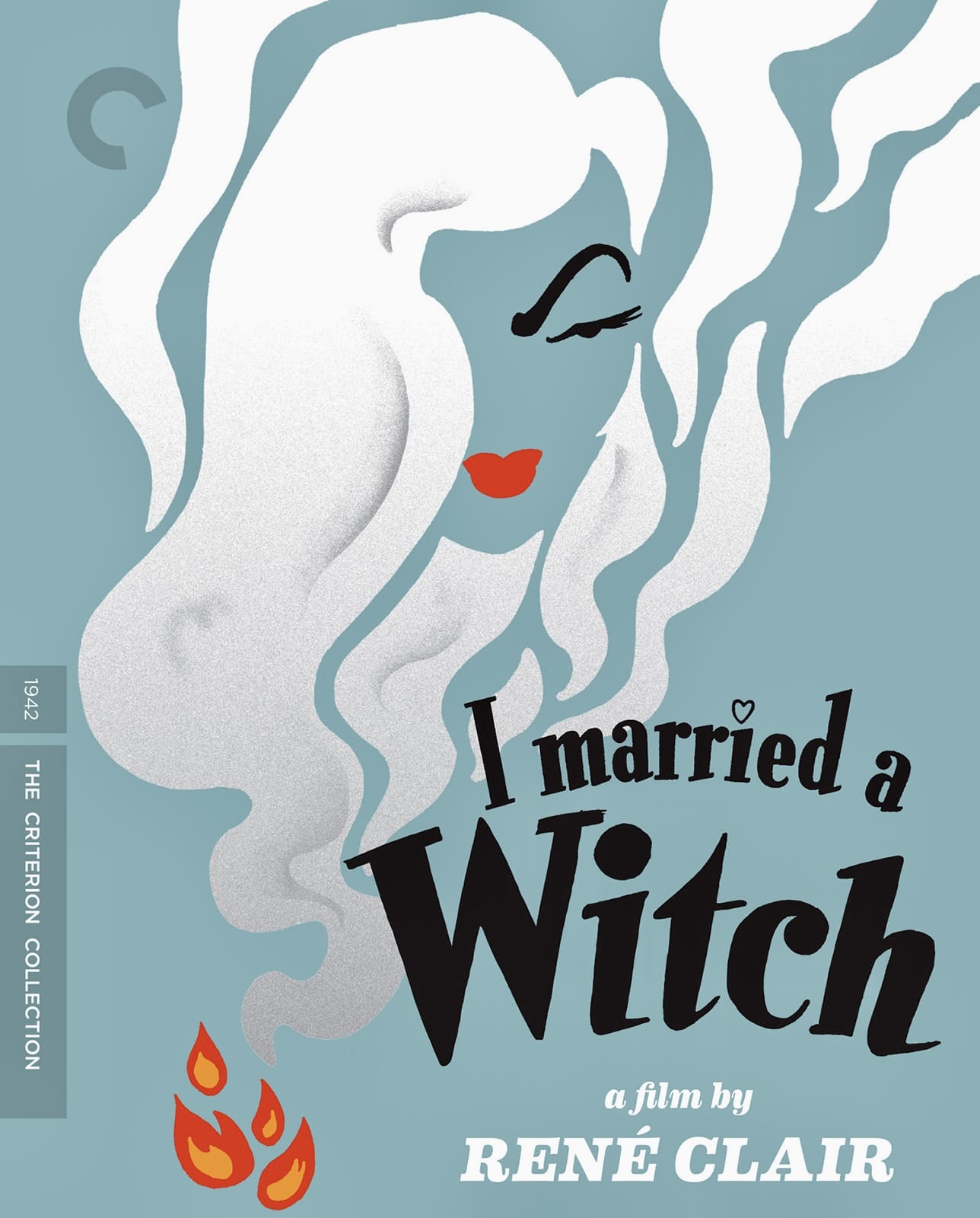
Over the years I Married a Witch has been released on various formats but classic film collectors will probably want to purchase The Criterion Collection 2K digital restoration version on Blu-ray from October 2013. The disc includes an audio interview and an archival one of Rene Clair and an essay by Guy Maddin.
*This is a revised and expanded version of an article that originally appeared on the Turner Classic Movies website.
Other Links of interest:
https://www.criterion.com/current/posts/2924-i-married-a-witch-it-s-such-an-ancient-pitch
https://www.thefamouspeople.com/profiles/veronica-lake-39034.php
https://www.hollywoodsgoldenage.com/actors/fredric_march.html
 Cinema Sojourns