
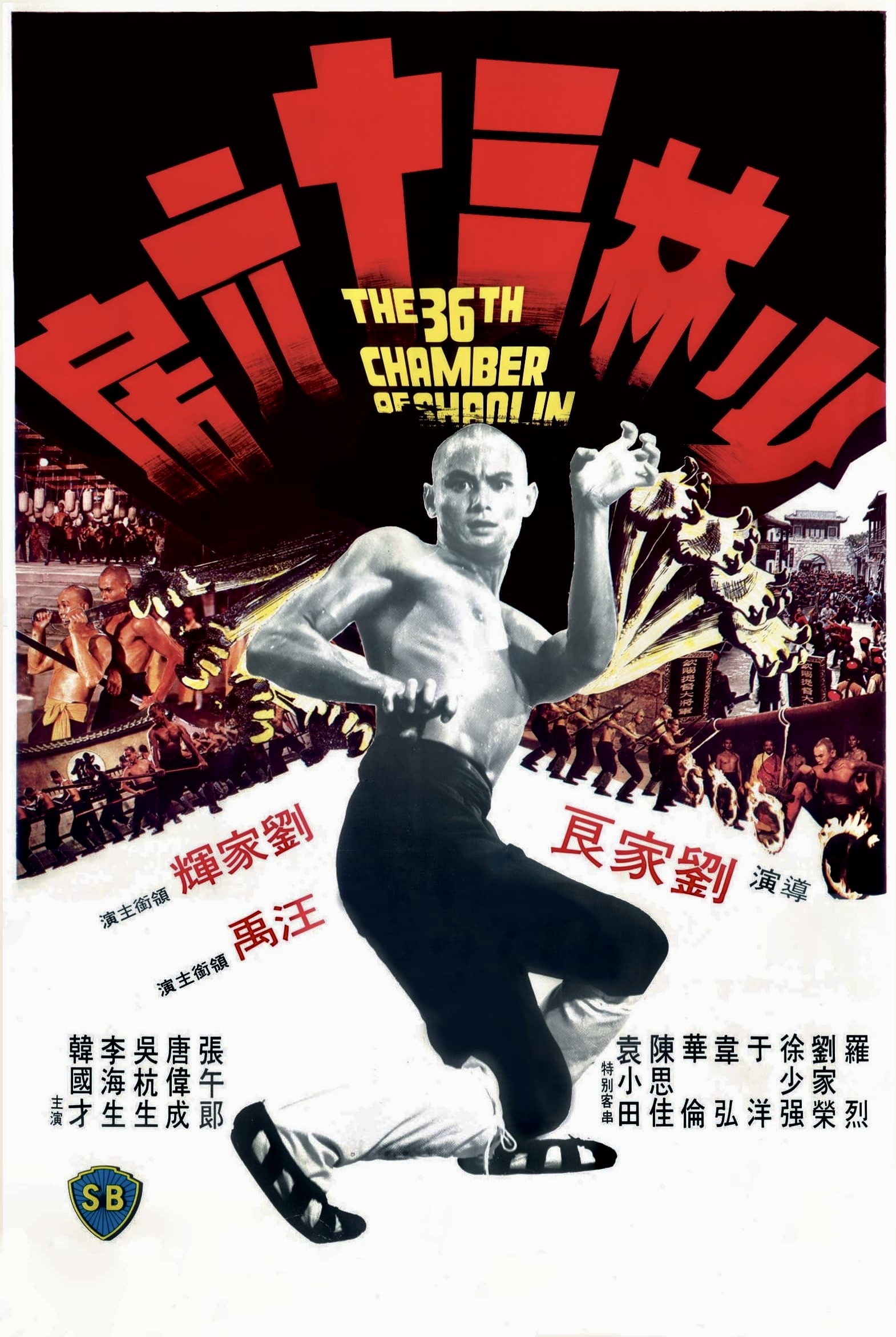
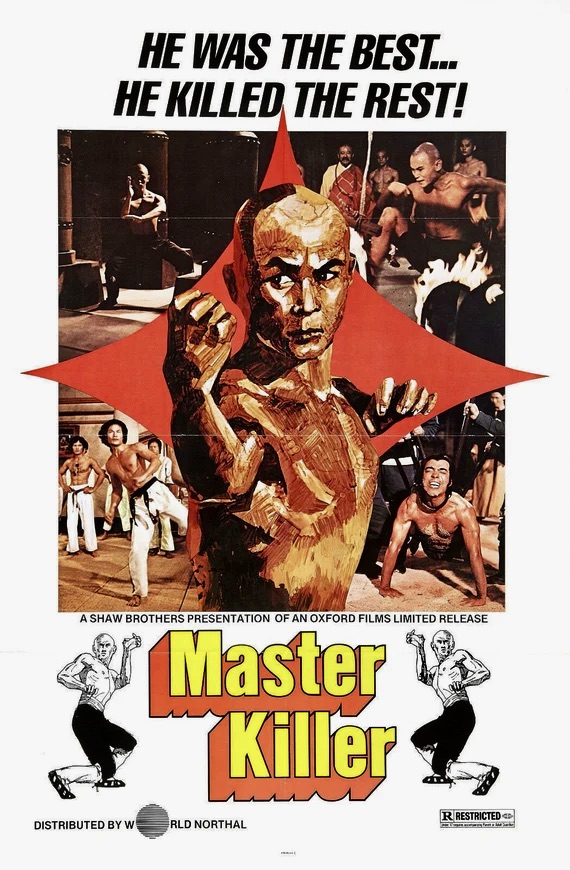
Did you know that there are more than 180 styles of martial arts practiced around the world and that includes karate, judo and other similar forms? Many experts trained in Chinese martial arts generally agree that one of the oldest forms of this practice and the most difficult to master is the Hung Gar style which can be traced back to the 17th century. That is also the time period featured in Shao Lin sans hi liu fang (English title: The 36th Chamber of Shaolin aka Master Killer aka Shaolin Master Killer, 1978). The film, directed by former actor Chia-Liang Liu (aka Lau Kar-Leung), is considered one of the cornerstones of Hong Kong martial arts cinema and it showcases the fluid movements and balletic grace of the Hung Gar style as practiced by its star, Chia-Hui Liu aka Gordon Liu.

The opening credits of the movie alone serve as a wonderful visual introduction to this form of martial arts as Liu practices various moves, which includes gyrating through rain and torrents of water as spectacularly as Gene Kelly did in his iconic dance number in Singin’ in the Rain (1952). The film then opens in a province of Canton where the populace is under the tyrannical rule of General Tien Ta (Lo Lieh) and his Tartar clan. San Te (Liu), the son of a dried fish vendor, is a member of a secret resistance group that opposes the repressive regime but his rebellious attitude soon attracts the attention of Lord Tang (Wilson Tong), Tien Ta’s chief enforcer.

When San Te’s family and numerous resistance members are killed by the Tartars, San Te is forced to flee for his life. He barely escapes Lord Tang and his men but is seriously injured and smuggles himself into a vegetable cart that is being delivered to Shaolin Temple in a nearby village (He hides in a barrel of bok choy!). He recovers from his wounds in the monastery and works for a year performing menial tasks for the monks until he is approved for their form of martial arts training.
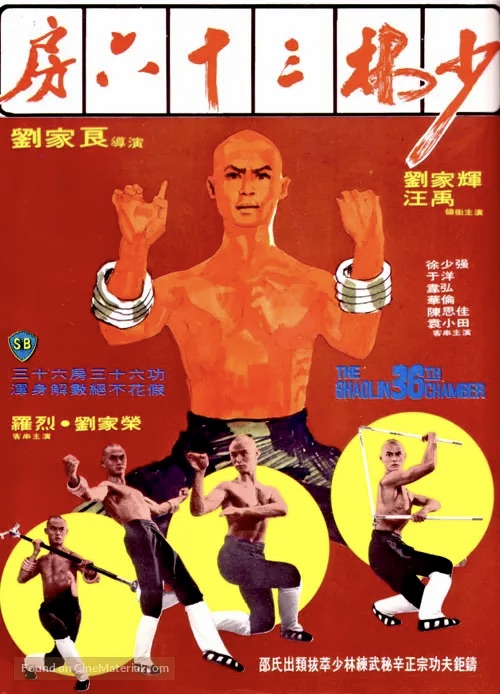
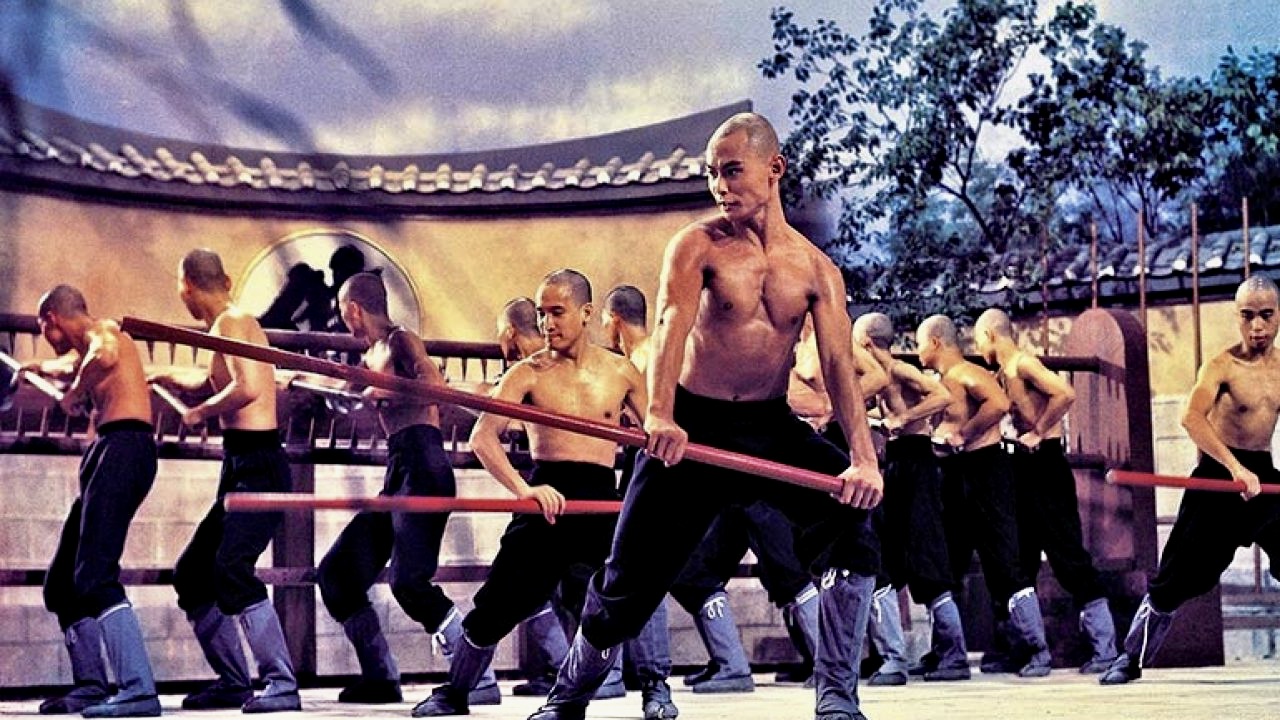
San Te’s training takes up the first half of The 36th Chamber of Shaolin and these sequences are visually enthralling but also quite a departure from other martial arts movies of this period which usually offered simplistic plots and wall to wall, non-stop action. Nor is there a love interest or too many secondary characters to distract from the streamlined narrative. The most unique aspect of Chia-Liang Liu’s film is the way it focuses primarily on the protagonist as he progresses from a naïve hot-head to a wise and experienced disciple who learns to meld his mind, body and spirit into a unified whole. Over time, San Te’s desire is replaced by a higher purpose, one in which he strives to overcome oppression and tyranny by training others in the Hung Gar tradition.
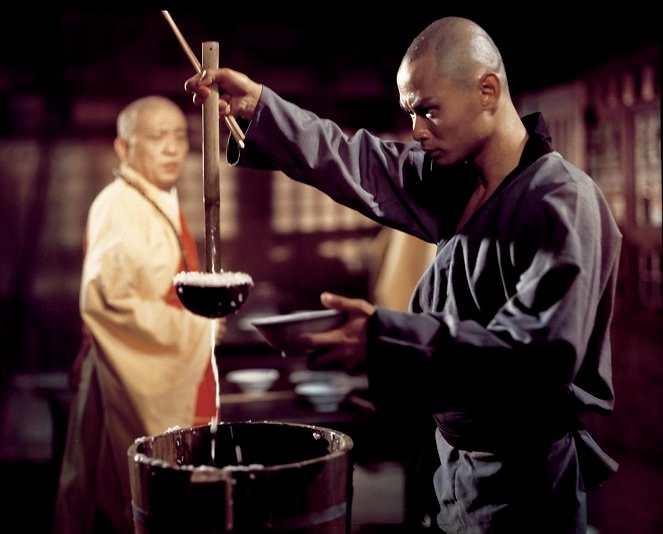
But it is San Te’s progress through the first 35 chambers of training that provides the film’s exotic and otherworldly appeal. Zen-like nuggets such as “A pure body is light, steps stable, stance is firm” guide our hero as he learns to eat congee (rice porridge) from a bowl while balancing his body on a slippery log in a moat. Equally challenging is the eye exercise where San Te must keep his head completely still between two burning incense sticks while relying on his peripheral vision to discern attacks from the side. The sword practice routines look like something out of a choreographed musical number and the head-butting sandbag obstacle course is suitably bizarre.
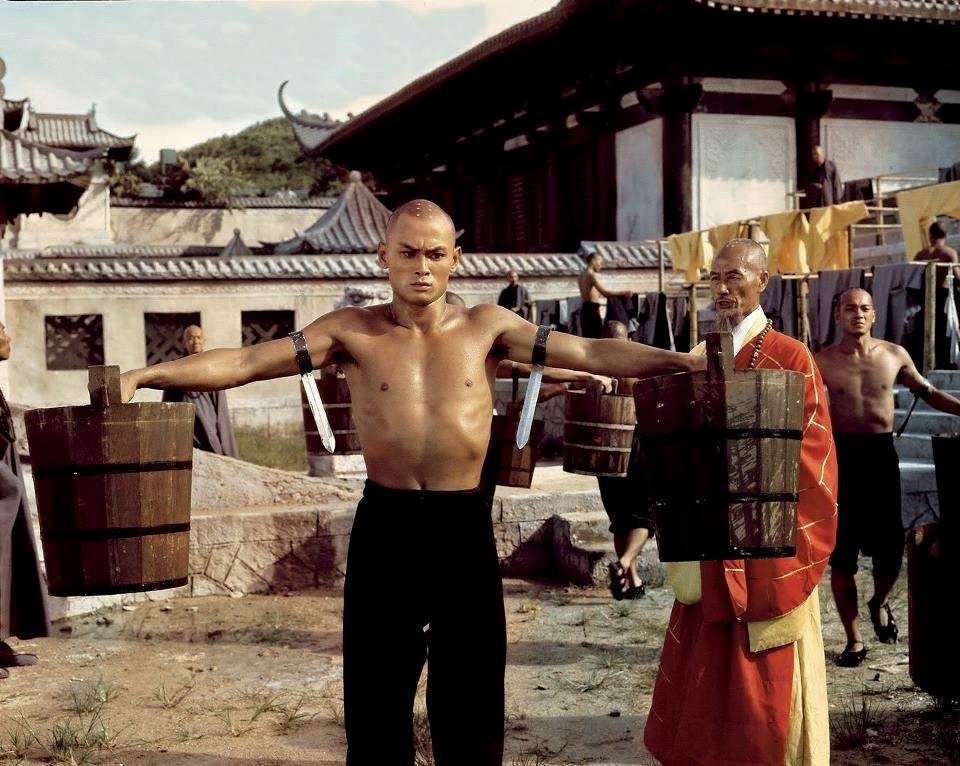
These justly famous training sequences clearly inspired aspects of Quentin Tarantino’s two Kill Bill movies (2003-2004), especially scenes where Uma Thurman (as The Bride) endures physical conditioning under the tutelage of master swordsman Sonny Chiba. Tarantino even cast Gordon Liu in two different roles in the Kill Bill movies, one as the masked bodyguard Johnny Mo and the other as the Kung Fu master Pai Mei.
As for the second half of The 36th Chamber of Shaolin, San Te graduates with flying colors and suggests the creation of a 36th chamber, one in which secular students could train alongside other monks. This idea is rejected by the head abbot (Tung-Kua Ai) and San Te is sent out into the real world again, but this time he has a new mission – he begins assembling a team of gifted craftsmen he can train such as Tung (Hang-Sheng Wu), the village blacksmith, and Miller Six (Yue Wong), the rice grinder. But San Te’s plan is interrupted by an unexpected encounter with Lord Tang and ends with the death of the sadistic Tartar in a fight the latter initiated. When General Tien Ta learns of this, he rides out with his mounted militia to extract revenge but meets his match in the Shaolin monk.
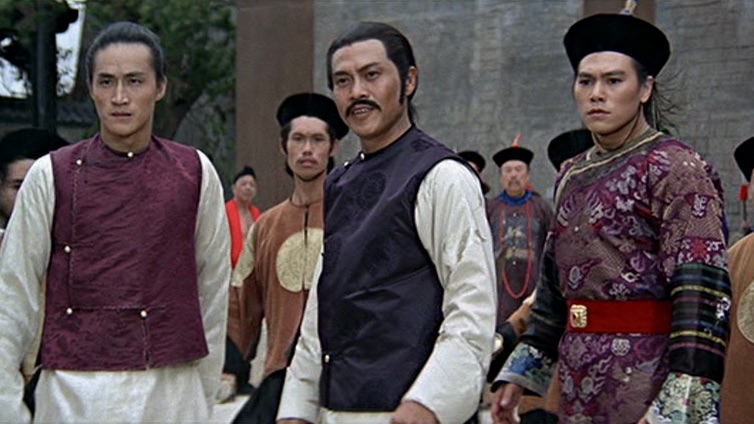
It has to be said that the climax of The 36th Chamber of Shaolin feels rushed and we don’t even see the General’s actual demise (the scene ends with a freeze-frame of Tien Ta being rammed in the chest by San Te’s head!) but the movie never followed a standard revenge scenario. The whole point of the story was San Te’s path to enlightenment and learning that the practice of Hung Gar served a more noble objective.
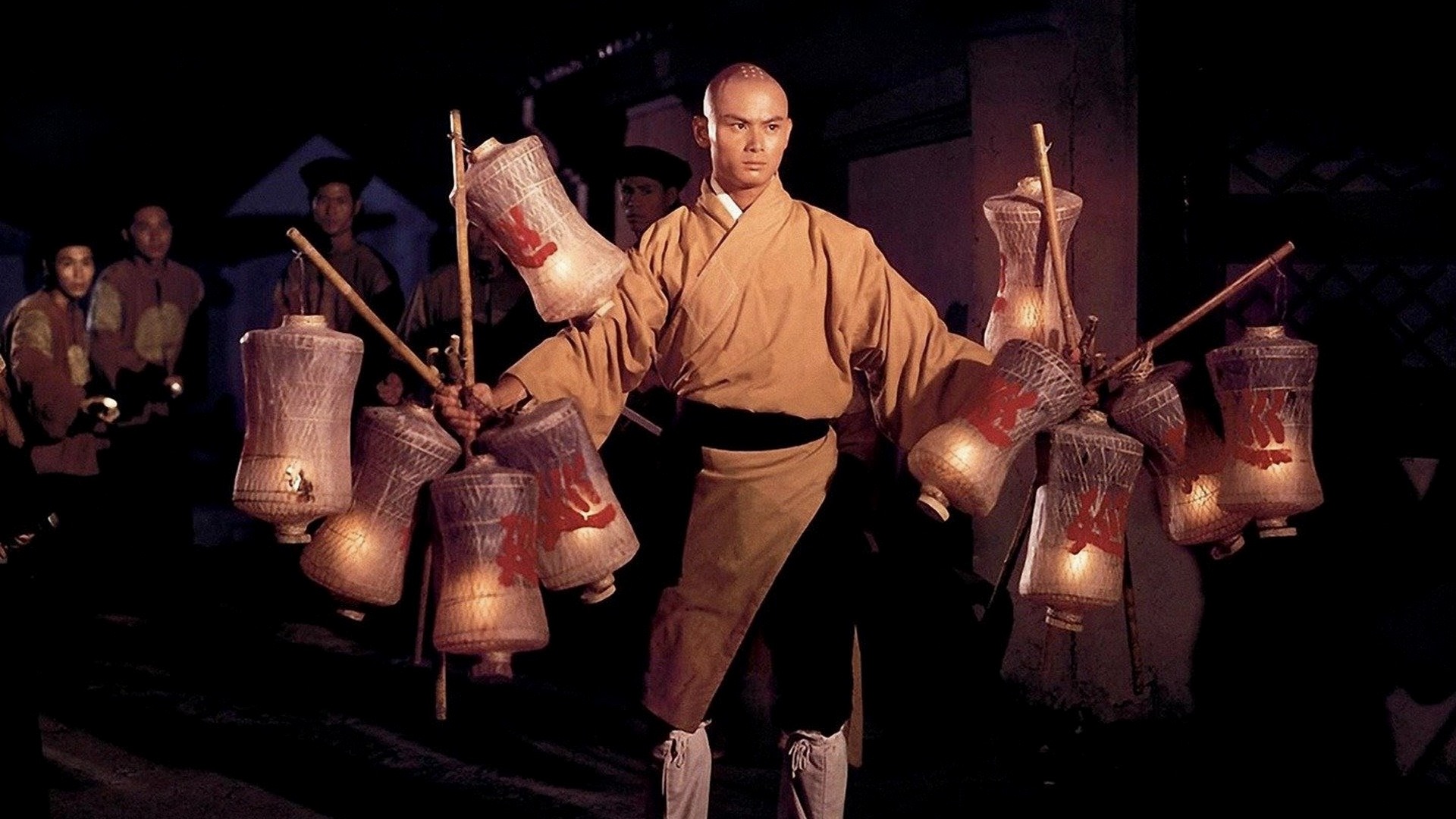
It is easy to see why Chia-Liang Liu’s film is so revered and why Gordon Liu became one of the top stars of the Hong Kong film industry. As a child, Liu was trained by local legend Liu Cham in the Hung Gar tradition and he eventually found work in movies as a stunt man. He began playing bit parts in 1974 and transitioned into leading roles with Challenge of the Masters in 1976. In most of his later films he usually played the hero, usually a monk with superb martial arts skills, and his clean shaven, bald appearance was often compared to Yul Brynner, whom the actor admired.
In an interview with CNN, Liu said this about the making of his 1978 breakthrough role, “I think all the fame that came from “36th Chamber” wasn’t because of me. It resulted from the collective work of the plot, the company and my director’s efforts. I only hoped I did my very best with heart and energy to play the role as expected. I didn’t have any anticipation of getting fame or success from the movie. I remember it was actually a very difficult point in my acting career, because I’m only human, and some of those moves were quite challenging, and I hadn’t mastered them yet. Take, for example, a scene from the movie where I had to jump into the water. There’s no lesson you can learn beforehand on how to jump in. You just have to have the courage to just do it and jump. I was injured many times throughout the shoot, but never did I tell anyone about it.’
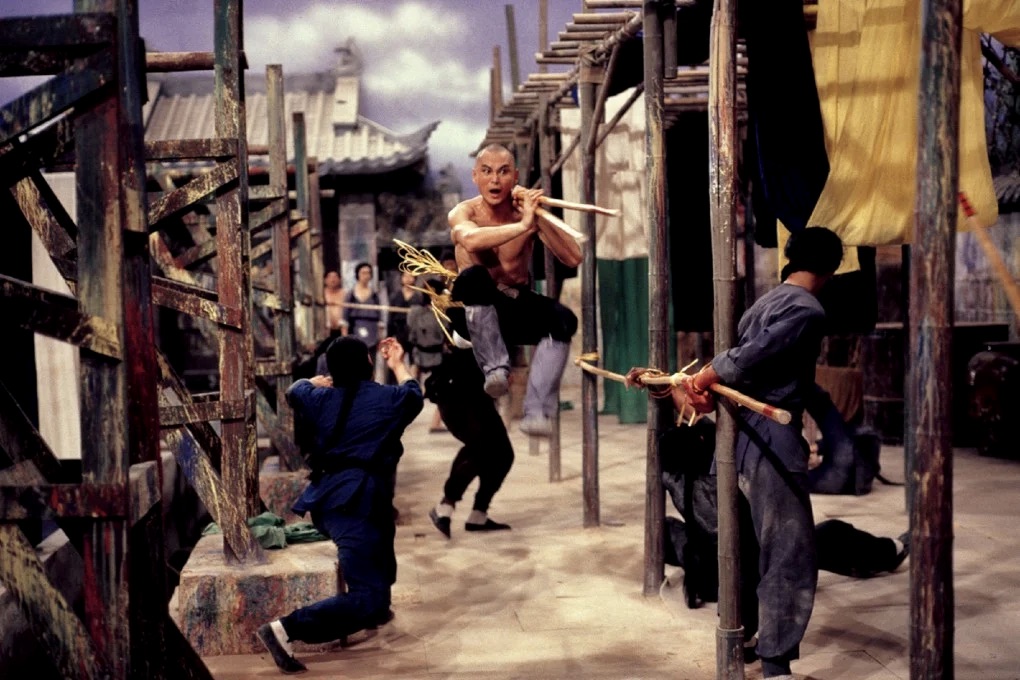
Liu later stated that his character in The 36th Chamber of Shaolin was actually based on a real person – Liu Yu-de, a monk who lived in the early 18th century – but the events in the film were entirely fictitious. Liu also credits director Chia-Liang Liu with making his ascent within the Hong Kong film industry possible. The first film Chia-Liang Liu directed was The Spiritual Boxer (1975) and other popular efforts include Mad Monkey Kung Fu (1979), Legendary Weapons of China (1982) and The Eight Diagram Pole Fighter (1984). But The 36th Chamber of Shaolin is generally considered his masterpiece and it inspired two sequels, Return to the 36th Chamber (1980) and Disciples of the 36th Chamber (1985).
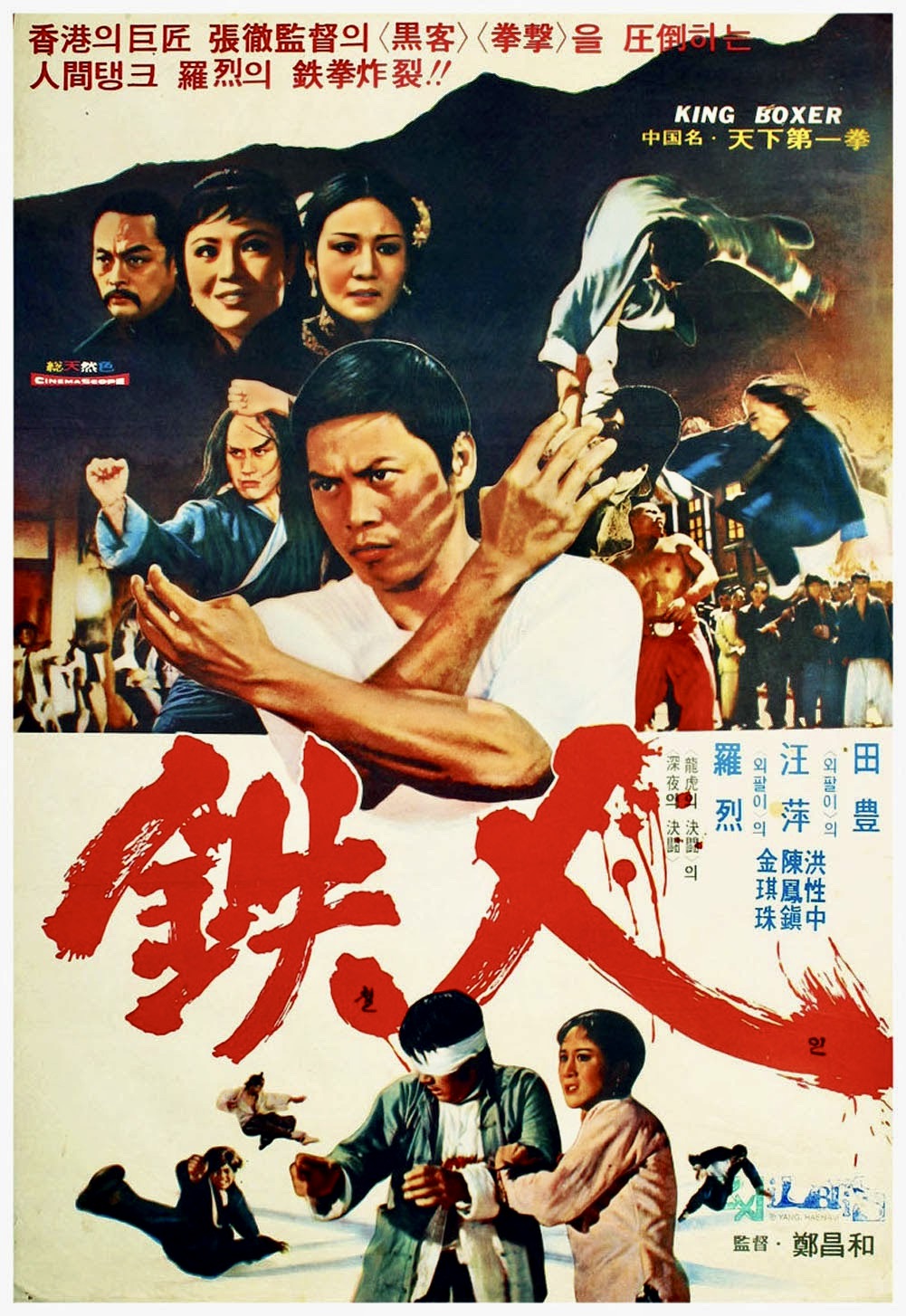
Hong Kong fan film fans will also recognize Lo Lieh in the role of General Tien Ta from countless other martial arts action flicks such as Five Fingers of Death (1972) aka King Boxer, a huge box office success for producers Raymond and Run Run Shaw, and one of the first imports to reach U.S. screens during the kung fu craze of the early seventies. In fact, Lieh is generally considered to be the first Kung Fu superstar before Bruce Lee and specialized mostly in villainous roles.
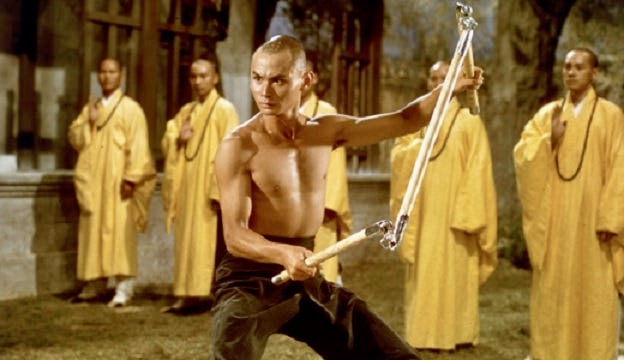
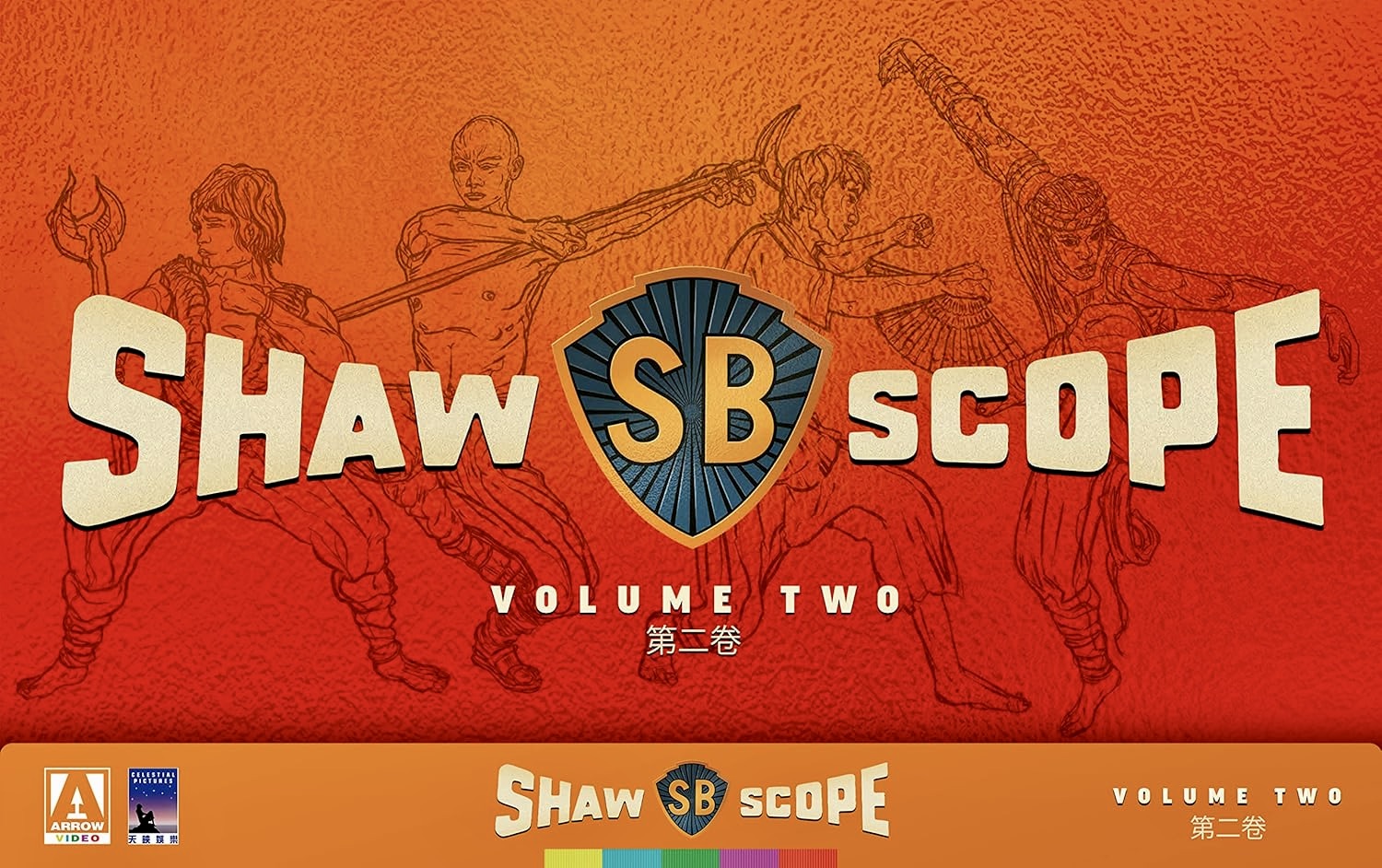
The 36th Chamber of Shaolin was originally released on DVD by Genius Products in 2007 through Dragon Dynasty/Celestial Pictures as part of The Shaw Brothers Classic Collection. It is presented in the widescreen format with English subtitles and the extras include a featurette entitled Shaolin: A Hero Birthplace, interviews with Gordon Liu and RZA of the Wu-Tang Clan (whose band name was a homage to the film) and other supplementary material. Serious collectors, however, might want to spring for the Arrow Films Blu-ray compilation Shawscope: Volume Two, a ten-disc limited edition (released in December 2022), which includes The 36th Chamber of Shaolin and its two sequels among other cult items like My Young Auntie (1981) and The Boxer’s Omen (1983) plus a pile of extra features.
Other links of interest:
https://www.grindhousedatabase.com/index.php/Category:Gordon_Liu
https://edition.cnn.com/2007/WORLD/asiapcf/09/05/talkasia.gordonliu/index.html
https://mydramalist.com/people/18443-lau-kar-leung
https://www.pressreader.com/china/south-china-morning-post-6150/20200824/282119230394181
 Cinema Sojourns