
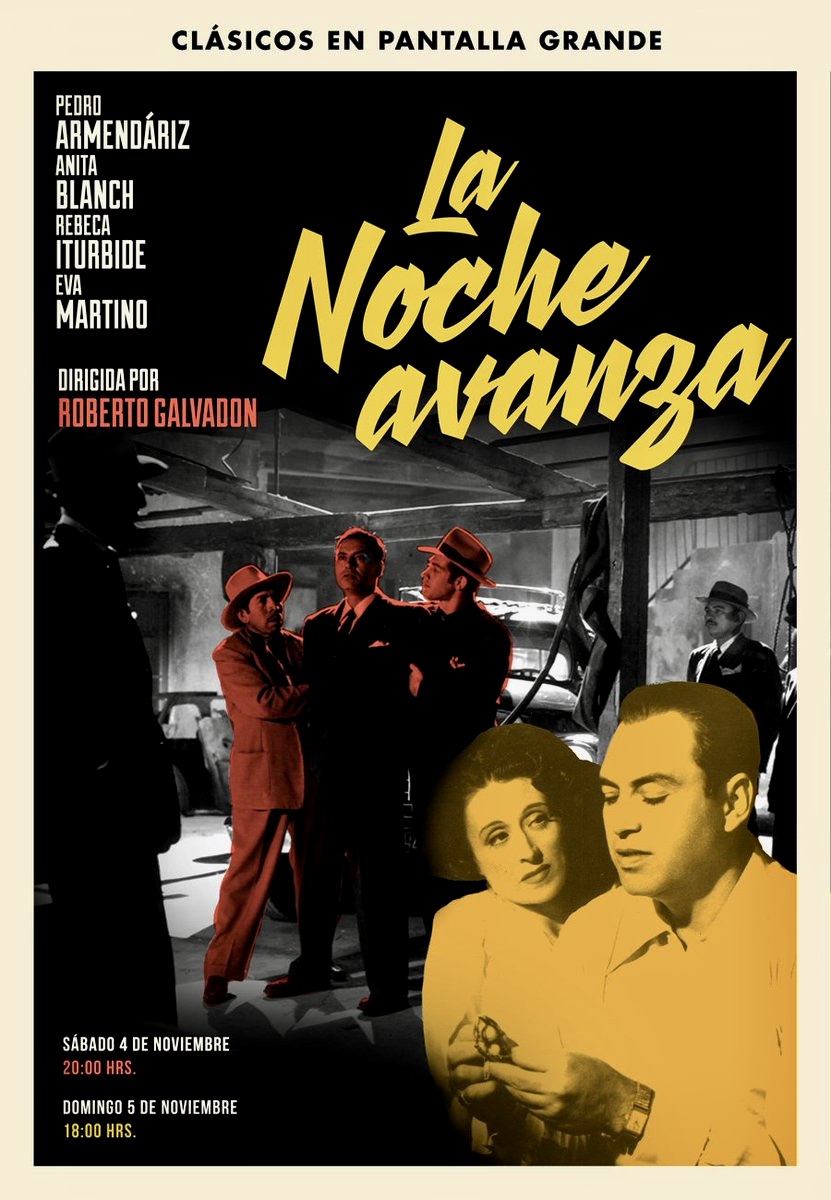
Men behaving badly could easily qualify as a cinema subgenre with such classic examples as Kirk Douglas in Champion (1949) and Robert De Niro in Raging Bull (1980) leading the pack but the athletic anti-hero of La Noche Avanza (English title: Night Falls or The Night Draws On, 1952) might even surpass them in terms of sheer toxic masculinity. Marcos (Pedro Armendariz) is Mexico’s most famous undefeated jai alai champion, a public hero and a sexually magnetic lure for women. He is also the epitome of an arrogant macho muchacho Latin male who considers everyone else inferior with boasts like “I’m one of the victorious, the strong…The weak don’t count.”
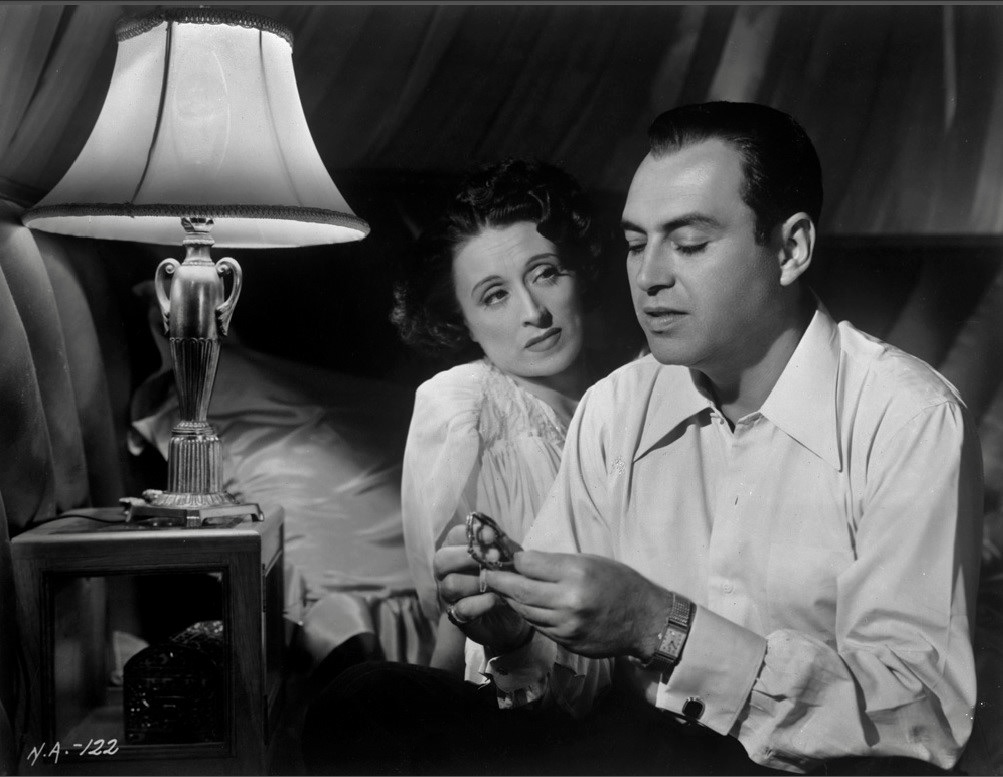
A hot blooded cock of the walk, Marcos is involved with three women but is already looking forward to new conquests in Cuba where his future jai alai career lies. Rebeca (Rebeca Iturbide), who is pregnant with his child, and Lucrecia (Eva Martino), a sexy nightclub singer, constantly vie for his attention while he romances Sara (Anita Blanch), a former flame he abandoned once she spent her fortune on him. Now that Sara is wealthy again, Marcos pursues her in earnest but his winning streak is about to end badly. A critique of excessive machismo, Night Falls is one of the great but almost forgotten melodramas from Mexico’s Golden Age of Cinema and a key film in the career of director Roberto Gavaldon.
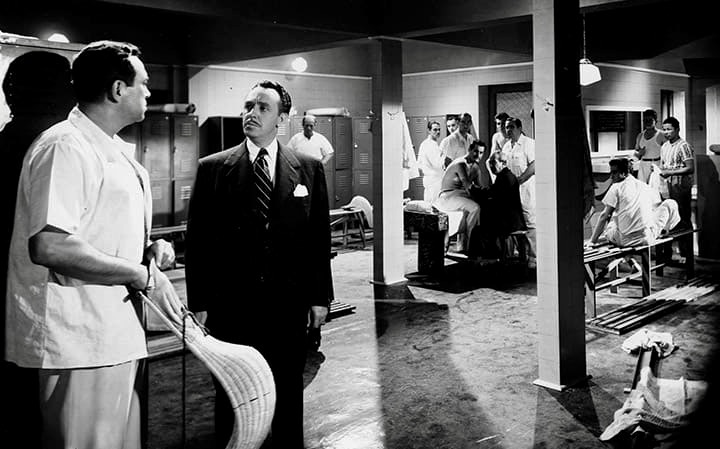
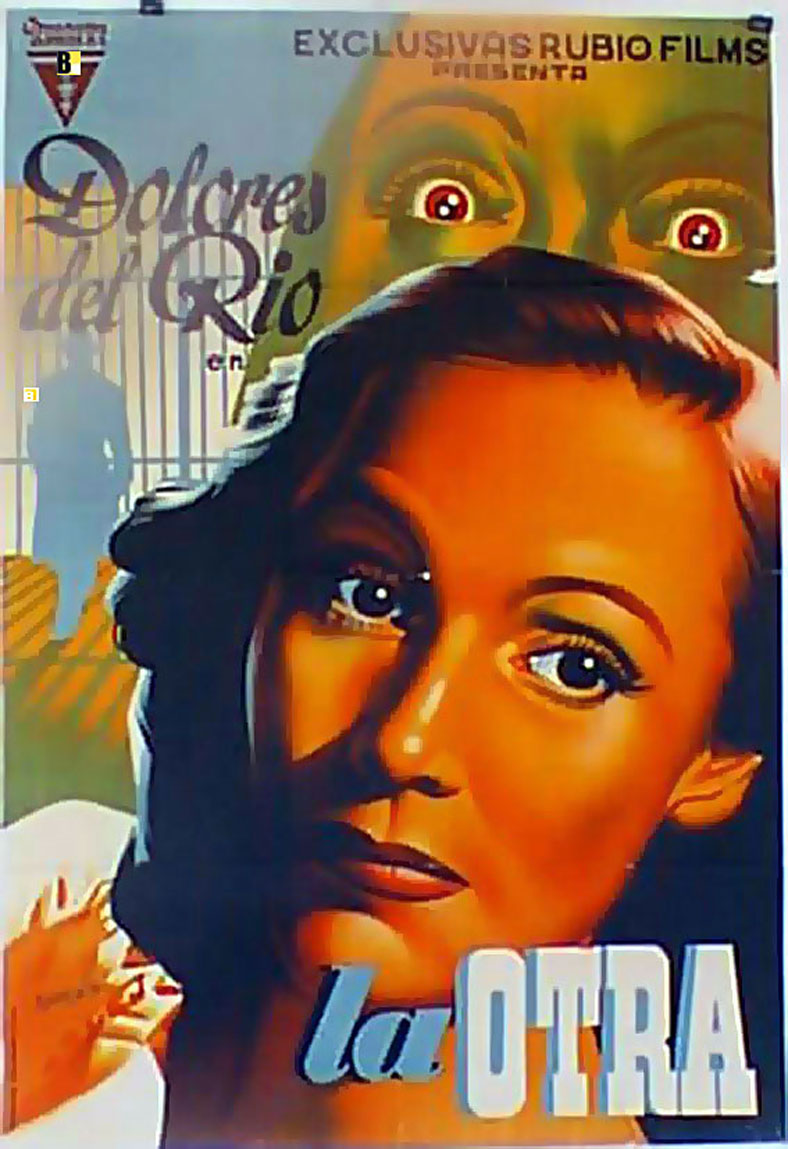
Though little known in the U.S., Gavaldon was considered one of Mexico’s most important directors in the 40s and 50s along with Emilio Fernandez and Luis Bunuel (while in exile from Spain). He dabbled in literary adaptations and social dramas in his early work but achieved an international breakthrough with La Otra (1946) starring Dolores Del Rio in a dual role as twin sisters, one good, one evil.
The movie marked Gavaldon’s move into darker material with film noir influences and resulted in a quintet of films that focused on the negative effects of male hubris starting with Rosauro Castro (1950). The other four are In the Palm of Your Hand (En La Palma de tu Mano, 1951), Night Falls, El Rebozo de Soledad (1952) and Le Tres Perfectas Casadas (1953).

Night Falls may not be the best film in Gavoldon’s quintet of male melodramas but it is immensely entertaining and almost operatic in its emotional intensity. Part of this is due to Pedro Armendariz’s strutting, egomaniacal performance as the insufferable Marcos and the three main female leads who react to him with varying degrees of passion, hysteria and outrage. Lucrecia, the most masochistic of the three, bemoans her fate at one point saying, “You’re like a drug to me…I seek you even when you harm me.” Sara turns out to be just as needy and is hiding an ulterior motive for her return. But it is Rebeca’s gradual transition from desperation to homicidal rage that makes Night Falls an over-the-top but satisfying tale of female revenge visited on an unfaithful and mean-spirited lothario.
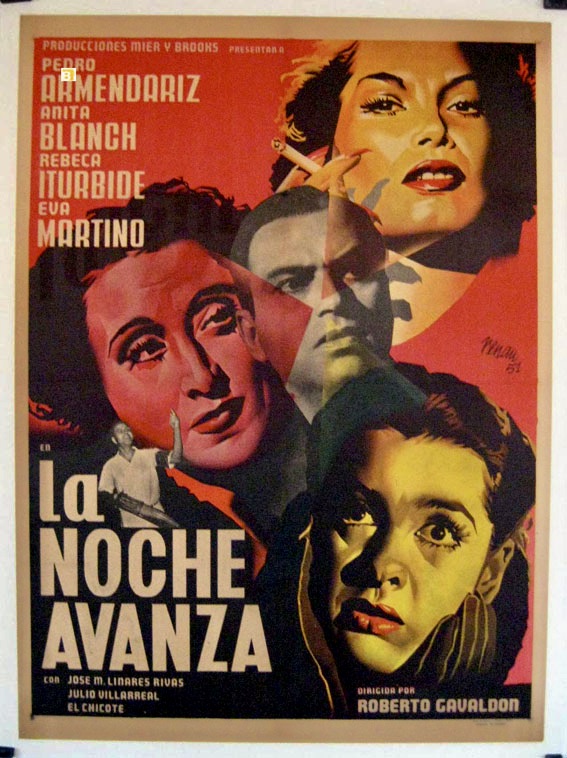
The first half of Night Falls builds up such viewer animosity toward Marcos that one can’t wait to see this bully get his just deserts. This is a man who not only beats and berets women and men alike but is also cruel to animals. In an early scene, we see Marcos kick a dog out of the way while opening a car door for Lucrecia (who isn’t treated much better). Yet, when things start to fall apart for Marcos, he doesn’t become any more sympathetic and he continues to manipulate everyone around him with lies, threats and deceit.
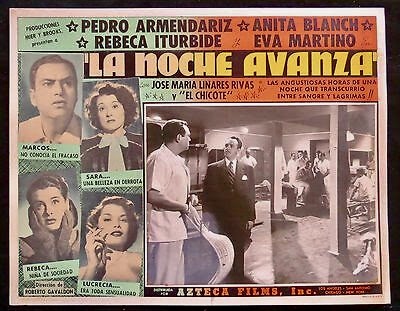
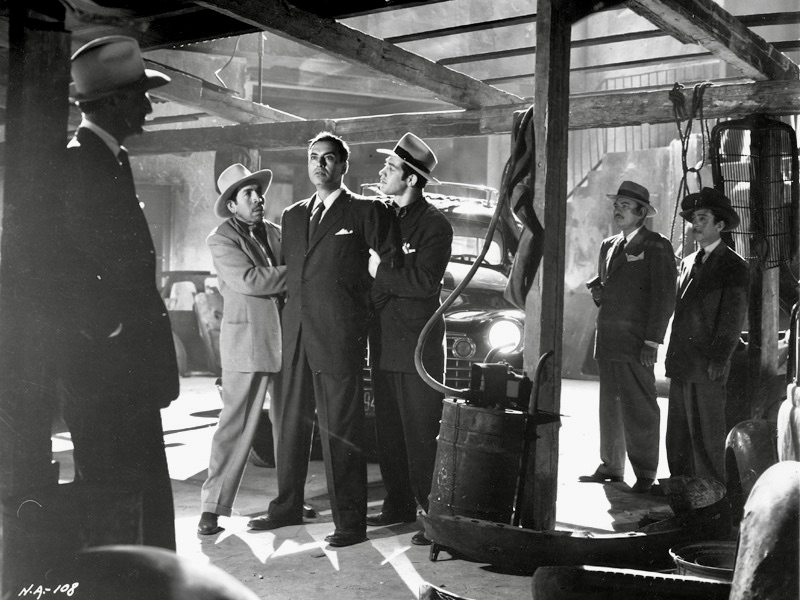
Armendariz has certainly portrayed other memorable villains in his career such as the lead in Luis Bunuel’s El Bruto (1953) but he comes across like a primeval force of nature in Night Falls. We can’t help but watch in fascination and glee as his life spirals out of control. It starts with his betrayal by Marcial (Jose Maria Linares-Rivas), a shady gambler, and his criminal cohorts who try to blackmail Marcos into losing a championship jai alai game. Rebeca’s brother Armando (Carlos Muzquiz) also becomes instrumental in undermining his sister’s seducer. Events take an even darker turn when Marcos is kidnapped at gunpoint and forced to drink an entire bottle of tequila, a sequence that looks like an insidious version of waterboarding. [Spoiler alert] But nothing prepares you for the final comeuppance after Rebeca empties her pistol into Marcos on an airplane bound for Havana. We see a discarded newspaper on the street bearing a headline about Marcos as a dog stops and urinates on it. A street sweeper then comes along and dumps the soiled paper in the trash. It might not be subtle but it provides an appropriate sting in the tail finale.
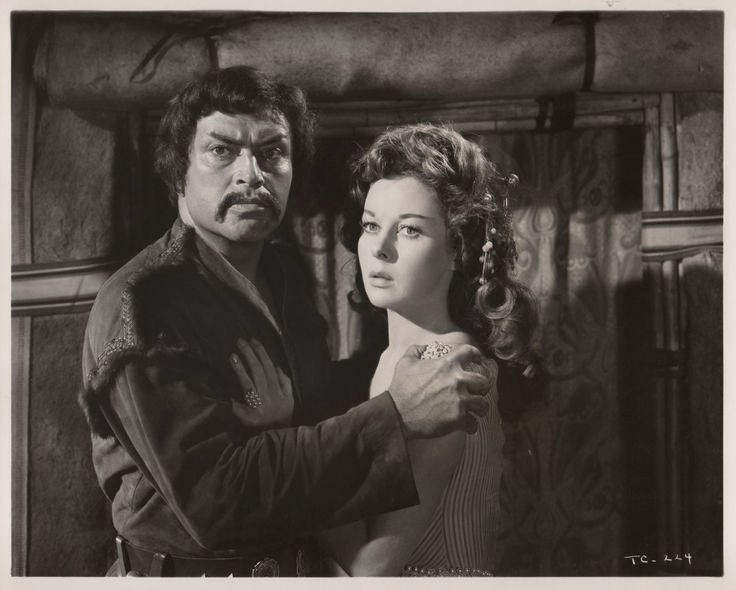
During his peak years, Armendariz was considered “the Mexican Clark Gable” and was paired with Mexico’s greatest actresses like Dolores Del Rio and Maria Felix in romantic melodramas like Maria Candelaria (1944) and Maclovia (1948). Armendariz’s versatility as an actor can be seen in everything from his poignant performance in The Pearl (1947), based on John Steinbeck’s novella, to his supporting roles in John Ford westerns (The Fugitive [1947], Fort Apache [1948], 3 Godfathers [1948]) to a trilogy of historical biopics about Pancho Villa (Asi era Pancho Villa [1957], Pancho Villa y la Valentina [1960], Cuando! Viva Villa…¡Es La Muerte [1960]). In his own country, he was a six time Best Actor nominee at the annual Ariel Awards (similar to our Academy Awards) and won twice. Unfortunately, he committed suicide at age 51 in 1963 after suffering from the effects of cancer, which many believe was caused by his exposure to radioactive nuclear testing in Utah during the filming of The Conqueror (1956). Several of the other actors from that film – John Wayne, Susan Hayward, Agnes Moorehead – and director Dick Powell also died from cancer related causes.
Night Falls has been something of a lost film until recent years when a restored print of the film was featured in a MoMA tribute to Roberto Galvadon in 2019, a 2020 Noir City Film Festival and a Mexican film retrospective in Locarno in 2023. Film scholar Farran Smith Nehme aka the Self-Styled Siren admitted that the film was a personal favorite due to “ its zippy pace, its affinities with boxing noir, and the way it illustrates what the Mexican cinema could do that the Code-encumbered Hollywood could not.” Film noir enthusiasts will also love the moody black and white cinematography of Jack Draper and the doom-laden music score by Raul Lavista which manages to highlight a few nightclub numbers by the exotic Eva Martino as the sultry but mistreated nightclub singer Lucrecia.
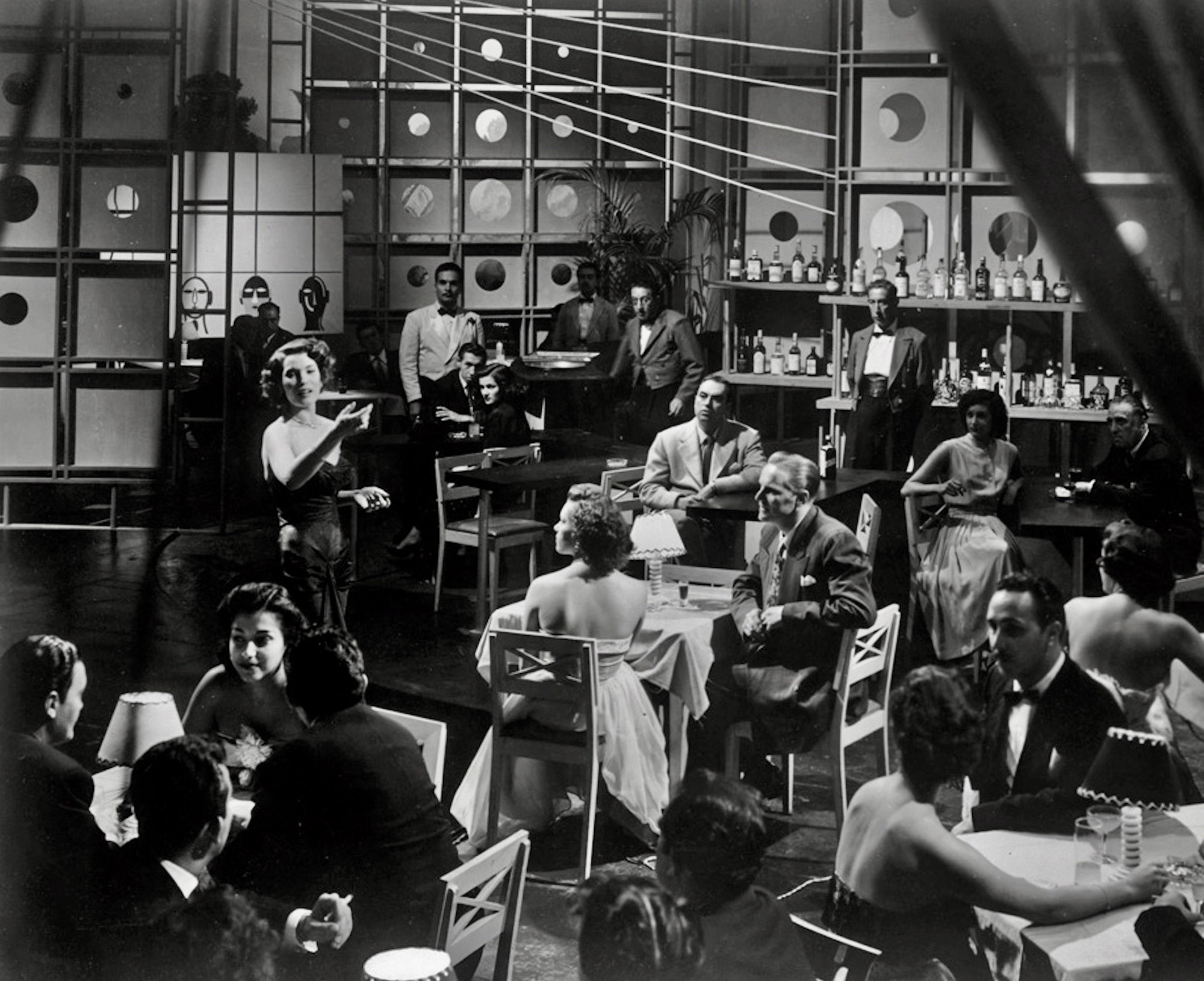
There is a good chance Night Falls might be licensed as a future Blu-ray release from some U.S. distributor but until then you can stream a beautiful restored print of the film with English subtitles on Youtube and at the Cave of Forgotten Films website.
Other links of interest:
https://www.filmlinc.org/films/the-night-falls/
https://mubi.com/en/notebook/posts/roberto-gavaldon-s-mortal-visions
https://cla.calpoly.edu/Pedro-Armendariz
 Cinema Sojourns