
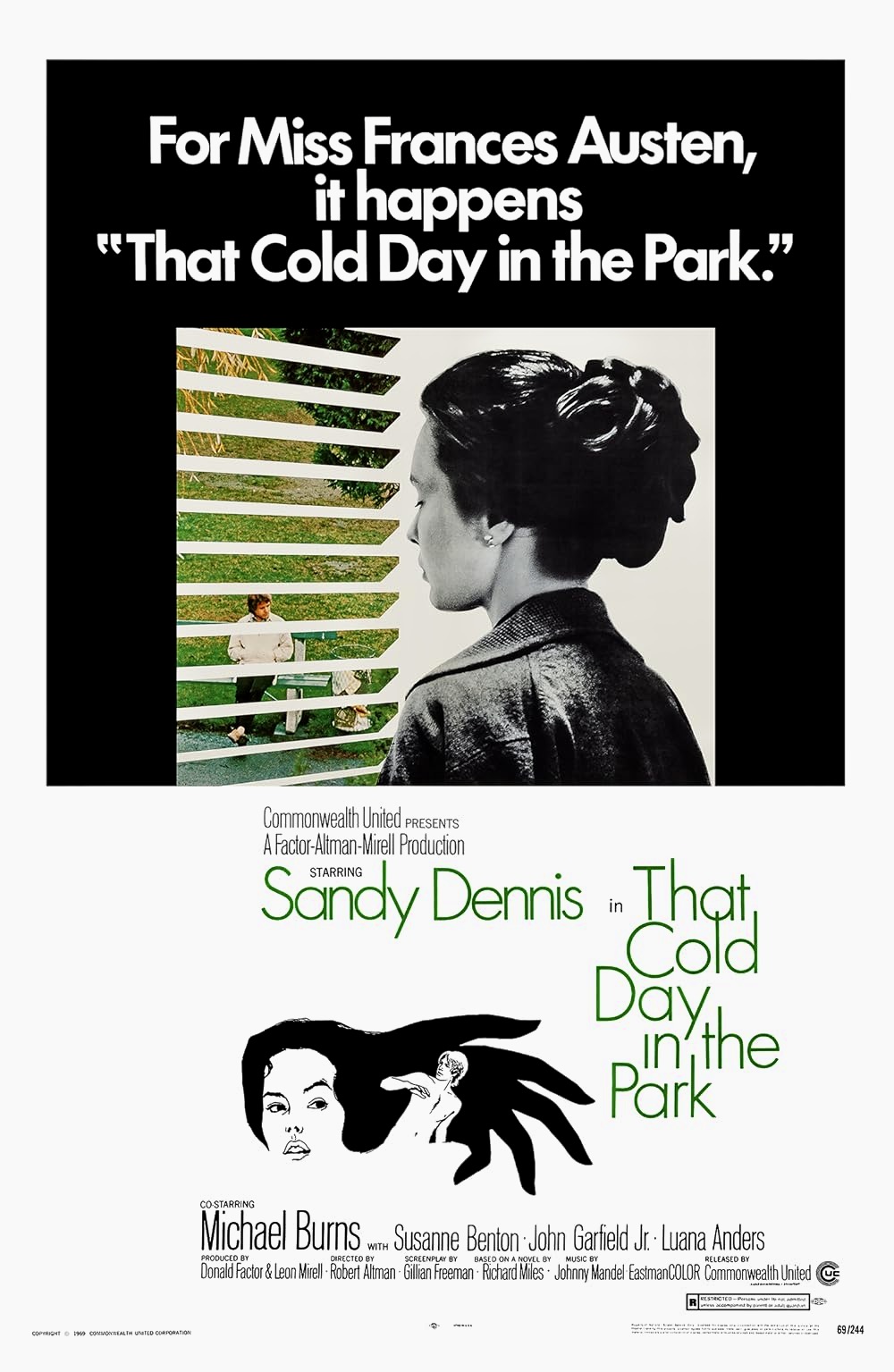
Most film critics and movie lovers point to Nashville (1975) as Robert Altman’s masterpiece, although I’ve always been partial to his unique spin on the Western, McCabe and Mrs. Miller (1971). I also admire an earlier film that he directed that was conspicuously absent or missing from his filmography in most of the obituaries on the director after he died. That Cold Day in the Park was made between Countdown (1967) and M*A*S*H* (1970) in 1969 and was based on a novel by Richard Miles. The screenplay was by British screenwriter Gillian Freeman, who had written the novel and film adaptation of The Leather Boys (1964), Sidney J. Furie’s drama about a troubled working class marriage and the husband’s friendship with a closeted gay biker.
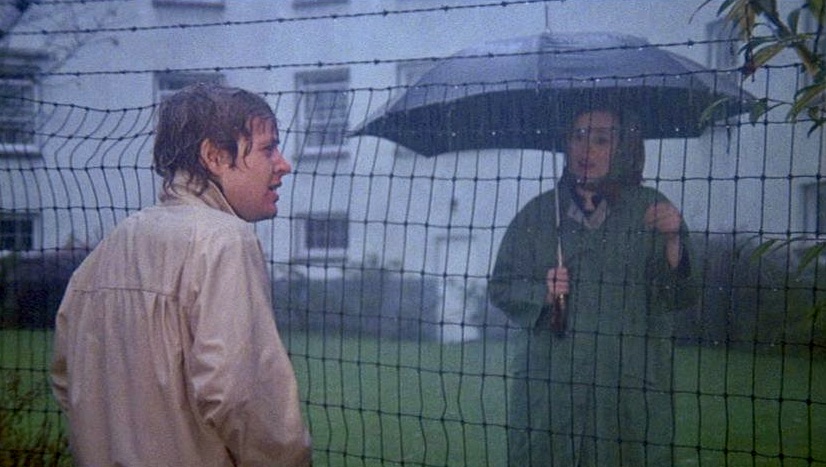
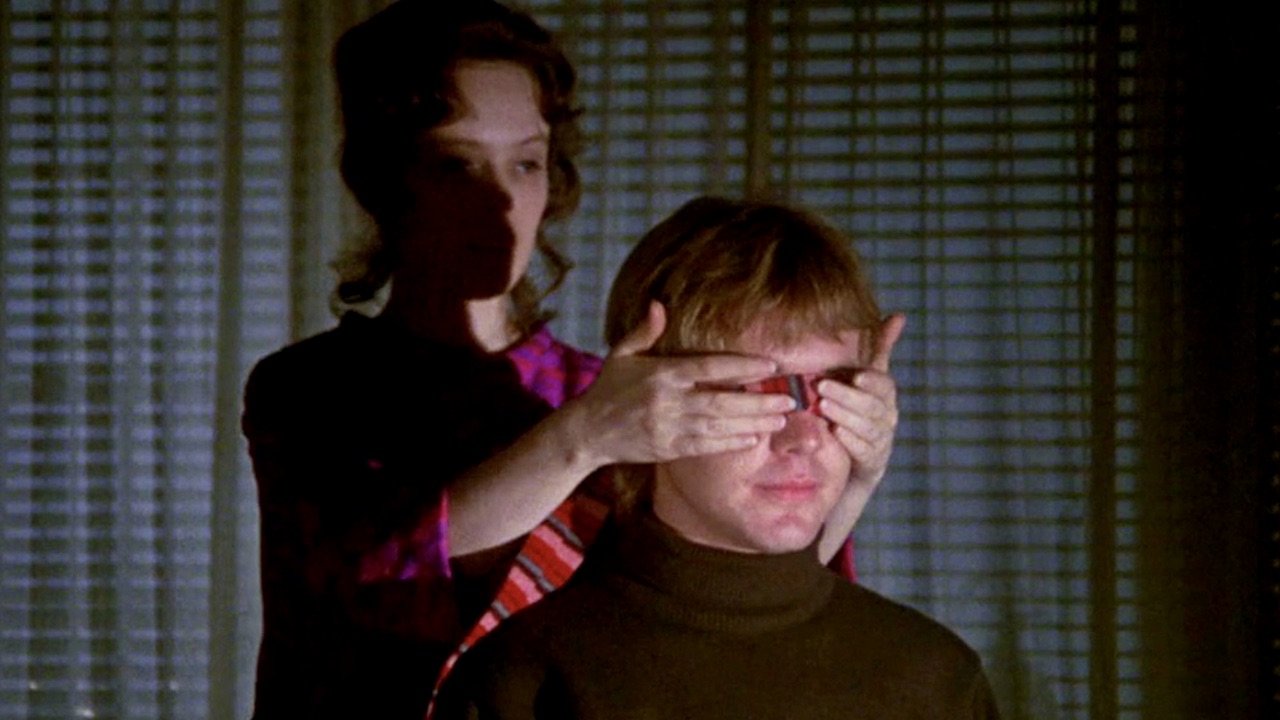
A gender twist on John Fowles’s The Collector, That Cold Day in the Park stars Sandy Dennis as Frances Austen, a lonely spinster whose apartment overlooks a park in Vancouver. One wet, wintry day she spots a young man on a park bench who appears to be homeless. She invites him into her home to get warm but ends up encouraging him to stay. The fact that the stranger (Michael Burns) pretends to be mute only adds to the ensuing strangeness. His little joke backfires, however, when he arouses Dennis’s long-suppressed sexual feelings and becomes a prisoner in her apartment.
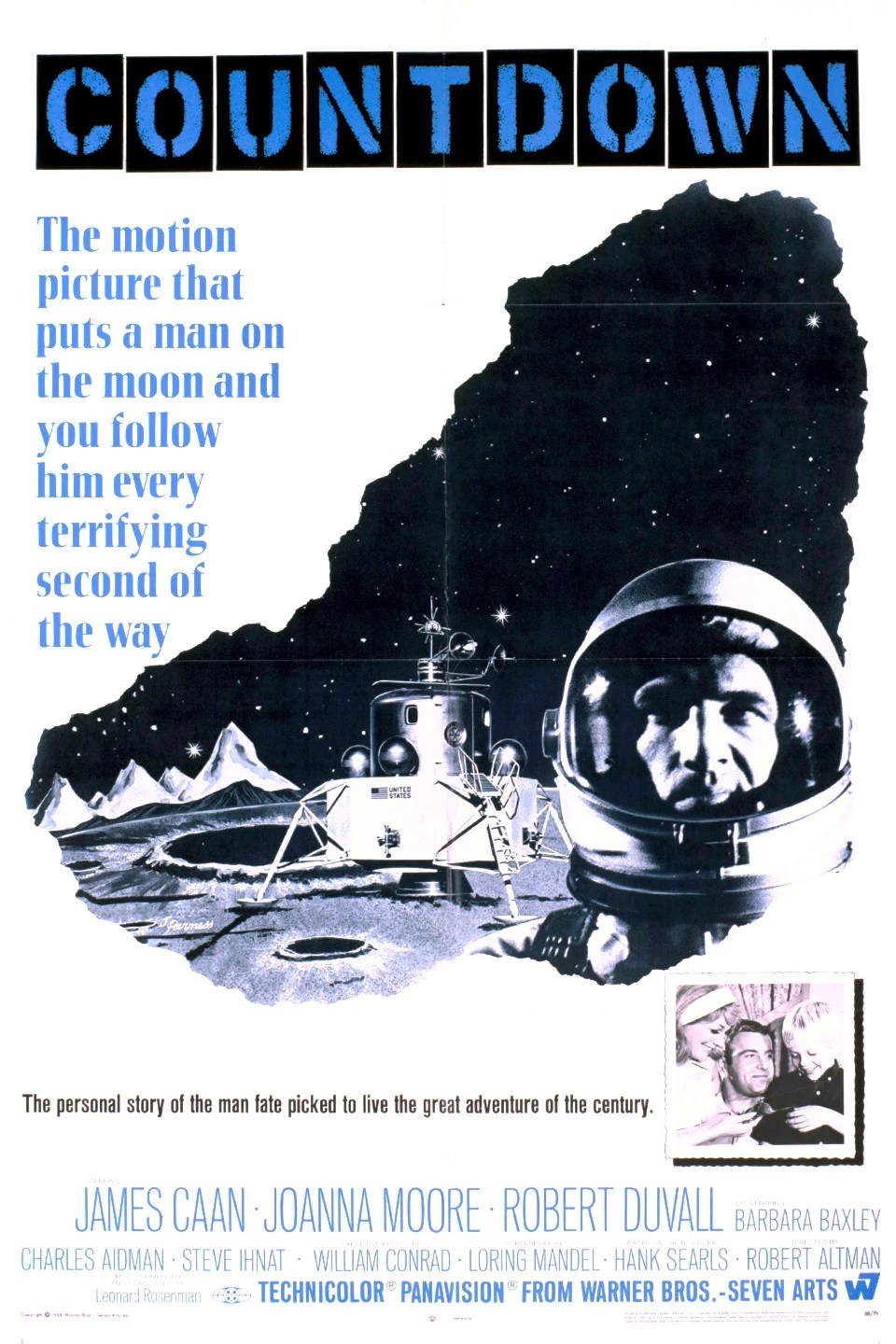
Prior to making this (his fourth feature film), Altman was at a low point in his career after his unhappy experience working with actor/executive producer William Conrad on Countdown (the film was taken away from him and some scenes were reshot and the ending was changed). Luckily former talent agent George Litto came to the rescue and set Altman up with a compatible producer (Donald Factor, the son of Max Factor), who helped him put his new project together with a budget of around $400,000. An earlier adaptation of the screenplay by Barbara Turner (before Freeman was brought in) had been set in London with the action taking place around Hyde Park but that location proved too expensive for the production. Instead, they found an affordable substitute with the city of Vancouver and were even able to build the entire interior of Frances’s apartment on a local sound stage.

According to the director in Mitchell Zuckoff’s Robert Altman: The Oral Biography, “I sent that script to Ingrid Bergman, and she sent me back a note – she was rather insulted by that part. And I sent it also to Vanessa Redgrave. That’s how Sandy Dennis came up. She said, “Try her.” She read it and agreed to do it. It was just this story of this woman and this younger guy. I’ll tell you who I turned down for that part – Jack Nicholson. Jack wanted it – he came to my office and we talked about it. And I said, “Jack, I think you’re too old for it.” At the time, Nicholson had finished making Easy Rider but it hadn’t been released yet and he was still struggling to find good leading men roles.

That Cold Day in the Park was shopped around to every major studio in Hollywood but every one of them turned Altman and Factor down. Then Commonwealth-United, a relatively new entertainment corporation/distributor, agreed to put up the additional money needed for the production. This was great news for Altman because it meant less interference from a major studio during the filming and editing. According to Patrick McGilligan biography, Robert Altman: Jumping Off the Cliff, it also meant “The Hollywood unions could be circumvented and costs lowered. Only some fourteen of the average fifty-man crew of Cold Day was imported from Hollywood; wage scales were below the Hollywood norm…[and] there was a Vancouver eagerness to show that a superior picture could be crafted at a reasonable price.”
Graeme Clifford, who would go on to direct the 1982 biopic Frances with Jessica Lange, was hired as Altman’s assistant editor and second assistant director, while cinematographer Laszlo Kovacs and set designer Leon Ericksen were brought in from Los Angeles. Clifford and Ericksen, in particular, would go on work with Altman on several other films and help him perfect his unique look and signature style.

This was Altman’s first experience of working with an actress of Sandy Dennis’s caliber; she had won a Best Supporting Actress Oscar for her performance in Who’s Afraid of Virginia Woolf? (1967) and he was slightly intimidated by her reputation but she was impressed by his improvisational approach. For one scene where she enters the boy’s bedroom and thinks he is sleeping in the bed (he has slipped out the window to visit his sister), Dennis is supposed to deliver a speech to the boy. “Sandy objected,” Clifford stated in Zuckoff’s oral biography of the director. “She said, “I would know there was no one there.” Bob took her aside and said, “Look, Sandy, let’s just try it my way, and if it doesn’t work, we’ll try it another way.” She couldn’t say no to that. She went in and it was a long monologue to an empty bed with pillows stuffed into it. It was a single take and Bob said cut. Even the crew in the scaffolding was applauding. That was it. It was Altman magic.”

Dennis ended up getting typecast as neurotic or quirky female characters in several films (The Fox [1967], Thank You All Very Much [1969], The Out of Towners [1970]) but she is excellent here, going from voyeur to an obsessive/compulsive nutcase yet doing it in a quiet, unsettling manner. The sequence where she hires a prostitute (a great cameo appearance by Luana Anders) for Burns and then watches them have sex is particularly creepy with a shocking payoff. Dennis would go on to work with Altman again in Come Back to the 5 & Dime, Jimmy Dean, Jimmy Dean in 1982.

The rest of the cast of That Cold Day in the Park was relatively unknown. Michael Burns had been a child actor and appeared in the James Stewart comedy Mr. Hobbs Takes a Vacation (1962) but mostly worked in television for most of his career. Susanne Benton, who would later appear in the cult sci-fi fantasy A Boy and His Dog (1975) was cast in the role of Nina, the boy’s sister, and their scenes together have an odd incestuous vibe. You can also spot John Garfield Jr. and Michael Murphy in minor roles. Murphy, of course, would become one of Altman’s repertory players, appearing in at least eight of his films including the lead in the made-for-cable series Tanner ’88’.

Even though That Cold Day in the Park has a more straightforward narrative structure than any of Altman’s subsequent films, all of the familiar Altman stylistics are already on display – overlapping dialogue, an eye for the odd detail, an editing style that emphasizes character behavior, a more natural sound mix, and an extensive use of the zoom lens (which is employed more intelligently than in most movies). Yet, unlike Altman’s later work, That Cold Day in the Park maintains a taut tension that becomes increasingly claustrophobic as Dennis becomes completely unhinged. The film is also the first in Altman’s quartet of movies focusing exclusively on women characters that includes Images (1972), Three Women (1977) and Come Back to the 5 & Dime, Jimmy Dean, Jimmy Dean.

When That Cold Day in the Park premiered, only a handful of critics bothered to review it and most of the reviews were mixed, if not negative. One of the positive notices was from Raymond A. Sokolov of Newsweek, who called it “a first-rate exercise in astonishment that grows wilder and wilder, ending on an arbitrary but totally unexpected note.” More typical was Roger Ebert’s review which stated, “The plot is too improbable to be taken seriously, and yet director Robert Altman apparently does take it seriously. And so we get a torturous essay on abnormal psychology when, with less trouble, we could have had a simple, juicy horror film… But “That Cold Day in the Park” doesn’t declare itself as a horror film until too late, and the audience is already lost.” Even Pauline Kael of The New Yorker, who would become one of Altman’s biggest champions, wasn’t fond of the movie, writing “One can admire this film for its craftsmanship; it has a cold brilliance. But that’s all.”

In recent years That Cold Day in the Park has been reassessed by various film critics and Altman aficionados and its reputation as an impressive early work is undeniable. Yet you have to wonder if the film had been released after M*A*S*H*, would it have been more favorably reviewed or even enjoyed some success at the box office?
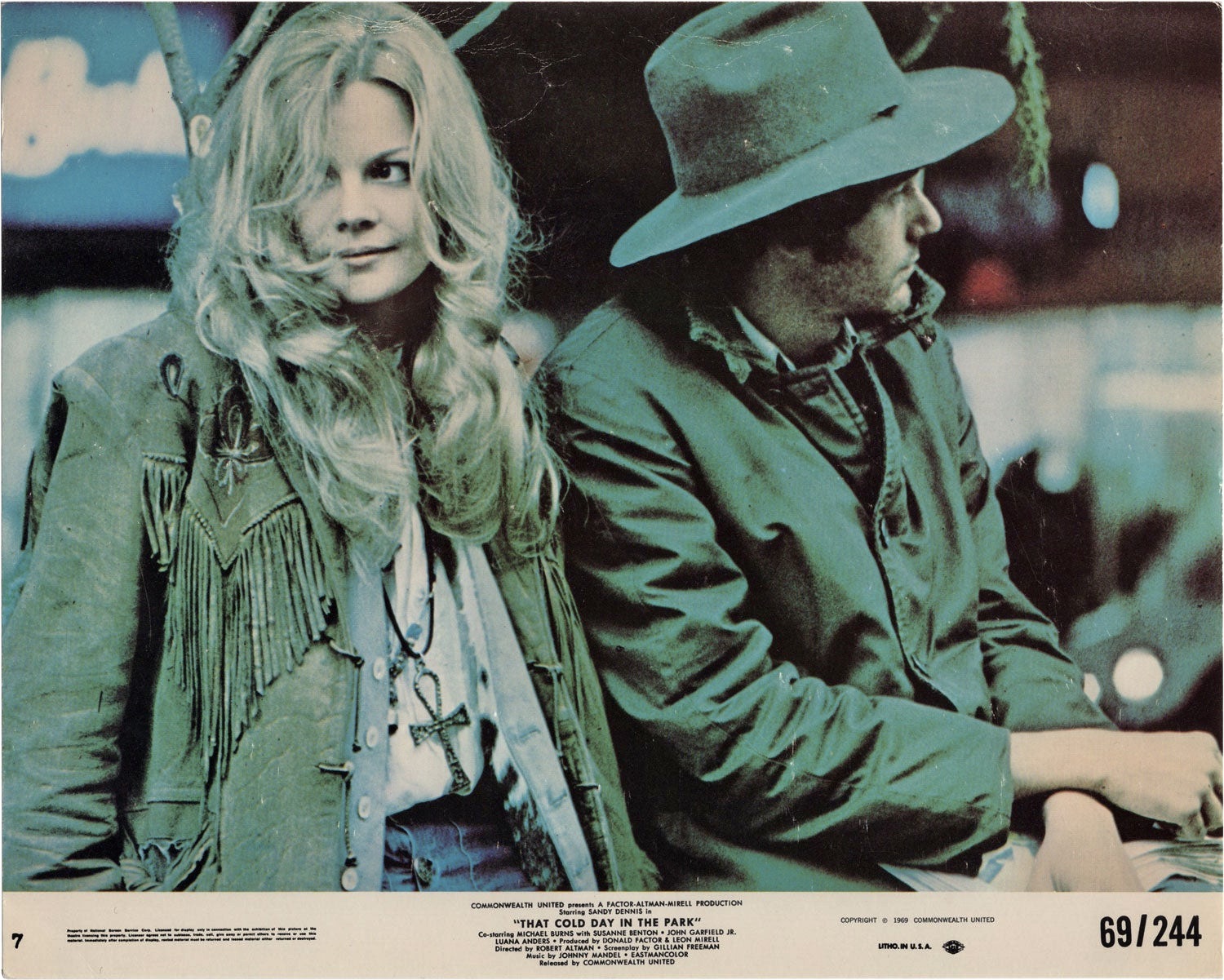
Except for a VHS release, That Cold Day in the Park was difficult to see for many years. Finally, Olive Films released a multi-format disc with no supplementary features in February 2013. Even better is Arrow Films’ Limited 2-disc Special Edition of the movie released in 2024 with a host of extras including behind-the-scenes footage of Altman and Dennis on the set, extended scenes from a pre-release version of the movie and more.

Other links of interest:
https://thehollywoodinterview.blogspot.com/2008/02/robert-altman-hollywood-interview.html
https://reverseshot.org/interviews/entry/342/robert-altman
https://www.csmonitor.com/1981/0820/082058.html
http://www.philonfilm.net/2013/03/bob-loves-chaos-he-revels-in-that-kind.html
http://thefilmexperience.net/blog/2025/2/20/robert-altman-100-that-cold-day-in-the-park.html
 Cinema Sojourns