
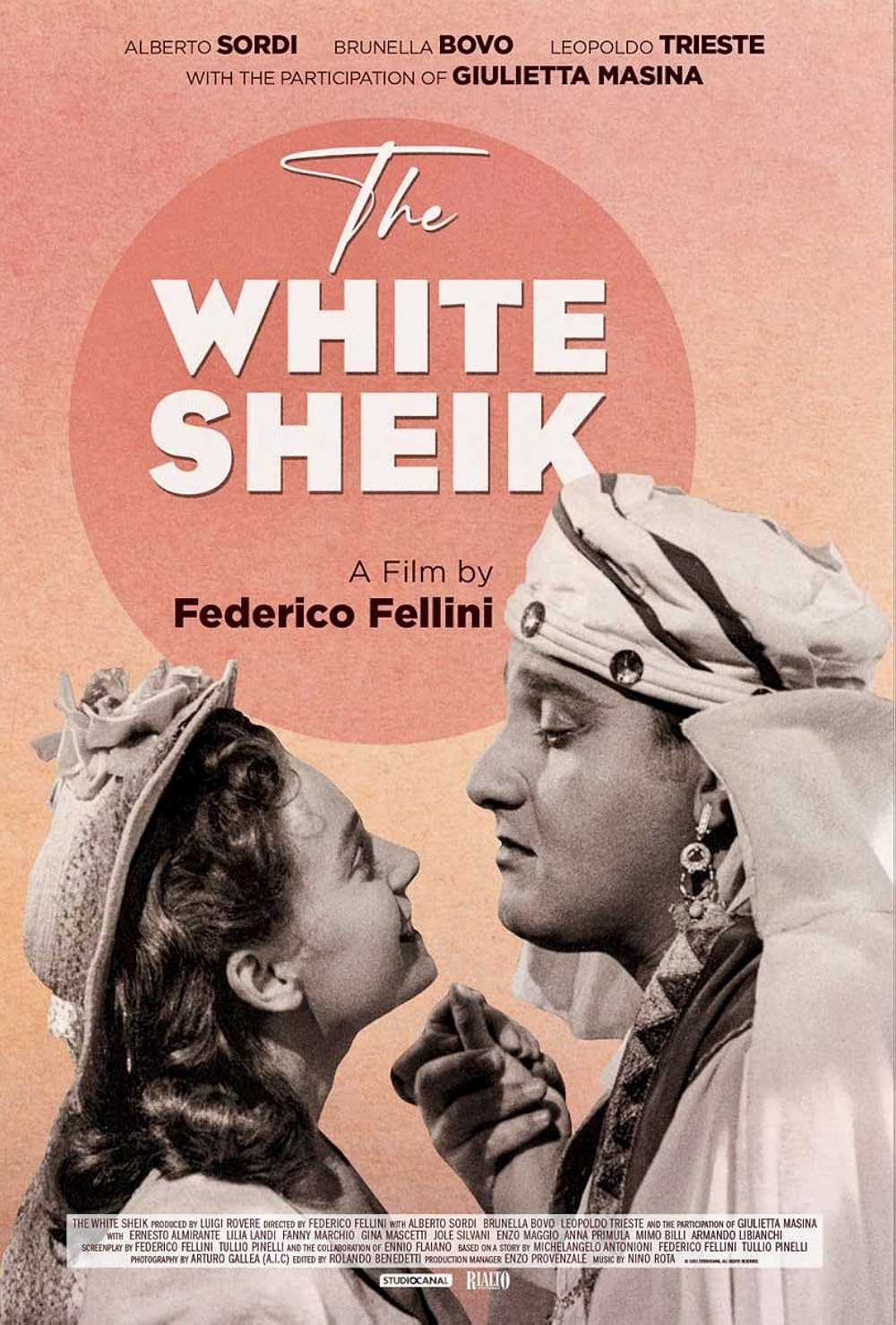
“With Paisan, I knew that I wanted to be a film director. I thought maybe this was where my future was, not as a journalist. It was with The White Sheik that I knew I was a film director.” – Federico Fellini (from I, Fellini by Charlotte Chandler)
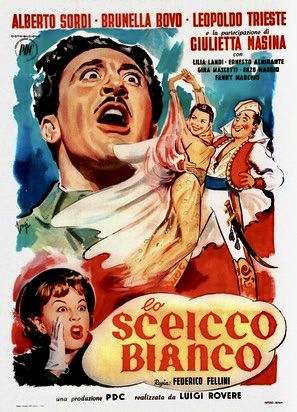
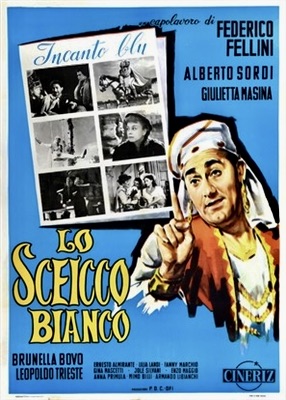
In The White Sheik (Italian title: Lo Sceicco Bianco, 1952), Fellini’s first solo directorial effort (he co-directed Variety Lights with Alberto Lattuada the previous year) he drew upon his experiences as a journalist and script writer to tell a bittersweet story about a provincial newlywed couple vacationing in Rome for their honeymoon. Wanda (Brunella Bovo), the young bride, is a naive romantic, prone to impulsive behavior and passionate fantasies. She is also an avid fan of fotoromanzi (a comic book with photo captions instead of cartoon drawings) and is secretly infatuated with “The White Sheik,” the hero of her favorite series.
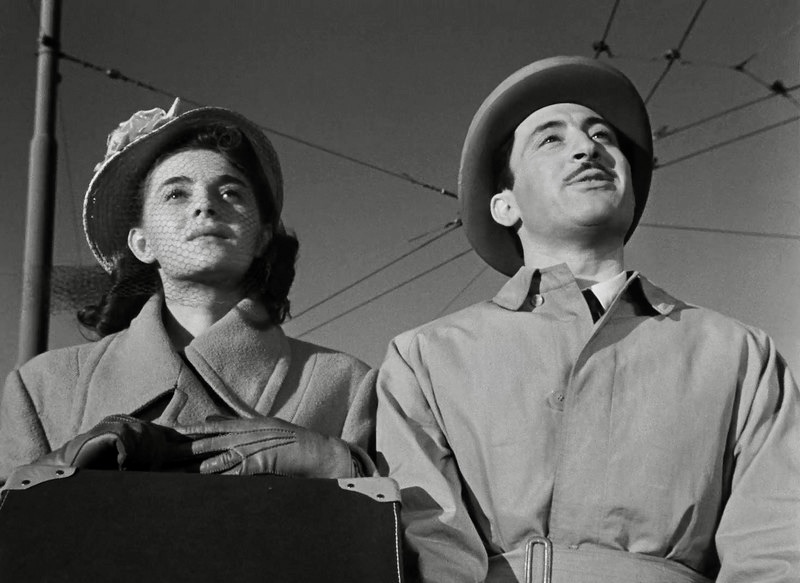
Her husband Ivan (Leopoldo Trieste) is her complete opposite: conservative, unspontaneous and overly concerned about social respectability. Shortly after their arrival in Rome, the couple is soon parted, with the bride heading off to the publishing office of Blue Romance to meet her idol while her husband frantically scours the city for her.
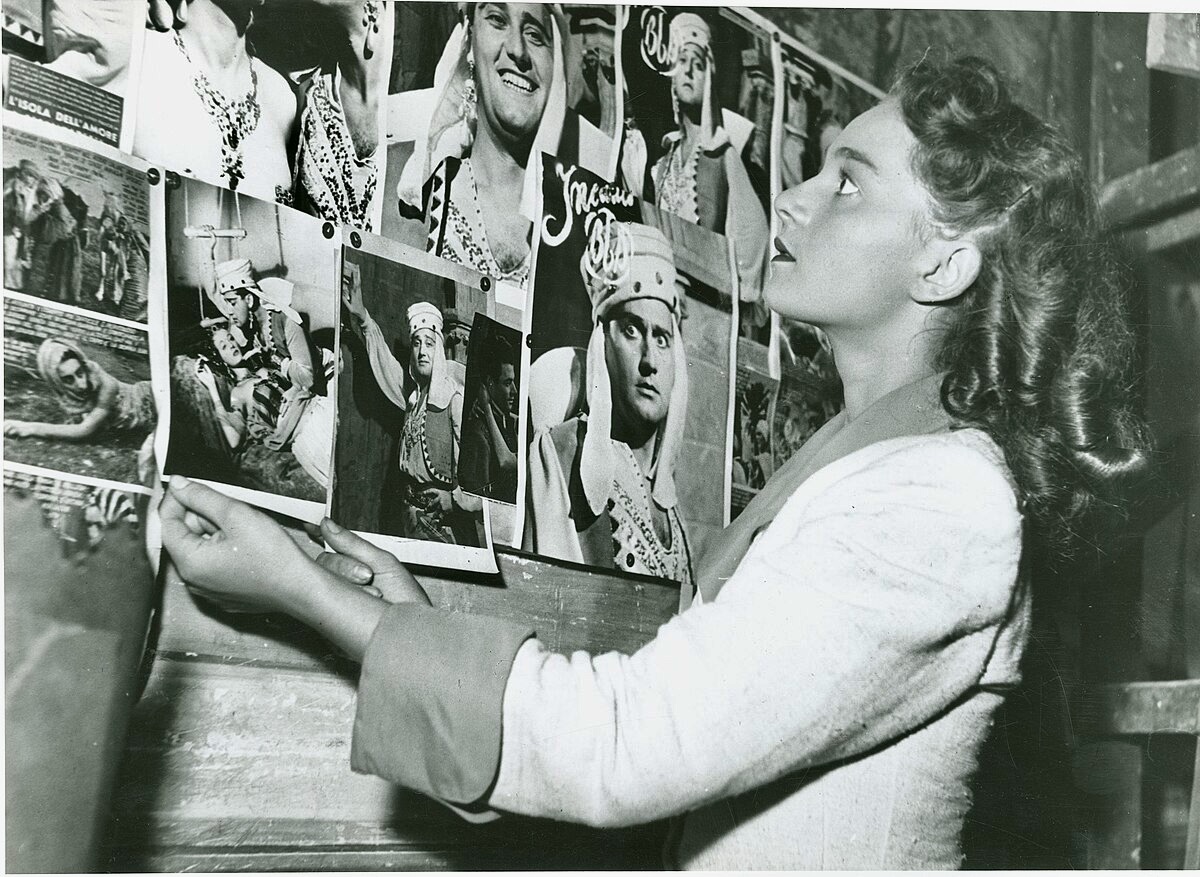
Like many of his subsequent films, The White Sheik explores a subject which would become a recurring motif in Fellini’s movies – the clash between illusion and reality. In the course of their misadventures in Rome, both the husband and his new bride see their hopes and dreams dashed: Ivan is forced to face his own unrealistic expectations of marriage while Wanda finally sees her “White Sheik” exposed for what he really is – a petty and vain third-rate actor. By the film’s end, the couple is reconciled with a more realistic view of their martial responsibilities yet Fellini’s final scene is ironic, suggesting that both characters are still clinging to their foolish illusions.
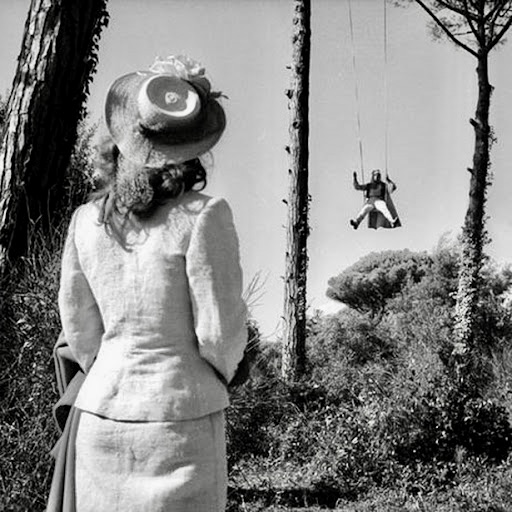
Michelangelo Antonioni, Tullio Pinelli and Fellini came up with the original story for the film and the final screenplay was a collaboration between Fellini, Pinelli and Ennio Flaiano. The director later stated in I, Fellini by Charlotte Chandler, that he “drew on impressions from stories I’d written for Marc’ Aurelio [a humor magazine], reflecting my own thoughts on the doomed nature of romance, young love confronting bittersweet reality, the spoiled honeymoon, the disappointments inherent in early marriage, and the impossibility of preserving one’s early romantic dreams.”
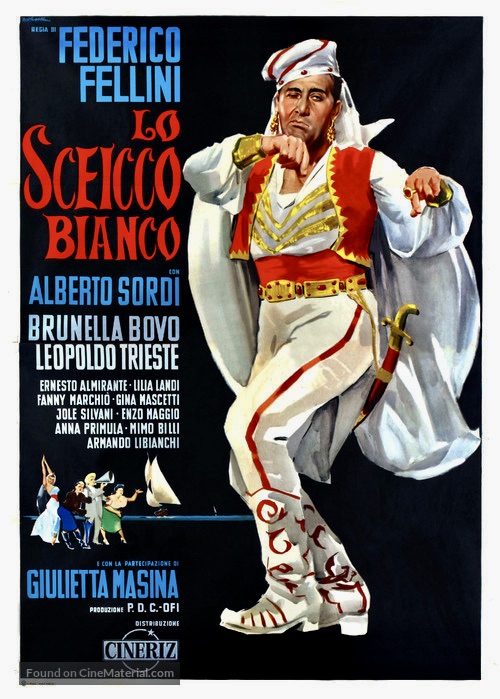
Producer Carlo Ponti initially proposed The White Sheik as a project for Michelangelo Antonioni who had previously made an acclaimed documentary about the fotoromanzi entitled L’amorosa menzogna (The Loving Lie, 1949). Fellini and Tullio Pinelli were hired to write the screenplay but their initial script didn’t please Antonioni and eventually the project was passed on to another producer, Luigi Rovere, who encouraged Fellini to direct it himself.
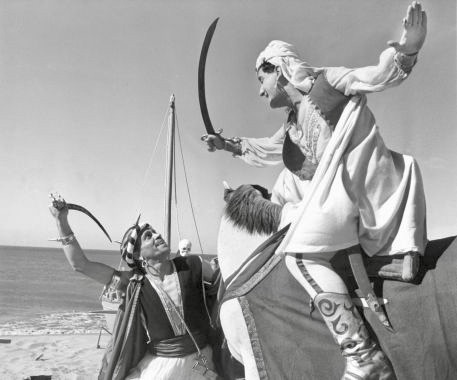
The first obstacles Fellini had to overcome were his casting choices. Alberto Sordi was not popular with Italian moviegoers at the time yet the director insisted that he was perfect for “The White Sheik.” Although Peppino De Filippo, his original choice for the part of Ivan, was rejected, Fellini’s second choice, Leopoldo Trieste, was approved.
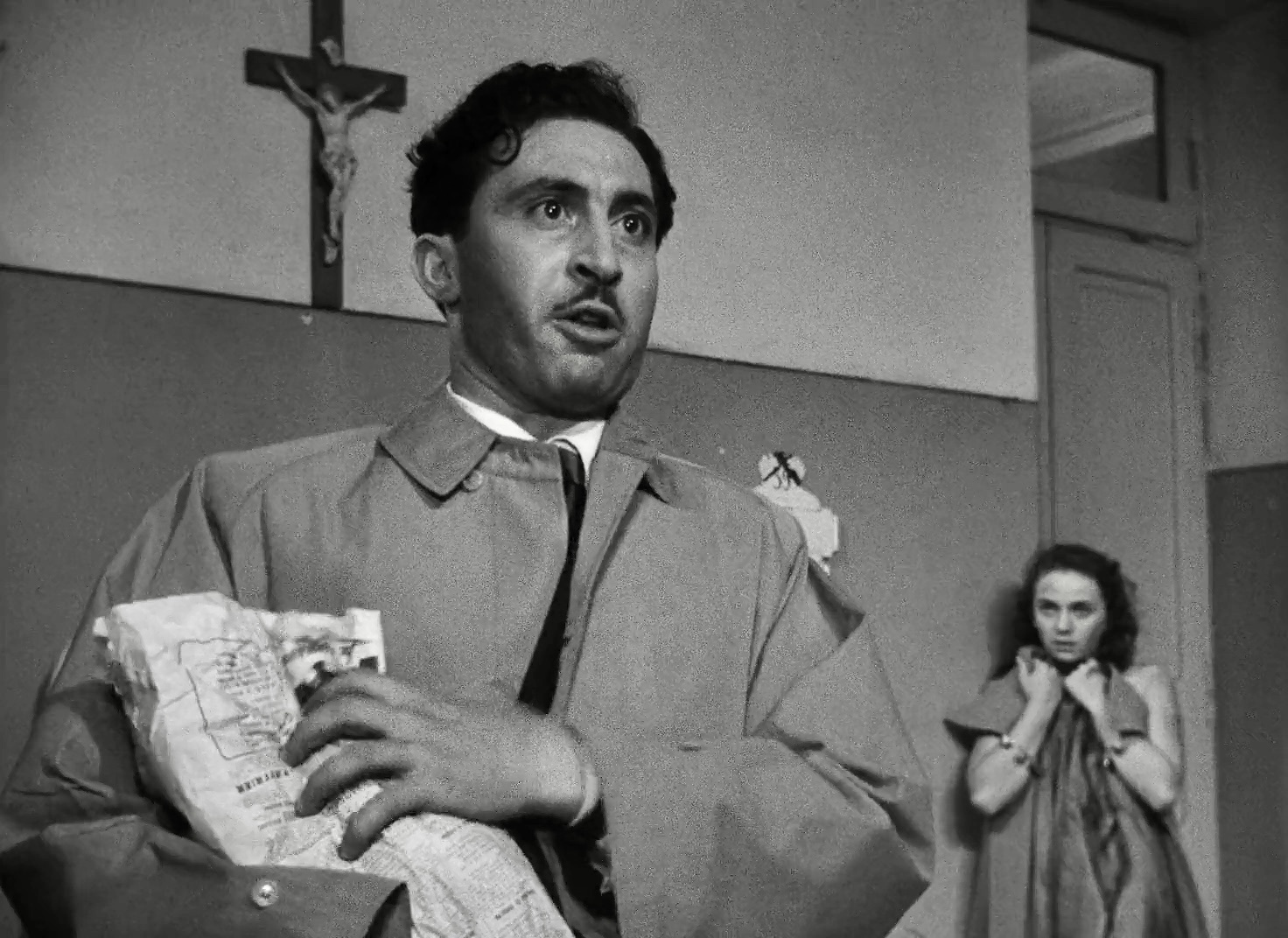
Trieste was a well-known writer, not a professional actor, but the director decided to cast him after they met at a screening room at Cinecitta Studios. Brunella Bovo, who was a young and relatively unknown actress, won the role of Wanda and Fellini cast his wife, Giulietta Masina, in a small part, playing a prostitute called Cabiria. The director would later build an entire film around this character – Nights of Cabiria – which won his wife international acclaim and garnered the film an Oscar for Best Foreign Language Film of 1957.
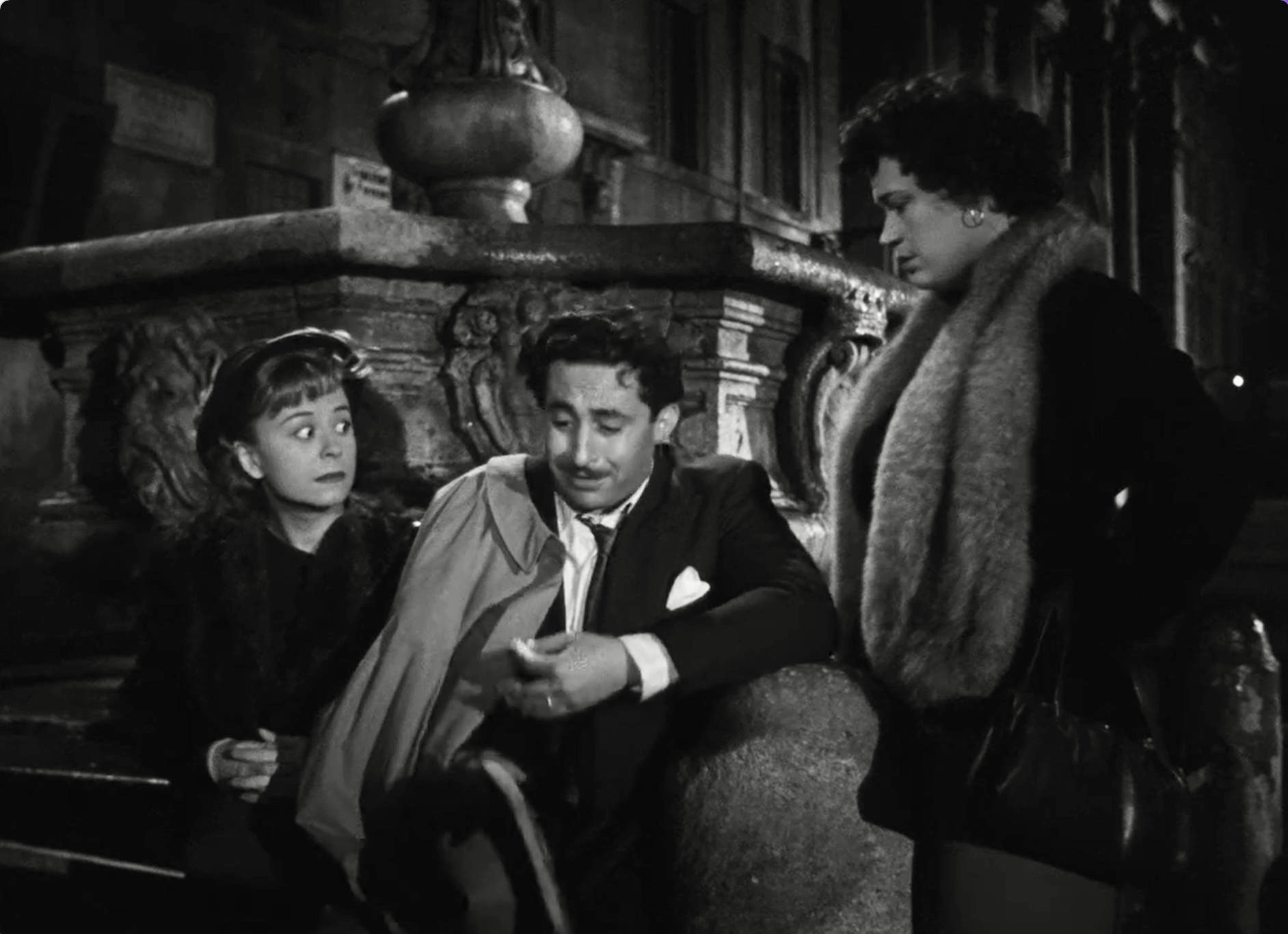
Even though Fellini had co-directed a feature the previous year, he was extremely nervous on his first day of shooting The White Sheik. According to Peter Bondanella in The Films of Federico Fellini: “A flat tire delayed his arrival on the set but gave the young man the opportunity to pray for guidance at a roadside church. Unfortunately, in the church Fellini saw a catafalque he understandably interpreted as a bad omen. He spent the entire first day on his set walking around on the beach in the sun, pretending to his crew and producer that he was deep in thought, while actually trying to imagine how the directors for whom he had written scripts would have resolved the scene’s technical complexities: “Rossellini, the inimitable, the unpredictable, came to mind almost exclusively. How would Roberto have done it.”
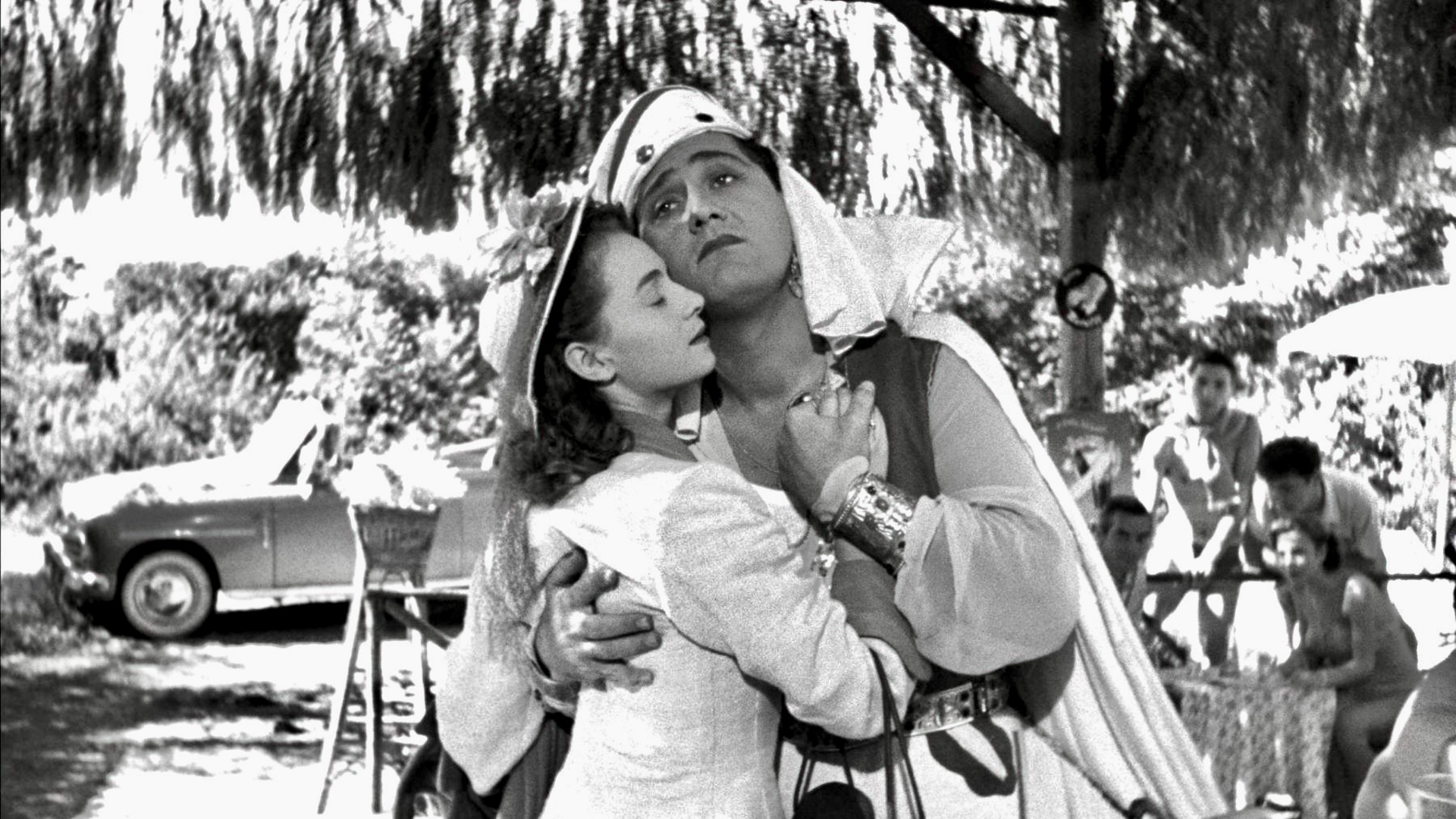
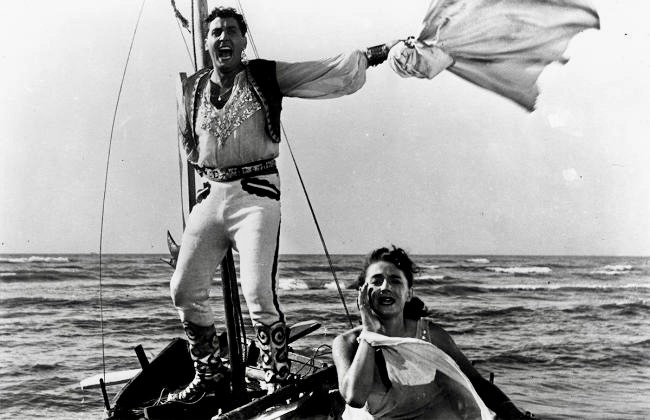
Luckily, Fellini took control of the situation on the second day, improvising a scene in which Wanda is taken out to sea by “The White Sheik” on his “pirate boat.” From that point on, his judgment never faltered and he began to develop some of the techniques which would become the hallmarks of his style: the use of music (by Nino Rota) to establish the emotional state of his characters, ironic juxtapositions of images, and satiric humor (when Wanda attempts to drown herself by jumping into the Tiber River, she only succeeds in getting stuck in the ankle-deep mud).
When The White Sheik finally premiered at the Venice Film Festival, the audience responded favorably but the Italian critics dismissed it as a failure since it didn’t cater to their political agendas (for one thing, the movie didn’t comply with previous neorealism standards set by Rossellini’s films). In Fellini: A Life by Hollis Alpert, the director was quoted as saying, “Perhaps it was ahead of its time. It’s an ironic story, and Italians don’t like irony – sarcasm and buffoonery, but not irony.”
Even more unfortunate, The White Sheik was poorly distributed by a small company that went bankrupt, preventing American audiences from seeing the film for many years. Now it is seen by some critics like John Simon as “an early masterpiece” from the director but more importantly this film marked the beginning of Fellini’s creative collaborations with a core group of talented people – the cinematographer Otello Martelli, composer Nino Rota, the writers Tullio Pinelli and Ennio Flaiano, and his actress wife, Giulietta Masina.

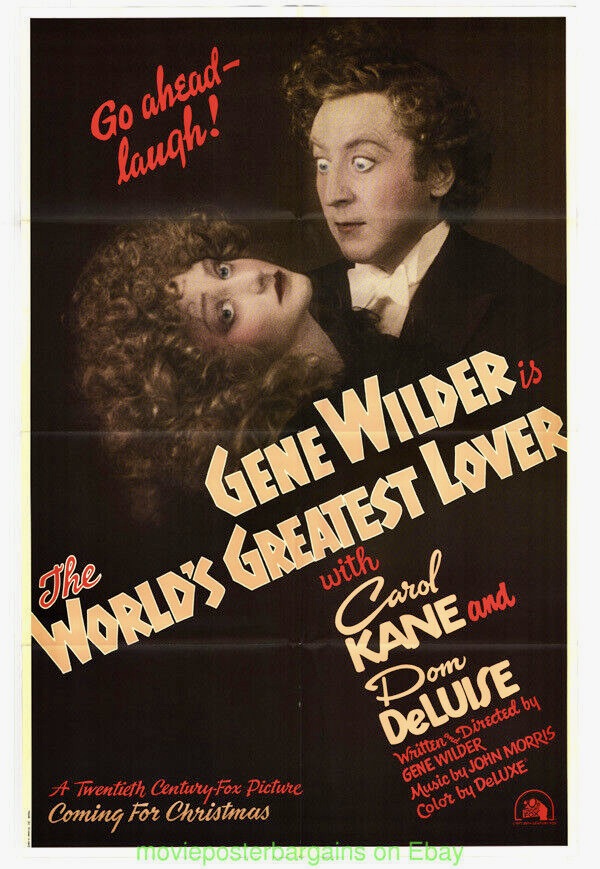
In 1977, actor Gene Wilder directed and starred in a loose remake of The White Sheik entitled The World’s Greatest Lover but it was only a pale imitation of the original.
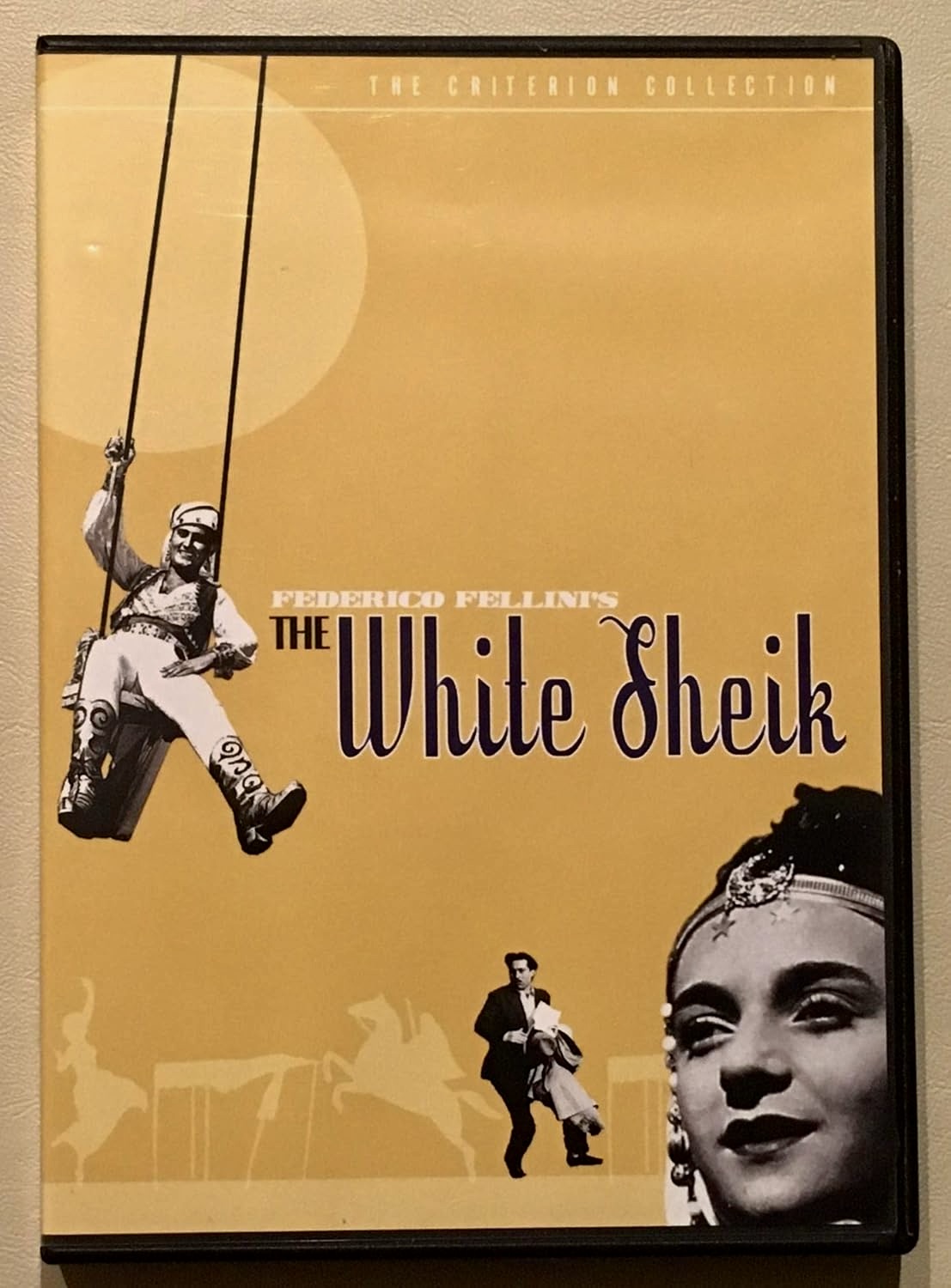
The Criterion Collection released The White Sheik on DVD in April 2003 with extra features such as interviews with Brunella Bovo and Leopoldo Trieste on the film. That edition is now out of print but in November 2020 Criterion released Essential Fellini on Blu-ray, a collection featuring 14 of his most famous films including The White Sheik. That special release is currently unavailable as well but it is only a matter of time until this early Fellini work is made available again.
*This is a revised and expanded version of an article that originally appeared on the Turner Classic Movies website.
Other links of interest:
https://diaryofascreenwriter.blogspot.com/dream-as-reality-interview-with-fellini#google_vignette
https://dcairns.wordpress.com/tag/brunella-bovo/
https://variety.com/2003/scene/people-news/leopoldo-trieste-1117879712/
 Cinema Sojourns