

Artificial intelligence (AI) appears to be influencing almost every aspect of human life these days and that includes everything from robopets (as a replacement for the real thing) to the online dating industry. There are even humanoid robots powered by AI but, as yet, no one has created an android that could pass for a real person and interact with them without anyone being able to tell the difference. But it is only a matter of time and Ich Bin Dein Mensch (English title: I’m Your Man, 2021), directed by German filmmaker Maria Schrader, takes this premise and turns it into a thought provoking cautionary tale that is alternately amusing, disturbing, sexy and subversive without ever falling into the trap of being just a futuristic romantic comedy.
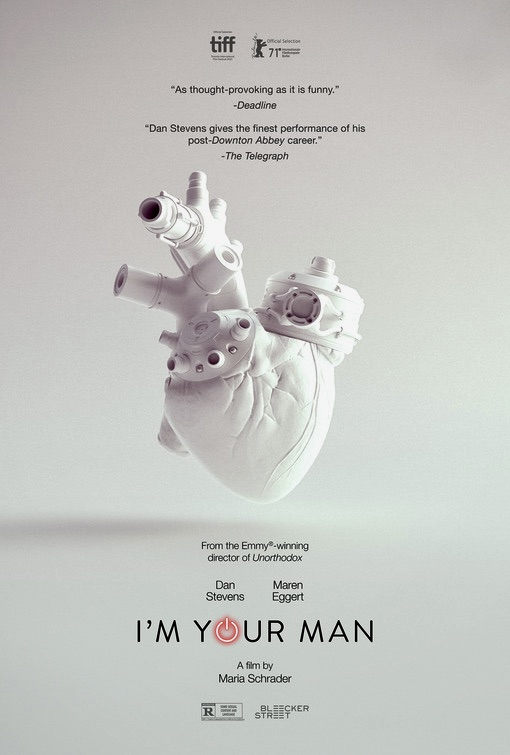
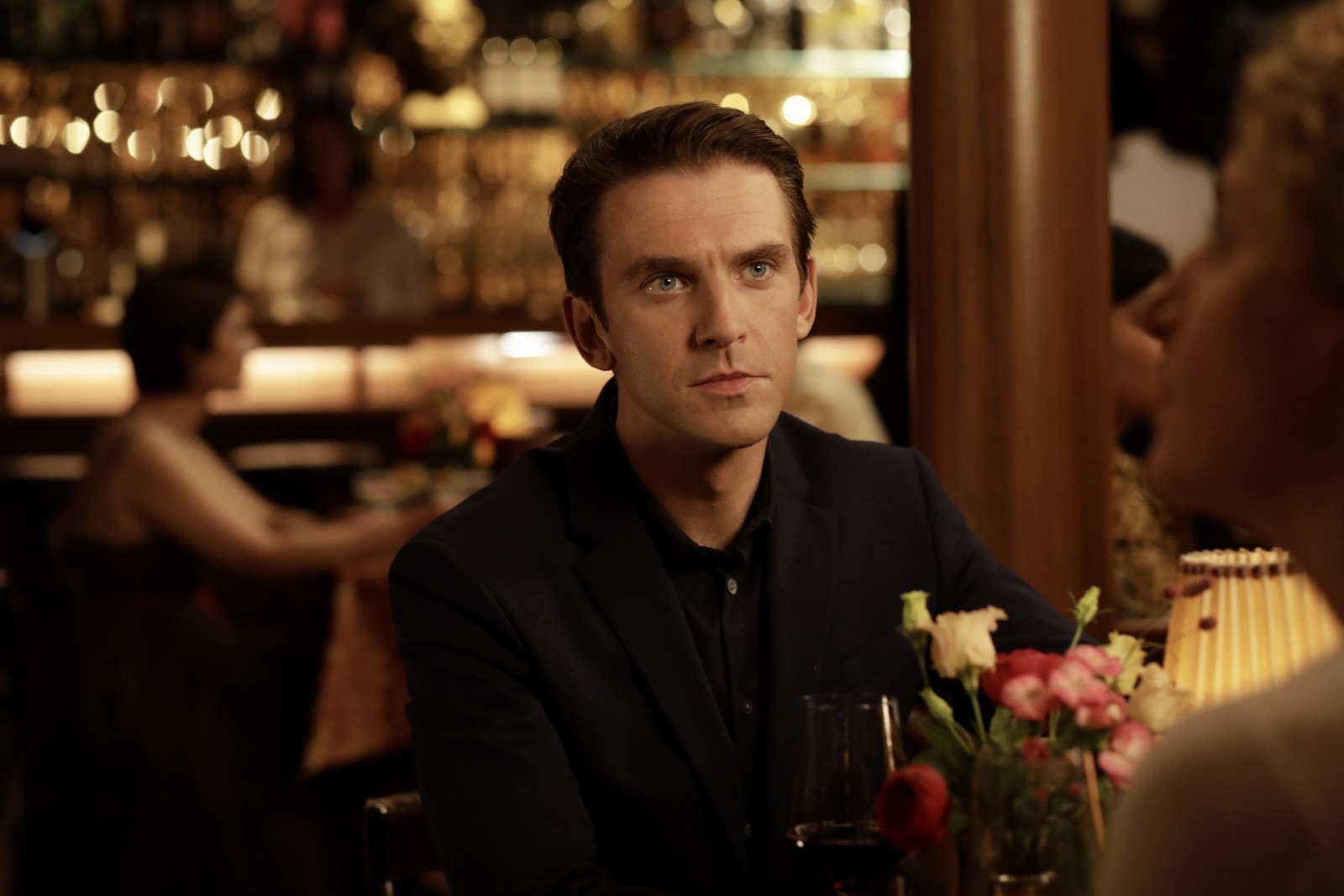
Based on a short story by Emma Braslavsky and adapted for the screen by Jan Schomburg and Maria Schrader, I’m Your Man opens in the near future in Berlin with Alma (Maren Eggert) meeting her ideal AI match (Dan Stevens) at a faux nightclub where the dancers are all holograms. The only reason Alma, an anthropologist who specializes in ancient cuneiforms, is participating in this experiment is to curry favor with her boss, Dekan (Falilou Seck) – it was his idea – and receive funding for her current project, a study on the use of metaphor and poetry in early civilizations.
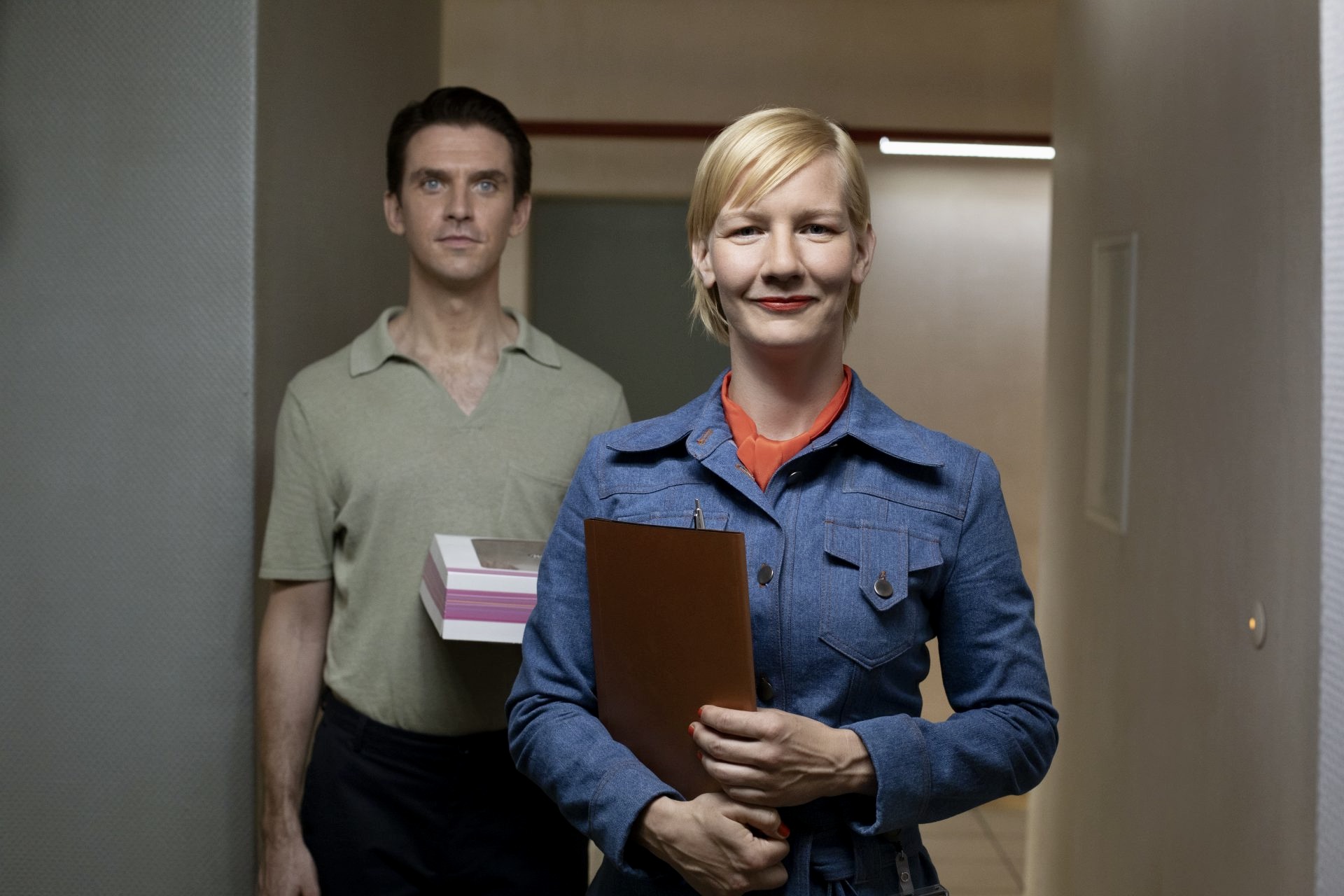
The officious woman in charge of monitoring the experiment (Sandra Huller) tells Alma that “according to our extensive analysis, Tom is the partner you have the best chances of being happy with.” Yet, despite being handsome, charming, and imbued with the intelligence of 17 million people, Tom is still a work in progress, whose attempts at flirtation and romantic banter are still trial and error as witnessed by his first come-on to Alma: “Your eyes are like two mountain lakes I could sink into.”
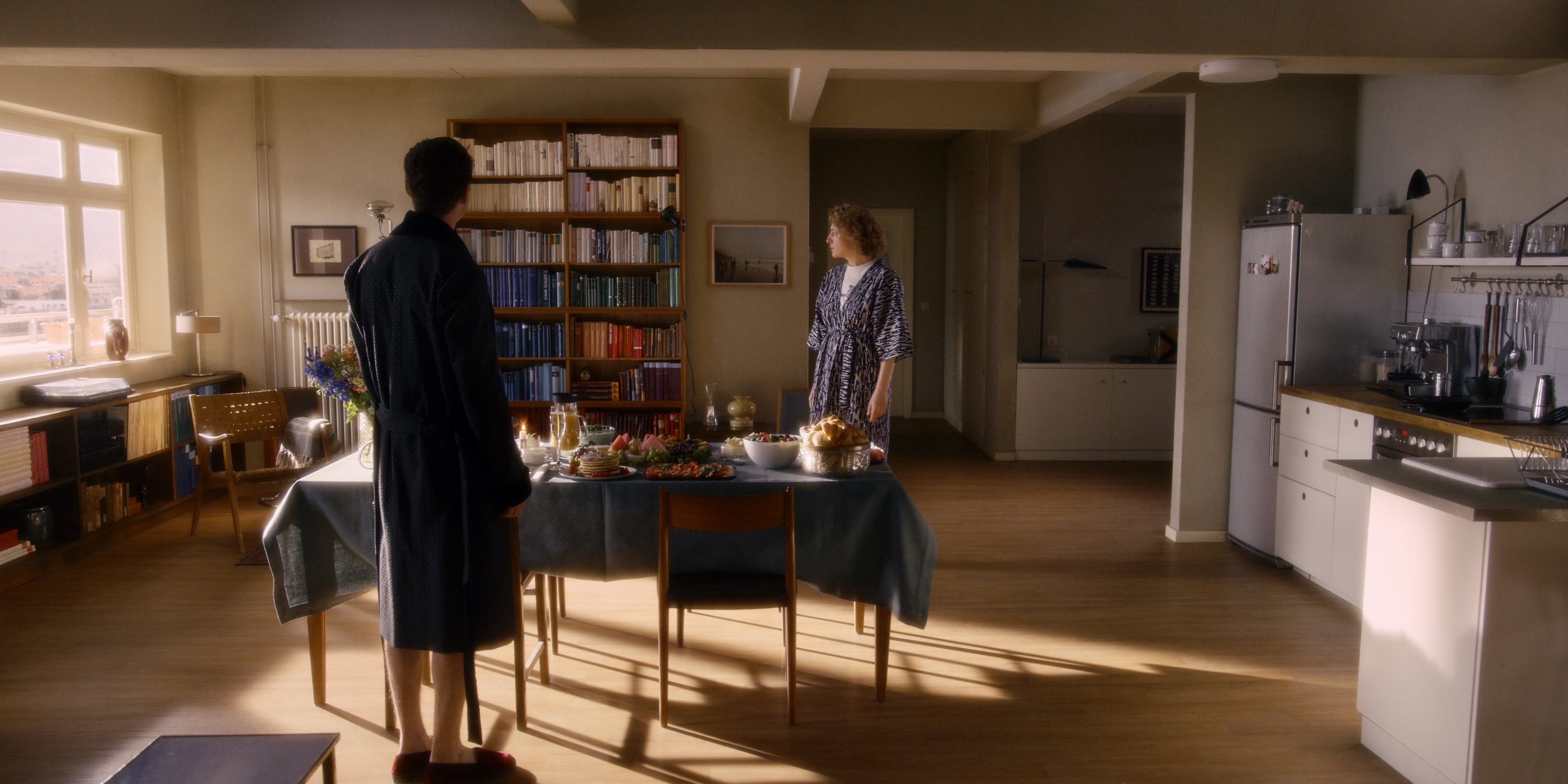
Alma proves to be completely dismissive of Tom as an ideal mate but agrees to let him live with her for a three-week trial period – in separate beds. She also makes it clear she has no desire for physical intimacy with him for which he has no algorithm for comprehending. After all, his main programming objective is to please Alma and meet her every need.
Director Schrader does a wonderful balancing act of making AI seem creepy and misguided while at the same time presenting the technology as both intriguing and potentially beneficial for improving human life. There is also a considerable amount of tension generated over whether Alma will eventually succumb to Tom’s courtship and whether that could be a disastrous development.
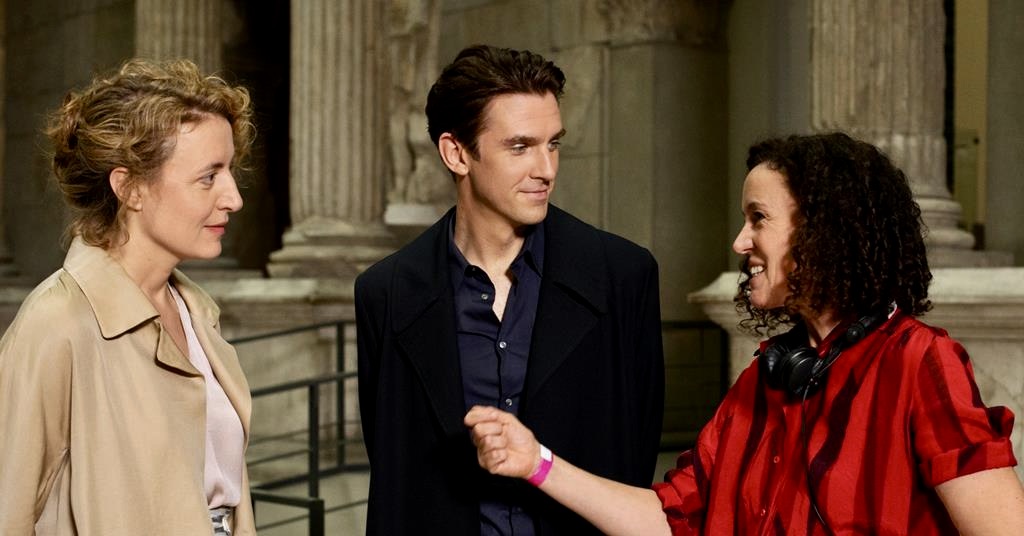
What is surprising is how the viewer’s concern for Alma – a beautifully realized portrait of a professional career woman with a complicated personality – soon begins to shift as Tom becomes less robotic and more natural in his interactions with others. Over time, you begin to question whether Alma is rejecting Tom on principle alone instead of seeing the whole picture. Who wouldn’t want someone around who could help them with their career, handle daily chores (shopping, driving, etc.), provide them with companionship, intelligent conversation and even a fulfilling sex life? Does it really matter that Tom is just a robot, has no real feelings and all of his behavior is programmed?

I’m Your Man, like its lab-experiment scenario, provides a fascinating “what if” contemplation of AI as it relates to human interaction and dating. And Alma raises all the red flags for why an AI companion/partner could be a bad thing for mankind. “Are humans really intended to have all their needs met at the push of a button?,” she asks. “Is it not our unfulfilled longing, our imagination and our unending pursuit of happiness that are the sources of our humanity? If we allow humanoids as spouses, we will create a society of addicts, gorged and weary from having their needs permanently met and from a constant flow of personal acknowledgement. What impetus would we have to confront conventional individuals, to challenge ourselves, to endure conflicts, to change? It’s to be expected that anyone who lives with a humanoid long term will become incapable of sustaining normal human contact.”

While Alma provides a good argument against mankind being dependent on AI, Tom points out in his non-judgmental way that people are imperfect creatures but their failings are also what make them human, something he could never truly understand because he is programmed to be perfect. “You’ve lost a child. At your age, you probably won’t be able to have another one,” he tells Alma. “You’re sad because you would’ve liked to have experienced that. You feel cast aside because Julian is having another baby and will forget this one. Maybe you think of your father, that you might end up as lonely as he is and you won’t even have children to take care of you. I can understand that. It’s very easy to understand.” Alma responses with “It sounds banal when you say it. Banal and self-indulgent and pathetic.” To which Tom states, “It is pathetic. Your pain is pathetic because it’s relative. But it’s also not pathetic, because it’s part of you and that’s why I love you.”

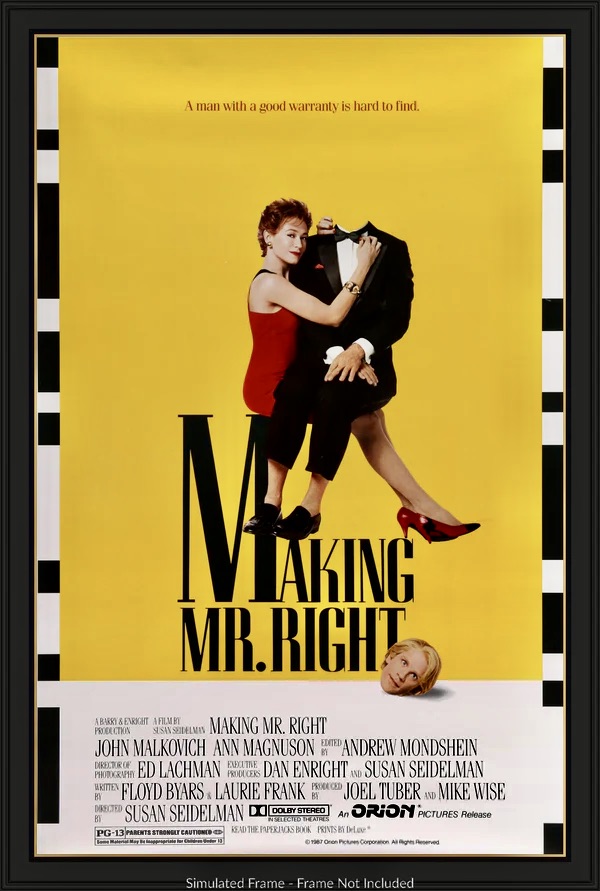
It is hard to imagine I’m Your Man working as well as it does without Maren Eggert and Dan Stevens in the main roles. Her likable but feisty skeptic makes a delightful contrast to Stevens’ wide-eyed, inquisitive cyborg, who becomes increasingly captivating by his constant recalibration of every human interaction (you can almost see the algorithms at play behind his eyes). The result is a droll screwball comedy that is more interested in making you think then generating easy laughs from sight gags or broad shtick and that’s a good thing. In some ways, it is a more timely variation on Susan Seidelman’s similarly themed Making Mr. Right (1987), in which John Malkovich played a dual role as a scientist and the android he creates in an experiment involving male-female interaction.
Schrader’s film won numerous accolades on the film festival circuit, especially at the German Film Awards where it won Best Director, Best Actress, Best Film and Best Screenplay. It was also enthusiastically endorsed by most reviewers although there were a few dissenters like Tilt magazine which seemed to have a major problem with the setting, which is actually perfect for a futuristic, sci-fi location (much like Paris was for Jean-Luc Godard’s Alphaville in 1965): “Romantic comedies flourish by their location, almost doing as much heavy lifting as the characters, but I’m Your Man seems to have picked its locales via stock photo search. Real Berliners would never hang around Alexanderplatz, possibly the most soulless, police-heavy place you could find in the entire city. Coupled with a middle-section that plods around the same few themes with indeterminate indecision, I’m Your Man sadly fails as both science-fiction and romantic comedy.”

Much more typical of the praise it received is this review by Brian Tallerico, the managing editor of RogerEbert.com, who wrote, “I’m Your Man” becomes most fascinating as it starts to examine how perhaps technology hasn’t always been the best thing for humanity… what starts with a set-up for a relatively predictable comedy gets more poignant and complex in its final act in very rewarding ways… So many movies are about loving each other’s beauty and grace—“I’m Your Man” becomes about how we have to love each other’s pathetic pain too, and, more importantly, we have to love our own. What’s more human than that?”

If a major Hollywood studio ever decides to remake I’m Your Man, it will probably be turned into a broad rom-com farce with a stronger emphasis on the rites of contemporary dating and “fish out of water” jokes about Tom’s attempts to mimic and pass as a real person. Don’t wait for that version and check out the original instead, which was released on Blu-ray by Bleecker Street Media in January 2022.

Other links of interest:
https://variety.com/2022/awards/global/maria-schrader-im-your-man-journey-oscars-1235160867/
https://cineuropa.org/en/interview/398418/
https://www.newyorker.com/magazine/2021/09/27/the-uncanny-valley-of-im-your-man
 Cinema Sojourns