
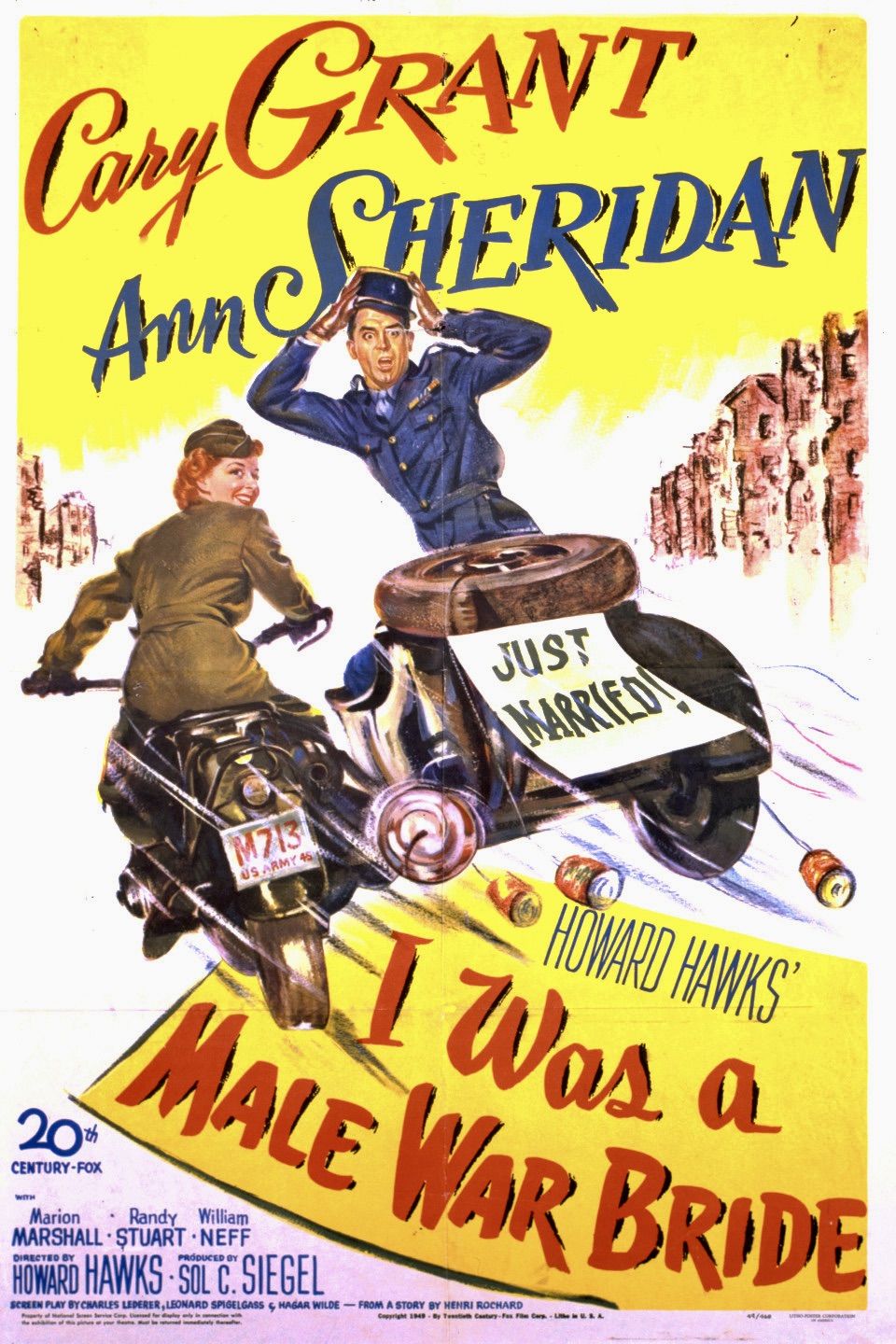
There are certain movie titles that make you pause and consider the mystery, allure or absurdity of their meaning. They can promise so much and deliver so little like Billy the Kid vs. Dracula (1966) or She Gods of Tiger Reef (1958). Or they can overdeliver on their promise to an astonished but grateful audience as in Russ Meyer’s infamous Faster, Pussycat! Kill! Kill! (1965). They can also mislead and confound you with wording so vague or fanciful that you have no earthly idea what it’s about as in Lord Love a Duck (1966), The Day the Fish Came Out (1967), or All the Fine Young Cannibals (1960), which inspired the name of the Brit pop trio that had a hit with “She Drives Me Crazy.” Then there are those completely frank and unambiguous titles that reveal the pure essence of the film in a no-nonsense manner – Teenagers from Outer Space (1959) and I Was a Male War Bride (1940). Or titles that are so much fun to say that you simply love saying them out loud just to hear the sound of them rolling off your tongue like Rat Pfink a Boo Boo (1966) or Puddin’ Head (1941).
I’ve compiled a short list of some of my favorite titles which will most likely endure through the centuries as iconic remnants of 20th century pop culture and wacko moments in movie marketing. Some are more fun than the actual film while others are ciphers that defy you to guess at the subject matter if you came across the title in a listing with no poster art.
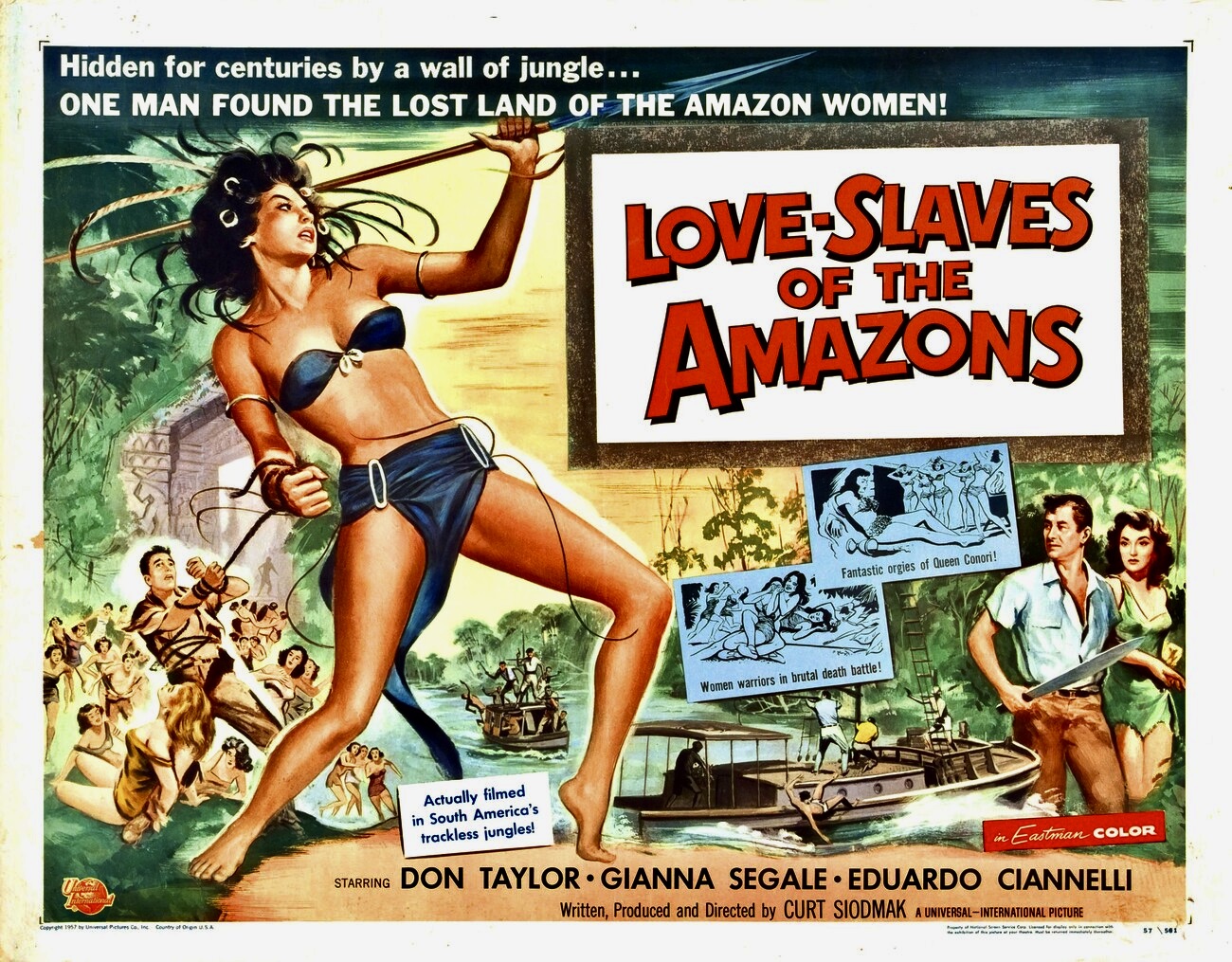
Love-Slaves of the Amazon (1957)
With poster art by Reynold Brown and an exotic title like that, how could this movie go wrong? In too many ways to count. This is a fairly typical example of fifties exploitation promotion on the behalf of studio publicists trying to lure audiences to mediocre B-movie fare. Sam Katzman and Roger Corman were masters at this, often coming up with the title first and then developing a story around it like Cha-Cha-Cha Boom! (1956) or Corman’s The Saga of the Viking Women and Their Voyage to the Waters of the Great Sea Serpent (1957). Love-Slaves of the Amazon was promoted as a scintillating jungle romp but, in reality, this is closer to a slapstick comedy. Directed by Curt Siodmak (brother of noir czar Robert Siodmak), the film starts out as a straightforward action-adventure yarn and then goes bonkers once a tribe of Amazon women capture our hero Don Taylor and subject him to various tribal rites like an enforced bath administrated by a bunch of giggling, matronly tribal elders. There are catfights, real jungle locations for a change (it was shot in Brazil) and not the usual threadbare sound stage, and several of the actors were redubbed by Paul Frees. I know it sounds like fun but it’s more plodding than amusing and it could never live up to that title.
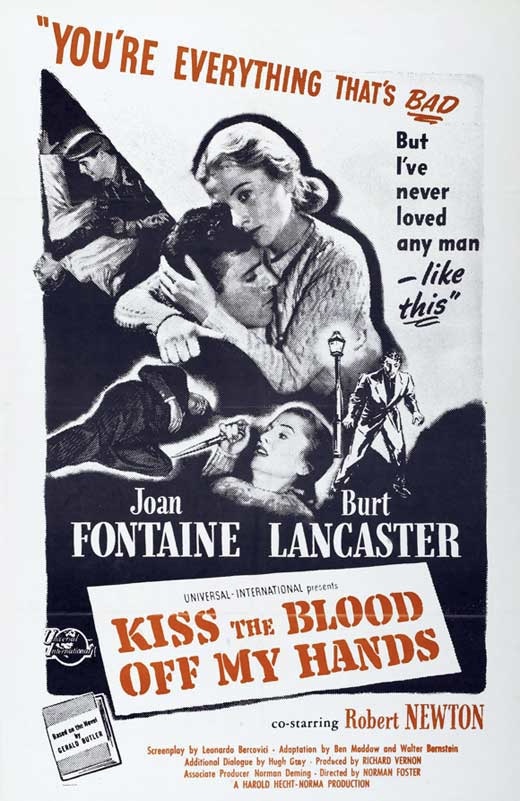
Kiss the Blood Off My Hands (1948)
Can you think of a better title for an American noir than this? This brooding post-war melodrama starring Burt Lancaster, Joan Fontaine and Robert Newton, was the first production for Norma Productions, the independent company Lancaster formed with producer Harold Hecht. It might not be in the same league with Kiss Me Deadly (1955) or Murder, My Sweet (1944) but it is does live up to its title in some regards, aided by Lancaster’s muscular performance, the glistening black and white cinematography of Russell Metty and Miklos Rozsa’s moody score.
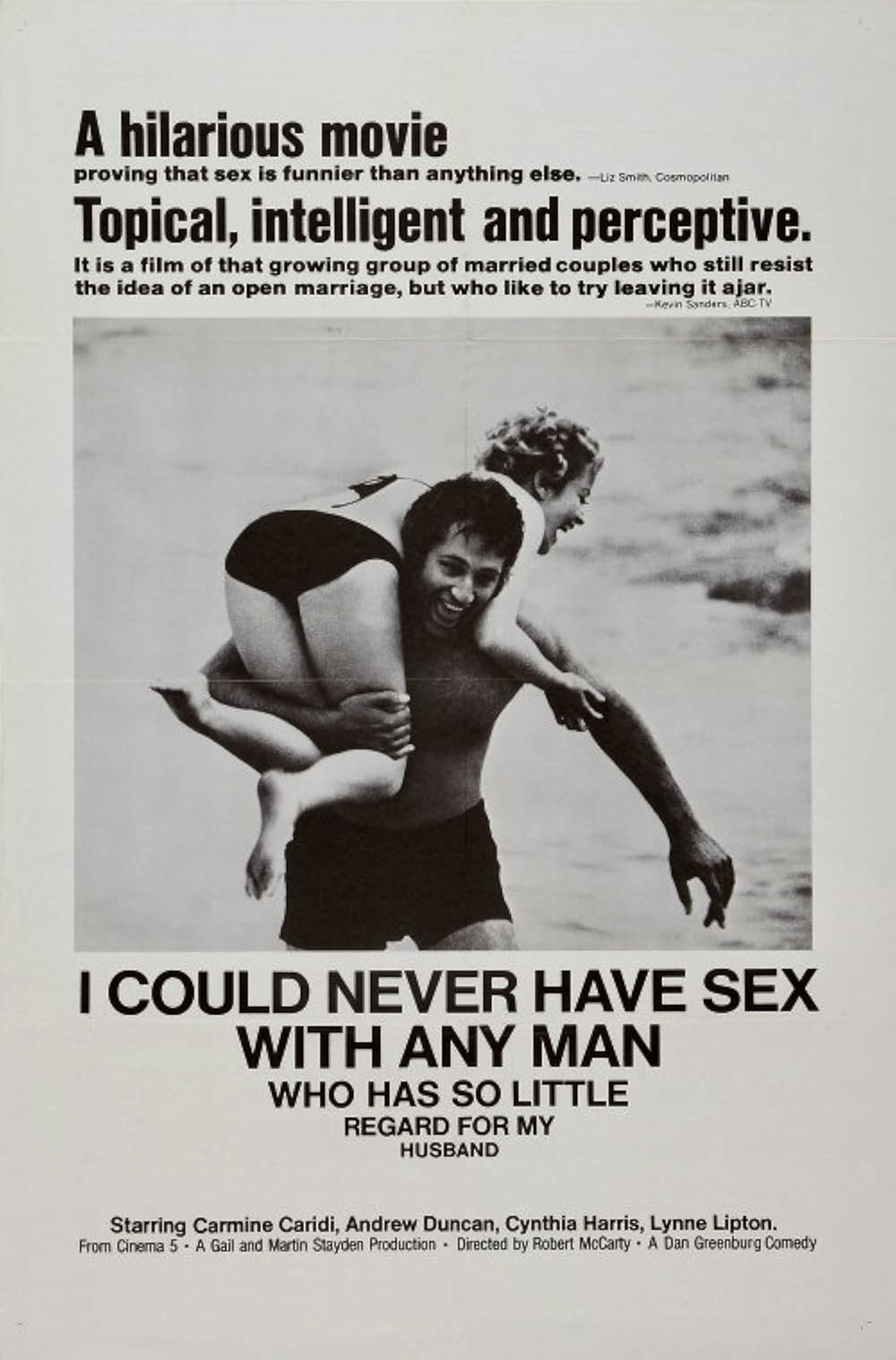
I Could Never Have Sex with Any Man Who Has So Little Regard for My Husband (1973)
This is the sort of title that would be a marquee nightmare for any theatre owner during its original run. In fact, most theatres had to resort to displaying an abbreviated version of the title – I Could Never Have Sex or I Could Never Have Sex with Any Man – which changes the meaning completely and loses the satiric nature of the title altogether. The film’s name is both the joke and the punchline and was typical of some of the offbeat adult comedies dealing with therapy sessions and marital problems being released in the seventies such as Who is Harry Kellerman and Why is He Saying Those Terrible Things About Me? (1971) and I Will, I Will…For Now (1977). Based on a novel by Dan Greenburg (author of How to Be a Jewish Mother), who also adapted the screenplay, this four character sex farce received mixed reviews and scant distribution and was often referred to as an East Coast Bob and Carol and Ted and Alice. Vincent Canby summed up what many considered the movie’s best feature in his New York Times review, ” there are some funny lines and bits of business in “I Could Never Have Sex With Any Man Who Has So Little Regard for My Husband,” a title so long that it seems intended as a bit of business in itself. It’s the sort of movie you’re supposed to start laughing at just from seeing the ads. You could also call it a cocktail party movie: it’s funnier to be told about than to sit through.”
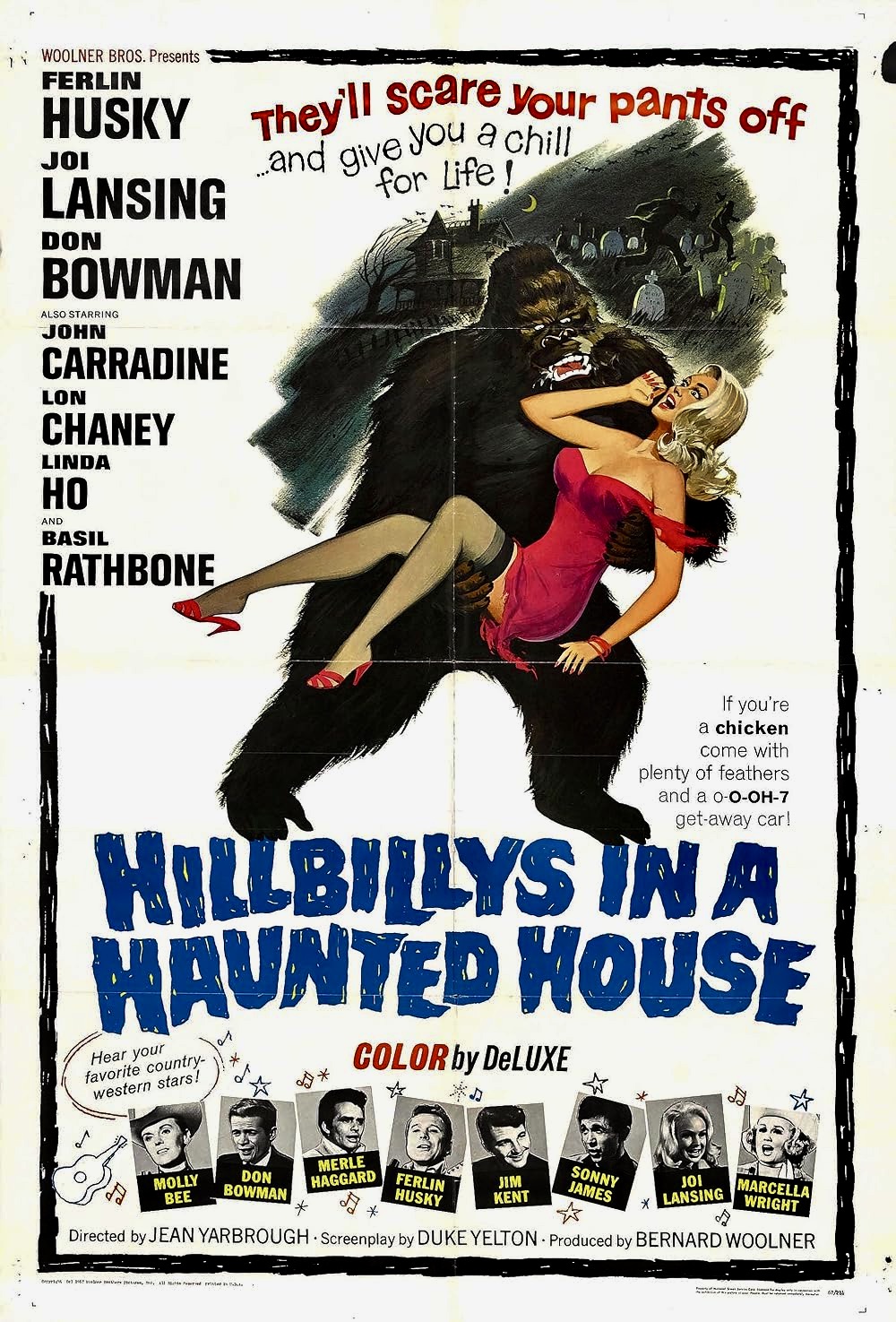
Hillbillys in a Haunted House (1967)
You might not agree but a title like this is as high concept as Cowboys & Aliens (2011) in its own way. It’s an early precursor to the genre mash-ups being created by Hollywood now as if it’s a new concept. The sixties were full of this hybrid experimentation in titling as evidenced by Jesse James Meets Frankenstein’s Daughter (1966) or Hercules in the Haunted World (1961). Here we have country music stars Ferlin Husky, Merle Haggard, Sonny James and Molly Bee mixing it up with horror stars John Carradine, Lon Chaney Jr. and Basil Rathbone in a movie directed by poverty row specialist Jean Yarbrough (The Devil Bat, King of the Zombies). I’ve never seen this and have to admit I’m curious but that title conjures up such a crazy movie in my imagination that the real thing could never be as good.
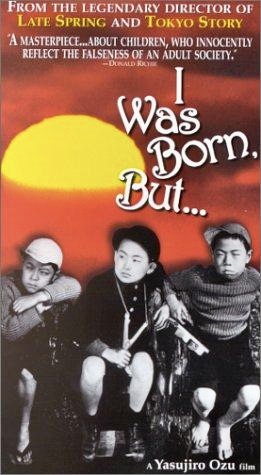
I Was Born, But… (1932)
Although the original Japanese title of this key Yasujiro Ozu film was Otona no miru ehon – Umarete wa mita keredo, I love the fill-in-the-rest-of-the-title aspect of the American translation. There’s a fun, mischievous quality at work here which mirrors the delightful film, a social satire about two young brothers who rebel against their father over a matter of honor and hierarchy in the father’s workplace. Partial or incomplete titles like I Was Born, But… engage the reader in the best way, encouraging one to use their imagination and expound on the title in the manner of a campfire tale where you past the story from one person to the next…and the story changes with the teller – I Was Born But…I Wish I Wasn’t; I Was Born But…Reincarnated as a Mushroom; etc. Ozu would later remake the film in 1959 as Good Morning (Japanese title: Ohayo).
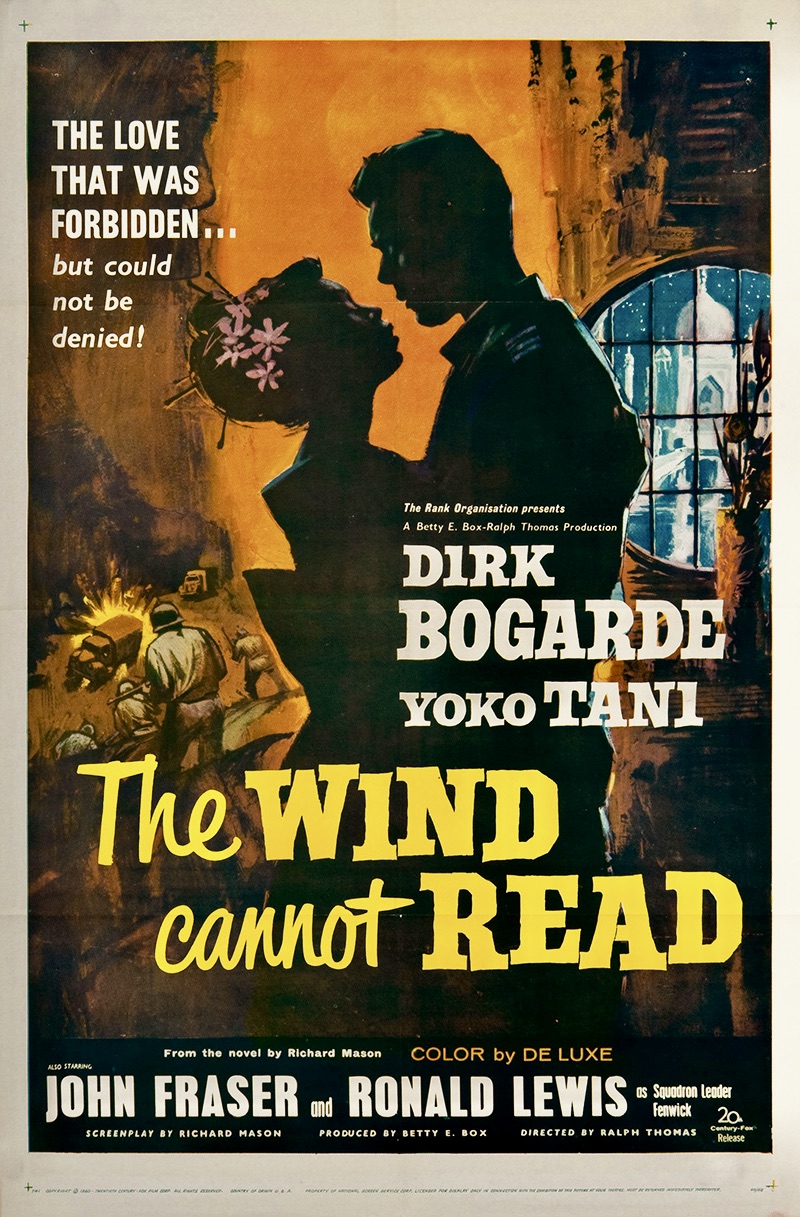
The Wind Cannot Read (1958)
Is this a subtle rebuke to human logic and our understanding of the natural world? Poetic titles like this don’t shed any light on what they’re really about and this one would only make sense to some people if it was adapted from a well-known novel (which it was). Yet there is something intriguing about a title as facetious as this and one could probably assume it’s an art film. Actually, it’s a WWII drama set in Burma about an RAF officer (Dirk Bogarde) who marries a Japanese woman in India and is later captured by the enemy. So possibly The Wind Cannot Read is the translation of an old Japanese proverb. The movie is based on the novel by Richard Mason and may well have been a bestseller in its day but the meaning is lost to us now. By the way, two other novels by Mason were also filmed – Storm Over Jamaica (1958) and The World of Suzie Wong (1960).
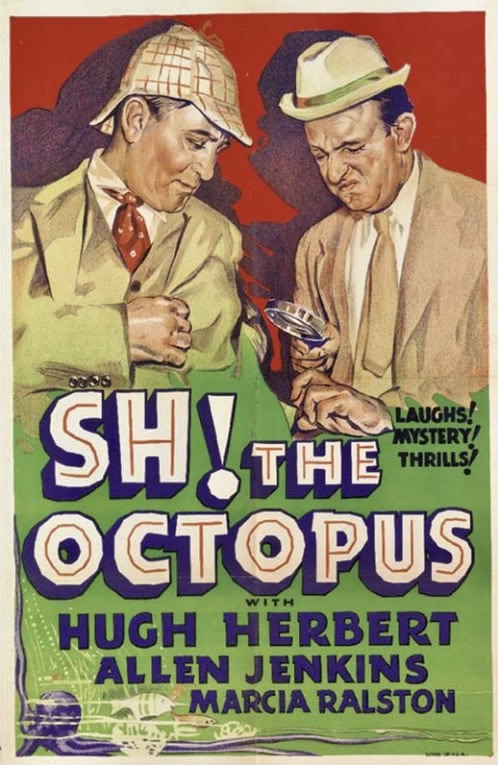
Sh! The Octopus (1937)
As obtuse in its meaning as The Wind Cannot Read is this oddly titled comedy-mystery that is set in a deserted lighthouse and involves two bumbling detectives played by Hugh Herbert and Allen Jenkins. At least some titles like Lillian Gish’s Remodeling Her Husband (1920) or What – No Beer? (1933) with Buster Keaton suggest they might be a comedy if you saw the title on a marquee. But Sh! The Octopus is the sort of title no studio-hired marketing firm would ever allow to reach theaters under that moniker today.
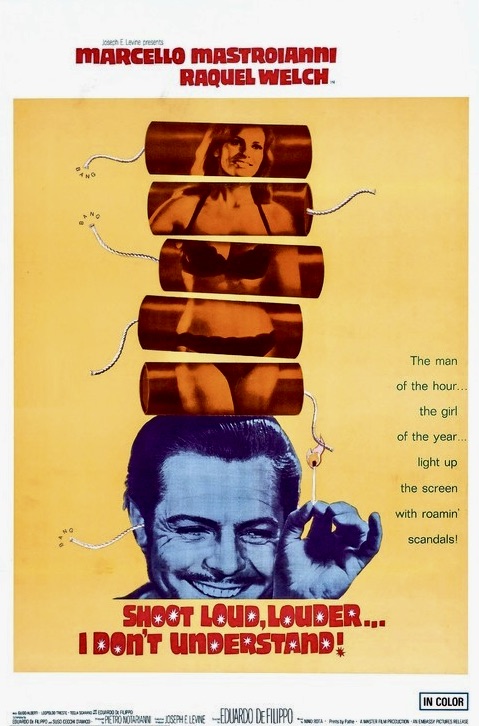
Shoot Loud, Louder…I Don’t Understand (1966)
Me neither. English translations of international titles can be just as awkward and hilariously incongruous as English-dubbed versions of international films but this one, which is a very faithful translation of the 1966 Italian film title (Spara Forte, pie Forte…Non Capisco!), is especially enigmatic. A shrill, broadly played farce with elements of fantasy and the surreal, the film title could be a spaghetti western since many from that genre were just as vague in the translation. Instead, Shoot Loud, Louder…I Don’t Understand! focuses on a man (Marcello Mastroianni) who may or may not have witnessed a gangster’s murder and the strange events that follow which involve a prostitute (Raquel Welch) and his uncle (played by the film’s director Eduardo De Filippo) who communicates with fireworks as a sort of Morse code.
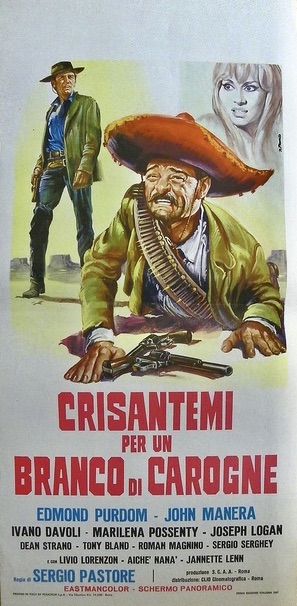
Speaking of spaghetti westerns, there are many titles that are quite original and memorable such as Sergio Leone’s Duck, You Sucker! (aka A Fistful of Dynamite, 1971), Django Kill…If You Live, Shoot! (1967), and Have a Good Funeral, My Friend…Sartana Will Pay (1970). But a favorite title is Chrysanthemums for a Bunch of Swine (Italian title: Crisantemi per un Branco di Carogne, 1968) which sounds like a parody of No Orchids for Miss Blandish (1948), which was based on the James Hadley Chase novel.
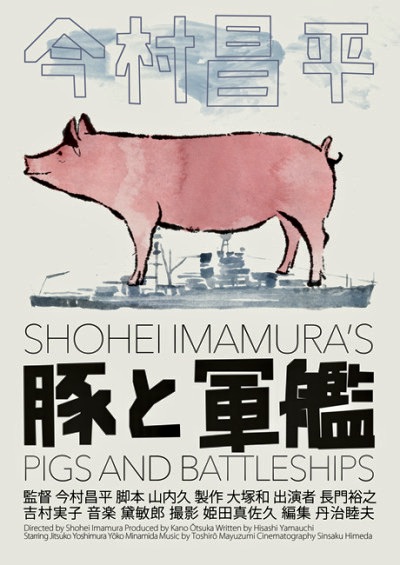
Pigs and Battleships (1961)
While I’m on the subject of foreign film titles translated into English, I have to tip my hat to the Japanese film industry for an abundance of bizarre and awe-inspiring offerings. Pigs and Battleships sounds like it could be some nutty anime but for once there is truth in advertising as this brilliant post-WWII satire from Shohei Imamura really does deliver what it promises in its climax: snorting, squealing pigs go on a wild stampede through the streets of Yokosuka, which is under the occupation of the U.S. Navy as evidenced by the many American sailors everywhere on shore leave from their battleships. I also like director Minoru Kawasaki’s humorous approach to film titles and genre offerings with The Calamari Wrestler (2004), Executive Koala (2005), and The World Sinks Except Japan (2006), among his more whimsical but twisted features.

Of course, if you’re looking for the really outlandish titles, the Japanese “pink film” genre has its share of lulus such as Go, Go…Second Time Virgin (1969), Beautiful Teacher in Torture Hell (1985) and the offensively titled Please Rape Me Once More (1967). One of the most distinctive though is Inflatable Sex Doll of the Wastelands (1967), which also goes by the dissimilar title of Dutch Wife in the Desert, and conjures up an image of overwhelming loneliness and alienation instead of sexual titillation.
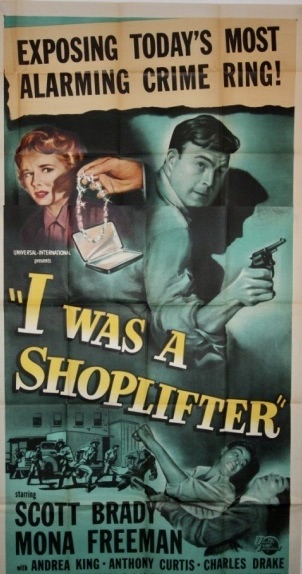
I Was a Shoplifter (1950)
Expose films have always been popular and the best ones come ready made with the most exploitable aspect of their subject matter built into the title. No need for tag lines or anything else on the poster. This one, a low-budget B movie police docu-drama starring Scott Brady with Tony Curtis and Rock Hudson in minor roles, is a favorite because of its laughably tame confessional; the plot is actually about a shoplifting racket and not a singular operator. Other great expose titles include Sam Fuller’s I Shot Jesse James (1949), I Married a Monster from Outer Space (1958), I Passed for White (1960) and the Toshiro Mifune war drama, I Bombed Pearl Harbor (1960). Which leads us to a rash of films that begin with “I Was a……” starting as early as 1933 with I Was a Spy and continuing through the forties and early fifties (1951’s I Was a Communist for the F.B.I.) when the trend was revived for younger audiences.
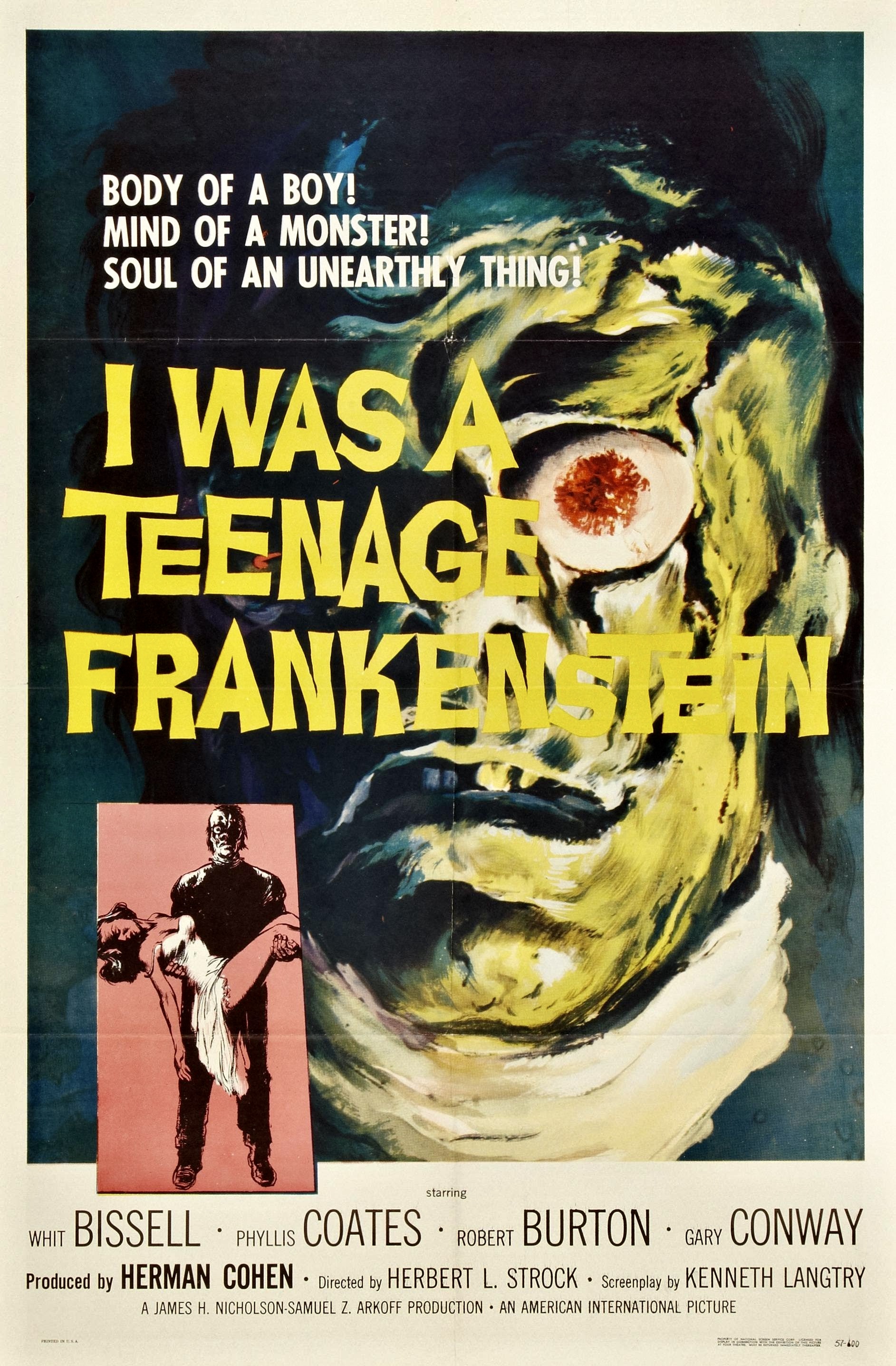
I Was a Teenage Frankenstein (1957)
Baby boomers and other older segments of the movie-going public always complain about the lack of good films for their age group and interests these days as the Hollywood studios pursue the 17-30 demographic. But it’s always been this way. At least since the 1950s, if not before. That was the decade when the word “teenager” became such a sure-fire audience hook that it was worked into as many titles as possible but probably the most iconic and earliest examples of it were I Was a Teenage Frankenstein and I Was a Teenage Werewolf (also 1957). Other infamous titles include Teenage Cave Man (1958), Teenage Monster (1958, aka Meteor Monster), Teenage Doll (1957), Teenage Zombies (1960), Teenage Millionaire (1961), Teenage Gang Debs (1966) and Teenage Mother (1967).
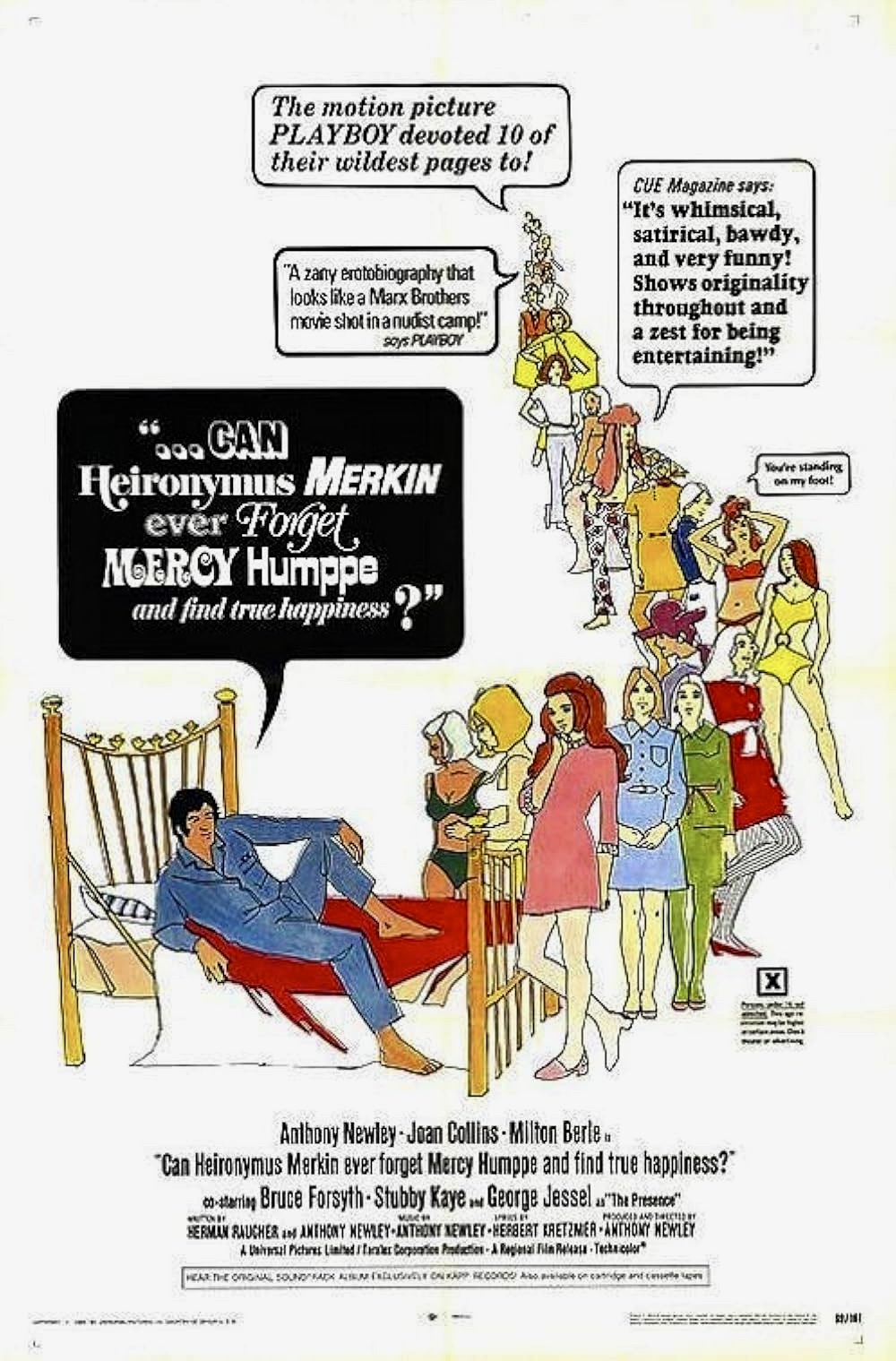
Can Heironymus Merkin Ever Forget Mercy Humppe and Find True Happiness? (1969)
Don’t you love the sixties? With the rise of countless indie distributors and exploitation film releases, promoters got wildly imaginative with their product. But this particular film was an indulgent ego-trip by writer/director/producer/composer and star Anthony Newley, who was married at the time to his co-star Joan Collins. Set within a film-within-a-film framework, the movie depicts the life and times, in autobiographical form, of a sex-obsessed film director who has put his thinly disguised life story on the screen accompanied by musical numbers such as “Oh What a Son of a Bitch I Am.” It was given an X rating at the time and many critics wrote it off as a poor imitation of Fellini’s 8 1/2 but the title is so bad it’s good. Other favorite titles of the swingin’ sixties include How to Stuff a Wild Bikini (1965), The Incredibly Strange Creatures Who Stopped Living and Became Mixed-Up Zombies (1964), Voyage to the Planet of Prehistoric Women (1968), directed by Peter Bogdanovich, Oh Dad, Poor Dad, Mama’s Hung You in the Closet and I’m Feelin’ So Sad (1967), based on the off-Broadway play by Arthur Kopit, and Confessions of an Opium Eater (aka Souls for Sale, 1962), which sounds like a drug addiction drama but is really a costume melodrama starring Vincent Price set in 19th century Chinatown in San Francisco.
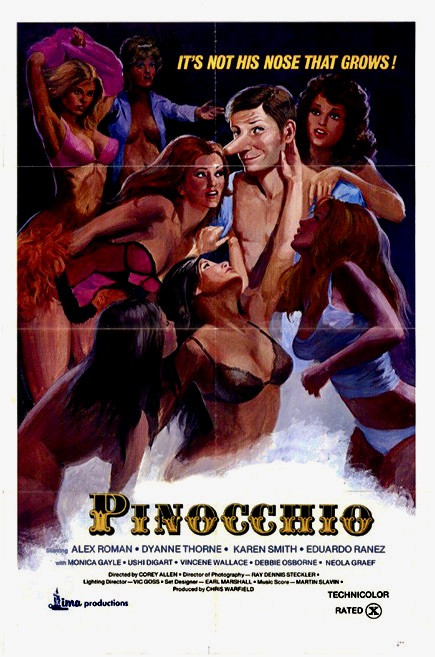
The Erotic Adventures of Pinocchio (1971)
If exploitation genre film titles got more creative and far out as the sixties passed into history and the seventies began, soft core and X-rated sex films became equally adventurous in their titling, never missing the opportunity to parody a more famous film title such as Sex Family Robinson (1968), Thar She Blows! (1968), Midnight Plowboy (1971) and Romancing the Bone (1984). My favorite though because of its more faithful, simple approach is The Erotic Adventures of Pinocchio (aka Pinocchio) which leaves a lot to the imagination. The poster, on the other hand, is guilty of too much information and ruins the kinkiness by leading you by the nose.
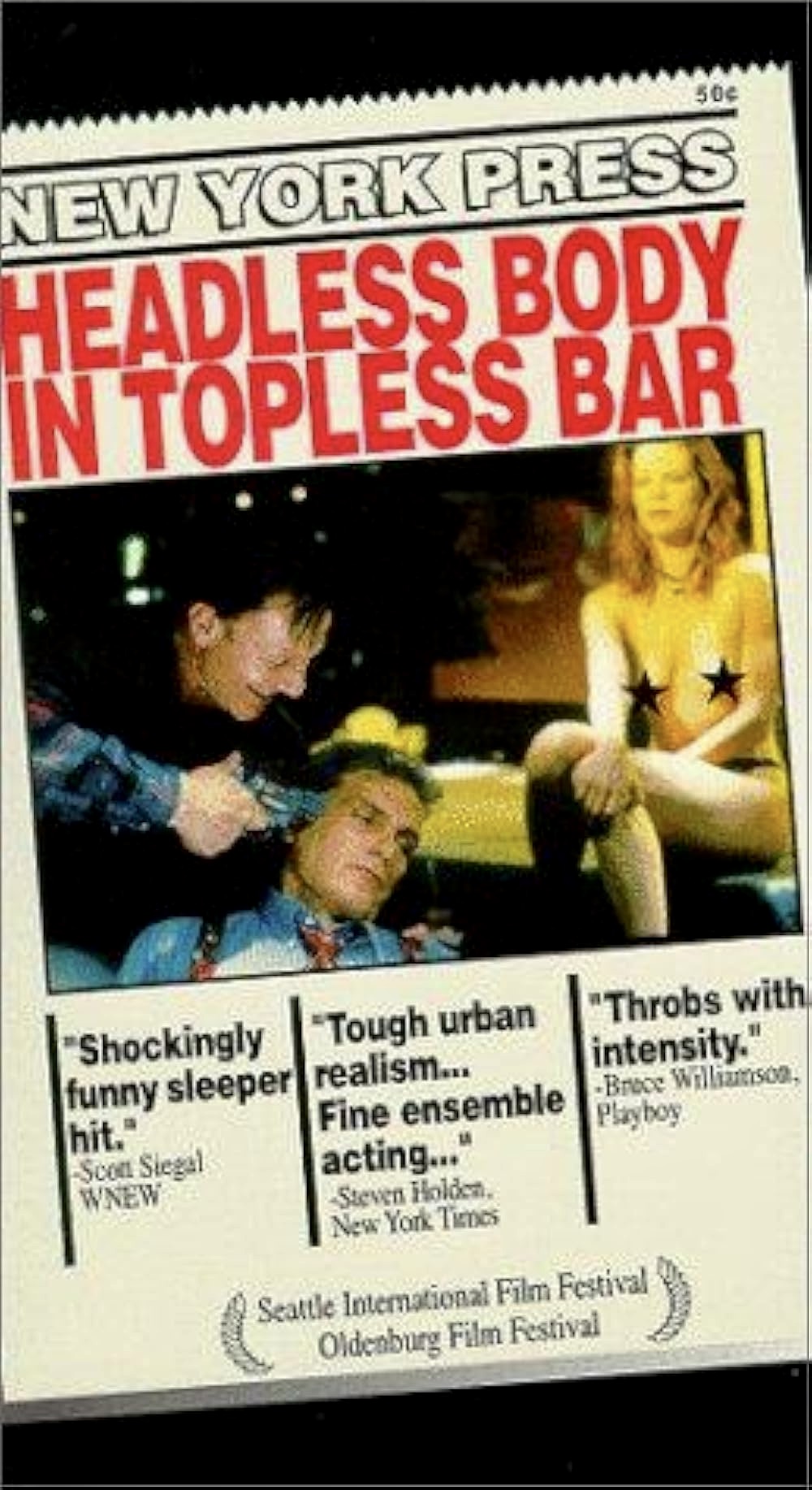
Headless Body in a Topless Bar (1995)
Believe it or not, there are a lot more movie titles about missing limbs or decapitated and severed heads than you’d imagine. This one, which sounds like it was stolen from the headline of a New York City tabloid, is the wittiest. A black comedy about a bunch of people held hostage by a deranged gunman, Headless Body in a Topless Bar sounds like an unofficial remake of the 1950 noir Dial 1119 and stars an eclectic cast that includes Raymond J. Barry, David Selby and Paul Williams (The Phantom of the Paradise). Other titles that make the list include the Joe Pesci black comedy 8 Heads in a Duffel Bag (1997), Sam Peckinpah’s Bring Me the Head of Alfredo Garcia (1974) and The Man Who Reclaimed His Head (1934), which really isn’t a fantasy at all but a drama about a pacifist journalist (Claude Rains) who is driven insane by war profiteers.
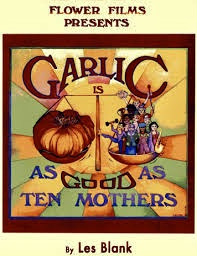
The list could go on and on with documentary titles like Les Blank’s Garlic is as Good as Ten Mothers (1980) or a German Edgar Wallace thriller like The Fellowship of the Fog (1959, aka Face of the Frog) and, in some cases, you could showcase individual directors such as Lina Wertmuller or those nutty filmmaking brothers, George and Mike Kuchar – all of whom have a genius for strange but alluring titles.
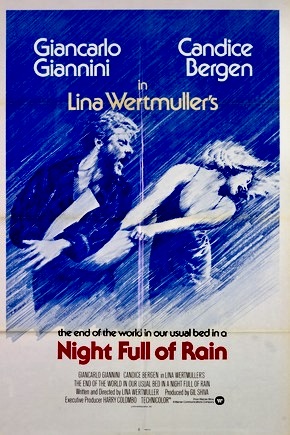
Ms. Wertmuller, who enjoyed a brief period of critical acclaim and international renown in the seventies with such films as The Seduction of Mimi (1972) and Love & Anarchy (1973), would soon become a parody of herself as her titles became longer and more ambitious like Swept Away…By an Unusual Destiny in the Blue Sea of August (1974), The End of the World in Our Usual Bed in a Night Full of Rain (1978) or A Joke of Destiny Lying in Wait Around the Corner Like a Robber (1983) and, best of all, Too Much Romance…It’s Time for Stuffed Peppers (2004).
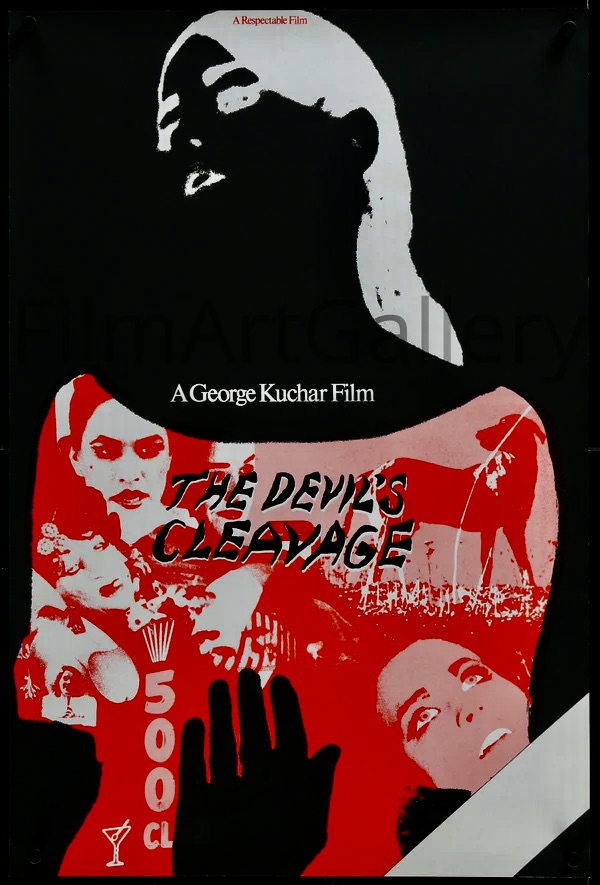
Of course, the underground filmmakers George and Mike Kuchar easily rival Ms. Wertmuller’s overbaked concoctions with such films (by George) as Pussy on a Hot Tin Roof (1963), Hold Me While I’m Naked (1966), House of the White People (1968) and The Devil’s Cleavage (1974). Mike’s efforts are just as much fun and include A Tub Named Desire (1956), I Was a Teenage Rumpot (1960), Tootsies in Autumn (1963) and Sins of the Fleshapoids (1965). I know I’m probably leaving out some wonderfully weird and legendary movie titles but that’s where you come in.

Other links of interest:
https://www.theguerrillarep.com/blog/how-to-title-your-film-so-it-sells
https://www.filmcomment.com/article/top-20-longest-movie-titles/
 Cinema Sojourns