
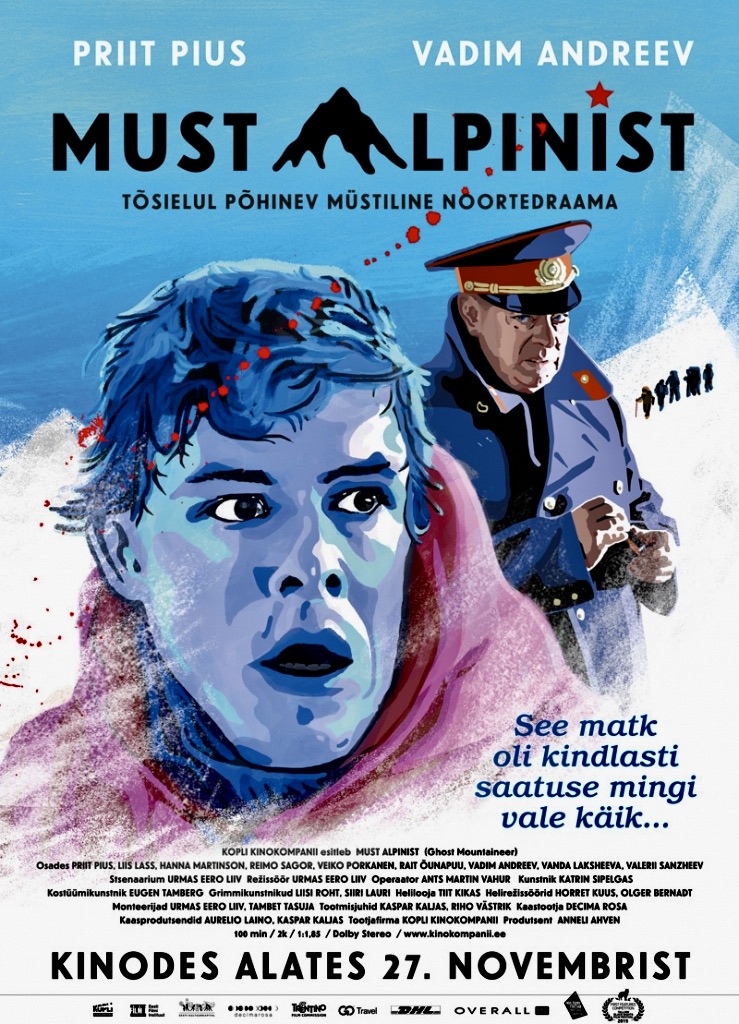
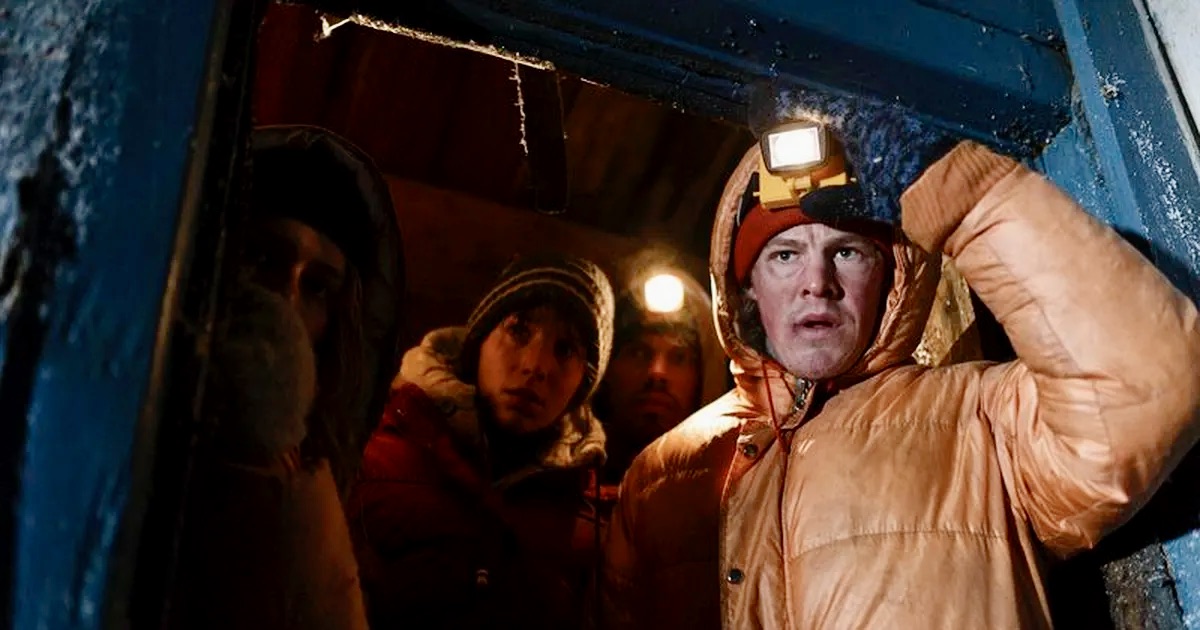
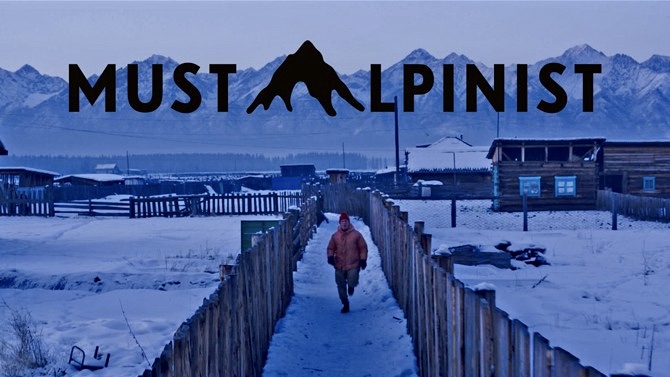
There are no actual ghosts in Must Alpinist (English title: Ghost Mountaineer, 2015) but all of the main protagonists – a six member team of college students – face imminent danger and possible death in the treacherous landscapes and freezing weather of the Buryatian mountains in Siberia. Based on a real incident experienced by the film’s director, Urmas E. Liiv, in 1989, this is one of the rare feature films made in Estonia by a native filmmaker and it turns out to be an unusual hybrid of various genres.
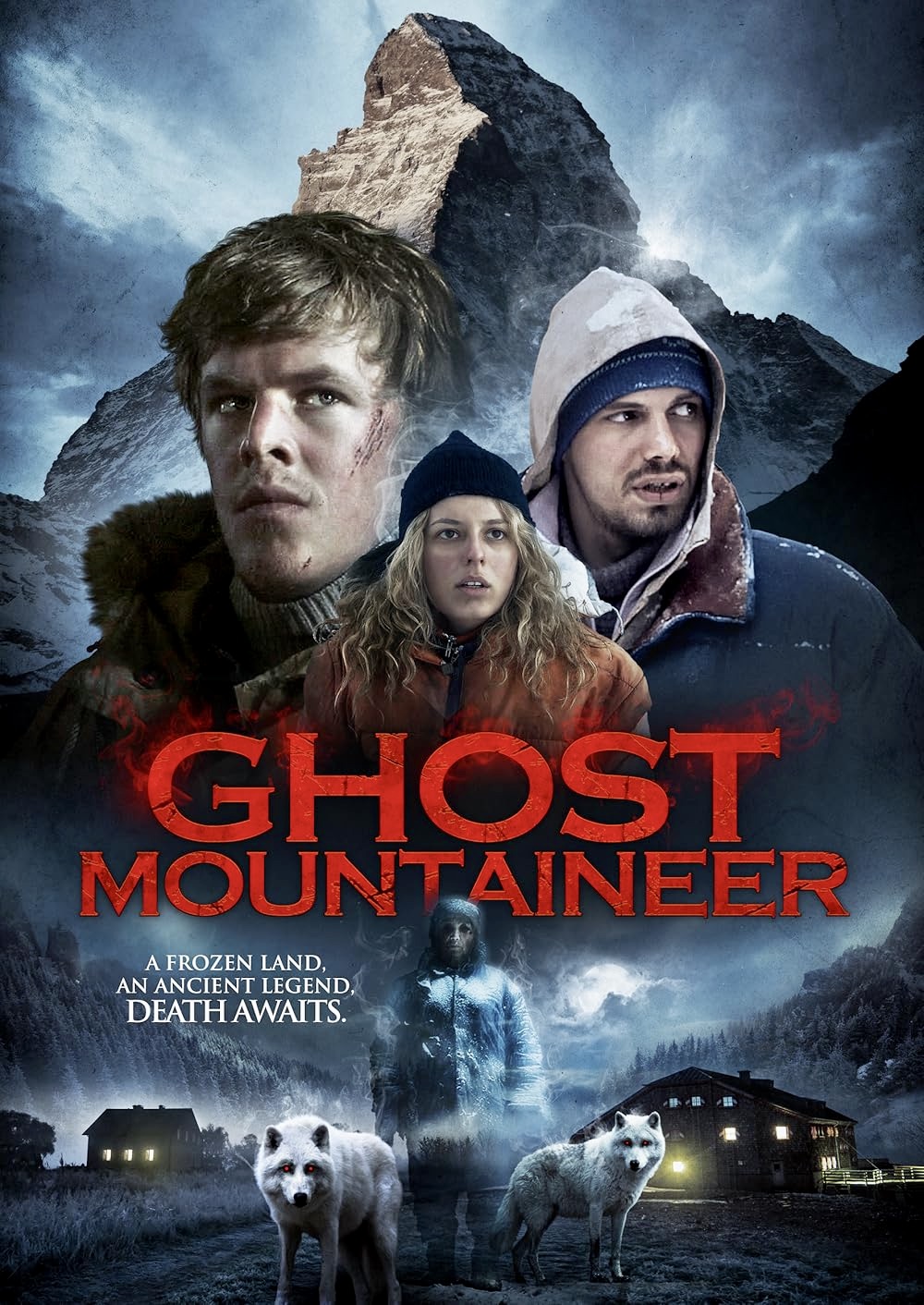
The first half of the movie begins as a playful holiday romp for six young, adventurous hikers that quickly turns into a survival thriller. The second half, however, transitions into a culture clash melodrama with a political slant. Add to that an escalating sense of paranoia, some supernatural touches and a flirtation with the found footage genre and you have an intriguing if uneven novelty.
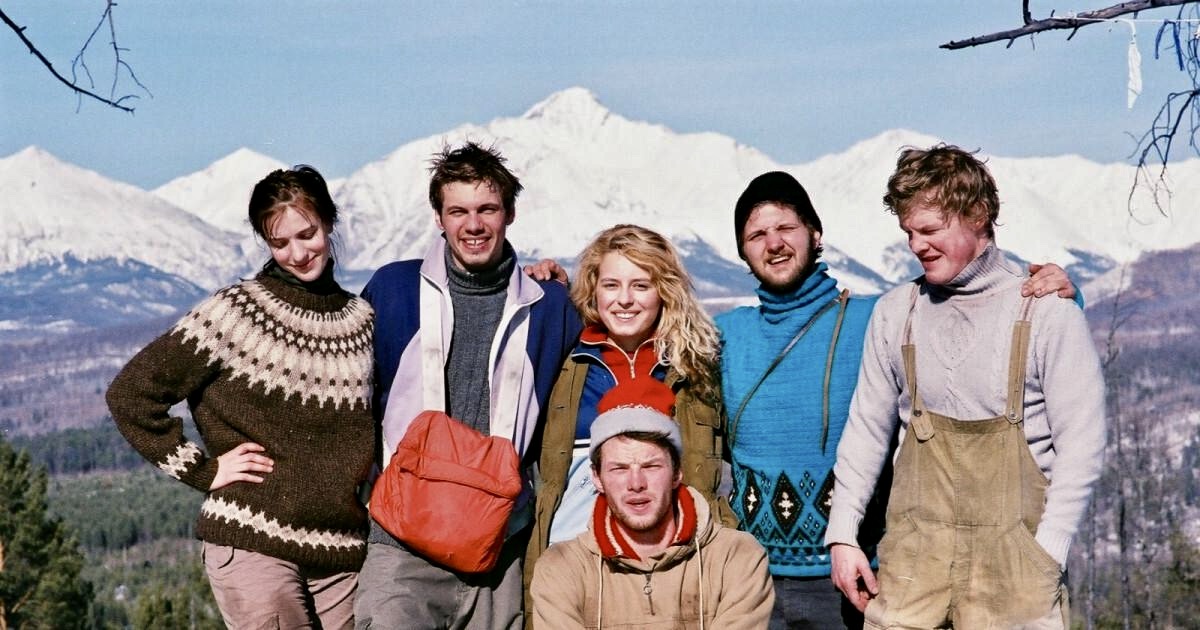
The ringleader for the mountain trek is Olle (Reimo Sagor), a geology student who is mainly interested in discovering and bringing back samples of the gem-like mineral nephrite, a type of jade. When he isn’t able to assemble his usual hiking team, his companion Anne (Liis Remmel) invites some friendly acquaintances to join them. They include Else (Hanna Martinson), a medical student who quickly earns the nickname Marleen (as in Dietrich) for her blonde beauty, and three aspiring biologists, Eero (Priit Pius, a stand-in for the film’s director), Indrek (Rait Ounapuu) and Margus (Veiko Porkanen), who turns out to be addicted to sedatives – not a good fit for a mountaineer.
Olle is clearly not impressed by this rowdy, party-hardy entourage and becomes increasingly sullen and uncommunicative as the group trudges deeper into an icy, wind-swept wilderness. By the sixteenth day of the climb, the group has become lost due to an inaccurate map and the relationship between Olle and the fun-loving Eero is pushed to the breaking point. When Olle goes off on a pair of skis to find a safe pathway off the mountain, Eero tries to follow him but is buried in a sudden avalanche. Luckily, he digs his way out of the snow but Olle appears to have disappeared.
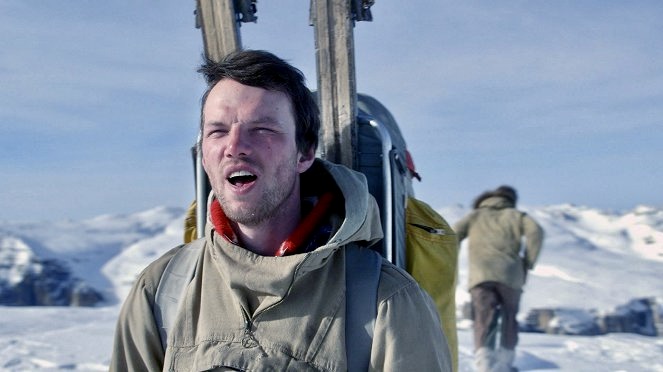
The group frantically digs for Olle in the avalanche snow but never find him and are eventually forced to make their way to the closest Buryatian village for help. Instead of a friendly welcome, the students are immediately treated with suspicion and hostility by the local militia officer (Vadim Andreev), a mean-spirited Russian who hates his life in this remote hellhole. The villagers in turn are superstitious and unhelpful and the five backpackers soon find themselves trapped with the officer confiscating their passports.
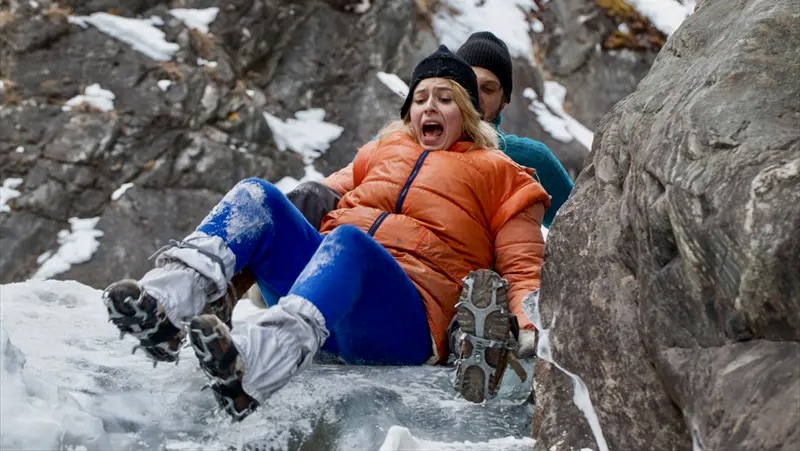
Things go from bad to worse as the students find themselves suspected of killing Olle. As fear takes hold, their group dynamic is dramatically altered with Eero stepping up to take charge while the others alternate between helplessness and panic. But even as the narrative grows darker with the discovery of a corpse on the icy slopes, a gory autopsy and frightening hallucinations interrupting reality, we know some hikers will survive because their voices are heard narrating their tale at the outset.
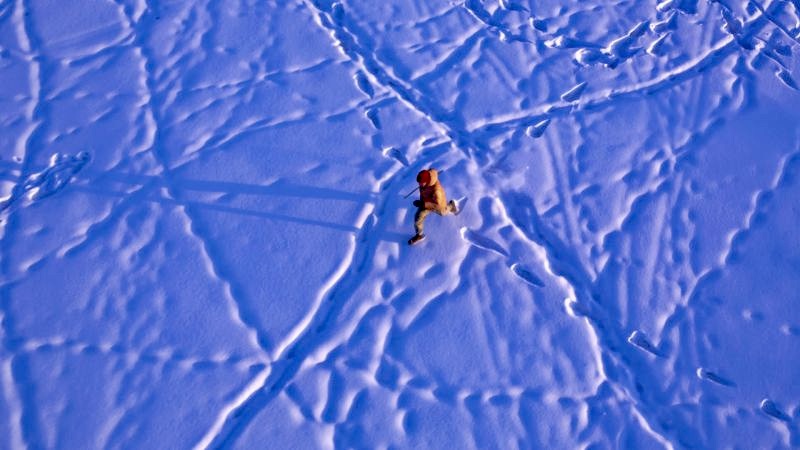
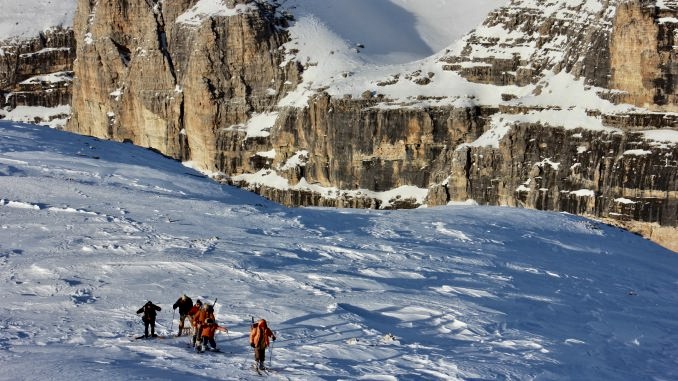
Ghost Mountaineer has a lot of qualities working in its favor – dazzling cinematography (by Ants Martin Vahur), tense and realistic hiking sequences and an impressive natural setting (much of it was shot in the Fassa Valley in the Dolomites near Trentino, Italy with some location footage in Kyren and Buryatia, Russia). And the remote and backward village where the students find themselves prisoners is as creepy and mysterious as the island community that was home to a homicidal cult in 1973’s The Wicker Man.
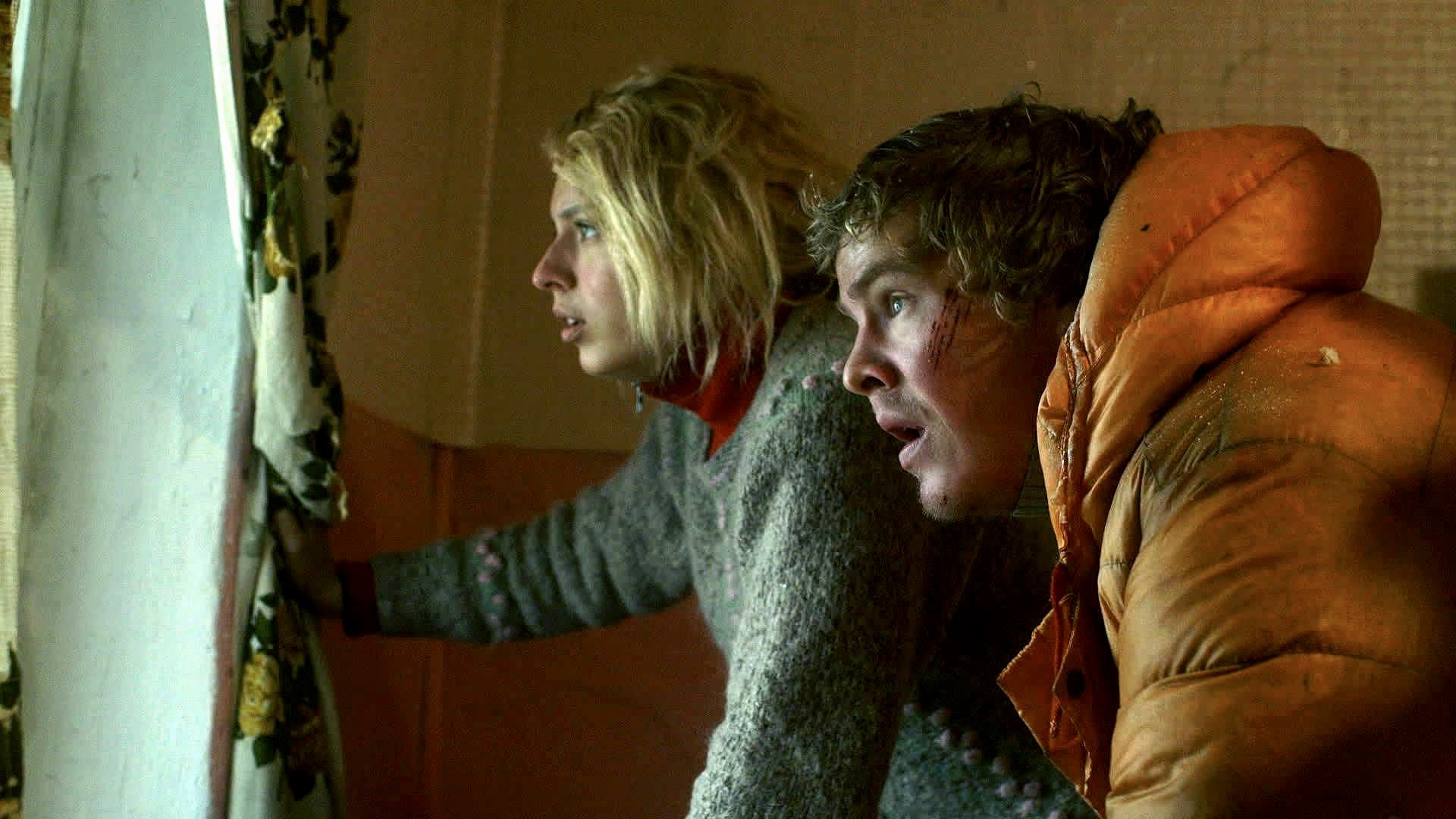
The performances are adequate but only Pius’s Eero emerges as a fully, fleshed-out character among the six hikers. Much more memorable are the sinister supporting characters like the corrupt militia officer who accuses the Estonian students of being German fascists while possibly plotting to frame them for murder. Fotik (Valerii Sanzheev), a local guide with bad teeth and a gleeful laugh, also becomes increasingly weird as he fixates on Anne, even drawing pornographic sketches of her and then masturbating to a violent video.
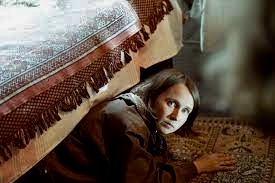
Less successful is director Liiv’s attempt to weave supernatural aspects into the film’s fabric. Eero’s campfire horror tale of a ghost mountaineer provides a promising set-up but it doesn’t pay off effectively when the specter is occasionally glimpsed in the distance during one of Margus’s hallucinations. In fact, the constant interruption of reality in the second half of Ghost Mountaineer by various nightmares and visions of the group members is more confusing than suspenseful and starts to seem like a gimmick, especially a scene where Anne is axed to death by an unidentified stranger (a false jump scare).
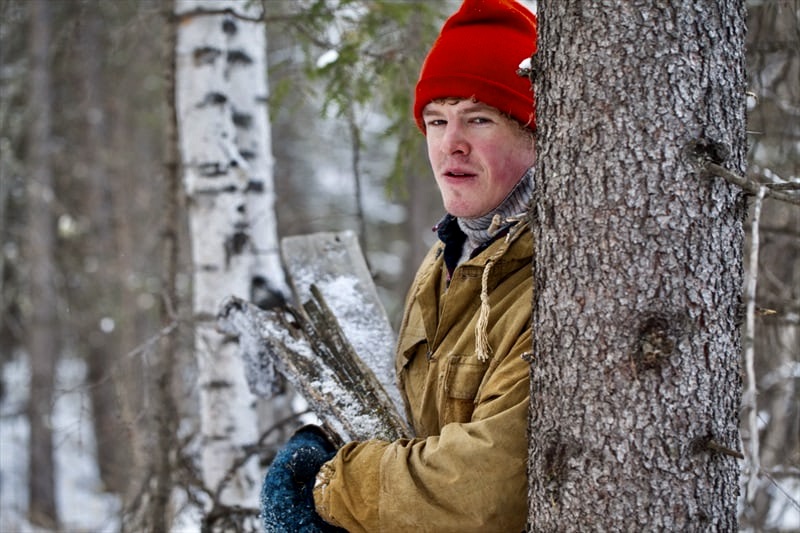
Liiv even has a few of the hikers recall events from the trek that they forgot but then remember via flashback in the film’s second half such as Eero entering a sacred area of the forest designated by colorful strips of fabric placed there by an indigenous tribe. The idea that Eero has entered a holy place and unleashed a curse is an effective horror trope but the director never develops it beyond this throwaway scene.
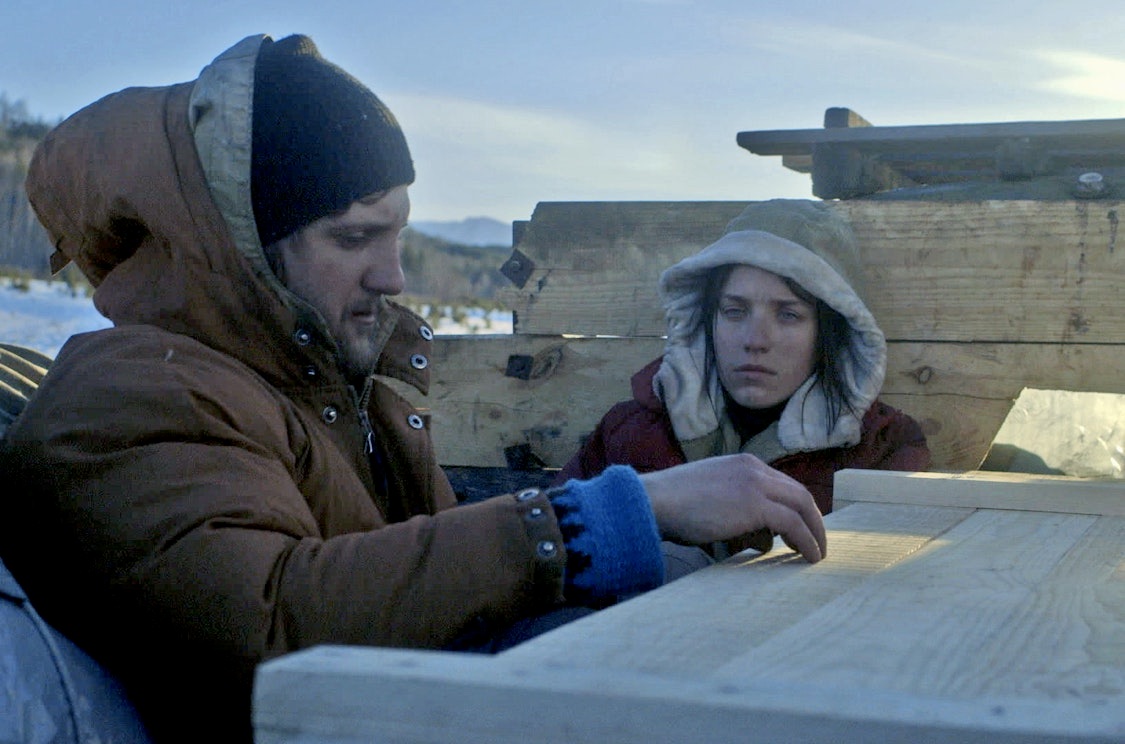
Despite these unproductive distractions, it is still encouraging to see a genre film with ambitions to be more than just a standard thriller and the culture clash that occurs between the college students and the local villagers and Russian bureaucrat provides a dysfunctional glimpse of rural life in Russia before the Soviet Union collapsed in 1991.
When Ghost Mountaineer was released in 2015 it was screened at several film festivals in Europe and garnered some better-than-average reviews with The Hollywood Reporter noting that “…Liiv somehow salvages a sporadically gripping thriller out of this sprawling mess, if only because suspense is greatly amplified when a film dispenses with fixed genre rules and narrative logic…the lurid plot twists may even prove a selling point to fans of more cultish Euro-pulp cinema. Concluding with an update on what the real survivors of these tragic events are doing now, Ghost Mountaineer is a flawed but intriguing cocktail of fact, fiction and folklore.”
David Gonzalez of Cineuropa voiced a similar opinion, stating that “Ghost Mountaineer‘s look at paranoia and nearly inexplicable…events is fundamentally based on editing tricks, attempting to flood the viewer’s senses with fiery images and sound cuts, by-the-numbers frights and bold insertions of different imagery. Despite all of this, Liiv’s first feature, filled with energy as it is, has a raison d’être: it is the telling of a story based on real events that happened to him.”
As far as I know, Ghost Mountaineer never found a theatrical distributor in the U.S. and is unavailable for purchase on Blu-ray or DVD. However, you can stream it on Kanopy (with English subtitles). The language in the original film is Estonian and Russian with some tribal dialects from the Buryatian region.

Other links of interest:
https://vocal.media/horror/unearthly-terror-in-the-ural-mountains
https://www.hollywoodreporter.com/movies/movie-features/estonia-film-productions-tallinn-1235274501/
https://dokweb.net/database/persons/biography/f4cae281-ec4f-4be2-90cf-f5d351f2a9b6/urmas-eero-liiv
 Cinema Sojourns