
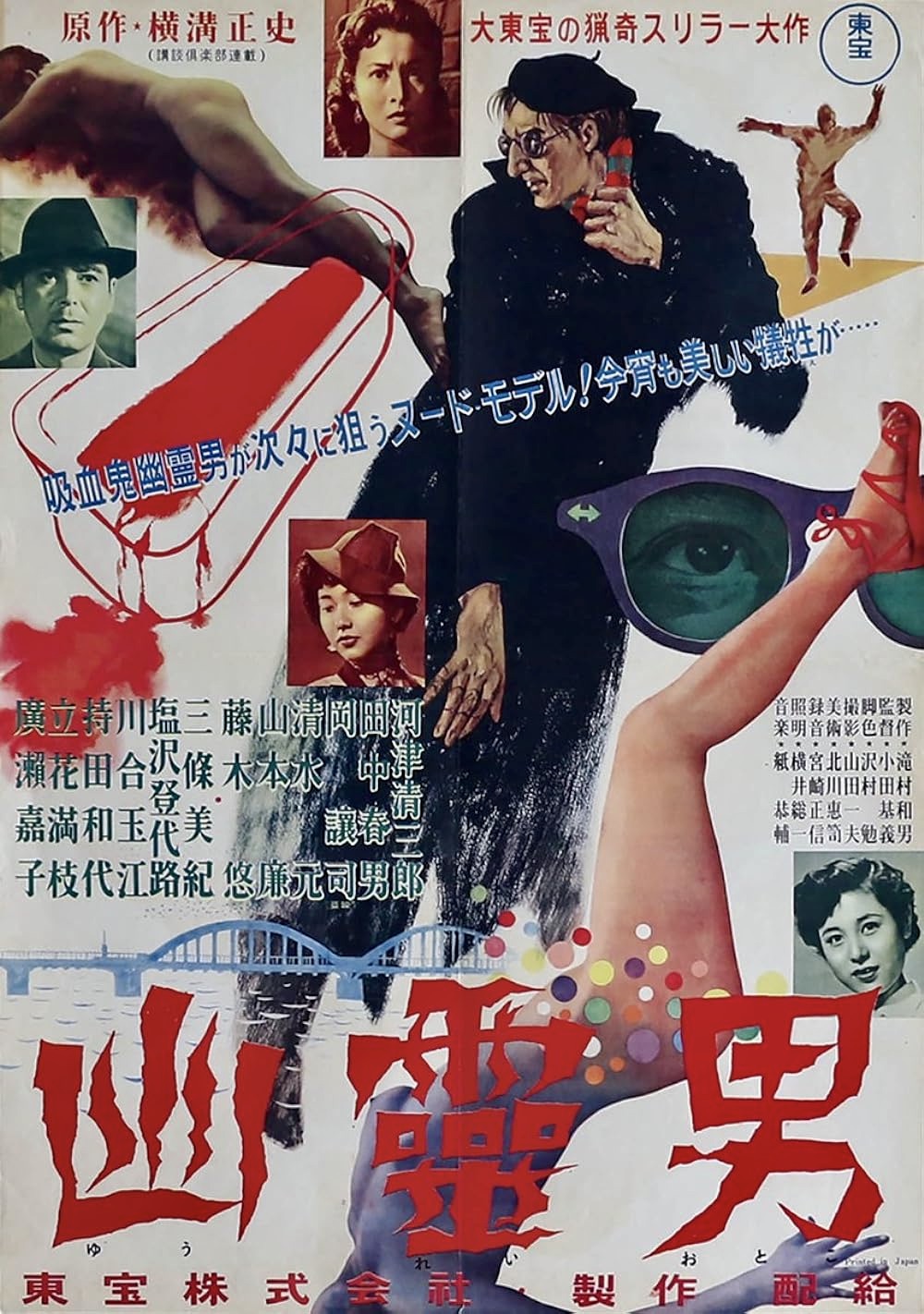
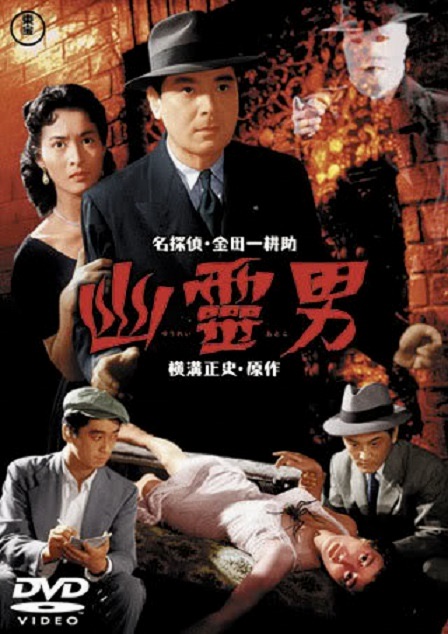
Novelists who specialize in murder mysteries and thrillers with detective heroes are not exclusively British and American but practitioners of a worldwide literary tradition, especially in Japan where Edogawa Ranpo, Soji Shimada and Seishi Yokomizo are considered masters of the form. Yokomizo, for example, was so popular and prolific that he was often called the “Japanese John Dickson Carr,” a writer of American detective fiction who created such famous sleuths as Dr. Gideon Fell and Sir Henry Merrivale in his novels. Yokomizo became popular in the post-WW2 years with a series of “locked room” mystery thrillers that began with The Honjin Murders in 1946 featuring the detective hero Kosuke Kindaichi. Yet it wasn’t until 1954 when the character of Kindaichi was first portrayed on the screen by actor Seizaburo Kawazu in the murder mystery Yurei Otoko (English title: Ghost Man). It was the first of several Kosuke Kindaichi film adaptations but, for its era, it was also extremely racy for its female nudity as well as its disturbing narrative which follows the crimes of a cunning serial killer who preys on models.
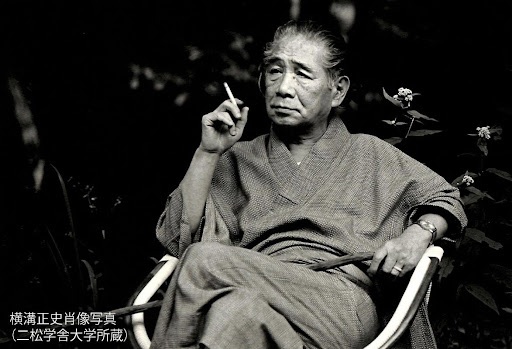
The film opens on an appropriately ominous note as a man crawls over a high wall and escapes from the Kano Mental Hospital. The fugitive is none other than the infamous painter Kazuhito Tsumuna (Ren Yamamoto), who was already an eccentric artist before being driven insane by his wife’s infidelity. He was later committed to the asylum for sucking the blood of several models in the manner of a vampire.
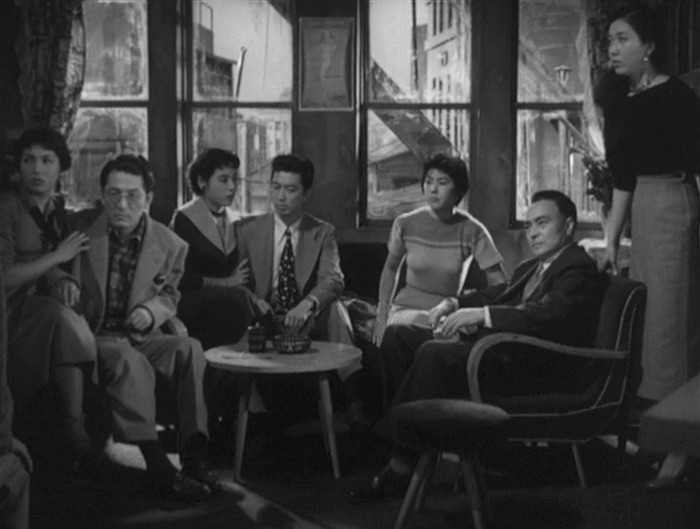
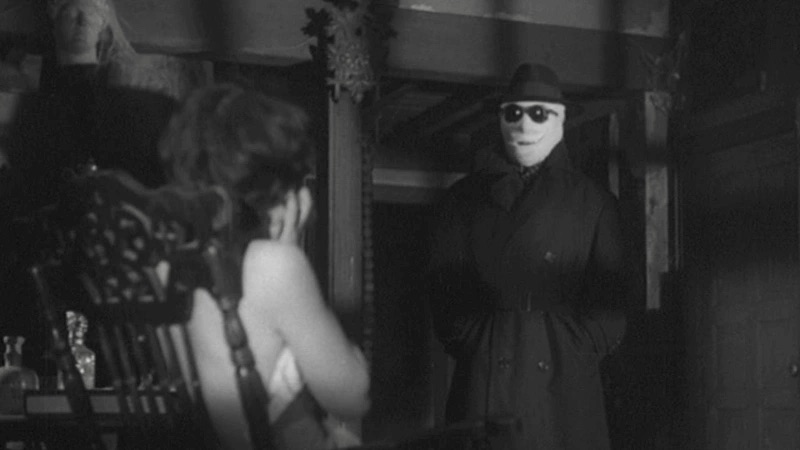
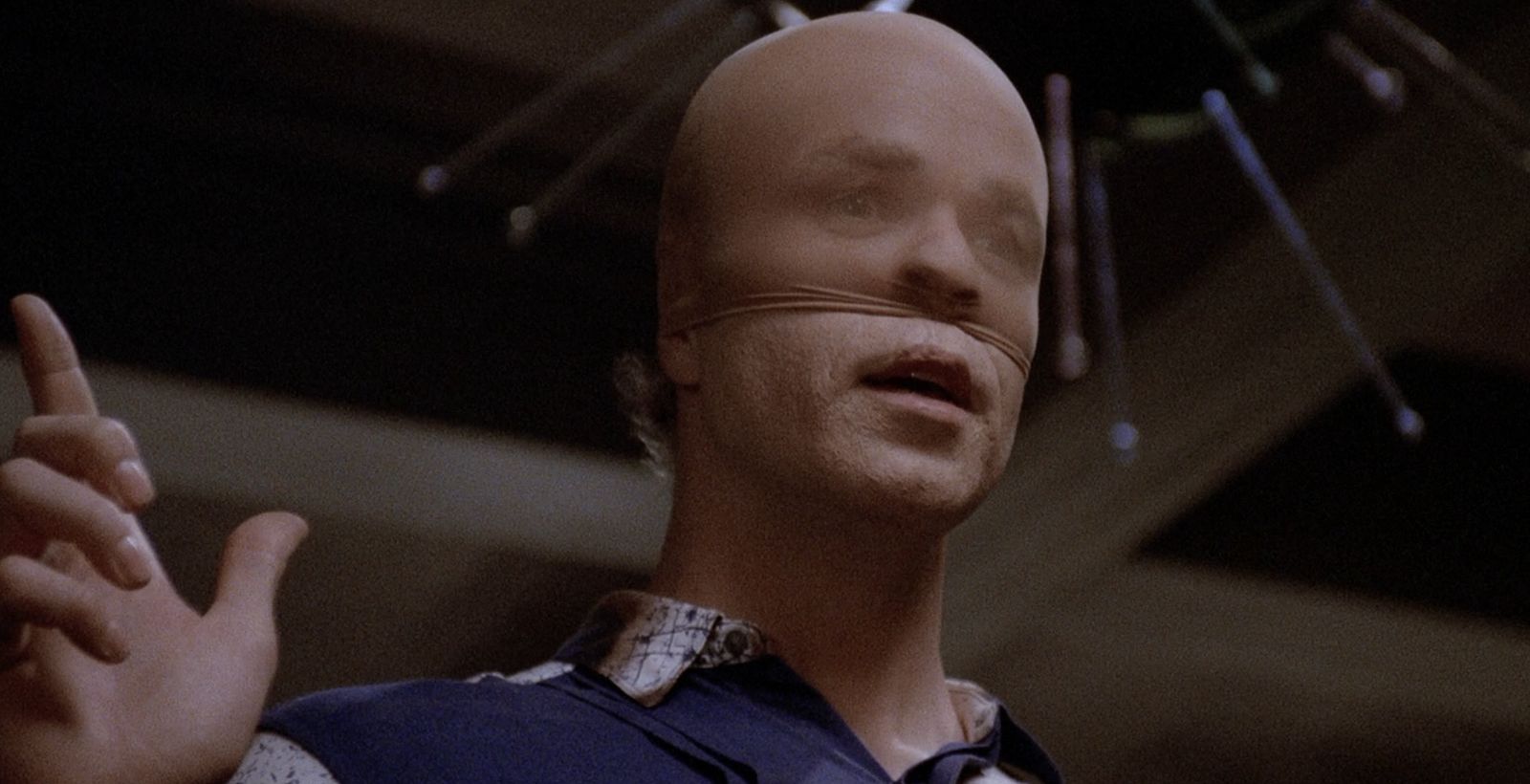
Tsumuna’s escape rates a front page headline in the newspaper and members of a mutual arts organization known as the Bizarro Enthusiast Club are busy discussing the case when a strange man with facial scars, rotten teeth and dark glasses enters their office requesting a model for his art needs. In case you’re wondering this so called arts club is little more than a front for female escorts who make their money posing nude for photographers or self proclaimed artists but even the club managers and their models are taken aback by this creepy looking stranger who claims he is referred by Dr. Kano, director of the mental asylum, and lists his name as Ghostman Sagawa. Despite their reservations, the model Keiko is sent to Sagawa’s home for a modeling session. She is given a drug by the man who came to her office but when he flees suddenly, she is confronted with a more disturbing visage – the real Sagawa, whose face is bandaged and looks like Claude Rains in The Invisible Man (1933).
[Spoiler ahead] When Keiko fails to return to the office, the managers and co-workers converge on Sagawa’s residence, only to learn from an investigating policeman that the building has been deserted for a long time. Once inside, they find an abandoned artist studio and the nude body of Keiko in the bathtub. When the group returns to the office, a prerecorded message on a tape player taunts them with “I trust you all enjoyed the superb performance I put on for Act I of the show…and now preparations for Act 2 have been completed.” Inspector Todoraki (Joji Oka) is quickly called to the scene and determines that a future modeling session booked by Taro Yamada (a pseudonym) is bogus and the model Mitsuko should be protected.
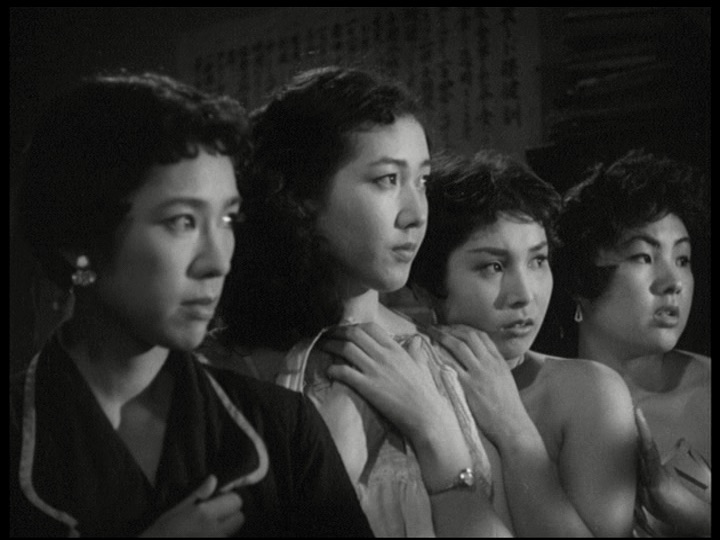
Kikuchi, one of the office managers, and Kokichi, brother of the late Keiko, agree to accompany Mitsuko home and watch over her. Unfortunately, the trio unwittingly get into a taxi driven by Ghostface’s assistant and are drugged. Mitsuko later comes face to face with her bandaged captor who tells her, “I like the way women look when they are freshly dead.” But, strangely enough, the maniac doesn’t kill her and she is later found unconscious in a rowboat in the harbor along with Kokichi while Kikuchi is found passed out on a road.
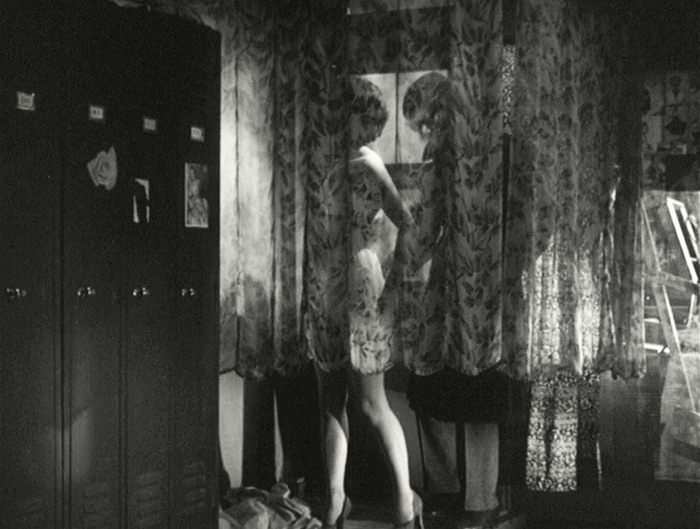
Once detective Kindaichi (Seizaburo Kawazu) enters the investigation, Ghostface’s crimes increase and the motives behind his reign of terror began to suggest something other than just a necrophiliac desire to photograph nude female corpses. Certainly, Ghostface’s behavior is not unlike a bloodthirsty vampire but Ghost Man does not delve into the supernatural at all and, if anything, the gruesome crime details prefigure the sort of serial killer movies that would become so popular in the 1980s and 90s such as Henry: Portrait of a Serial Killer (1986), Manhunter (1986) and Silence of the Lambs (1991)
It is not just the perverse, fetishized murder scenes depicted in Ghost Man (the murders are never shown) that make the film stand out from other Japanese crime thrillers of its era, it is the movie’s casual approach to female nudity as well as the tawdry settings (the low-rent headquarters of the Bizarro Enthusiast Club) and the noir-like atmosphere that are memorable. The shadowy black and white cinematography of Kazuo Yamada resembles some of RKO’s B-movie classics like Cat People (1942) and The Seventh Victim (1943), even if it lacks the stunning chiaroscuro effects of Nicholas Musuraca’s compositions in those films.
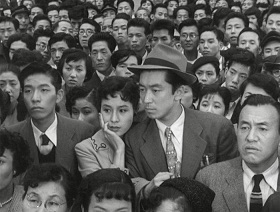
Granted, Ghost Man has its weak points. The murder victims are barely developed as characters before they are killed off and detective Kindaichi doesn’t enter the story until almost the half way point when he proves to be less enterprising and clever than Yokomizo’s original creation. There are also so many red herrings tossed out during the investigation that you need a scorecard to keep track of them all. And the film requires a major suspension of disbelief when it comes to some of the main characters who are often completely clueless or downright idiotic in their behavior. Of course, some of this results in unintentionally funny moments such as a sequence when all of the female models from the Bizarro Enthusiast Club are hosted at a resort hotel where photographers capture their nude posing in public settings (despite the threat of a killer on the loose).
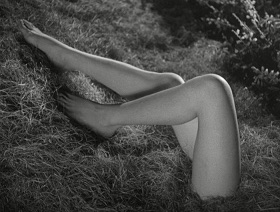
There are enough haunting set pieces in Ghost Man, however, to make it a must-see for Japanese genre film buffs. One of the most striking and surreal is the scene where the body of the model Sadako is revealed to be severed in two pieces. Her hips and legs appear to be emerging from the ground as if she was buried upside down while her upper torso and arms are arranged like a statue in a lily pond. The surprise twist is that the body parts belong to a mannequin (although the stand-in actress for Sadako is clearly seen moving in her still-life pose).
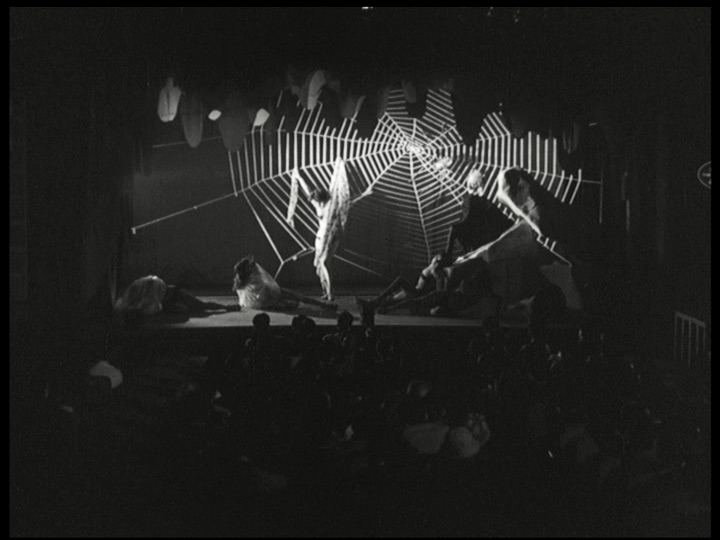
Another spectacular key moment occurs when Ayuko, the girlfriend of Ken (Yu Fujiki), a struggling newspaper reporter, is revealed to have a secret life as a stripper. During her stage show which features a giant spider web and a performer in a spider costume, Ayuko comes to a grisly end which is actually fitting since the stripper had earlier appeared excited by the possibility of being murdered. Even stranger is the fact that Ayuko was initially presented as the potential good girl heroine in the early stages of the movie.
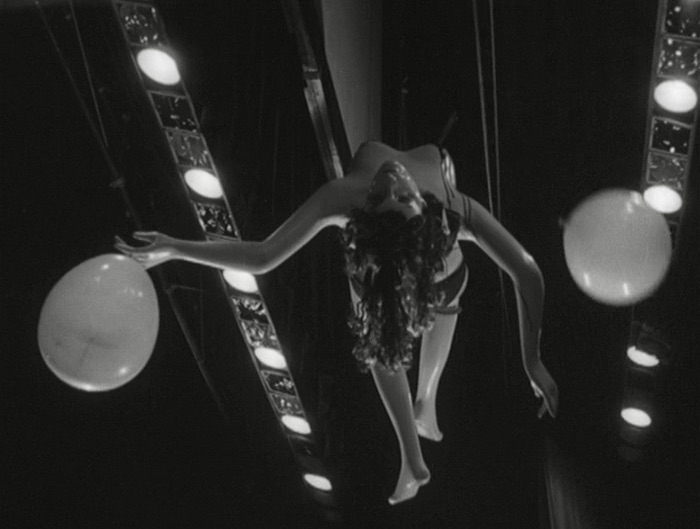
Last but not least is an unsettling sequence where the maniac known as Ghostface reviews his photographic collection of dead nude models, relishing their images as if they are famous works of art. The voyeuristic tone of the scene truly captures the sick mindset of the killer through visual images alone. Yet, strangely enough, the true motive behind the serial killer’s driving compulsion is revealed to be the result of a thwarted love affair.
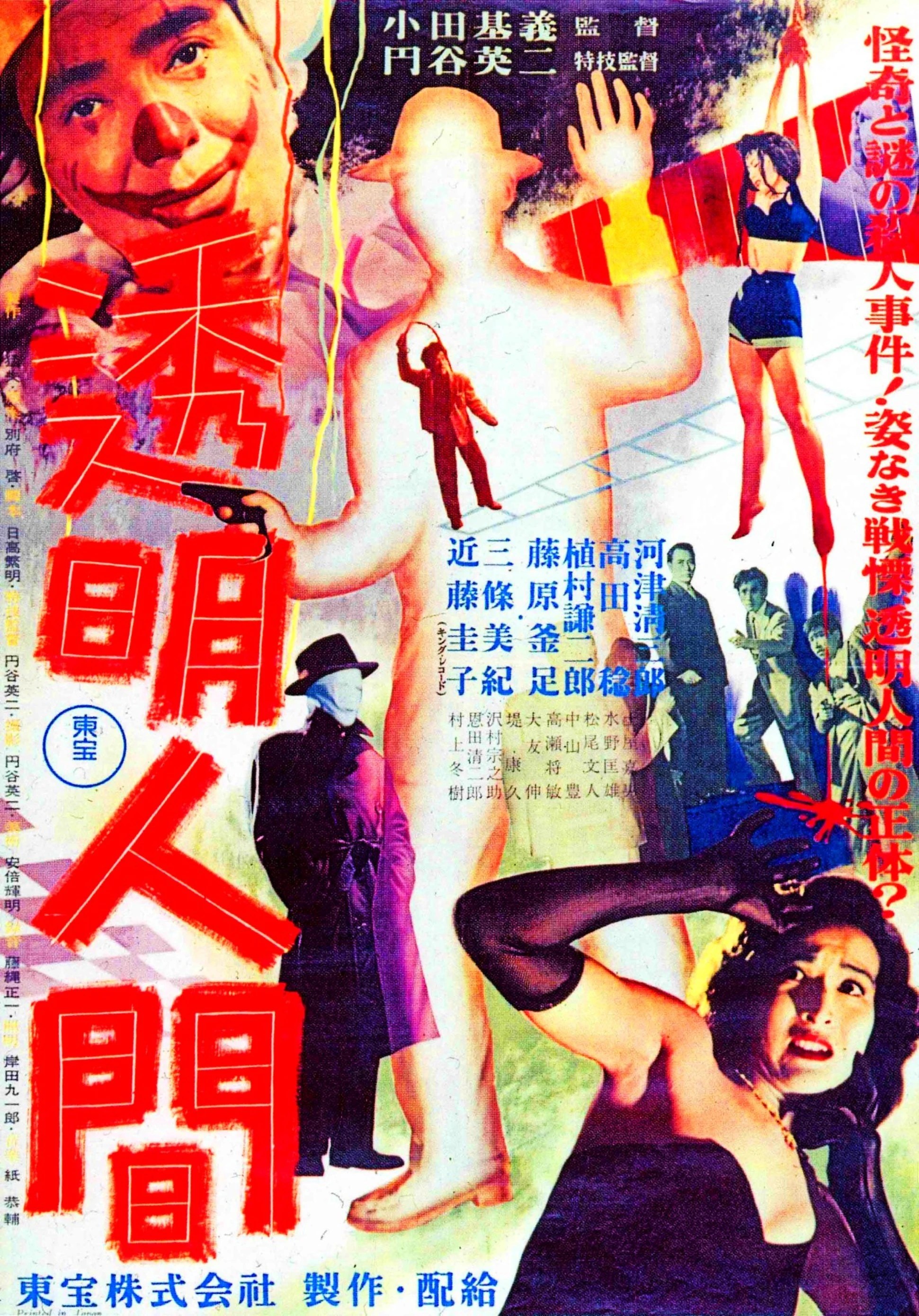
Ghost Man was directed by Motoyoshi Oda, whose career was mostly comprised of undistinguished B-movies. The two exceptions were the science fiction thriller Tomei Ningen (English title: The Invisible Avenger, 1954) and the Kaiju fantasy Godzilla Raids Again (1955), which was reedited and released in an English-dubbed version in the U.S. as Gigantis, the Fire Monster in 1962.
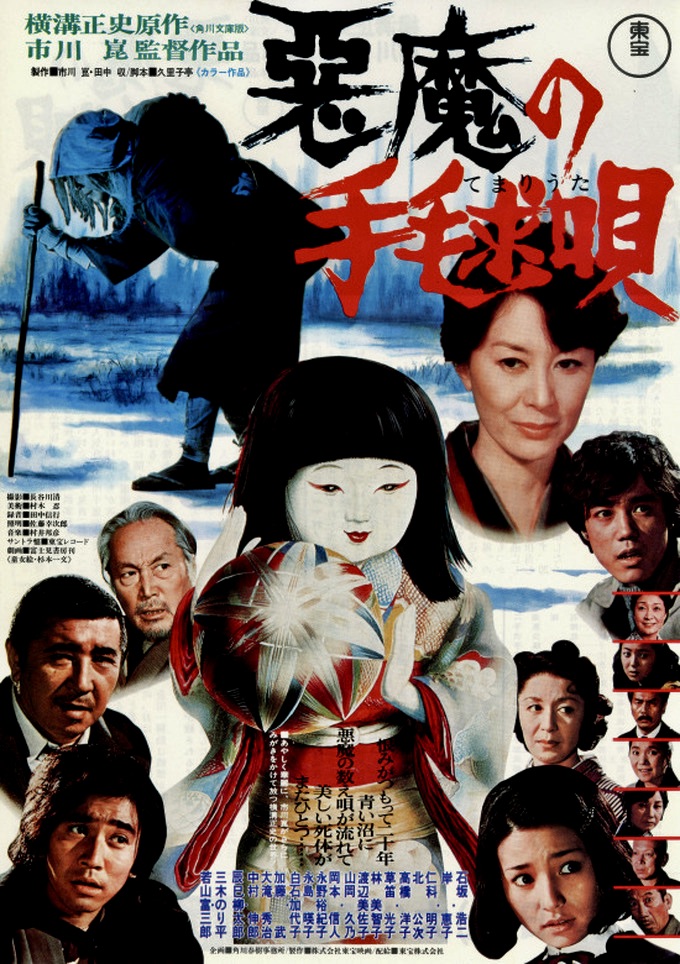
Two years after the release of Ghost Man, another Japanese murder mystery thriller featuring the exploits of Inspector Kindaichi reached the screens under the title Kyuketsu-ga (English title: The Vampire Moth, 1956). Directed by Nobuo Nakagawa, The Vampire Moth was an even more creepy and stylish presentation of a Detective Kindaichi thriller (with Ryo Ikebe in the leading role) but the Japanese director who is most associated with film adaptations of mystery novels by Seishi Yokomizo is Kon Ichikawa (Fires on the Plain, The Burmese Harp). He has made five movies featuring Yokomizo’s Kindaichi detective hero starting with the most famous of the lot, The Inugami Family in 1976.
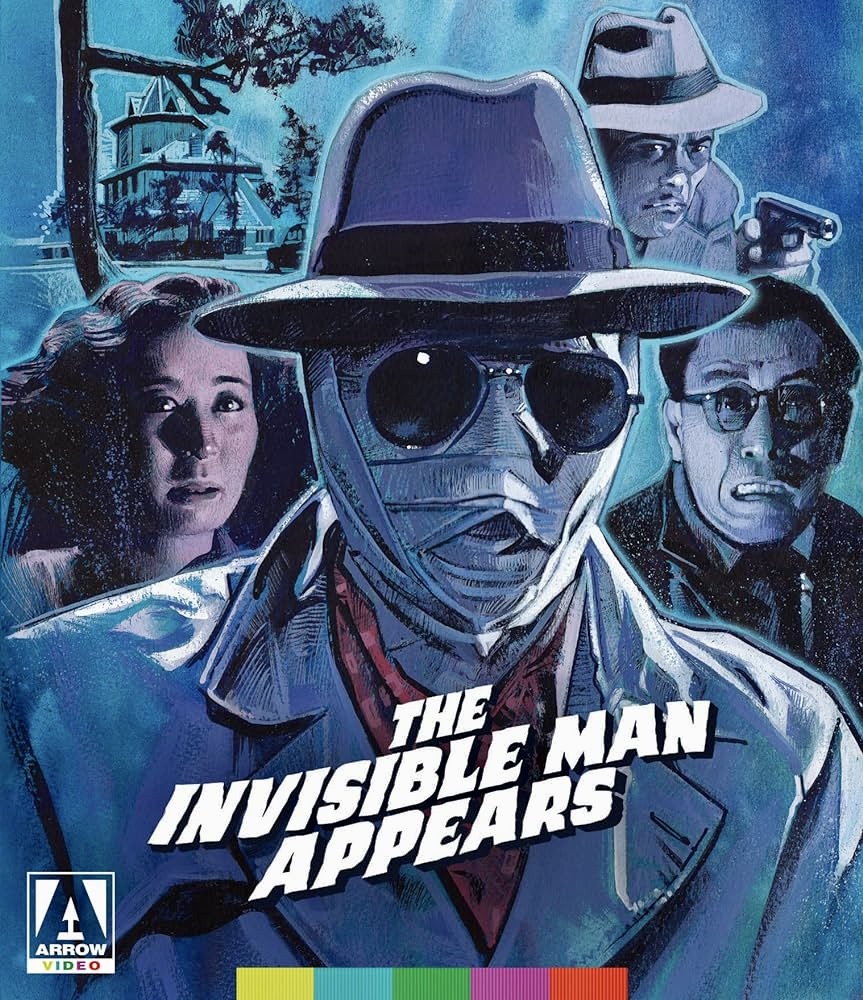
Ghost Man is not currently available on any format in the U.S. although you might be able to find a Japanese import version on DVD (without English subtitles) from online sellers. I first saw the film as a DVD-R release with English subtitles from European Trash Cinema which is no longer in business. It seems like the sort of film which could possibly be picked up for a digital restoration by Arrow Films, who in recent years restored two Japanese genre films, The Invisible Man Appears (1949) and The Invisible Man vs. The Human Fly (1957), on a double feature Blu-ray in March 2021.
Other links of interest:
https://www.tohokingdom.com/people/seishi_yokomizo.html
https://www.godzillacineaste.net/people/kawazu-seizaburo
 Cinema Sojourns