
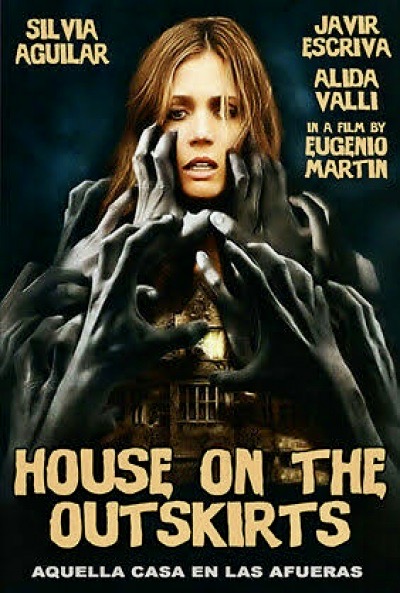
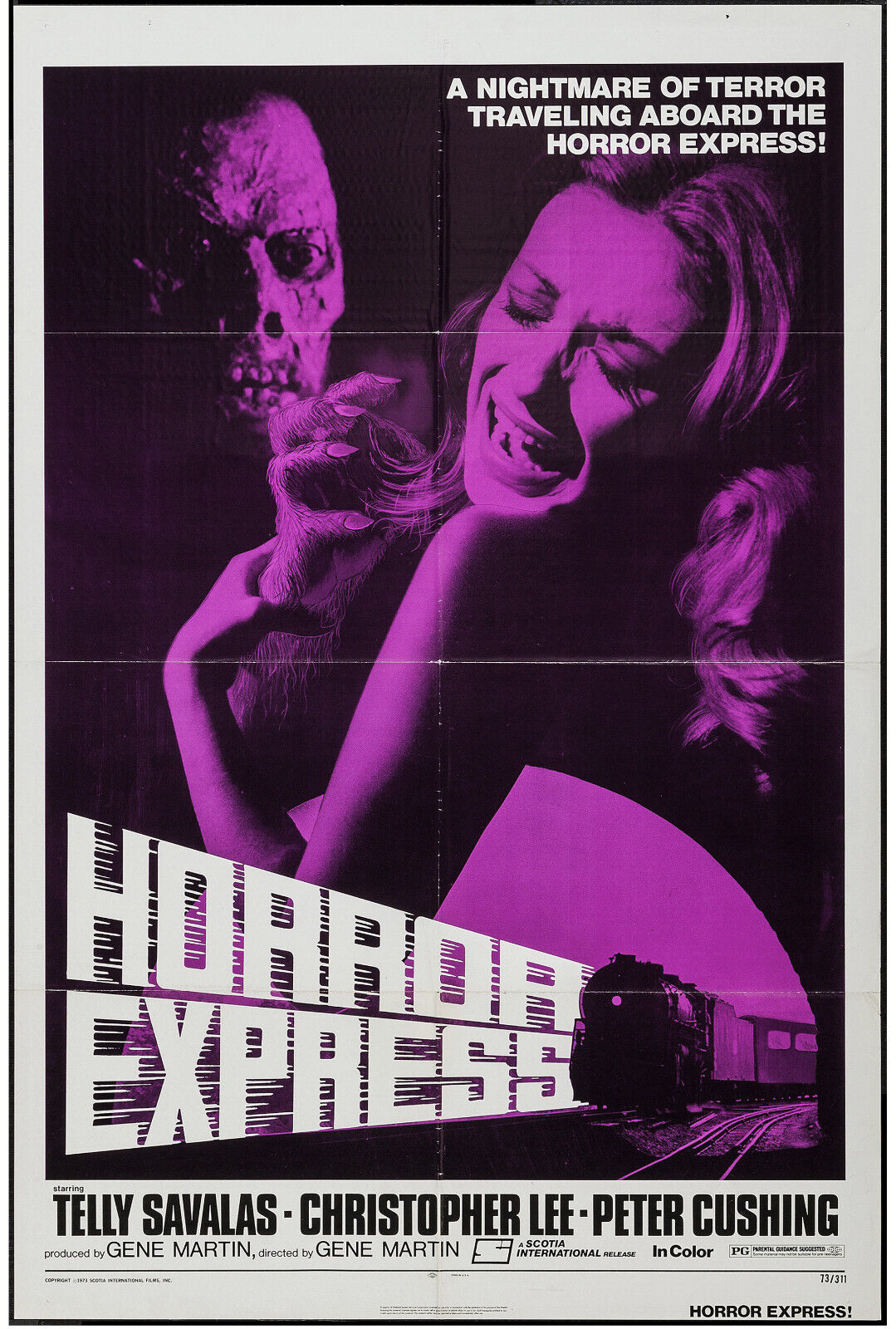
Spanish director Eugenio Martin is not a name familiar to the average American moviegoer but for fans of European genre films, he has developed a cult following over the years, thanks to the release on DVD and Blu-ray of some of his better known titles. Among these are the fast-paced, enormously entertaining sci-fi/horror/train disaster hybrid Horror Express (1970) with Christopher Lee, Peter Cushing and Telly Savalas, the giallo The Fourth Victim (1971) starring Carroll Baker, and A Candle for the Devil aka It Happened at Nightmare Inn (1973) in which two religious fanatic sisters are behind a series of murders. Martin also helmed several entrees in the Spaghetti Western genre such as The Ugly Ones (1966), Requiem for a Gringo (1968) and Bad Man’s River (1971) featuring Lee Van Cleef, James Mason and Gina Lollobrigida but some of his efforts defy easy categorization like Aquella Casa en las Afueras (English title: The House on the Outskirts, 1980), which is like a woman-in-peril melodrama crossed with an “old dark house” thriller. Throw in some unspoken but implied social commentary on women’s birthrights and you have a rather unique film from post-Franco Spain.
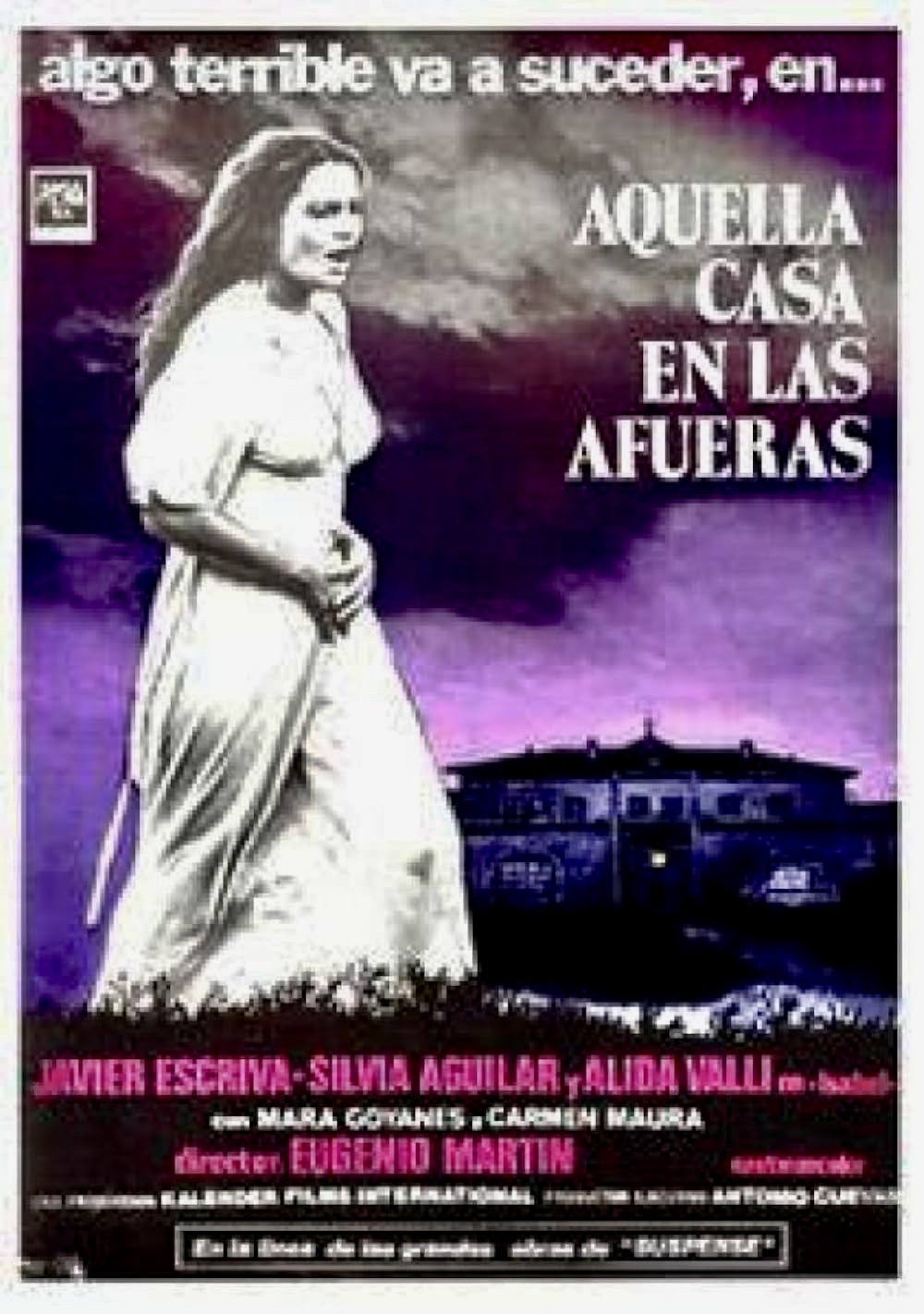
Set in the countryside just outside of Madrid, the movie opens with a hallucinatory dream-like sequence of someone being subjected to a medical procedure and then transitions to the opening credits where a car travels down a long tree-lined avenue toward a final destination. The driver is Joaquin (Javier Escriva) and the companion is Nieves (Silva Aguilar), his young wife, who is five months pregnant. After her complaints about living in the city, Joaquin decided to surprise his wife and rented a country estate for its quiet, idyllic setting, where they can raise their child. But as soon as Nieves sees their new abode – a large, rambling mansion on a wooded estate – she senses something is not right and her discomfort grows as she tours the house.
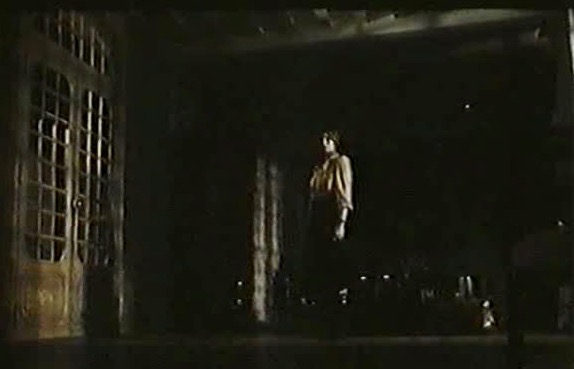
Viewers will easily guess why the mansion is causing Nieves’s distress early on but The House on the Outskirts is less interested in the secret history behind this forbidding place than in exploring how the heroine confronts and comes to terms with her own past and her marriage to a much older man, who often treats her in an overly protective but controlling manner.
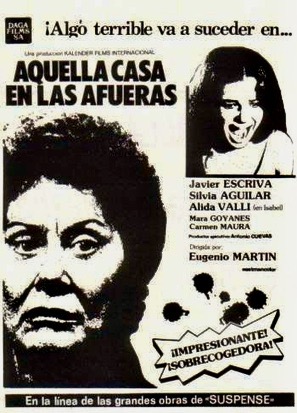
The movie also racks up the tension with the introduction of Isabel (Alida Valli), the owner of the estate, who has agreed to stay on and help Nieves with chores and support during the pregnancy. Isabel is exceedingly helpful and omnipresent around the mansion – so much so that her smiling demeanor and eagerness to please begins to seem like thinly veiled anxiety and desperation. It doesn’t take long before her true identity is revealed but her diabolical plans for Nieves are not made clear until the disturbing climax.
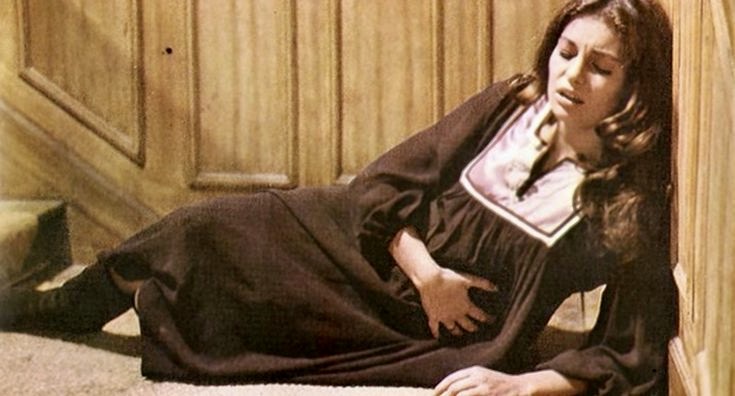
The House on the Outskirts is a slow burn gothic chiller but with a contemporary setting and a controversial thematic thread involving unwanted pregnancies and abortion, which was illegal in Spain in 1980. It wasn’t until 1985 that abortion was legalized for Spanish women during the first 14 weeks of pregnancy and movies like this grim cautionary tale probably helped raise public support for that ruling.
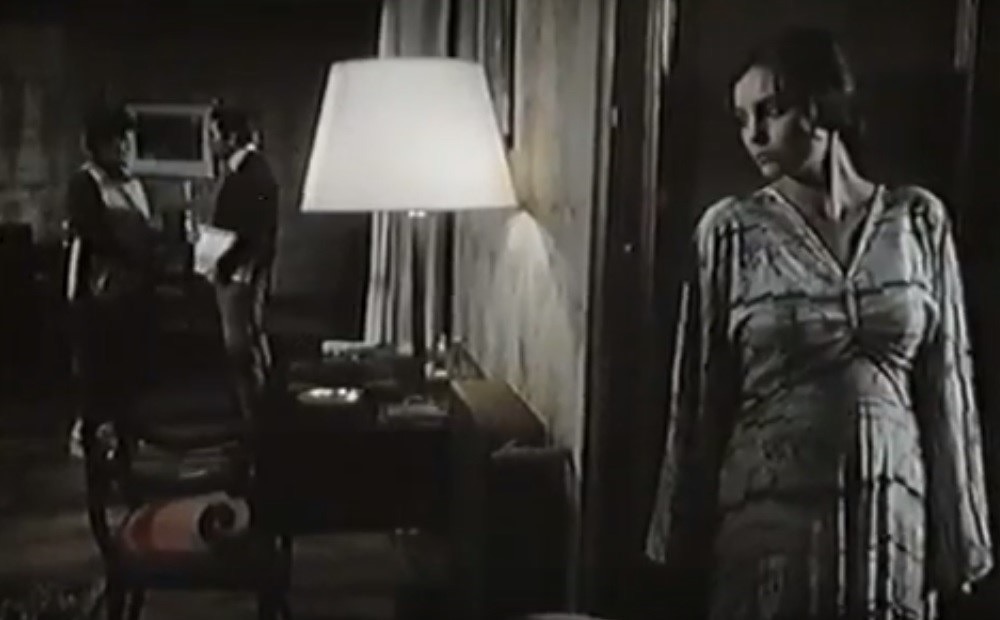
Unlike other blood-drenched giallos and slasher flicks of its era, The House on the Outskirts is not genuine exploitation fare. Yes, there is some violence – a brief but shocking murder in an attic, a literate back-stabbing and a fatal fall down a staircase – but the emphasis is on Nieve’s progress from traumatized victim to self-realization and a reassessment of her husband’s virtues (after being depicted as a possible suspect in her predicament for most of the movie).
The acting is solid for this kind of Hitchcockian plot with Javier Escriva appropriately remote and somewhat mysterious as the stolid husband while Mara Goyanes is cheerful and upbeat as the next door neighbor Charo and Nieves’s sole ally. In the main role as the increasingly paranoid heroine, Silvia Aguilar is convincingly frightened and emotionally fragile and is no stranger to these types of mystery thrillers and horror outings, having appeared in Red Rings of Fear (1979) and films by Paul Naschy – El Caminante (The Traveller, 1979), The Beasts’ Carnival (1980) and The Night of the Werewolf, 1981).
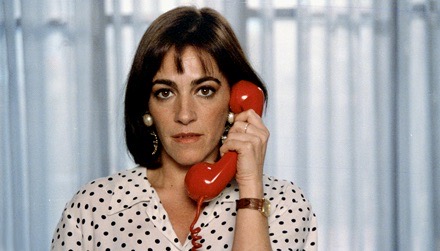
It is also fun to see Carmen Maura, the muse of numerous Pedro Almodovar films like Law of Desire (1987) and Women on the Verge of a Nervous Breakdown (1988), in a supporting role as a concerned social worker whose curiosity about the creepy Isabel ends badly.
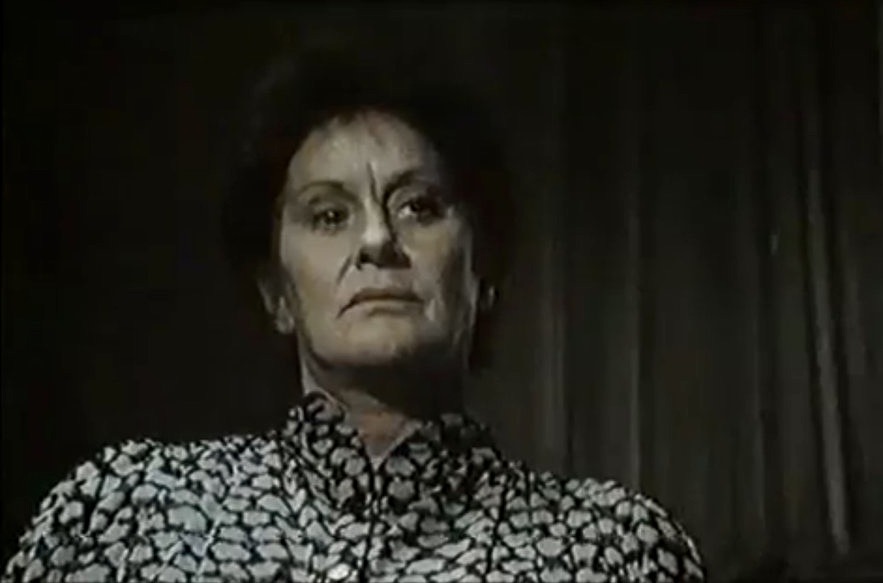
The main attraction though is Alida Valli as the mansion’s mysterious owner who turns out to be a schizophrenic out patient from a local hospital. Once the luminous beauty and mysterious siren of Carol Reed’s The Third Man (1949), Valli was 59 years old by the time she made The House on the Outskirts and her face had grown hard and her body thick and heavy set, making her physically imposing as a frizzy haired gorgon. Valli’s committed performance and lack of vanity is right up there with other classic Grand Guignol dame roles such as Bette Davis and Joan Crawford in What Ever Happened to Baby Jane? (1962). She also knows how to give a line reading an underlayer of real menace such as this comment to the social worker about her former work as an abortionist: “You know these women who get rid of their children? They can’t be forgiven, neither in heaven nor hell.”
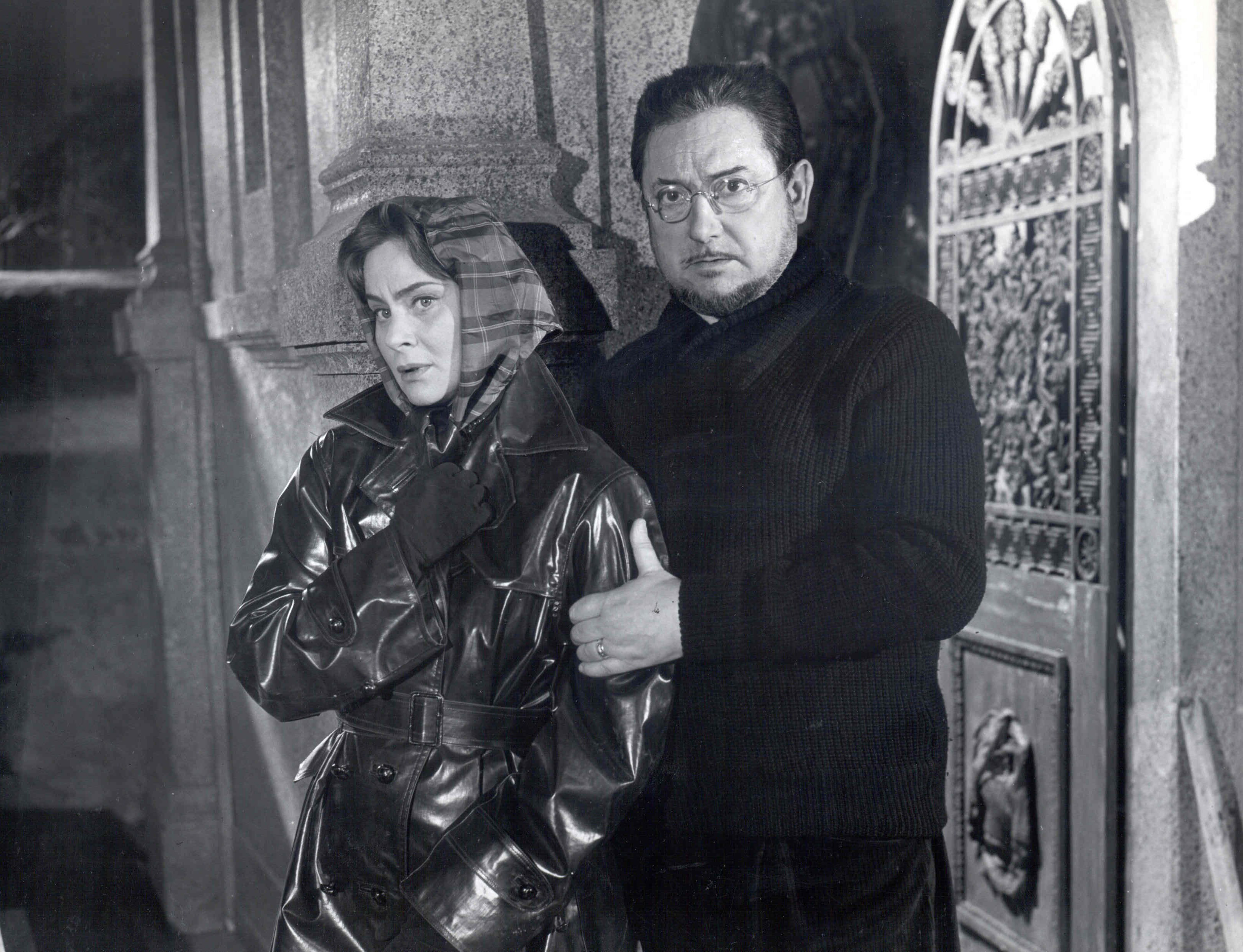
This kind of role was nothing new for Valli at this point in her career and she gave several memorable performances as either a villainess or eccentric character in such films as Eyes Without a Face (1960), Mario Bava’s Lisa and the Devil (1973), The Antichrist (1974) and Dario Argento’s Suspiria (1977) as the ballet teacher/resident witch in a haunted dancing academy.

The only downside to The House on the Outskirts is the somewhat slow pacing and a tendency to telegraph any surprises in the narrative before they occur but this remains an intriguing one-off in director Eugenio Martin’s filmography. If you haven’t ever seen one of his movies, I recommend you start with Horror Express, which is an excellent example of the imaginative touches and sense of style he can bring to a B-movie genre exercise.
The House on the Outskirts is not currently available on any format in the U.S. although poor quality bootleg copies of the film have been available for years. You can stream a mediocre but watchable version of the movie on Youtube (in Spanish with no English subtitles) but it would be great if Mondo Macabro, Vinegar Syndrome or Severin Films decided to remaster it and release it on Blu-ray in the future.

Other links of interest:
http://www.coolasscinema.com/2016/08/cool-ass-cinema-book-reviews-eugenio.html
https://westernsallitaliana.blogspot.com/2010/05/happy-85th-birthday-eugenio-martin.html?m=1
https://offscreen.com/view/alida_valli
https://www.enforex.com/culture/carmen-maura.html
 Cinema Sojourns