
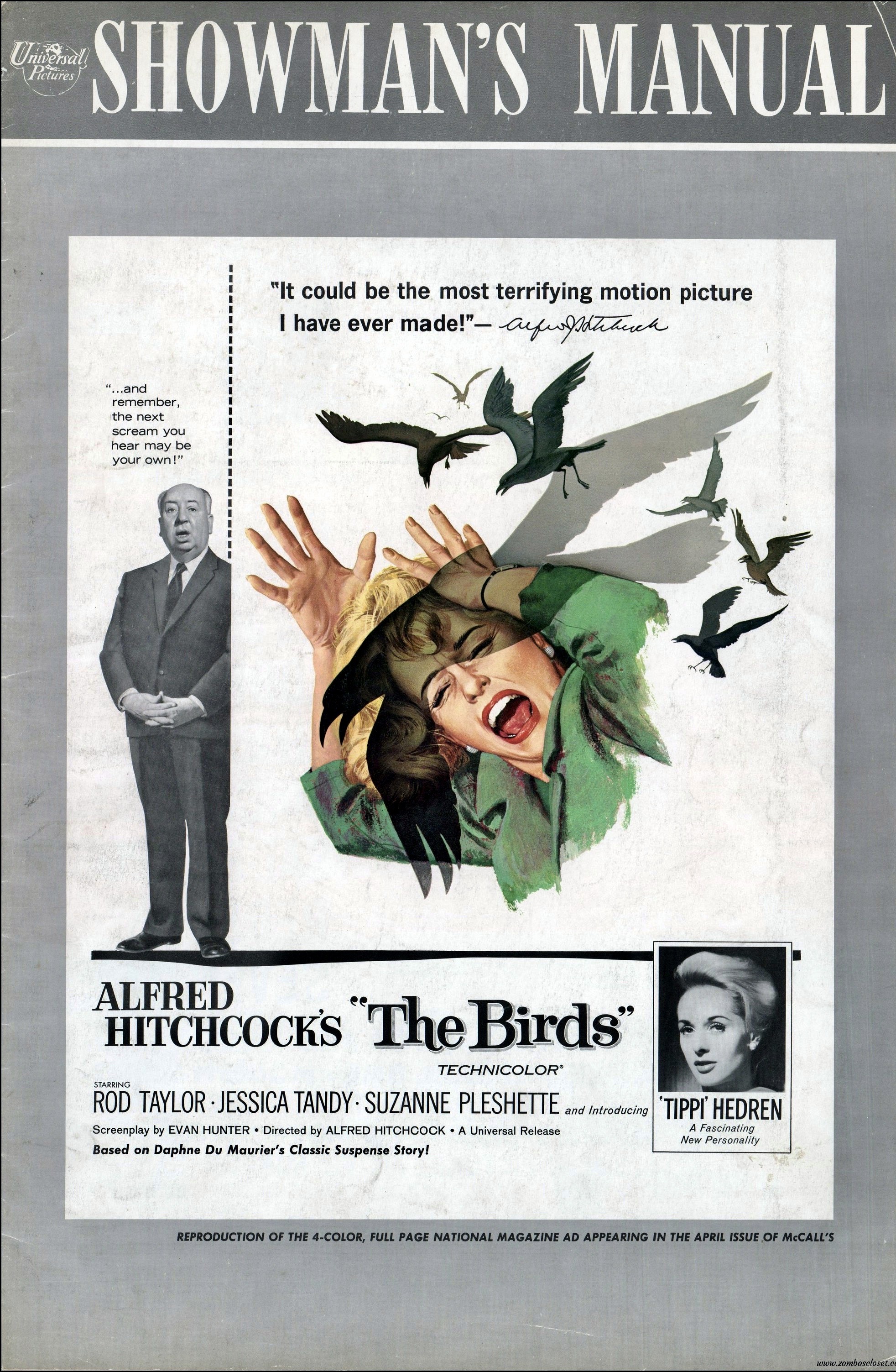
Among the many movie collectibles on the marketplace, pressbooks were studio publicity tools that were created for the theatre exhibitors. Though rarely seen by the public except by film collectors, these specialized publications were chock full of alternate poster art for their specific film as well as behind-the-scenes stories on the production, cast and crew. Best of all were the promotional tips for theatre managers on how to pack their theatres with excited fans. Some of these tips could probably get you arrested and sometimes you had to wonder if the pressbook writers were drunk or just testing the gullibility of the exhibitors.
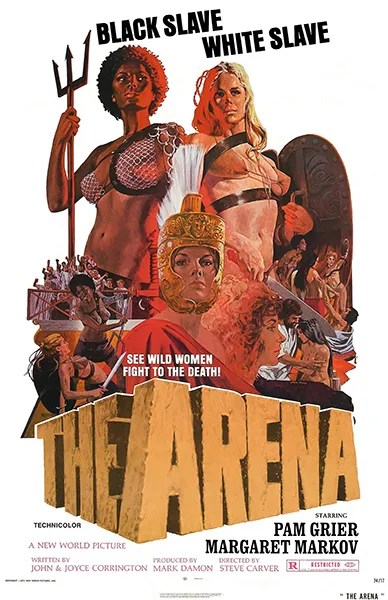
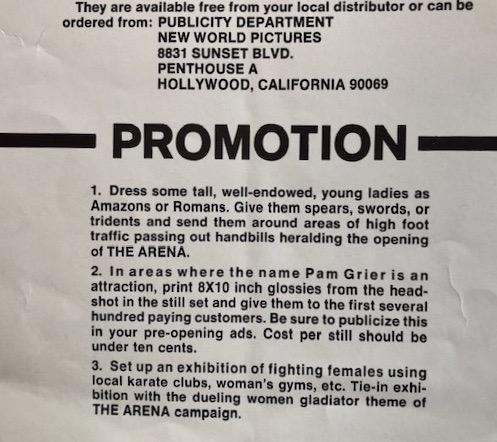
Giving spears and swords to “tall, well-endowed young ladies” dressed as Amazons in the theatre lobby was probably not a good idea for 1974’s The Arena (starring Pam Grier) since a lot of angry feminists would probably volunteer and make mincemeat of the sexist pig theatre owner and any leering male customers. Of course, today it would cause a stampede if you stated you were going to film the event. Contestants would think it was a new reality TV show.
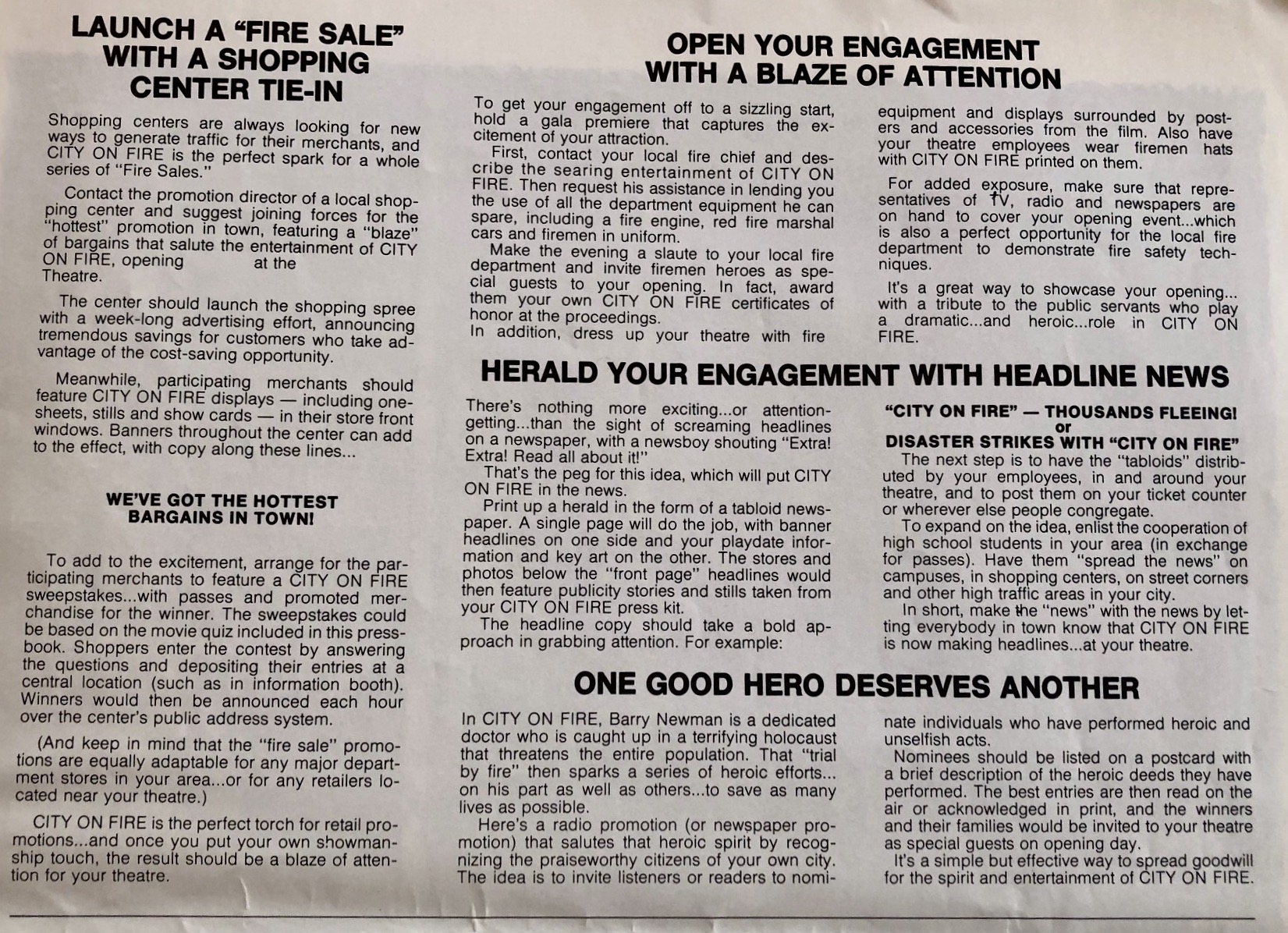
Here are some pressbook suggestions for the Canadian-made City of Fire (1979), a B-movie disaster film starring Henry Fonda and Shelley Winters during that late seventies period when they would star in anything – Tenacles, The Swarm, The Visitor, Meteor, etc.
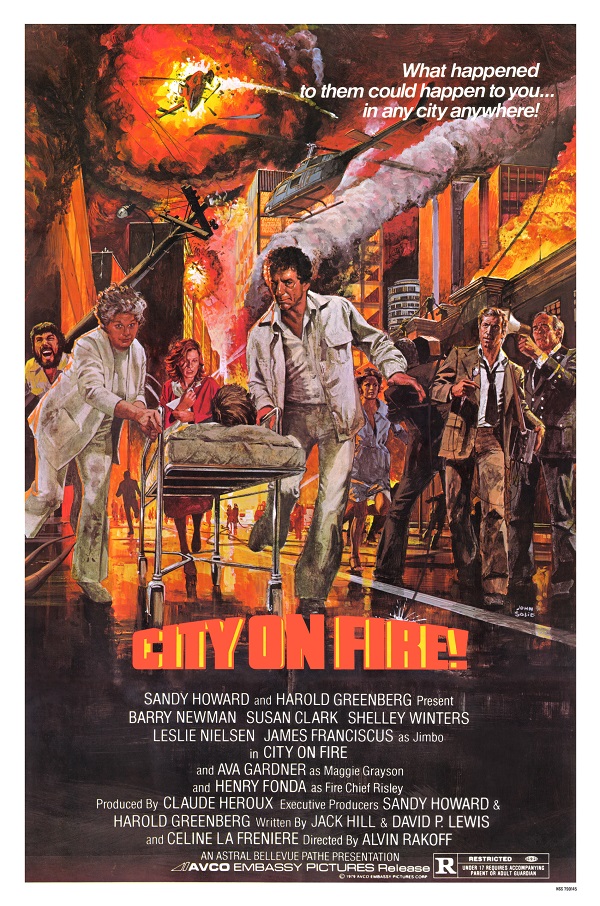
As you can see, the City of Fire pressbook is a mixture of the tasteless and the charitable. You could do a “Fire Sale” tie-in or arrange a benefit for the local firemen’s department or even better – publish a fake newspaper with catchy headlines like “Disaster Strikes with City on Fire” and distribute it all over town. Never mind about the fact that some people in your community may have suffered major losses due to a fire. It’s all in fun.
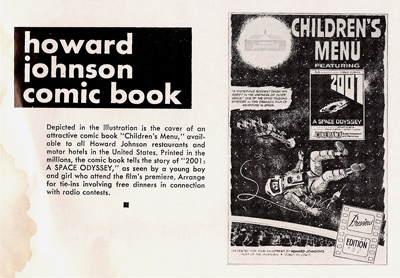
One of the most fascinating aspects of these pressbooks is when a major motion picture like Stanley Kubrick’s 2001: A Space Odyssey (1968) has product merchandising tie-ins featured in the pressbook. I, for one, would have loved to have seen Kubrick’s face when a Howard Johnson restaurant 2001 promotion tie-in was first presented to him…or maybe they never ran it past him. These pressbook promotions sometimes come across like sideshow carny pitches, hustling the rubes who ran theatres in the boondocks.
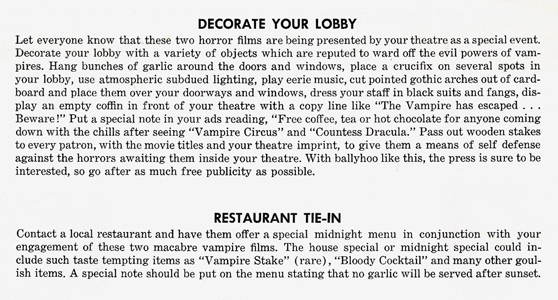
Horror movies always offered numerous possibilities for promotions, especially vampire films. Here’s one for Vampire Circus (1972). You have to wonder about a restaurant tie-in. After a blood-drenched gothic thriller would you really want a “Vampire stake” (rare)?
Pressbooks were also great for giving theatre owners ideas for local promotions by giving them several choices of ad slicks for newspaper promotions based on their clientele. In other words, you could present the standard studio promotional choice for the ad or chose something a little more customized for your audience if they tended to respond to the more sensational approach. Take, for example, these alternate newspaper ad teasers for The Poseidon Adventure (1972).
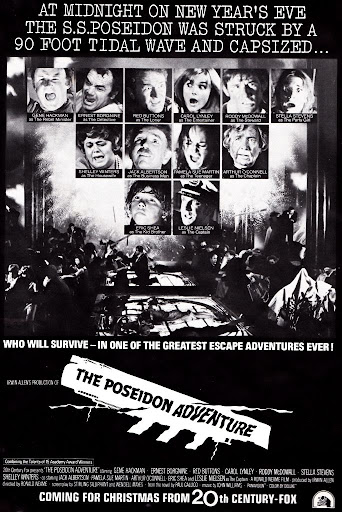
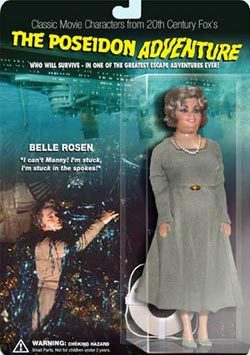
Variations on this teaser ad coupled Gene Hackman with most of his co-stars in duo mug shots but the clear winner is Hackman and Borgnine, both of them screaming their heads off. There was also one that highlighted Shelley Winters and one put the focus on Red Buttons, Roddy McDowall, Carol Lynley and Stella Stevens but neither was quite as dramatic as the Hackman-Borgnine design. The Poseidon Adventure was so popular it even inspired a line of action figures like Shelley Winters’s character Belle Rosen.
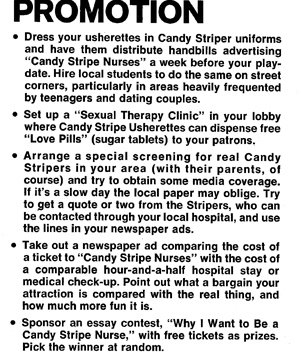
New World Pictures, a Roger Corman brainchild, released countless “professional women” movies in the early seventies (a golden time for pressbooks) but their Nurse movies hardly needed any promotion. Any movie with Nurse in the title was a guaranteed hit at the drive-ins. Here are some smashing ideas for a lobby promotion for Candy Stripe Nurses (1974). Who wouldn’t want to visit a “sexual therapy clinic” near the concession stand where usherettes were dispensing “love pills?
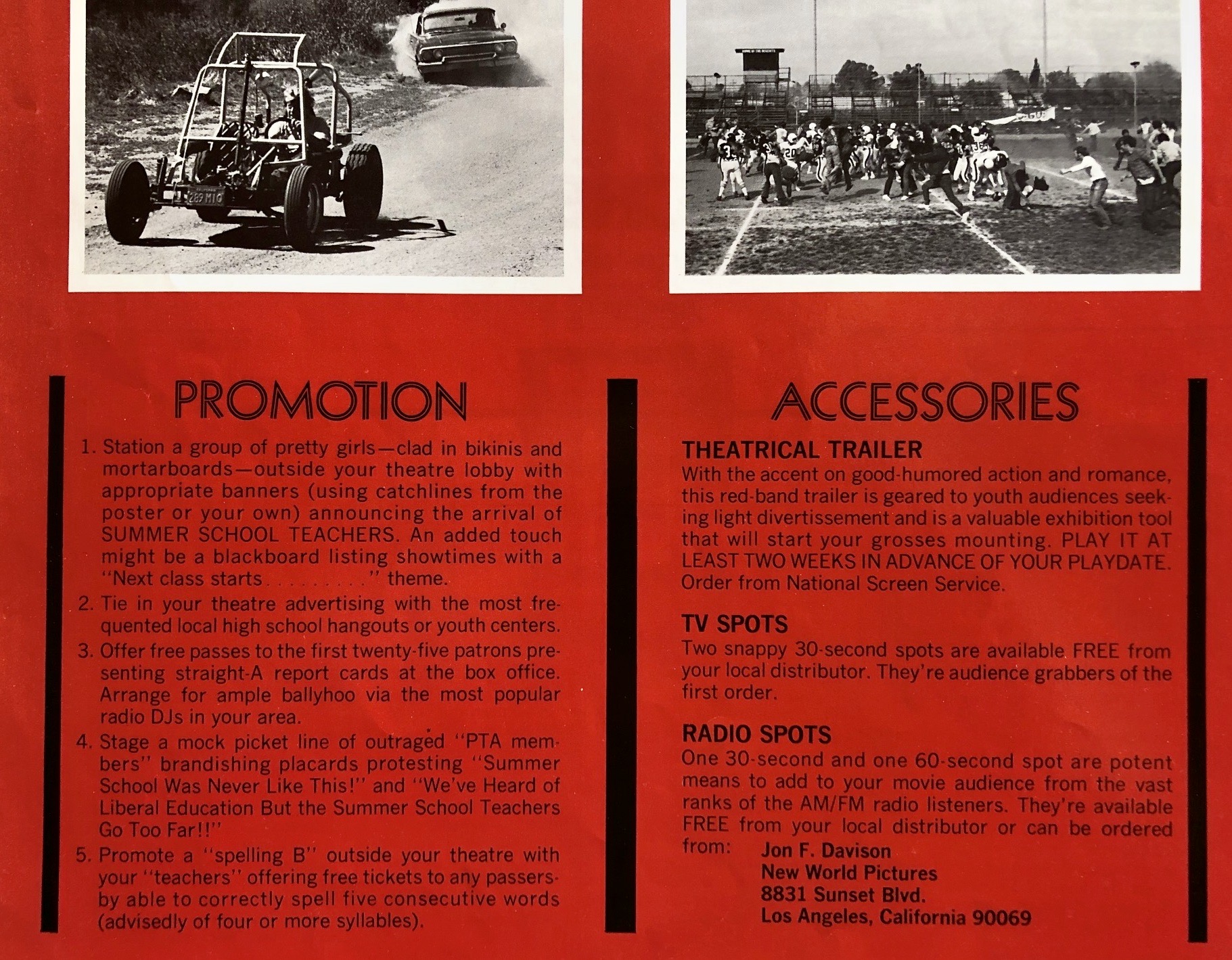
Or how about this classy promotion for Summer School Teachers (1975), written and directed by Barbara Peeters, who also helmed the rapist monster thriller, Humanoids from the Deep (1980).
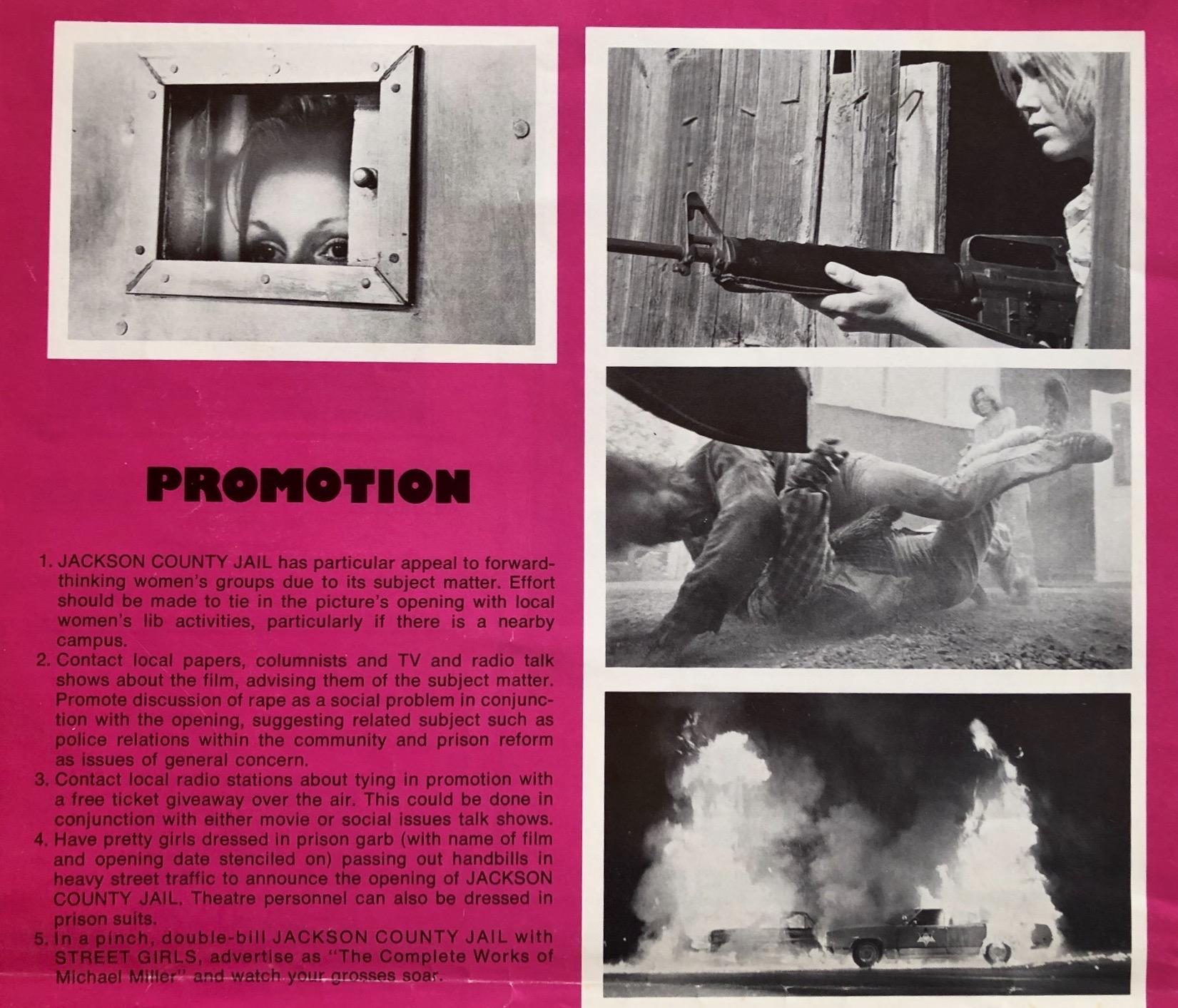
You could say the pressbook creators for New World Pictures were generally schizophrenic in their approach to genre movies like Jackson County Jail (1976) starring Yvette Mimieux and Tommy Lee Jones in an early starring role. First, they try to make the marketing relevant and important as if this is a serious social issue movie: “Promote discussion of rape as a social problem in conjunction with the opening, suggesting related subject matter such as police relations within the community and prison reforms as issues as general concern.” Police relations? The cops in this movie are the rapists! Or how about this alternate suggestion: “Have pretty girls dressed in prison garb (with name of film and opening date stenciled on) passing out handbills in heavy street traffic…Theatre personnel can also be dressed in prison suits.”
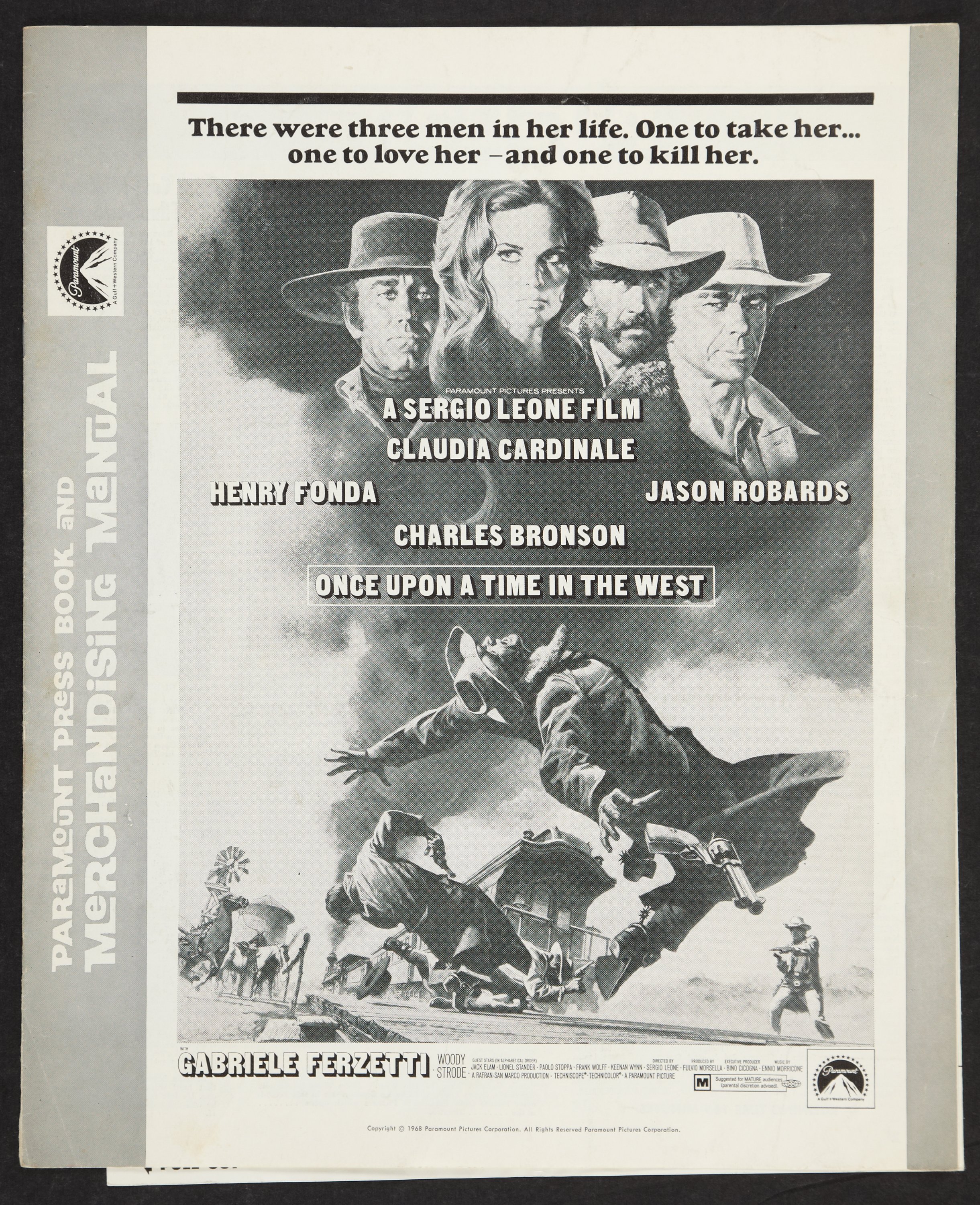
Once Upon a Time in the West (1968) is often considered Sergio Leone’s masterpiece but the pressbook promotional ideas for it seem very uninspired and disconnected from the film. A Claudia Cardinale lookalike contest? A quick draw sketch artist competition? Why not take the high road and have the local symphony present a concert of the evocative Ennio Morricone score? Or at least take the low road and have the neighborhood Italian restaurant offer “spaghetti western fare” for a limited time only.
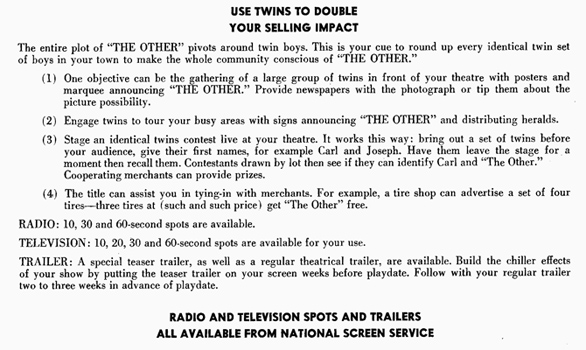
The Other (1972) was an offbeat horror offering, based on the novel by Tom Tryon (I Married a Monster from Outer Space), that was a difficult sell for theatre owners. There was no monster and no way to easily exploit the horrific aspects of the film. So…what to do? Can you imagine if all of the identical twins in your town showed up at a promotion for The Other? It would be so much scarier than the movie.
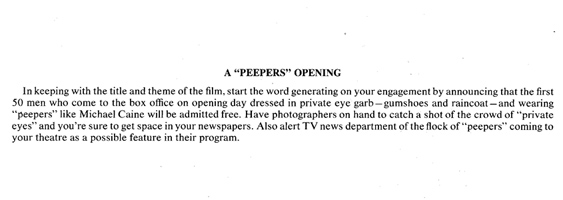
Peeper (1976), a relatively obscure Michael Caine private eye parody, clearly stumped the pressbook writers who probably never saw the films for which they were creating promotional copy. I suppose you could consider detectives voyeurs to some degree but isn’t this being a little too literal?
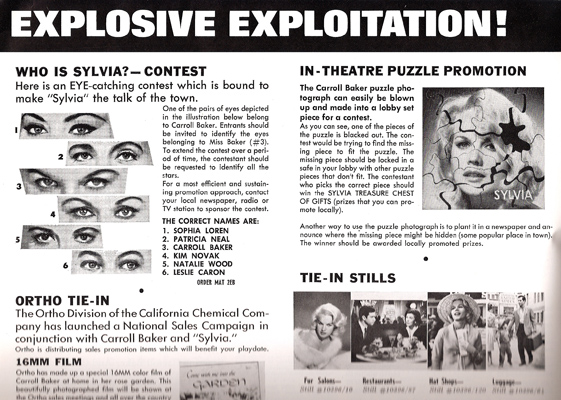
Here’s a creative approach from the pressbook for Sylvia, the 1965 melodrama starring Carroll Baker who was red hot at the time. She had just appeared in Seth Holt’s underrated Station Six-Sahara and the Harold Robbins’ potboiler The Carpetbaggers. Her next film – and the one that led to the undoing of her Hollywood career – was Harlow (1965). But I like the approach here. It’s all about the deconstruction of her image before she had a breakdown and ran off to Italy for a second film career in some entertaining Eurotrash genre films (The Sweet Body of Deborah, Baba Yaga, etc.) which U.S. critics ignored but are still being revived and celebrated by a younger generation via DVDs and Blu-rays.
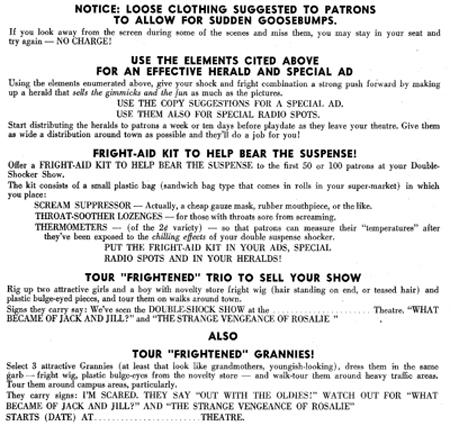
Last but not least we have one of my favorites – the pressbook for the obscure drive-in thriller The Strange Vengeance of Rosalie (1972 – what was in the water that year?) This was usually exhibited with the British chiller What Became of Jack and Jill? Rosalie was a stark three character melodrama that starred Bonnie Bedelia, Ken Howard and Anthony Zerbe and was a forerunner of Stephen King’s Misery (1990). The pressbook, however, positions it as a genuine horror film.
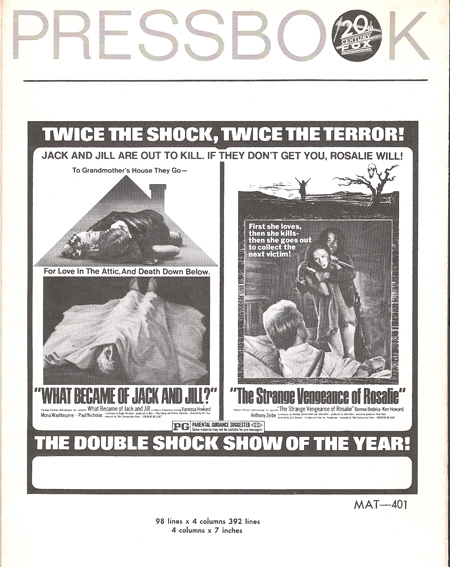
I just love the frightening trio concept to sell the show – “Rig up two attractive girls and a boy with novelty store fright wig (hair standing on end or teased hair) and plastic bulge-eyed pieces, and tour them on walks around town. Hello? For what movie? Give me some of that juice you’re drinking! I won’t even go into the “loose clothing” idea or the “Frightened Grannies” concept.
Other links of interest:
https://mediahistoryproject.org/collections/pressbooks
https://artofthemovies.co.uk/blogs/original-movie-posters/what-is-a-press-book
 Cinema Sojourns