
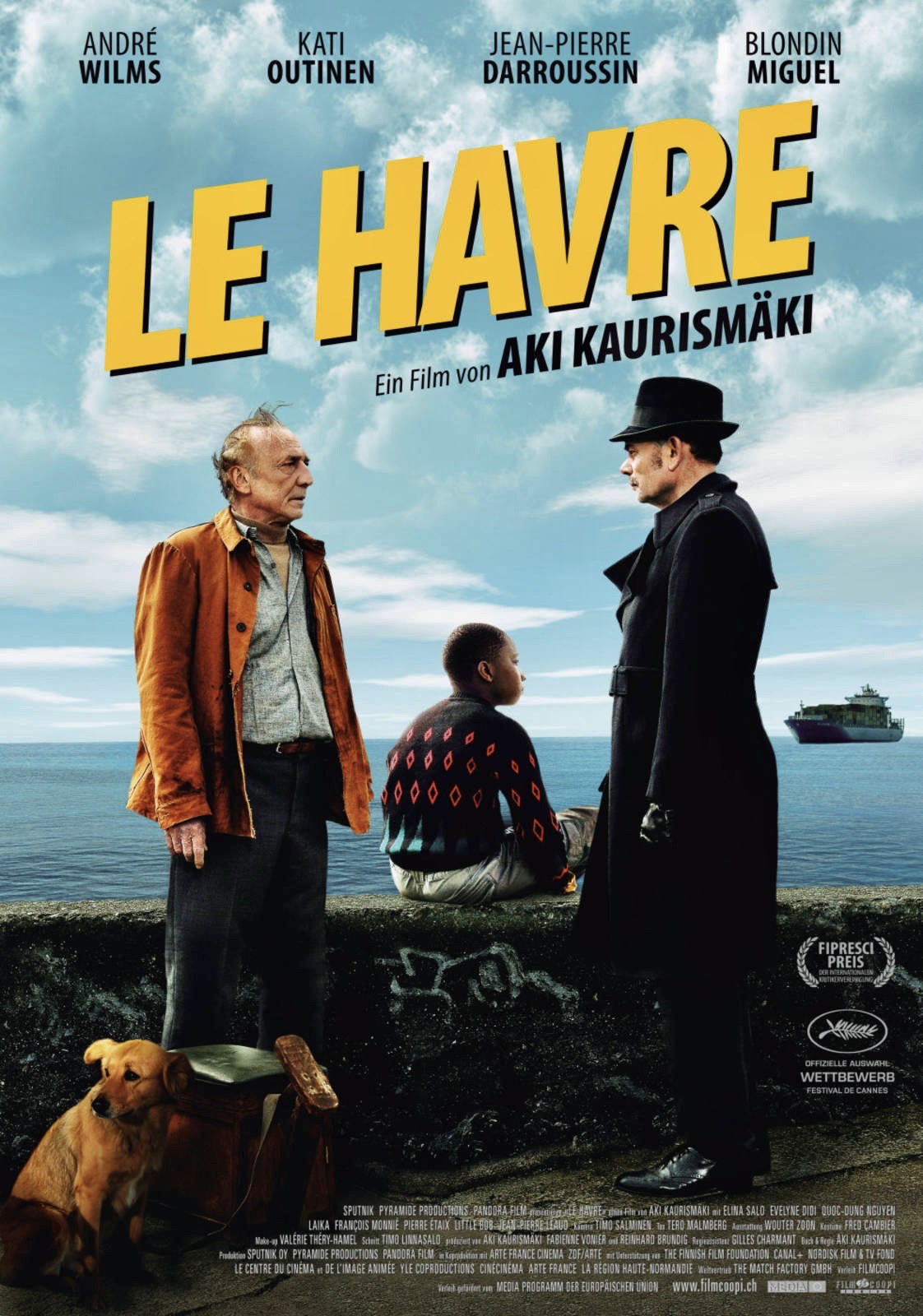
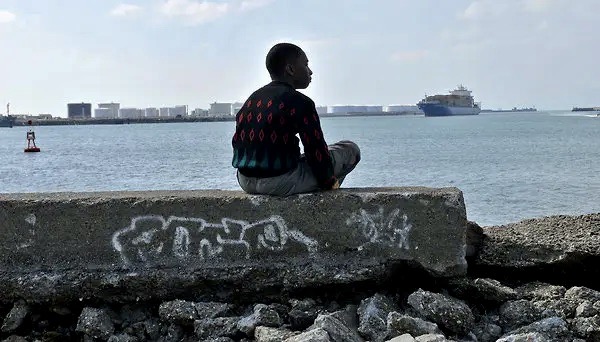
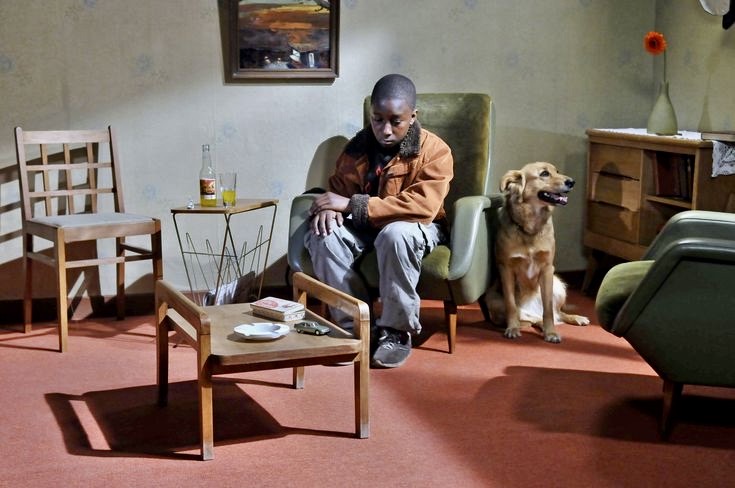
When did the immigrant situation become an international crisis? Anyone who follows the news knows that immigration has been on the rise for the last 20 years or more but, beginning in 2020, the number of fleeing people seeking asylum in Europe, the U.S. and other more affluent countries has tripled and is reaching catastrophic proportions. This situation was addressed in a small but personal way back in 2011 by the great Finnish auteur Aki Kaurismaki in his film Le Havre. Instead of trying to tackle the whole immigration problem, Kaurismaki uses it as the background for a story about Idrissa (Blondin Miguel), a young African immigrant, and how his plight spurs a working-class French community to protect and aid him during his journey.
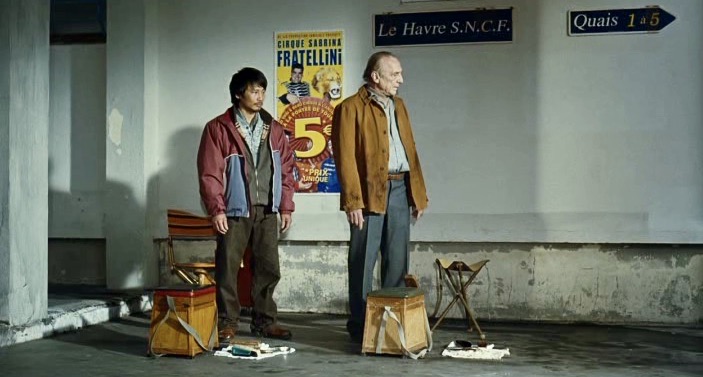
The real hero in the story is Marcel (Andre Wilms), an elderly shoe shine vendor who barely survives on his meager earnings, which are managed by his more practical wife Arletty (Kati Outinen). When she is diagnosed with a life-threatening disease and admitted to a hospital for treatment, Marcel is jolted out of his day-to-day routine by this unexpected event and his discovery of Idrissa, who is hiding from immigration authorities. In his own small way, Marcel becomes determined to help the boy find his way to London, where his mother is employed at a laundry.
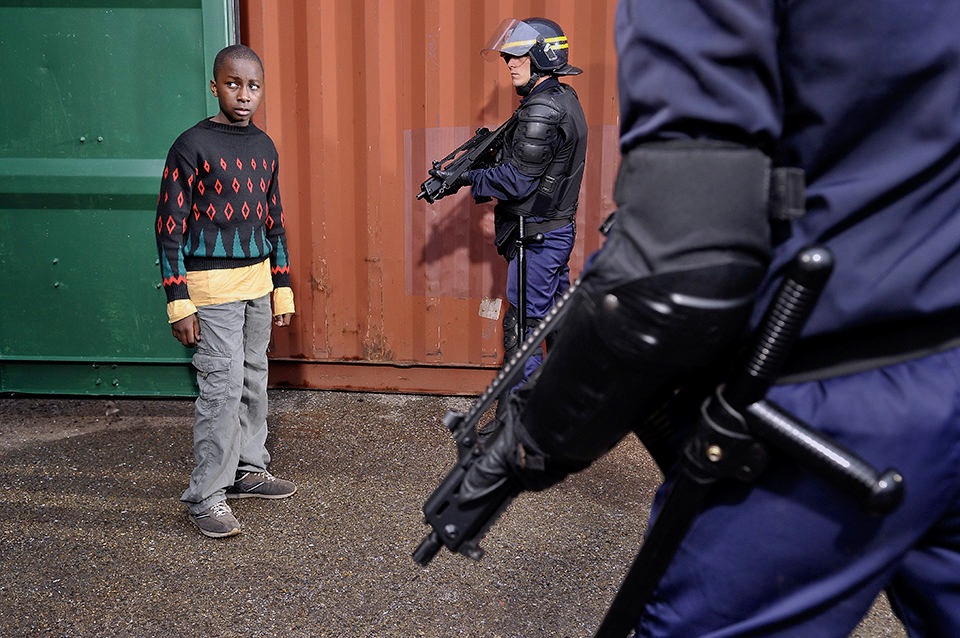
The immigration authorities in Le Havre are mostly depicted as some faceless bureaucratic threat but a more pressing concern is detective Monet (Jean-Pierre Darroussin), who seems intent on tracking Idrissa down and shipping him back to his homeland.
Director Kaurismaki takes this potentially melodramatic scenario and turns it into something quirky and unexpectedly upbeat, adding his trademark deadpan humor and fondness for downtrodden characters living on the margins of society.

Marcel’s decision to help Idrissa is emblematic of his tightknit, working-class neighborhood and soon Yvette (Evelyne Didi), the local baker, Claire (Elina Salo), a bar owner, and others become part of Idrissa’s underground support group as if it were second nature to them. As Kaurismaki once stated in an interview, “People are at their best when everything goes wrong. The most noble traits, and the ugliest, are always discovered in a crisis: man’s greatness, man’s baseness. If everything disappears, traits of solidarity and self-sacrifice emerge. Of course, in a film one is allowed to and must exaggerate those best qualities of mankind that you do not see too often.”
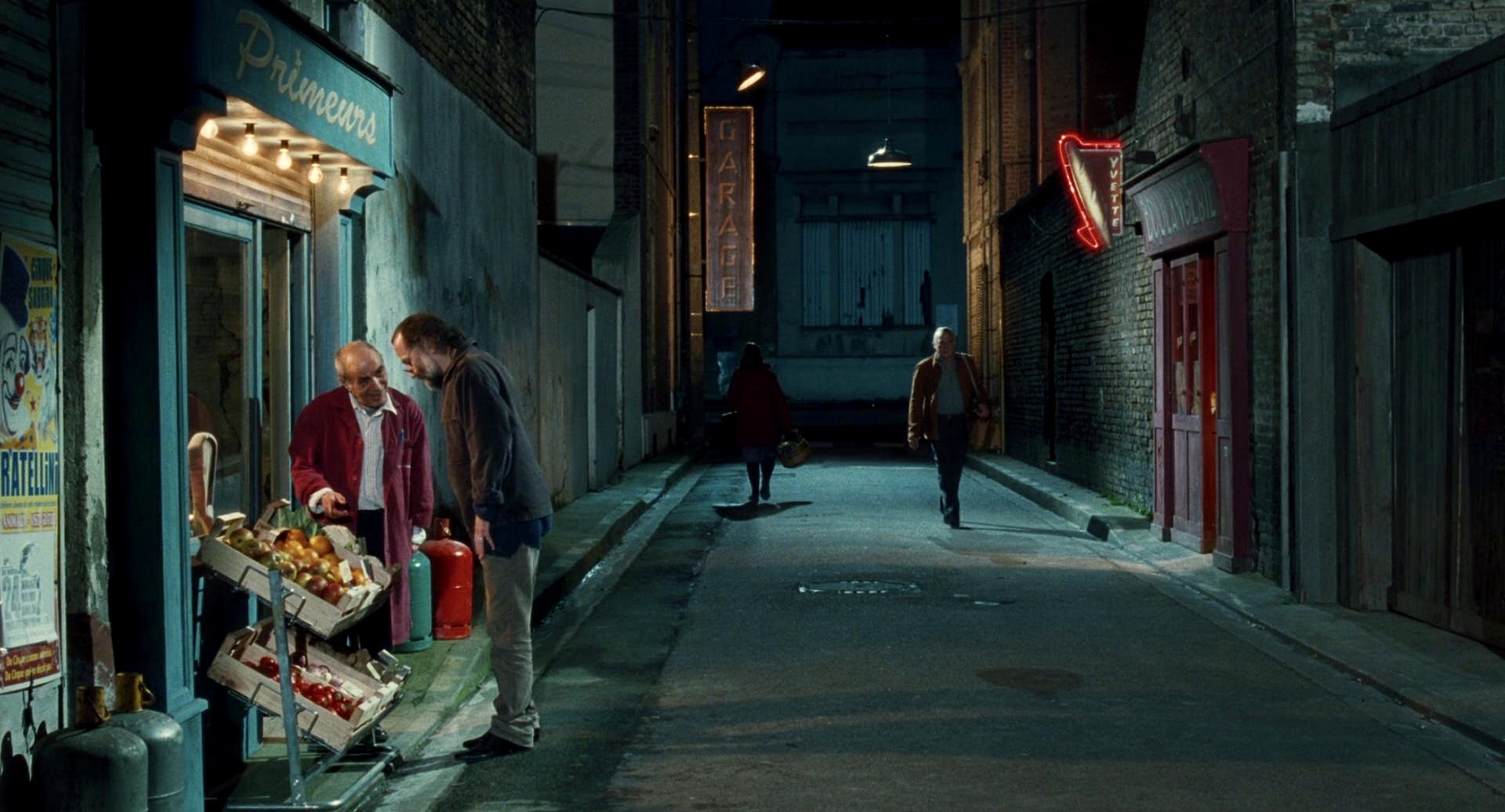
One can only imagine what Hollywood would do with a storyline like Le Havre, casting it with big name stars, underscoring it with sentimental music and giving it a phony, feel-good ending. Kaurismaki, on the other hand, grounds his film in a realistic milieu and balances the threat of Idrissa’s capture with a stylized but believable depiction of an illegal immigrant’s experience that ends well and doesn’t feel false. With so many stories about immigrants suffering death and tragedy in their attempts to start a new life, is it refreshing to experience a movie where goodness and compassion prevails. Maybe it is Kaurismaki’s version of a working-class fantasy like Vittorio De Sica’s Miracle in Milan (1951) but the fadeout feels well-earned and deeply satisfying.
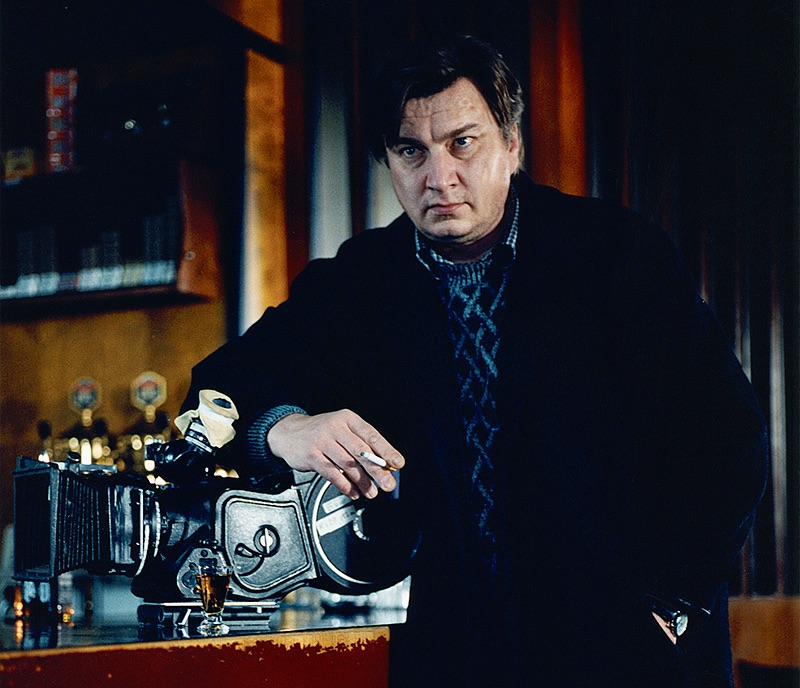
In an interview for The Criterion Collection with critic Peter von Bagn, Kaurismaki acknowledged his desire to offer something other than cynicism and a doom and gloom outlook to moviegoers: “In this one I thought I’d radically place two happy endings one after the other. It’s seldom done, so I upped the ante: the boy’s departure and the miraculous recovery [of Marcel’s wife]. Either one would do as a happy ending. The ending might’ve been happy first and then unhappy, but I decided to go full throttle with the fairy-tale aspect. Not even medical science means anything.”
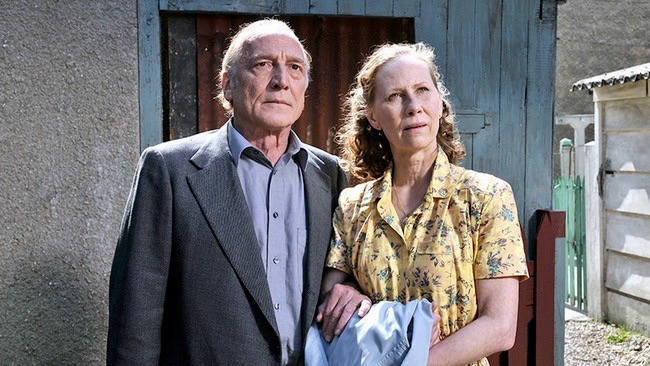
In the main role of Marcel, French actor Andre Wilms has one of those great, weathered faces that has seen the best and worst that life has to offer. Strangely enough, he is playing an older version of himself that first appeared in Kaurismaki’s Le Vie de Boheme (1992). In that film, he was a struggling writer in Paris trying to get his work published. In Le Havre, he polishes shoes for street change, having long given up his dreams of being a famous author.
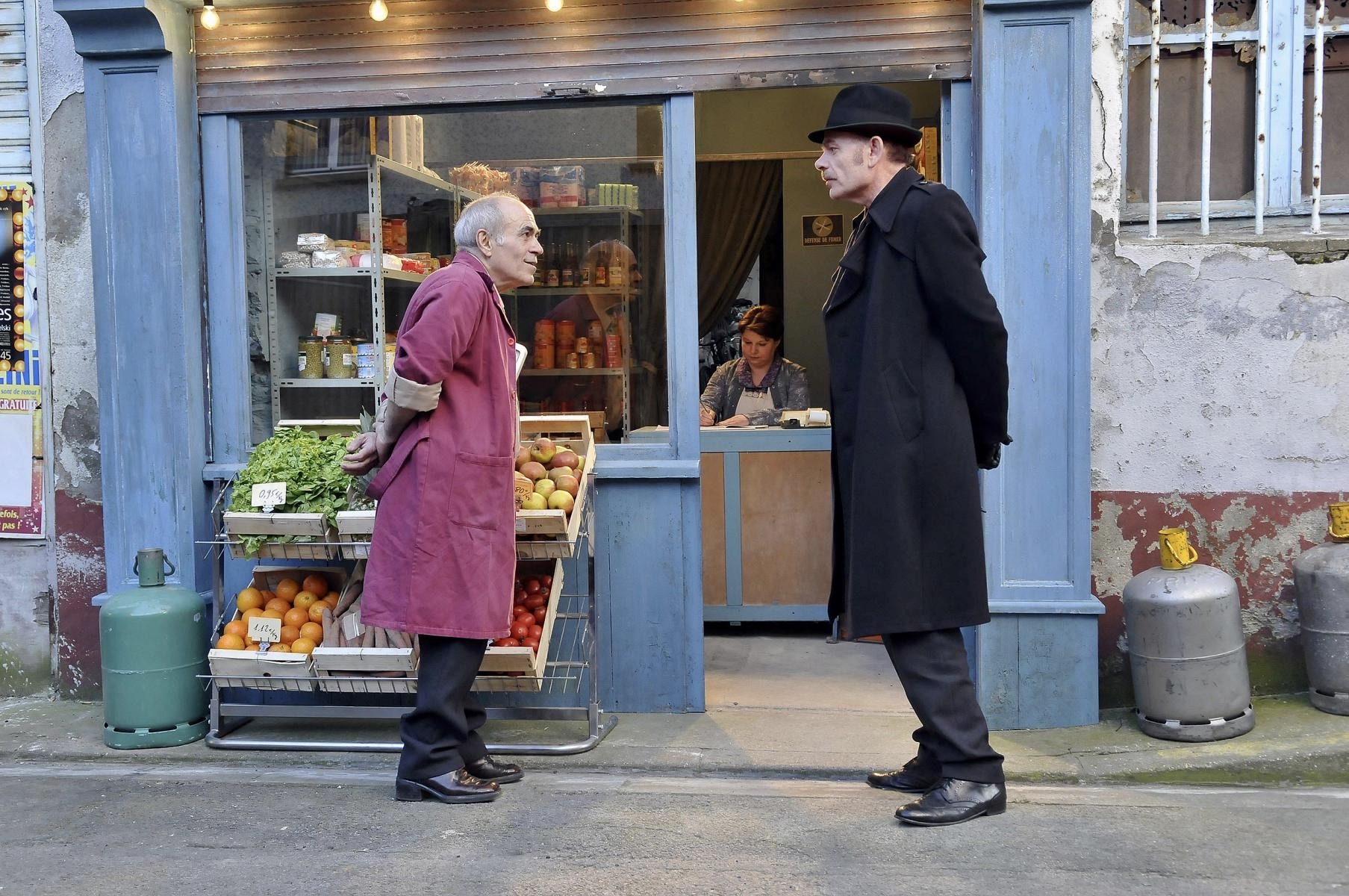
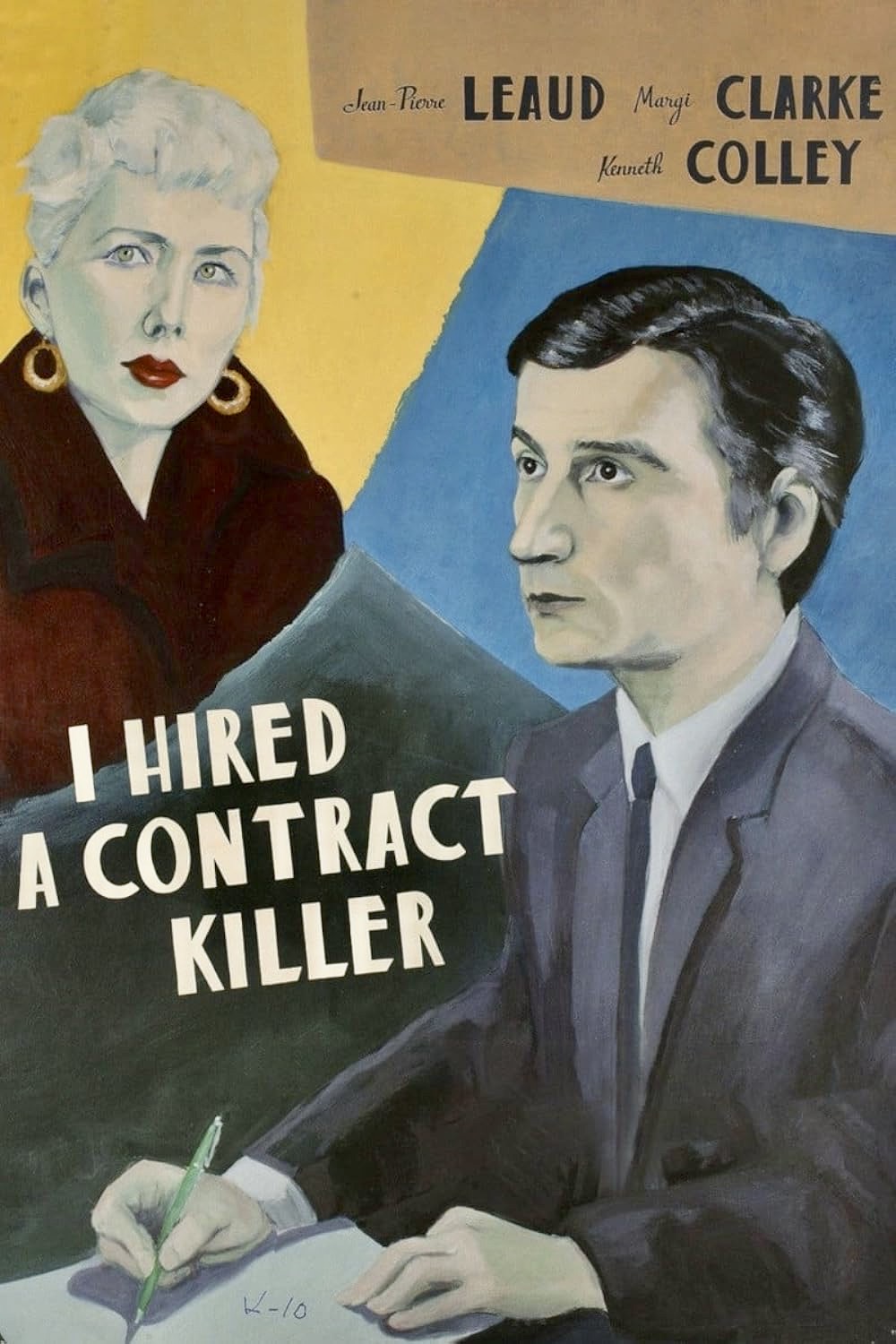
The movie is also Kaurismaki’s second film in French (the first was Le Vie de Boheme) and fills out some of the supporting roles with famous French actors like Jean-Pierre Darroussin as the deceptively compassionate Monet, comedian Pierre Etaix as the doctor treating Arletty and Jean-Pierre Leaud in an almost wordless cameo as the neighborhood informer/spy. (Leaud had previously appeared in the starring role in Kaurismaki’s black comedy, I Hired a Contract Killer [1990]).
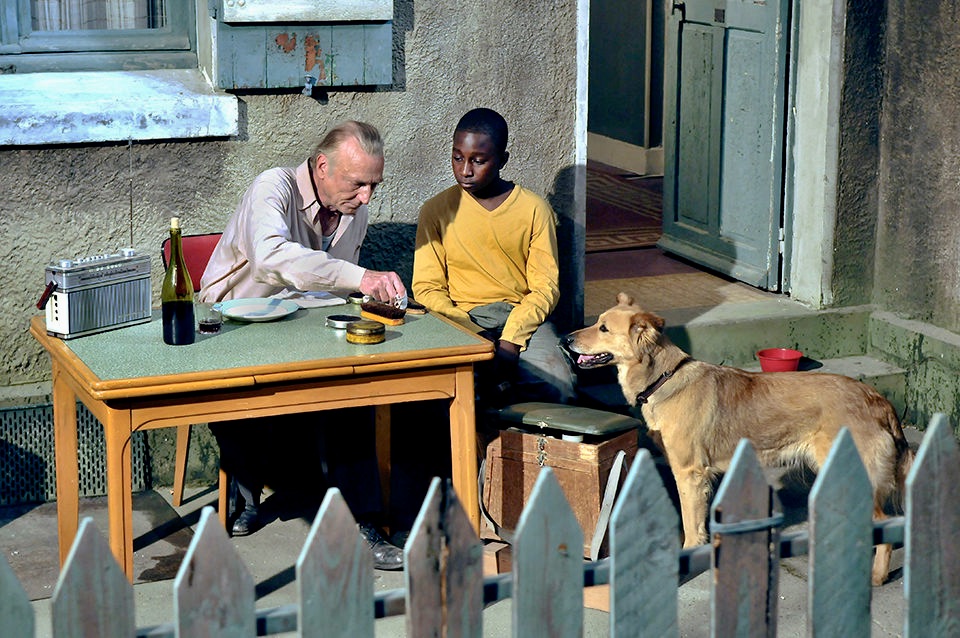
Le Havre was universally praised by most film critics upon its release with Peter Bradshaw’s review for The Guardian succinctly capturing the movie’s appeal: “It is seductively funny, offbeat and warm-hearted, like the rest of his films, but with a new heartfelt urgency on the subject of northern Europe’s attitude to desperate refugees from the developing world….and it has a solid, old-fashioned look; but for the contemporary theme, it could have been made at any time in the last 50 years.”
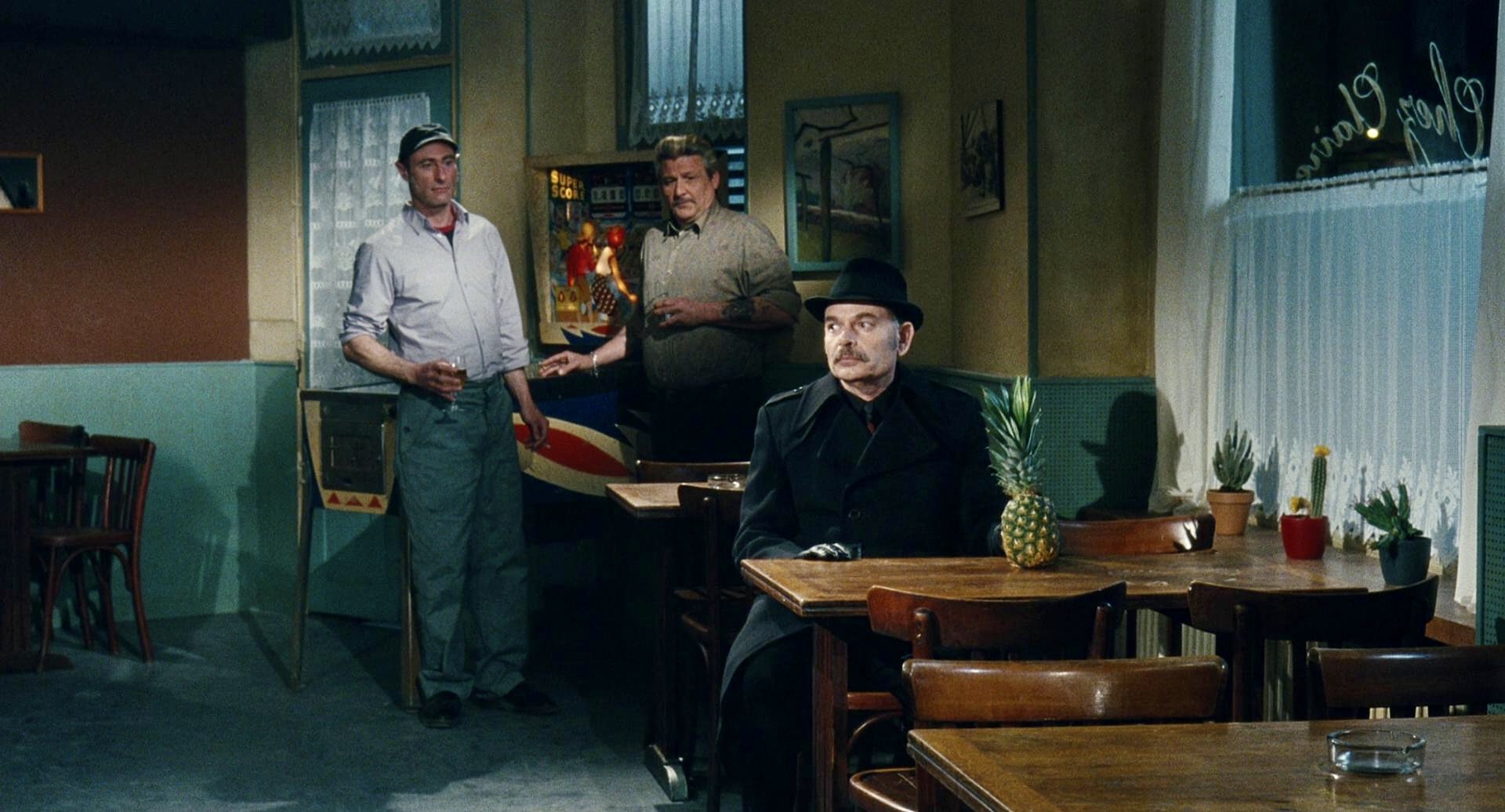
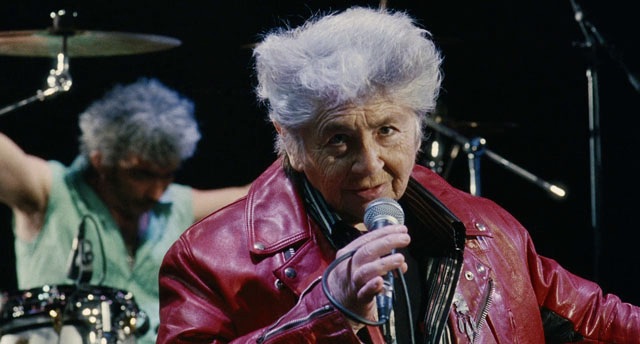
As usual for a Kaurismaki film, the cinematography by long-time collaborator Timo Salminen is exquisite. Even the most drab, uninviting interiors or economically depressed environments like a dive bar are given warmth and visual interest through the use of specific colors and lighting schemes that suggest a painter is behind the camera. Kaurismaki’s love of rockabilly, surf guitar and roots music also adds a lively, eccentric touch with selections from The Renegades (“Matelot”), Blind Willie McTell (“Statesboro Blues”), and Little Bob aka Roberto Piazza, a French rock ‘n’ roller who performs “Sheila ‘N’ Willy” and “Libero.” The latter looks like a character who would fit in perfectly with Kaurismaki’s Siberian rock band in Leningrad Cowboys Go America (1989).
Regarding the location for the film, Kaurismaki revealed to critic Peter von Bagn that the port city of Le Havre (where it was filmed) was almost completely destroyed by bombings during WW2 but the neighborhood featured in the movie where the main characters live was unharmed “and the only one with curvy streets.” He also added that “this particular strip has also been completely demolished. The bulldozers were waiting: we bought the area an extra week of life. As always, the most interesting scenery is destroyed to make room for malls.”
Le Havre is the first film in a planned trilogy that Kaurismaki may or may not get around to finishing now that he is 66 years old (he was born in 1957). He would like to film the next one in Spain and the third one in Germany with immigration as a linking theme. This isn’t the first time Kaurismaki has tackled a film trilogy. In 1986 he launched his first trilogy, often referred to as his “Proletariat Trilogy,” with Shadows in Paradise and followed it with two more movies featuring marginalized protagonists, Ariel (1988) and The Match Factory Girl (1990), starring Kaurismaki regular Kati Outinen (Marcel’s wife in Le Havre).
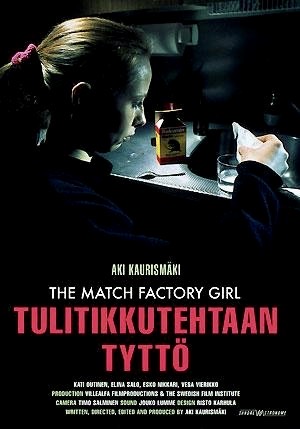
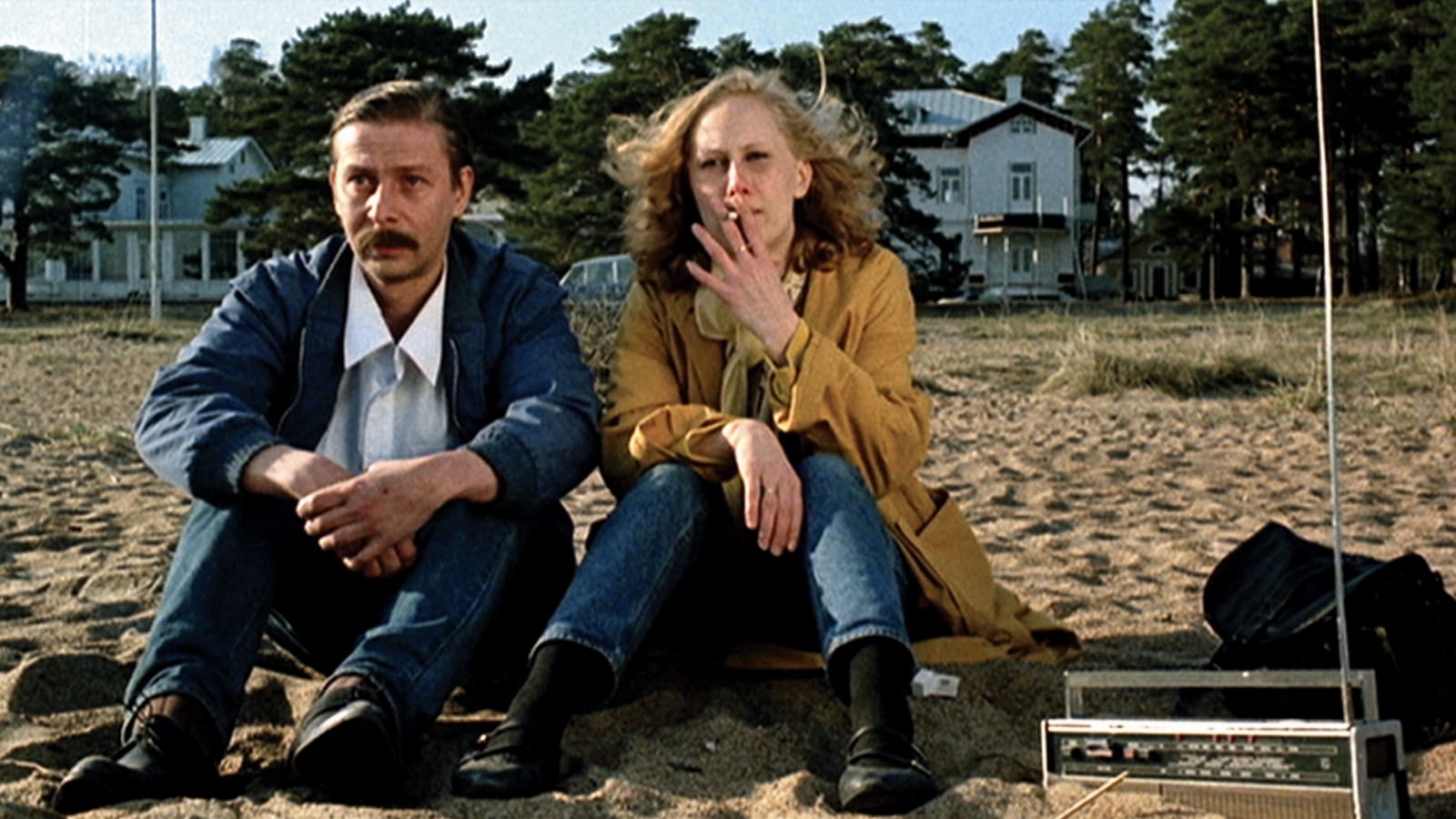
Then Kaurismaki created another trilogy focusing on some down and out characters in Finland starting with Drifting Clouds (1996) and continuing with The Man Without a Past (2002) and Lights in the Dusk (2006). For anyone who has never seen a Kaurismaki film before, however, Le Havre is an easily accessible entry point and, if you like what you see, I recommend following it up with Shadows in Paradise, which established the template for all of the director’s future work.
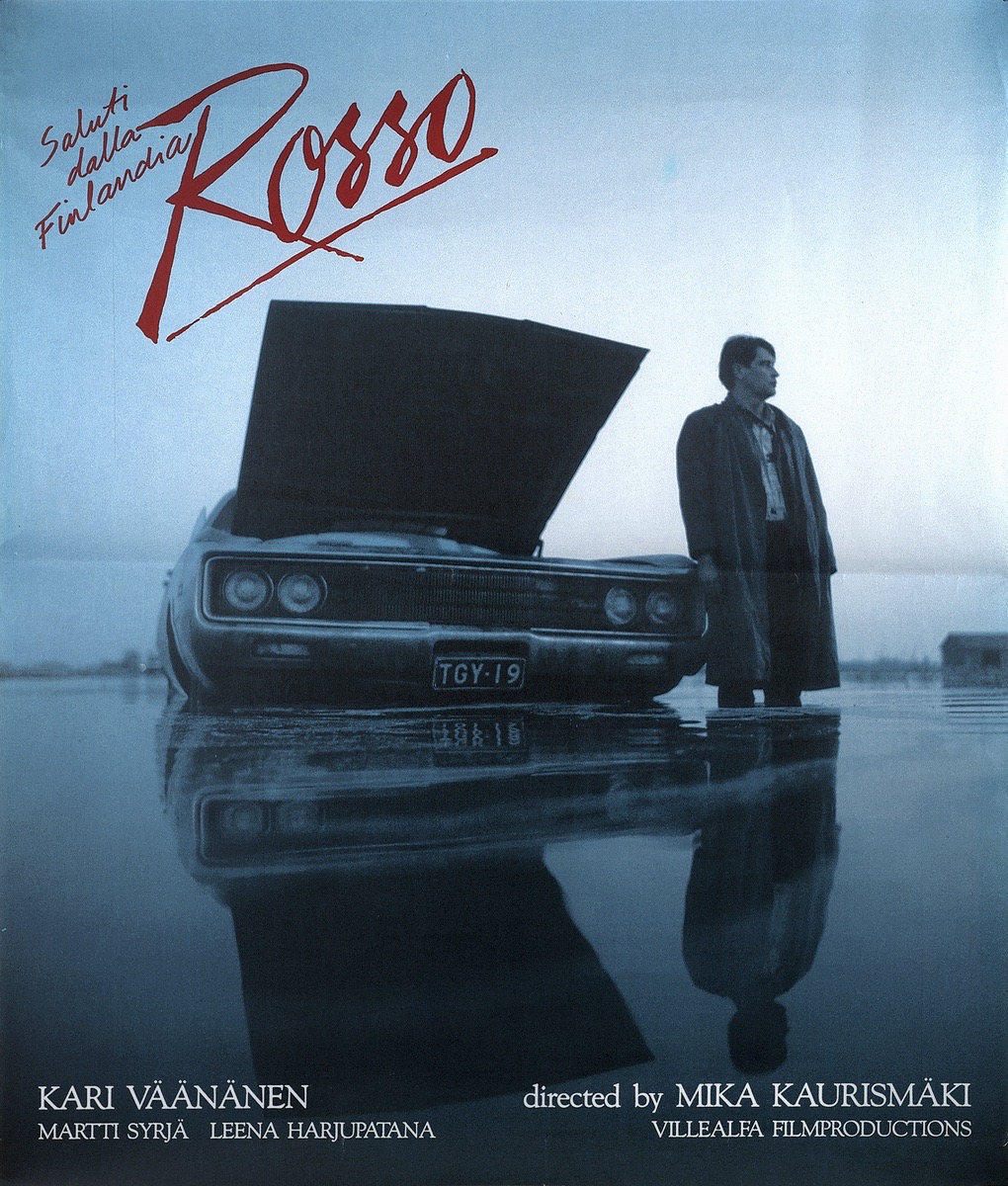
You might even be motivated to check out the films of his older brother Mika Kaurismaki, who isn’t as well-known as Aki, but he has over 40 movies to his credit and several of them have cult followings such as Rosso (1985), a road movie about a Sicilian hitman, Zombie and the Ghost Train (1991) starring Silu Seppala as a self-destructive musician, and Tigrero: A Film That Was Never Made (1994), a fascinating documentary on a Samuel Fuller project that was supposed to be filmed in the jungles of Brazil but never happened.
In the U.S., Le Havre won numerous critic awards including Best International Festival at the Chicago International Film Festival and nominee for Best Foreign Language Film by the National Society of Film Critics. In Europe, it garnered even more prizes with the Cannes Film Festival awarding it the FIPRESCI prize and a special mention prize of the Ecumenical Jury, which called it, “An ode to hope, solidarity and brotherhood: using sophisticated filmmaking, Aki KAURISMÄKI invites us in a world which he transforms through the magic of the colours, the humour of the dialogues, the humanity of the characters – with “The Sermon on the Mount” in the background.” It even won the Palm Dog Jury Prize for Laika, Marcel’s lovable pooch in the film. (This category started as a fun extra event at Cannes in 2001 and has since become a regular fixture at the festival.)
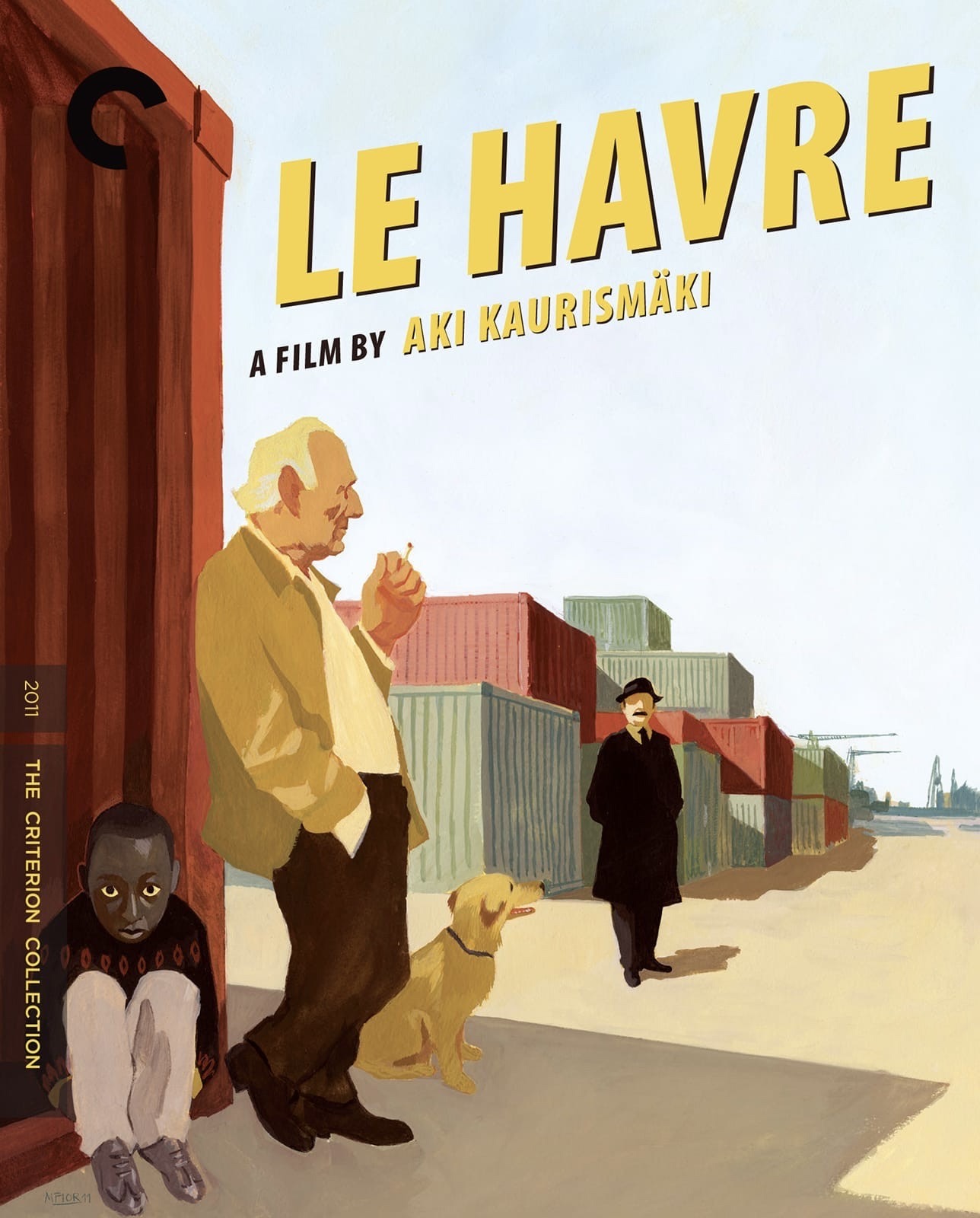
Le Havre was released on Blu-ray by The Criterion Collection in July 2012 and is still the best presentation of Kaurismaki’s movie. The extra features include a Finnish television interview with actress Kati Outinen on her work with the director over the years, an interview with actor Andre Wilms (he died in February 2022 at age 74), footage of Little Bob in concert and more.
Other links of interest:
https://www.sbs.com.au/whats-on/article/le-havre-aki-kaurismaki-interview/ooi2kyb6k
https://www.filmcomment.com/article/aki-kaurismaki/
https://www.mikakaurismaki.com/bio.php
https://floatingworldrecords.co.uk/blogs/discover/the-story-of-little-bob
 Cinema Sojourns
Kaurismäki has just released his fourth part in the Proletariat trilogy: Fallen Leaves (see IMDB details here: https://www.imdb.com/title/tt21027780/). Haven’t seen it yet, but watching it in the cinema is on my to do list for this week.
The reviews have been great so far and a new Kaurismaki film is always a reason for rejoicing.