

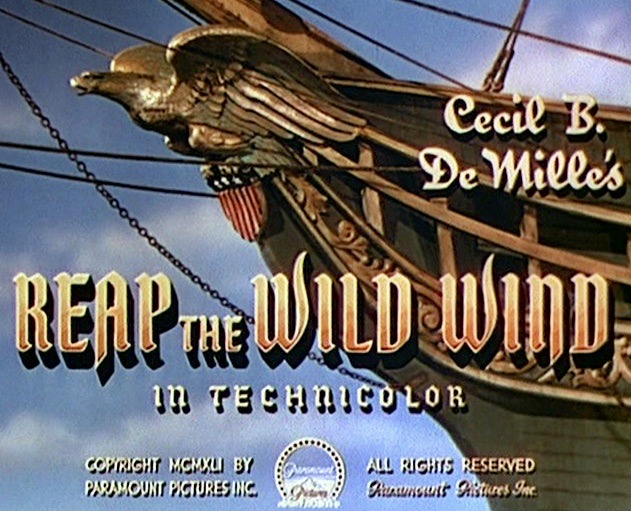
When fans of classic films from Hollywood’s golden era exclaim “They don’t make ‘em like they used to,” they are usually referring to the kind of lavish, big-budget, audience-pleasing entertainments that were the specialty of Cecil B. DeMille during the silent and sound eras. Often derided by some critics as being corny and bombastic with an exploitable mix of sex, violence and quasi-religious elements, his most popular films were always in sync with what audiences wanted from a movie during his 45-year reign as a major Hollywood director/producer. Three of DeMille’s biblical epics, The Ten Commandments (1923), The King of Kings (1927), and Samson and Delilah (1949), along with Reap the Wild Wind (1942) are still considered some of the biggest box office hits in the history of Hollywood. The latter film, in particular, is an excellent example of his larger-than-life approach to storytelling mixing rival sea captains, a hurricane, and a giant red squid into a torrid romantic saga based on Thelma Strabel’s best selling novel.

Reap the Wild Wind also established Ray Milland as a popular leading man (he would win the Oscar three years later for his performance as the alcoholic writer in The Lost Weekend, 1945) and was nominated for three Academy Awards, Best Color Cinematography, Best Color Art Direction-Interior Decoration and Best Special Effects, which won the award.

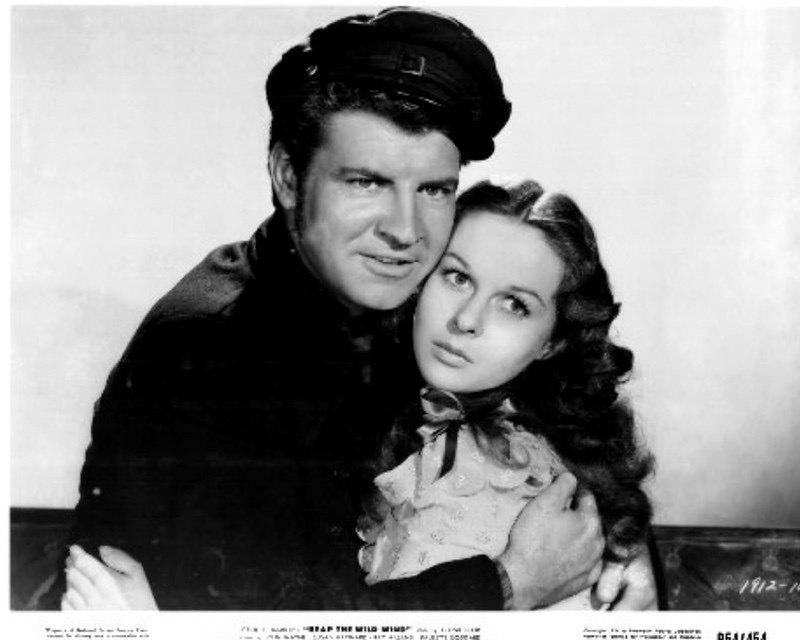
The story, which is set in the Florida Keys, pits Loxi Claiborne (Paulette Goddard), the owner of a ship salvage operation, against the dishonest Cutler brothers (Raymond Massey, Robert Preston) who are suspected of causing schooners to wreck just so they can salvage them. Joining forces with Loxi temporarily are Captain Jack Stuart (John Wayne) and Stephen Tolliver (Ray Milland), a Charleston lawyer investigating a recent ship salvage. As expected, Stuart and Tolliver soon become rivals for Loxi’s affections and their conflict sets the stage for a tragic turn of events.

After the completion of North West Mounted Police (1940), DeMille focused on his new project, The Queen of Queens, a story about the Virgin Mary, but was unable to resolve numerous script problems. Instead, he decided to make a movie about shipwrecks and deep-sea diving based on a serial by Thelma Strabel that had appeared in the Saturday Evening Post. Remaining true to the original setting, DeMille filmed some sequences on location in Key West, Florida, not far from the area where he shot his first version of The Buccaneer in 1938.
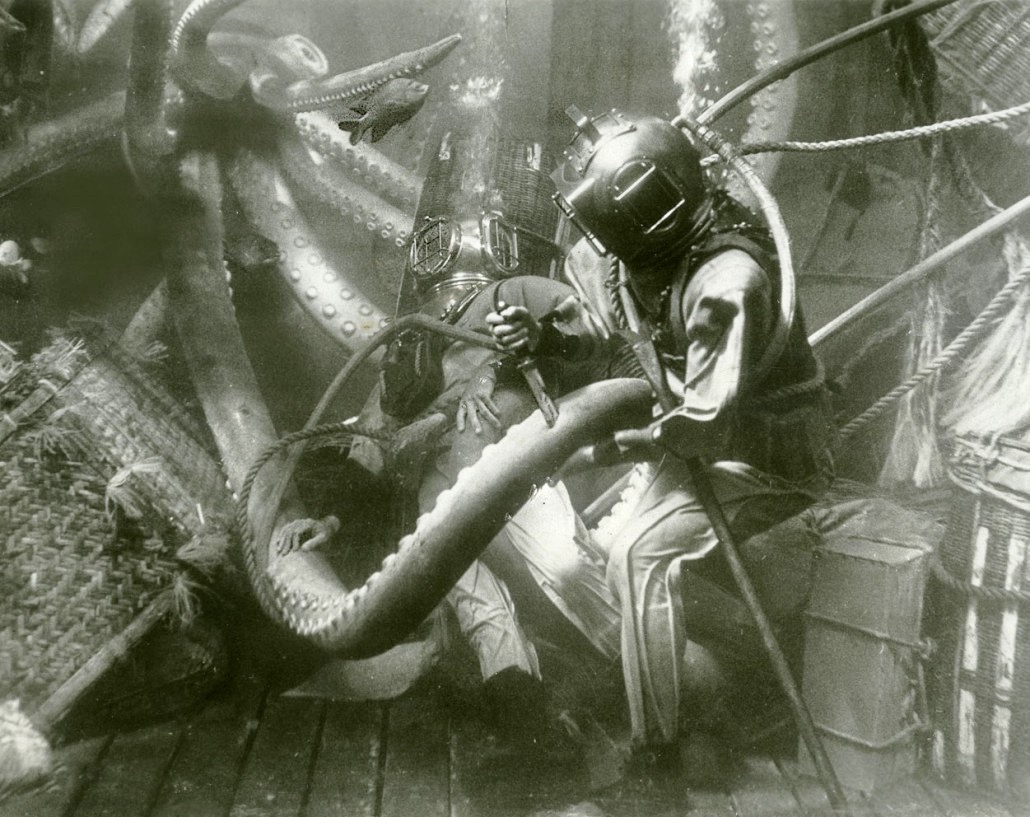
He also planned on using a live octopus for the sequence where Ray Milland is attacked underwater. But he ended up settling for a huge mechanical octopus, which was operated by a twenty-four button electrical keyboard with a complex system of hydraulic pistons used to activate the thirty-foot tentacles of the octopus. While filming the sequence, DeMille communicated by a loudspeaker to direct the technicians in the movement of the creature while at the same time barking orders to Milland and John Wayne underwater through telephone wires in their helmets (Wayne would later battle another underwater sea creature in Wake of the Red Witch, 1948).
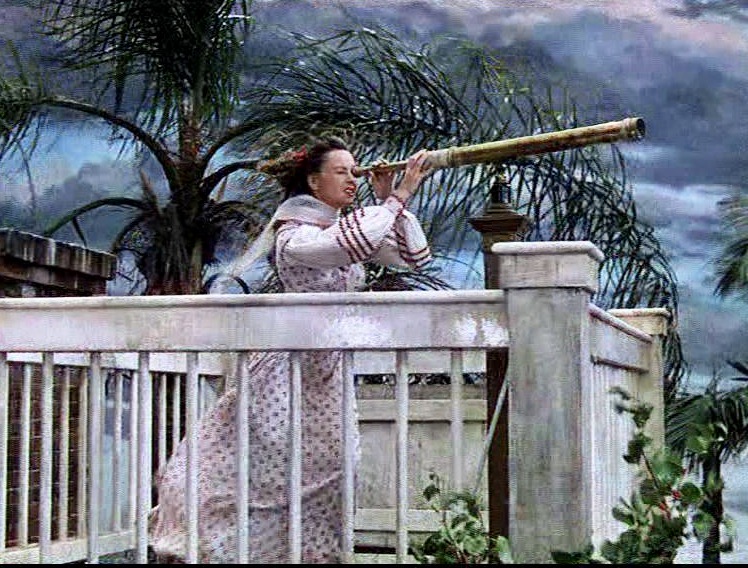
Other scenes in Reap the Wild Wind which posed problems were the shipwreck and shots of the vividly colored underwater kelp. For the former, DeMille wanted to simultaneously capture the shipwreck, the churning sea, and the stormy sky in the same shot. This was accomplished by shooting the segments separately and then projecting them on three different projectors with fused quartz lenses onto a background where the movements were synchronized.
For the kelp, DeMille used yards and yards of iridescent silk that would weave about in the ocean depths. Unfortunately, the color of silk changes in sea water so DeMille’s production team, headed by cinematographers Victor Milner and William V. Skall, had to use fresh silk every day, then dry it out, and have it dyed back to its original shade for reuse. Needless to say, the sequence took a month to photograph but due to such painstaking detail, Milner and Skall’s Technicolor cinematography received an Oscar nomination that year.
The casting of Reap the Wild Wind is equally top drawer and features DeMille’s penchant for mixing big name stars like John Wayne with up-and-coming performers like Susan Hayward and established character actors like Charles Bickford and Louise Beavers. For one ballroom sequence, DeMille even cast some of his former silent film associates as extras like Maurice Costello, Elmo Lincoln, Monte Blue, and director George Melford. You can also see gossip columnist Hedda Hopper in her last screen appearance as a dramatic actress.

In the biography, Cecil B. DeMille, author Charles Higham wrote that “John Wayne was extremely ill-at-ease about acting in a DeMille picture; he did not relish being shouted at on the set. He had applied for the role of Wild Bill Hickok in The Plainsman and had been turned down (DeMille’s only remark had been, “You were in The Big Trail weren’t you? A lot of water has gone under the bridge since then.”)

When he was offered the role played by Preston Foster in North West Mounted Police he had told DeMille’s emissary: “Just tell Mr. DeMille too much water has flowed under the bridge for me to want that role.” DeMille was provoked, and when Reap the Wild Wind came along, firmly offered him the part. “The only reason you called me here is to make Ray Milland look like a man,” Wayne said. “That’s right,” DeMille replied. After some wrangling, Wayne accepted the role, and they became good friends.”

Typical of its era, Reap the Wild Wind is not without a few scenes that will make audiences wince today in regards to its antebellum setting. Louise Beavers is once again typecast as the domestic help while slavery and racial inequality are omnipresent background elements such as a scene where King Cutler (Massey) tries to persuade Jack to sail a slave ship to Africa.

Nevertheless, the film was a huge commercial and critical success with Bosley Crowther of The New York Times stating, “It definitely marks a DeMillestone. It is the master turned loose, with no holds barred.For onto a gorgeous panorama representing the southern coast around 1840, Mr. De Mille has crowded a story filled with sea storms, ship wrecks and gang fights, and peopled with picaresque characters, dashing gentlemen and ladies in crinoline. He has worked a chattering monkey into it, and also a giant squid…. He has splashed it with every color, from that of red coal oil to that of a yellow buttercup. Obviously the shrewd producer has hoped to sow another “Gone With the Wind.”
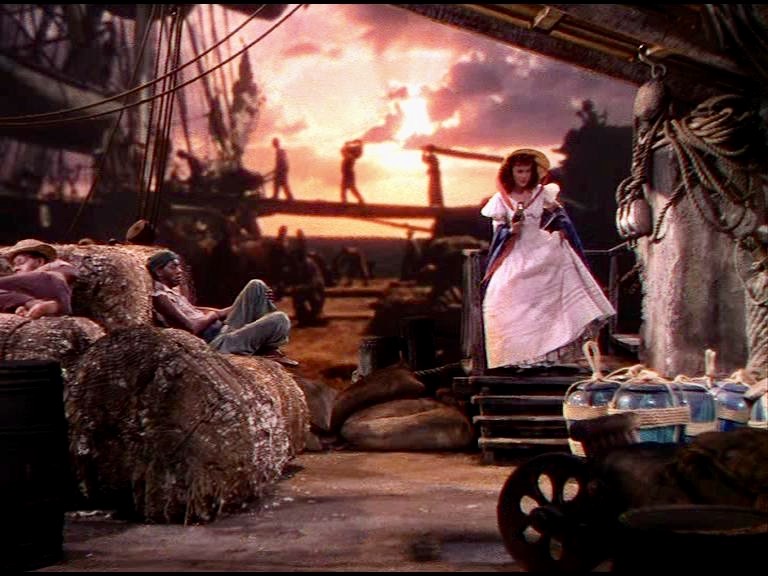
The Variety reviewer wrote, “It is a film possessing the spectacular sweep of colorful backgrounds which characterize the Cecil DeMille type of screen entertainment…The production is a visual triumph. Some of the marine scenes are breathtaking. There is skillful blending of process photography.” And The Hollywood Reporter review was equally enthusiastic: “The giant squid sequence that climaxes the action is purely Jules Verne in its pulling power for kids of all ages….Don’t you ever say DeMille short-changed you. He has packed everything into a film that runs more than two hours.”

Reap the Wild Wind has been available on VHS and DVD over the years but your best option is the Blu-Ray edition released by Kino Lorber Studio Classics in September 2019.

*This is a revised and expanded version of an article that originally appeared on the Turner Classic Movies website.
Other links of interest:
https://tvtropes.org/pmwiki/pmwiki.php/Film/ReapTheWildWind
 Cinema Sojourns