

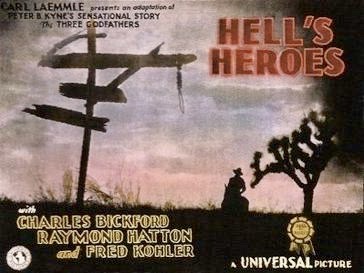
Moviegoers often complain about the Hollywood practice of remaking a film that was popular the first time around so why make it again. The answer is obvious. A good story is worth retelling again and again and author Peter B. Kyne is one of those writers whose various novels and stories have been adapted to the screen more than 100 times, especially during the silent and early sound era. Many of these works were also adapted by screenwriters without his consent or any compensation from the studios but most film buffs will recognize his most popular creation, which was a 1913 novella entitled Three Godfathers (It first appeared in The Saturday Evening Post in November 1912). D.W. Griffith made a short silent version of it in 1913 with Harry Carey called The Sheriff’s Baby. There was a Universal silent version in 1916 which also starred Harry Carey, then a remake directed by John Ford in 1920 called Marked Men, and yet another remake by Ford in color and starring John Wayne in 1948 entitled 3 Godfathers. Other adaptations include a made-for-TV version entitled The Godson in 1974 and even a 2003 Japanese anime called Tokyo Godfathers from director Satoshi Kon as a homage to the original story. But one version that is often overlooked is Hell’s Heroes (1929) directed by William Wyler.
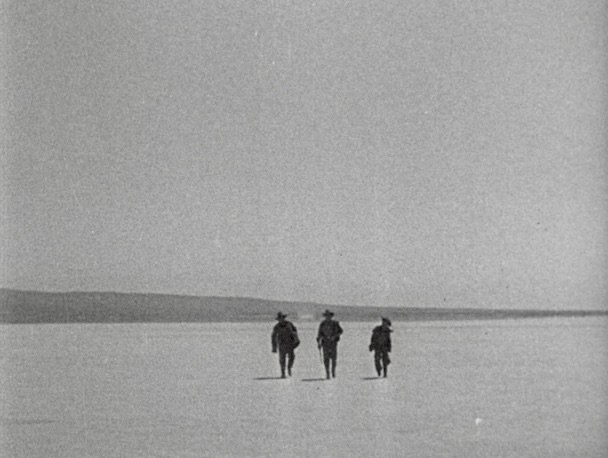
Shot on location in the Mojave Desert and the Panamint Valley near Death Valley, Hell’s Heroes (1930) is probably the most stark and dramatically effective version of the oft-filmed Peter B. Kyne novella. The story, which is set on Christmas Eve, follows three outlaws (Charles Bickford, Raymond Hatton, Fred Kohler) as they rob a bank and flee into the desert during a sandstorm. While crossing the sun-scorched terrain, they discover an abandoned wagon carrying a pregnant woman. She dies shortly after giving birth and the three fugitives grudgingly agree to carry her child to safety, risking their own lives in the process.
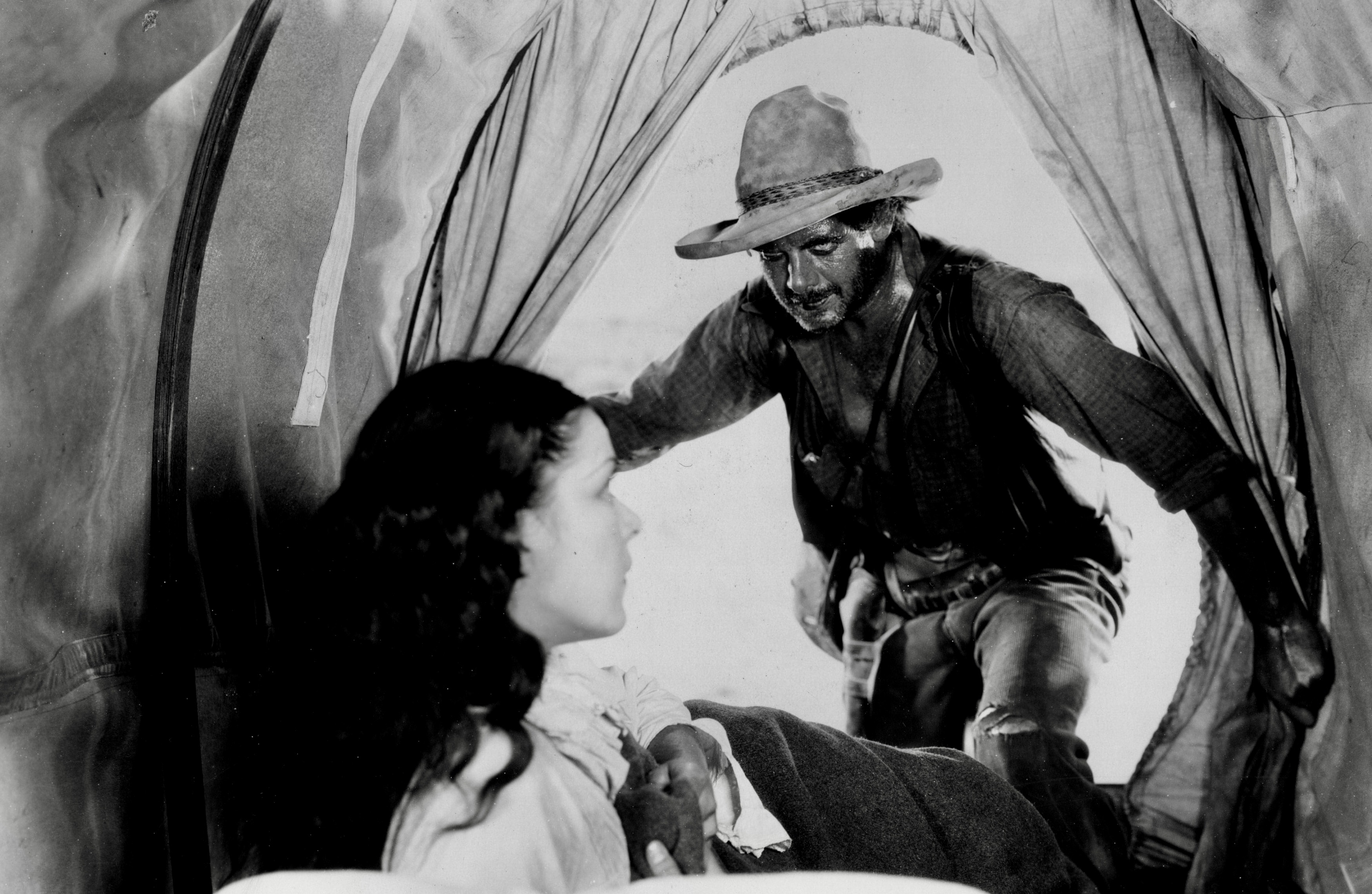
Universal’s first all-sound outdoor picture, Hell’s Heroes was made at a time in William Wyler’s career when he was still working his way up through the hierarchy of the studio system and not yet recognized as one of Hollywood’s most talented directors. The only reason he ended up directing an A-picture like Hell’s Heroes was because he had a proven track record of transforming mediocre material into first rate entertainment and because the original choice for director – screenwriter Tom Reed – had no directing experience.
The filming of Hell’s Heroes turned out to be no picnic at the beach. Because of the primitive sound techniques, Wyler was forced to record the dialogue of the three outlaws on the fly by having the crew improvise a soundproof booth with a sealed window to house the camera and cameraman. The booth was mounted on rails and pushed by a dozen men in absolute silence while microphones in the sagebrush picked up dialogue (It should be noted that the movie was also released in a silent version).

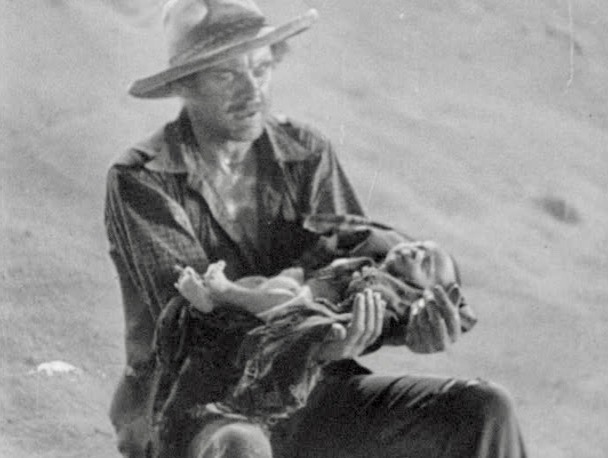
The desert temperatures would sometimes climb to a hundred ten degrees Fahrenheit and the heat in the booth would become intolerable, causing the cameraman to pass out. Wyler was also challenged in his direction by Charles Bickford, a popular New York stage actor who was brought to Hollywood by Cecil B. DeMille. Bickford refused to follow Wyler’s suggestions for the filming of his final desert trek so the director worked around him, creating a long tracking shot that passed over tracks in the sand, an abandoned hat, and discarded gold before coming to rest on the orphaned baby. This powerful sequence also attracted the attention of Darryl Zanuck, a producer at Warner Bros. who ordered his directors to study this sequence.

Hell’s Heroes turned out to be an enormous commercial success, but Wyler had to battle for his creative vision and that meant going head to head with “Junior,” Wyler’s nickname for his producer and son of studio head Carl Laemmle. The two men clashed constantly over the escalating budget, the shooting schedule, and scenes that might be subjected to censorship by the Hays Office like the climax. The latter was a battle that Wyler lost. His original ending, where the surviving outlaw is captured by the angry townspeople and prepared for hanging, was dropped and replaced with a less cynical conclusion.

Critics were mixed on Hell’s Heroes. The New York Times was positive with the reviewer stating that the film “happens to be an interesting and realistic bit of characterization about three men who suffer retribution in the desert and undergo privation in their wish to atone for a crime….The three main characters are excellent, especially Mr Bickford’s portrayal.” The Film Daily started its review with this header: “Western of limited appeal due to absence of love story and the general dreariness of the theme” and went on to add “…the depressing desert wanderings and sufferings of the dirty and hairy fugitives are not likely to prove very satisfying as entertainment.”
More than ninety years after its original release, Hell’s Heroes remains a landmark Western and one of the most visually innovative films of the early sound era. In 1990 the movie was restored through the efforts of director Martin Scorsese and The Film Foundation.

Hell’s Heroes was released on DVD in August 2010 by The Warner Archive Collection which paired it on the same disc as the 1936 version of Three Godfathers starring Chester Morris, Lewis Stone and Walter Brennan. Would it be unrealistic to think that Warner might release it on Blu-ray in the future?

*This is an expanded and revised version of an article that originally appeared on the Turner Classic Movies website.
Other links of interest:
https://www.sfgate.com/bayarea/article/Honoring-the-many-forms-of-director-William-Wyler-2799226.php
 Cinema Sojourns