
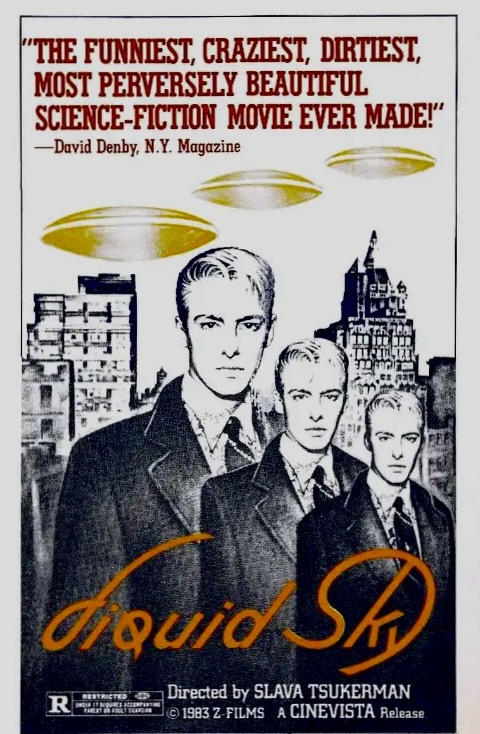
Is it possible for a struggling independent film director to make a science fiction film today for less than a million dollars? It doesn’t seem likely but it could be possible if the director is driven, highly creative and blessed with a team of uniquely gifted collaborators. That was certainly the case for Russian émigré Slava Tsukerman in 1982 when he embarked on his American feature film debut, Liquid Sky. Made for approximately $500,000 and produced during a 28-day shooting schedule, the film became an overnight sensation, winning special awards at film festivals around the globe and attracting adventurous filmgoers to a long run at New York City midnight movie screenings.
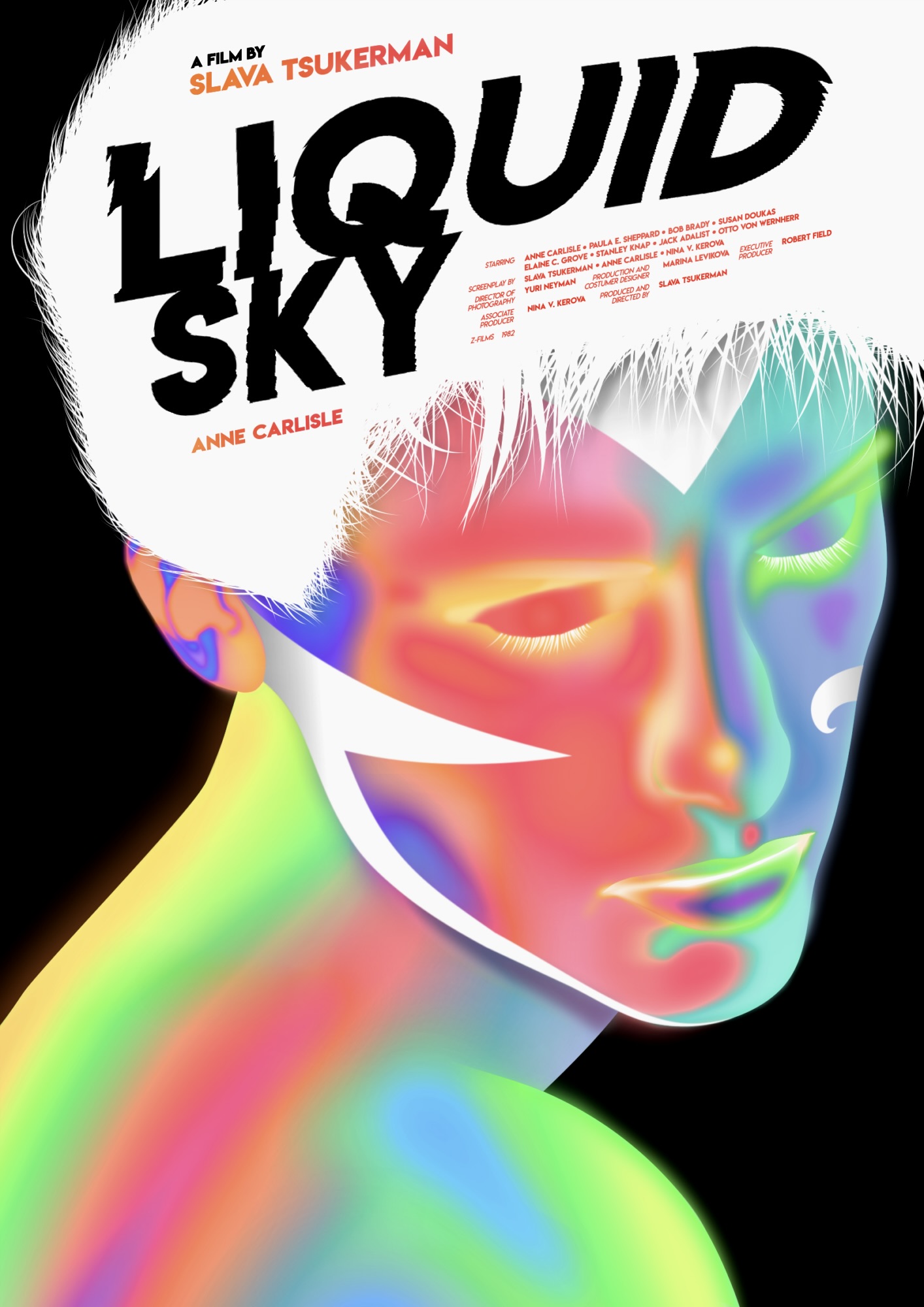
One reason for its immediate and lasting success is that Liquid Sky is much more than a sci-fi movie. Those genre elements – which involve a UFO establishing its base on the top of a NYC penthouse – are almost incidental to a film which is much more of a time capsule snapshot of the Lower East Side just as its underground arts/music scene was about to explode into mainstream media. More importantly, Tsukerman’s film can be viewed as many things – a satire of the burgeoning avant-garde nightlife scene and the kinds of people it attracts, a subversive look at gender and sexual role playing, or a cautionary tale about drug addiction…or any kind of addiction for that matter. After 44 years, Liquid Sky remains remarkably fresh and inventive and it looks like some fantastical art object.
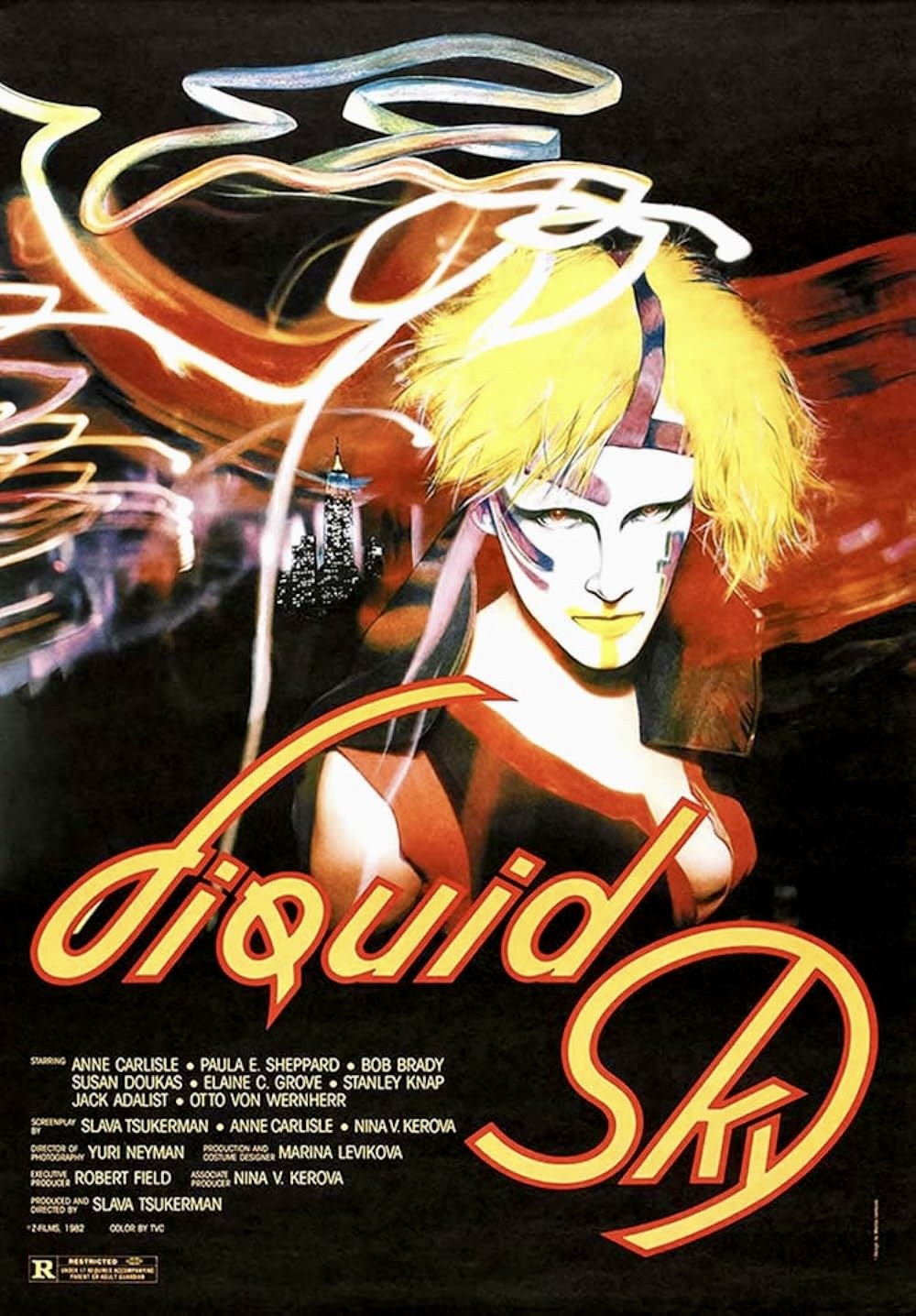
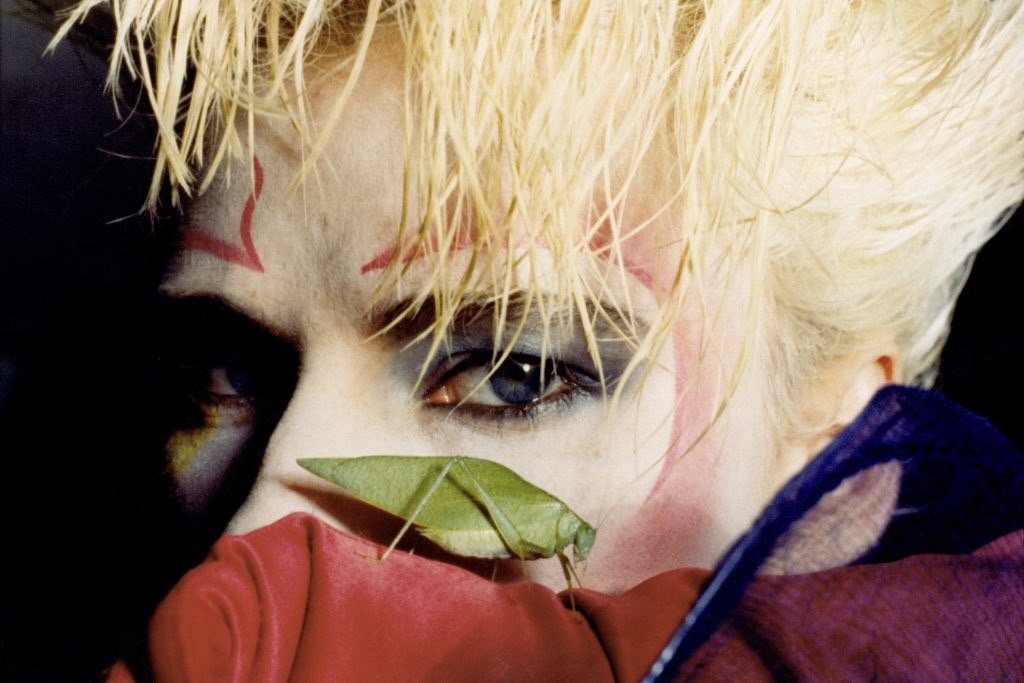
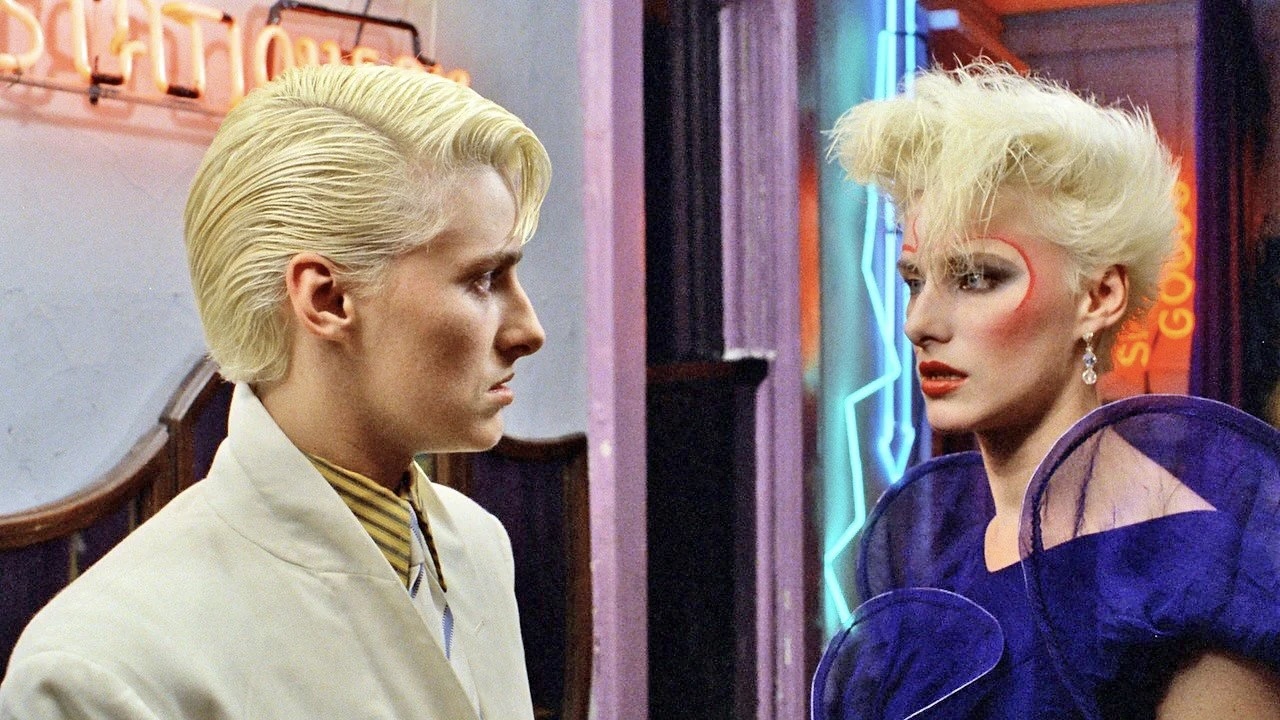
First, there is the story. Margaret (Anne Carlisle), the reigning poster girl of the New Wave fashion scene, is in a volatile on/off relationship with her roommate Adrian (Paula E. Sheppard), a punk poet/singer who performs at a hipster night spot where she also sells heroin on the side. Margaret is growing disenchanted with the demands of her underground celebrity because of her hectic schedule and the constant threat of sexual predators, mostly men. She has also aroused the intense jealousy of Jimmy (also played by Carlisle in a dual role), a drug addicted male model. Their world quickly begins to unravel when a tiny UFO lands on the roof of Margaret’s penthouse and the inhabitant (which is never seen) begins to monitor the model’s sex life. It soon turns out that the alien feeds off human orgasms, absorbing the victim at the moment of climax. Anyone who has sex with Margaret is a likely candidate for obliteration and people start disappearing (although the first two victims are found with a glass-like spike protruding from their skull).
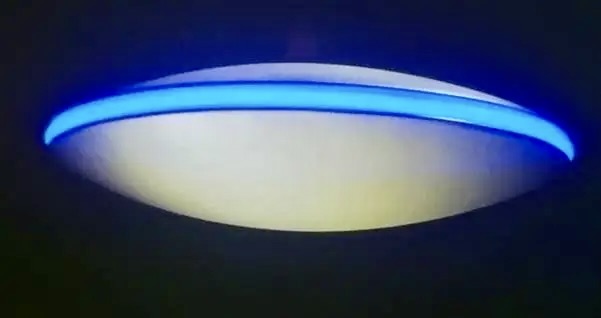
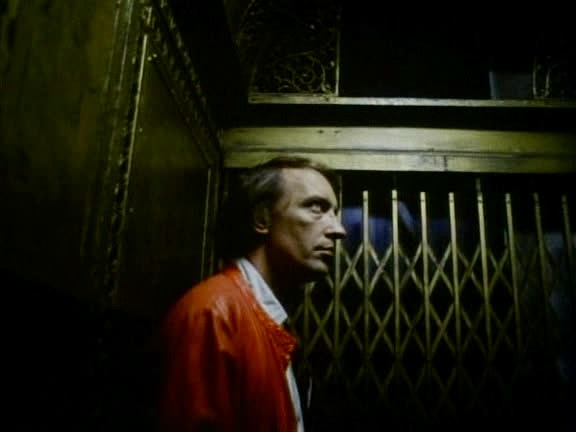
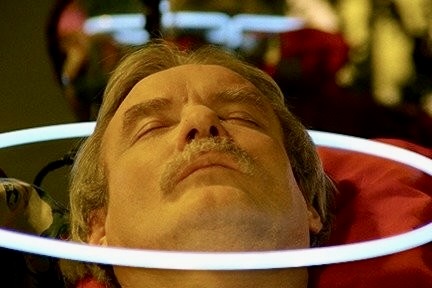
Meanwhile, Johann (Otto von Wernherr), an astrophysicist from West Germany, arrives in New York on a hunt for the UFO. After establishing the location of the spacecraft from his telescope atop the Empire State Building, he sets up his surveyance across the street from Margaret’s apartment, thanks to a chance meeting with local resident Sylvia (Susan Doukas), a television producer, who also happens to be Jimmy’s mother. When Johann discovers the reason for the strange deaths, he tried to warn Margaret but puts his own life in jeopardy.
What could have been played for suspense or horror in any other sci-fi movie is treated as a deadpan absurdist comedy, crackling with acerbic dialogue and plenty of anti-social attitude. Most of the hipster crowd in Margaret’s orbit are social climbing narcissists obsessed with sex and drugs while Adrian is a foul-mouthed baby punk, who appears to be bipolar in the way she swings from sweet talk to violent threats. Jimmy’s sullen, mean-spirited behavior reflects his dependency on cocaine and almost all of the men who pursue Margaret exude toxic masculinity. In comparison, Margaret is almost sympathetic for her jaded but blasé attitude toward everything, especially sex: “I’m always curious about people who have to make those kind of sexual definitions…homosexual, heterosexual, bisexual. When I like someone, it doesn’t depend of what kind of genitals they have as long as I find them attractive, don’t you think?”
In some ways, the film’s nonchalant, laissez-faire attitude toward sex prefigures current society’s preoccupation with transgender, incel and other controversial forms of human behavior. But Liquid Sky isn’t afraid to push the envelope further with such scenes as Adrian wanting to have sex with the corpse of Owen (Bob Brady), Margaret’s former professor/lover. As she sits on his face, preparing to pleasure herself, Margaret violently objects, culminating in a catfight. Scenes like this may polarize some viewers but the whole underground scene is presented as an in-your-face f*ck you to the establishment and mainstream culture. And despite the movie’s non-stop profanity and sexual content, there is nothing visually explicit to alarm the censors.
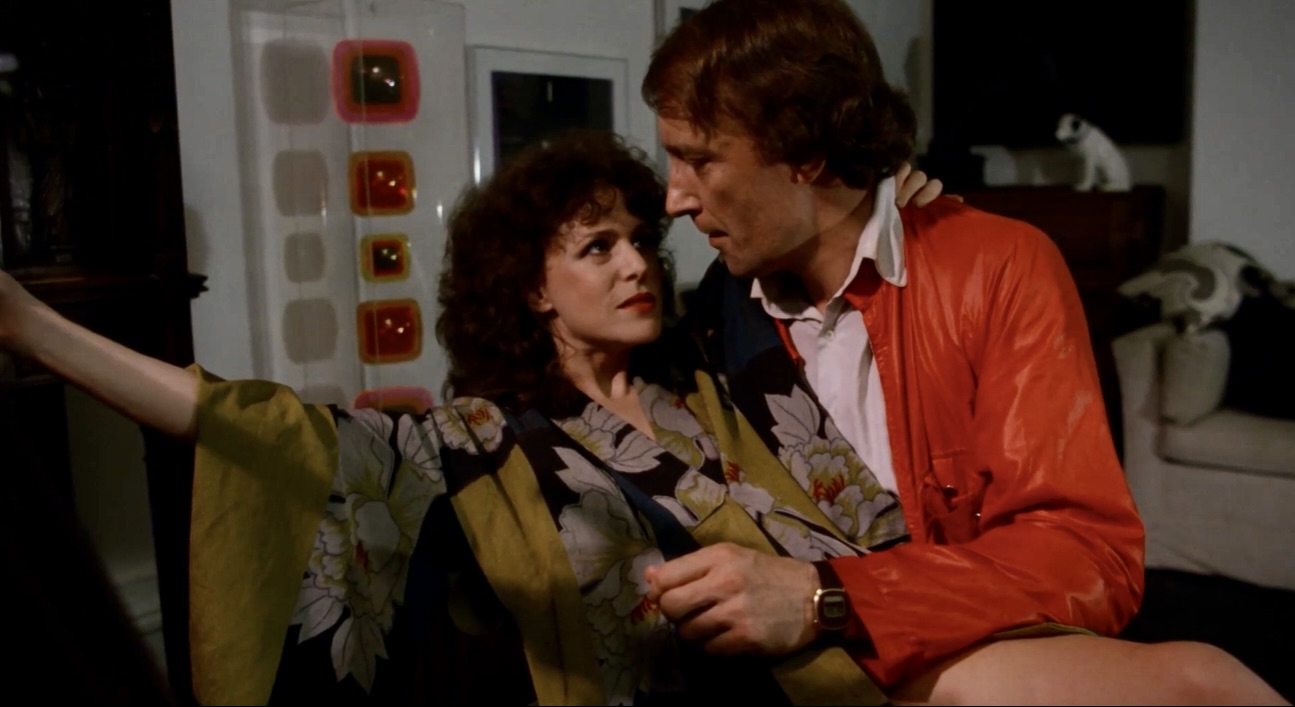
A lot of the dialogue in Liquid Sky helps defuse some of the film’s punk nihilism with goofball humor, especially in the exchanges between Johann and Sylvia, whose seductive behavior makes every line reading sound like foreplay. “Do aliens have orgasms?,” she coyly asks the scientist, and he replies, “They don’t even have bodies.” Sylvia also reveals a culinary mania for shrimp dishes, which is revealed during a Chinese take-out order which Johann refuses at first. “I’m sorry, but duty is more important than shrimps,” he states. “Well, the duty is yours, the house is mine,” she snaps, adding, “And in my house, shrimps are more important that duty.”
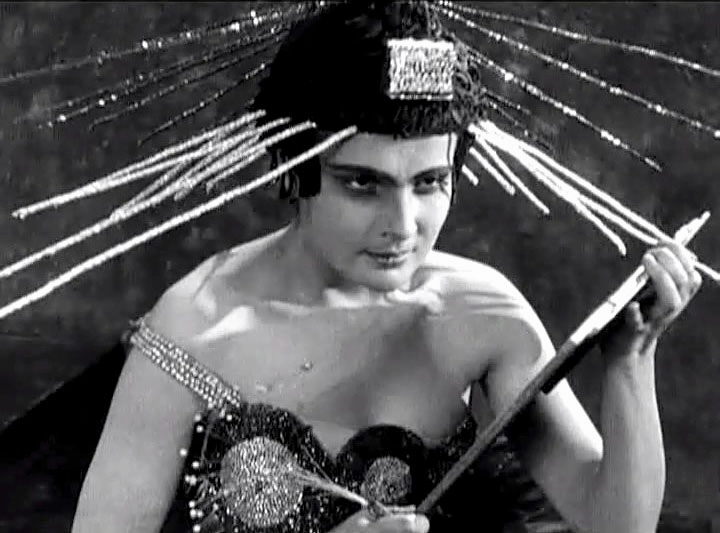
When Liquid Sky first opened in 1982, most mainstream critics were surprisingly positive in their assessments with several of them comparing the movie to cinematic performance art. Janet Maslin of The New York Times wrote “It’s the overall resourcefulness of Mr. Tsukerman and his talented colleagues that gives Liquid Sky its high style. Visually bright and arresting, with a varied and insinuating electronic score, the film is full of eye-catching images.” J. Hoberman of The Village Voice even pointed out the movie’s homages and influences, stating, “’Liquid Sky’ has a particularly Soviet quality. Not only is it a montage film with much parallel action, but the costumes, makeup, hair styles, production design and even the herky-jerky dances are also highly suggestive of Russia’s 1920s Constructivist avant-garde. Its true ancestor is the director Yakov Protazanov’s 1924 Soviet space opera, ‘Aelita,’ which, among other things, depicts a revolution on Mars.”
Considering the movie’s meager production budget, it stands as a legendary primer on how to make a work of art for pennies. It also helped that the filmmakers Slava Tsukerman (who recently died on March 2, 2026), his wife Nina V. Kerova (associate producer), Yuri Neyman (cinematographer) and Marina Levikova (production designer/costumer) all agreed on the vision they had for the film and persevered in achieving it.
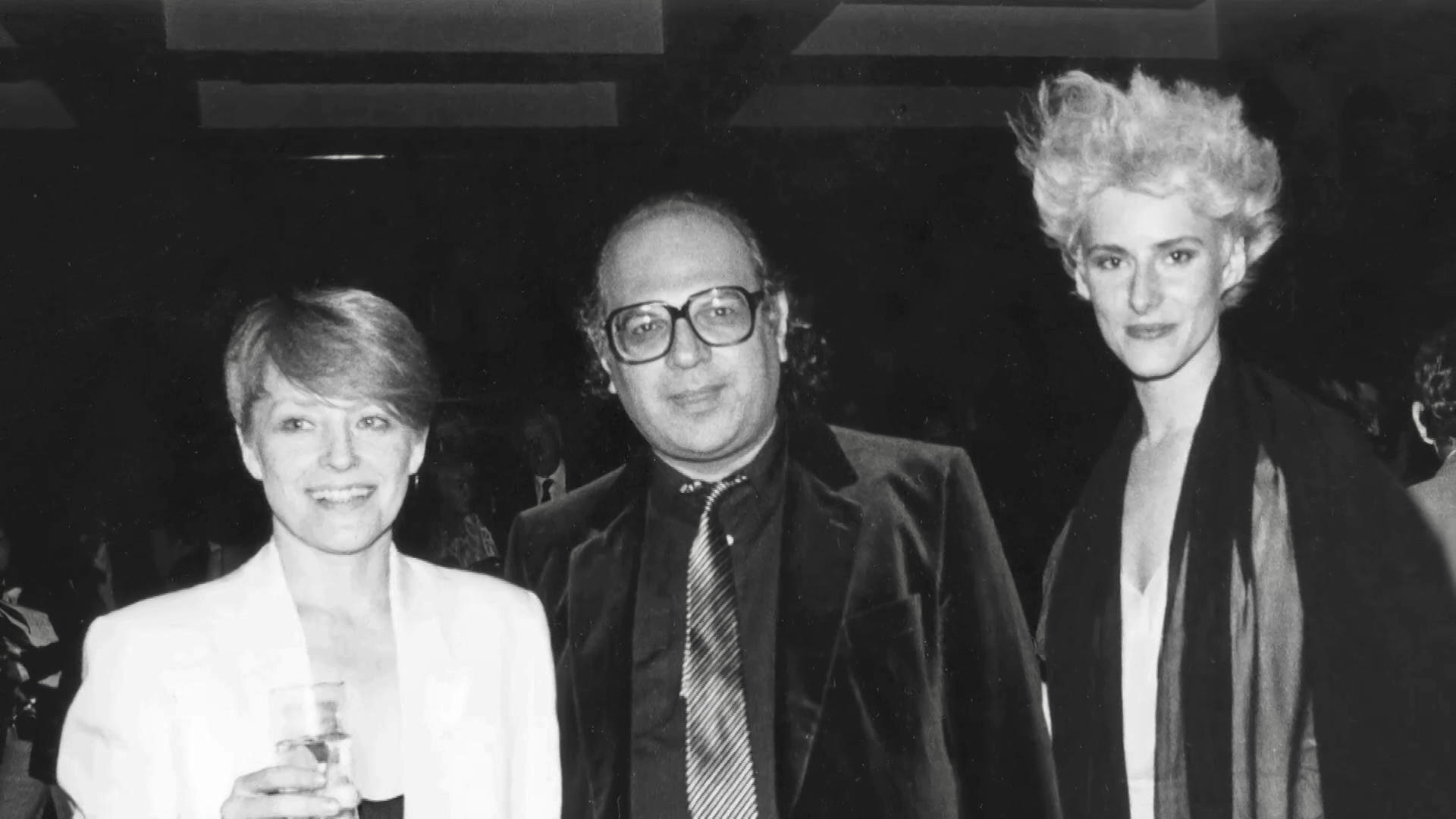
Initially the filmmakers had planned to shoot a film called Sweet 16 about a girl with an artificial body who lives forever with Ann Carlisle, a top New Wave model at the time, in the title role. Andy Warhol had even agreed to appear in a minor role as a clerk in a plastic flower store but the investor pulled out of the project. Undeterred the group created a new project using biographical elements from Carlisle’s life to fashion a narrative which became Liquid Sky and took advantage of the creative ambiance in the Lower East Side scene.
Otto von Wernherr, a musician/artist and early collaborator with Madonna, was recurred for a supporting role, and graffiti artist Keith Haring was approached to paint the backdrop for one scene but declined when he learned he would have to paint over his creations upon completion. The nightclub featured in the film was not a set but the legendary post-punk/new wave venue, The Pyramid Club, which is prominently featured in Adrian’s performance of “Me and My Rhythm Box.” And Margaret’s apartment in the film (at Broadway and 28th Street) was actually the penthouse in New York where Ann Carlisle lived at the time.
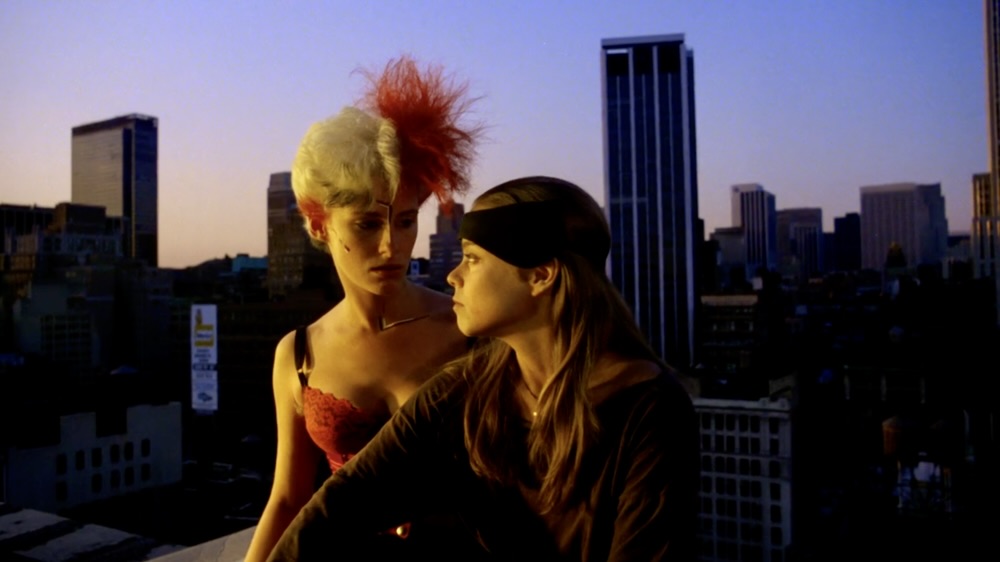
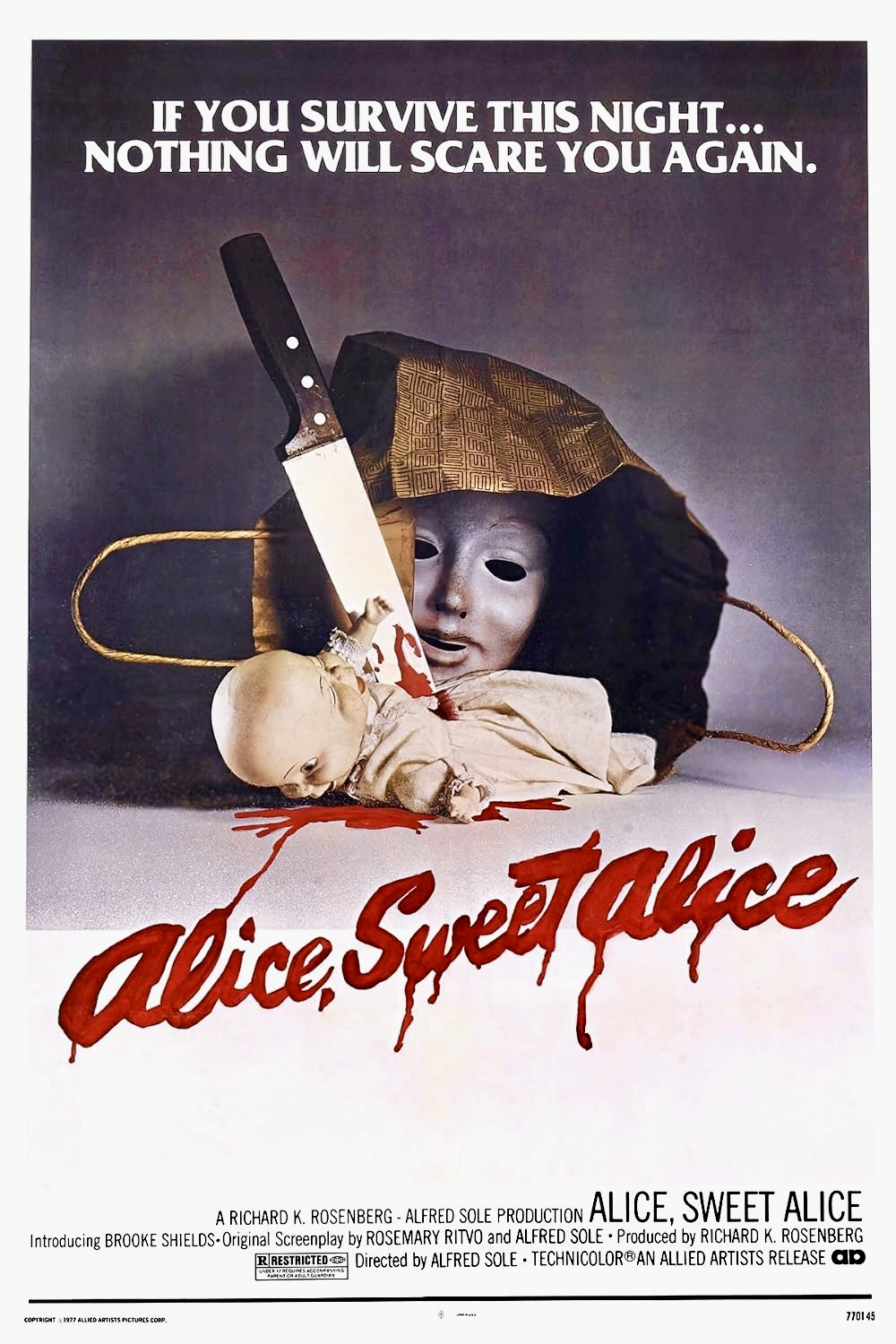
Paula E. Sheppard, who won rave reviews for her role as the defiant, abrasive Adrian, had previously appeared in Alfred Sole’s 1976 cult slasher thriller Alice, Sweet Alice. Her performance as a troubled teenager suspected of murder in that film, however, was overlooked at the time by critics who focused more on Brooke Shields in her feature film debut as a murder victim. Yet, despite Sheppard’s standout work in Liquid Sky, the actress retired from acting shortly after that, got married and moved to the northwest where she raised a family.
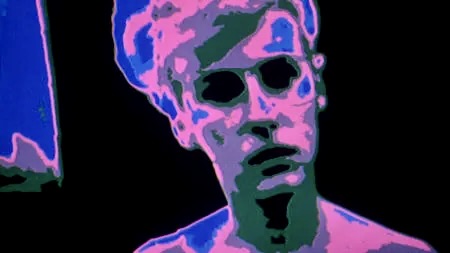
Certainly, the breakout star of Liquid Sky was Ann Carlisle who was sensational in the dual role of Margaret and Jimmy. The scenes where she appears opposite herself are utterly convincing despite the difficulty in achieving such an effect. Cinematographer Neyman said in an interview with Sasha Razor for the Los Angeles Review of Books: “we had no choice but to undertake a very risky technical solution: to film her using a very old split screen on the original negative. Under normal circumstances, nobody would ever do this, but we were on a budget, and I gave my word to Slava that I could pull off this high-risk operation. This is what they did back in the 1910s. You have probably seen it in The Queen of Spades (1916), directed by Yakov Protazanov.”
Although Carlisle went on to star in a few other offbeat indie films of the eighties including Larry Cohen’s psychological thriller Perfect Strangers (1984), Susan Seidelman’s Desperately Seeking Susan (1985) and James Bruce’s The Suicide Club (1987), she eventually went back to school and now works as an art therapist and owns a gallery.
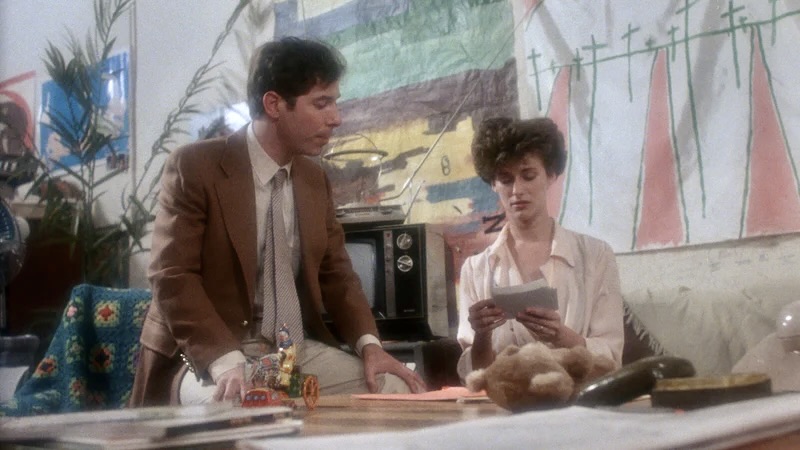
When the actress was interviewed by Lee Sobel about the movie for Greasy Kid Stuff, she fondly recalled the experience but admitted the drawbacks: “It was low budget, and if there was any money, it went into making the production look good. It was shot in 35mm and it looked like this little jewel. So we worked really long hours in uncomfortable conditions. It was always too hot. And a lot of the times, I only got one take. That’s hard to do. I was always worried that I wasn’t getting it. We did what we could with what we had.”
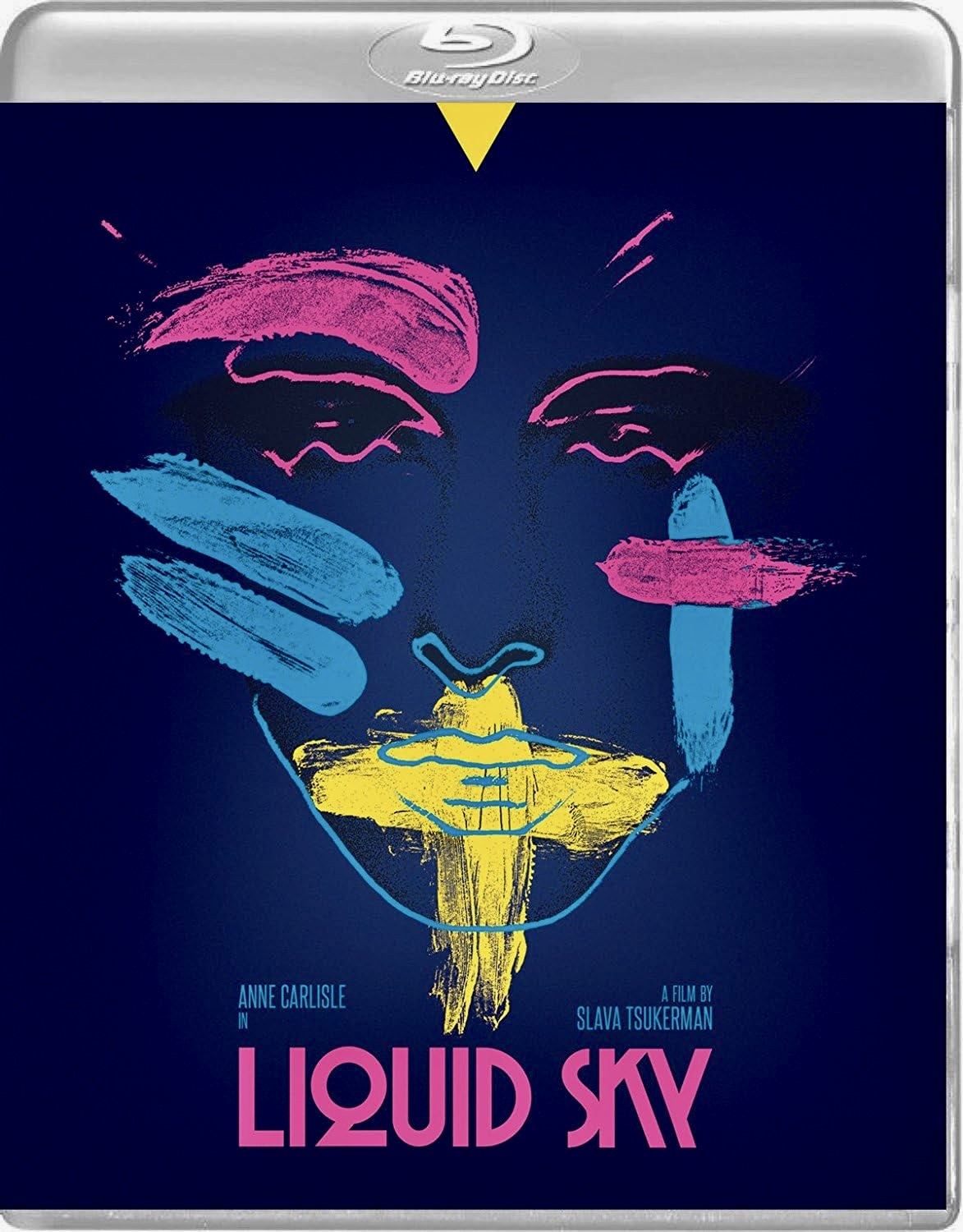
The film deserves to be seen on the big screen with an excellent sound system to appreciate the eye-popping art direction, electronic music score and unusual digital effects which often resemble the experimental films of Jordan Belson. Thanks to Vinegar Syndrome, you can enjoy the remastered Liquid Sky on the dual limited edition Blu-Ray/DVD in April 2018. The extra features include an audio commentary by Slava Tsukerman, an interview with Ann Carlisle, a making of documentary, behind the scenes footage and much more.
Other links of interest:
https://www.greasykidstuffmagazine.com/liquid-sky
https://variety.com/2026/film/news/slava-tsukerman-dead-liquid-sky-1236679582/
 Cinema Sojourns