
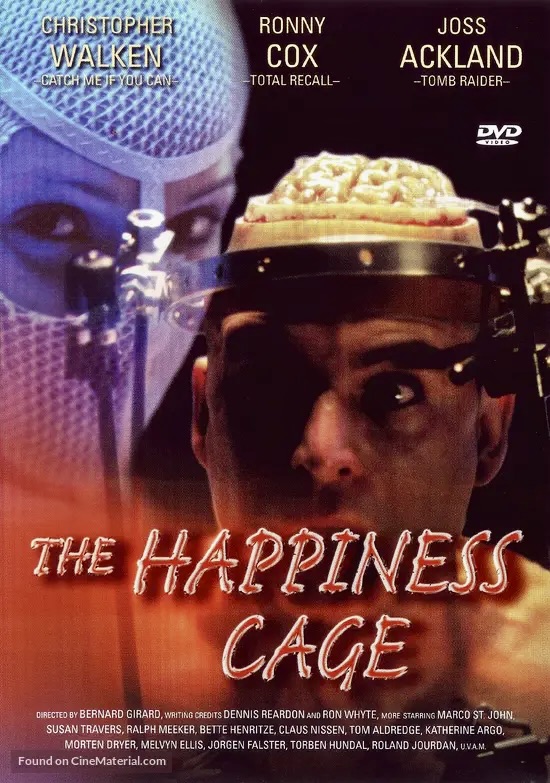
Think back to when you first saw Christopher Walken and Ronnie Cox in a feature film. Did you know the two actors co-starred in a low-budget production in 1972 called The Mind Snatchers in the early phase of their careers? 1976 was the year when Walken first captured my attention in two small supporting roles; the first being Paul Mazursky’s semi-autographical drama Next Stop, Greenwich Village, where he played an aspiring actor. In the second film, a supernatural horror thriller called The Sentinel, he played a cop. He followed these with an even more memorable supporting role in Woody Allen’s Annie Hall (1977) as the strangely morbid brother of the title character. Ronnie Cox, on the other hand, made a haunting and unforgettable impression as the doomed Drew in Deliverance (1972), John Boorman’s critically acclaimed adaptation of the James Dickey novel. But both Walken and Cox are dynamic together in a movie that premiered before all of the above films yet remains a mostly unseen obscurity because of its sporadic distribution under various titles.
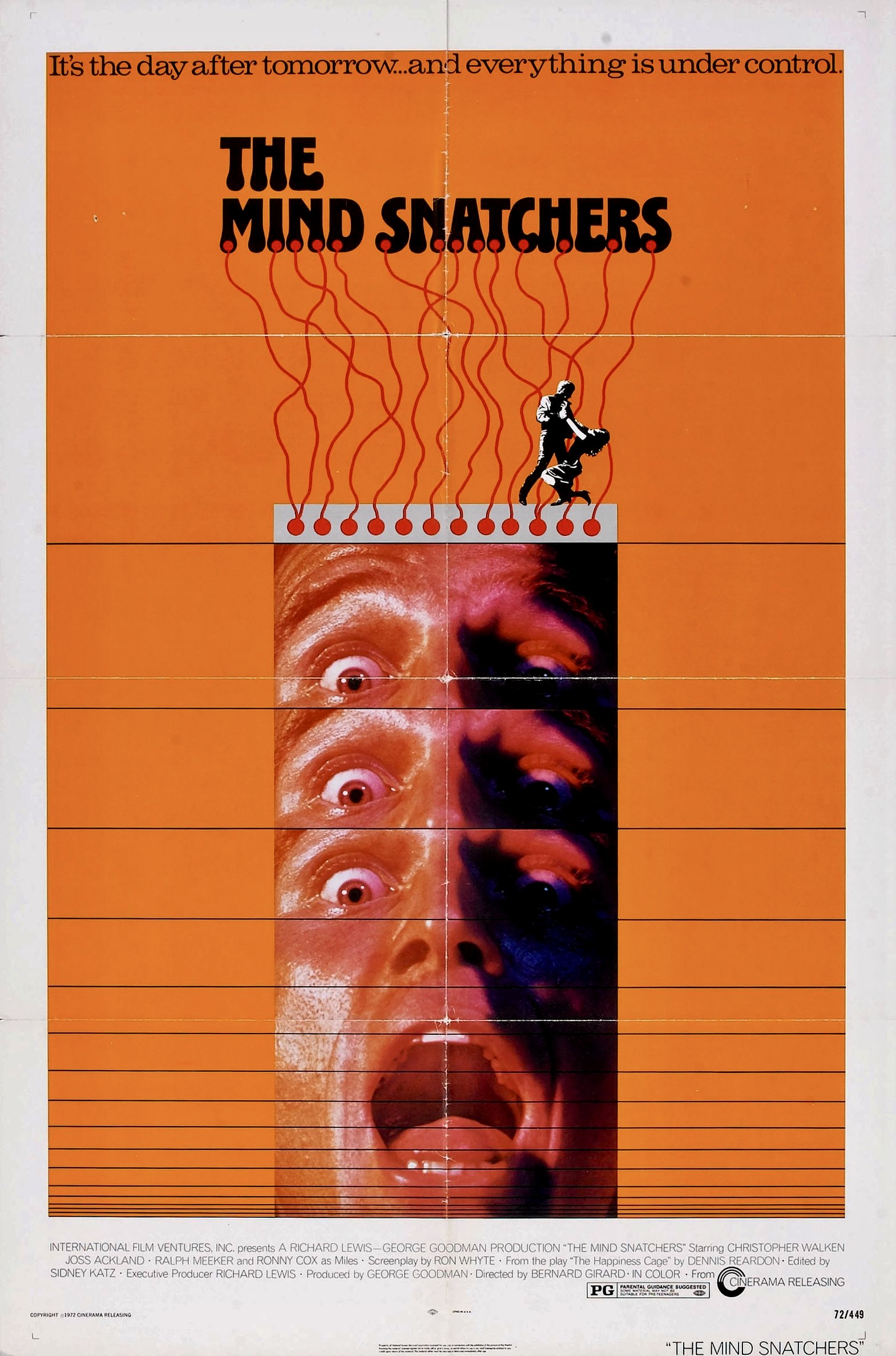
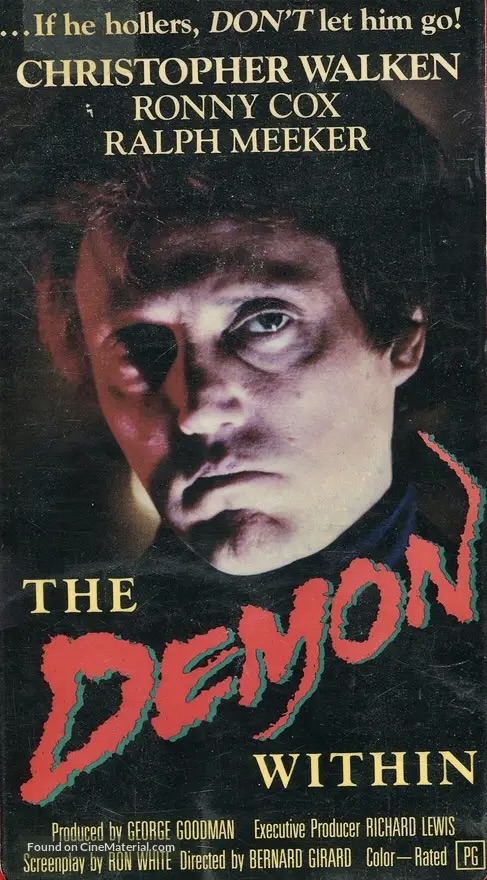
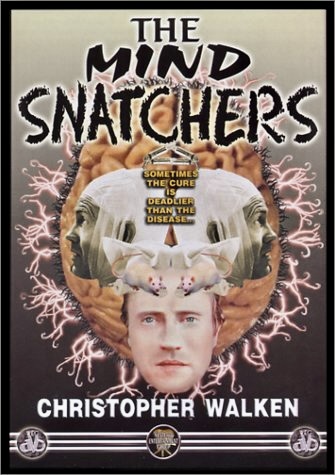
Initially released as The Happiness Cage in 1972 and then retitled The Mind Snatchers, this offbeat psychological drama never found an audience due to a confusing marketing campaign that seemed uncertain whether the movie was a sci-fi thriller, a horror film, an exploitation flick or an art house oddity. It also didn’t help that the movie was released in some markets as Brain Control and in others as The Demon Within. The director, Bernard Girard, was not well known to moviegoers despite a 20-year career of working mostly in television. Plus, the two leading players, Walken and Cox, were practically unknown at the time.
I didn’t see The Mind Snatchers until February 2003 when it was released on DVD by Image Entertainment but I have to admit it is an astonishing acting showcase for both Walken and Cox. If any major casting agent in Hollywood had seen it in 1972, it might have accelerated both actors’ careers in a major way. Certainly, Deliverance helped launch Cox’s career but it really wasn’t until the 1980s that he became a popular go-to character actor in such box office hits as Taps (1981), Beverly Hills Cop (1984), Beverly Hills Cop II (1987) and Robocop (1987). Walken, of course, became an overnight star six years later with an Oscar winning Best Supporting Actor performance in The Deer Hunter (1978).
The Mind Snatchers, however, is a riveting introduction to both actors that should surprise their fans. Walken’s unique manner of speaking, mannerisms and imposing presence are already in evidence here and could serve as the acting template for all his future roles. But Cox is the wild card. Never has he been more manic, unpredictable or hilarious on screen. And despite the film’s disturbing subject matter, there is plenty of black humor and quirky behavior to savor.
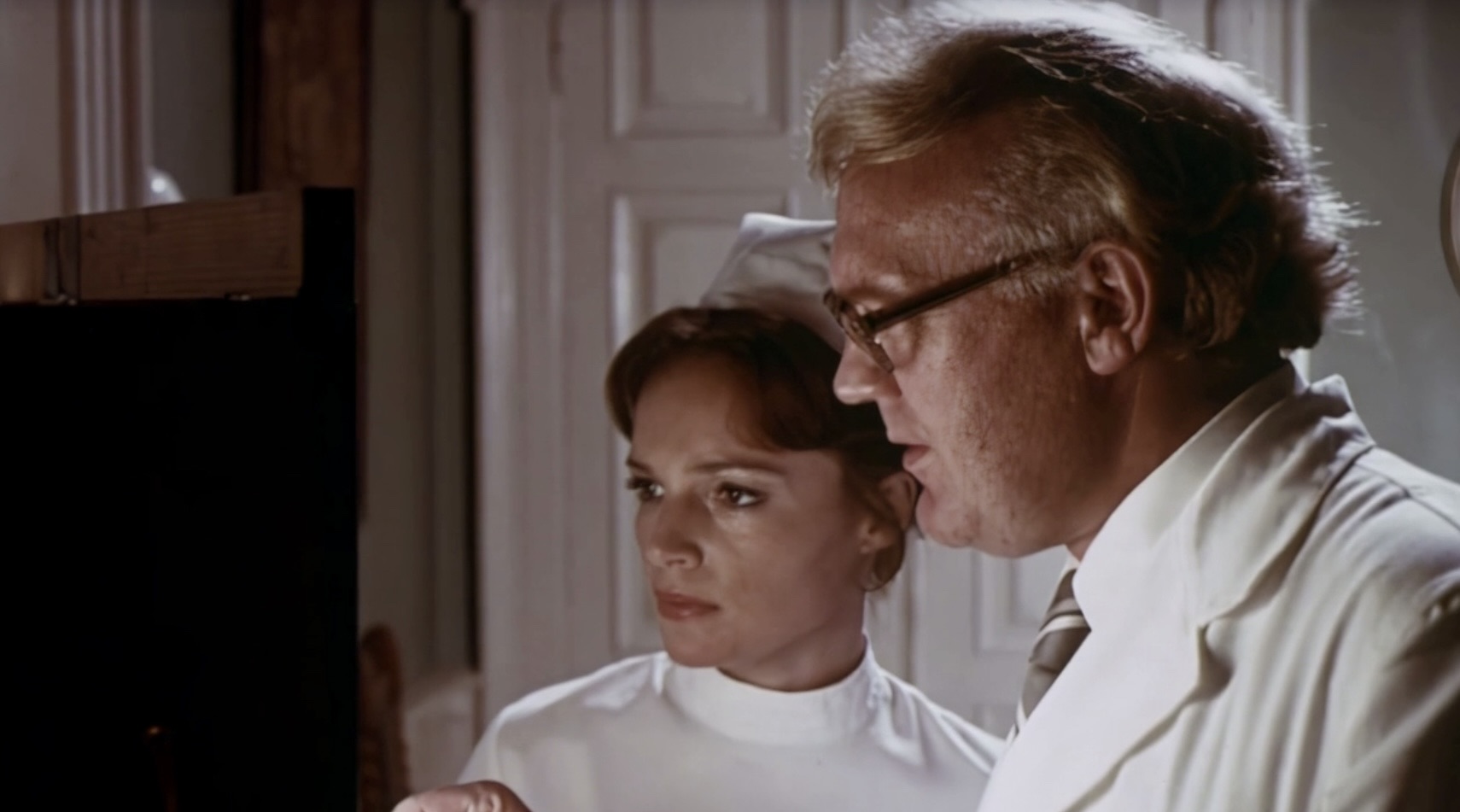
Based on the 1970 play The Happiness Cage by Dennis Reardon, which was first performed at the New York Shakespeare Festival Public Theatre and produced by Joseph Papp, the 1972 film adaptation by screenwriter Ron Whyte focuses on scientific experiments on the human brain while raising concerns over medical ethics and the legalities of treating patients like lab rats.
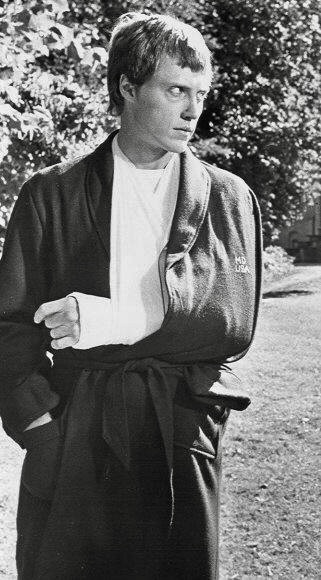
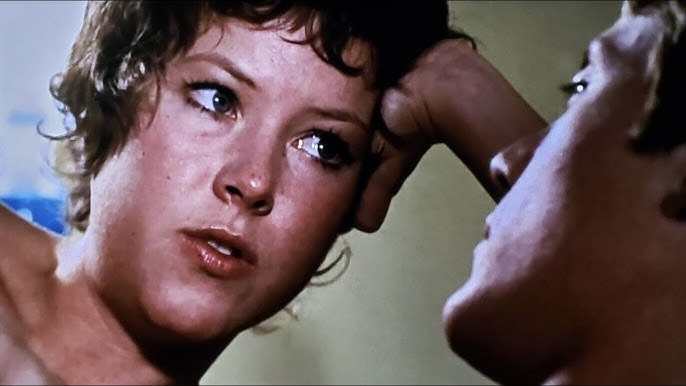
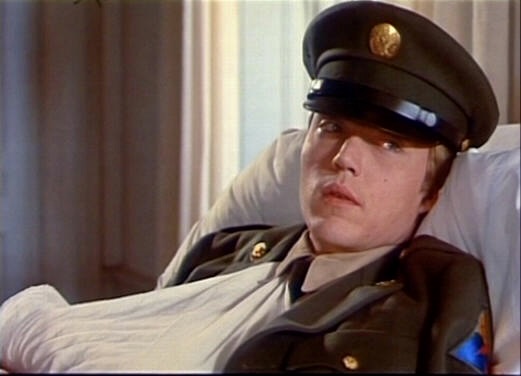
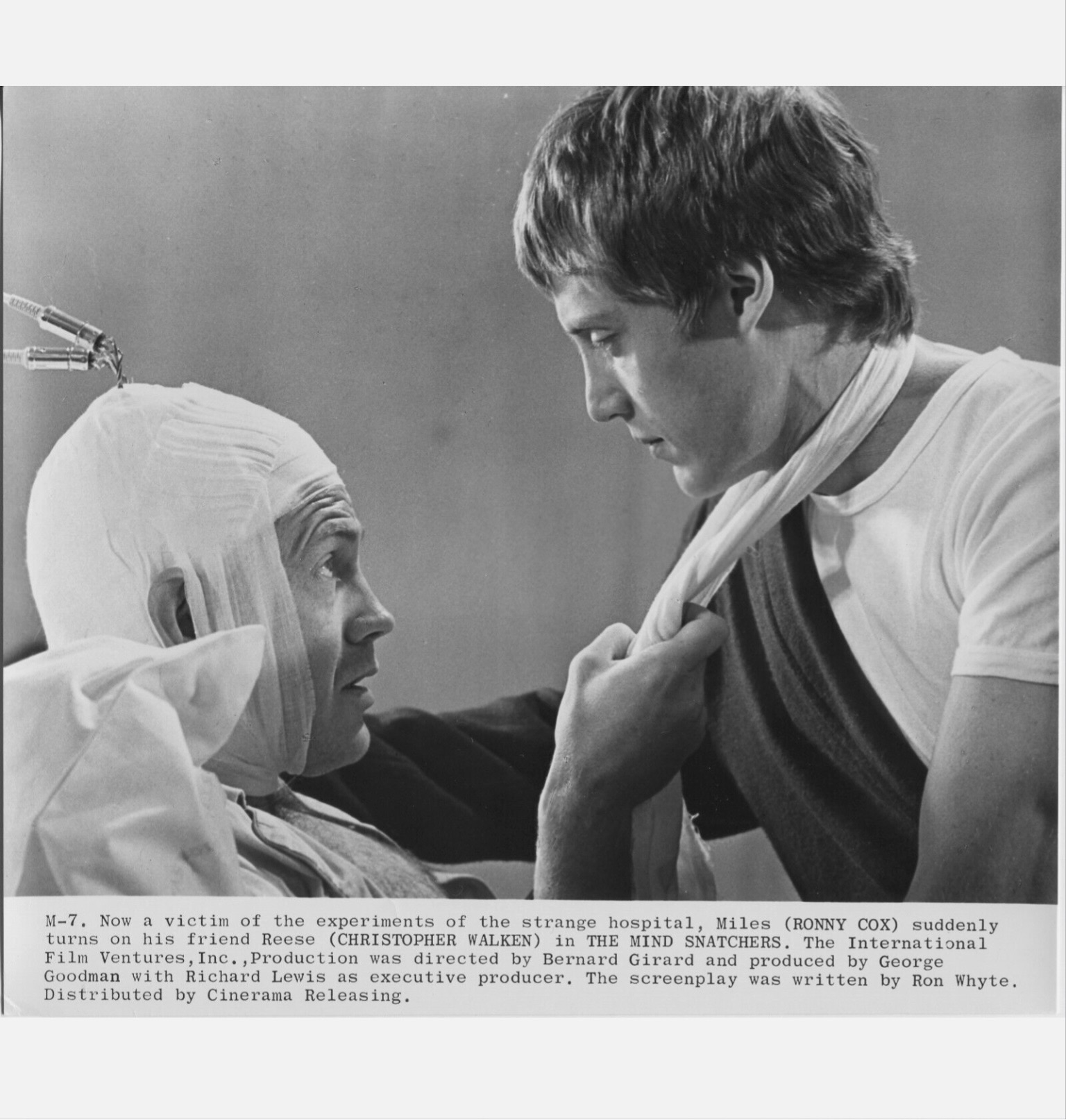
In the opening scene, James Reese (Walken), an army private, has just been released from the stockade where he had been incarcerated for a violent episode. He attends a party hosted by his girlfriend Lisa (Birthe Newmann) but almost immediately creates a disturbance by his hostile reaction to the other guests. He says to a female friend of Lisa, “I don’t care if you’re a girl. I’ll punch you right in the mouth,” but then channels his rage into a wardrobe in the bedroom, smashing it with his fist. He also breaks his arm in the process and sends the party guests scurrying. At this point, two MPs, responding to reports of Reese’s behavior, show up and escort the private to an army hospital where he is treated for his injury and held for psychiatric observation.
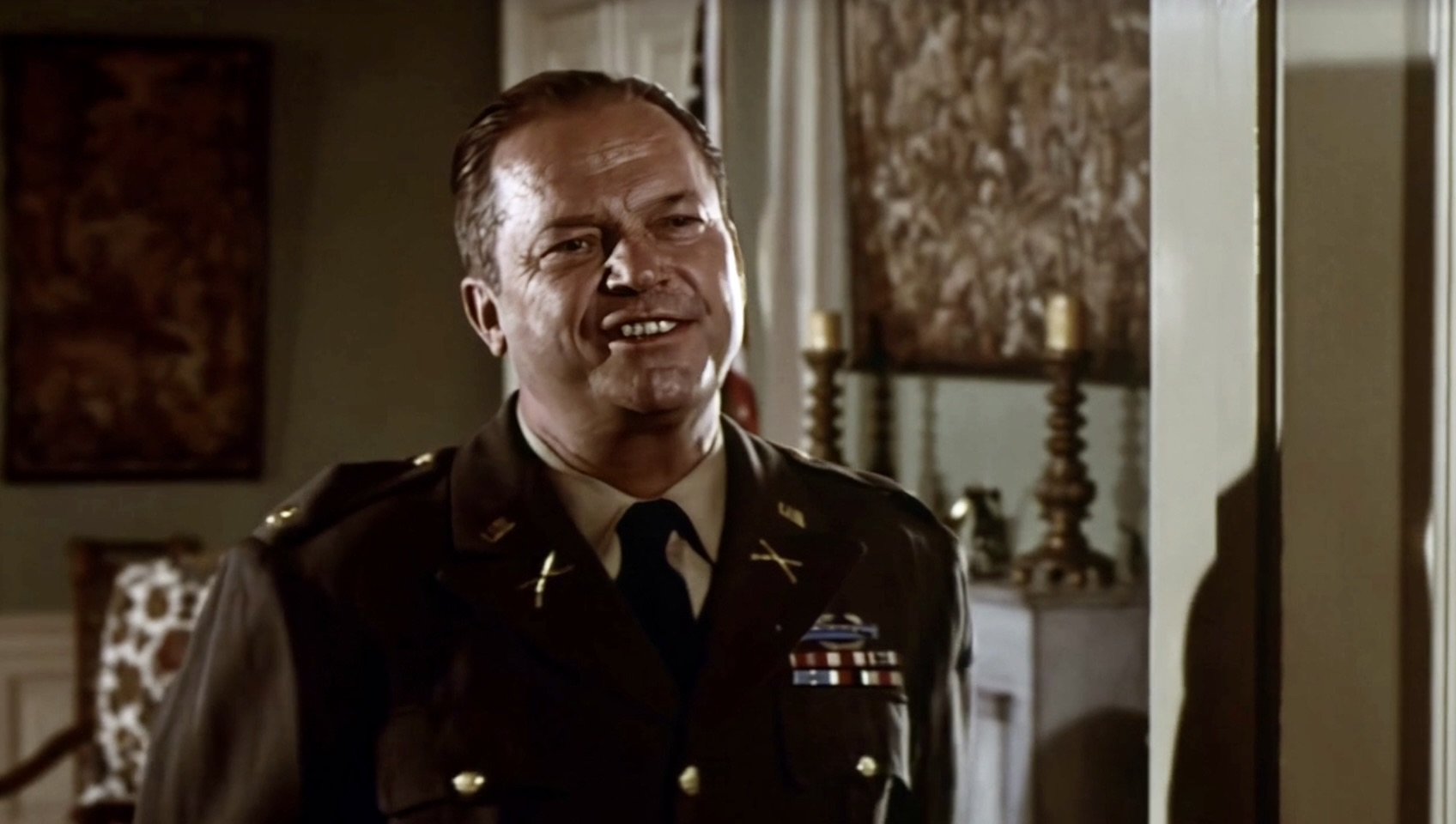
Dr. Frederick (Joss Ackland), a scientist conducting experiments on the human brain, and the Major (Ralph Meeker), the army official who funds the research, listen to recorded interviews with Reese and a psychiatrist. They conclude that his behavioral problems and anti-social tendencies might be cured or controlled through brain surgery instead of electric shock treatments. Reese has no idea that he is being prepped as a guinea pig for Dr. Frederick’s experiments and naively signs consent forms allowing the army to commit him to a heavily guarded, top secret facility.
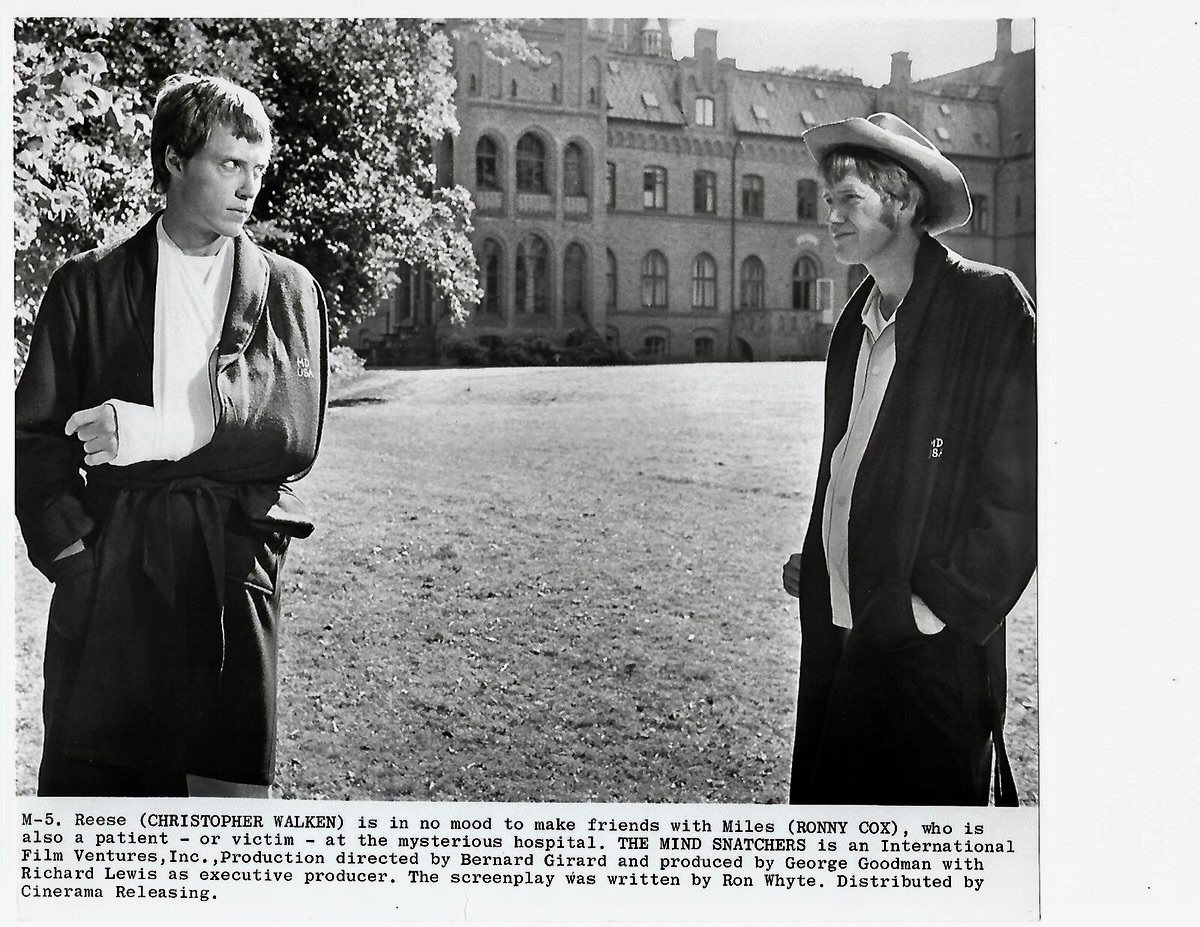
Reese soon finds himself in an eerie, almost deserted mansion with two roommates, one of whom is confined to a bed and often screams in pain. The other patient is Sergeant Miles (Ronny Cox), a hyperactive red neck yahoo, who alternates between aggressive taunts and crude good-ole-boy humor. In one of his first encounters with Reese, Miles confesses, “You know what’s wrong with me? I’m as horny as a three-balled toad,” and then tickles his roommate’s backside while giggling like a half-wit. Another over-the-top scene has Miles stimulating his libedo with a hand held device that becomes so addictive that he eventually collapses in an orgasmic spasm.
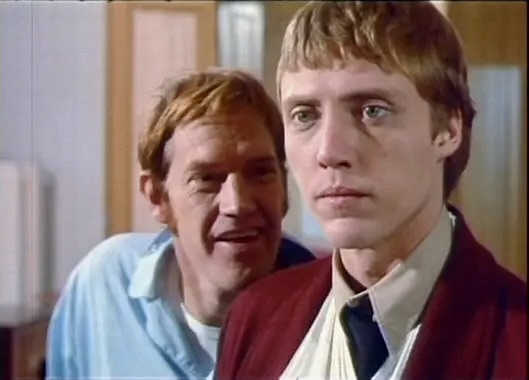
It soon becomes obvious to Reese that both he and Miles are being used to test Dr. Frederick’s theories about accessing and controlling the pain/pleasure centers of the brain in order to cure sociopathic tendencies or schizophrenia. Miles readily submits to surgery because he has a terminal illness and is going to die within the year but Reese explores other options…like trying to escape from the private sanitarium. But there is no exit from this place with its high barbed-wire fences, German shepherd guard dogs or Shannon (Marco St. John), the sinister orderly who is more like a jailer than a health worker.
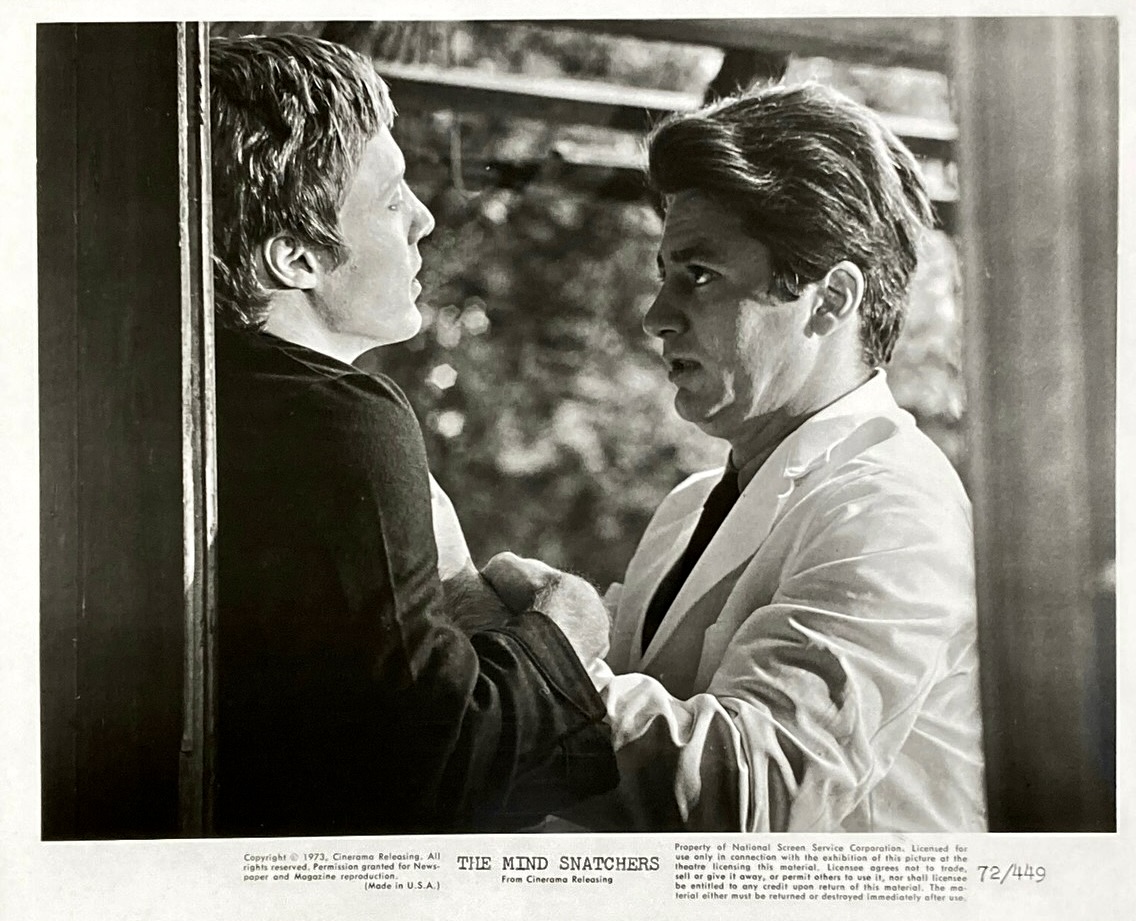
Walken’s performance as Reese is spellbinding with his erratic shifts between intimidation and vulnerability. He is clearly a complex, intelligent individual with a cynical wit but his volatile side would be difficult to tolerate if you were a best friend, companion or family member. At the same time, trying to alter Reese’s personality through experimental surgery on his brain clearly oversteps the bounds of moral and medical ethics.
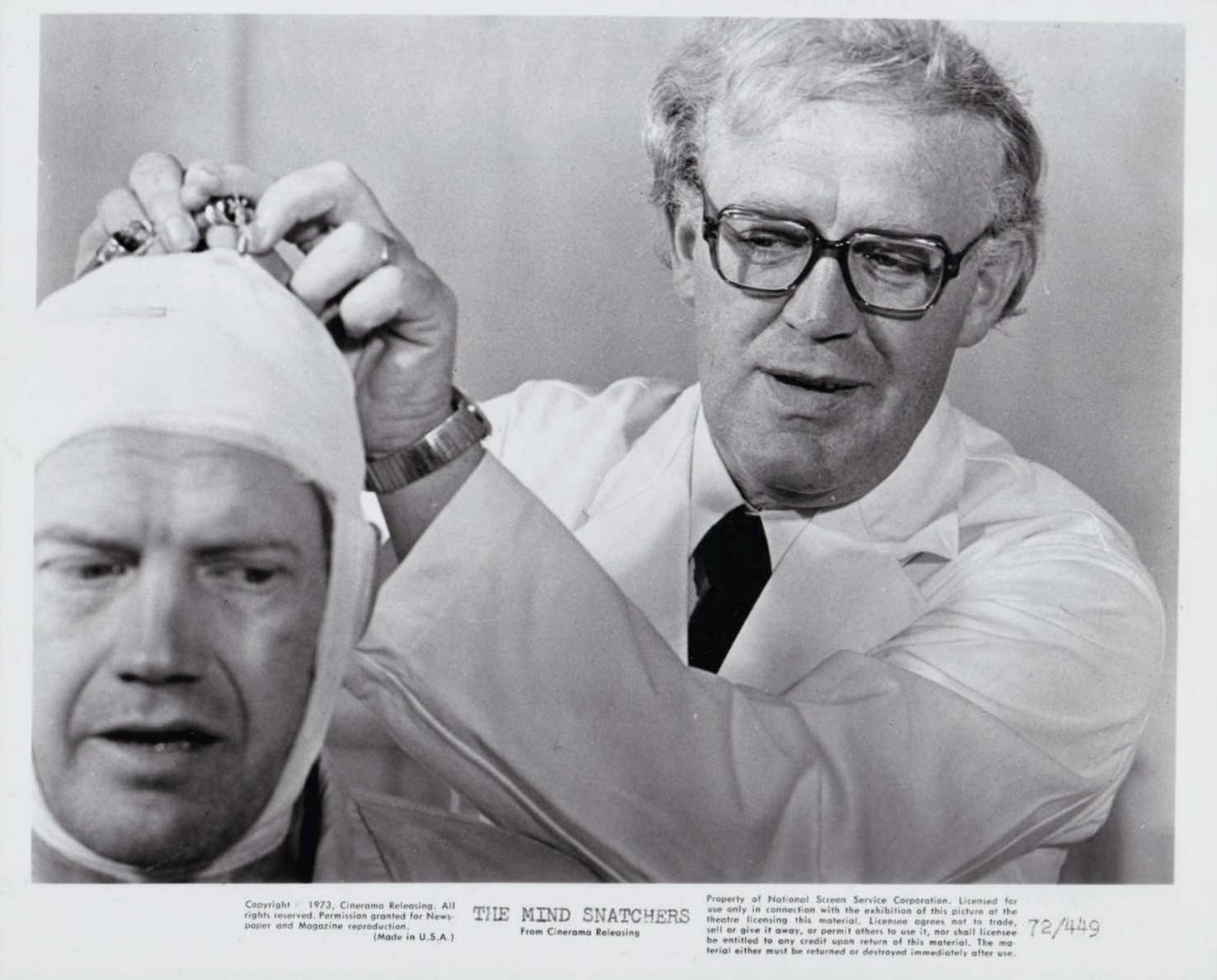
The Mind Snatchers explores familiar themes that have surfaced in other sci-fi or mental illness dramas such as the original 1956 version of Invasion of the Body Snatchers, One Flew Over the Cuckoo’s Nest (1975) and The Mountain (2018), Rick Alverson’s avant-garde film about a doctor specializing in lobotomies. The aliens in Invasion of the Body Snatchers saw emotions as an unnecessary by-product of human behavior when they preferred a detached flatline response to everything. In contrast, Dr. Frederick sees controlling and modifying the disruptive and anti-social behavior of problematic patients as a scientific breakthrough, even if his patients become docile and compliant versions of their former self. Is destroying someone’s personal identity or subduing their true nature a benefit to society in this context?
All of these concerns are raised in The Mind Snatchers but they seem to take place in an alternate reality. Much of the film has the feel of an off-Broadway play that has been opened up for the screen which isn’t a bad thing. A sense of claustrophobia permeates the proceedings and helps escalate the tension. In addition, the remote setting of the sanatorium and its skeleton staff (1 doctor, 1 orderly, two nurses) reminds me of a Twilight Zone episode. (By the way, the movie takes place in Frankfort, Kentucky but was actually filmed in Denmark.)
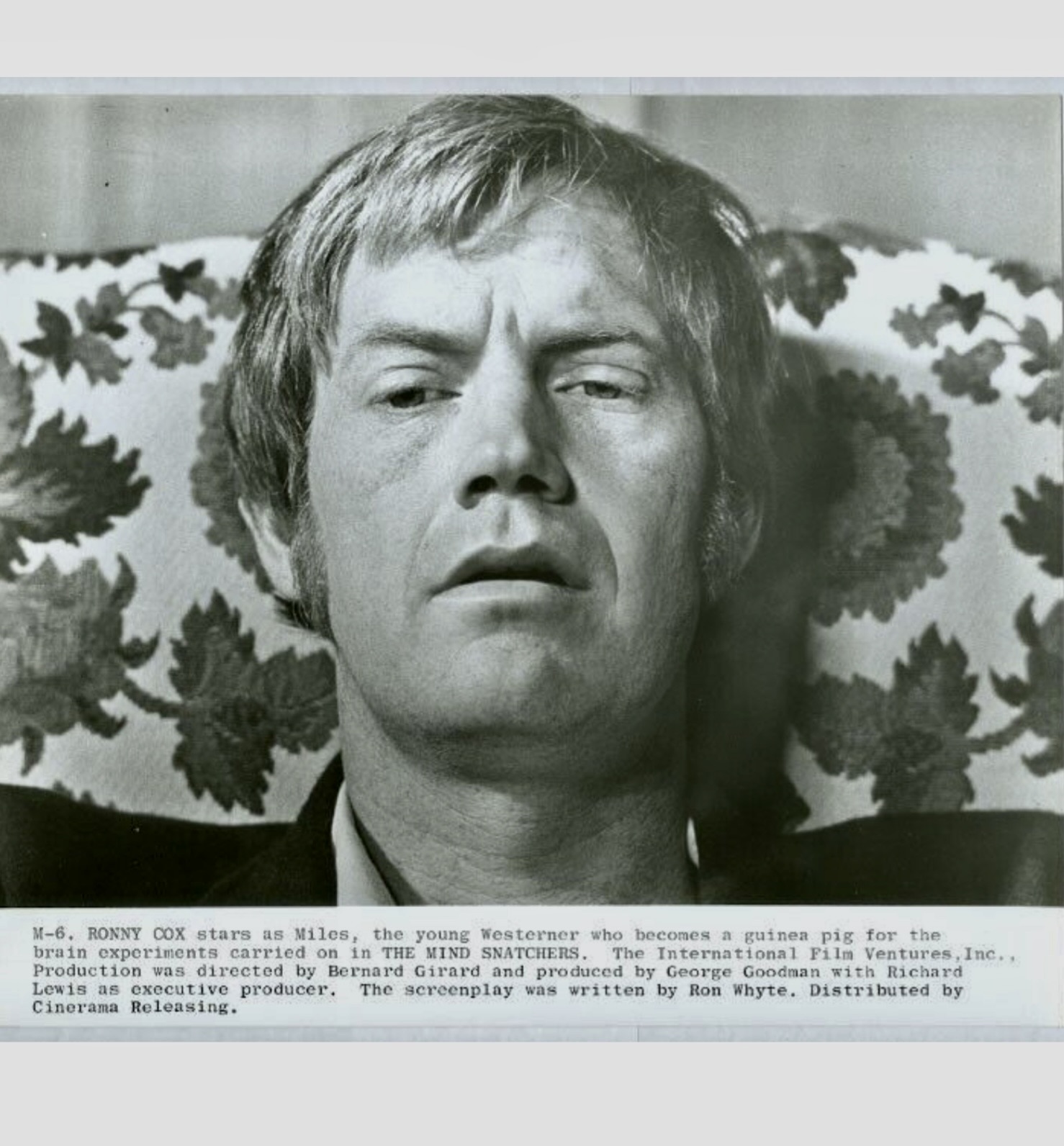
In supporting roles, British actor Joss Ackland (in one of his first prominent roles in a U.S. film) is both sinister and patronizing as the misguided “mad scientist” of the piece while Ralph Meeker and Marco St. John are merely perfunctory as the heavies. But it is Bette Henritze as the nurse Anna, who truly stands out in a small but memorable part. Naïve but relentlessly chipper, Anna imagines herself as a Florence Nightingale type but she meets her match in Reese, who reduces her to tears with his insults. “I just insulted you. You so stupid you don’t get it?” he asks her, adding, “Look, can you make babies?” “Of course I can,” she replies. “Then why don’t you go do that!,” he sneers.
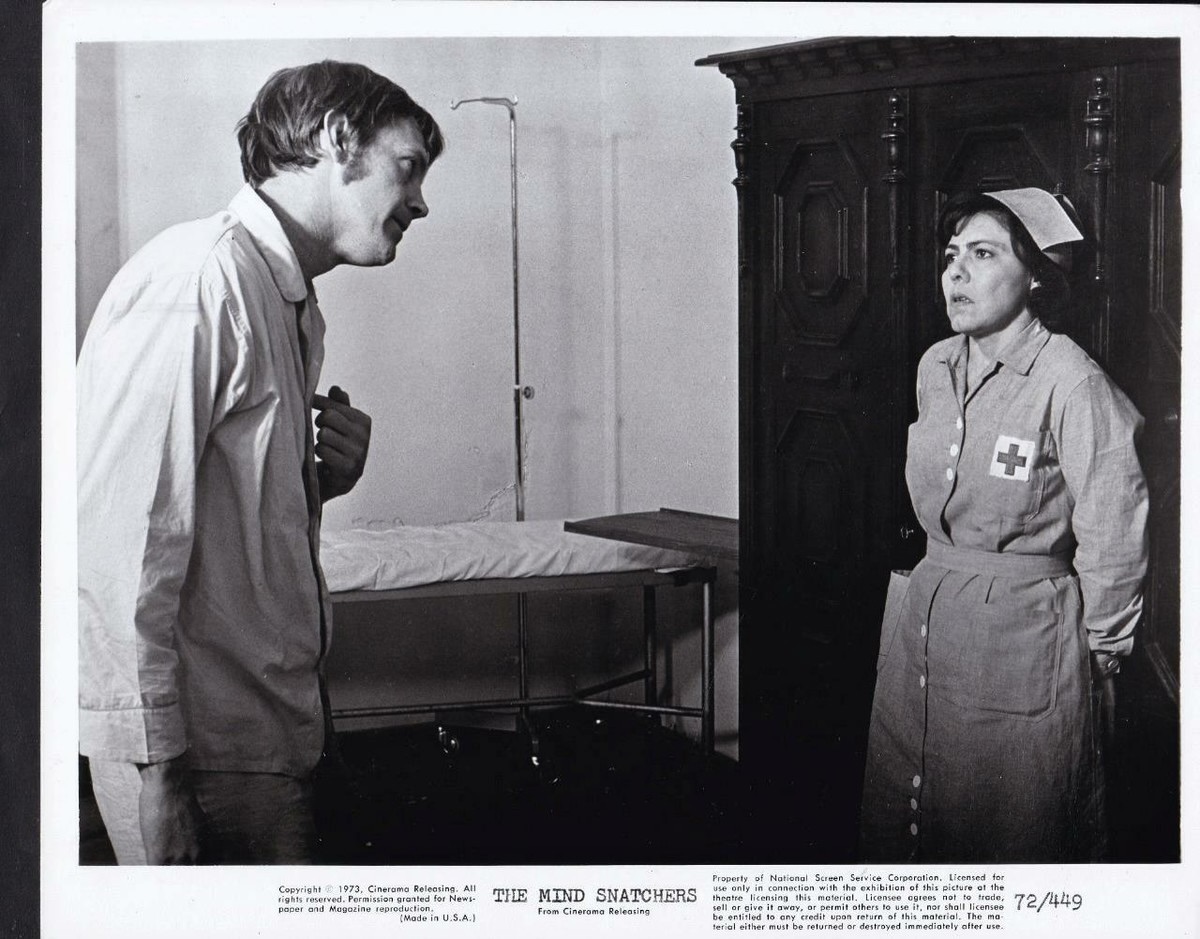
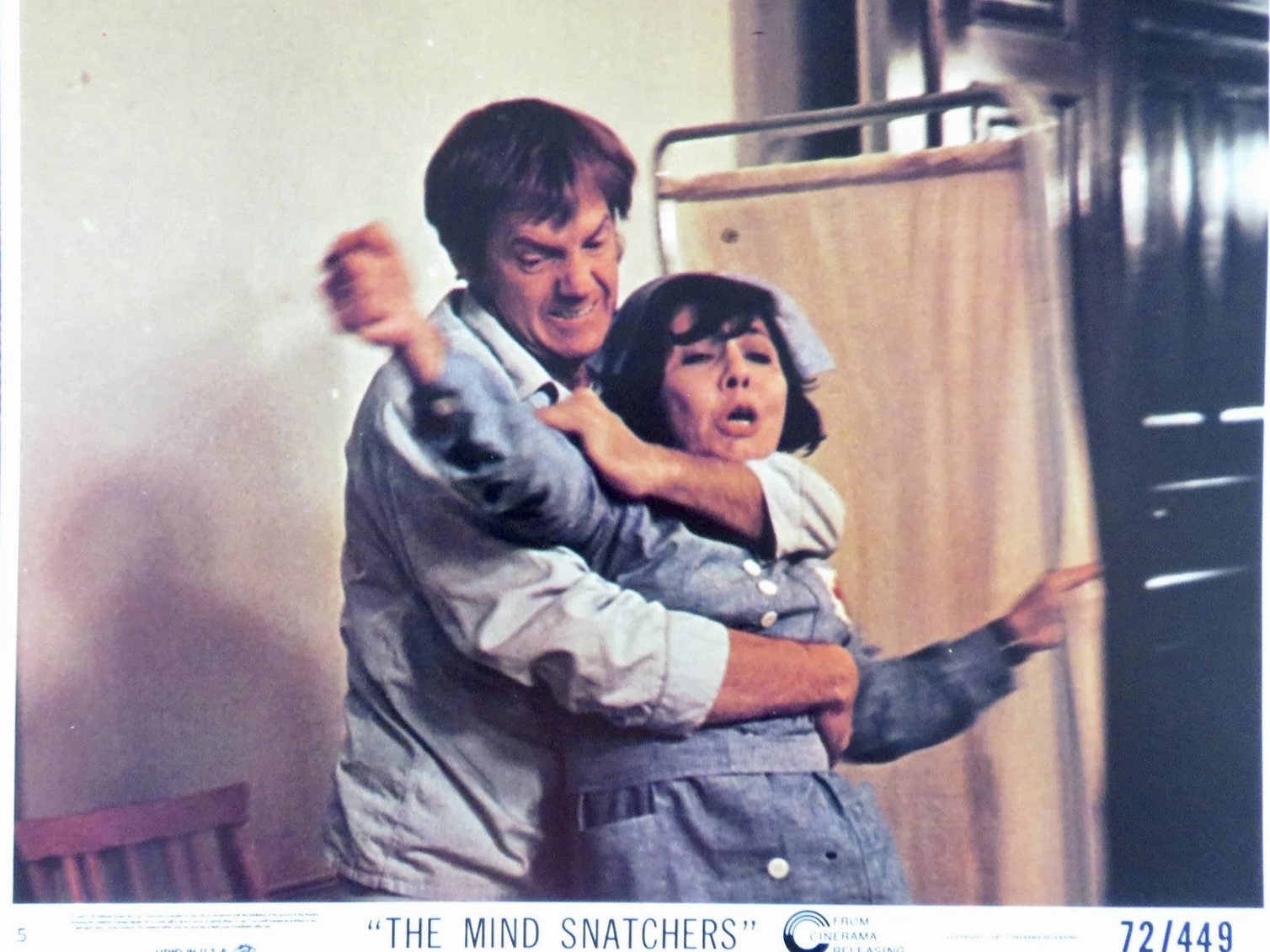
Anna has a much more traumatic encounter with Miles, who tells her, “You know what I need, Anna. I need love.” She responds with, “I know you do poor man but that’s not in my contract.” At which point, he loses control and sexually assaults her, culminating in an off-screen rape. Strangely enough, Anna returns the next day to play checkers with Miles. Either she didn’t report the rape or is still in shock but it only underscores the bonkers environment of the clinic.
The Mind Snatchers was mostly overlooked by critics during its initial release but Howard Thompson of The New York Times criticized the film for remaining too close to its stage origins. Still, he admitted, “The scenarist, Ron Whyte, and the director, Bernard Girard, have not betrayed the playwright. The pros and cons of the experiment are grippingly argued by Christopher Walken, as the brightest of the patients; Joss Ackland, as a conscience-bent surgeon and Ralph Meeker, as an ice-cold major (in the play, a general). The story and that plot resolution simply don’t hold up, as X-rayed by the camera. What does sustain is the freezing horror of the hospital atmosphere, conveyed by the dialogue and two piercing, brilliant performances. We weren’t sold on the plastic shrewdness of the young hero, voiced by Mr. Walken. But Ronny Cox as a stricken Texan and Bette Henritze as a very surprised hospital aide—both from the original play—are wonderfully effective.”
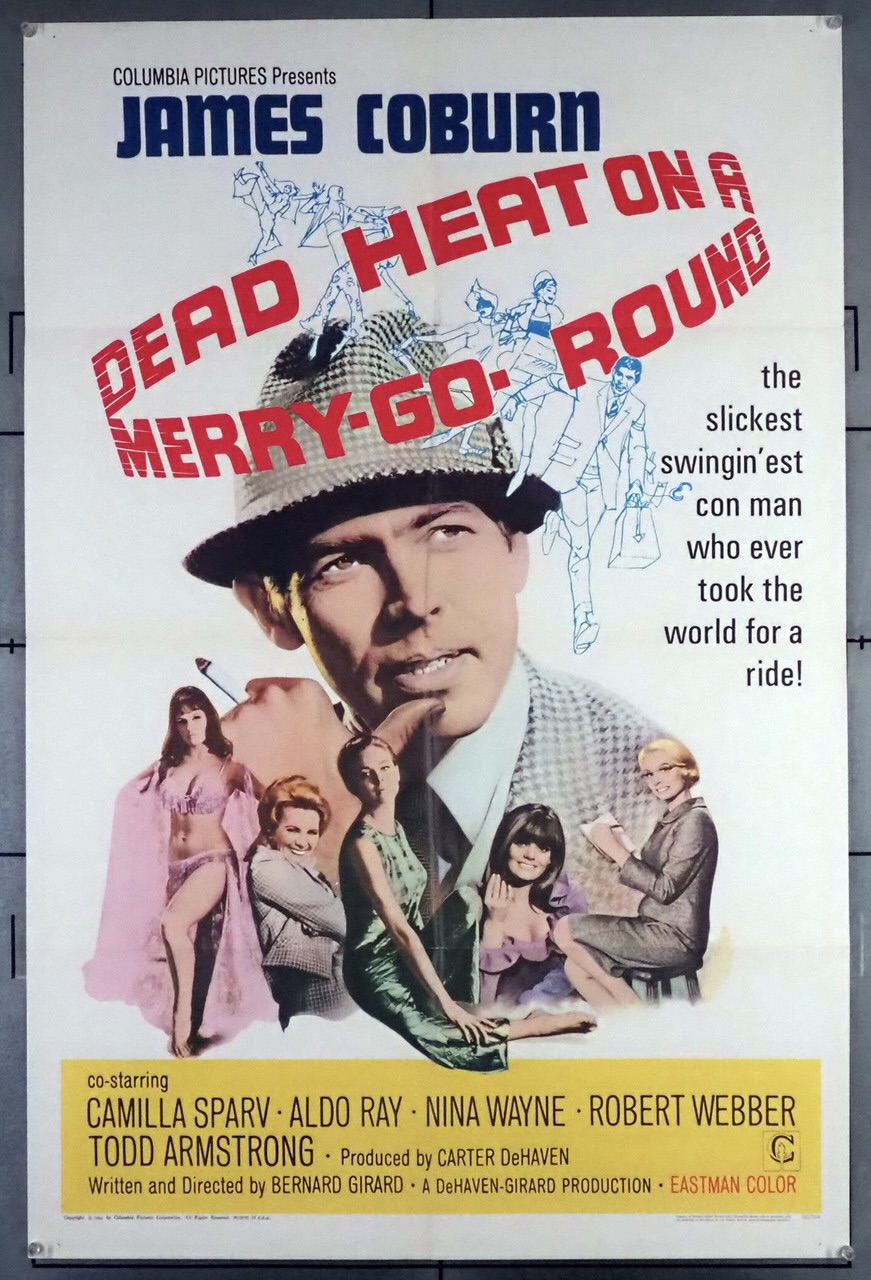
Bernard Girard, the director of The Mind Snatchers, is best known for his work in television, mostly helming episodes of Medic, Climax!, M Squad, and The Alfred Hitchcock Hour. His feature directorial debut was the 1957 western Ride Out for Revenge (1957) and he also turned out B-movie melodramas like The Green-Eyed Blonde (1957) and The Party Crashers (1958). Dead Heat on a Merry-Go-Round (1966), an intriguing caper comedy-drama headlined by James Coburn, is generally regarded as his best film but The Mind Snatchers is certainly fascinating as a showcase for Walken and Cox and as an offbeat indie film of the 70s.
Ronny Cox, who appeared in the original play, commented on it favorably in an interview for The Flashback Files, saying, “I did it originally with Marty Sheen in Christopher Walken’s role. I must have had two hundred phone calls of agents and producers. Dropping names here, but Tennessee Williams’ agent, Ms. Audrey Wood, came to see the play one night. Afterward she came backstage and asked me: Young man, who is your agent? I told her I didn’t have an agent. She said: You do now. She got me signed. When John Boorman came to New York looking for good, unknown actors, it was Joe Papp who recommended they see me.”
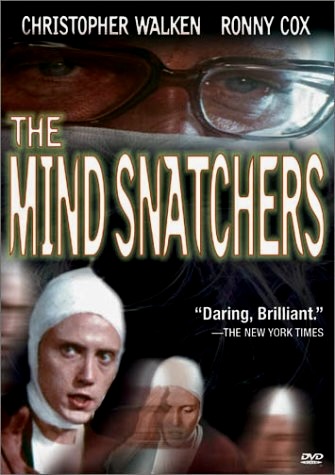
The Mind Snatchers has been released on VHS and DVD over the years but the 2003 DVD from Image Entertainment is probably your best viewing option even though the print is less than pristine with some visible damage. It contains no extras other than three trailers for the film and an alternative opening shot but it sure would be great to see Girard’s film receive a Blu-ray upgrade one of these days.
Other links of interest:
https://www.flashbackfiles.com/ronny-cox-interview
https://collider.com/christopher-walken-the-mind-snatchers/
https://thehollywoodinterview.blogspot.com/2010/01/christopher-walken-hollywood-interview.html
https://www.andsoitbeginsfilms.com/2017/07/in-character-christopher-walken.html
 Cinema Sojourns