
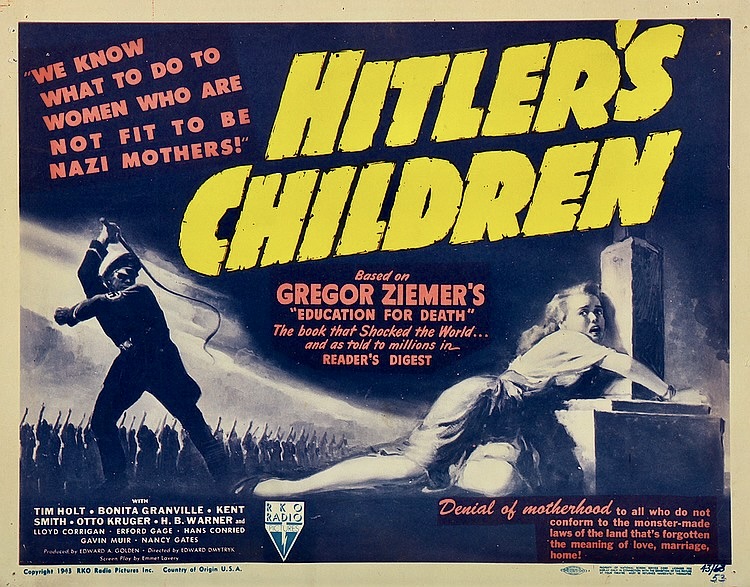
You’d expect a film with a title like Hitler’s Children (1943) to be an exploitation picture, not a prestige production and you wouldn’t be wrong in most respects. But this sensationalistic melodrama about a Nazi youth and his American girlfriend struck a resonant chord with audiences of its era, making it the highest grossing film of all time for RKO Studios, surpassing even the box office receipts of King Kong (1933) and Top Hat (1935).

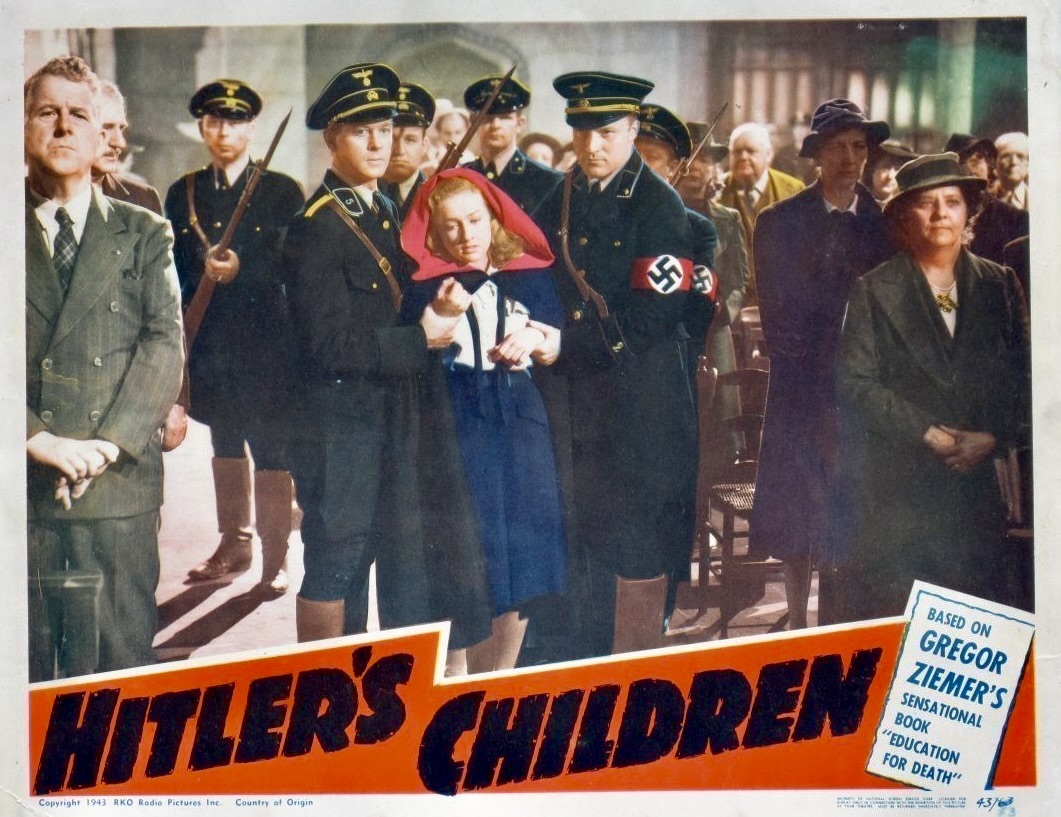
The real intent of Hitler’s Children is to show the indoctrination process of young Germans and how their minds are poisoned with fascist ideals. The love story between budding storm trooper Karl Bruner (Tim Holt) and his childhood sweetheart Anna Muller (Bonita Granville) is merely the vehicle which carries the film to its defiant yet grimly determined climax. Along the way we witness various well-staged atrocities from the enforced sterilization of women prisoners deemed unworthy to have Nazi babies to Anna’s public flogging at a concentration camp. There’s not an ounce of subtlety in Edward Dmytryk’s tautly paced programmer but there’s plenty of lip-smacking villainy and rabid anti-Nazi propaganda that is so extreme it almost works on a level of pure parody. Helping to suspend disbelief and keep a straight face is a supporting cast of dependable character actors like Kent Smith, Otto Kruger, H.B. Warner, Lloyd Corrigan, Hans Conried, Gavin Muir and Nancy Gates.
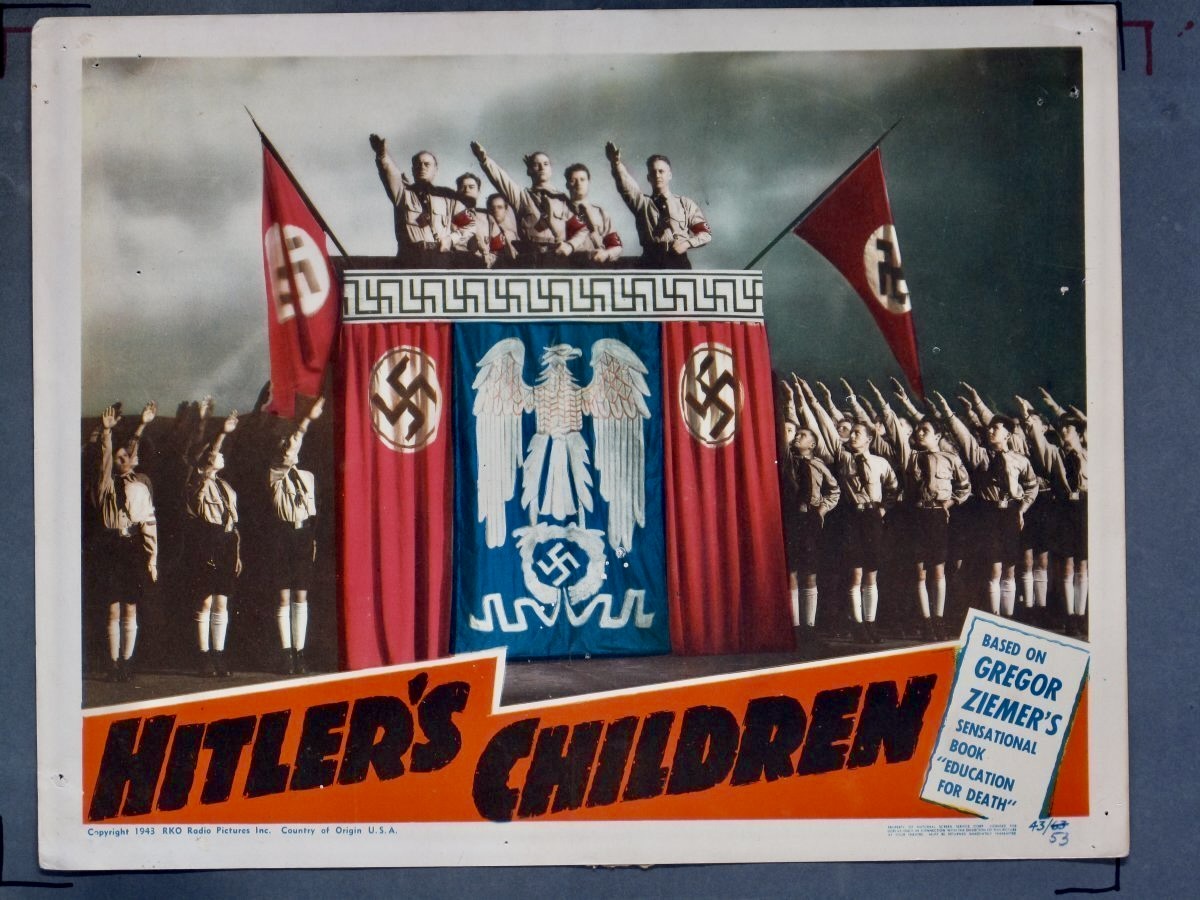
Dmytryk actually ended up on the film by accident. In his autobiography, It’s a Hell of a Life But Not a Bad Living, he wrote “A friend of mine, Irving Reis, had prepared and actually started shooting a film called Hitler’s Children, an exploitation B. Irving was rather headstrong and somewhat touchy – a bad combination in Hollywood. After a few days, he got into a fight with producer Doc Golden. Getting his back up, he quit the film, expecting, so he told me later, to win a quick apology and a free hand. Instead, the studio said, “As you wish,” and asked me to take over the direction. He gave me his blessing, asking only that his name be completely removed from the film’s credits. The studio was willing and I went to work. I finished on schedule, cut and dubbed it, and turned it over to the distribution department. None of us at the studio was sure of what we had.”
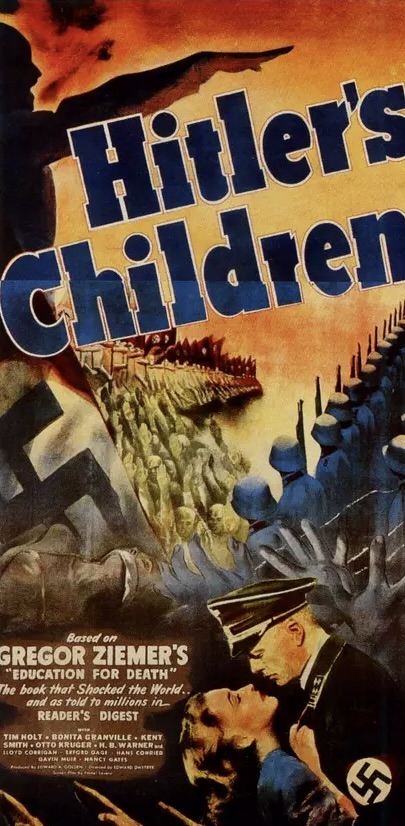
From Hitler’s Children, Dmytryk went directly to Universal to shoot Captive Wild Woman (1943), a horror film starring the Venezuela born actress, Acquanetta, whose beauty was concealed by her special “monkey woman” makeup. But once Hitler’s Children opened theatrically, the director soon found himself in demand. In his autobiography, he recalled: “Taken from a novel titled Education for Death, its story concerned the treatment of youthful nonconformists in Nazi Germany. A title with the word “Hitler” in it was considered box-office poison, and the exhibitors asked [producer] Doc Golden and RKO to change ours. Doc was stubborn – and he was right. The film cost a little over $100,000, and, running only in England and the Western Hemisphere…grossed, by some accounts, $7,500,00.”
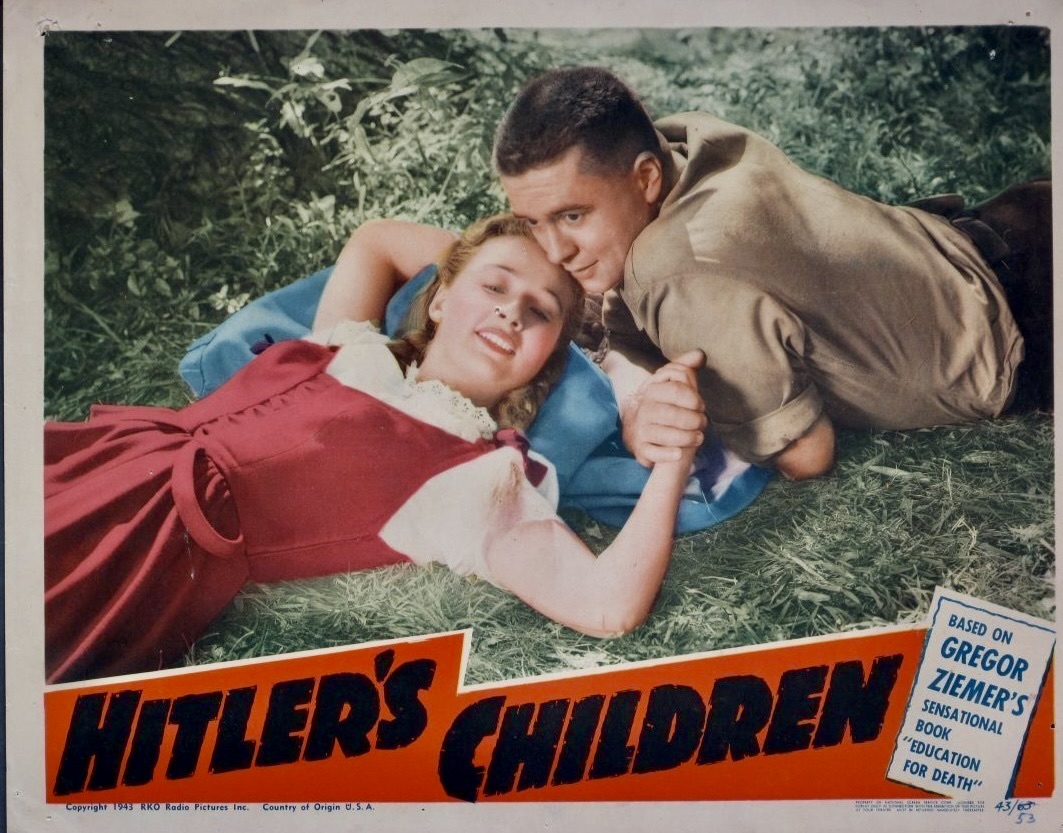
Seen today, Hitler’s Children is clearly a melodramatic but predictable propaganda effort for its era. Nevertheless, it remains an irresistibly compelling B-movie and it helped launch Dmytryk’s career. He would go on to direct one more propaganda melodrama for RKO – Behind the Rising Sun (1943) – and then hit the big time the following year with Murder, My Sweet, one of the best film adaptations of a Raymond Chandler detective novel.
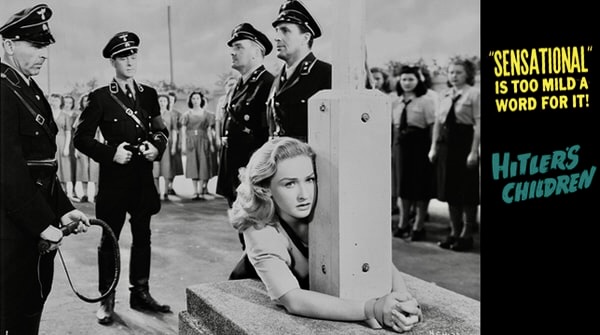
As for Bonita Granville, she always cited Hitler’s Children as her favorite film. Even though she went on to make more upscale movies like Love Laughs at Andy Hardy (1947) and The Lone Ranger (1956), she liked Hitler’s Children because it was one of the rare times she got top billing and got to play an adult character.
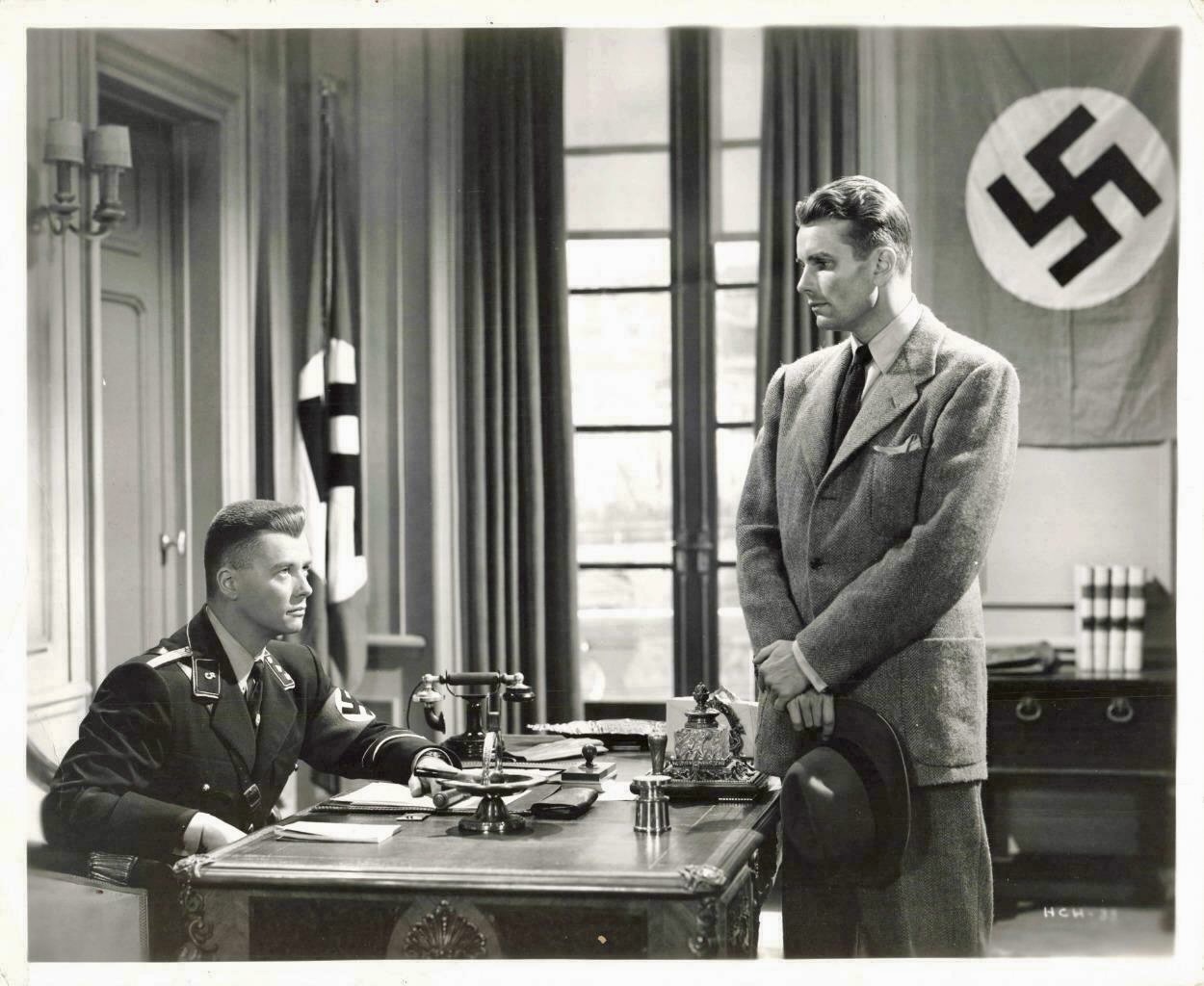
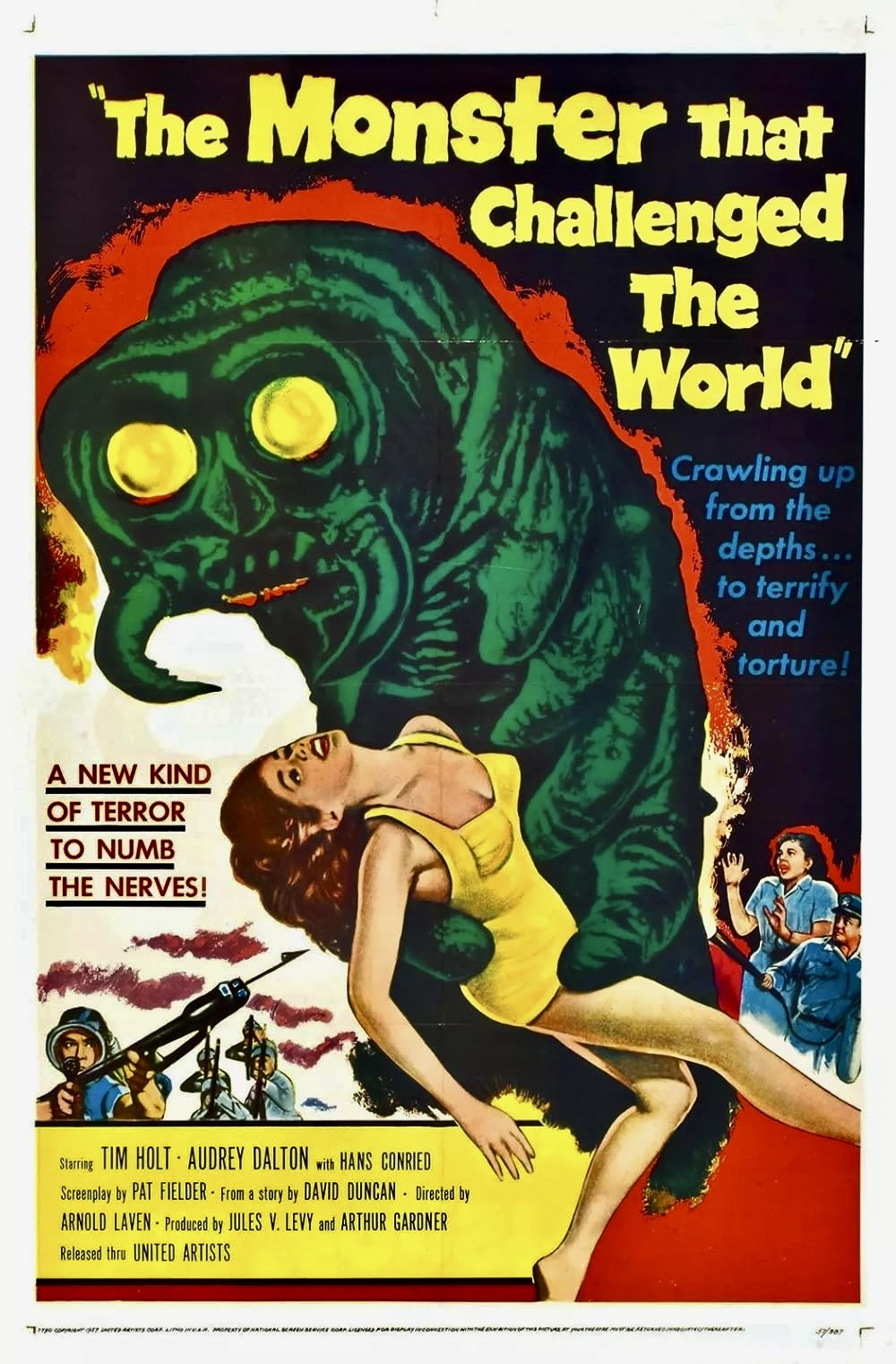
Tim Holt was already gravitating toward a steady career in westerns by the time he made Hitler’s Children with John Ford’s Stagecoach (1939) on his resume but also numerous B oaters for RKO in which he had the leading role such as Wagon Train (1940) and Cyclone on Horseback (1941). He actually had the opportunity to transition into starring roles in A pictures in the early to mid-forties, thanks to impressive performances in The Magnificent Ambersons (1942), My Darling Clementine (1946) and The Treasure of the Sierra Madre (1948). Instead, Holt preferred to stick with low budget westerns because he loved working outdoors with horses and didn’t enjoy the stress of appearing in big budget productions. In a career where he made close to 78 films more than fifty of them were westerns with a few rare exceptions like the 1951 noir His Kind of Woman and the sci-fi thriller, The Monster That Challenged the World (1957).
Most critics treated Hitler’s Children as an exploitation B-movie and Bosley Crowther of The New York Times was no exception calling the film “obvious, conventional” adding, “Edward Dmytryk, who directed, has set the whole thing in an oratorical style and has given it the quality of a philippic rather than a credible story from life.” More recent assessments of the film, however, are more favorable such as Nicholas Bell for Ion Cinema who wrote, “Though its woefully sanitized depiction of labor camps would prove to be euphemistic, at best, the acknowledgement of ‘breeding’ programs by the Third Reich still merits a bit of squalid interest. It’s similar to an SS operation depicted by Czech filmmaker Milan Cieslar with his 2000 film Spring of Life, though Dmytryk’s vision is still more lurid.”
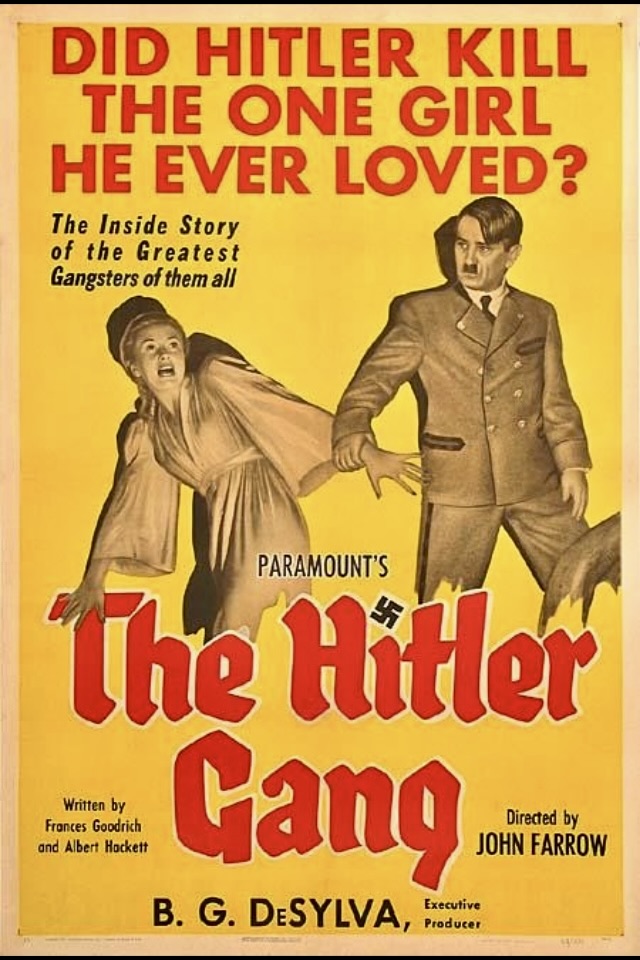
Other anti-Hitler exploitation films from Hollywood during the late thirties/early forties include Hitler: Beast of Berlin (1939), directed by Sam Newfield (White Pongo, The Monster Maker), Hitler: Dead or Alive (1942) starring Ward Bond, Douglas Sirk’s Hitler’s Madman (1943) and The Hitler Gang (1944), helmed by John Farrow and released by Paramount.
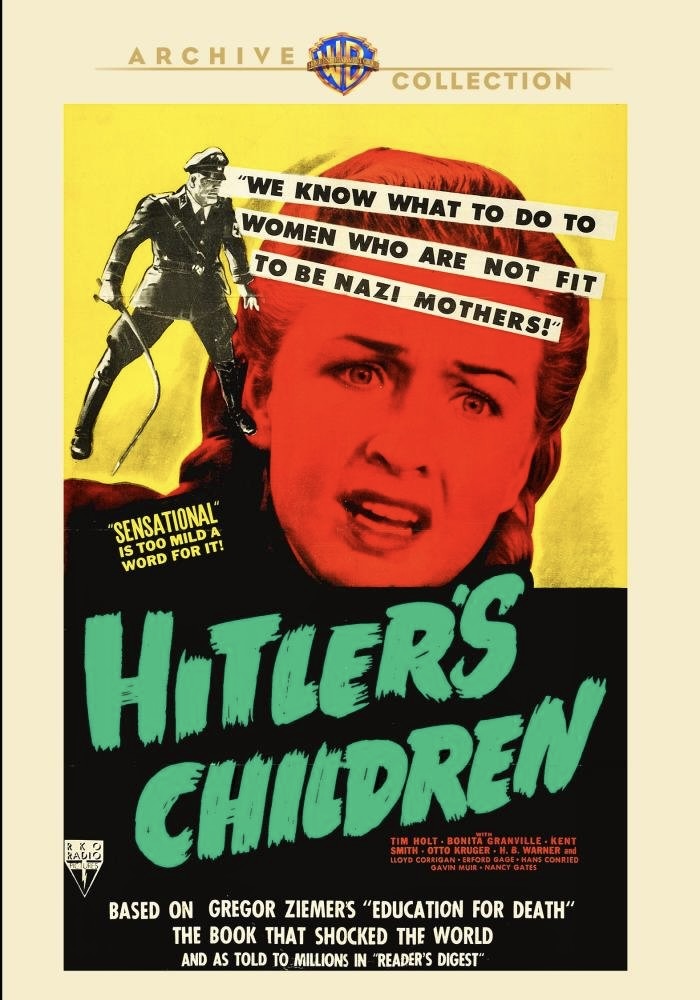
Hitler’s Children was released on DVD by the Warner Archive Collection in December 2015 as a stand-alone disc with no extra features and is still the best presentation of the film to date.
Other links of interest:
http://www.screenonline.org.uk/people/id/502547/index.html
https://d23.com/walt-disney-legend/bonita-granville-wrather/
https://mubi.com/en/notebook/posts/notebook-primer-hollywood-anti-fascism-during-world-war-ii
 Cinema Sojourns