
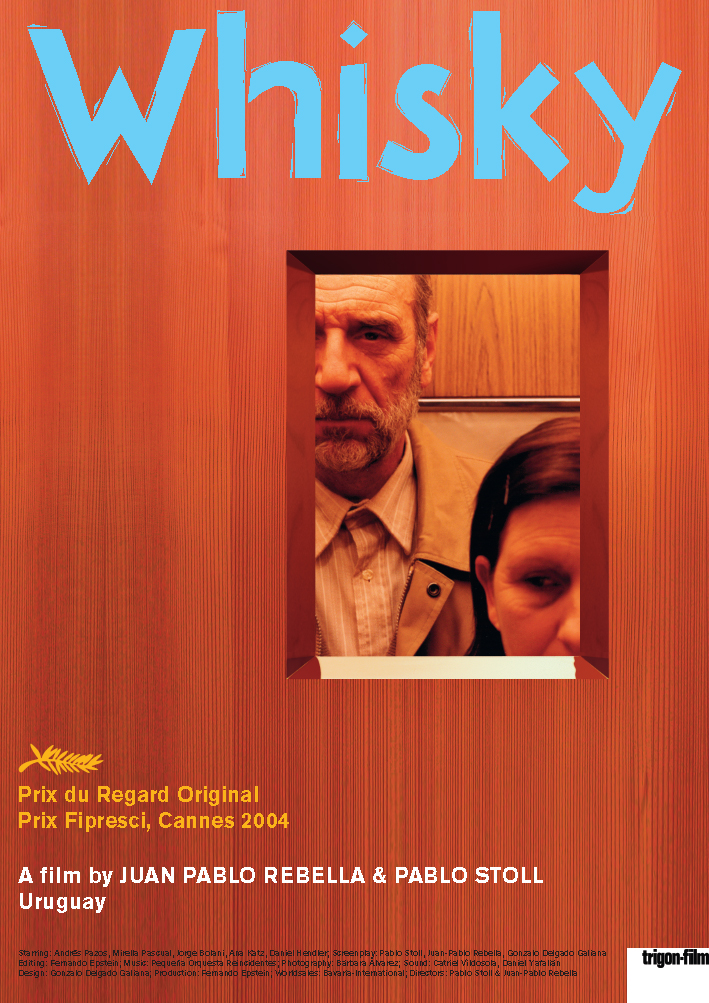
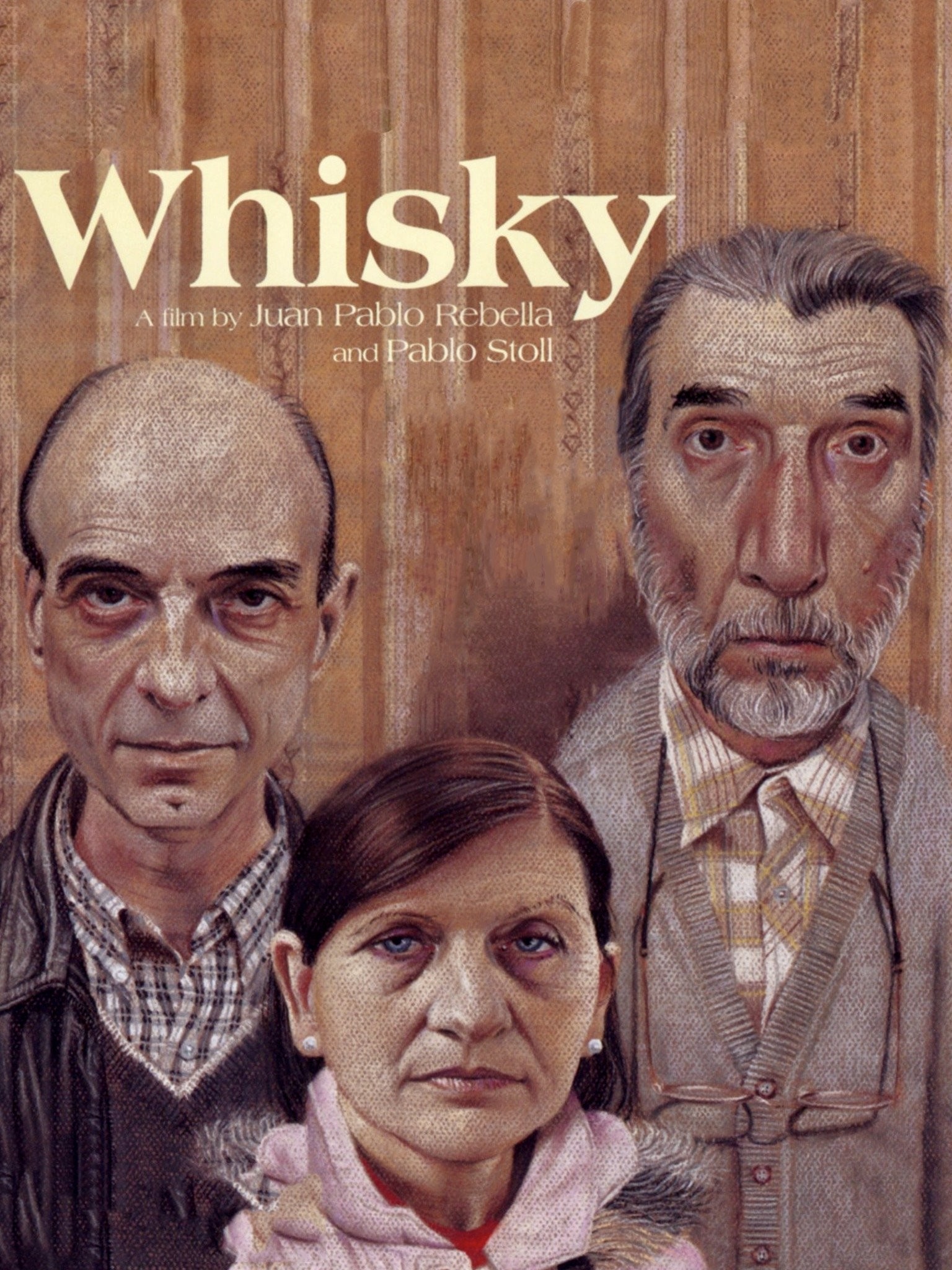
What was the last movie you saw from Uruguay? I was not sure I had ever even seen a film from that country until I recalled watching La Noche de 12 Anos (English title: A Twelve-Year Night) in 2018. Directed by Alvaro Brechner, it was the story of three political prisoners from the National Liberation Movement aka Tupamaros in Uruguay who were systematically tortured in jail during the military dictatorship of the country in 1973. The only other film I recall that was specific to Uruguay was Costa-Gavras’s State of Siege (1972), a Kafka-like drama based on the real-life kidnapping and assassination of Daniel A. Mitrione, a government official with the United States Agency for International Development. But Costa-Gavras’s film was actually shot in Chile, not in Montevideo where the events took place, and was primarily a French production so it doesn’t really qualify as a Uruguayan production…which brings me to Whisky, a 2004 film by Uruguay filmmakers Juan Pablo Rebella and Pablo Stoll. Whisky could not be more different than the politically charged A Twelve-Year Night and offers instead a subtle, bittersweet character study directed in the deadpan absurdist style of Aki Kaurismaki (Ariel, Le Havre) or similar kindred spirits like Roy Andersson (Songs from the Second Floor, About Endlessness) or Jim Jarmusch (Stranger Than Paradise, Dead Man).
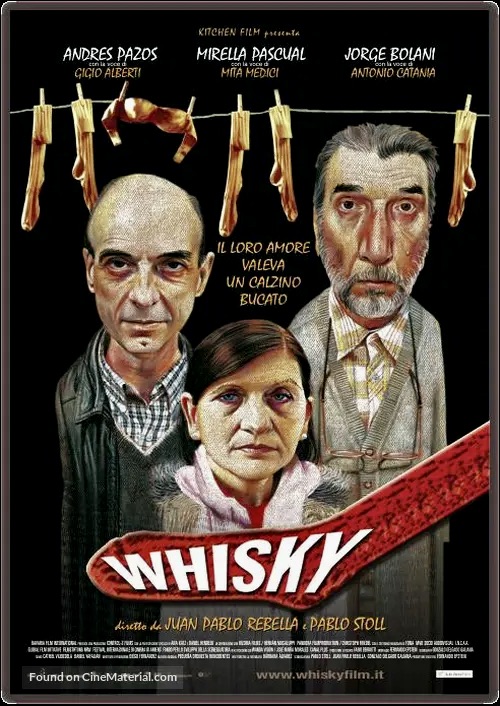
The film opens as Jacobo Koller (Andres Pazos) drives to work at his small, cluttered sock factory in Montevideo. He only has three female employees who perform their work on outdated machines from Italy and you can tell that his business is barely scrapping by. Marta (Mirella Pascual), a dowdy, middle-aged woman, is his most trusted employee and also serves as his unofficial personal assistant, making him fruit drinks in the morning. One day Marta gets an odd request from Jacobo – will she move in with him for a few days while his brother is visiting from Brazil? On the surface, the boss’s request could easily be misinterpreted but Marta intuitively knows what Jacobo is asking. He wants her to pretend to be his wife when his long estranged younger brother Herman (Jorge Bolani) comes to visit to celebrate the new gravestone marker for their mother’s cemetery plot.
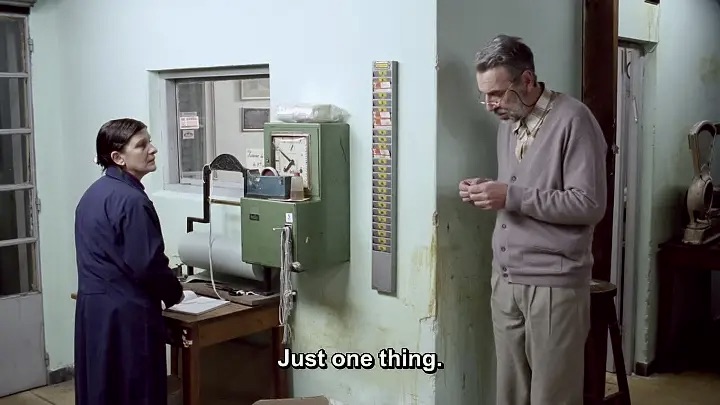
Very little backstory is provided for any of the characters in Whisky but we can surmise from Jacobo’s impersonal interaction with others that he is operating on some kind of emotionless autopilot. It might have something to do with the recent death of his elderly mother who lived with him. His messy, unkept apartment is starting to look like the setting of an episode from the TV series Hoarders and further confirms his apathy and dreary existence.
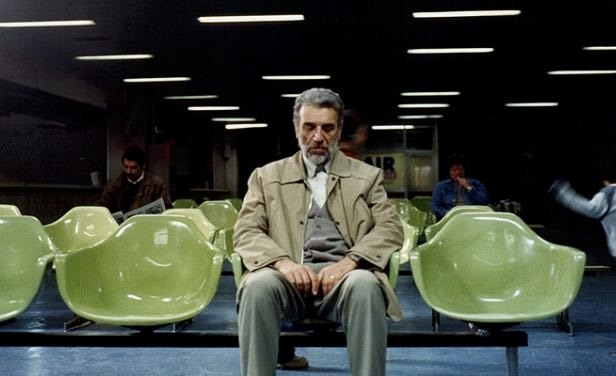
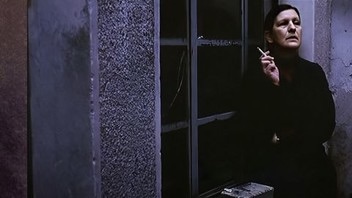
Marta, his reticent and quietly observant employee, also appears to have no social life outside of her work but it doesn’t mean she doesn’t yearn for one. We see glimpses of her at work or on a city bus listening to a romantic pop song on the radio (“O Quizas Simplemente Le Regale Una Rosa…” performed by Leonardo Favio) and smiling as if in a daydream. Directors Rebella and Stoll track the non-eventful lives of these two lonely people in in fixed-frame camera shots with little to no movement (the cinematography is by Barbara Alvarez). The effect is often hypnotic, creating a series of tableaux-like compositions that often combine pathos with absurdist humor as in Jacobo’s futile attempts to fix the blinds in his dingy office so he let some sunlight into the room. When Herman enters the scene for a brief period, he creates a new dynamic that has a subtle but transformative effect on all three of them
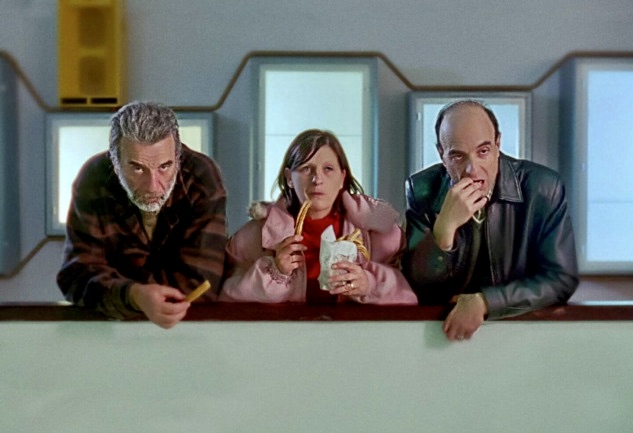
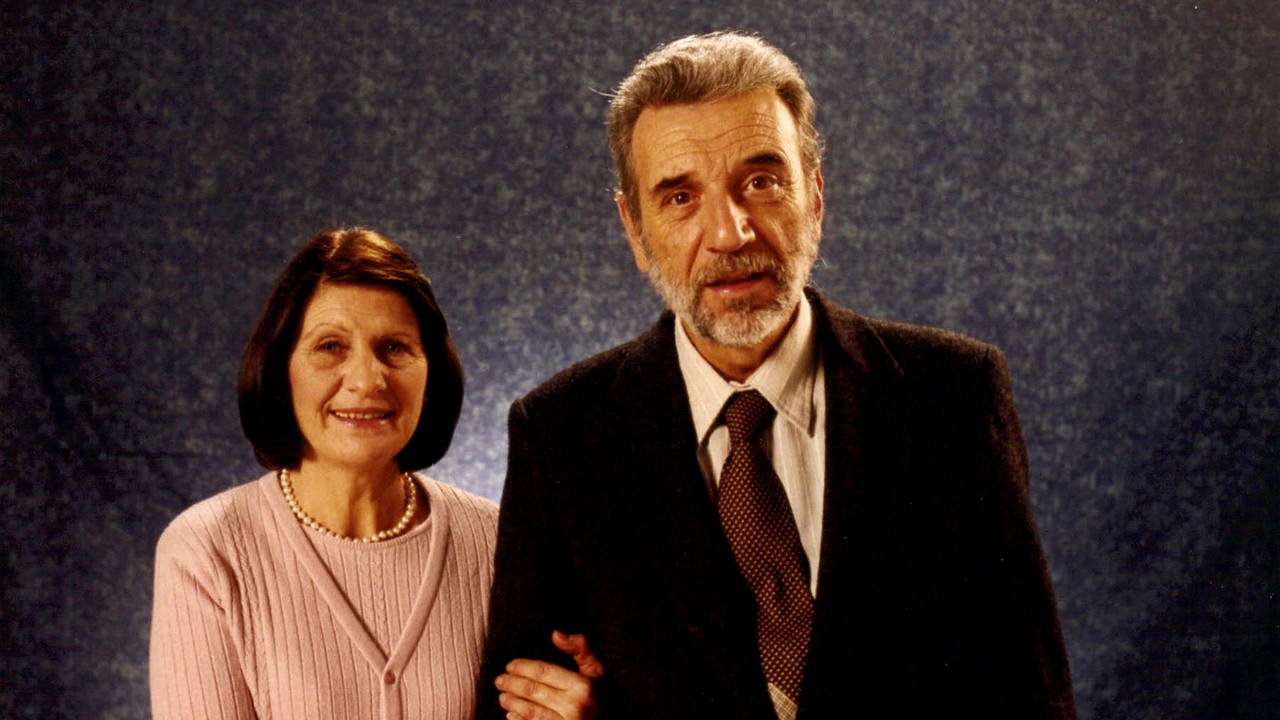
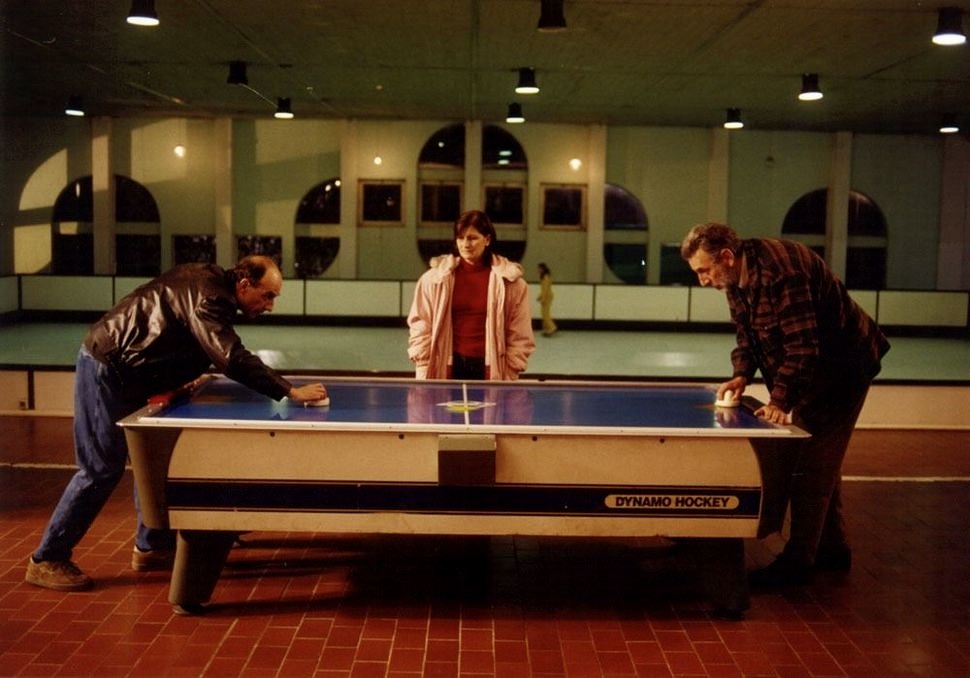
What soon becomes obvious is that Herman, who also runs a sock factory in Brazil, is much more successful as a businessman. He also has a wife and children and appears outwardly confident and gregarious. The truth is that he feels guilty for leaving Uruguay to make a new life for himself in Brazil while Jacobo was stuck taking care of their elderly mother and never married. Ashamed of his current circumstances and not wanting to be pitied by Herman, Jacobo tries to present himself as being happy and content with his lot in life, which includes his pretend marriage to Marta. They even pose for fake wedding photos and create a fictitious backstory about their honeymoon in the popular resort of Iguazu Falls, Brazil. This charade leads to unexpected developments in the film’s second half when Herman insists on taking Jacobo and Marta to the seaside resort town of Piriapolis in the off season where they frequent an ice skating ring, a casino, and a karaoke bar.
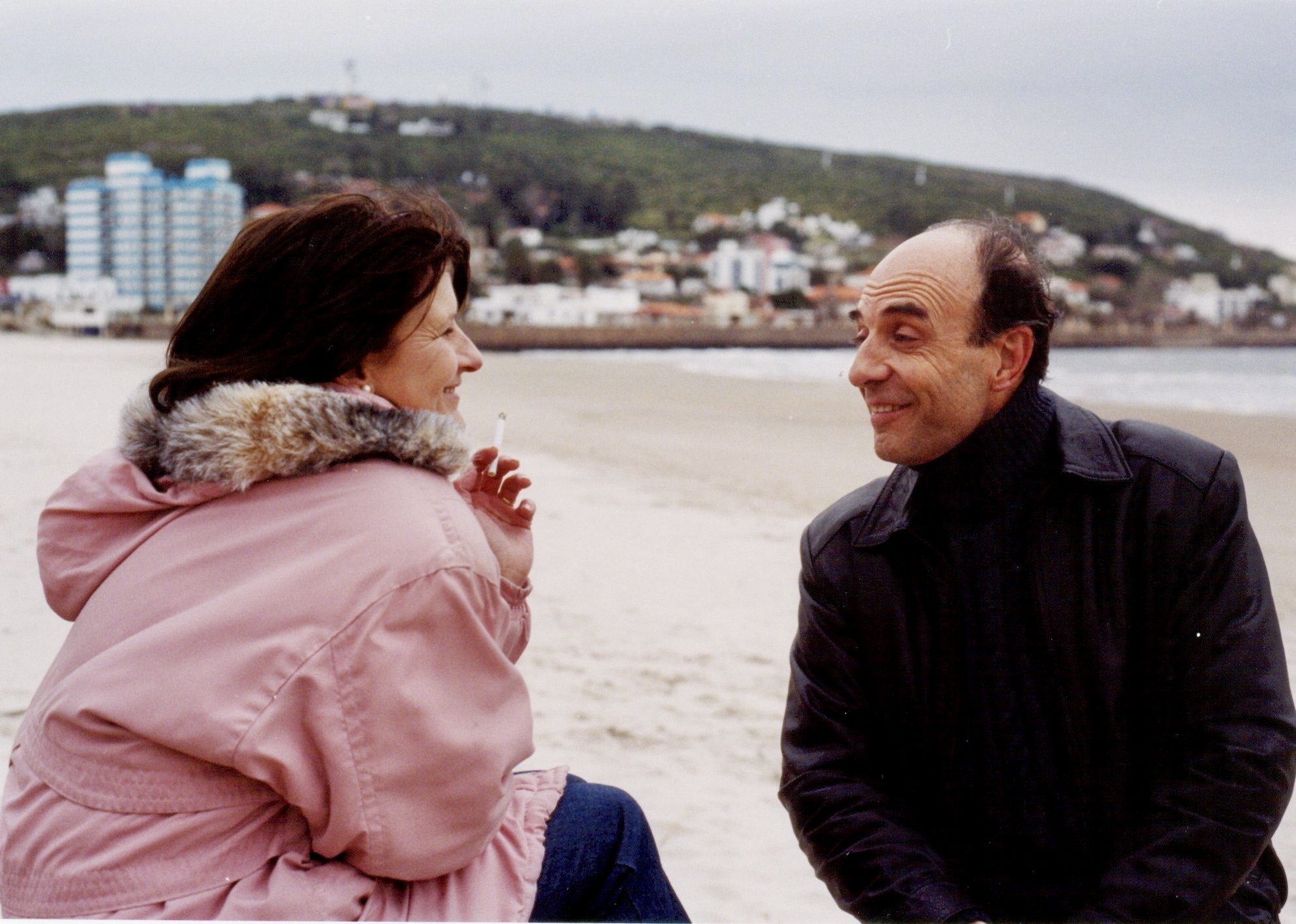
In the brisk 94-minute running time, Whisky goes from being a quirky portrait of some people living lives of quiet desperation and dashed dreams to their sudden awakening to new possibilities and relationships in their lives. Yet none of this leads to a predictable romantic resolution as it might in some mainstream commercial comedy. In fact, the open ending can be interpreted in various ways but it generates a sense of optimism, not despair, and the characters take on a life of their own in your mind. You long to know what happens to them.
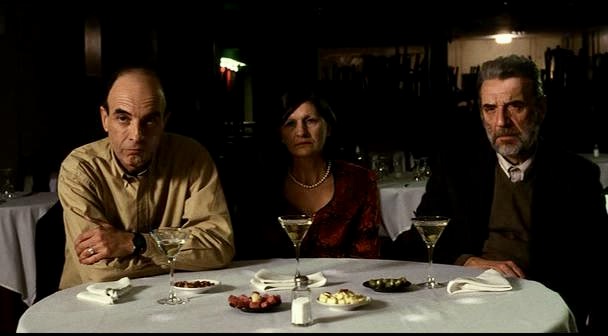
Rebella and Stoll’s slow, methodical approach to character development and narrative is not for everyone. Emotions are mostly kept in check so there are no highs or lows but there is still drama and suspense in subtle but telling scenes such as Jacobo’s refusal to accept a generous sum of money from Herman (for taking care of their mother for years). Jacobo ends up taking Herman’s guilt money and betting it all on number 24 during a game of roulette at a casino in Piriapolis. It is probably the most unexpected and surprisingly moment in Whisky and suggests that Jacobo is finally taking charge of his own life again. By the way, the title has little bearing on the story and is briefly referenced in a scene where the wedding photographer tells Jacobo and Marta to smile for his camera by saying whisky.
Whisky was a surprise hit in Uruguay and signaled the beginning of a film renaissance for a new generation of filmmakers. Manohla Dargis of The New York Times wrote, “A deadpan comedy shot through with a vein of despair, the Uruguayan film Whiskey is a pint-size pleasure.” Phil Hall of Film Threat magazine called it, “A symphony of small gestures, throwaway glances, brief exchanges or unexpected observation and silences which actually say more than pages of dialogue.” And Slarek of Cine Outsider wrote, “Whisky is minimalist in the very best sense of the term, never wasting a shot or a look or an edit, creating and engaging us with sympathetic and interesting characters by focussing on the ordinary rather than the extraordinary. The three lead performances are all beautifully understated, and like the Kaurismaki films to which it has been compared, the film admirably demonstrates that unhappy characters can still make for an involving, wryly amusing and even curiously uplifting film.”
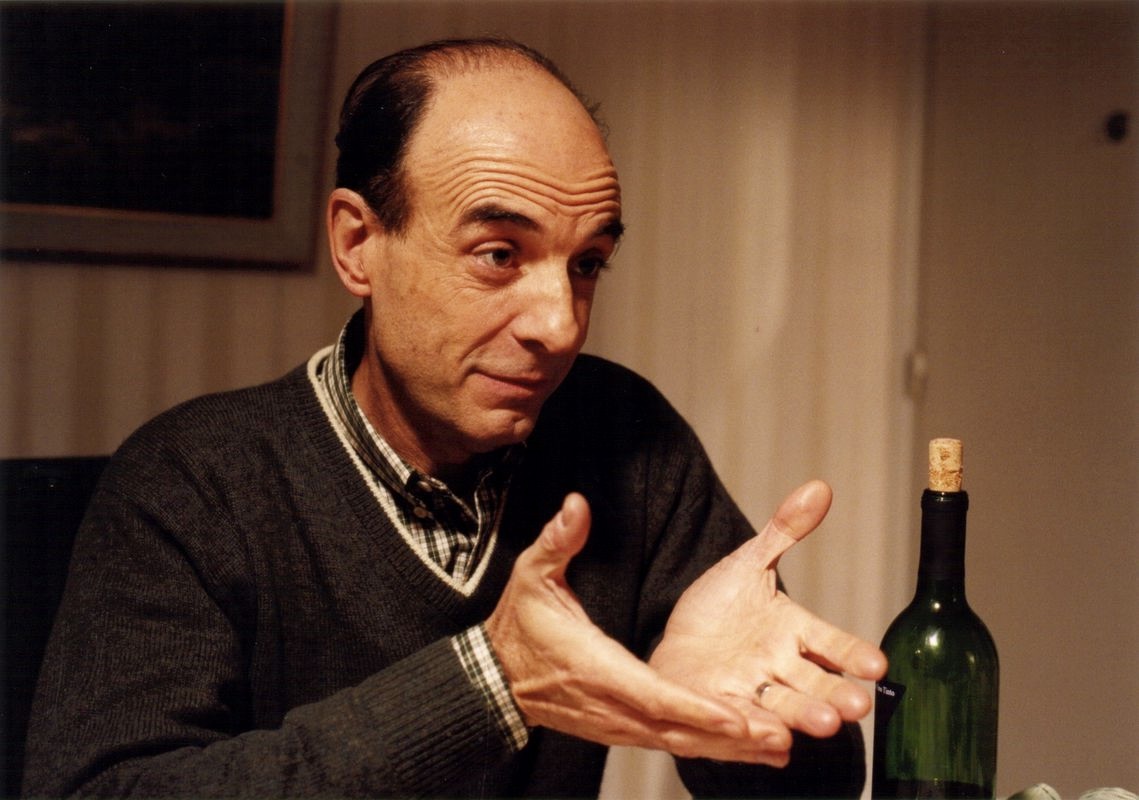
Some film critics believed that directors Rebella and Stoll were making social and cultural observations about Uruguay and Brazil through their characters in Whiskey but Stoll later insisted in an interview at TropicalCinema.com that was never intentional: “While we were writing, Uruguay was still deep in the economic crisis. Every time Juan and I came back to Montevideo from an international screening for 25 Watts, things at home had gotten worse. Some people say Whisky is a film about that crisis. We never set out to make a film about the crisis, but it was clearly there. The script came together from our own experiences, from conversations and advice from friends, but also from things we were observing—including the absurd humor of how much effort went into making something as mundane as a sock. There’s a whole life there that often goes unnoticed. In a way, the film ends up being a kind of documentary on how socks are made—while bigger things are happening.”
Equally popular at film festivals around the world, Whisky won the FIPRESCI Prize and the Regard Original Award at Cannes. It also won Best Feature Film at the Chicago International Film Festival, Best Spanish Language Film at the Goya Awards (Spain), and Best Latin American Film at the Ariel Awards (Mexico). Among the film’s cast members, Mirella Pascual as Marta was the clear favorite and was awarded the Best Actress award at the Tokyo International Film Festival, the Lima Latin American Film Festival and the Thessaloniki Film Festival (Greece).
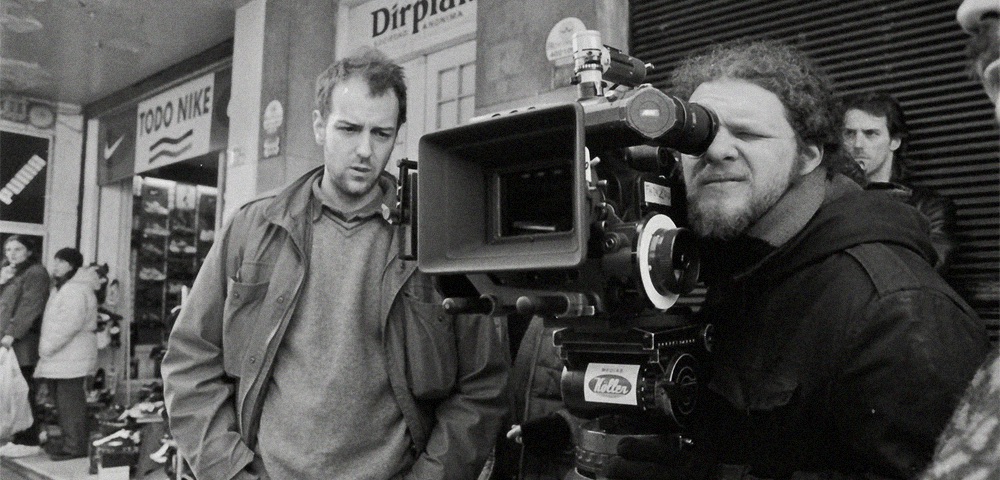
After the release of Whisky, everyone expected to see Rebella and Stoll go on to bigger and more ambitious projects. Unfortunately, it was the final film for Juan Pablo Rebella for died in 2006 at age 32 (the cause of death was listed as suicide). Pablo Stoll, however, continues to write, direct and produce movies and has received accolades for later films such as the musical drama Hiroshima (2009) and 3 (2012), a comedy about a teenage girl dealing with her divorced parents. Stoll and Rebella’s first feature film together, 25 Watts (2001), a tale about three street kids in Montevideo, is also still considered a key film in Uruguay’s burgeoning film industry.
Whisky is not currently available as a domestic release in the U.S. but if you have an all-region DVD player, you can find import versions of the film available with English subtitles from online sellers. You can also stream a very nice transfer of the movie with English subtitles at the Cave of Forgotten Films website.
Other links of interest:
https://reverseshot.org/symposiums/entry/1386/whisky
 Cinema Sojourns