
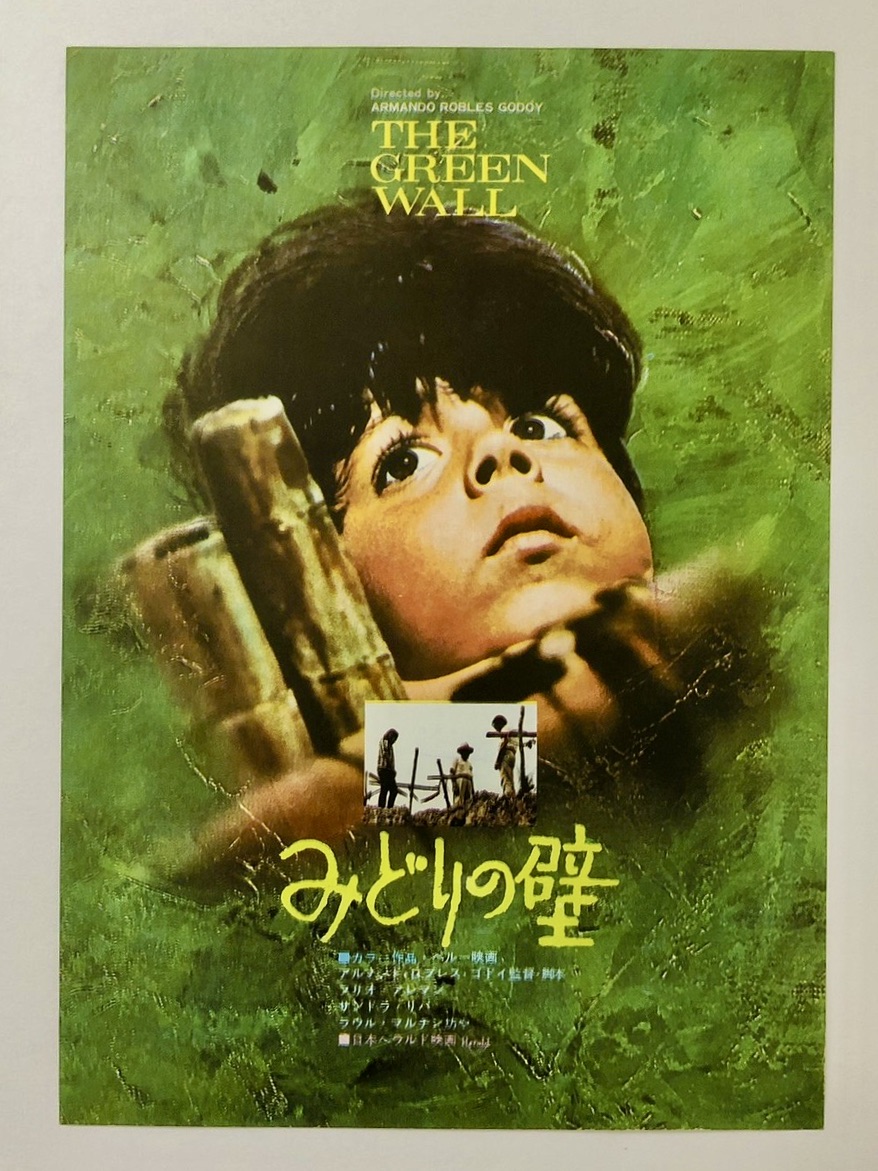
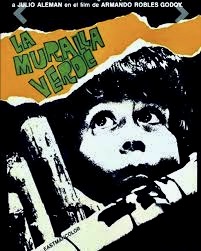
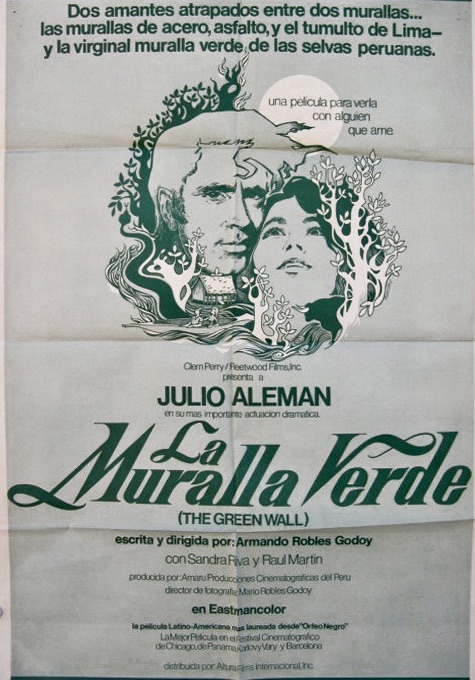
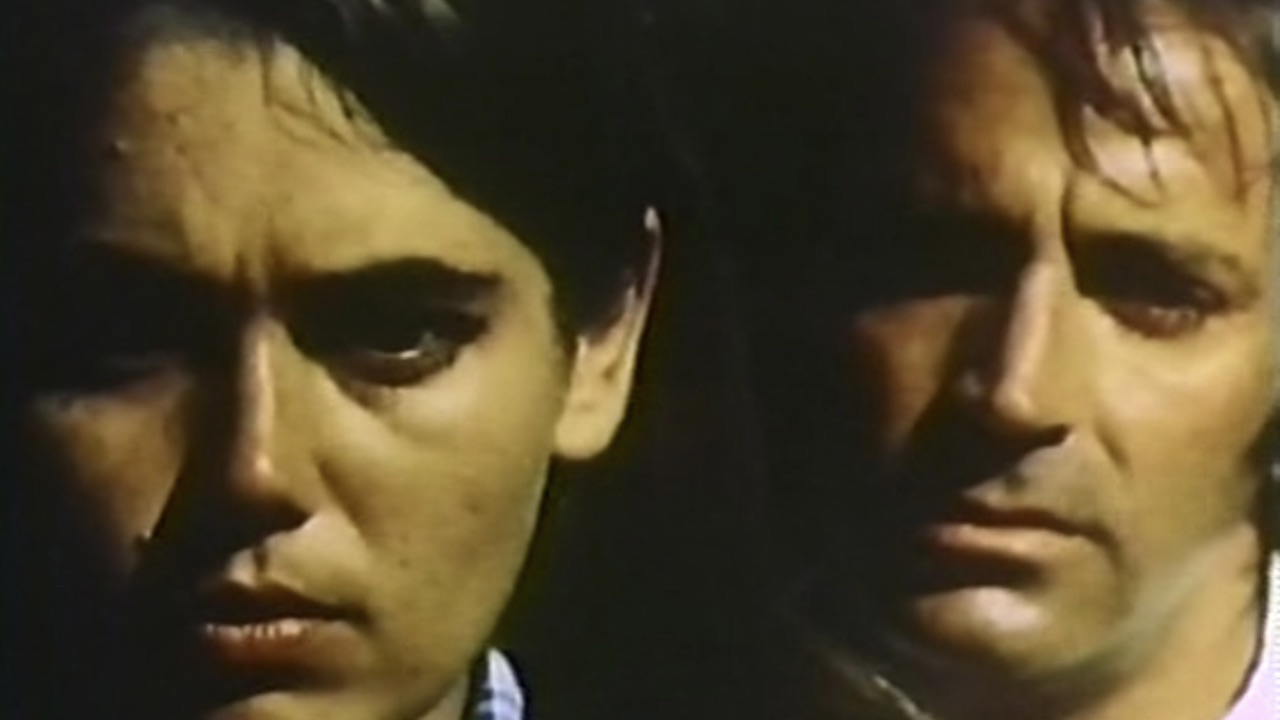
Remember the back-to-the-land movement of the mid-1960s, which lasted well into the late 1970s? It was a counterculture response to urban living with its many problems – traffic, pollution, crime, political turmoil, etc.. Young people, in particular, were looking for healthier, more sustainable lifestyles such as growing their own food and living off the land. Although this cultural phenomenon mostly occurred in North America, the idea was co-opted by young idealists around the world, even in such far away places as Tingo Maria, Peru. That is the setting of the 1969 film La Muralla Verde (English title, The Green Wall), the story of Mario (Julio Aleman), a recently married businessman, who becomes fed up with city living in Lima and convinces his wife Delba (Sandra Riva) to start a new life on the land he has purchased in the Peruvian jungle. Along with their newborn son Romulo, the couple set off on a new chapter in their lives with high hopes.
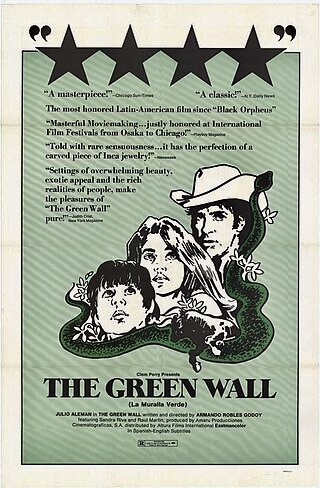
Directed by Armando Robles Godoy, The Green Wall takes a semi-experimental approach to its narrative, cutting back and forth between the past and the present to give us a complete portrait of Mario and his family before and after the move. The sound design of the film is equally free form with off-camera conversations occasionally being used to comment on an on-screen character or intercutting natural sounds like rainfall or a crackling fire with musical selections, either diegetic or coming directly from the soundtrack (composed by Enrique Pinilla). The result is a lyrical mosaic that straddles several film genres from romantic drama to political critique to nature study to tearjerker.
A large part of the film’s success is due to the lush cinematography by Mario Robles, which creates an immersive visual experience for the viewer. Lyrical shots of the dense jungle foliage, fresh water streams, or bananas being harvested alternate with flashbacks to Mario and Delba’s pre-marriage life in Lima. Mario’s co-workers appear to be as frustrated and unhappy with their lot in life as their friend but seem unwilling to take the same risks as Mario. Delba’s parents, on the other hand, try to discourage their daughter from marrying Mario and raising a child in a place with no doctors, schools or even electricity and plumbing.
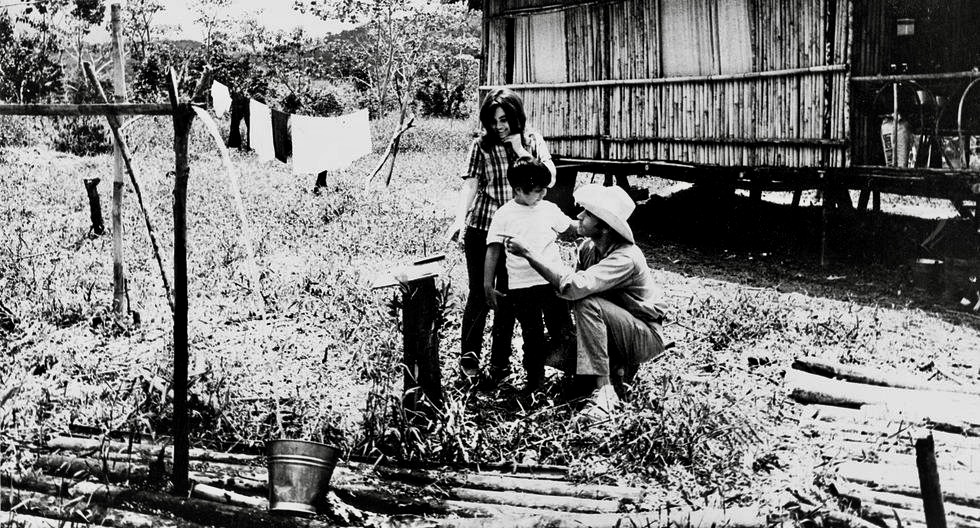
Against all odds, however, Mario creates a happy home for his family, building a thatched-roof structure with a kitchen, sleeping areas and a veranda. He rigs up a musical water wheel for Romulo (Raul Martin) and a make shift shower for bathing while Delba spends her time preparing food and helping her husband with chores. Romulo also leads an idyllic existence during the family’s six year sojourn in the wilderness, spending much of his time creating a miniature city populated by tiny figurines.
There is also a brief interlude where Mario raises a small calf he dubs “Mendelson” in the hopes that the fully grown steer can help him farm the land. Unfortunately, the animal ends up being a nuisance. It continually knocks down the border fences and eats the coffee plants Mario is raising. But there are other problems that create anxiety and frustration for the young settlers.
A government program that was created to offer aid and support to families relocating to jungle land turns out to be a bureaucratic nightmare of endless paper work for permits. The government employees appear to be either inept or indifferent at their jobs and Mario has trouble even getting the officials to respond to trespassers on his land, who are damaging his crops. Yet the beauty of their surroundings and the rewards of being self-sufficient is almost enough to make them forget the city sprawl they left behind. Then something unexpected happens. Romulo is bit by a shushupe, a long, venomous snake known as the South American Bushmaster. At this point, The Green Wall becomes an action thriller with Delba and Felix (Esteban Rengifo), a local farmer, racing against time to get the boy to a doctor before the venom can kill him. In an ironic twist, Mario is away during this incident, trying to get a government official to sign off on his property deed during a celebration to honor the visiting President of Peru.
During its initial release, The Green Wall garnered critical acclaim and excellent word of mouth among moviegoers who helped turn the movie into a cult hit. Roger Ebert of The Chicago Sun-Times was one of the movie’s biggest champions and wrote, “The Green Wall is beautiful in so many different ways – in its story, its photography, in the construction of its images – that it becomes not simply a movie but an affirmation of life. There is not a false note in it, nothing that lies or is trickery, and we’re reminded of “The Bicycle Thief” and “The Wild Child.” Judith Crist of New York magazine said the movie was “a fascinating blend of romantic adventure and domestic melodrama in settings of overwhelming beauty and exotic appeal.” Other critics like Sam Kaplan of The Boston Phoenix praised the movie for its angry and often satiric treatment of the Peruvian government which wants to colonize the wilderness because “the future of Peru is in the jungle” but are hypocritical in their commitment to it.
There were a few detractors like Richard Koszarski of The Village Voice who stated, “It’s not that the story reads like an updating of “The Yearling” as seen through the pages of “The Whole Earth Catalog,” but that what begins as a serious, pertinent, and quite lovely work concludes with a very contrived and essentially trite piece of audience exploitation.” [Spoiler alert] The tragic episode with Romulo and the poisonous snake doesn’t strike me as a cheap narrative trick but as one of the very real consequences of living an isolated existence in a rainforest. Mario and Delba knew there were major risks in leaving the city and starting over in a remote region but neither could anticipate their son’s death. Still, the dangers of the jungle are apparent throughout the film as represented by occasional cutaways to a Bushmaster slithering through the jungle underbrush.
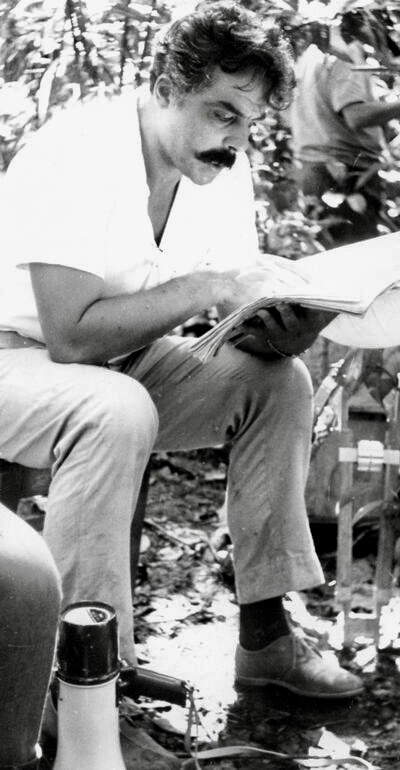
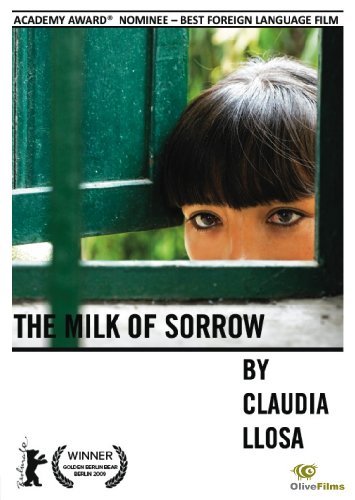
The Green Wall is significant for being one of the first Peruvian movies to receive international distribution and focus attention on the fledging Peru film industry. Director Armando Robles Godoy is also considered one of Peru’s most important filmmakers even though he only made six features and three short subjects. Interestingly enough, three of his films – No Stars in the Jungle (1967), The Green Wall (1969) and Mirage (1972) – were submitted by Peru to the Academy for Oscar consideration as Best Foreign Language Film but none of them made it to the final ballot. In fact, the only Peruvian film to ever receive an Academy Award nomination for Best Foreign Language Film (now called Best International Film) is Claudia Llosa’s The Milk of Sorrow (2009), a disturbing drama about a young woman and her crippling fear of men and the possibility of rape.
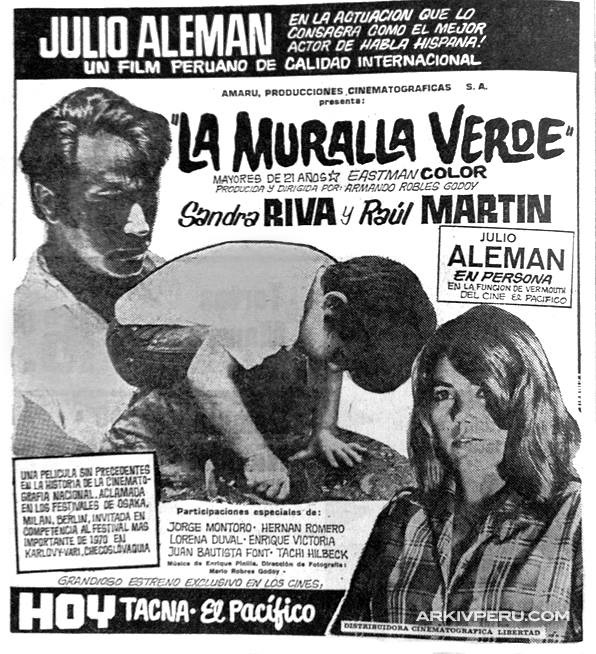
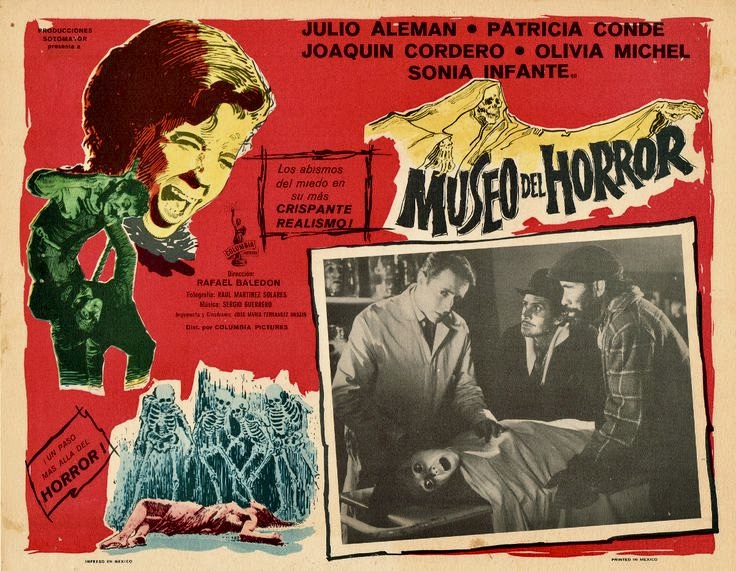
One final comment about The Green Wall: The cast is mostly composed of non-professional actors with the exception of Julio Aleman in the leading role of Mario. A Mexican actor with over 190 film and television credits, Aleman started appearing in movies in 1957 and starred in various genre films during Mexico’s Golden Age – horror thrillers like The Curse of Nostradamus (1961) and Museo del Horror (1964), westerns such as My Son, the Hero (1961) & El Tunco Maclovio (1970) and espionage adventures (S.O.S. Operation Bikini [1967], Peligro…!Mujeres en Accion [1969]). He was also a major star of Latin American telenovelas.
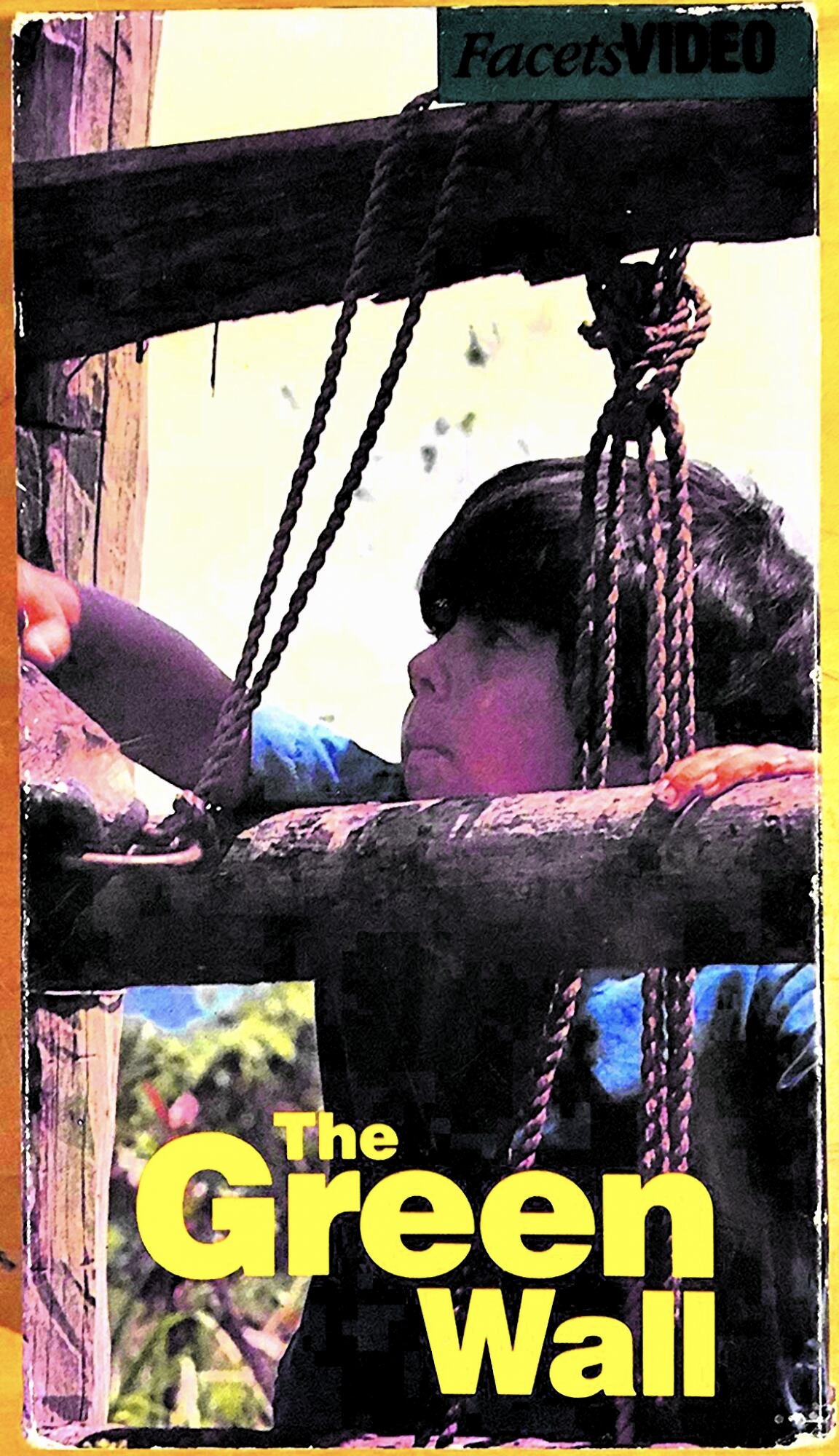
The Green Wall has been missing in action for years due to its unavailability on any format other than a long out-of-print VHS release from Facets Media. The film is in desperate need of a major digital restoration at this point as you can see from inferior copies of the movie that are streaming on Youtube.
Other links of interest:
https://www.utne.com/environment/back-to-the-land-movement-ze0z1609zfis/
https://history-timeline.net/home/timeline/detail/id/956.html
https://snakeradar.com/10-facts-about-the-south-american-bushmaster/
 Cinema Sojourns