
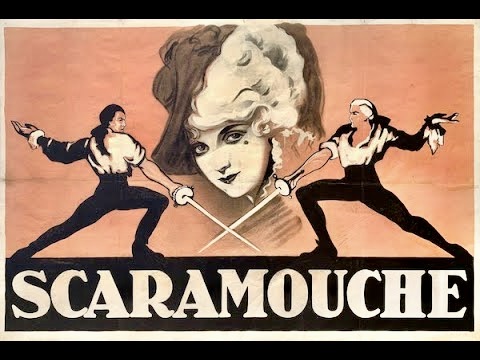
When was the last time you heard someone use the term swashbuckler? That’s a word that harkens back to another time but cinephiles associate it with a specific kind of action-adventure costume drama that became popular during the silent era. It also brought the work of novelist Rafael Sabatini to a larger audience thanks to movie adaptations of his most popular books. Early film adaptations include Scaramouche (1923) with Ramon Novarro in the title role, the 1924 versions of Captain Blood and The Sea Hawk and Bardeleys the Magnificent (1926) starring John Gilbert. And it was Errol Flynn who would come to represent the epitome of a swashbuckling hero, one skilled in sword fighting and other daring feats, in definitive versions of two Sabatini novels, Captain Blood (1935) and The Sea Hawk (1940) plus his iconic role in The Adventures of Robin Hood (1938)
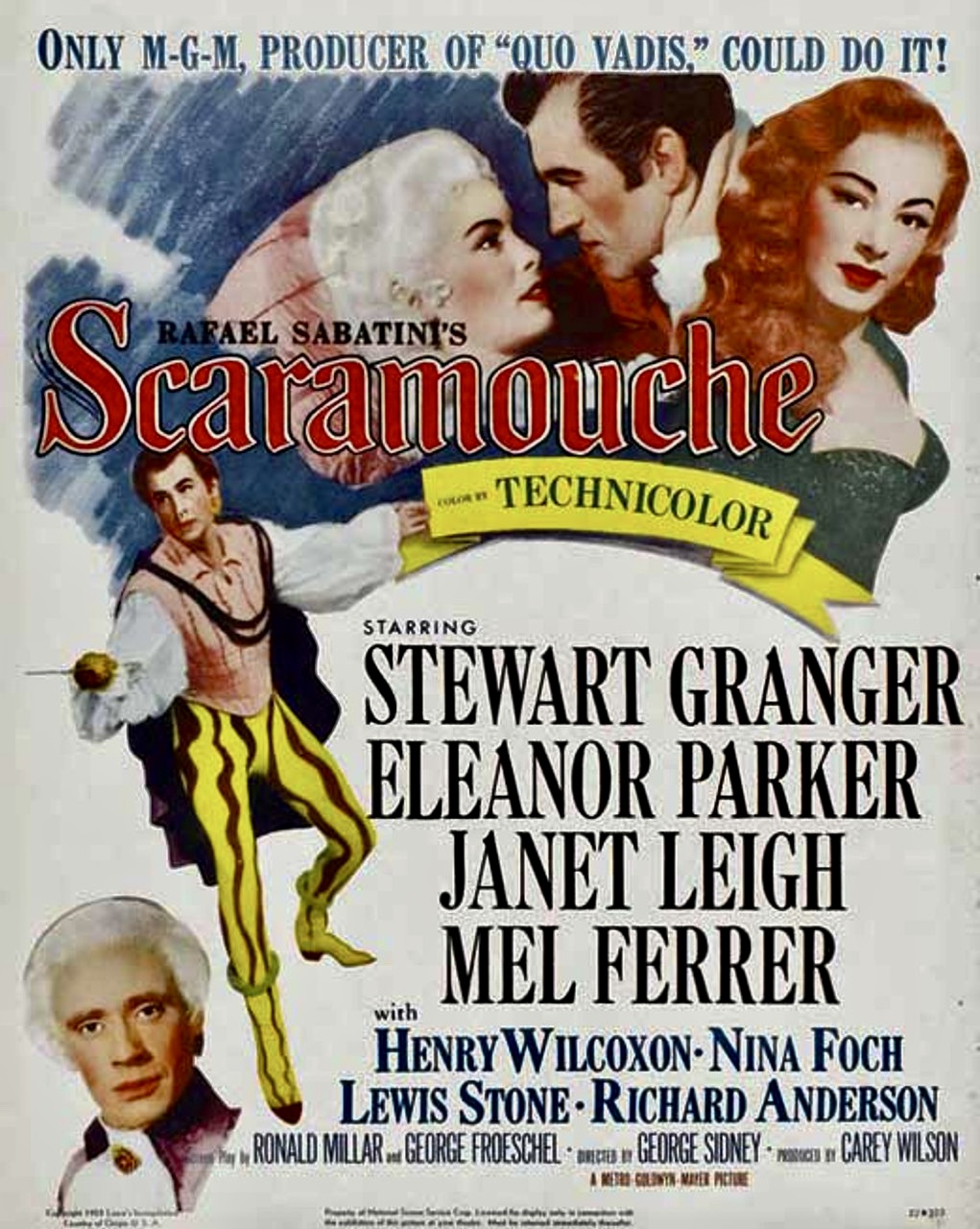
Yet, of all the swashbuckling novels written by Rafael Sabatini, Scaramouche is probably his best and most enduring work, even more so than Captain Blood, because of its rich and complex narrative, which spawned so many movie adaptations. Besides the superb 1924 silent version, there is MGM’s lavish 1952 Technicolor remake with Stewart Granger, the 1963 French costumer The Adventures of Scaramouche, an Italian comedy spoof Da Scaramouche or se Vuoi L’assoluzione Baciar devi sto…Cordone! (1973), a Spanish spinoff Los Hijos de Scaramouche (1975) and the 1976 international production The Loves and Times of Scaramouche (1976), directed by Enzo G. Castellari. There were even more adaptations and ripoffs including TV versions but my favorite of the lot is MGM’s 1952 remake.
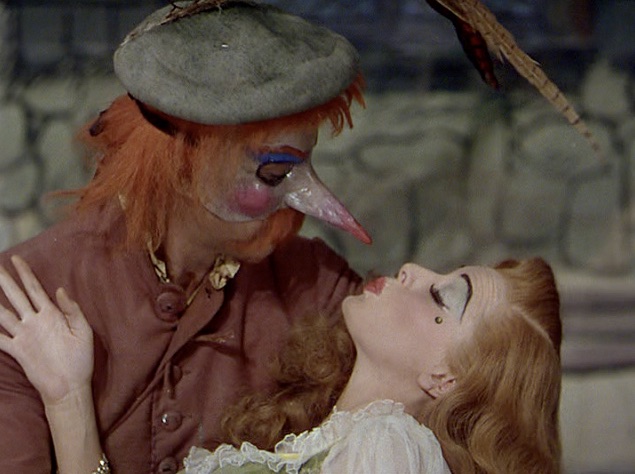
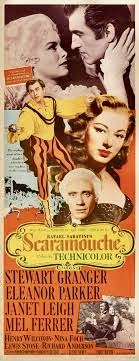
Set in the years just prior to the French Revolution, the book follows the trials and tribulations of Andre-Louis Moreau (Stewart Granger), an idealistic lawyer who dedicates his life to revenge after his best friend, Philippe de Valmorin (Richard Anderson) is killed in a duel by the Marquis de la Tour d’Azyr (Mel Ferrer as Marquis de Maynes in the film), a master swordsman. Forced into hiding by his archenemy, Moreau joins a traveling theatre group where he becomes the star comedian known as Scaramouche.
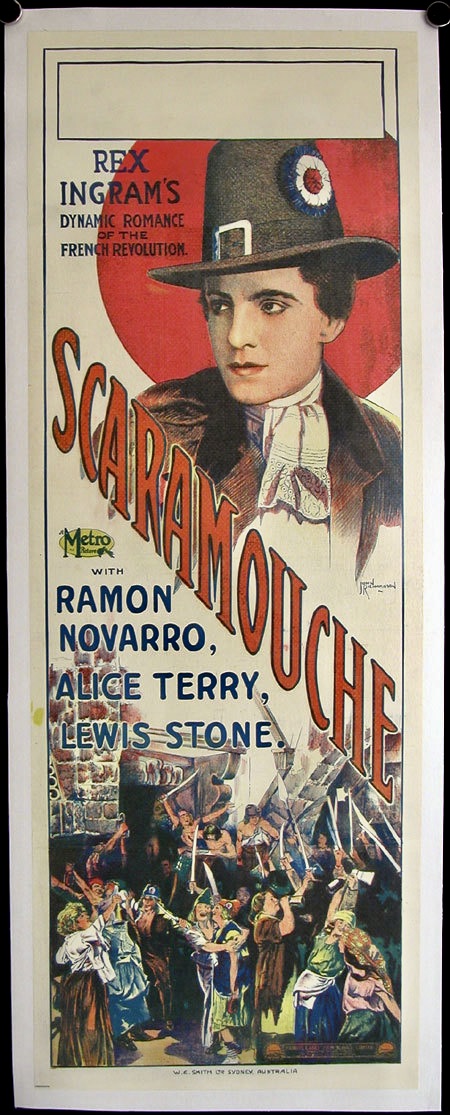
The 1923 version of Scaramouche with Ramon Novarro in the title role and Lewis Stone as his archrival was a mostly faithful adaptation of the novel and it made a huge impression on future swashbuckler Stewart Granger who saw it as a child. When Granger was later offered a contract by MGM, one of his stipulations was a guarantee that Scaramouche (1952) would be developed as a project for him and not as a musical for Gene Kelly as originally planned (Errol Flynn would have been the logical choice to play the lead if he had been 10 years younger; he was 43 at the time).
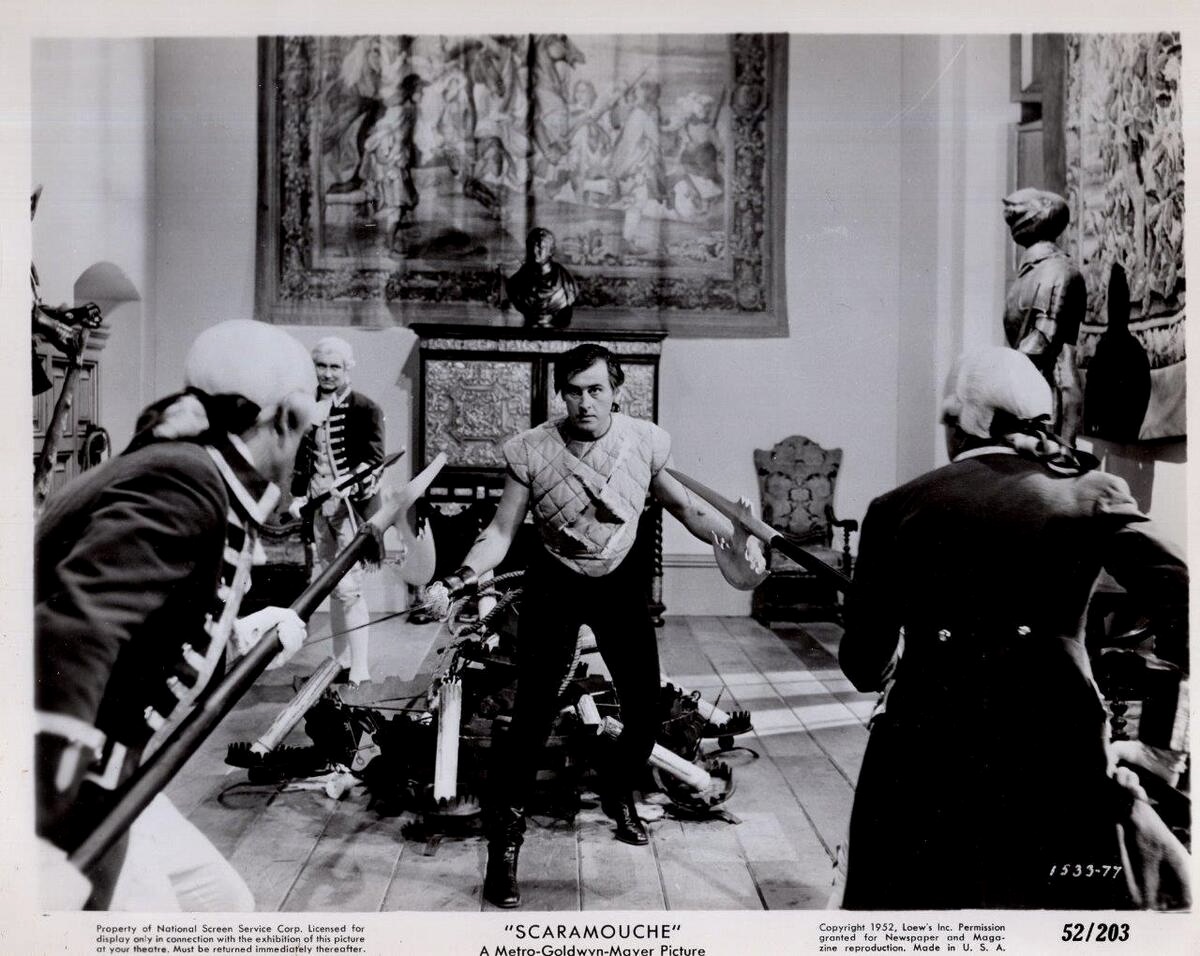
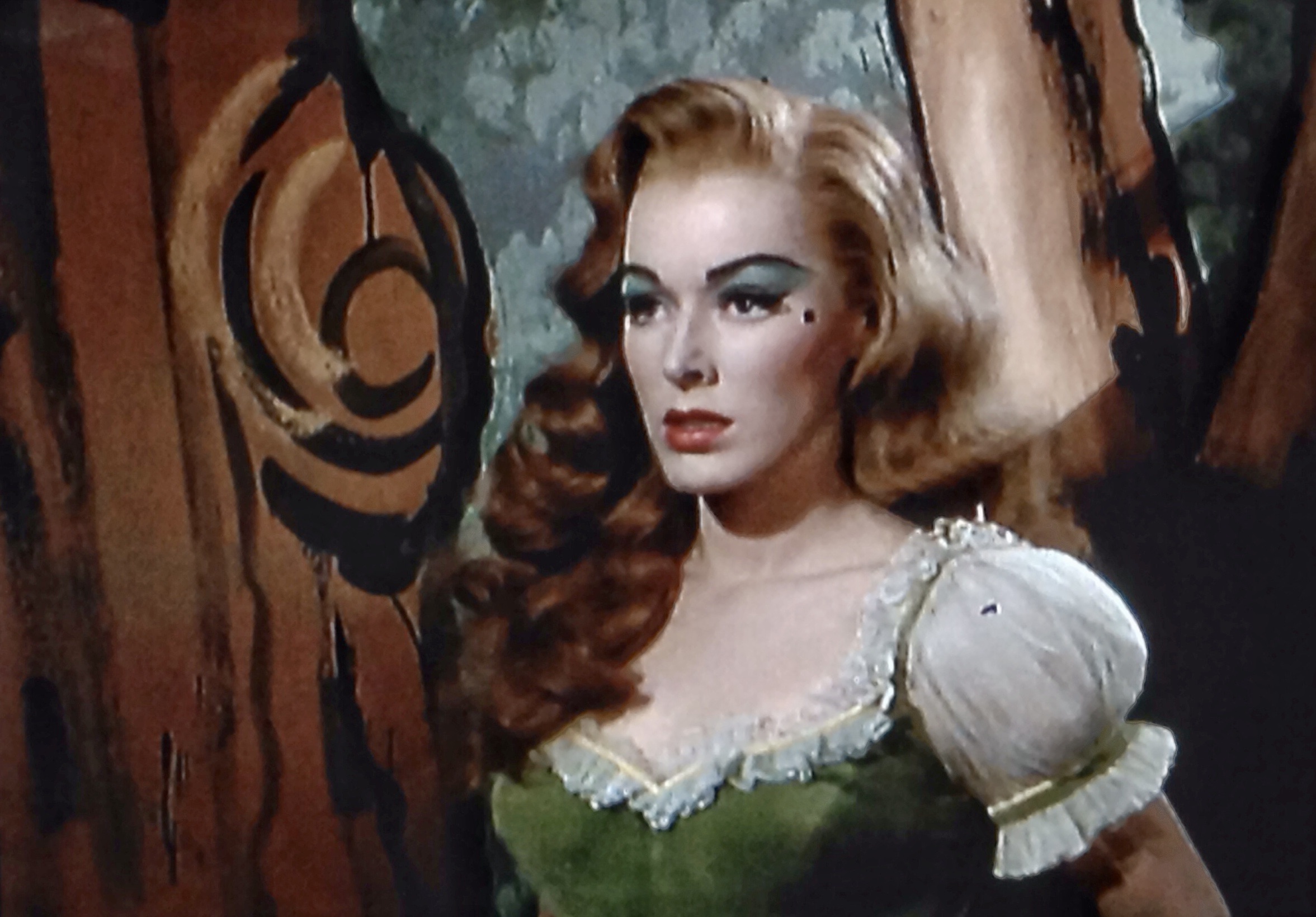
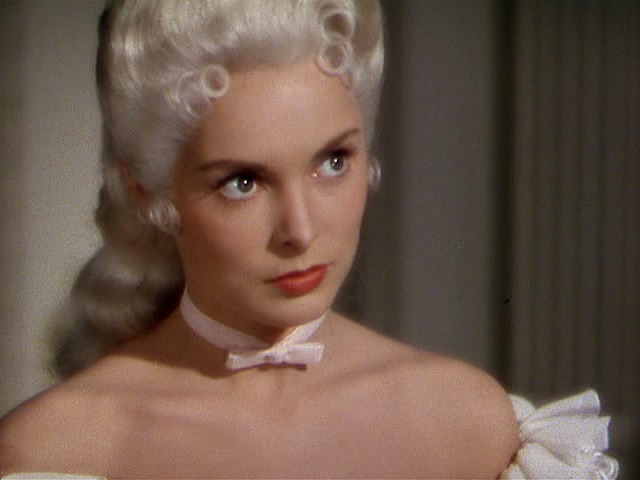
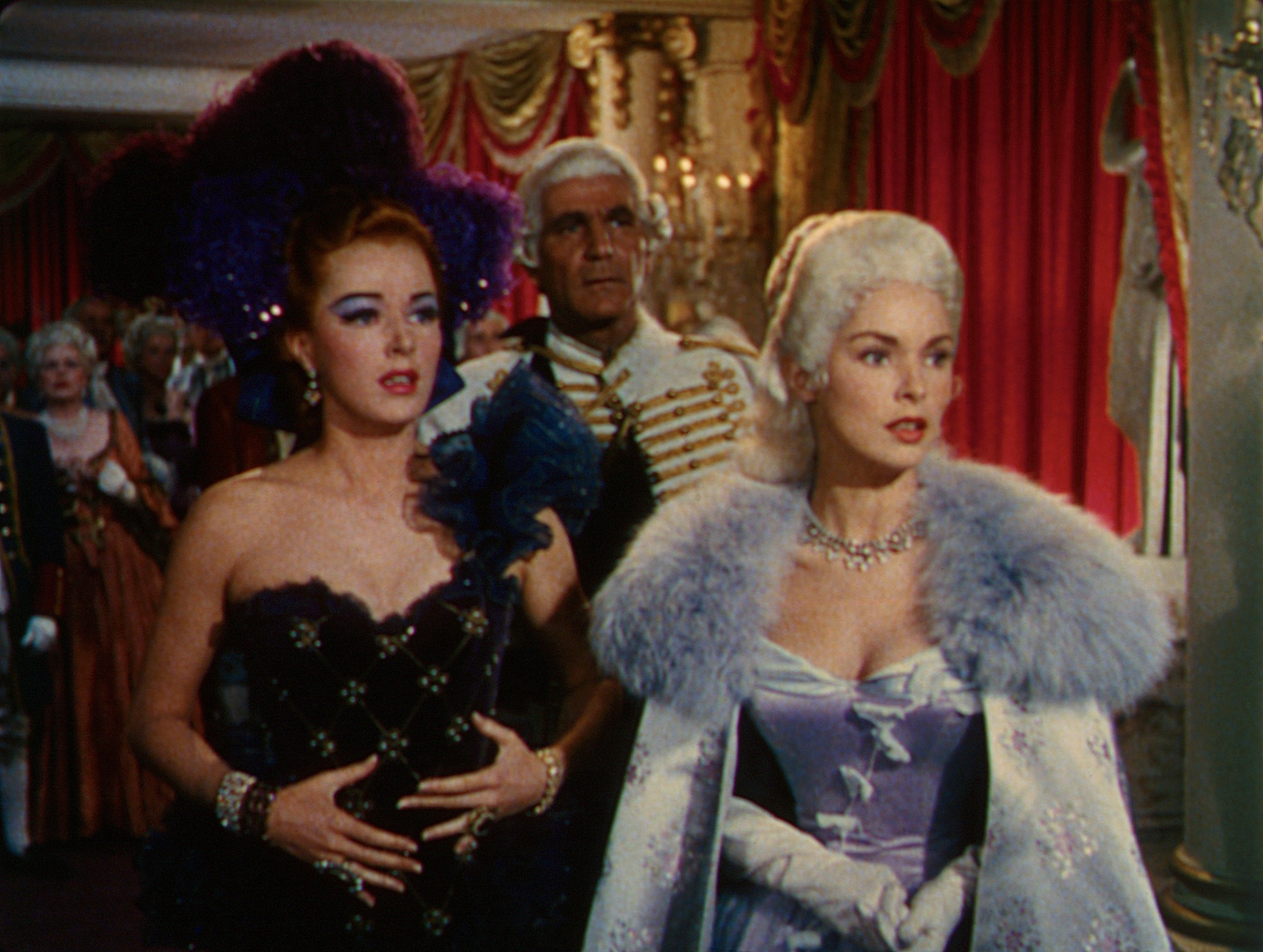
Granger got his wish and the resulting film established him as MGM’s resident swashbuckler. Originally, Granger was going to play both the hero and his archrival with Elizabeth Taylor in the role of Aline and Ava Gardner as Lenore. That concept was scrapped and Janet Leigh was hired to play Aline (she had to learn to ride sidesaddle for the part) and Eleanor Parker, in her first film as a MGM contract player, got to wear a flaming red wig as the fiery Lenore. The part of the villain, the Marquis de Maynes, was first assigned to Ricardo Montalban and then Fernando Lamas before Mel Ferrer was officially selected for the role. Lewis Stone, who had played the evil Marquis in the 1923 version, returned in a minor role as Georges de Valmorin. Other supporting players include Richard Anderson, Henry Wilcoxon, Robert Coote, John Dehner and Nina Foch as Marie Antoinette.
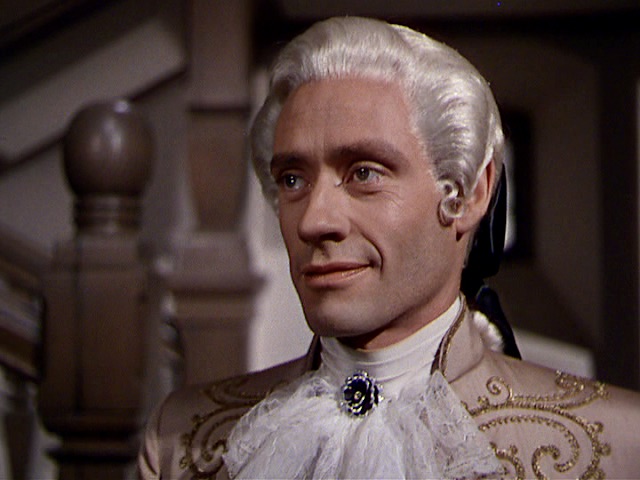
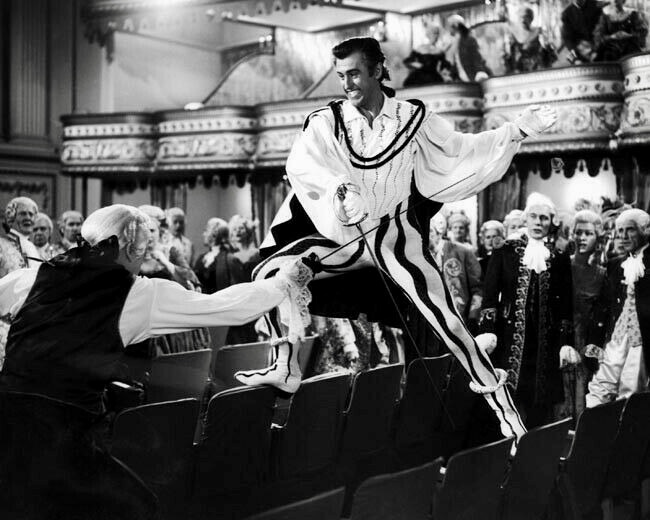
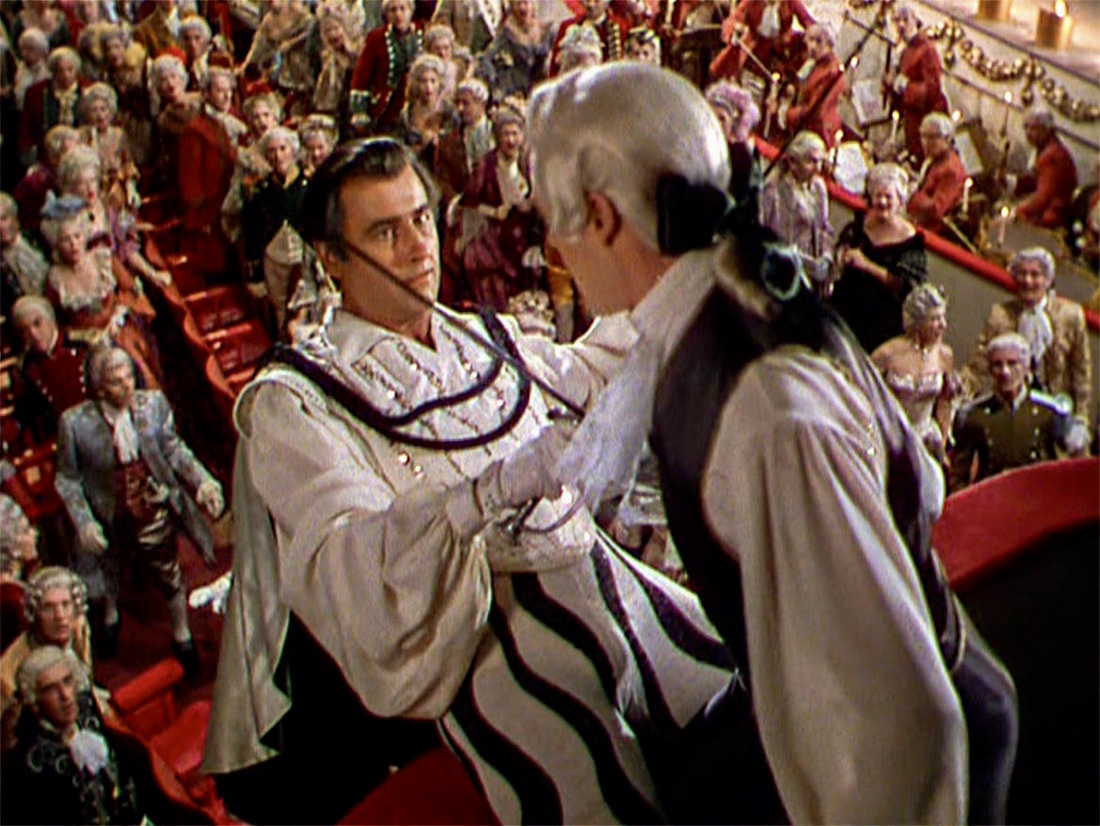
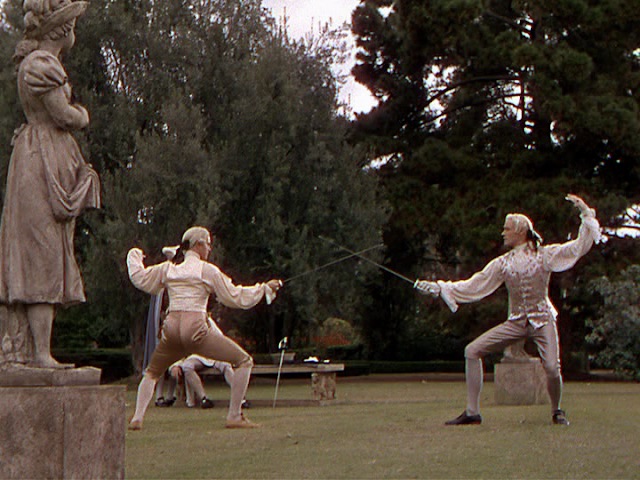
In preparing for his role in Scaramouche, Granger took fencing lessons from Jean Heremans, the European champion, and performed most of the stunts himself. The justly famous climactic duel in the theatre between Granger and Mel Ferrer, which lasted more than six minutes, required eight weeks of training in which both stars had to memorize eighty-seven individual sword passes and perform twenty-eight stunts. As a result of filming this sequence Granger suffered several injuries like a wrenched knee, a damaged shoulder, and an injured back. In fact, the knee and shoulder injuries caused permanent damage and would plague him the rest of his life.
There were other mishaps along the way: an iron chandelier that snapped its chain and obliterated a mattress where Granger was supposed to be lying, a fencing sequence where trainer Heremans almost lost an eye, and an incident where Granger’s wife, Jean Simmons, was visiting the set and almost received a flying sword in the face.
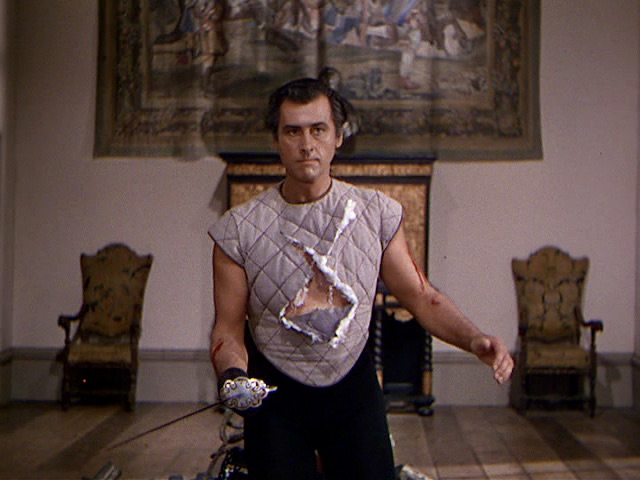
Of course, the audience knew nothing about the behind-the-scenes difficulties in making the film and only saw an extravagant action adventure with a rousing music score by Victor Young, fluid camerawork by Charles Rosher, lavish costumes by Gile Steele, and stunning period art direction by Cedric Gibbons and Hans Peters. Most of all, however, it was George Sidney’s spirited and stylish direction that maintained a wonderful balance between the lighthearted and the serious and the ensemble cast was impeccable.
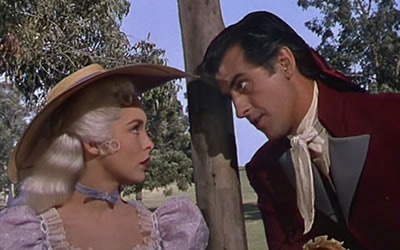
The clever screenplay by Ronald Millar and George Froeschel also integrated several intriguing subplots into the narrative involving the possibility of incest, questionable birthrights, cloak and dagger intrigues at the royal court, the bohemian lifestyle of a traveling theater troupe and an unexpected bond between the two main female rivals over the fate of the hero.
Stewart Granger had become an overnight star at MGM after his dashing performance as explorer Allan Quartermain in the 1950 remake of King Solomon’s Mines. Scaramouche was the film that established him as the studio’s new swashbuckling hero and a fitting successor to Errol Flynn in that genre. It also typecast Granger, much to his dismay, in a series of adventure/costume dramas such as The Prisoner of Zenda (1952), Young Bess (1953), Beau Brummel (1954) and Moonfleet (1955). Granger never won any awards for his acting ability but he is perfectly cast here, displaying devilish charm, impressive athletic prowess and fencing skills plus a mixture of toughness and vulnerability. And he has genuine sexual chemistry with Eleanor Parker as the feisty Lenore. At the end, you almost wish he had gone off with her instead of the more demure and adoring Aline. Leigh, however, has rarely looked more beautiful on screen (she looks like a peaches and cream confection) and Ferrer makes an extremely formidable and menacing foe for the hero.
MGM’s successful revival of the swashbuckler genre actually began with the release of Scaramouche in 1952 and was followed by Ivanhoe later in the year. In fact, Ivanhoe was MGM’s top grossing movie of 1952 and its success was overshadowed by an even bigger blockbuster – Knights of the Round Table the next year. Scaramouche was a box office hit as well although the critics were mixed. Bosley Crowther of The New York Times was one of the more favorable reviewers writing, “A cheekier attitude toward romance and a great deal more play with the swords [than the 1923 version] are in this latter-day whip-up, and these are the things that make it fun…It is really Eleanor Parker who wins the female prize as the red-headed, fire-brand of the theatre who keeps our hero on the go. We are very happy to inform you that she goes off with Napoleon at the end. No less would be worthy of the lady.”
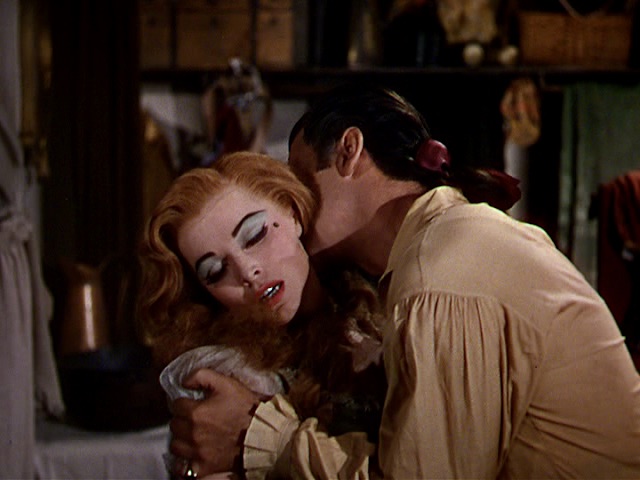
What is interesting about this is that Granger and Parker did not get along at all during the filming. According to Parker in an interview she did with Alan K. Rode for Noir City Sentinel, “Stewart Granger was a dreadful person, rude … just awful. Just being in his presence was bad. I thought at one point the crew was going kill him. Jean visited him on the set and would leave his dressing room in tears. He humiliated her. It was terrible. All of the dueling scenes in Scaramouche were wonderful, though. I’ll give Granger credit for that. He didn’t know how to do any of that, but worked hard and learned. Mel Ferrer, his counterpart in the movie, was extremely adept at the swordplay, but was a gentleman. He could have taken advantage and upstaged Granger, the star, but he never did.”
Apparently the on-set relationship between Granger and Parker completely fell apart after a scene where Lenore was supposed to slap the hero really hard on the face. She kept pulling her blows until director George Sidney demanded that she do it for real or it wouldn’t be convincing. After Parker did as she was told, Granger was so angry that he didn’t speak to her off the set for the rest of the movie. In fact, Granger doesn’t even talk about Parker when discussing Scaramouche in his biography Sparks Fly Upward years later. So, if their passionate antagonism toward each other in the film seems real, it was.
As for the film itself, Don Shiach, author of Stewart Granger: The Last of the Swashbucklers, writes, “There is no doubt that Scaramouche marks a peak in Granger’s screen career. Indeed, in the opinion of many critics and fans, it was the peak…The movie itself has lasted well and is almost as fresh today as it was in 1952. It has pace, verve, a richness of texture and looks wonderful. It is MGM almost at its very best in terms of opulence and sheer entertainment.”
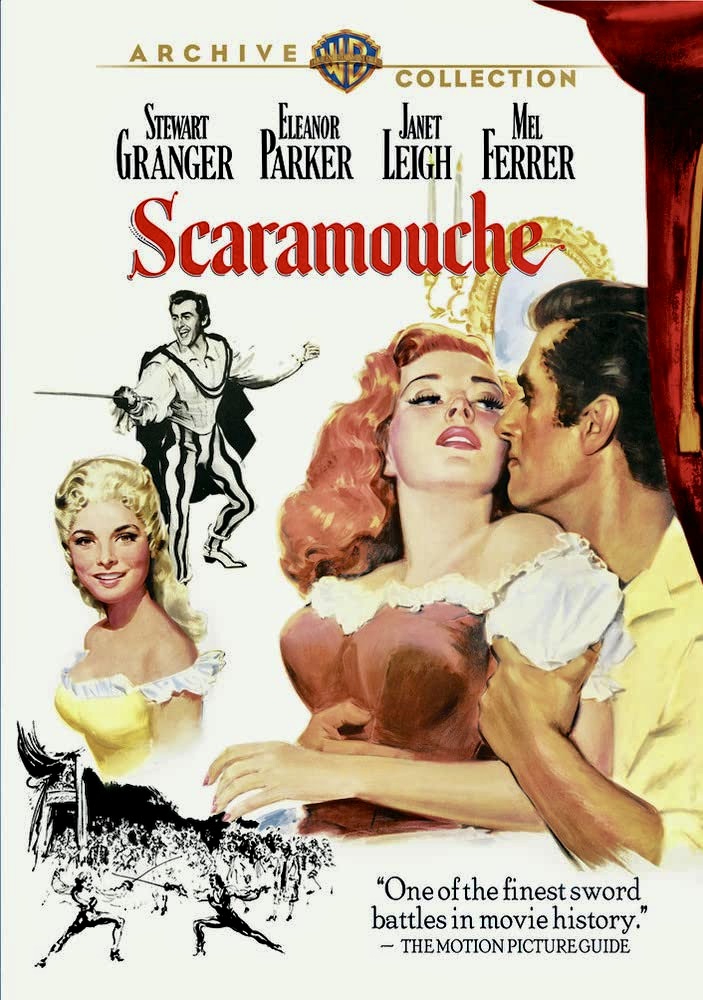
Scaramouche has been released on VHS and DVD over the years but to date the best edition is the Warner Archive DVD from 2012, which includes a featurette on the film with Mel Ferrer recalling the production. This is certainly a movie that deserves a Blu-ray or 4K restoration after all these years.
*This is a revised and expanded version of an article that originally appeared on the Turner Classic Movies website.
Other websites of interest:
https://www.grahamhague.com/rafaelsabatini.shtml
https://www.dga.org/Craft/VisualHistory/Interviews/George-Sidney
https://www.silversirens.co.uk/people/stewart-granger/
https://loveletterstooldhollywood.blogspot.com/2019/07/the-dizzying-delights-of-scaramouche.html
 Cinema Sojourns