
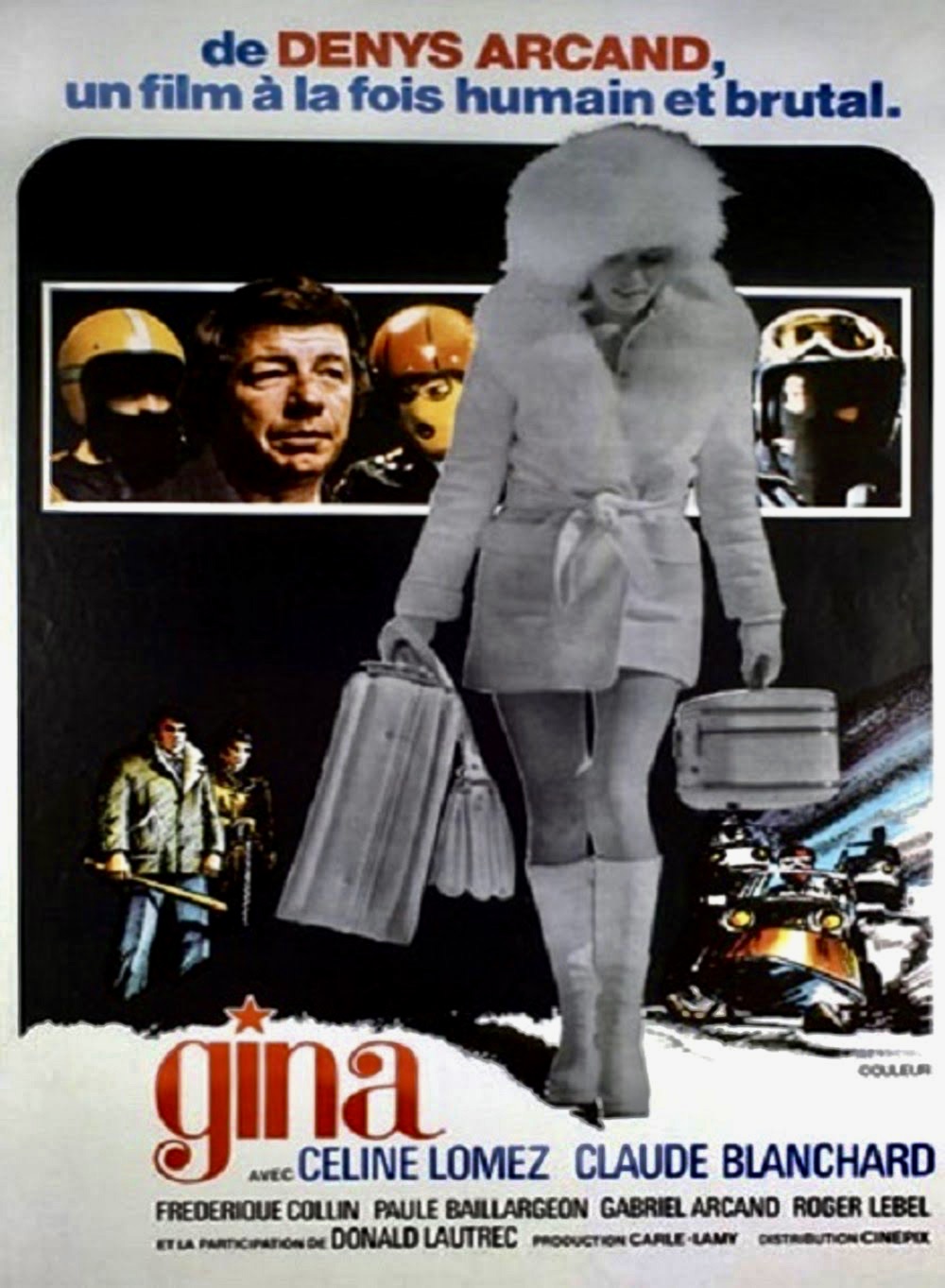
Canadian writer/director Denys Arcand burst upon the international film world in 1986 with his film The Decline of the American Empire, which won the FIPRESCI Prize at Cannes and the Best Foreign Language Film from the New York Film Critics Circle plus it received an Oscar nomination for Best Foreign Language Film (it lost to The Assault, a Nazi-themed WW2 drama from the Netherlands). A witty but cynical talkfest about a gathering of academics obsessed with sex, Decline was often compared by critics at the time to 1983’s The Big Chill, except it was a “feel bad” version of it. More critical acclaim and awards followed for Arcand’s follow-up feature Jesus of Montreal (1989) and his later work, The Barbarian Invasions (2003), which is often regarded as his finest achievement.

What most non-Canadians didn’t know at the time was that Arcand had made a name for himself making award-winning documentaries for the National Film Board of Canada and then dabbled in the B-movie genre with an unofficial trilogy of crime dramas: La Maudite Galette (English title: Dirty Money, 1972), Rejeanne Padovani (1973) and Gina (1975). These low budget efforts, all of which were shot in Quebec in the French language, helped Arcand hone his skills as a director but were decidedly down and dirty efforts compared to his more intellectual art-house fare in the 1980s yet there is nothing typical or cliched about Arcand’s crime trilogy. Dirty Money depicts a murder scheme for money gone wrong and looks like a precursor to The Coen Brothers’ Blood Simple (1984). Rejeanne Padovani is a sordid tale of political corruption, bribery and murder that was seen as a barely disguised critique of the Canadian government at the time. And Gina, probably my favorite of the three, is a strangely effective hybrid of softcore melodrama and revenge thriller crossed with a bleak portrait of working class life in the provinces – in this case, the textile mill town of Louiseville, Quebec during a particularly frigid winter.

Gina (Celine Lomez), the title character of Arcand’s 1975 feature, is a professional stripper who works for a crime syndicate boss in Montreal. During the lean winter months, she is farmed out to rural towns like Louiseville and Berthierville where she performs her solo strip act in local bars and nightclubs for blue collar workers. During her stay in Louiseville she encounters and befriends a four man documentary film crew from the National Film Board who are making an expose on textile mill management and poor working conditions for the employees. Gina also attracts the unwanted sexual interest of Bob Sauvageau (Claude Blanchard) and his gang of redneck thugs who hang out in an abandoned freighter on a frozen river and spend their time getting drunk and riding their ski-doos (snowmobiles) all over the frozen landscape.
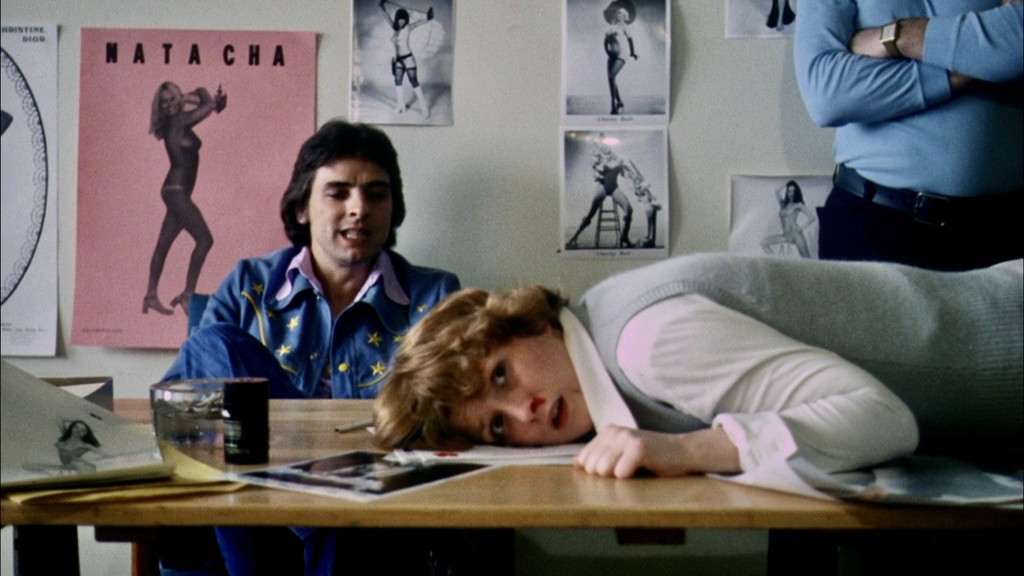
In the course of the film, the documentary director (Gabriel Arcand) is revealed through government sources and other textile mill owners, to be a political provocateur who is planting to depict the management of the textile industry in Canada in a negative light. He is soon denied access to filming any more footage inside the Louiseville factory but not before his crew has interviewed several local workers including Dolores (Frederique Collin), who help expose the horrible working conditions inside the facility.

[Spoiler alert] Events take a turn for the worse when Gina rejects Bob’s sexual advances and he breaks into her motel room with his goon squad and the stripper is gang raped. After she recovers, Gina contacts her boss in Montreal and he shows up with his gangster buddies, intent on punishing the men who abused the star of his side hustle. It doesn’t go well for the ski-doo gang and Gina exacts revenge on Bob and his sidekick (Jocelyn Berube) during a frantic nighttime chase on dangerous ice-covered roads.

Gina certainly looks and sounds at times like a typical exploitation thriller of the 1970s, the kind that played drive-ins and grindhouses. It gives off a sleazy vibe, especially the scenes featuring Bob and his cretinous followers. The sexploitation angle is front and center as well due to Gina’s provocative strip act and casual nudity. But the film is also clearly invested in exploring the local social milieu of towns like Louiseville as witnessed by the care Arcand takes in fleshing out characters like Rita (Paule Baillargeon), the unhappily married wife of the motel owner, and Dolores, whose dream is to escape her textile job, marry her fiancé and move to Montreal. Economic disparity becomes a key component of Arcand’s movie as we see how working class people like Gina and Dolores are forced into career paths out of financial necessity or lack of employment opportunities.
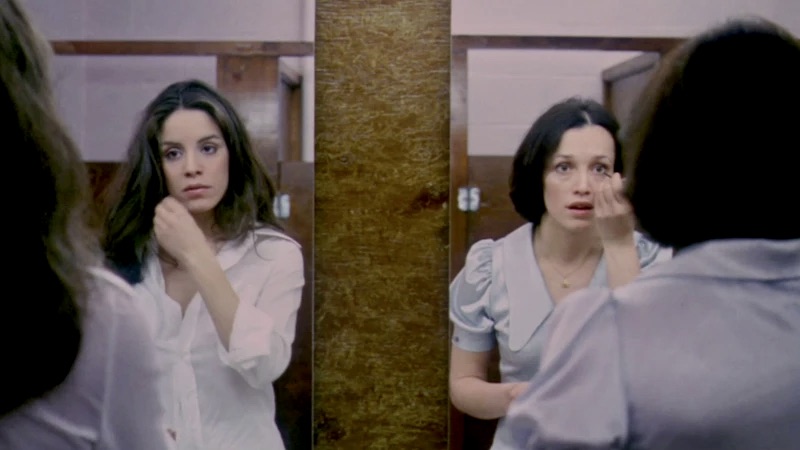
In one of the more revealing scenes in Gina, the heroine and Dolores have a discussion about how much they make at their jobs and it is easy to see how a woman would choose stripping for $400-450 a gig to a factory job that pays $50 a day for a dawn-to-dusk work schedule. The grim reality of a mill town like Louiseville in the dead of winter is also perfectly captured by cinematographer Alain Dostie’s unappealing color palette that highlights drab interiors like non-descript motel rooms, deserted streets and the ski-doo gang’s oddball headquarters with its lived-in squalor. It is much closer to the kind of documentary-like realism captured in British kitchen sink dramas like Saturday Night and Sunday Morning (1960) and This Sporting Life (1963) instead of exploitation films such as Last House on the Left (1972).
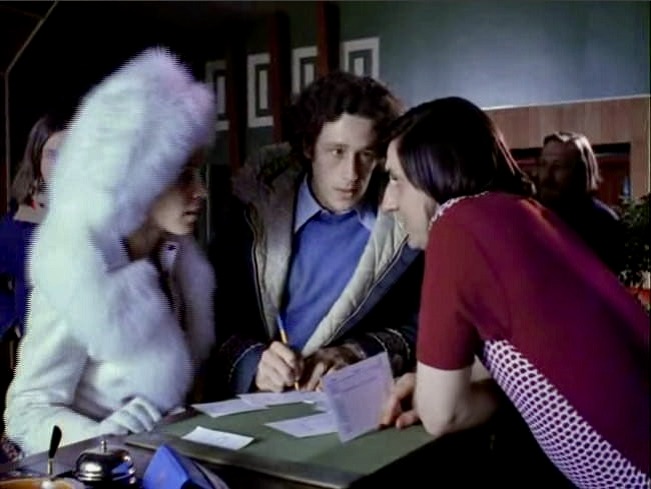
Another interesting aspect of Gina is Arcand’s decision to conclude the film with a happy ending that brings closure to all three subplots but the resolution is much more ambiguous than that. At the end we see Gina in an airplane lounge waiting for a flight to a sunnier locale while a Mexican mariachi band plays for the passengers. Is her lot in life really going to improve after fleeing Canada or will she end up as a stripper in Tijuana? The documentary director and his crew are seen back in Montreal shooting a commercial feature that will clearly pay the bills. But has their creativity and social consciousness been crushed by the establishment, forcing them to take work solely for financial reasons? Lastly, we see Dolores in a bridal gown posing on the steps of a Montreal church with her new husband. Is this her dream ending or just the beginning of a different kind of enslavement?
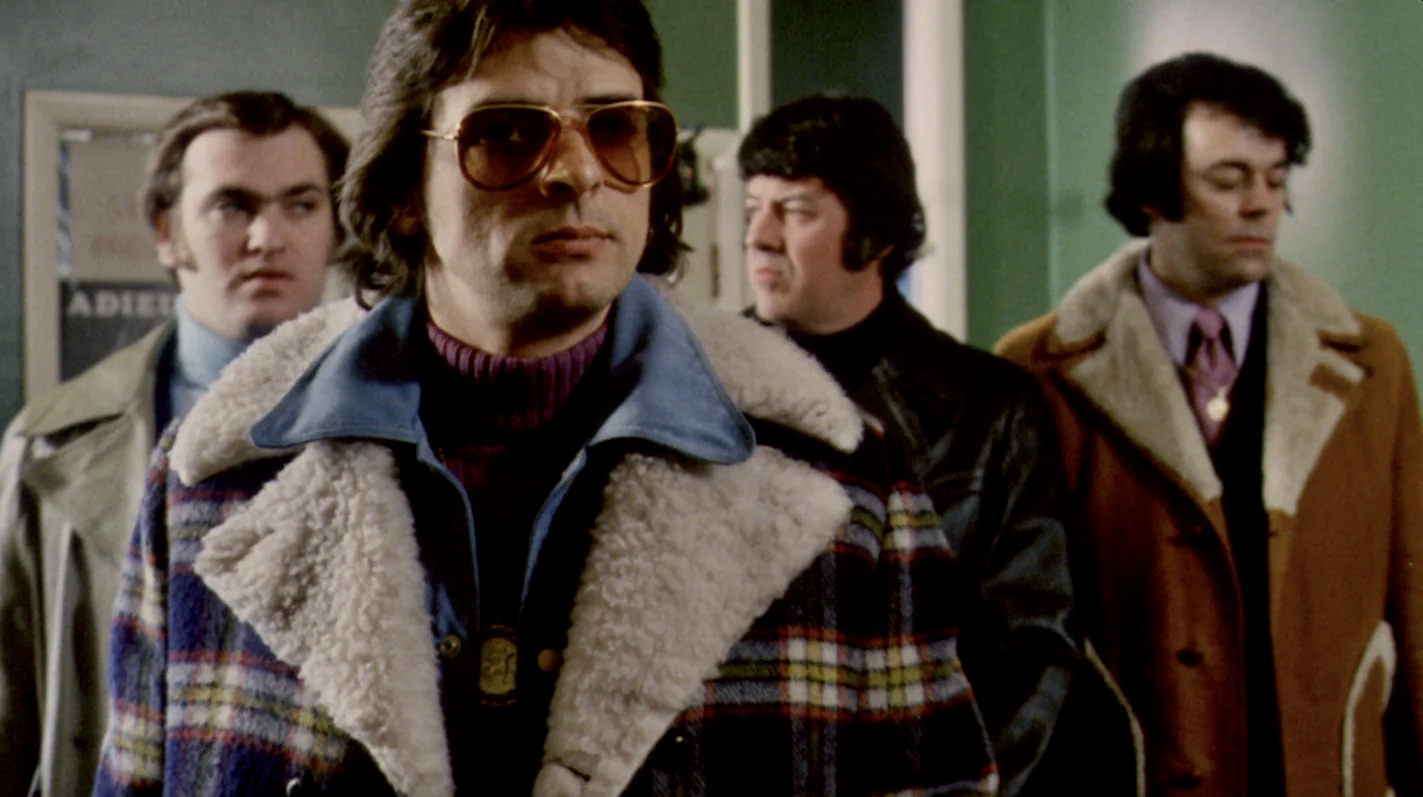
In interviews with Arcand about the film, the director admits that much of Gina is autobiographical in nature. In 1971 Arcand submitted his documentary on the textile industry in Canada entitled On est au Coton (English title: Cotton Mill, Treadmill, 1970) to the NFB. It created a controversy within that prestigious institution and was banned from public screening until 1976 when a censored version of it aired. While Arcand was filming his documentary, he and his crew would often stay in motels in these desolate locations and he noticed that occasionally a stripper would be the only other boarder at the motel. They were there to make money at local gigs and, as he got to know some of them through personally, the idea for Gina began to take shape. Sometimes reality is stranger than fiction.
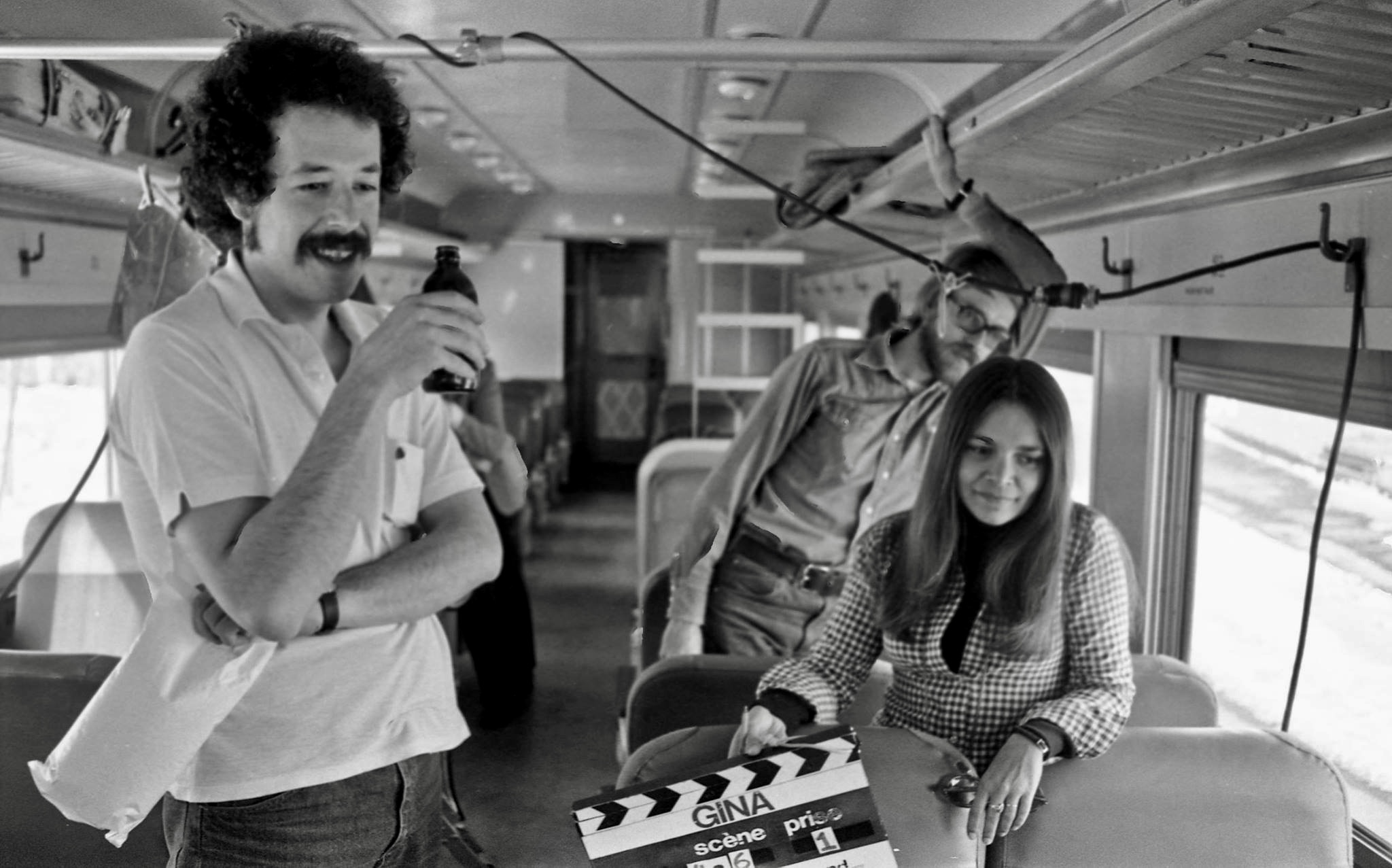
It goes without saying that Gina is not going to appeal to everyone, especially exploitation film lovers who expect more action and flesh than Gina has to offer. There is more of an emphasis on dialogue over plot and some scenes could use some judicious editing such as a pool room showdown pitting Gina and a film crew member against two local punks. It isn’t like watching a riveting game of accomplished pool sharks as in The Hustler (1961). Instead, it is shot in real time and it’s s-l-o-w (even though Celine Lomez took pool playing lessons from an expert and is perfectly fine on camera). There is also a mix of professional actors and non-actors/local residents which is sometimes obvious and awkward.
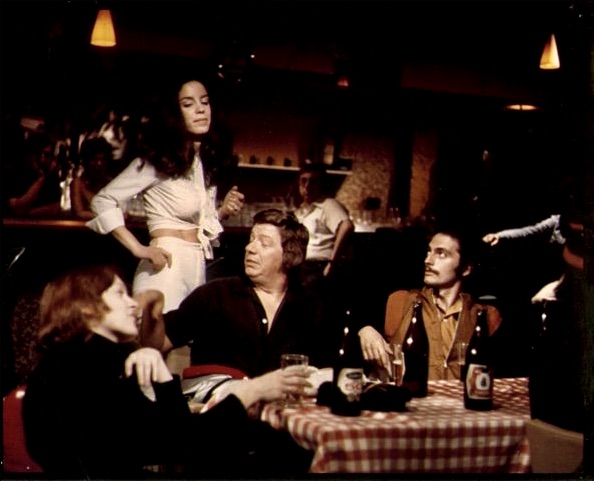
On the other hand, some aspects of Gina are sensational such as the final nighttime chase sequence involving speeding snowmobiles and Bob’s bloody demise in the whirling blades of a snowplow. Ms. Lomez is also completely captivating as the title character, balancing warmth and sexiness with a deceptively tough demeanor. Her stripper is an unsentimental creation with few illusions about the world or what men want from her. When one of the film crew members shows an interest in her, Arcand doesn’t try to turn it into a romantic subplot. Instead you can tell from Lomez’s facial expressions that she is sizing up this new admirer for classification as either a potential friend or some guy that just wants to get in her pants. He doesn’t make the grade but then Gina sees through most men and is more focused on financial security which equals freedom in her book.
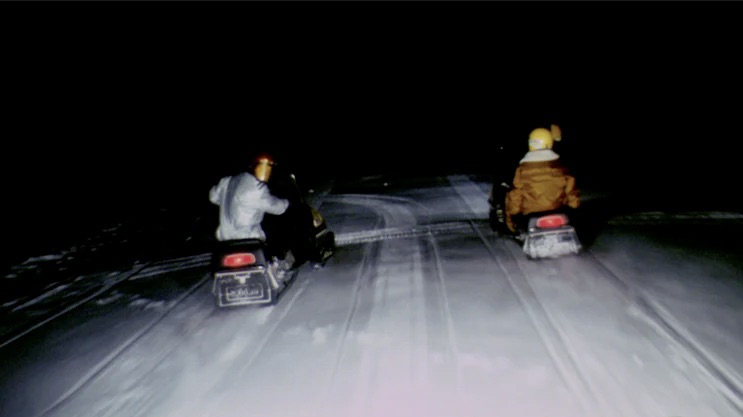
Gina has recently been restored along with Arcand’s Dirty Money and Rejeanne Padovani by Canadian International Pictures and is being distributed on Blu-ray by the wonderful folks at Vinegar Syndrome. The Gina blu-ray disc includes an interview with Denys Arcand on the film, a making of documentary, audio commentary by film experts Kier-La Janisse and Justine Smith and interviews with several actors from Gina.

Other links of interest:
https://cfe.tiff.net/canadianfilmencyclopedia/content/bios/denys-arcand
https://www.montrealgazette.com/entertainment-life/article85646.html
https://www.canuxploitation.com/review/gina.html
 Cinema Sojourns