
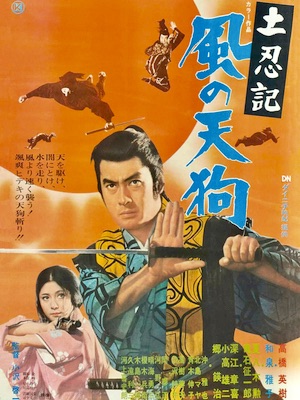
The samurai film in Japanese cinema was often classified as a chanbara, a sub-category of the jidai-geki (period drama) which was more action oriented. The chanbara was at the peak of its popularity in Japan from the early 50s to the early 70s with occasional revivals of the form up through the present and some of the most famous examples of the genre are Teinosuke Kinugasa’s Gate of Hell (1954), Hiroshi Inagaki’s Samurai Trilogy (1954-1956), and Akira Kurosawa’s Seven Samurai (1954) and Yojimbo (1961). One aspect of the samurai film that always struck me was that it seemed like a period variation on the American western and the fact that Kurosawa was a huge fan of director John Ford seems obvious when you look at Seven Samurai and Yojimbo, whose main protagonists are samurai-for-hire, not unlike professional gunfighters or bounty hunters in the wild west. Both of Kurosawa’s films went on to inspire two popular westerns respectively – John Sturges’s The Magnificent Seven (1960) and Sergio Leone’s A Fistful of Dollars (1964). Reminiscent of Kurosawa’s chanbara efforts is Haunted Samurai (Japan title: Kaze no Tengu, 1970), an often overlooked samurai action-adventure from director Keiichi Ozawa that came toward the tail end of the genre’s peak period but also seems custom made for an American western remake.
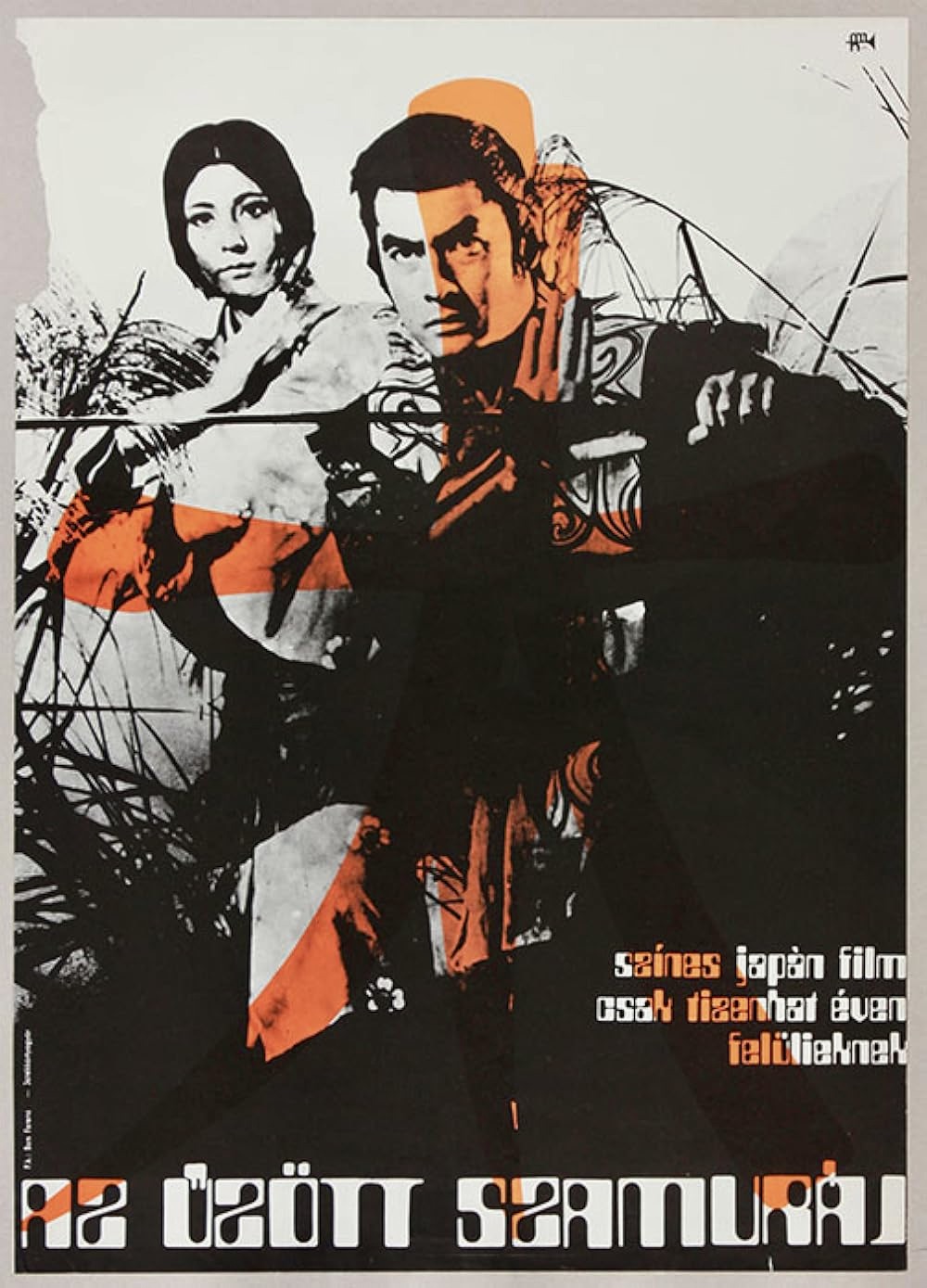
The title is a bit of a misnomer since there are no supernatural elements or ghost story aspects to the film (unless you count one swordsman’s ability to momentarily disappear before his rival like a magician’s vanishing trick). No, in this case, Rokuheita (Hideki Takahashi), the chief protagonist, is a samurai warrior who is continually haunted by past actions and the enemies he has made. The alternate title in some regions, Shinobi Demon: Duel in the Wind, also doesn’t accurately describe the narrative arc of Haunted Samurai, other than to prepare the viewer for action, most of it quick, violent and beautifully choreographed.
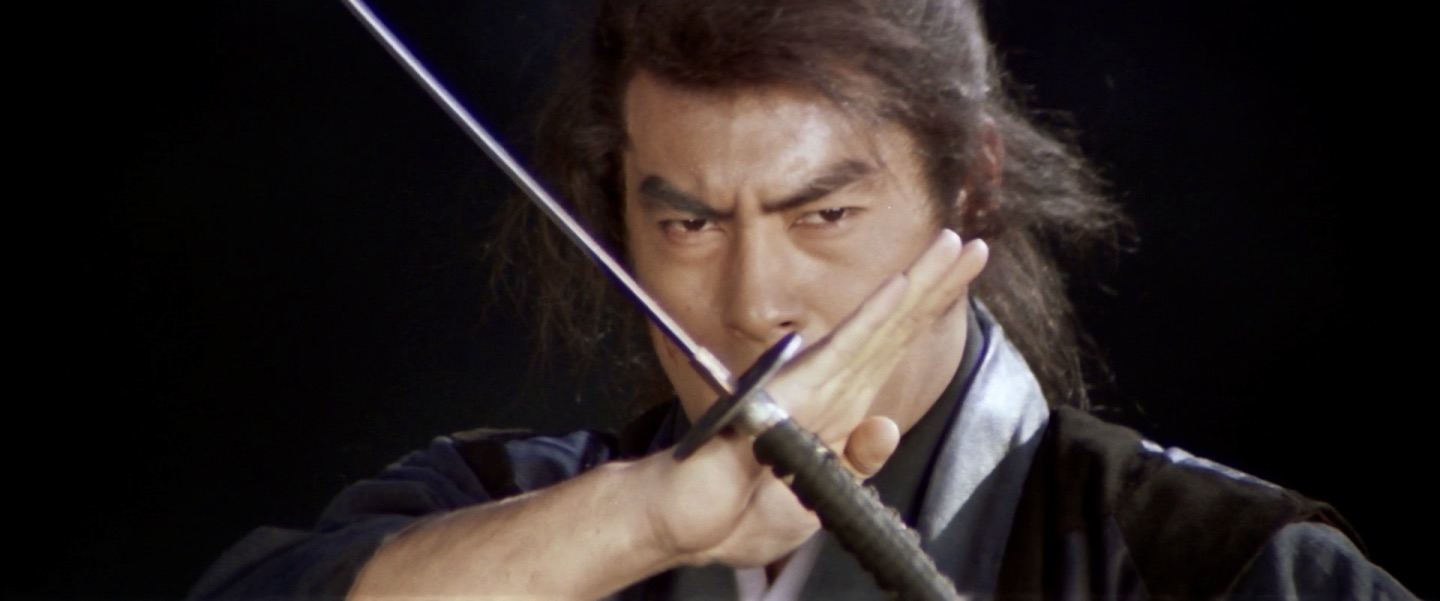
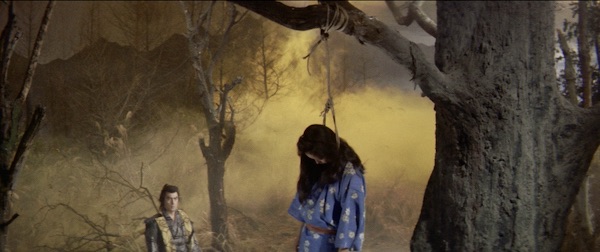
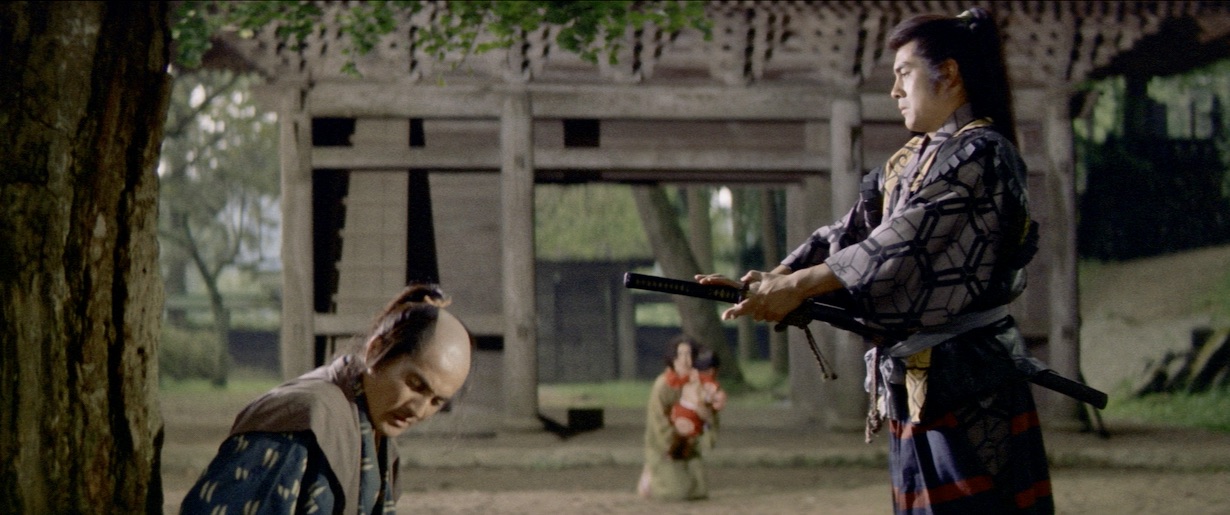
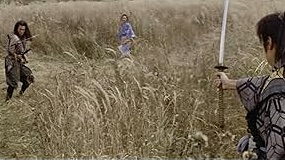
What is particularly satisfying about Ozawa’s film is how well it balances an engrossing character study with enough kinetic action sequences to satisfy any chanbara fan. After an elegant opening credit sequence of Japanese watercolors accompanied by flute and percussion music (the score is by composer Hajime Kaburagi), we are introduced to Rokuheita, who has been ordered to kill Gamba (Eiji Go) for deserting his clan. A duel between the two men in a meadow ends with Gamba’s death, despite an attempt by Rokuheita’s sister to stop the fight. In protest over the clan’s code of punishing deserters, she commits suicide but Rokuheita has little time to grieve. His master Yojura of the Yagyu order has ordered him to kill another clan deserter, Ushizo (Yuji Odaka), who has abandoned his warrior ways and is now living quietly with his wife and child in a remote village.
Rokuheita locates Ushizo and wounds him in an attack but when the man’s wife and child show up to witness the duel, Rokuheita can’t bring himself to finish the deed and leaves the family in peace. He realizes his actions have made him a marked man and now he will be hunted down for refusing to honor the Yagyu code. A deserter on the run just like the men he was pursuing, Rokuheita decides to start over as a farmer in some rural village far removed from his master’s domain. Easier said than done.
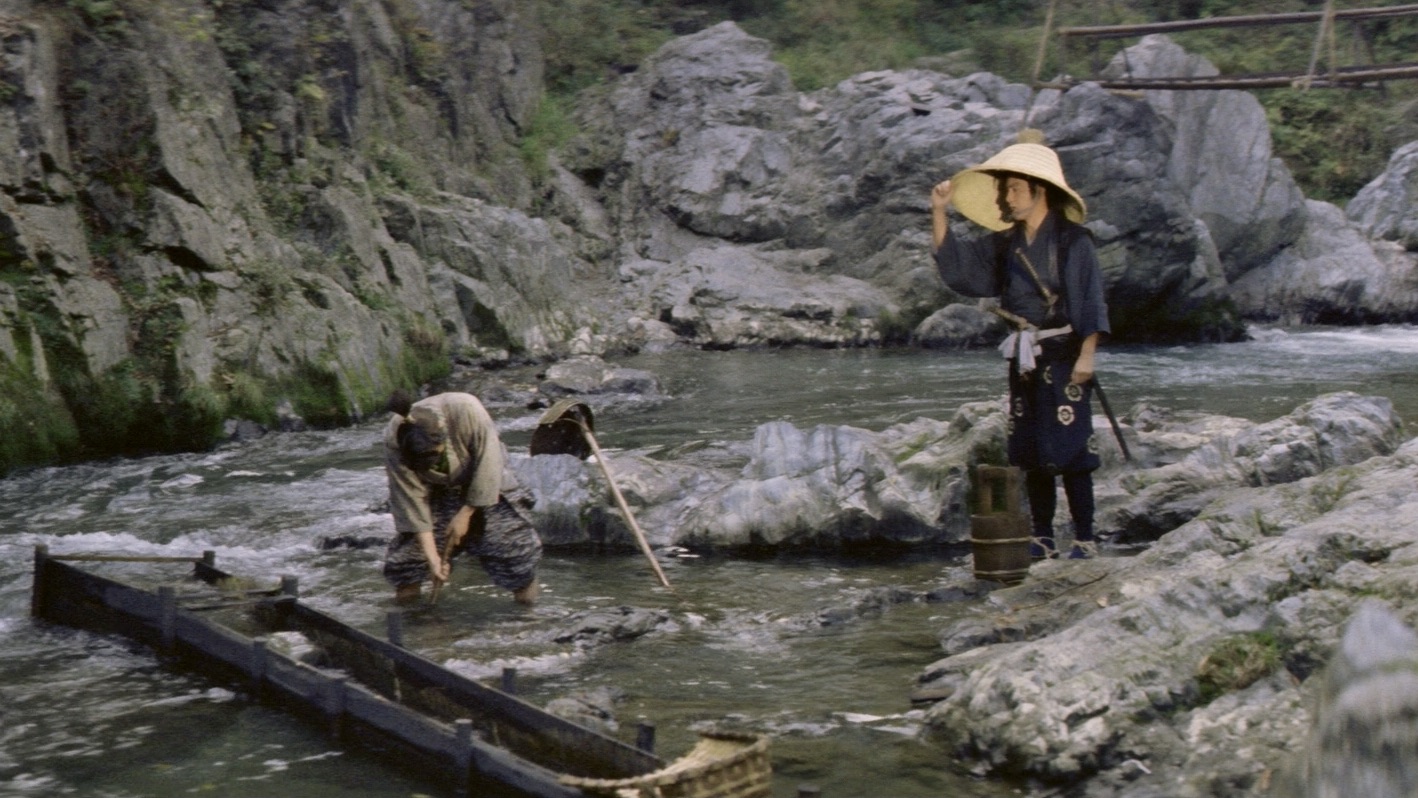
The remainder of Haunted Samurai depicts Rokuheita’s efforts to disappear and he finds the perfect opportunity to set down stakes in an out-of-the-way village after rescuing three of their residents from bandits – a father with a daughter and son. He helps the family and the other villagers raise crops for their survival but he soon finds his good intentions have raised awareness of his presence and there are new enemies to combat. Chief among them are the corrupt governor of the province, who is bent on confiscating the villagers’ food while taxing them heavily, and his cruel enforcer Nahoe (Shoki Fukae), who hires assassins to do his dirty work. Complicating matters is the presence of Tarao (Seiichiro Kameishi), a former samurai hiding behind a fake identity. When he first came to the village, he helped the inhabitants but now he is greedy and opportunistic after discovering gold in the river.
Tarao’s secret is eventually revealed to the governor and his minions and Rokuheita finds himself in the difficult position of having to protect the villagers from a deadly assault. If that wasn’t bad enough, Uzuki (Isao Natsuyagi), a professional assassin, has learned of Rokuheita’s new life in the village and arrives with the intention of killing him for deserting his clan (and to prove his own swordsman skills). Meanwhile, deadly ninjas from the Yagyu order are also hunting Rokuheita and converge in the area.
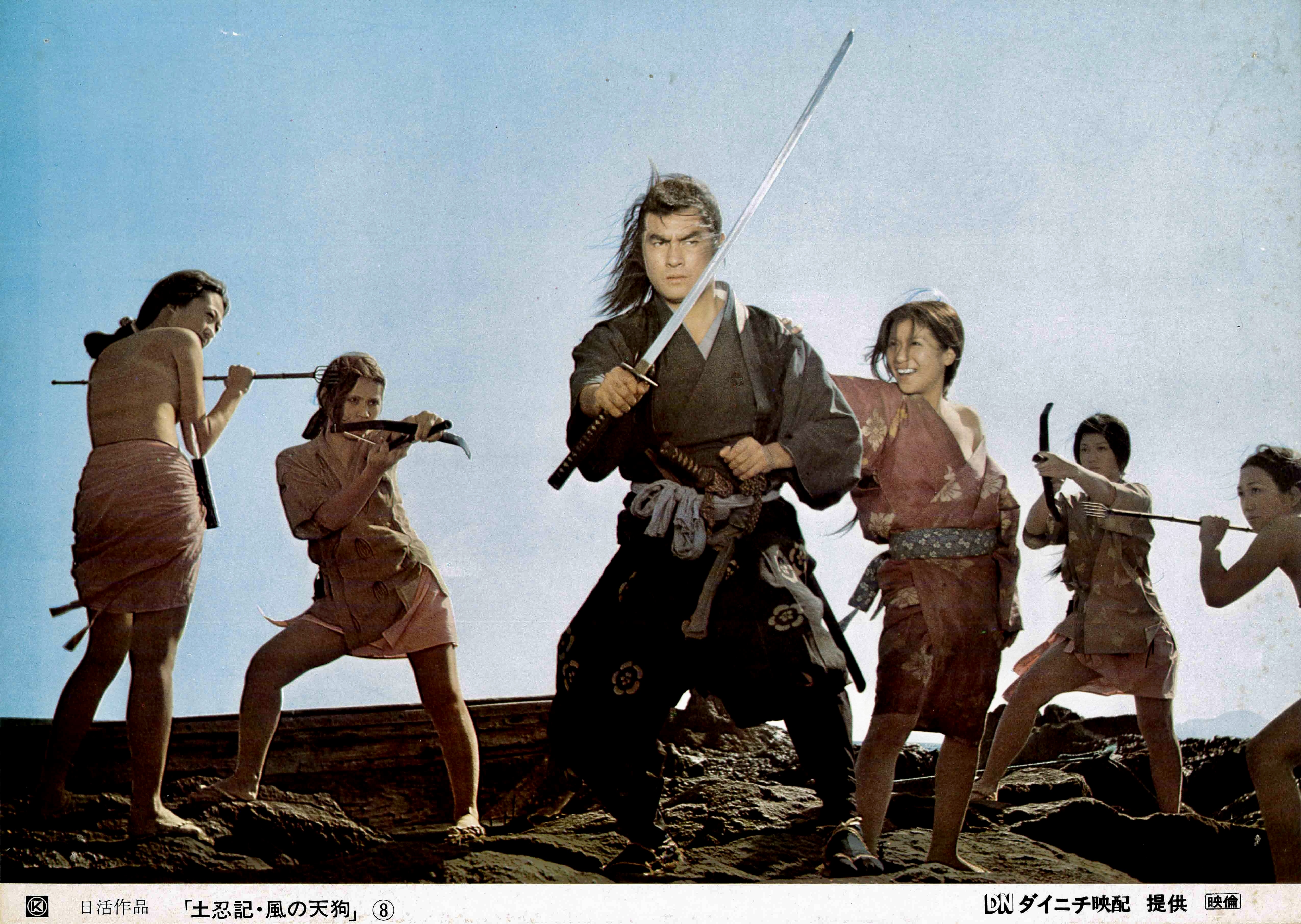
Based on stories by Goseki Kojima, the creator of the Lone Wolf and Cub series, Haunted Samurai unfolds like a classic samurai film from the early sixties except it is in color, the violence is more stylized and there are surprising touches which blur the line between a pulpy samurai actioner and an art film. Early in the movie we are treated to an almost surreal sequence in which Rokuheita is lured to an island by a seductive woman, only to be attacked by a band of topless female warriors. The battle begins on the shore and continues underwater where Rokuheita draws his sword and turns the water red with blood while fighting against his now completely nude antagonists. It is just one of the many astonishing and visually dazzling scenes in Ozawa’s epic.
Another standout moment is when Uzuki is lured to a shrine by the local priestess Seiga. He soon finds himself surrounded by murderous, blowdart shooting ninjas and Seiga turns out to be a man in disguise. Yet, Uzuki slays them all in a thrilling stalk and kill chase in the dark with minimal dialogue and fast but jarring glimpses of violence. The final showdown scene between Uzuki and Rokuheita during a total eclipse is also visually dazzling but the payoff is completely unexpected. There is no clear victor and Haunted Samurai has an open ending. Ozawa could easily have turned this into an ongoing franchise like his Outlaw Gangster series for Nikkatsu or the popular Lone Wolf and Cub series but for some reason Haunted Samurai remains an intriguing stand-alone entry and one of the most satisfying chanbara epics of the early seventies. In the end Rokuheita will never be able to live down his reputation like some infamous gunfighter. He will always be stalked and challenged by swordsmen and samurai who want to prove their skill and manhood by killing a legend.
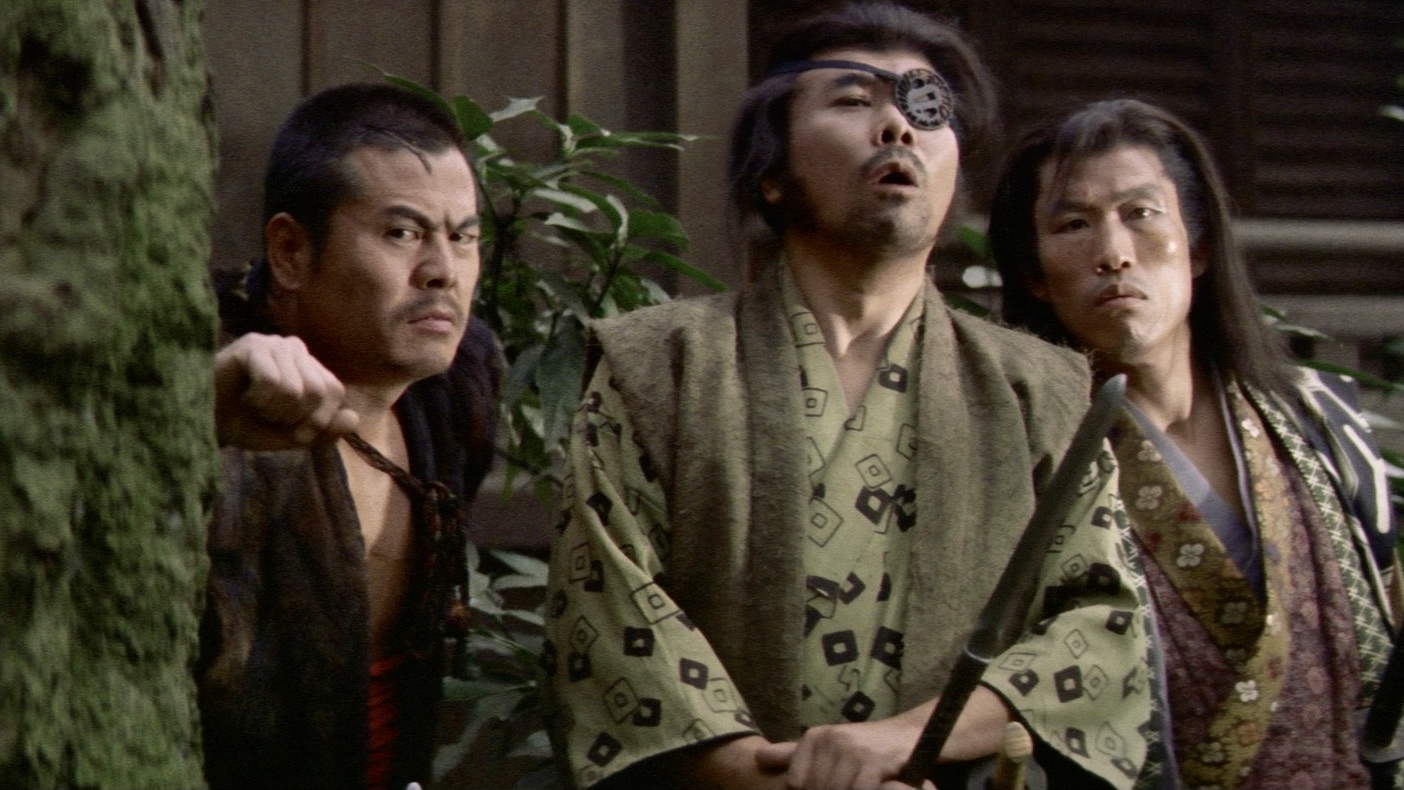
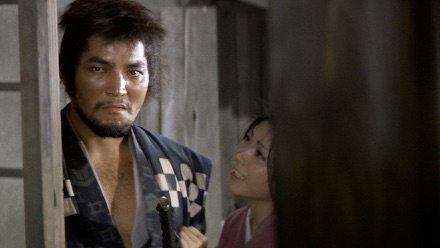
Hideki Takahashi is impressive as the stoic and formidable hero who occasionally shows glimpses of the compassion and guilt that lurk beneath his fierce façade. His portrayal makes a striking contrast against Isao Natsuyagi’s feral and relentless pursuer Uzuki. Seiichiro Kameishi is also mesmerizing as the suspicious and deceptive Tarao and Utako Shibusawa as his wife Oryo has a memorable scene in which she tries to poison and kill Rokuheita.
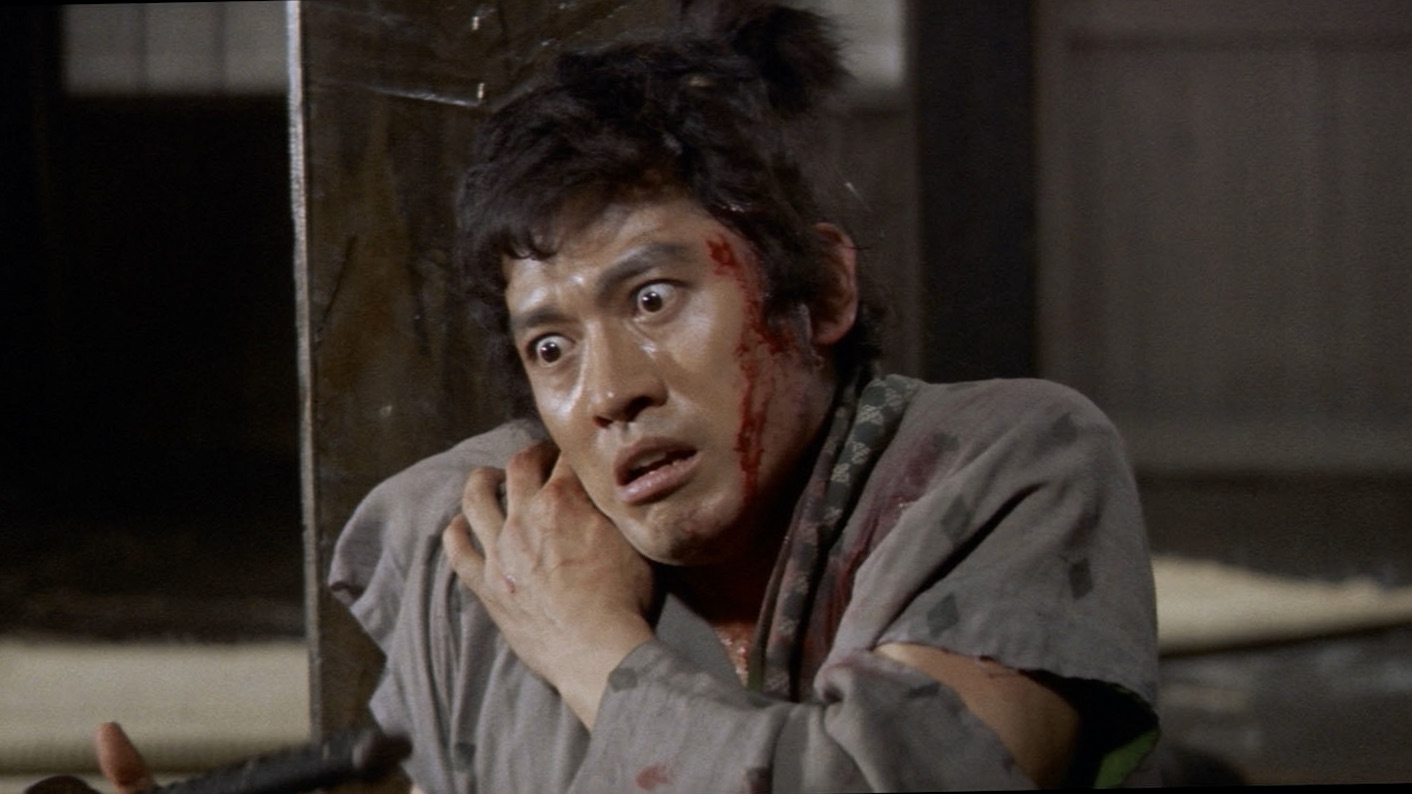
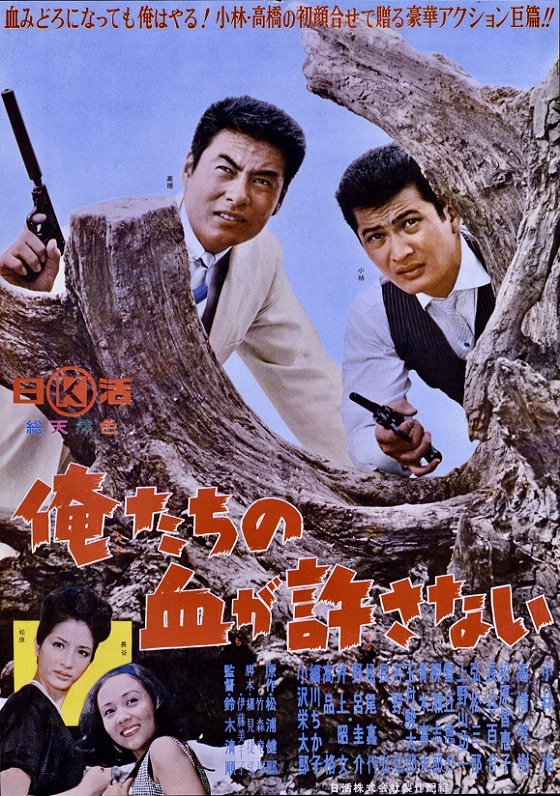
Fans of Japanese cinema will be familiar with Takahashi and Natsuyagi’s work in other genre films from the sixties and later. Takahashi is probably most famous for his collaborations with director Seijin Suzuki such as Our Blood Will Not Forgive (1964), Tattooed Life (1965), and Fighting Elegy (1966). Other career highlights include Motomu Ida’s Three Seconds Before the Explosion (1967) and Satsuo Yamamoto’s The Battle of Manchuria (1970) although his participation in Kazuo ‘Gaira’ Komizu’s sleazy Entrails of a Virgin (1986) is probably a career low point.
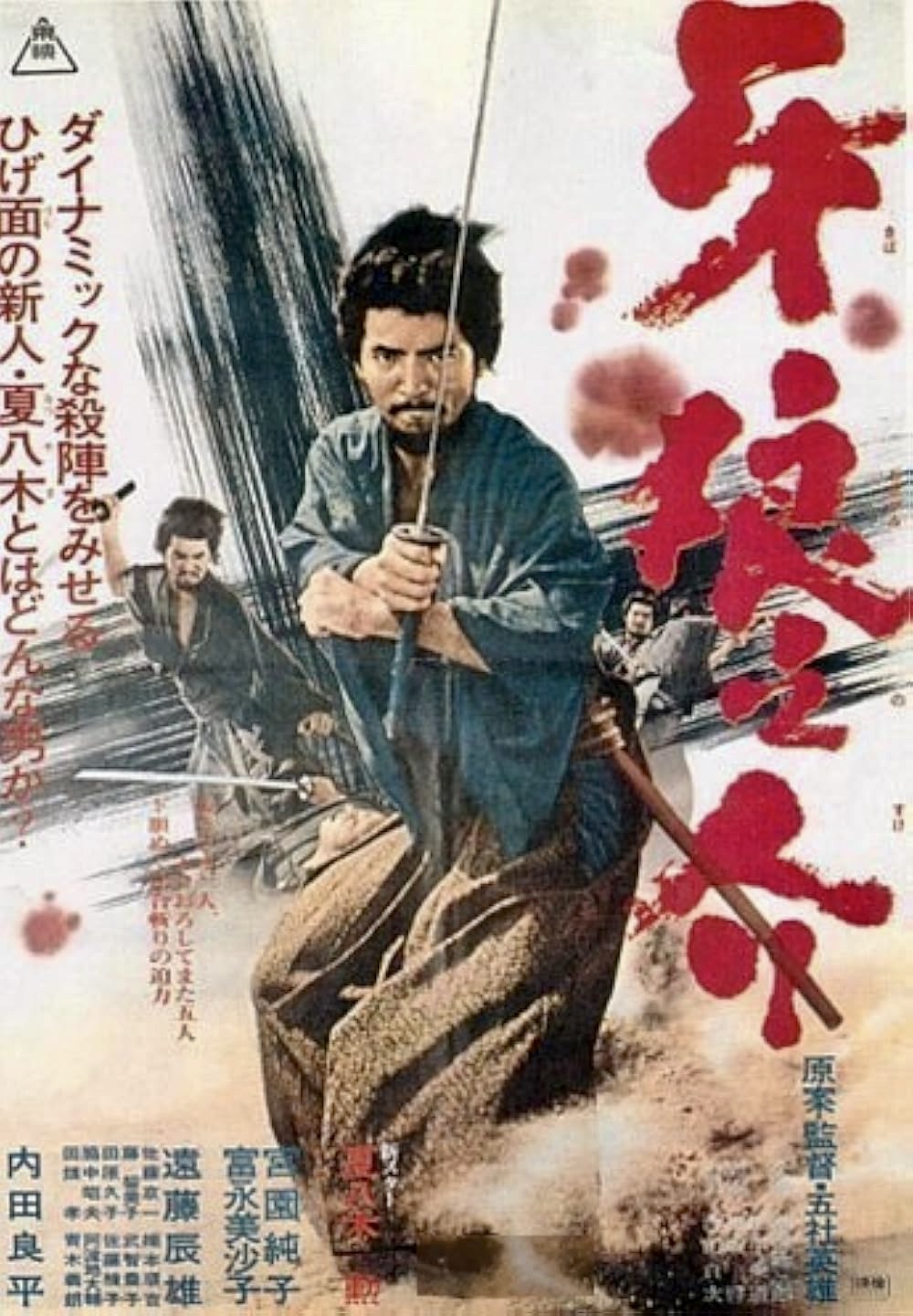
Like Takahashi, Isao Natsuyagi was a screen icon in Japan and is well known for his many movies with director Hideo Gosha such as Samurai Wolf (1966), Violent Streets (1974) and Hunter in the Dark (1979). He has also appeared in the cult sci-fi epic Submersion of Japan (1973), Kinji Fukasaku’s Virus (1980), Noboru Tanaka’s Village of Doom (1983), and Shohei Imamura’s subversive comedy Warm Water Under a Red Bridge (2001).
As for director Keiichi Ozawa, he isn’t well known in the U.S. and very few of his movies have enjoyed distribution here with the exception of the popular Outlaw Gangster series. Outlaw: Gangster VIP (1968), the first movie in the six-film yakuza crime franchise was directed by Toshio Masuda, but Ozawa made his directorial debut with the sequel, Gangster VIP 2 (1968). He went on to direct three more in the series including Outlaw: Goro the Assassin (1968), Outlaw: Black Dagger (1968), and Outlaw: Kill! (1969) but Haunted Samurai is recommended as an entry point for his work. It feels like a worthy successor to the chanbara films of Akira Kurosawa starring Toshiro Mifune.
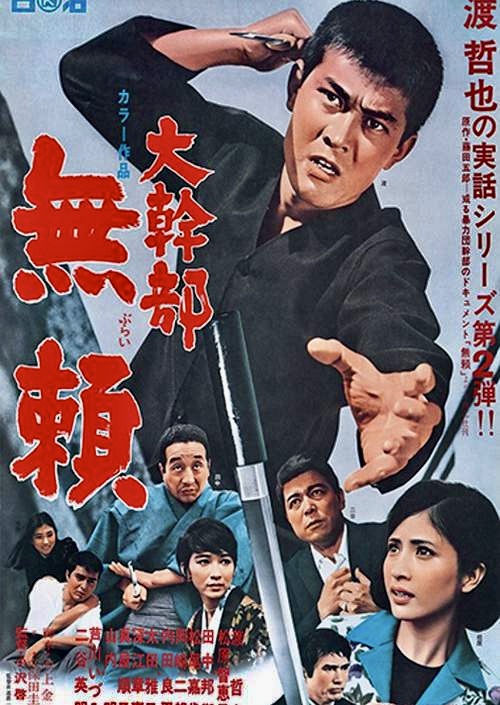
When the film was released in the U.S., it received a very limited release and The New York Times review by Howard Thompson was condescending and misguided. He wrote, “Zap! Bam! Powie! That’s what you’ll find in “The Haunted Samurai,” the new sword-swinger from Japan at the Bijou Theater. Severed hands and arms fly upward. A crunching sound of steel into human flesh dominates the sound track. There’s one huge close-up of a human eyeball skewered by a knife. Even a poor, squealing mouse gets it, at random. All this is cited simply to warn the unwary about the traditional chopped-hamburger aspect of many medieval adventures of Old Japan, as served up by the new one. You’d better have a strong stomach if you go to see this one. A fair-to-medium film such as this, with no particular interest or profundity, is best suited to Japanese audiences or scholars.” Thompson actually overreacts to the violence in Haunted Samurai, which is almost subtle and not as bloody as the carnage depicted in the Lone Wolf and Cub series. He also makes the movie sound like a disposable B movie for the grindhouse crowd while it is primarily an engrossing character study which would find a more appreciative audience on the art house circuit.
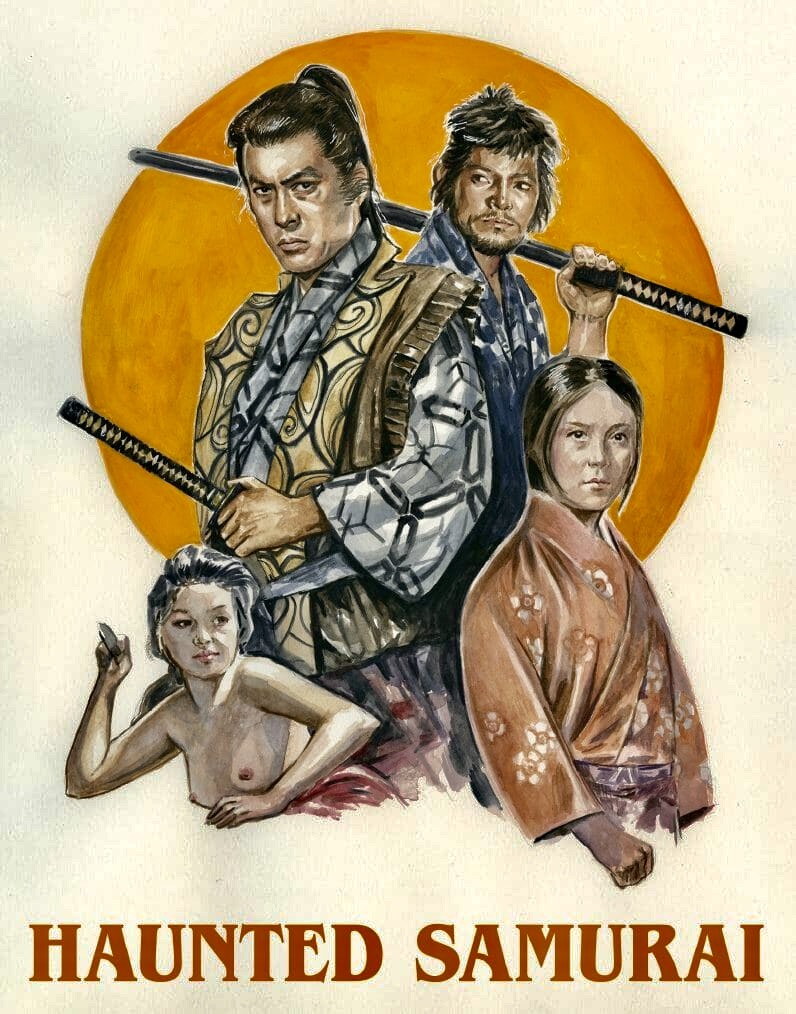
Haunted Samurai was released on Blu-ray by Surviving Elements/Diabolik DVD as a special edition disc. The extras include a trailer and a highly informative commentary track by chanbara experts Chris Poggiali and John Charles. The disc was limited to a one-time pressing of 1,000 copies and is currently sold out. You might be able to still find a copy from online sellers if you are lucky.
Other links of interest:
https://en.wikipedia.org/wiki/Hideki_Takahashi
http://www.midnighteye.com/features/samurai-cinema-101/
https://cinemorgue.fandom.com/wiki/Isao_Natsuyagi
 Cinema Sojourns