
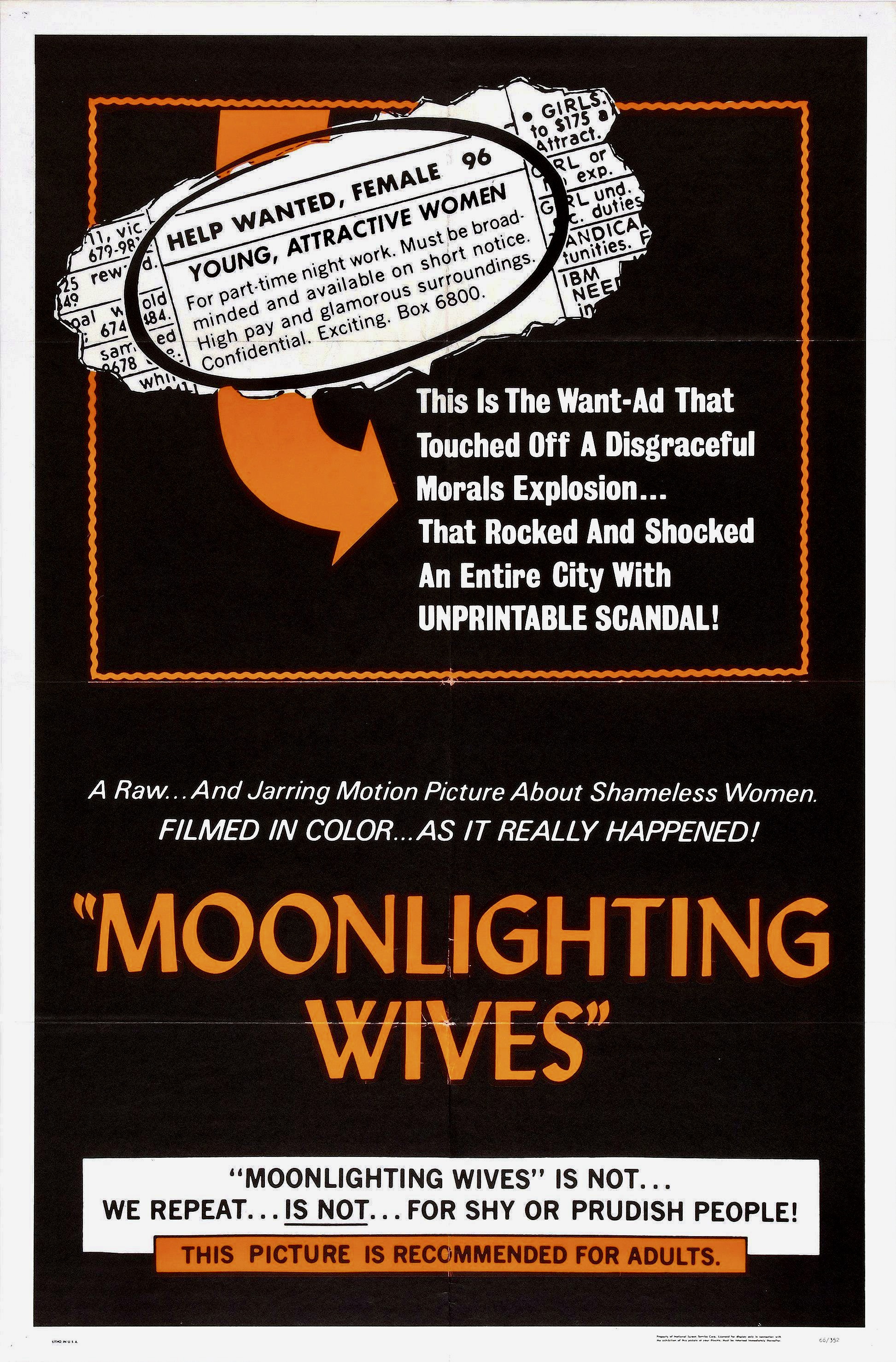
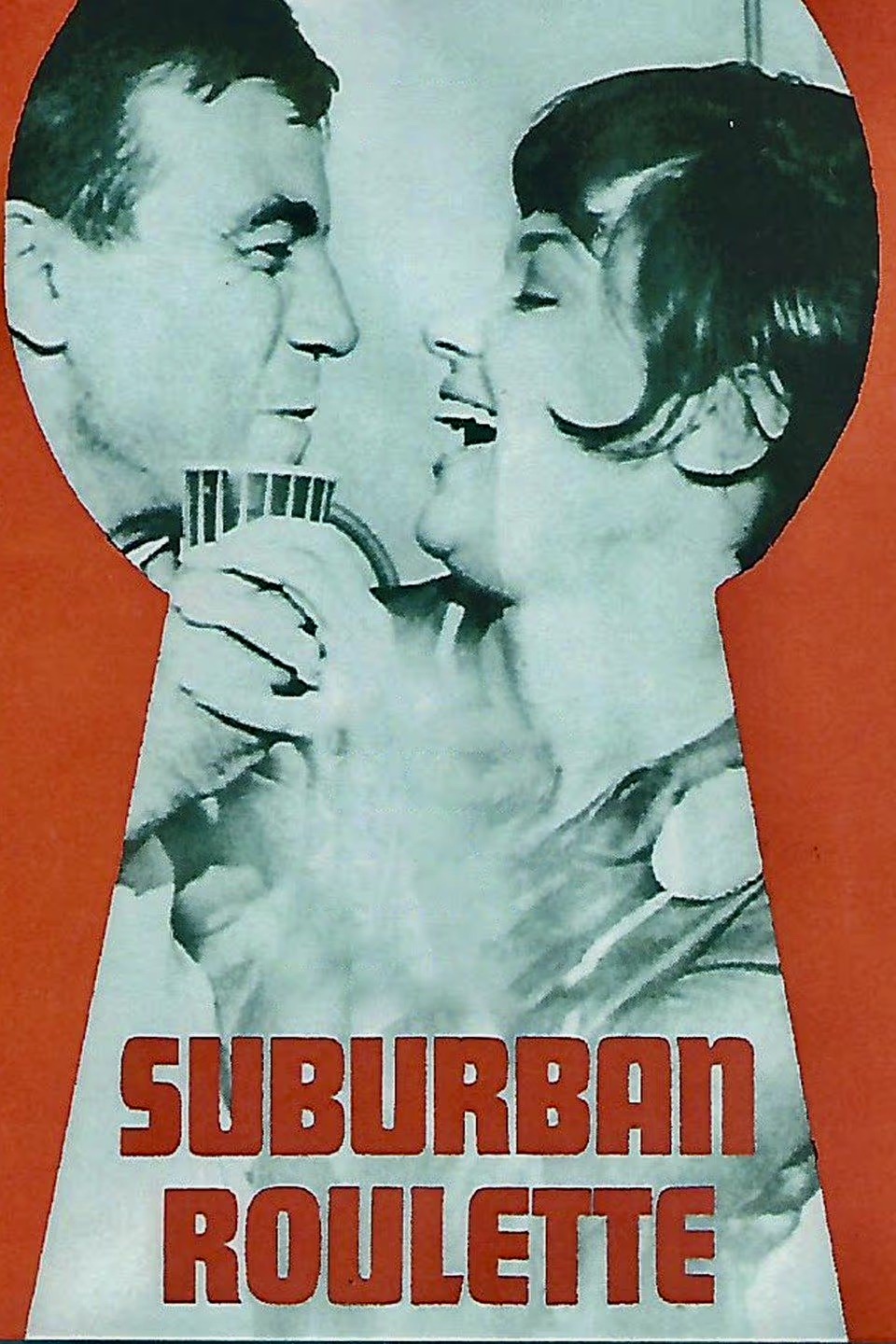
When did mate swapping parties and swinging singles soirees in suburbia in America become a social phenomenon? Some say it began during the Korean War (1950-1953) among married couples on army bases and then spread to the suburbs. One thing is certain: stories about such behavior began to appear in paperback novels, tabloid exposes and the media in the fifties and were common knowledge for most people by the time John Updike’s 1968 novel Couples was published (it focused on the lives of ten sexually active couples in a small town in Massachusetts). But even before Updike’s critically acclaimed work, sexploitation films in the sixties had been mining this subject matter in adult fare like Wife Swappers (1965), Unholy Matrimony (1967), Andy Millgan’s Depraved! (1967) and Suburban Roulette (1967), directed by Herschell Gordon Lewis.
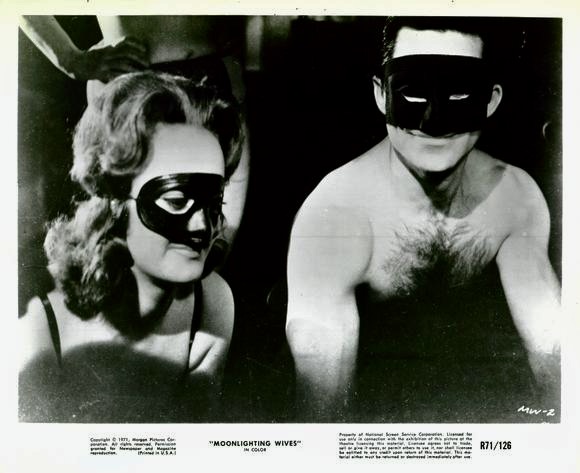
The often overlooked master of the form, however, was Joseph W. Sarno, who made his directorial debut with Nude in Charcoal (1961) and scored a drive-in hit with Sin in the Suburbs (1964), which delved into the secret sex orgies of masked participants in suburbia. Even more groundbreaking was Moonlighting Wives (1966), his first feature in color, which expanded on the swinging singles scene by combining it with a tale about a prostitution ring masterminded by a housewife in a middle class community.
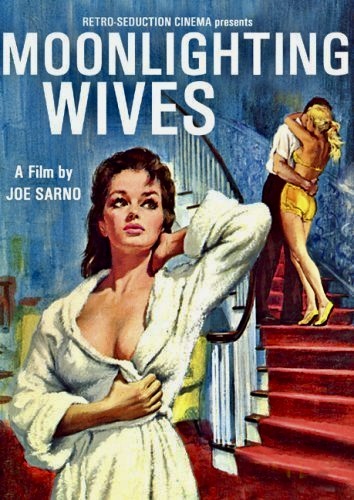
The project began when producer William J. Heineman, in charge of domestic sales at United Artists, approached Sarno with an idea for a movie that was based on an actual case in Nassau County, New York that received national coverage. Sarno did the research on the notorious expose and wrote a fictionalized screenplay which revolved around Joan Rand (Tammy Latour aka Diane Vivienne), a married housewife with a young son, who worked as a stenographer to supplement her husband’s meager salary and help pay the bills. Using her sexual appeal and feminine wiles to earn overtime bonuses from her boss for after work “favors,” Joan engineers an ambitious business plan (without her husband’s knowledge) that involves the participation of other housewives in the community, especially those in need of extra income due to gambling addictions or other expensive hobbies.

Under the guise of a stenographers-for-hire service that operates around the clock, Joan recruits a growing number of married housewives, providing them with beauty salon makeovers, new wardrobes, and even babysitting service in exchange for a percentage of their profits. As her operation grows, the business model also utilizes a local bar/hotel as a business rendezvous point (with the bartender as a key player) and the participation of Al (John Aristedes), the married golf pro at the country club, who is friendly with the wealthiest and most prominent members. Joan’s operation grows in leaps and bounds until an anonymous source informs two vice cops of the true nature of Ms. Rand’s stenographic service.

Joan (Tammy Latour aka Diane Vivienne, left) makes direct contact with golf pro Al Jordan (John Aristedes) for business purposes while his jealous married girlfriend (Gretchen Rudolph aka Jan Nash) looks on in MOONLIGHTING WIVES (1966).
In addition to the machinations of Joan’s budding business empire, Moonlighting Wives also weaves in several soap opera-like subplots. One of them involves Al’s secret relationship with Nancy (Gretchen Rudolph aka Jan Nash), a married woman. Another one follows Charlie, the frustrated husband of Joan, who is on the verge of becoming an alcoholic until he finds love with Lorna, their babysitter. A third story arc involves a professional prostitute who works solo but is much less successful than Joan’s girls and more devious.

Allegedly, the first cut of Sarno’s Moonlighting Wives ran four hours before it was edited down to a more reasonable 90-minute length. As a result, numerous characters and additional storylines were cut from the film but one set of characters remain – two married couples who are having affairs with each other’s spouses but only find out during a surprise meeting in someone’s bedroom. Instead of a physical altercation or a heated argument, the two husbands agree to share their wives with each other and their spouses voice their approval as well. Eventually the quartet becomes a sextette when Joan and Al join their company for an intimate group grope.
Sarno’s film plays out a little differently than the real life incident it was based on with the original “madam” of the operation being busted…but there was a twist. According to Sarno, in an interview with V. Vale of Re/Search, publisher of Incredibly Strange Films, the woman “had in her possession a little black book. This book had names and phone numbers of politicians, prominent attorneys, local public relations people and executives from the defense industry based nearby. Finally this young woman got off without any fines or anything: She got off completely. She had been sending the girls out as stenographers, and had paid withholding taxes and social security on them, so when the income tax people came in they couldn’t get anything on her. But this didn’t appear in the picture – the producers thought otherwise. In the movie she loses everything, but that’s not the way the real, true story ended.” The other main reason Moonlighting Wives ends with Joan’s arrest is because the Production Code in Hollywood was still in affect and they would censor or prohibit any film that showed criminals or lawbreakers getting away with their crimes.

In many ways, Moonlighting Wives is a pioneering adult sexploitation film. It has a higher budget than most of its competitors at the time and it shows; most of the actors are surprisingly good in their roles and more attractive than the norm. It even has a catchy, upbeat theme song that stays in your head and the jazzy music score perfectly suits the movie’s swinging vibe. Plus, the dialogue is often surprisingly realistic and frank, especially when depicting the kind of arguments married couples have over sex, respect, their role in a relationship or financial conflicts. A prime example is this argument between Joan and Charlie where he feels slighted because his wife insists on working.
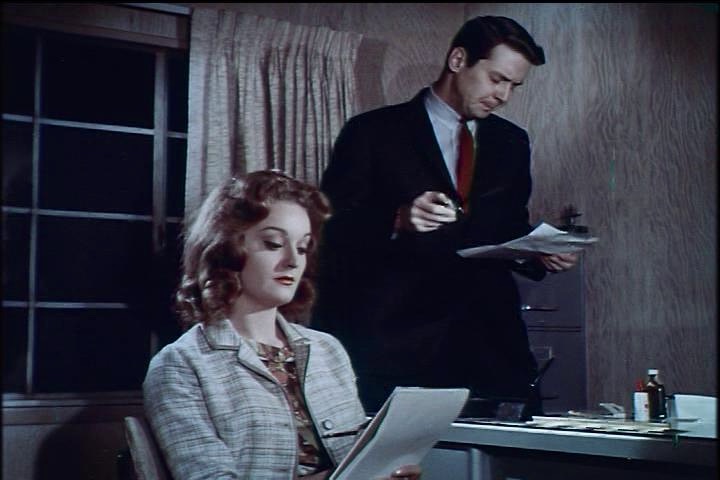
Charlie:…Maybe I feel like being the breadwinner.
Joan: Breadwinner? You call what you do breadwinning? Ever since Eric was born we haven’t been able to make ends meet.
Charlie: I bring home a steady check. I do the best I can.
Joan: Well, that’s not good enough. Not for me. Not for my kid. Being an expediter in a sweat shop just isn’t enough.
Charlie: I’m the head expediter and it’s not a sweat shop. It’s a well run, good paying lot with lots of benefits.
Joan: Lots of benefits, no money. Anyway, not enough money for what I want out of life. You better get used to the fact that I’m in business. I intend to be able to earn enough to afford to give Eric some advantages.
Charlie: So, it’s all for Eric, huh?
Joan: No, it’s not all for Eric. I want lots of things. I want a new car, a shiny sportscar all my own.
Charlie: What’s wrong with a station wagon?
Joan: It drives like a truck. It’s ordinary. Besides, it’s 3 years old. And I want a mink scarf.
Charlie (sarcastically): Why not a mink coat?
Joan: That will come later and before I’m finished we’ll have a membership to the country club.
Charlie: Country club? What for? Neither of us can play golf.
Joan: So what! You don’t join the country club for golf. You join it for business contacts. The place is full of influential people.

There are also numerous scenes featuring nudity (mostly female – of the topless variety) and one surprising shower scene where Al and Joan are seen completely naked from the rear through a glass door. While tame by today’s standards, the nude scenes were still relatively rare for a 1964 adult feature that found mass distribution at drive-ins and hard top theaters. To top it off, the film is fast paced, consistently amusing, sordid when it needs to be and a genuine time capsule of its era (it was filmed on Long Island and at locations in South Fallsburg, New York including The Hotel Windsor).
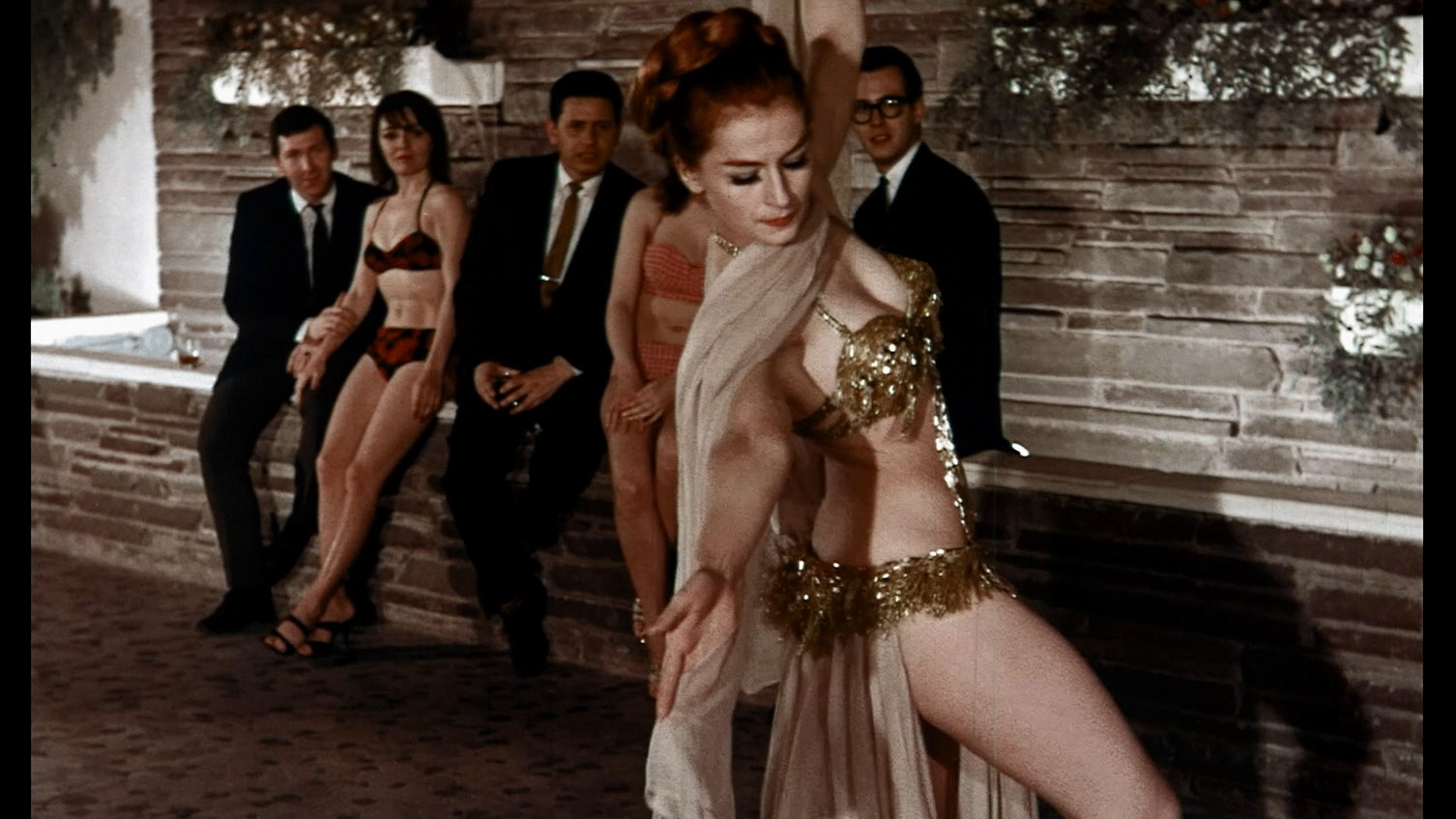
It was also hoped by Sarno and producer Heineman that Moonlighting Wives would be the sort of crossover adult feature that could play mainstream theater chains. Except for some high profile playdates in major cities like New York and Chicago, the film quickly faded from view after its initial release and wouldn’t be rediscovered until it popped up years later on VHS via the Something Weird label minus most of the nudity.

Joan (Tammy Latour aka Diane Vivienne, center) engages in a threesome with Barbara, one of her girls, and Al, the tennis pro (John Aristedes) in MOONLIGHTING WIVES (1966).
What I find particularly fascinating about Moonlighting Wives is its depiction of the American Dream according to Joan. Like most Americans, the suburbanites in the film were being sold visions of success, luxuries and the conveniences of modern life but the reality was something different. Joan figures out the means to achieve her goals because she is a shrewd businesswoman with an expertise in budgeting and management. And watching the wheels turn in her head and her eyes light up as she sizes up one situation after another and exploits it to her own end is fascinating to watch. And, Tammy Latour, as she is billed here, is alternately commanding, droll and delightfully unflappable as the no-nonsense Joan. Latour would go on to make at least two other movies for Sarno – The Naked Fog (1966), which was made after Moonlighting Wives but released first, and My Body Hungers (1967).
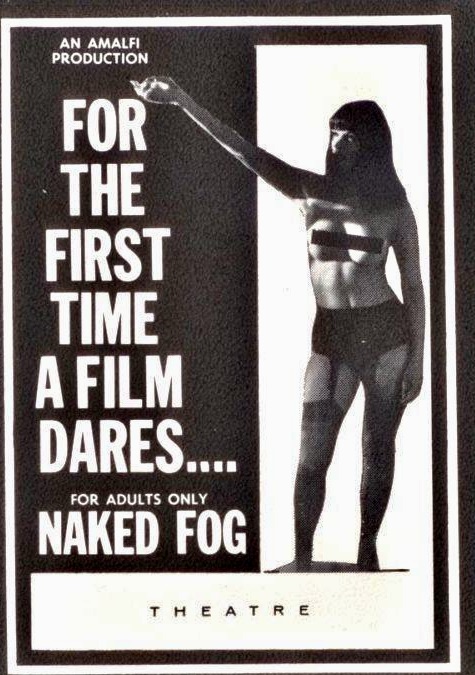
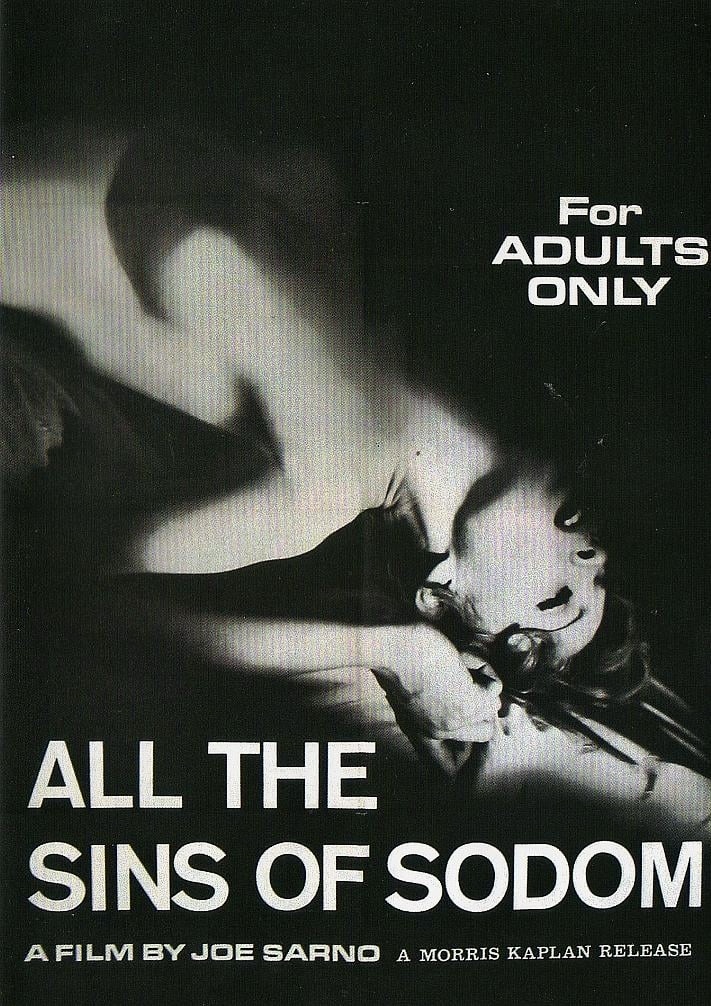
If you have never seen a Joe Sarno film, Moonlighting Wives is a great place to start but just about any Sarno film from the sixties is worth watching, whether it’s an early entry like Sin Your Sinners (1964) or Sin in the Suburbs (a popular favorite) or later efforts like All the Sins of Sodom (1968) and Passion in Hot Hollows (1969). Unfortunately, a changing market for adult features required more explicit sex, nudity and taboo subject matter and Sarno, in order to stay relevant in the business, moved into hardcore sex films in 1973. In all, it is estimated that he has directed more than 120 films in his lifetime (he died in April 2010 at age 89).
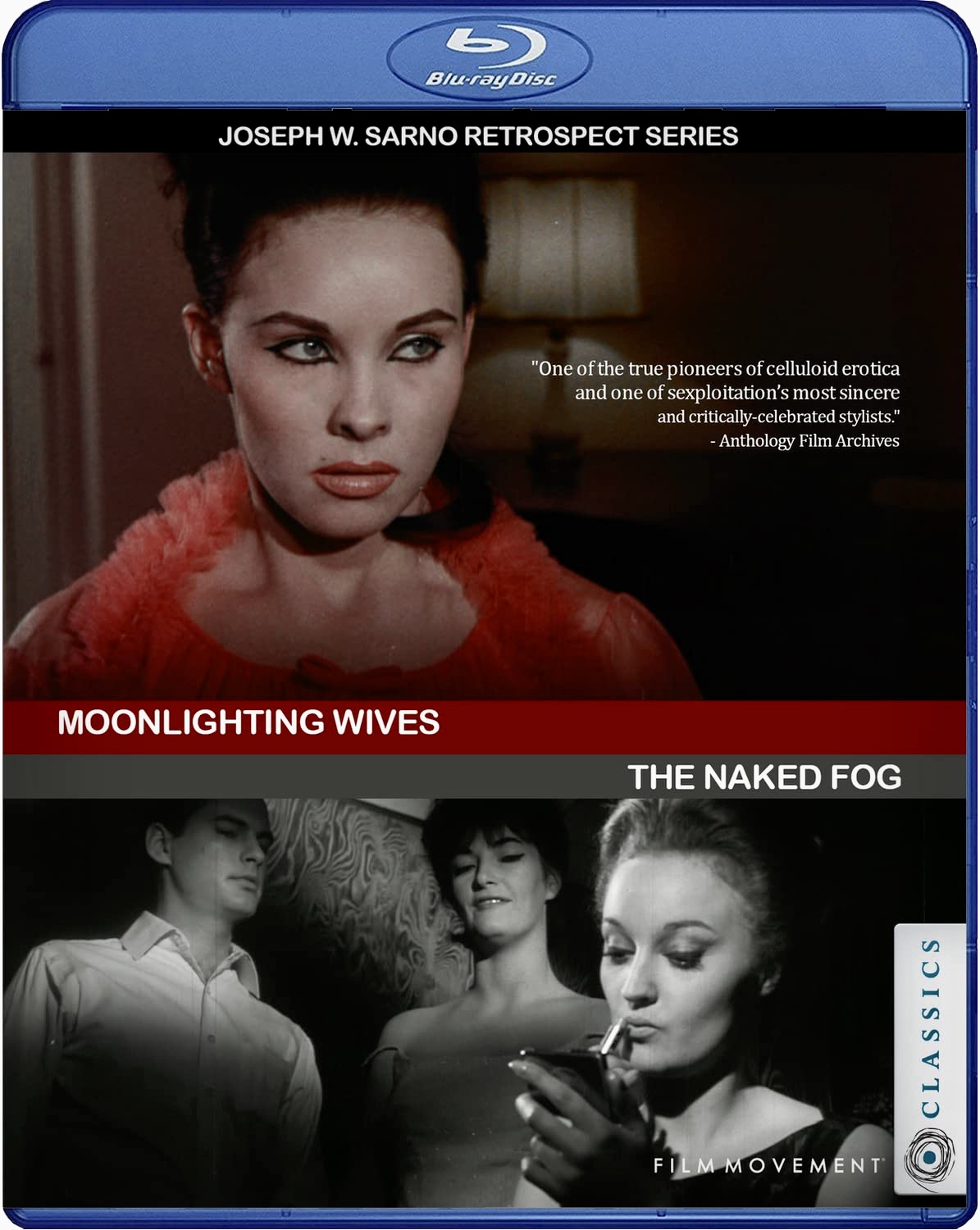
The most complete version of Moonlighting Wives was made available by the Film Movement on Blu-ray in April 2023. Despite some scratches on the print here and there, the presentation looks great with vastly improved audio and color correction since its VHS days. Sarno’s The Naked Fog is also included as a co-feature and the extras include interviews with Sarno and cinematographer Jerry Kalogeratos on Moonlighting Wives, and, best of all, an exhaustive, in-depth audio commentary on the movie by film historian Tim Lucas as well (he is currently working on a book about Joe Sarno).
Other links of interest:
https://videowatchdogblog.blogspot.com/2021/03/joe-sarno-at-100.html
https://dangerousminds.net/comments/sin_in_the_suburbs
https://www.encyclopedia.com/media/encyclopedias-almanacs-transcripts-and-maps/swinging
https://www.popmatters.com/beginners-guide-to-exploitation-film-2495811312.html
 Cinema Sojourns