
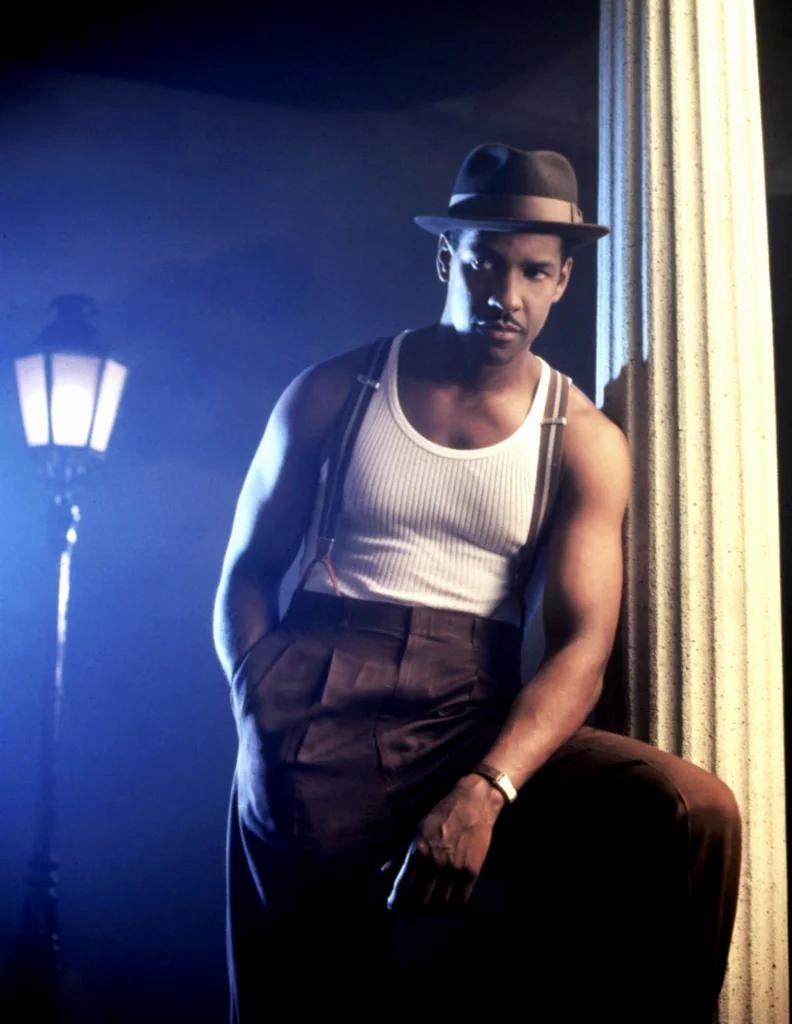
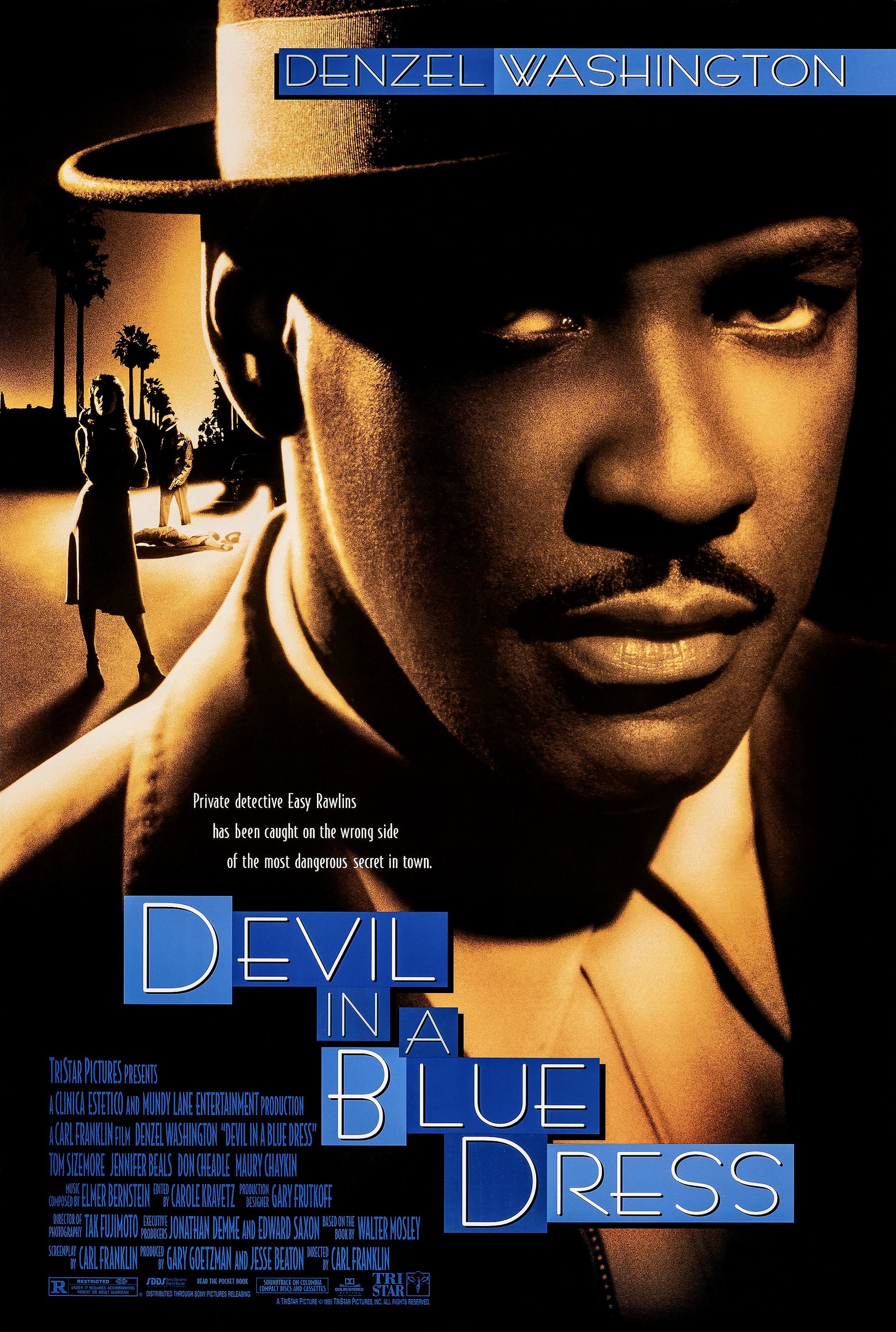
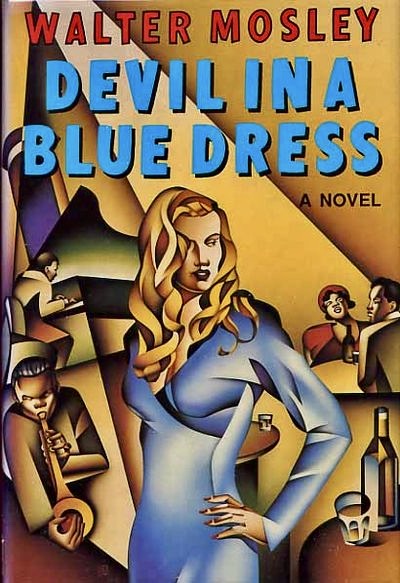
For avid readers of mystery and crime novels, the stories of African-American novelist Walter Mosley featuring his detective hero Easy Rawlins were a unique and welcome addition to an overly familiar genre. And it was no surprise when Devil in a Blue Dress, the first of a quartet of novels featuring Rawlins, was optioned by a Hollywood studio and later brought to the screen in 1995 by director Carl Franklin and Denzel Washington, who not only played the lead but helped finance it; it was the first film for his production company, Mundy Lane.
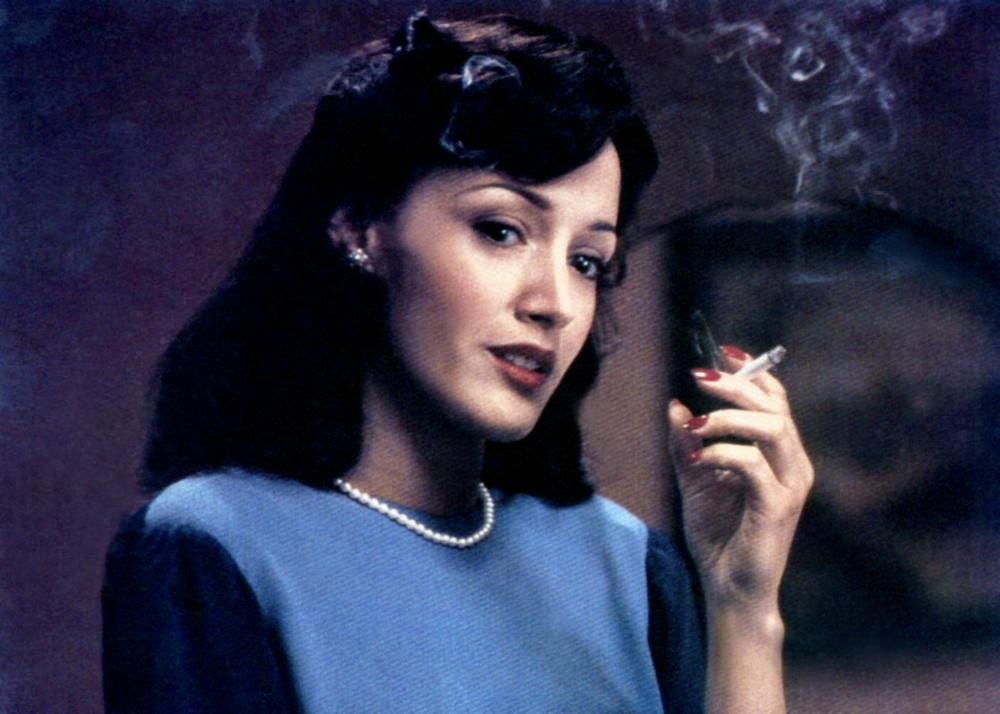
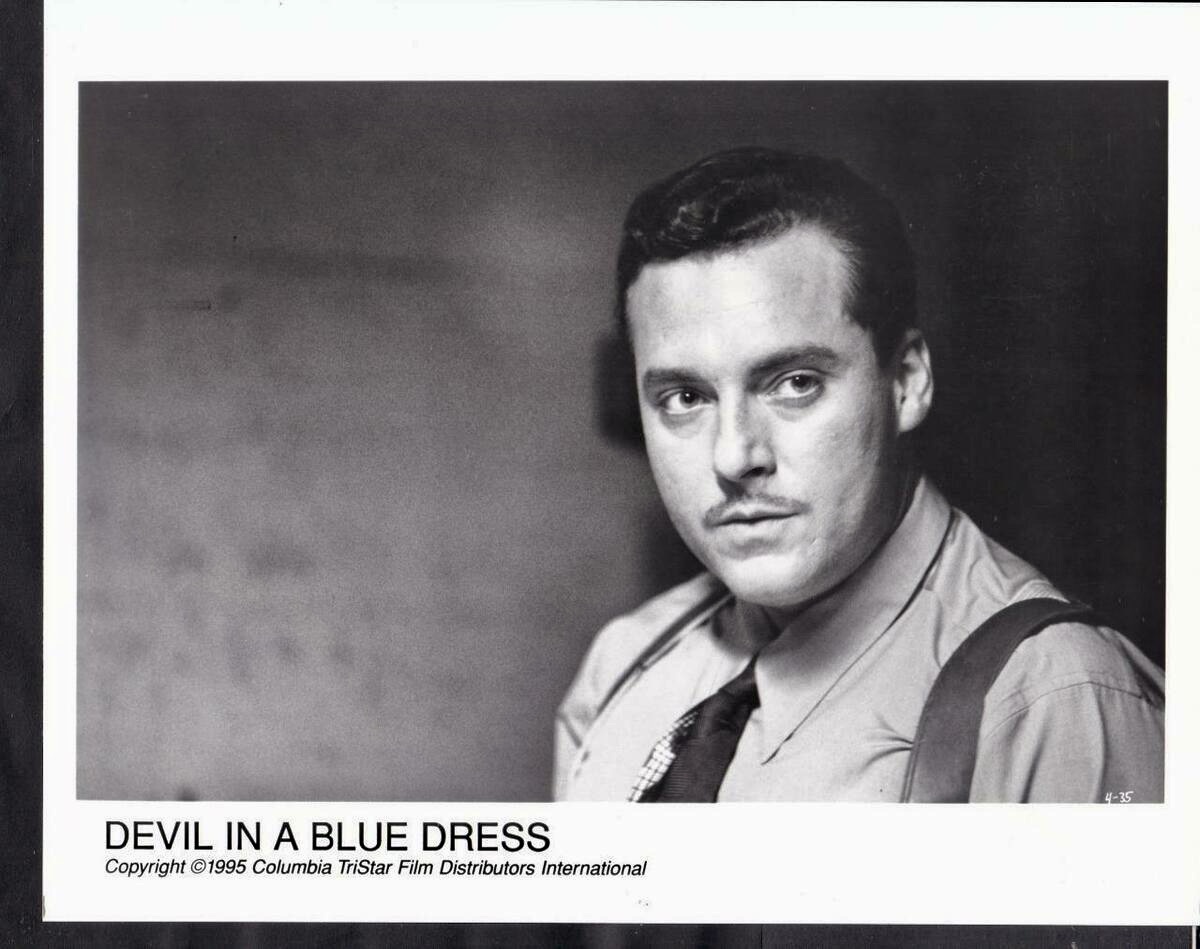
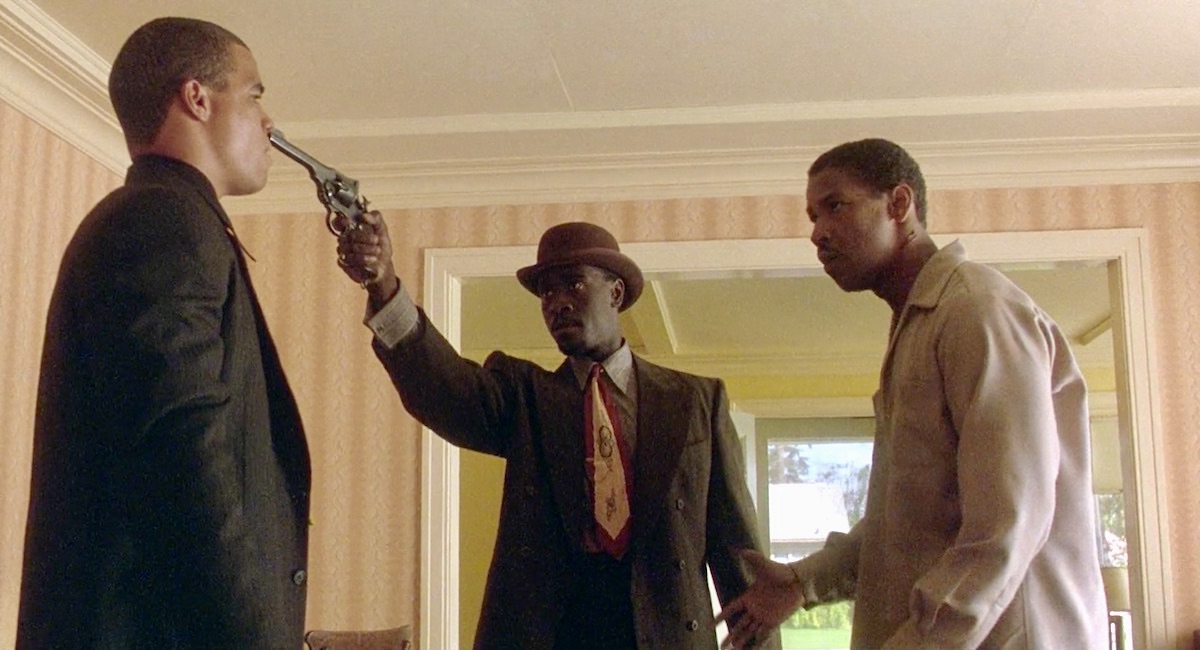
Set in Los Angeles in the forties, the film opens as Easy Rawlins, a recently unemployed aircraft plant worker, goes looking for work so he can pay his house mortgage. Desperate for money, he agrees to help find the missing Daphne Monet (Jennifer Beals) for a shady businessman named De Witt Albright (Tom Sizemore). It turns out that Daphne is the girlfriend of the current front runner for city mayor, Todd Carter (Terry Kinney). And as Easy tries to track Daphne down he finds himself caught up in the middle of a dangerous political rivalry where he is being set up as a fall guy. As a safety precaution he recruits his gun-happy friend Mouse (Don Cheadle) as backup support and eventually uncovers the mystery surrounding Daphne as the bodies pile up.
Universal first acquired the rights to Devil in a Blue Dress and hired Walter Mosley to adapt his own novel for the screen but the author soon realized it was not his forte and went back to writing fiction; the project languished in pre-production limbo until director Jonathan Demme entered the scene. He bought the rights with the intention to direct until he learned that Carl Franklin was also deeply interested in the project. Demme had just seen Franklin’s critically acclaimed crime drama, One False Move (1992), and agreed to partner with him on Devil. With Franklin secured as director, Demme then pitched the project to Mike Medavoy, the chairman of Tri-Star, who approved it, and Denzel Washington’s involvement as star and co-producer followed soon after that.
In Denzel Washington: His Films and Career by Douglas Brode, the actor stated his reasons for wanting to play Easy: “We’d never really seen South-Central Los Angeles from that time, so it was fresh territory…It was real!. Easy’s a regular guy who’s in over his head in a crazy situation. When I’m down at the station, being questioned by the police, I’m scared. It’s how you react in real life – you’re not so tough when you got a billy club up the side of your head.” The decision not to play Easy as a tough guy detective in the Humphrey Bogart mold was, in fact, true to the character in Mosley’s novel; he was just an ordinary guy who was out of work and needed money. He wasn’t a private eye but he had a natural cunning and keen survival skills.
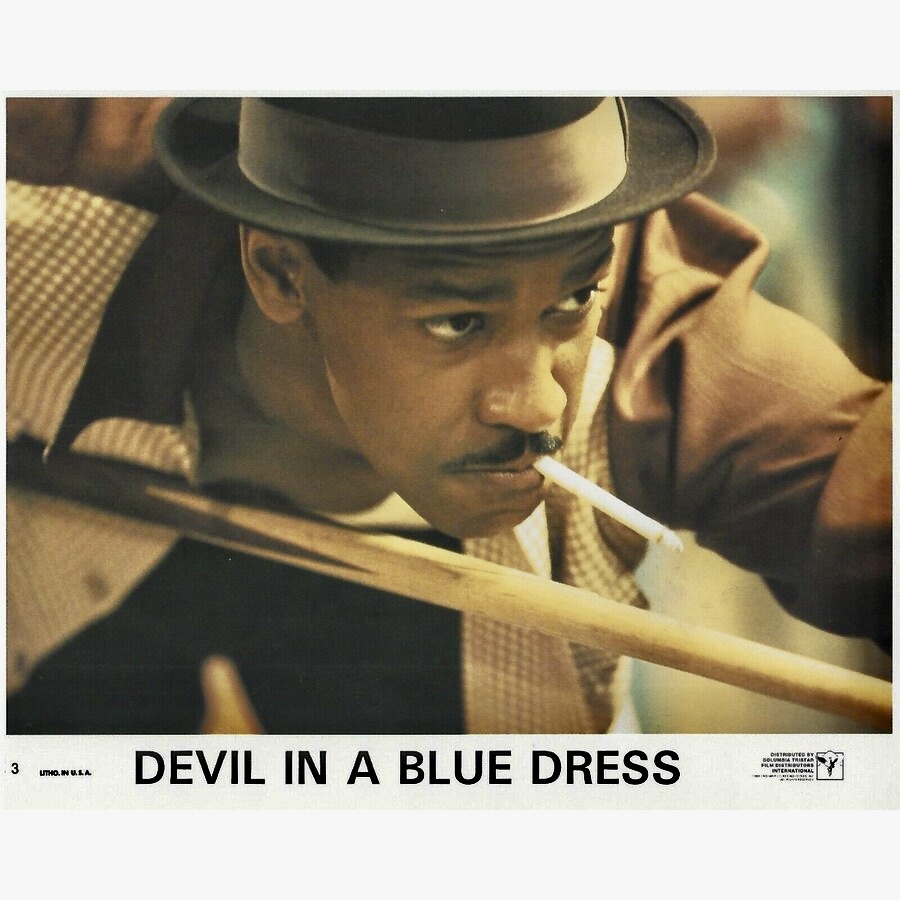
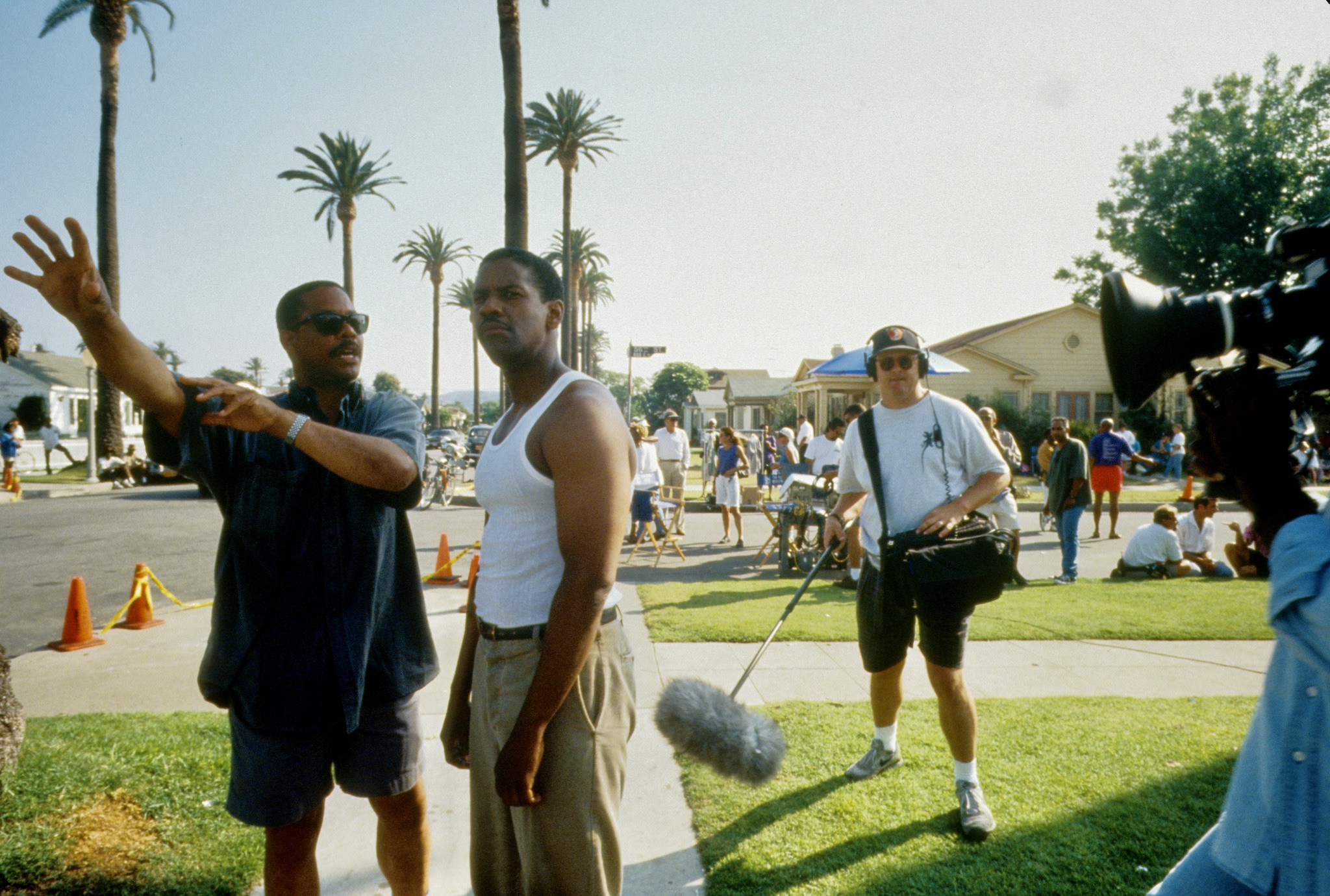
Prior to filming Franklin scouted out locations for the film and found a four block section of Main Street in downtown Los Angeles, near Pico, that could be redressed for period city scenes. But Easy’s neighborhood had to be recreated since the original community had long since been destroyed in the Watts riots.
Franklin also immersed himself in the period through photo research and by interviewing jazz musicians and other Los Angeles residents from the late forties who recalled the vivid nightlife and bustling community that existed at the intersection of Central Avenue and 103rd Street back then. “He’s really a history professor trapped in a movie director’s body,” Washington said of Franklin. “You know he’s always going to get deep into things.” In addition to capturing the forties atmosphere, Franklin puts a new spin on certain detective film stereotypes. Daphne, who at first looks like the standard femme fatale, turns out to be a tragic heroine with a secret identity. And Mouse could easily represent Easy’s dark side, the sort of homicidal, criminally-minded character he might have become if he had chosen a different path.
“Film Noir is one of my favorite genres,” Franklin later stated in an interview, “although I don’t think you need to approach it as a genre when you do it….I like detective kind of things. But what I never liked about them is the inaccessibility of the characters. Usually they’re people that you never run into in real life. You know, where does [Philip] Marlowe live? Who’s his mom? Where did he come from?…The thing about these people is that they were all people I had seen before. Easy lives in a neighborhood.”
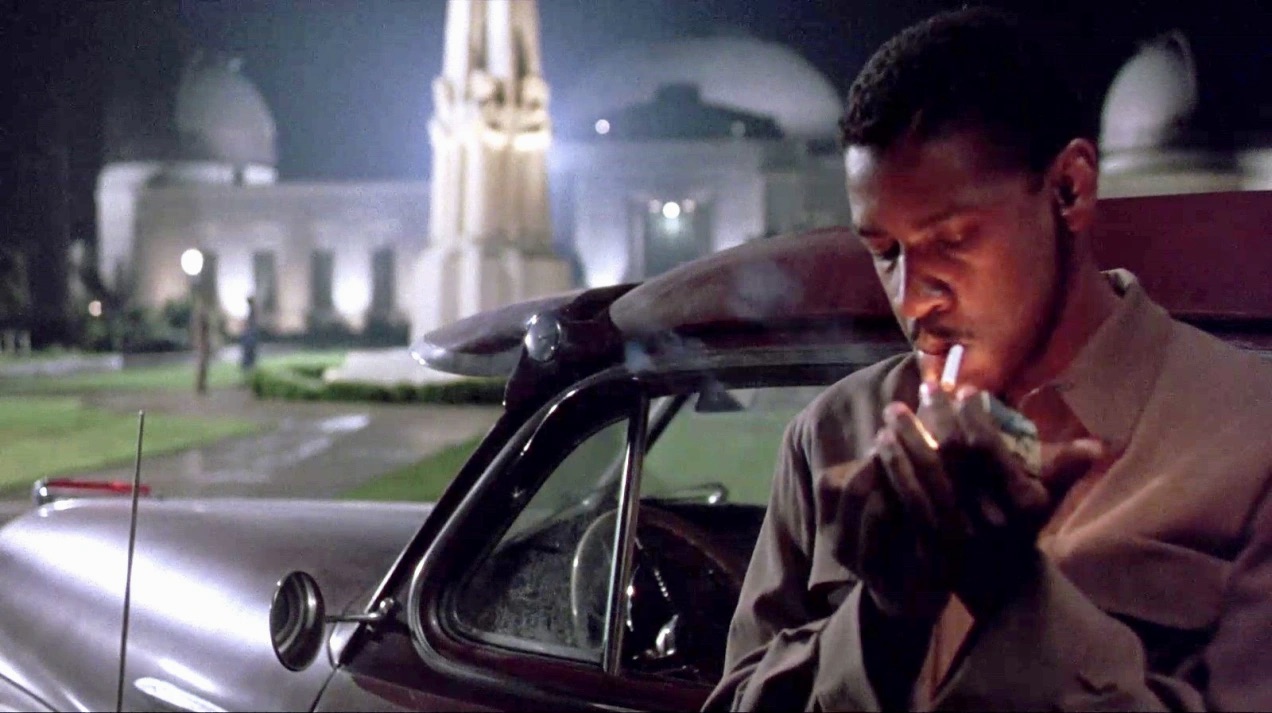
When Devil in a Blue Dress opened theatrically, it received mostly positive reviews from the nation’s leading critics. Time reviewer Richard Schickel wrote “Carl Franklin’s cool, expert adaptation of Devil in a Blue Dress…evokes the spirit of ’40s film noir more effectively than any movie since Chinatown [1974]” and added that Denzel Washington as Easy “gracefully reanimates a lost American archetype, the lonely lower-class male absorbing more cigarette smoke, bourbon whiskey and nasty beatings than is entirely healthy, as he pursues miscreants and moral imperatives down mean, palm-lined streets.”
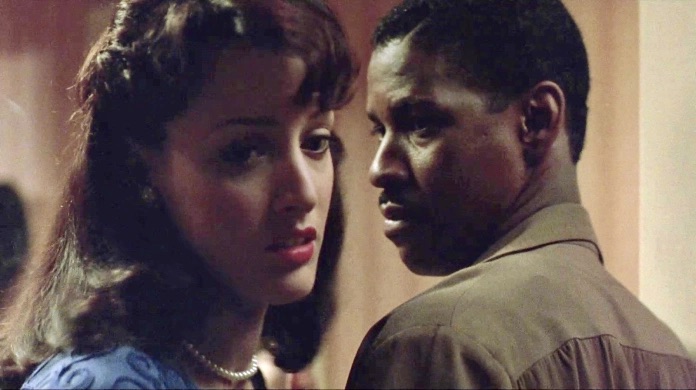
Washington’s performance deserved to be nominated for a Best Actor Oscar but the film was virtually ignored by the Academy voters, even Don Cheadle’s scene-stealing supporting role as the wildly unpredictable Mouse. Oddly enough, in an early version of the screenplay written by Walter Mosley, the author eliminated Mouse from the story but added aspects of his character to the creation of Rawlins. By the time production began, however, Franklin scrapped Mosley’s screenplay and wrote his own adaptation, which added Mouse back into the narrative at the mid-point. Cheadle received numerous accolades from his performance, winning Best Supporting Actor from the Los Angeles Film Critics Association and the National Society of Film Critics.
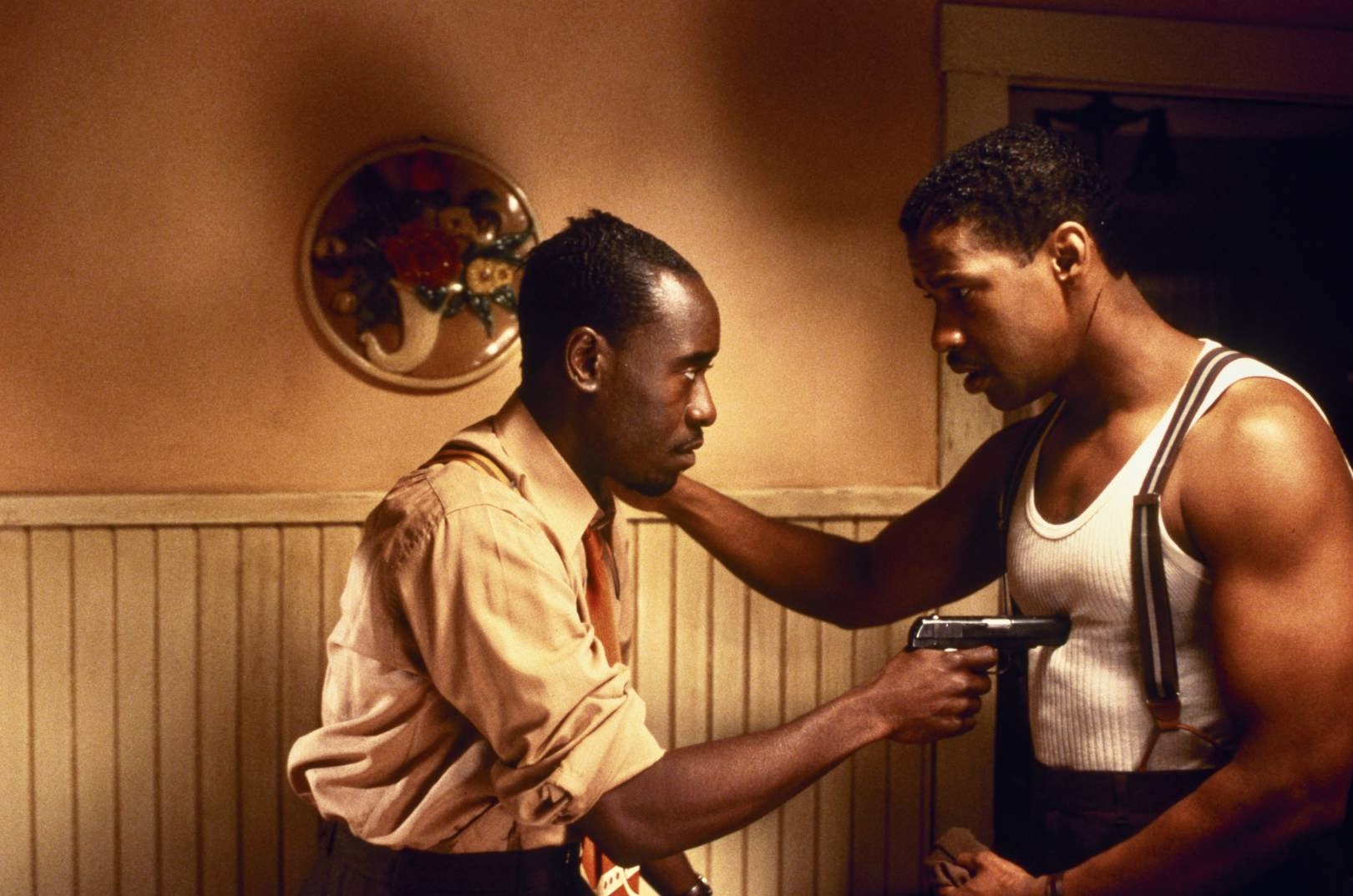
Budgeted at $20 million dollars, Devil in a Blue Dress only took in $16 million at the box office which was a great disappointment for Franklin, Washington and everyone else who worked on the film as a labor of love. Mosley fans were disappointed too because the film’s financial failure meant no more Easy Rawlins movies – A Red Death, White Butterfly, and Black Betty have yet to make it to the big screen.
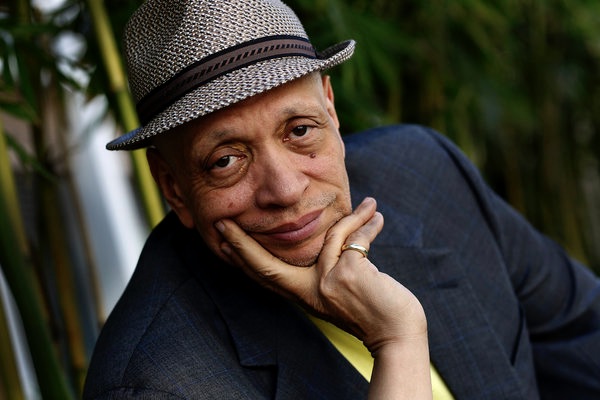
Denzel Washington later commented on the film’s inability to attract a wide audience: “They say period pieces are [a] hard [sell]. We also opened the weekend of the O.J. Simpson verdict, which didn’t help. But making fifty million dollars the first weekend is not the criterion for whether it’s a good film.” Devil in a Blue Dress is more than a good film and easily ranks among the best work that Franklin, Washington and Cheadle have done.
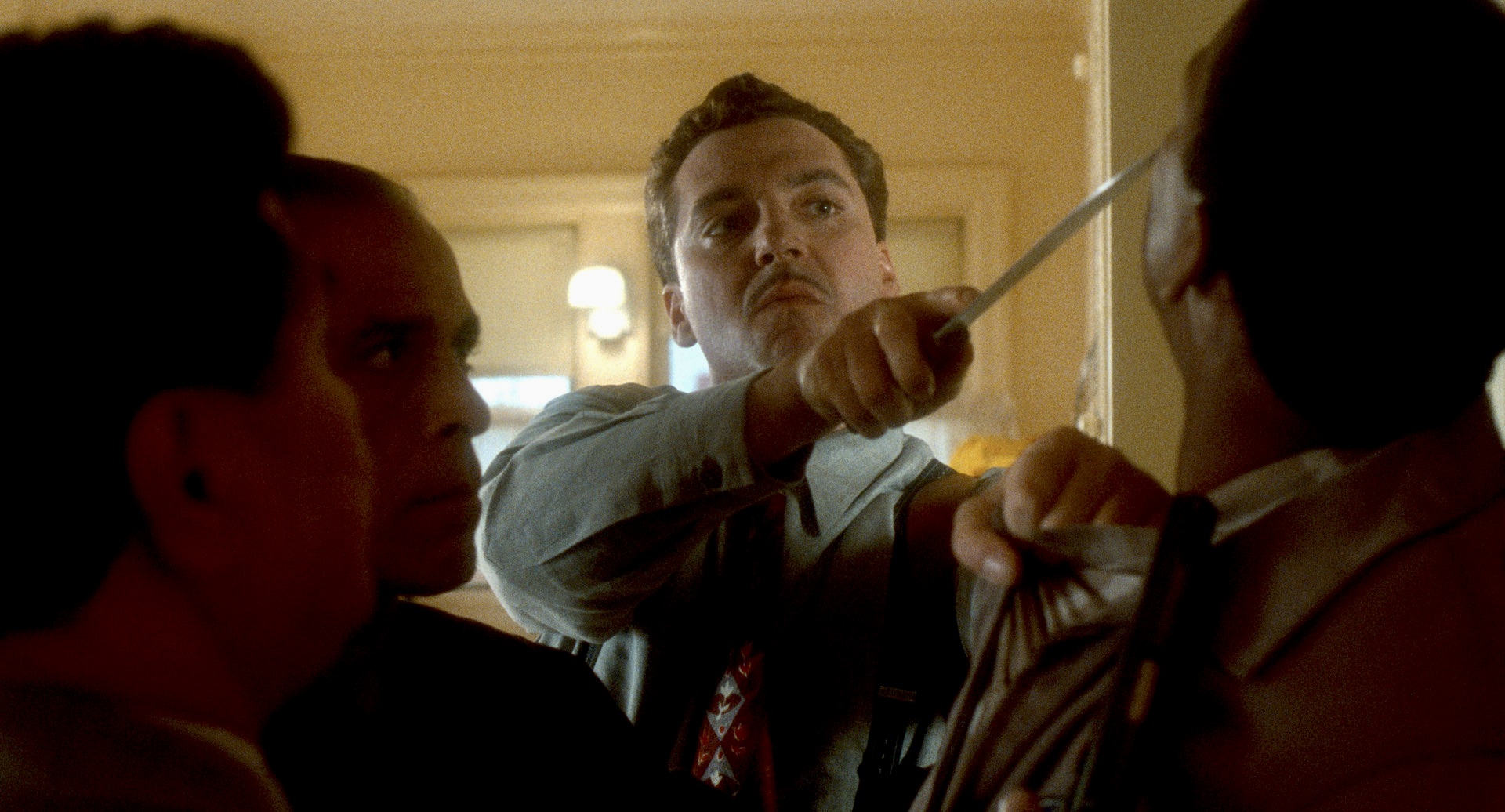
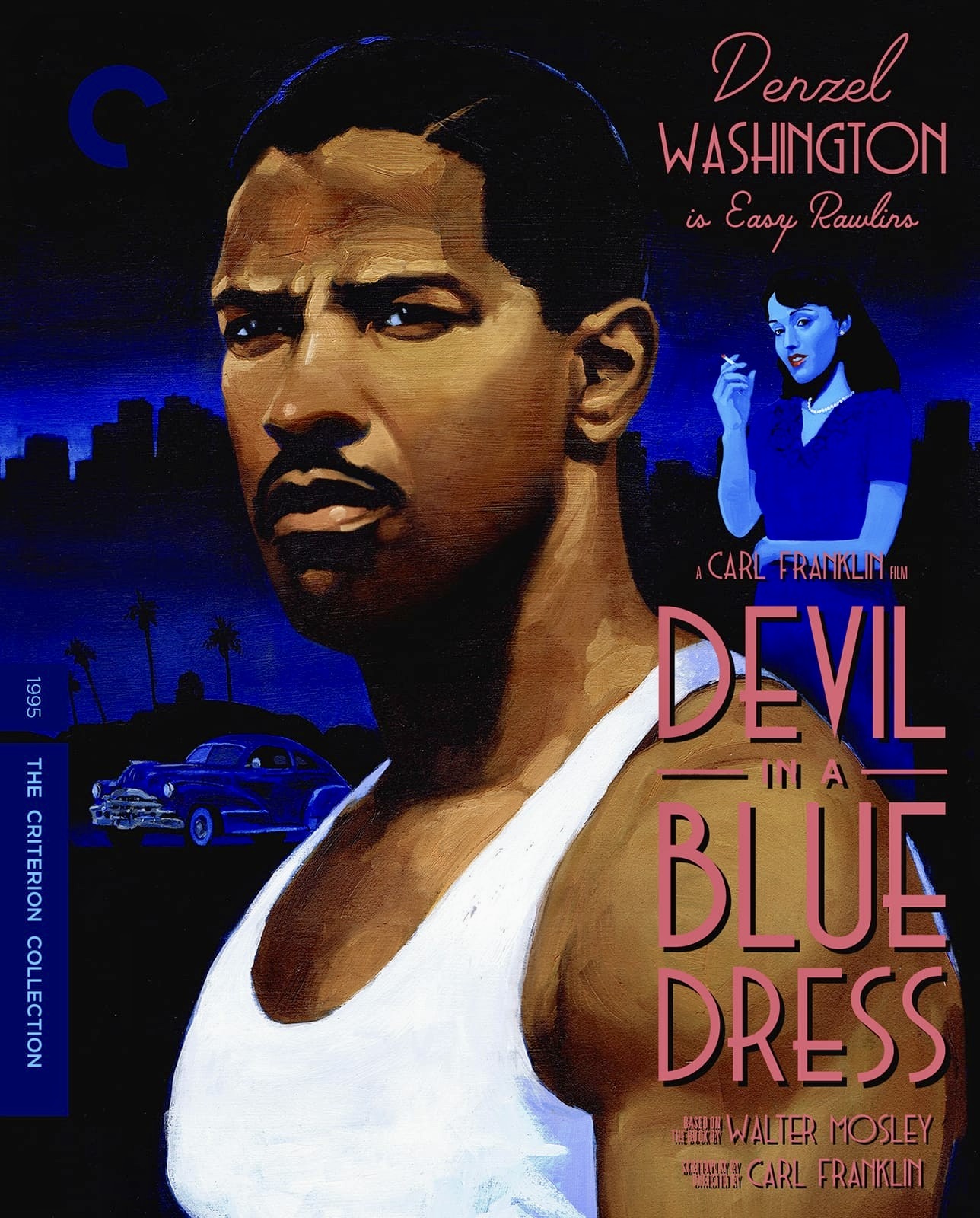
Initially released on VHS and DVD, Devil in a Blue Dress is now recognized as a classic film from the nineties. In July 2022 the film was released on Blu-ray by The Criterion Collection with a host of extra features including an audio commentary by the director, a conversation between Walter Mosley and novelist Attica Locke, Don Cheadle’s screen test and other supplements.
*This is a revised and expanded version of an article that originally appeared on the Turner Classic Movies website
Other links of interest:
https://www.criterion.com/current/posts/7873-devil-in-a-blue-dress-crossing-the-line
https://www.looper.com/955040/the-untold-truth-of-devil-in-a-blue-dress/
 Cinema Sojourns