
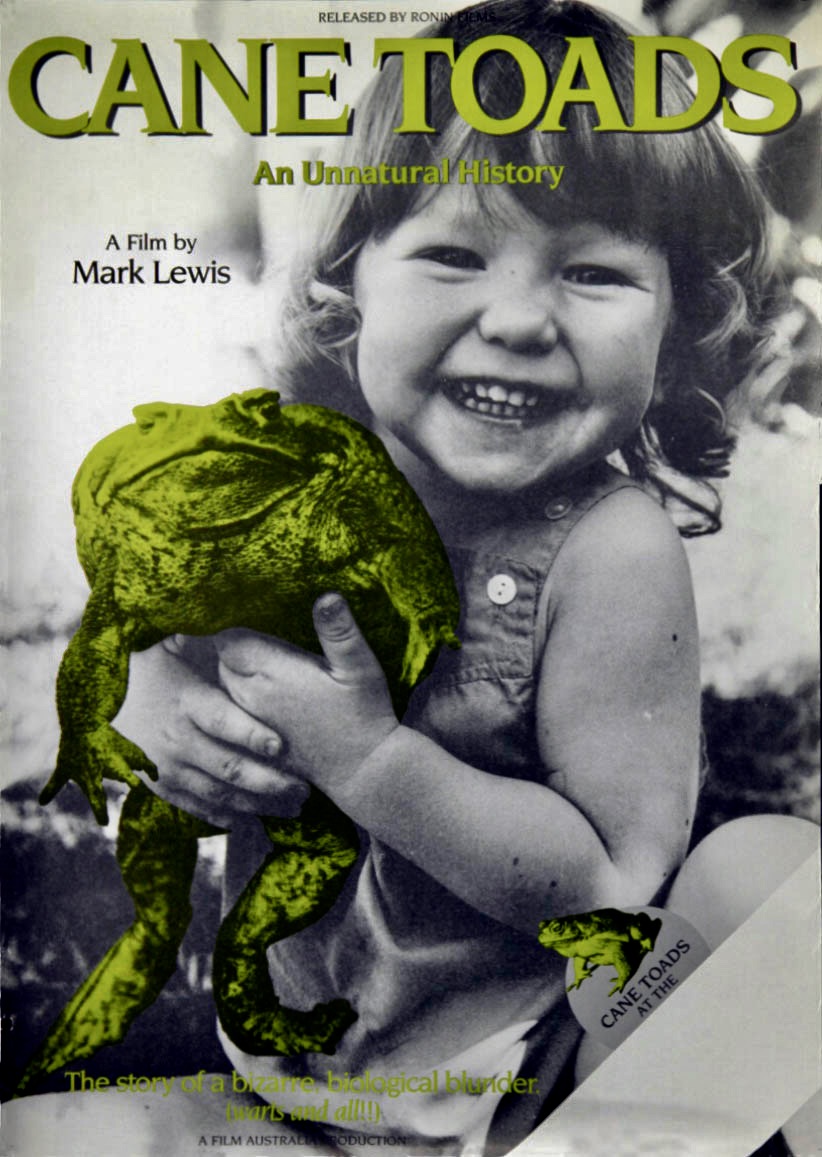
One of the biggest threats to natural habitats and healthy ecosystems around the world is the introduction of non-native invasive species into their realm. It could be a form of plant life like Purple Loosestrife or Kuduz or an animal or insect like the European Starling or the brown marmorated stink bug. But the result is usually the same with the invader proliferating and eventually wiping out all of the other competing species thus creating an ecological disaster. Certainly one of the strangest documentaries to concentrate on an encroaching menace is Cane Toads: An Unnatural History (1988). Directed by Mark Lewis, the film charts the introduction of the voracious and fast-breeding amphibian to Northern Queensland in Australia and its devastating effect on the continent.

During the early 1930s, sugar was one of Australia’s major exports but the farmers had to constantly battle the cane grub from destroying their crops on a seasonal basis. At the 4th Congress of the International Society of Sugar Cane Technologists in Puerto Rico in 1932, entomologist Raquel Dexter suggested using cane toads from Hawaii as a means to control the sugar cane grubs and beetles. Unfortunately, her research was faulty but the farmers wouldn’t learn that until the cane toads had been introduced into Northern Queensland and bred like crazy, creating environmental chaos. It turns out that the oversized amphibians, which can grow up to 24 centimeters and weigh as much as 3.3 pounds, didn’t really solve the grub problem because the grubs were too high up in the sugar cane stalks to be easy prey. Besides, there were plenty of other things to eat on the ground like insects, mice, vegetation…basically anything the cane toad could get inside its mouth and that includes ping pong balls and cigarette butts.

Lewis’s film is like a science-gone-amok horror film at times but it is also frequently off-the-wall funny and endlessly fascinating. It has just enough scientific data to present the disturbing scenario without boring the viewer and then serves up one bizarre detail after another about the cane toad’s anatomy, sex life, natural defenses and how it interacts with people. If there is one fact that will stick in your mind about the cane toad, it will probably be the amphibians’ insatiable urge to mate with anything. If a female toad isn’t available, the male will try to mate with fish (usually killing them in the process) or a person’s foot (sad but true) or even a pile of mud.
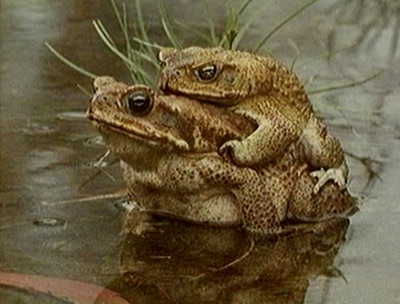
Lewis has taken care to stage some re-enactments of cane toad behavior, which are often comical but also illustrative on how peculiar these creatures really are. In one sequence, a male toad tries to mate with the decaying corpse of a female toad (crushed on the road) but doesn’t seem to notice his futile efforts even after an eight-hour breeding attempt. Another staged scene shows a small child playing with a cane toad while her mother is oblivious inside the house. The child doesn’t realize that the amphibian contains a deadly toxin in its body that is released when it feels threatened. Snakes, dogs, cats and other predators find this out the hard way when they bite or attack the toads and are usually poisoned and die in convulsive agony. Of course, nothing happens to the child because she doesn’t threaten the creature as a real predator might. In fact, one interviewee states that cane toads like people and enjoy being handled, petted or stroked by them. But few viewers will think there is anything cuddly about these wart-covered monstrosities.

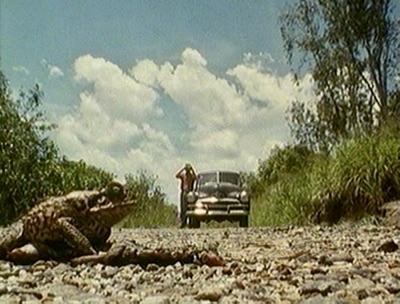
One of the most effective aspects of Cane Toads: An Unnatural History is Lewis’s method of bringing you into their world. Working with cinematographer Jim Frazier, a set of lenses were created that give viewers the impression they are seeing the world through the eyes of the toads, which consists of extremely low angle shots. Lewis also balances his presentation of interviewees between those who want to eradicate the amphibians and those who enjoy their presence around their house, especially the sounds they make at night.
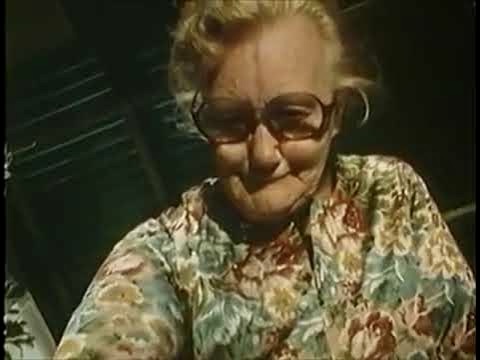
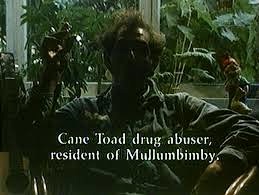
Some of these on-camera subjects are quite eccentric such as an unidentified man who has learned how to harvest the toad’s body for its drug-like hallucinatory properties. But in interviews about the documentary, the filmmaker has always been careful to assure viewers that no cane toads were killed in the making of the movie (For a scene in which a man in a truck appears to be running over countless amphibians on a paved road, brown potatoes were substituted for the real thing and shot from a distance).
Clocking in at a tidy 47-minute running time, Cane Toads: An Unnatural History was an unlikely candidate for theatrical distribution but it somehow received a general release and became one of the highest grossing documentary films of all time in Australia. It also received a theatrical release in the U.S. via First Run Films and quickly developed a cult following. A typical response to the movie is this excerpt from a film review by Chris Hicks for the Deseret News: “Press material for “Cane Toads” describes this unorthodox documentary as something of a cross between Monty Python and National Geographic. That’s accurate enough… Filmmaker Mark Lewis interviews experts on the creatures along with local residents and finds them decidedly split on what should be done about the problem. The testimonials of these folks, along with Lewis’ chronicling some of the toads’ more eccentric habits, make for a highly entertaining, often hilarious film, though in the end it is rather chilling.”

Brian Case, in a review for TimeOut noted “…In some areas of Queensland, the cane toad is regarded with reverence and even affection – ‘”They’re mates” – and statues have been erected to the warty oversized amphibian. Little girls put little frocks on them and put them in little beds; junkies smoke them and hallucinate; a citizen impersonated one of the highway and was fined. The most curious nature film since The Hellstrom Chronicle.”
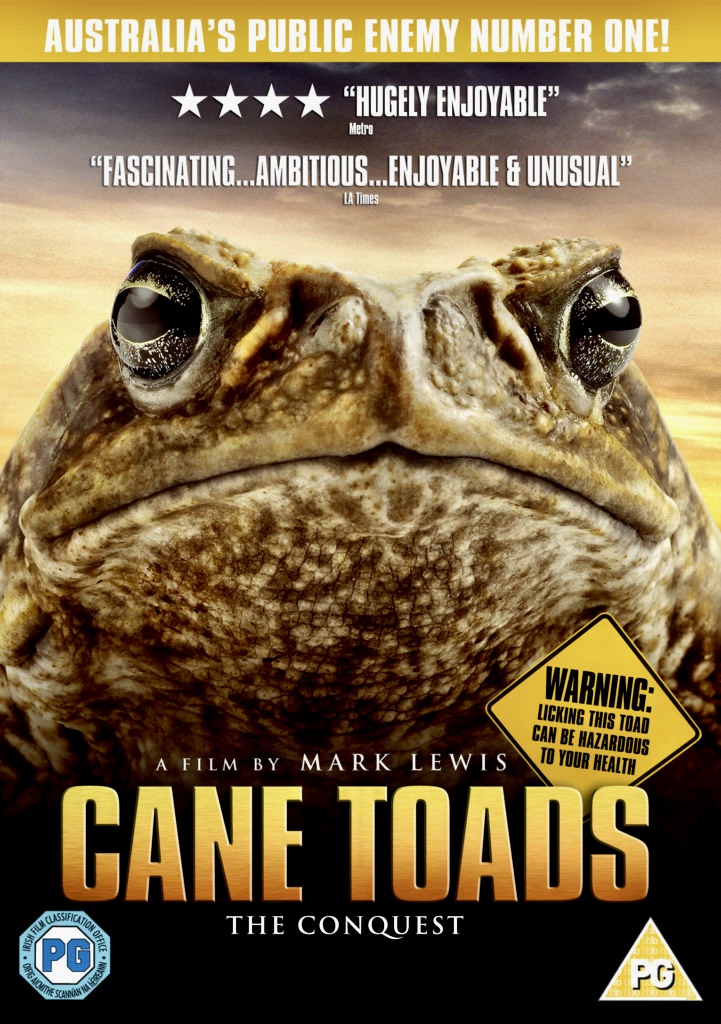
Cane Toads: An Unnatural History was Mark Lewis’s directorial debut and launched his career as an unconventional documentarian specializing in nature films. He even returned to the subject of his first movie in 2010 with Cane Toads: The Conquest, which was mostly a rehash of the 1988 film but this time, his sympathies seemed to be clearly on the side of the amphibians, even though the toads have now spread across the top of Australia from Queensland into New South Wales and Western Australia!
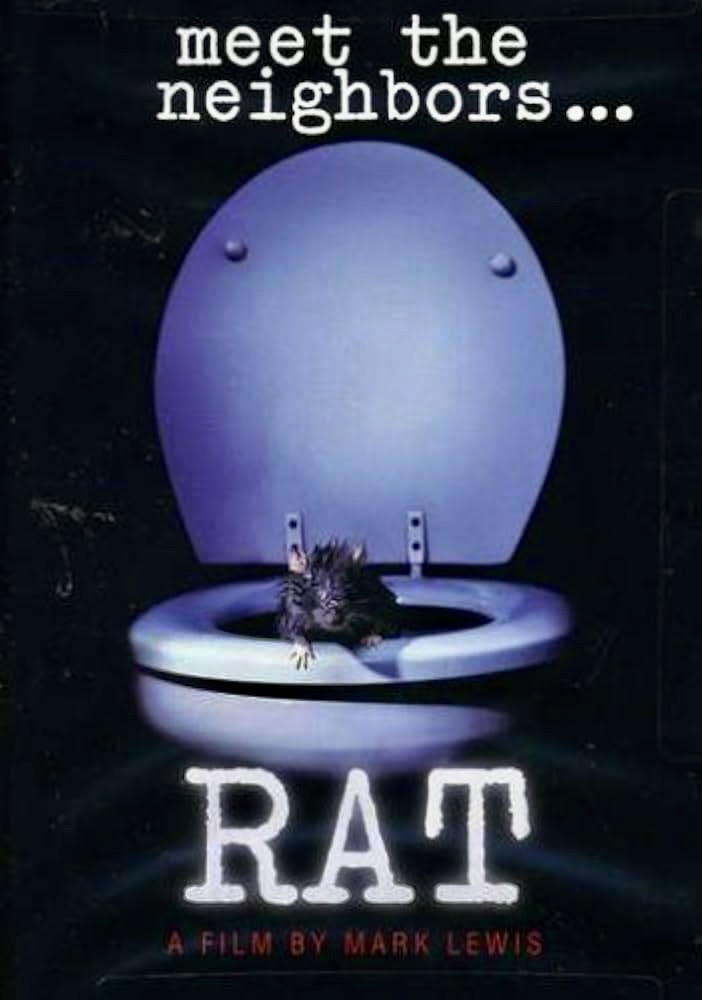
Among Lewis’s other documentaries are The Wonderful World of Dogs (1990), Rat (1998), a disturbing portrait of the exploding rodent population in New York City and the ongoing attempts to control it, and The Natural History of the Chicken (2000).
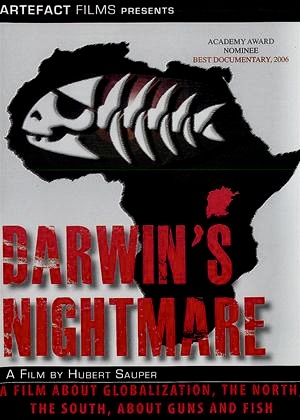
Of course, Lewis is not alone in focusing on invasive species with his two Cane Toad movies. Austrian filmmaker Hubert Sauper made a harrowing documentary in 2004 entitled Darwin’s Nightmare, which shows what happened in Lake Victoria in Tanzania after the introduction of the Nile perch into the waters in the 1950s. The perch, which grow to lengths of over 6 feet (often weighing 440 pounds or more), eventually caused the extinction of all other species in the lake but created a booming economy for fish distributors in Europe while the local people ended up as little more than slave laborers in fish processing plants along the lake.
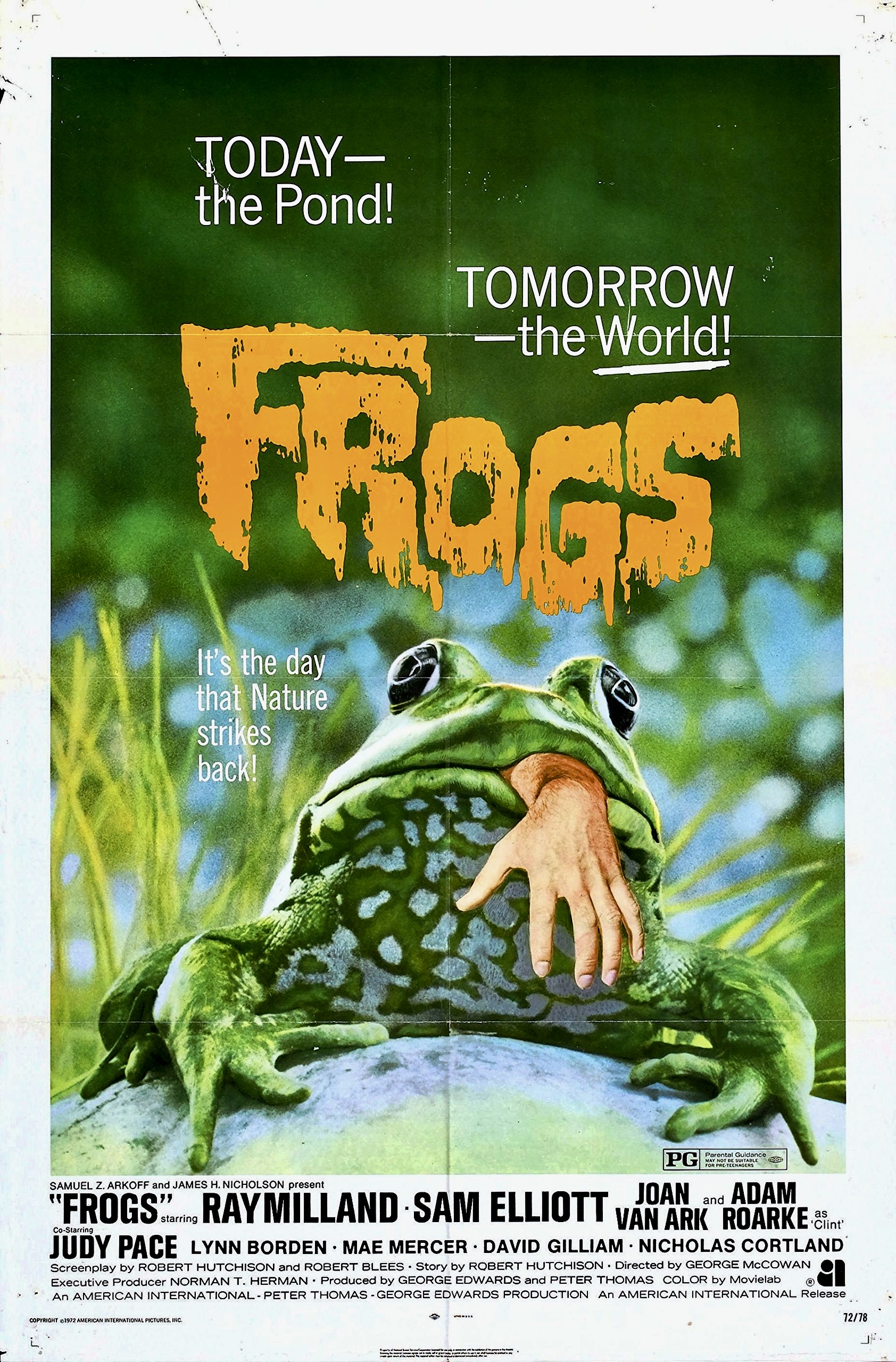
Equally disturbing is Pablo Chehebar and Nicolas Lacouzzi’s Beavers: Patagonia Invaders (2015, aka Castores, La Invasion del Fin del Mundo) and Rodents of Unusual Size (2017), which focuses on the impact of the nutria in coastal Louisiana. For those who don’t know, the nutria is a semi-aquatic rodent from South America similar in size to a muskrat or beaver. They are voracious herbivores and are famous for moving into new ecosystems and stripping them of all vegetation plus they are carriers of parasites and diseases that are harmful to livestock and humans. All of this is presented most convincingly in an unsettling documentary expose by Quinn Costello, Chris Metzler and Jeff Springer. Adventurous film programmers host an entire series of invasive species featuring the films cited above and maybe even throw in a thematically appropriate exploitation film like Frogs (1972) or Kingdom of the Spiders (1977) just for fun.
Cane Toads: An Unnatural History was originally released on DVD in 2001 by First Run Features but you can also view it on Youtube and Kanopy.

Other links of interest:
https://www.dcceew.gov.au/environment/invasive-species/publications/factsheet-cane-toad-bufo-marinus
http://www.markpoole.com.au/articles/mark-lewis-cane-toads.html
https://www.invasivespeciesinfo.gov/species-profiles-list
 Cinema Sojourns