
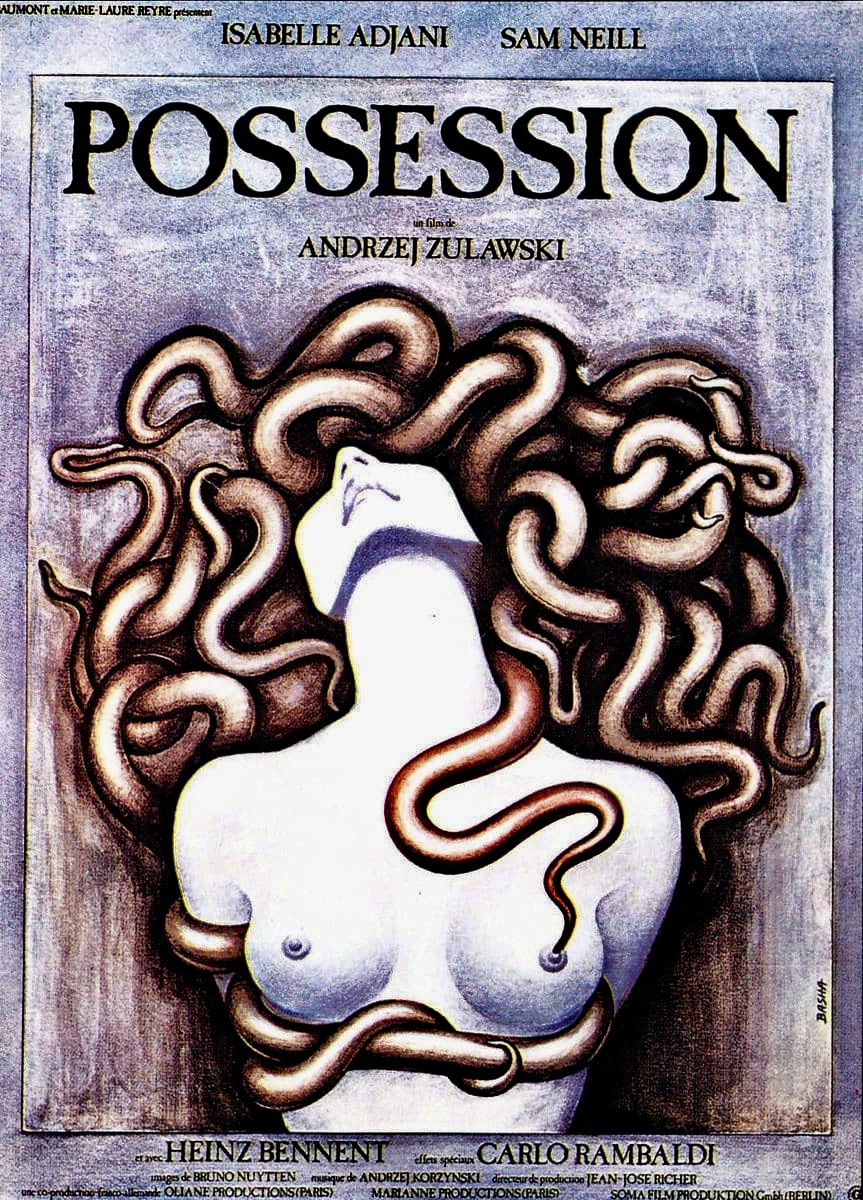
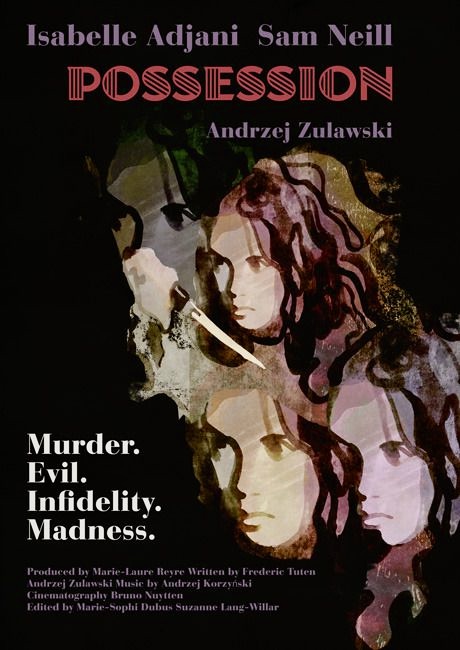
In The Devil’s Dictionary, a satirical lexicon written by Ambrose Bierce which was first published in 1906 under the title The Cynic’s Word Book, marriage is described as “The state or condition of a community consisting of a master, a mistress and two slaves, making in all, two.” While it may be an amusing if not particularly favorable definition of what should be a sacred union between two people, it does reflect a negative viewpoint embraced by some who have suffered through it. Possession (1981), directed and co-written by Andrzej Zulawski with Frederic Tuten, takes this conceit a step further, depicting the institution of marriage as not just a form of slavery but the embodiment of hell on earth.
There have been a number of critically acclaimed but harrowing and realistic depictions of divorced or soon-to-be-divorced couples featured in films like Ingmar Bergman’s Scenes from a Marriage (the 1973 mini-TV series and the 1974 edited-for-theatrical release) and Alan Parker’s Shoot the Moon (1982). There have even been black comedies on the topic such as Danny De Devito’s The War of the Roses (1989) with Michael Douglas and Kathleen Turner as hateful spouses who battle each other to the death. But Possession is truly a one-of-a-kind portrayal of a marriage on the rocks which dials up the rage, anxiety and misery to level eleven, even though Lars Von Trier’s Antichrist (2009) comes close in terms of overkill and extreme body horror.
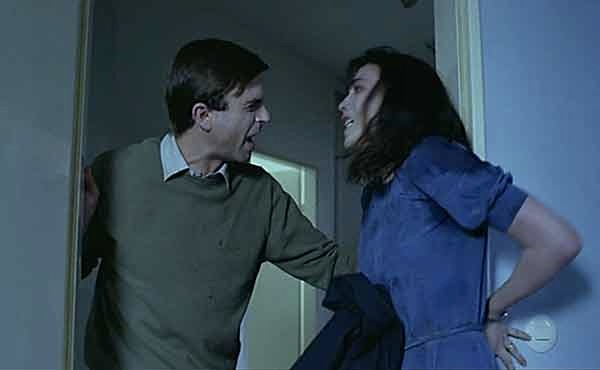
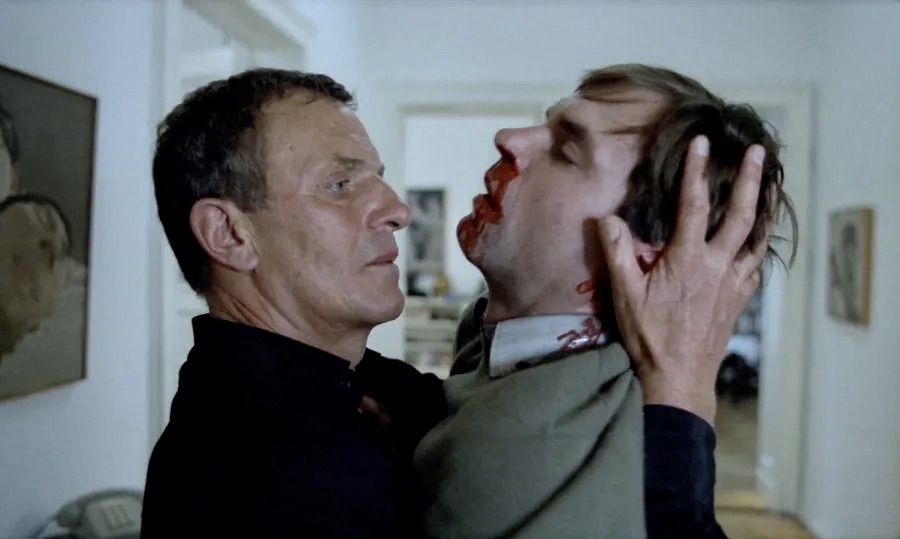
When Possession opens, the relationship between Anna (Isabelle Adjani) and Mark (Sam Neill), who travels extensively for his work, is already strained and in trouble. No sooner has Mark arrived home when Anna announces she wants time alone to decide if she wants to stay in the marriage. Mark overreacts and has an emotional meltdown before suspecting that Anna might be having an affair. At first he confronts Heinrich (Heinz Bennent), Anna’s friend and former lover, as the reason for his wife’s estrangement but soon it becomes apparent that Anna is hiding a much darker secret.
Mark ends up hiring a detective (Carl Duering) to follow and investigate Anna but when he goes missing, the marriage begins to go off the rails spectacularly in ways that affect not just husband and wife but almost everyone in their world including their young son Bob (Michael Hogben), Marge (Margit Carstensen), Anna’s friend and neighbor, the detective agency, and Heinrich and his elderly mother (Johanna Hofer). Before the film ends in a bloodbath, events take an almost supernatural turn with Mark meeting Helen, a doppelganger for Anna, at his son’s school and Anna creating a duplicate version of Mark from her sexual liaisons with a slimy creature with multiple tenacles in her dank hideaway. Yes, you read that correctly.
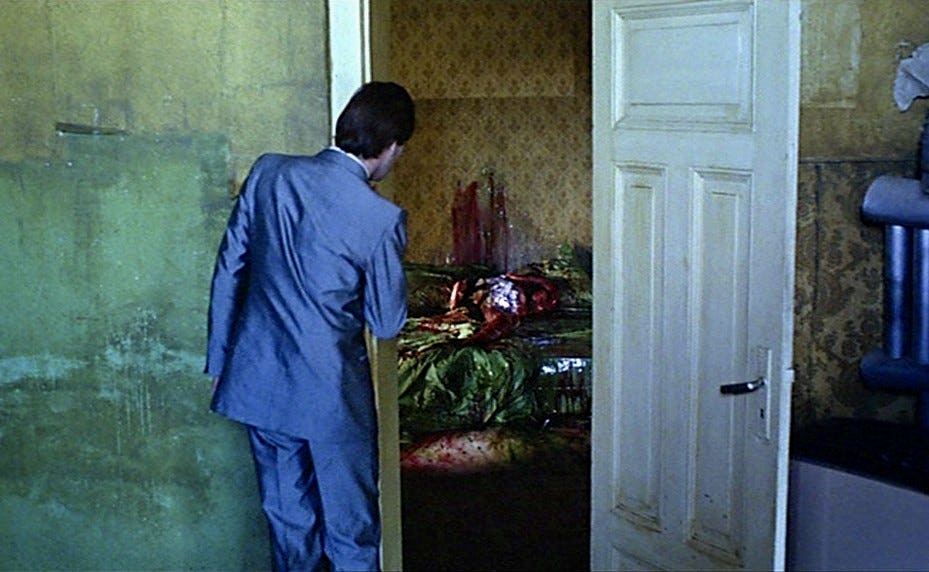
Certainly, Possession qualifies as a horror film. It also works as an extreme psychodrama or an allegory about the volatile emotional toll caused by a marriage in flames. But the best way to describe Possession is to call it an unrelenting howl of rage and pain that captures the mental, emotional and physical states of two people at war with each other. Love it or hate it, it is hard to imagine a viewer remaining indifference to what unfolds on screen. It is not unlike watching a wild animal on a rampage, one that can’t be contained or ignored. Every aspect of Zulawski’s production accentuates the story’s feel-bad, apocalyptic mood from the high-pitched discordant music score by Andrzej Korzynski to the frenetic cinematography of Bruno Nuytten, which transforms West Berlin into a bleak, desolate place with eternal grey skies and drab, colorless accommodations for the residents.
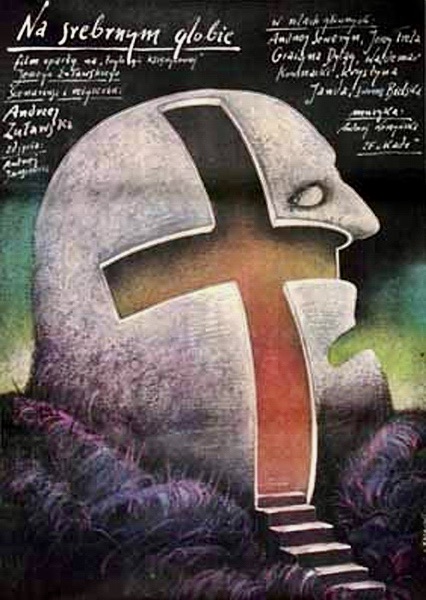
In some ways, Possession was a reaction to the director’s life at the time it was made. He was recoiling from an ugly divorce from his wife, actress Malgorzata Braunek, while also seeing his work banned in his native Poland for political reasons, including the shut-down of his recent production, a science fiction fable entitled On the Silver Globe. The director later admitted that living in exile with thoughts of suicide also helped shape the creation of Possession. But the road to the screen took many twists and turns before it became the cult phenomenon it is today.
Initially conceived as an English language production in order to reach a larger audience, the film first began as a screenplay-in-progress by Zulawski and novelist Frederic Tuten in New York City (It was the only place the director could travel on his passport at the time). Zulawski visualized the once-great factory town of Detroit as the perfect setting for the film but once he hooked up with French producer Marie-Laure Reyre, West Berlin became the new location for the story, which seemed perfect with the Berlin wall providing a symbolic representation of the couple’s irreconcilable differences.
The screenplay also went through various alterations during production and included an elderly character called Abe, who had been the first husband of Anna and a nurturing presence in her life. Zulawski wanted to cast Sterling Hayden in the role but the German financiers behind the movie wanted actor/director Bernard Wicki (Die Brucke aka The Bridge, 1959) to play the part and the director agreed at first. Unfortunately, Wicki turned out to be completely unprepared and wrong for the role and the character was eventually eliminated.
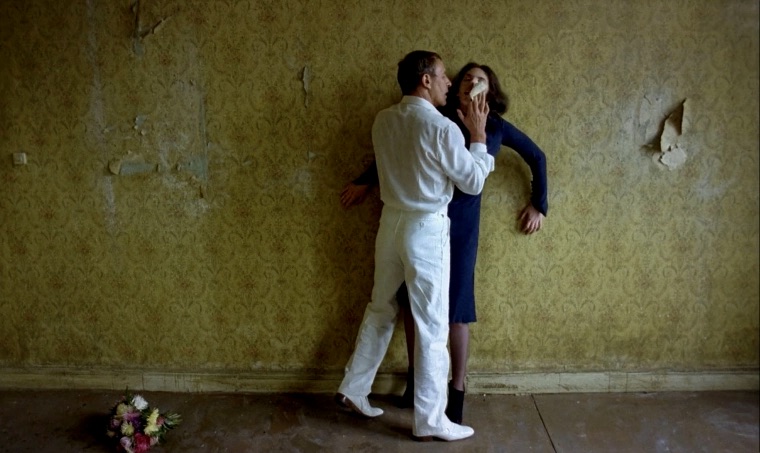
Yet, from the beginning, Zulawski wanted to cast Adjani in the role of Anna/Helen. She was a major star at the time and had just completed the James Ivory drama Quartet (1981) but her management persuaded her against accepting the part. The director then approached Judy Davis and Sam Neill, the romantic duo featured in the 1979 Australian biopic and international box office hit My Brilliant Career. Neill jumped at the chance to work with the acclaimed Polish director but Davis was slow to commit to the project. When she finally said yes, Adjani had already reconsidered her decision and accepted the role.
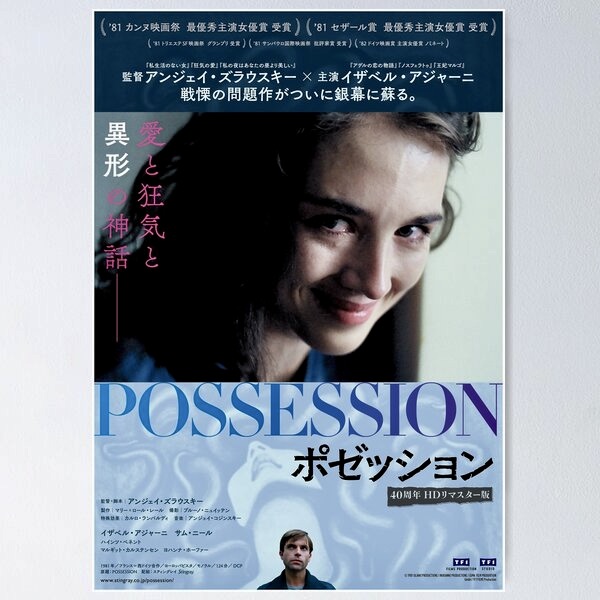
To say that Possession was an emotionally grueling, physically challenging shoot is an understatement based on Zulawski’s demanding on-set treatment of his actors which could be interpreted as abusive in these times of the Me Too and Woke movements. In later years, Adjani would reflect in an interview with Samantha Bergeson for Indiewire, ““I often wonder, when a person is an actress, if they’re capable of overcoming everything that’s inflicted on them…I remember — if you’ll allow me to offer a comparison from my own career and some situations with [the director] Andrzej Żuławski — there was something of great violence that I agreed to take on. But I’ve realized over the years that it’s something I could never accept again, and it’s part of everything that my subconscious has been swallowing and incubating. I wonder if acting has been a bit unhealthy during certain periods of my life, no?”
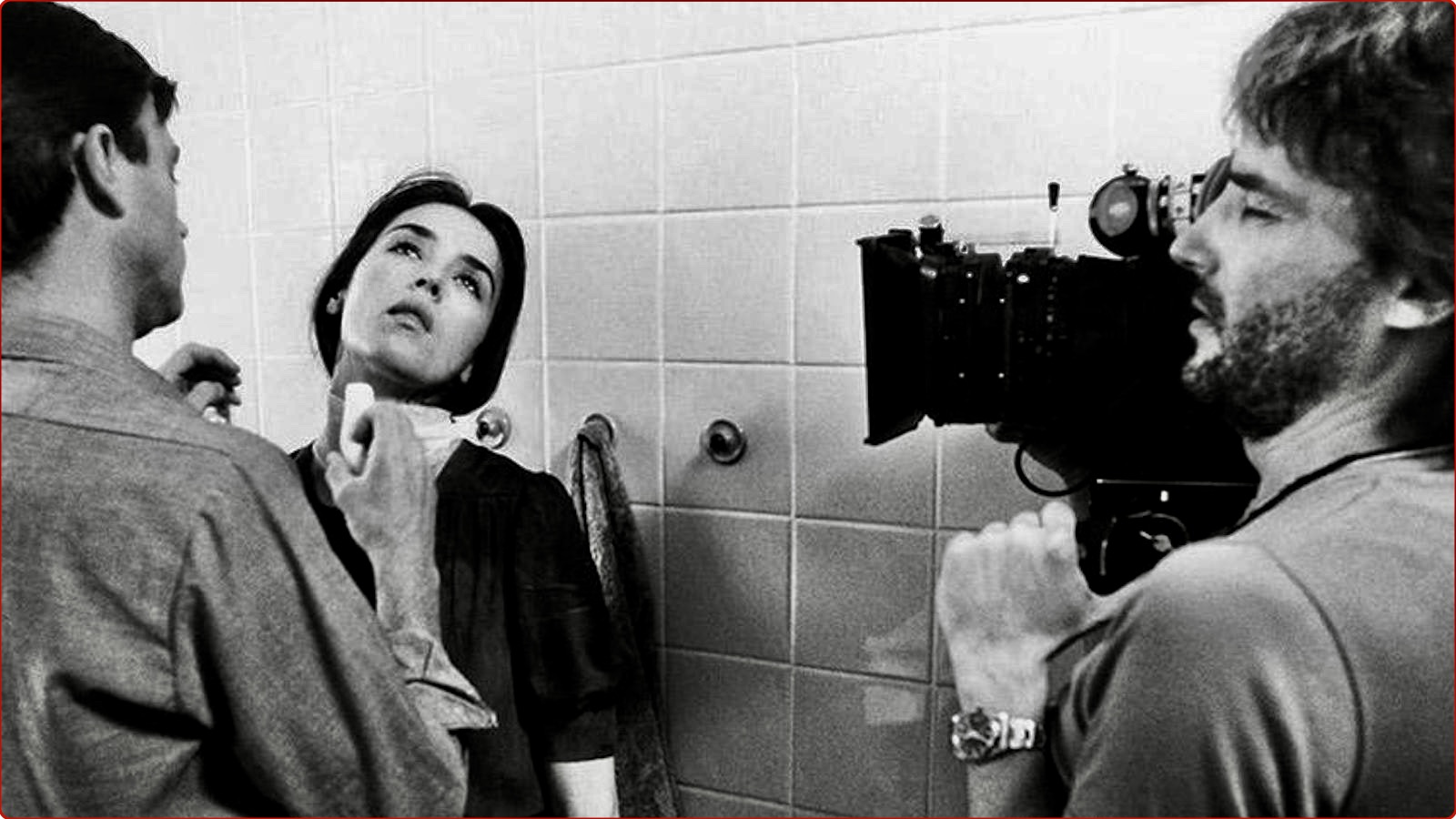
Sam Neill also confirmed the stressful nature of the shoot in a similar interview with Bergeson for Indiewire: “…With Żuławski, you would do whatever it was he wanted. And although that makes me sound like a classic victim of abuse, which in a sense I think we were, it was more than that. We had complete belief in him as an artist, and we wanted to make this thing, whatever it was. We really wanted to be in This Thing. We were making something bigger than ourselves.” Neill would go on to state in an interview with the BBC, “I call it the most extreme film I’ve ever made, in every possible respect, and he asked of us things I wouldn’t and couldn’t go to now. And I think I only just escaped that film with my sanity barely intact.”
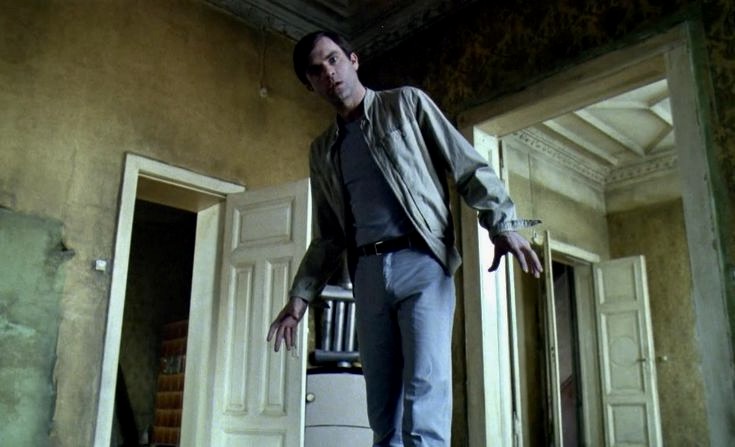
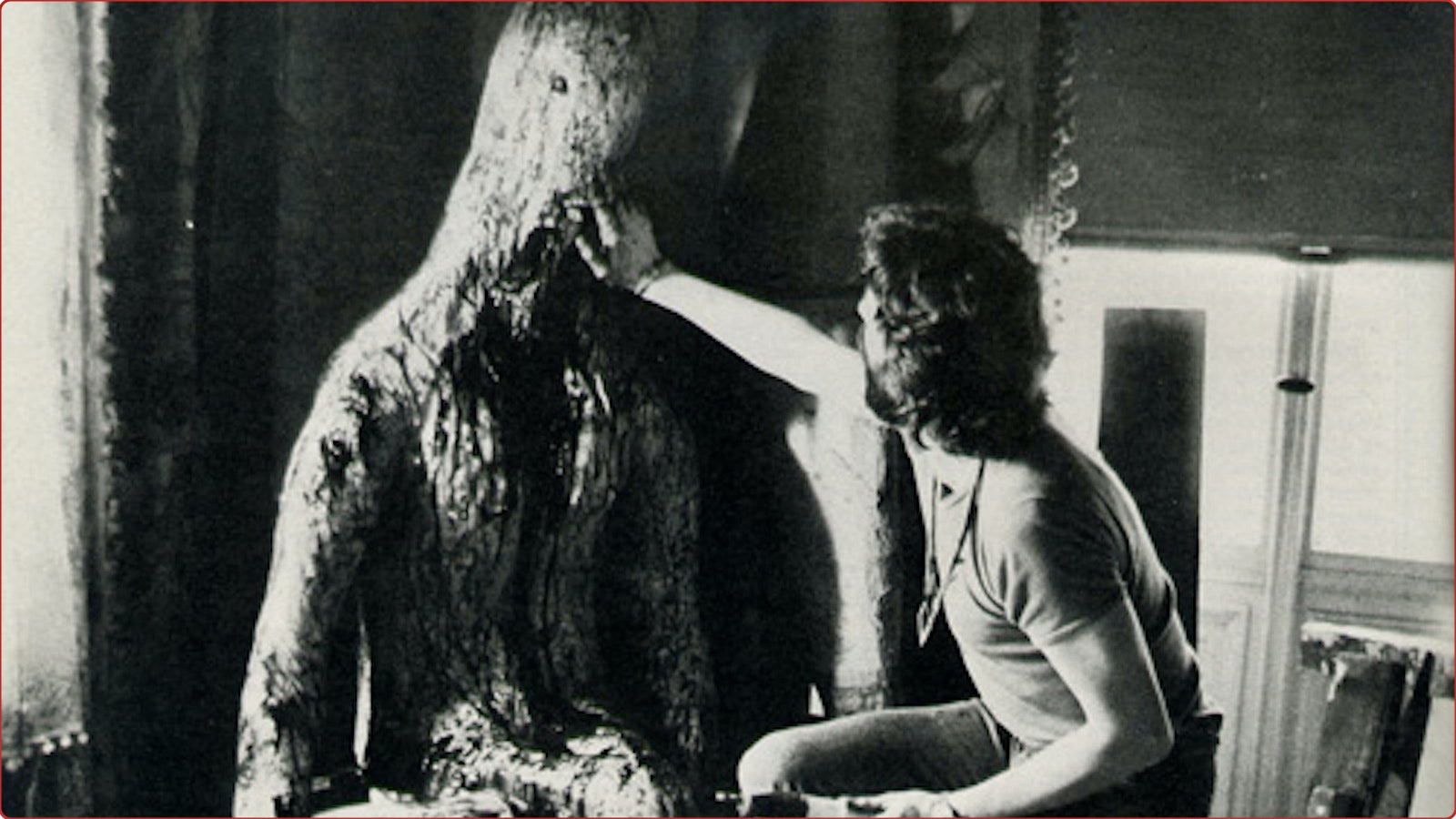
Even Zulawski was torn between admiration and dissatisfaction over the final result. One of his biggest disappointments was the visualization of Helen’s monstrous lover, which was created by the Italian special effects maestro Carlo Rambaldi (Alien, E.T.). In an interview with Daniel Bird, the director said, “The whole story revolved around the monster that Rambaldi was supposed to build up. The monster had stages of development: there was the first outpouring of this thing from [Isabelle] Adjani in the subway; then the same stuff had to lay in the tub in her apartment, starting to shape itself into something; and each time you see it, it becomes more and more like a human form, and you see that she forms the husband, but it’s very fuzzy. I tried to give some life to this idea, which is basic to the film, but I didn’t get to show it in the way I would have loved to show it.”
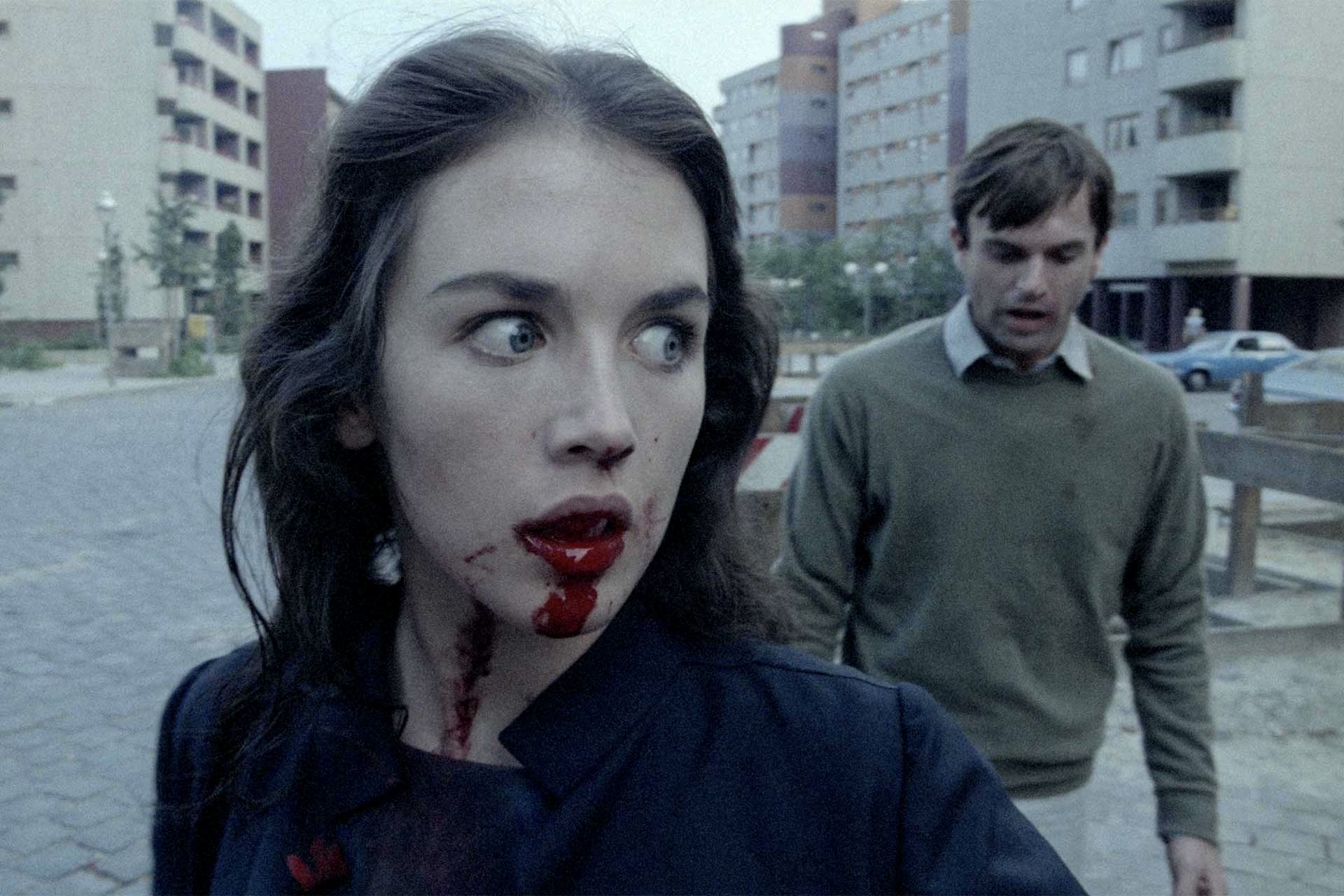
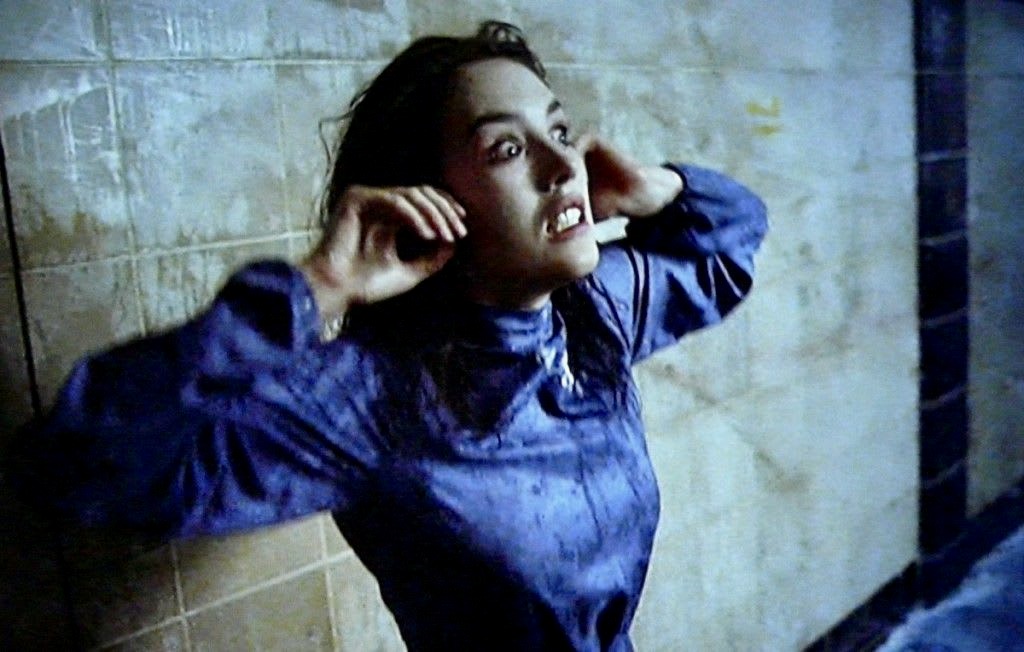
On the positive side, Possessed was well received in Europe when it premiered, especially in France where Adjani won the Best Actress Award at the Cannes Film and at the Cesar Awards and Zulawski was nominated for the Palme d’Or at Cannes. Both Adjani and Neill are spellbinding in their intensity and both have rarely given such raw, emotionally naked performances. Adjani, in particular, goes-for-broke in one shocking scene after another, whether it is slicing her neck with an electric carving knife or having a complete freakout in a subway tunnel. The latter scene, believe it or not, was captured in one take as Anna smashes a bag of groceries against the wall, splattering herself with milk and writhing on the ground in a pool of her own blood and vomit.
When Possessed had its New York City premiere in 1983, critics were equally divided over their assessments – big surprise! – with Harry Haun of the New York Daily News leading the negative reviews and noting that Adjani’s “prize-winning mad-act is impossible to appraise because the film it’s in is outlandishly unhinged as well… Just about any dialogue accompanying this mess would seem ludicrous.”
Variety, on the other hand, was one of the film’s defenders, writing “Possession starts on a hysterical note, stays there and surpasses it as the film progresses….Adjani is game as she plays the deranged, obsessed woman in high gear throughout. Pic’s mass of symbols and unbridled, brilliant directing meld this disparate tale into a film that could get cult following on its many levels of symbolism and exploitation.”
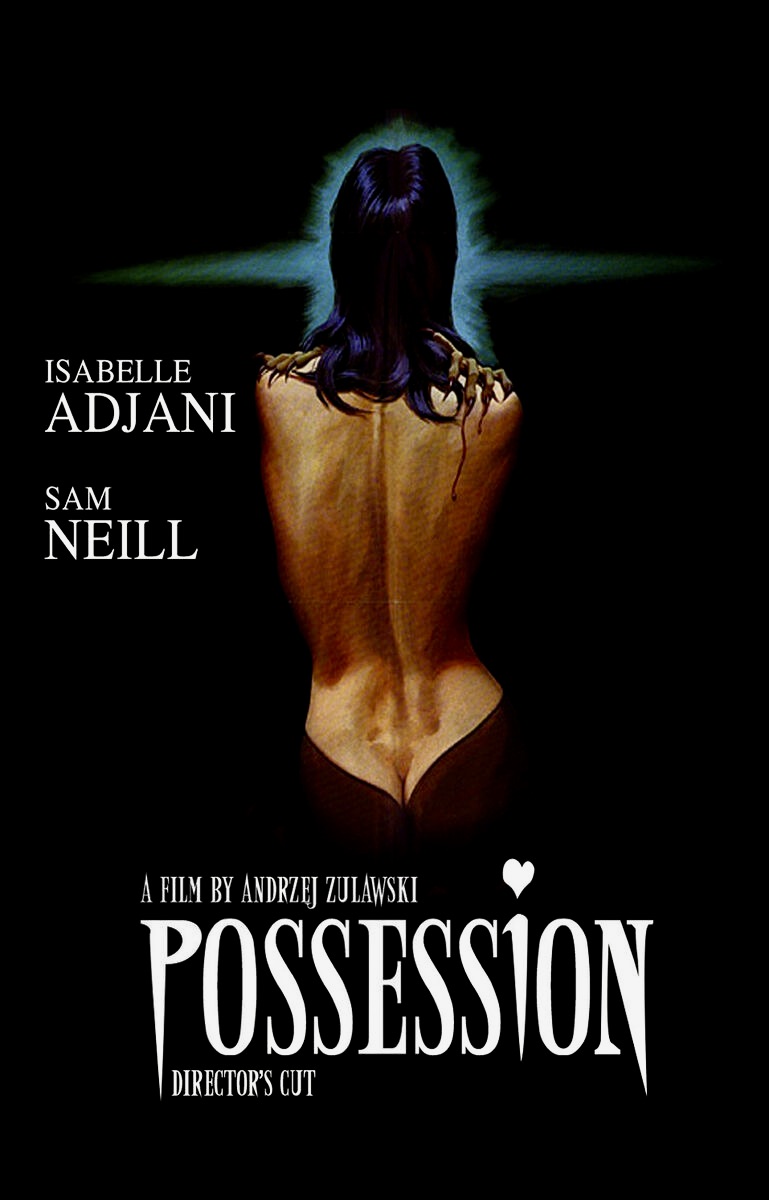
Unfortunately, Possession had its share of distribution problems with the U.K. banning the film outright and classifying it as a “video nasty.” In the U.S., the film was shorn of almost fifty minutes and released theatrically in that cut version in 1983, which made the film look even more chaotic and incomprehensible. This was the version I first saw and I have to admit I found Zulawski’s creation so overwrought and out-of-control that it became almost laughable in its excess. Having seen the original 124-minute cut more than once since then, however, I now admire the film, the direction and performances as a valid artistic expression of the emotional and mental angst most people experience in divorce cases. Certainly, there are obvious flaws and unanswered questions. For example, Margit Carstensen’s character is depicted as sympathetic to Anna but later collapses in an elevator, covered in blood from what appear to be stab wounds. Was she attacked by Anna? Were several of her scenes cut out of the final movie? She is barely developed as a character.
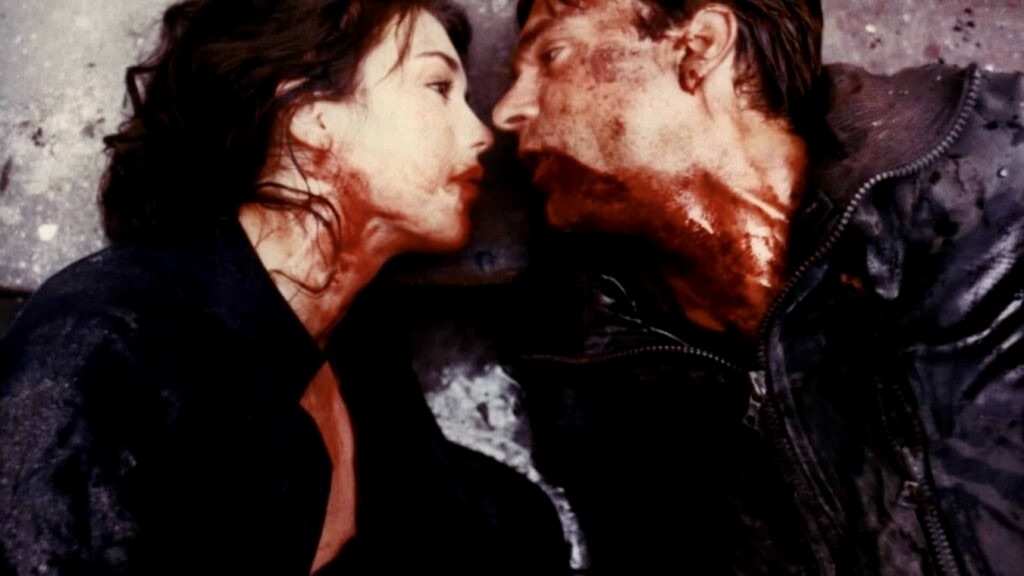
As you can tell from this post, Possession is not for everyone but it yields numerous and fascinating interpretations of its intent. Some feel that Possession ends on a nihilistic note with Mark and Anna dying in a hail of bullets from the police and their son Bob drowning himself in the bathtub as the destruction of the family unit comes full circle. Other viewers and critics have interpreted the finale as a positive sign that Mark and Anna have worked through their rage and anger to emerge reborn as their identical doubles, who are better, enlightened versions of the flawed Anna and Mark. It is also possible that the madness depicted on screen is simply a nightmarish manifestation of the turmoil raging in the minds of the battling couple and not really happening. Regardless of your interpretation, Possession’s reputation continues to grow and attract new fans with Sight and Sound magazine adding the film to their popular Greatest Films of All Time list in 2021.
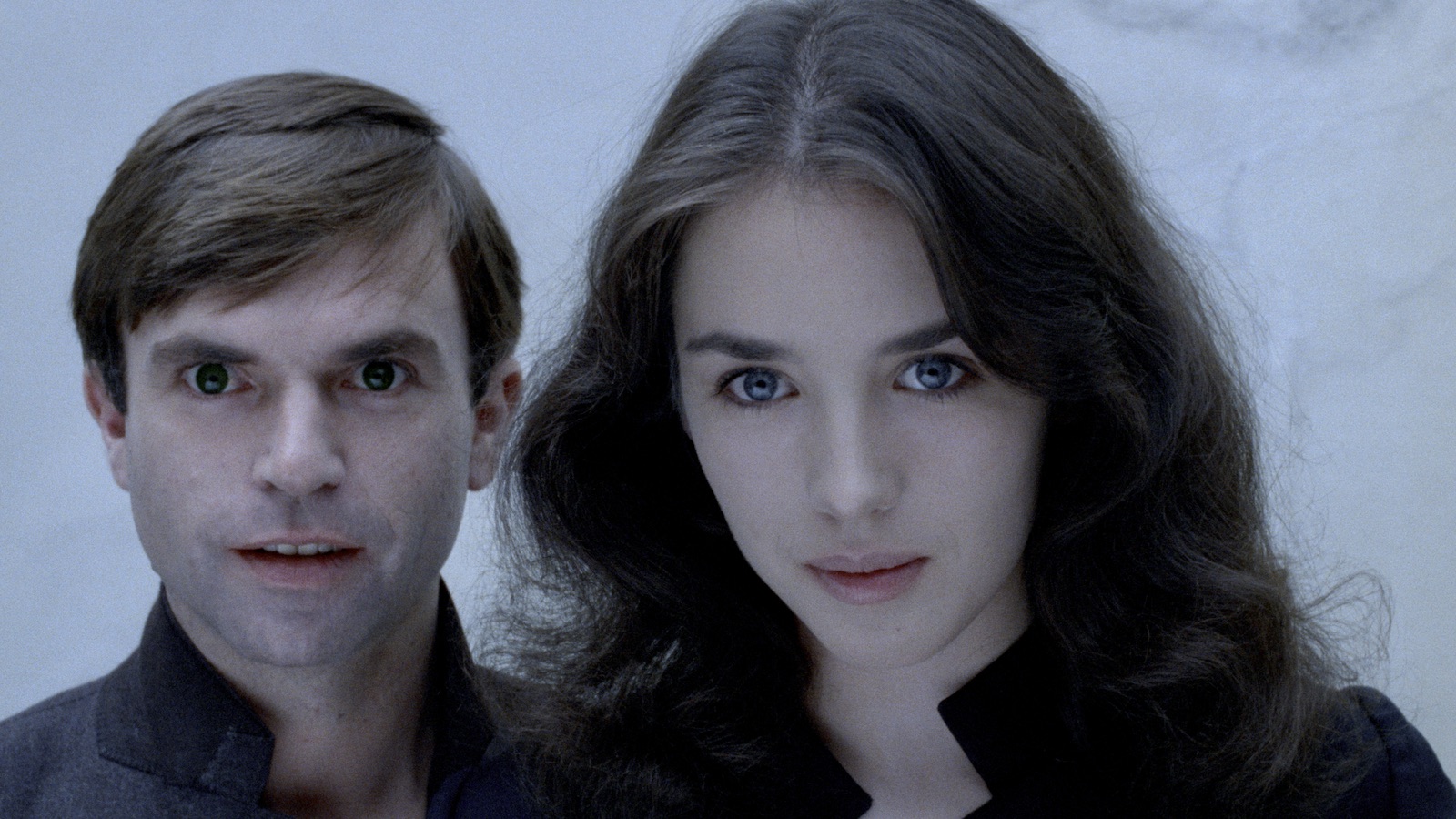
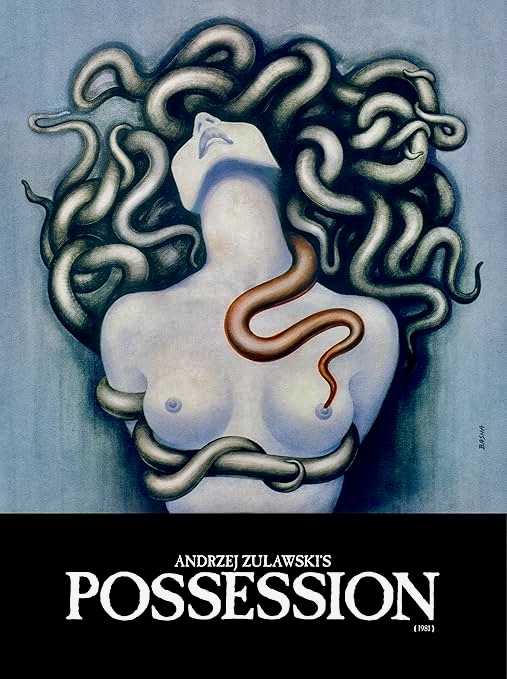
Zulawski’s film has been released on various formats over the years but probably the best way to experience Possession is the region-free limited edition Blu-ray released by Mondo Vision in 2014. The disc includes such supplementary features as a documentary on the making of the film, audio commentary by Andrzej Zulawski and other extras.
Other links of interest:
https://culture.pl/en/artist/andrzej-zulawski
https://variety.com/2016/film/news/andrzej-zulawski-dead-dies-polish-director-1201708470/
https://offscreen.com/view/an-interview-with-andrzej-zulawski-and-daniel-bird
https://crfashionbook.com/isabelle-adjani-interview-cr-fashion-book/
https://www.scoop.co.nz/stories/HL2405/S00051/on-the-psychological-horror-film-possession.htm
 Cinema Sojourns