

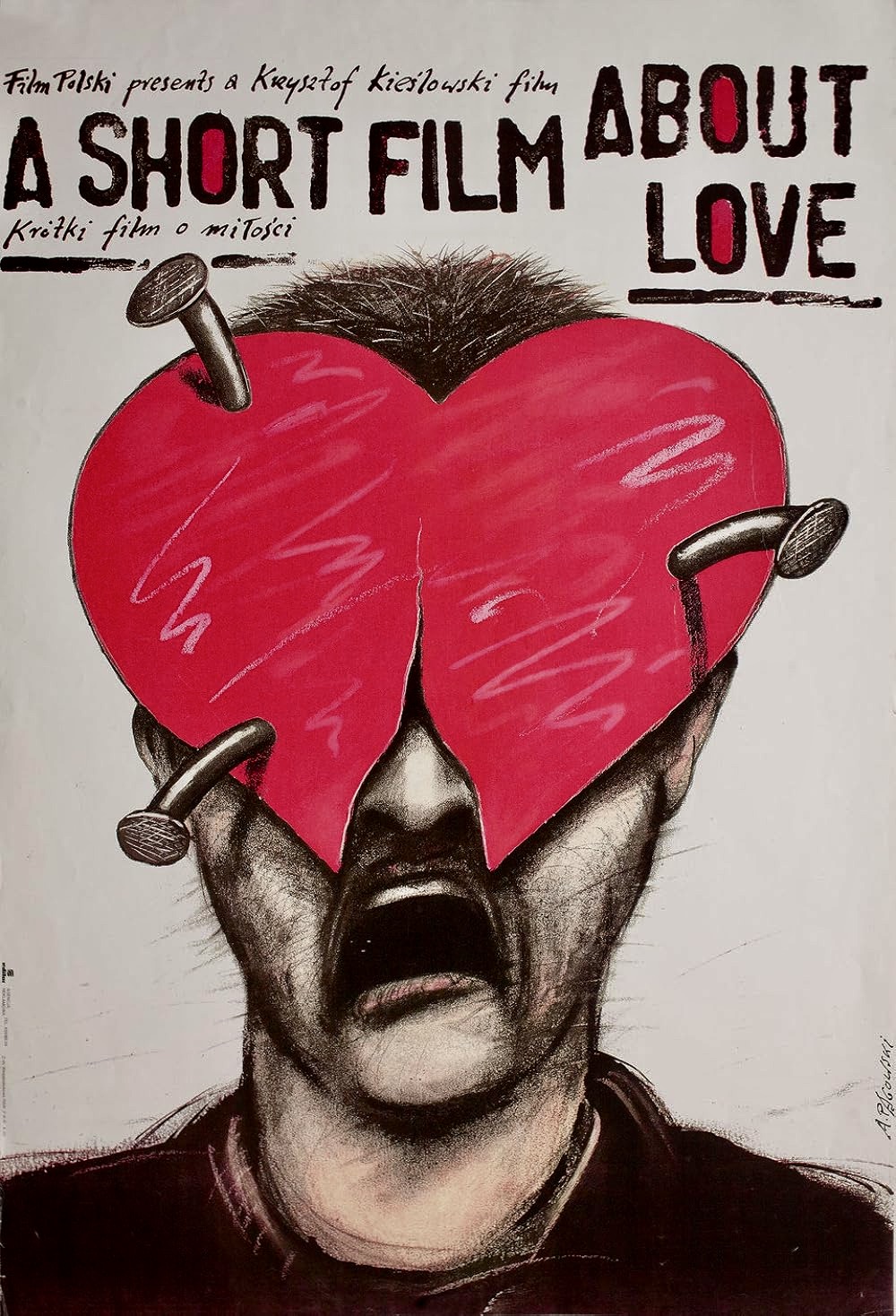
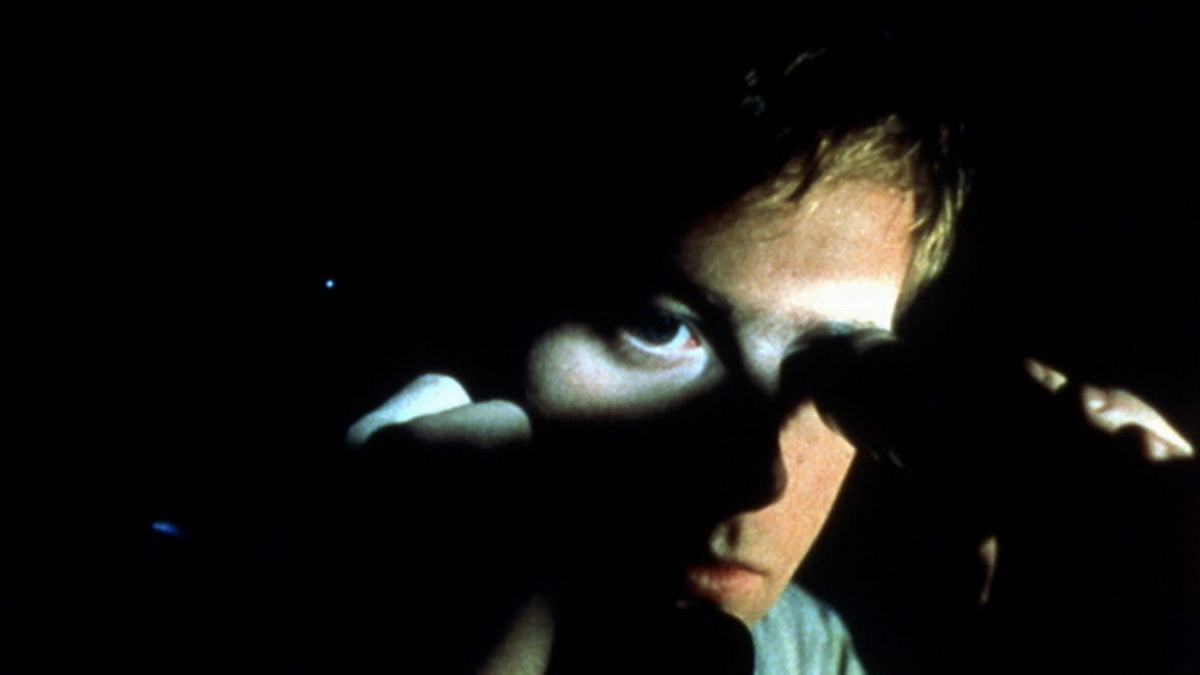
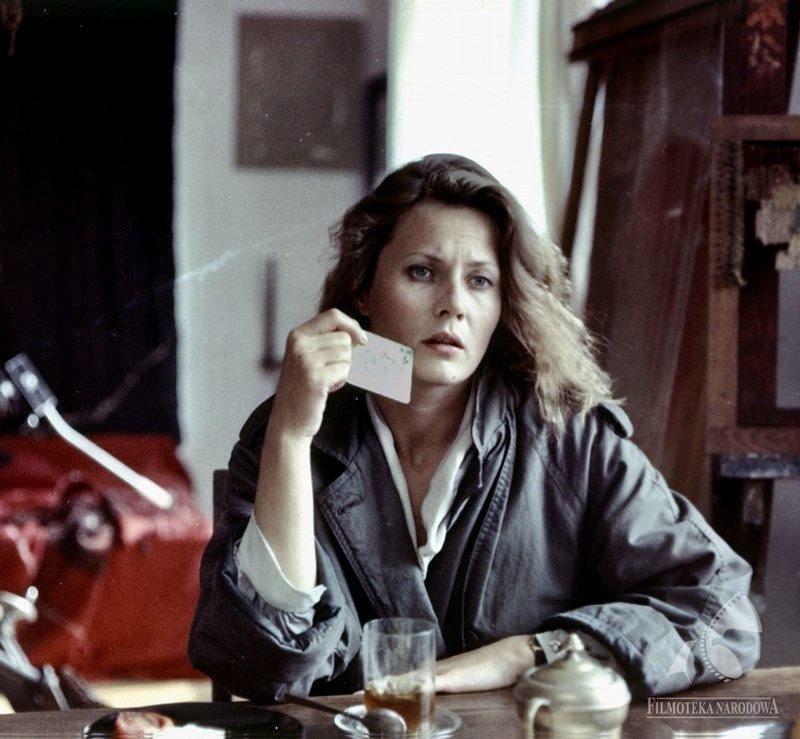
A lonely nineteen-year-old boy watches his neighbor Magda (Grazyna Szapolowska) through binoculars as she moves about her apartment across the courtyard in her underwear. Tomek (Olaf Lubaszenko) has been spying on this alluring older woman for almost a year and he has his routine down to a fine science, which includes setting his alarm clock to go off at the time she comes home from work so he won’t miss a thing. He soon graduates from binoculars to a telescope he stole from a local school. He also calls her up occasionally on the telephone but never has the nerve to say anything. His obsession, however, has come to the point where he requires more direct contact and so he begins to manipulate some face to face encounters with Magda through his work as a postal clerk and a milk delivery man for the apartments. While this basic premise for Polish filmmaker Krzysztof Kieslowski’s Krotki Film o Milosci (English title: A Short Film About Love,1988) sounds like the set-up for a creepy voyeur thriller in the vein of Rear Window (1954), Psycho (1960), or Peeping Tom (1960), the movie that unfolds goes in a completely different direction, depicting two lonely souls – one cynical, the other naïve – who forge a unique connection through unlikely circumstances.
At first Tomek’s attempts to disrupt Magda’s life are annoying and basic harassment. For example, he calls the gas company to report a leak in Magda’s apartment while she is busy entertaining a male caller, knowing that their lovemaking will be interrupted by a service man. He also sends her fake notices from the post office informing her she has received a money order just so he can see her in person. But what soon becomes apparent is that Tomek’s infatuation with Magda has evolved from a sex fantasy into something deeper that even he can’t quite articulate. Is he her guardian angel, her secret protector?
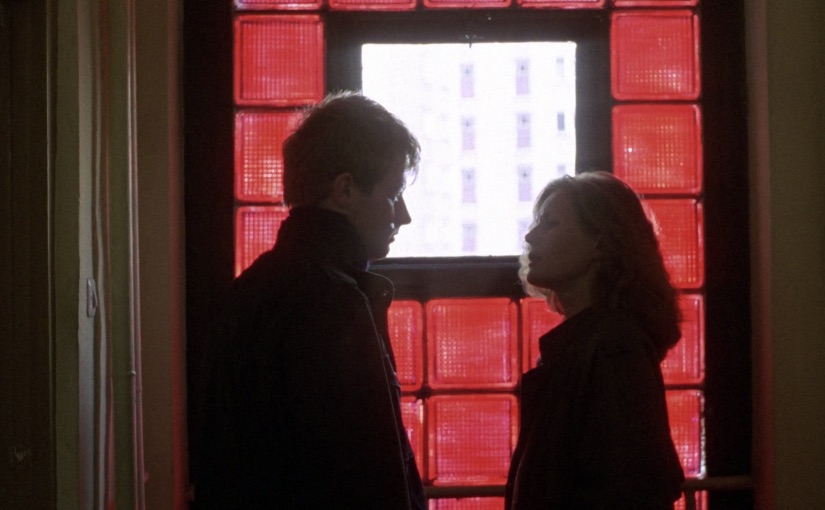
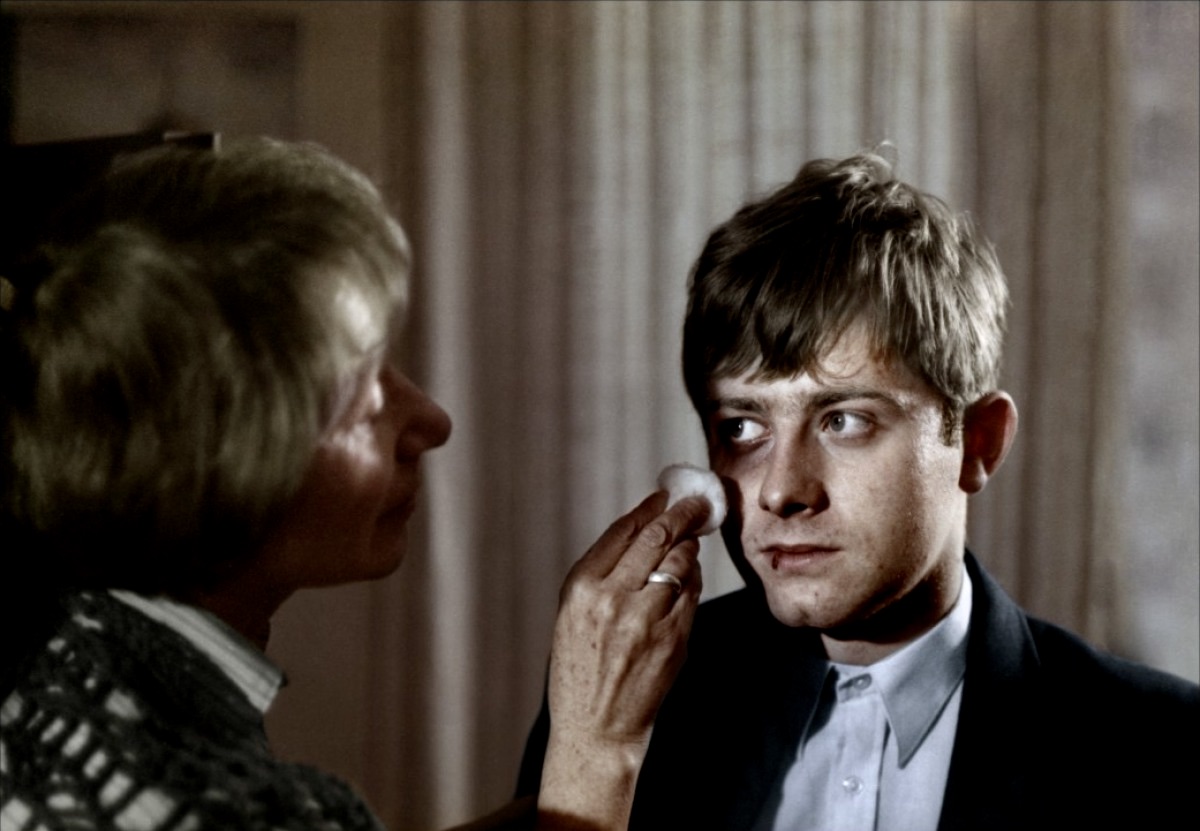
A turning point occurs when Tomek reveals his identity to Magda and she is understandably repulsed and angry. At the same time, she is curious as to why he became fixated on her and begins to behave more provocatively. She moves her bed so Tomek can get a better view and then tells her lover about it while they are having sex (Tomek ends up getting punched in the face after this revelation). When Magda finally asks Tomek, “Why do you play the voyeur?”, he replies, “Because I love you.” “Love doesn’t exist” is her blunt but honest response, which reflects her own personal experience on the subject.
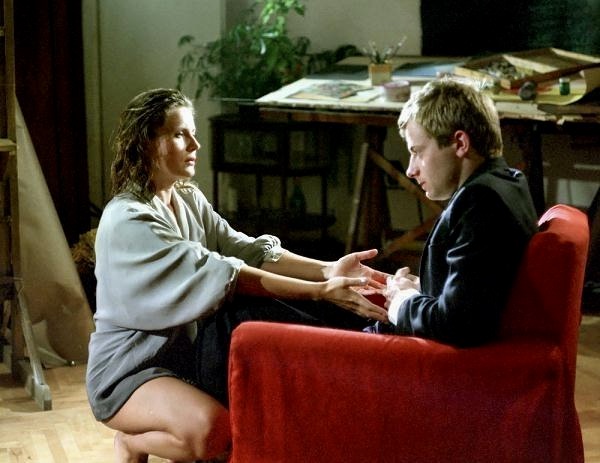
From this moment on, A Short Film About Love becomes Magda’s story as she moves from disillusionment and resignation over her empty life to a growing empathy and concern for this odd, virginal boy who seems to be living in a secret world of his own. At a certain point, Tomek and Madga switch roles as the watcher and the watched. Eventually the film takes a near-tragic turn toward the end but then transforms into something profoundly moving and otherworldly at the fadeout.
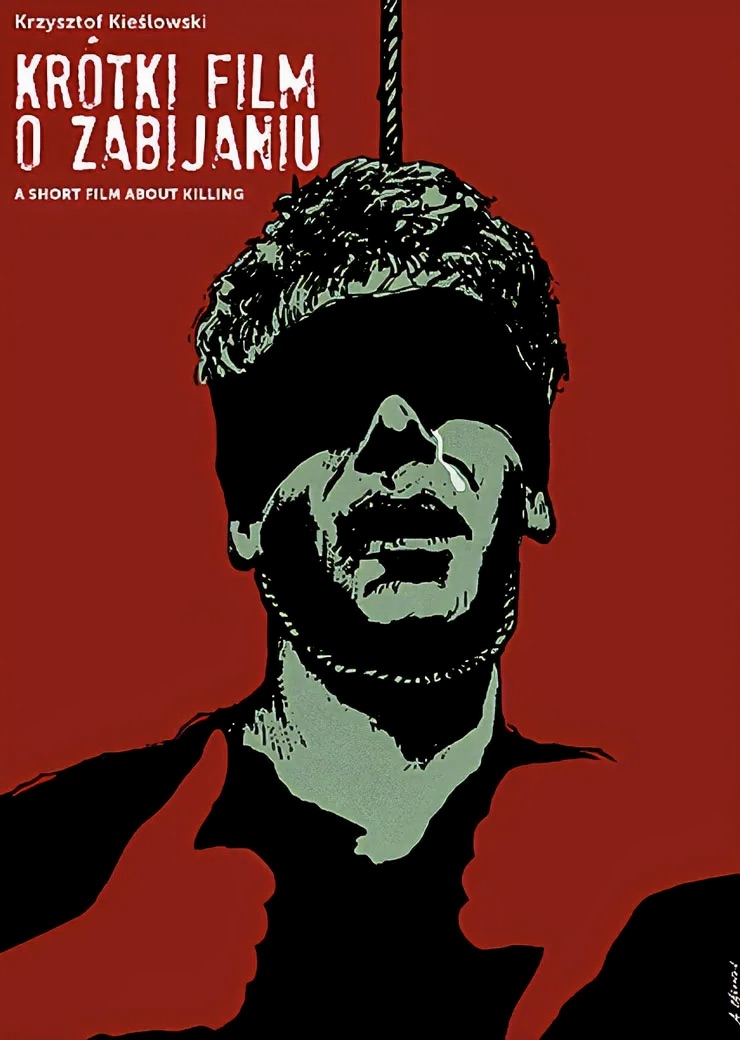
Originally the Tomek-Magda story was conceived for the ten part Polish TV series, The Dekalog (1989-1990), which was set in an apartment complex in Warsaw with each episode depicting a moral tale based on one of the ten commandments. As part of Kieslowski’s deal with the producers, he was expected to expand two of the episodes into feature length films for theatrical release using the same cast, and to hire a different director for each episode of The Dekalog. He chose to turn episode five (“Thou Shalt Not Kill”) and episode six (“Thou Shalt Not Commit Adultery”) into the features, A Short Film About Killing (1988) and A Short Film About Love, but became so possessive over the project that he ended up directing every episode himself. The result was a critically acclaimed and award-winning series that received a special citation from the National Board of Review as Outstanding Cinematic Series.
In the original TV episode that became A Short Film About Love, the ending is decidedly downbeat as Tomek ends his obsession with Magda and she is left feeling confused and dejected. For the film version actress Grazyna Szapolowska (in the role of Magda) convinced Kieslowski to end the story on a more hopeful note and he accepted the challenge, creating a film that is now regarded as one of his finest works along with The Double Life of Veronique (1991) and Three Colors: Red, White, Blue (1993-1994).
A Short Film About Love has an elliptical structure with an opening and closing image of a bandaged arm with another arm reaching toward it and in between the viewer is plunged into an intimate, soul searching character study of two people looking for some kind of connectivity on an almost spiritual level. The film’s emotional intensity is enhanced by Zbigniew Preisner’s sensitive, melancholy score and the artfully framed compositions of cinematographer Witold Adamek.
Kieslowski’s film was an international success (it was submitted as Poland’s official Oscar nominee for Best Foreign Film but didn’t make the final ballot) and garnered plenty of rave reviews. Gary Kamiya of The San Francisco Chronicle wrote, “Kieslowski has crafted a compelling portrait of love, that weed that forces its strange way through life’s hardest cement.” And Eric Hynes of Reverse Shot had this to say about the director’s unique approach to cinema, “Empathy is primary in all of Kieslowski’s work, capable of elevating desire to passion, possessiveness to belonging, voyeurism to love. Whether he’s coaxing it from his characters or from his audience—often from unlikely quarters and always through emotional duress—he pursues empathetic feeling through seeing. Though his episodic masterpiece, The Decalogue, is ostensibly organized around the Ten Commandments, the real through-line of the series is acceptance—not the kind that suffers fools, but the one that sees people for who they are, and manages to dignify anyone and everyone through sustained, respectful attention.”
Equally perceptive is this entry from The Faber Companion to Foreign Films by Ronald Bergan and Robyn Karney: “From its ironic title to its plangent denouement, the movie exemplifies its maker’s approach: to X-ray and then wield his precise scalpel to open up and explore the habits of human existence and the scars of damaged emotions. Szapolowska, well known in her native Poland, and newcomer Lubaszenko both give superb performances.”

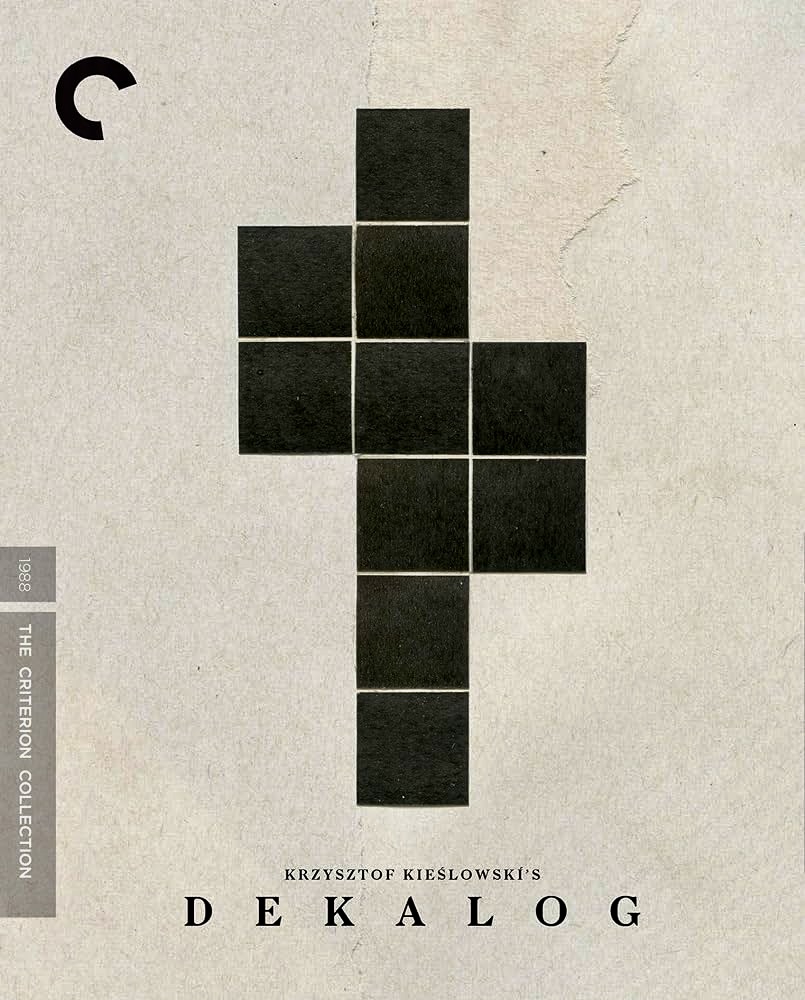
A Short Film About Love has been released in various formats over the years including a DVD release from Kino Lorber with some excellent supplements including an interview with Grazyna Szapolowska. The devoted Kieslowski fan, however, will want to spring for the Criterion Collection Blu-ray of the Polish TV series The Dekalog, which includes the theatrical version of A Short Film About Love and other well-curated extras.
Other links of interest:
https://www.artforum.com/columns/krzysztof-kielowski-202713/
https://reverseshot.org/symposiums/entry/914/a_short_film_about_love
http://www.notcoming.com/reviews/shortfilmlove/
https://culture.pl/en/work/a-short-film-about-love-decalogue-vi-krzysztof-kieslowski
 Cinema Sojourns