

The 1982 Indian film Elippathayam (English title: Rat-Trap) is one of those rare movies where the title has a double meaning – one is literal, the other metaphorical – which the director, Adoor Gopalakrishnan, succeeds in illuminating through a slow, methodical and almost hypnotic visual style that is neither pretentious nor didactic.
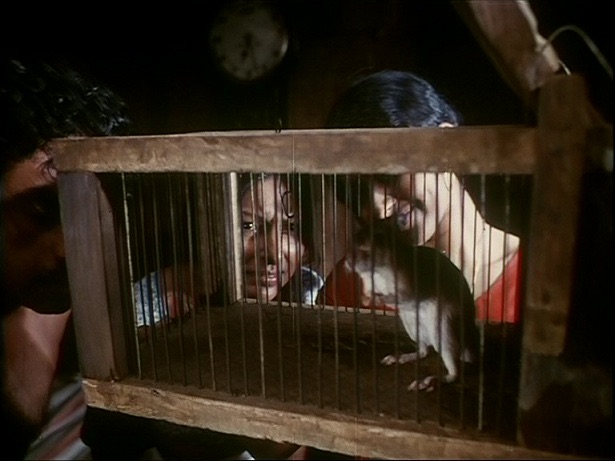
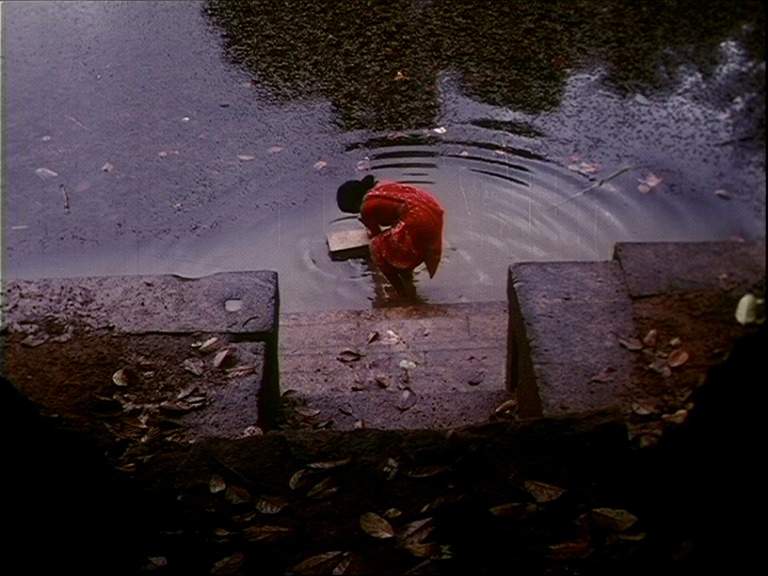
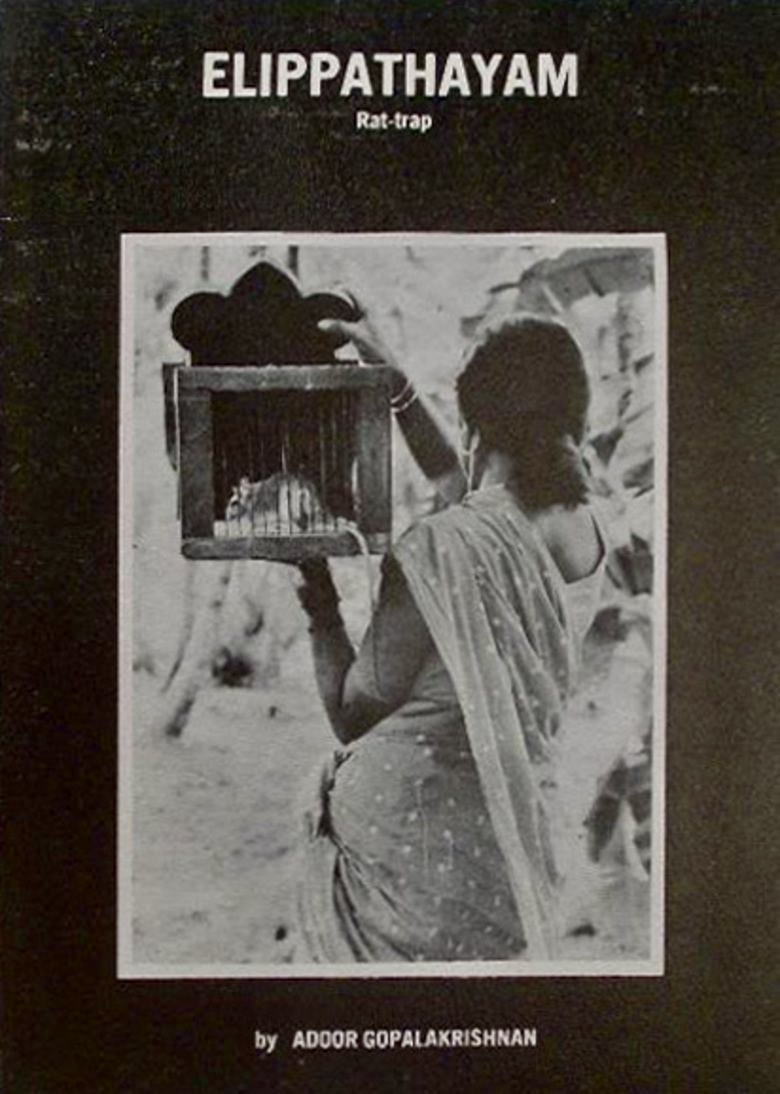
It all begins, appropriately enough, with wealthy landowner Unni (Karamana Janardanan Nair) and his two sisters Rajamma (Sharada) and Stridevi (Jalaja), armed with a flashlight and chasing a rat through their house at night. The younger sister Stridevi finds a discarded rat trap in the attic, repairs it and eventually captures the unwanted critter. She then takes the trap down to a murky pond where she drowns the rodent. But does this deed unleash a string of misfortunes for the family or is it just a coincidence that Unni and the lives of his sisters begin to unravel after this event?
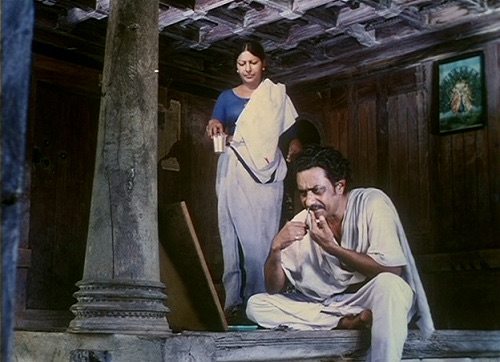
The family dynamic at the center of Rat Trap is just as dysfunctional and repressed as anything in a Tennessee Williams play or some other Southern Gothic novel but screenwriter/director Gopalakrishnan utilizes it as a critique of a dying feudalistic mindset in rural India. Unni is a spoiled, indolent patriarch whose stubborn refusal to change his ways results in his downfall. He spends his days mostly sleeping or dictating orders to his two sisters such as preparing his bath or chasing cows out of the garden. The older sister Rajamma is the more attentive of the two siblings but suffers silently as her brother continues to reject any suitor for her hand in marriage. He is quite content to keep his sisters as servants as long as he is in charge.
Stridevi, on the other hand, is young, carefree and narcissistic with plans of her own. Her rebellious nature will eventually emerge when Unni proves incapable of handling the most basic aspects of managing the family estate. He refuses to confront the thieves that are raiding his coconut grove at night. He is also negligent on paying his creditors nor will he acknowledge or help family members such as Janamma (Rajam K. Nair), a married sister who has come to the estate with her son in hopes of receiving their share of profits from the property’s annual harvest.
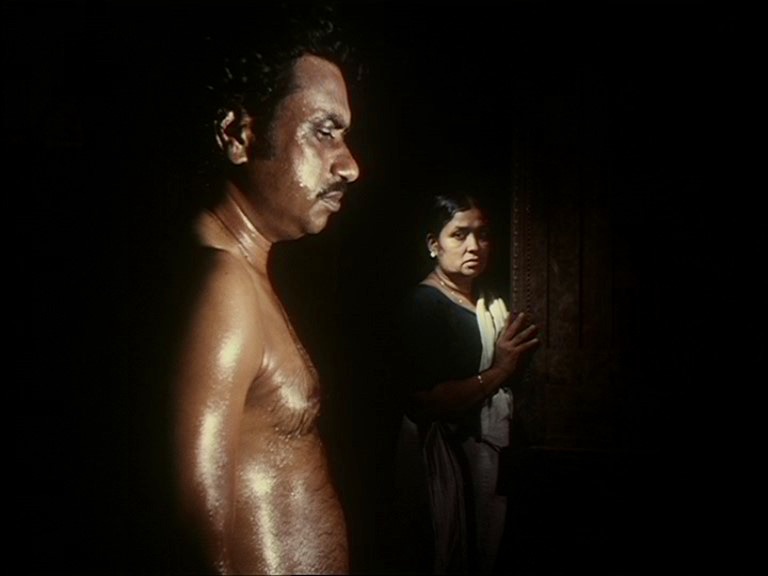
Although Rat Trap unfolds in a leisurely manner, the episodic structure exists to show how every confrontation or problem Unni avoids only adds to his increasingly agitated mental state. And a constant recurrence of rats in the house only emphasizes the fact that Unni is in a trap of his own making which also has drastic consequences for his family members.
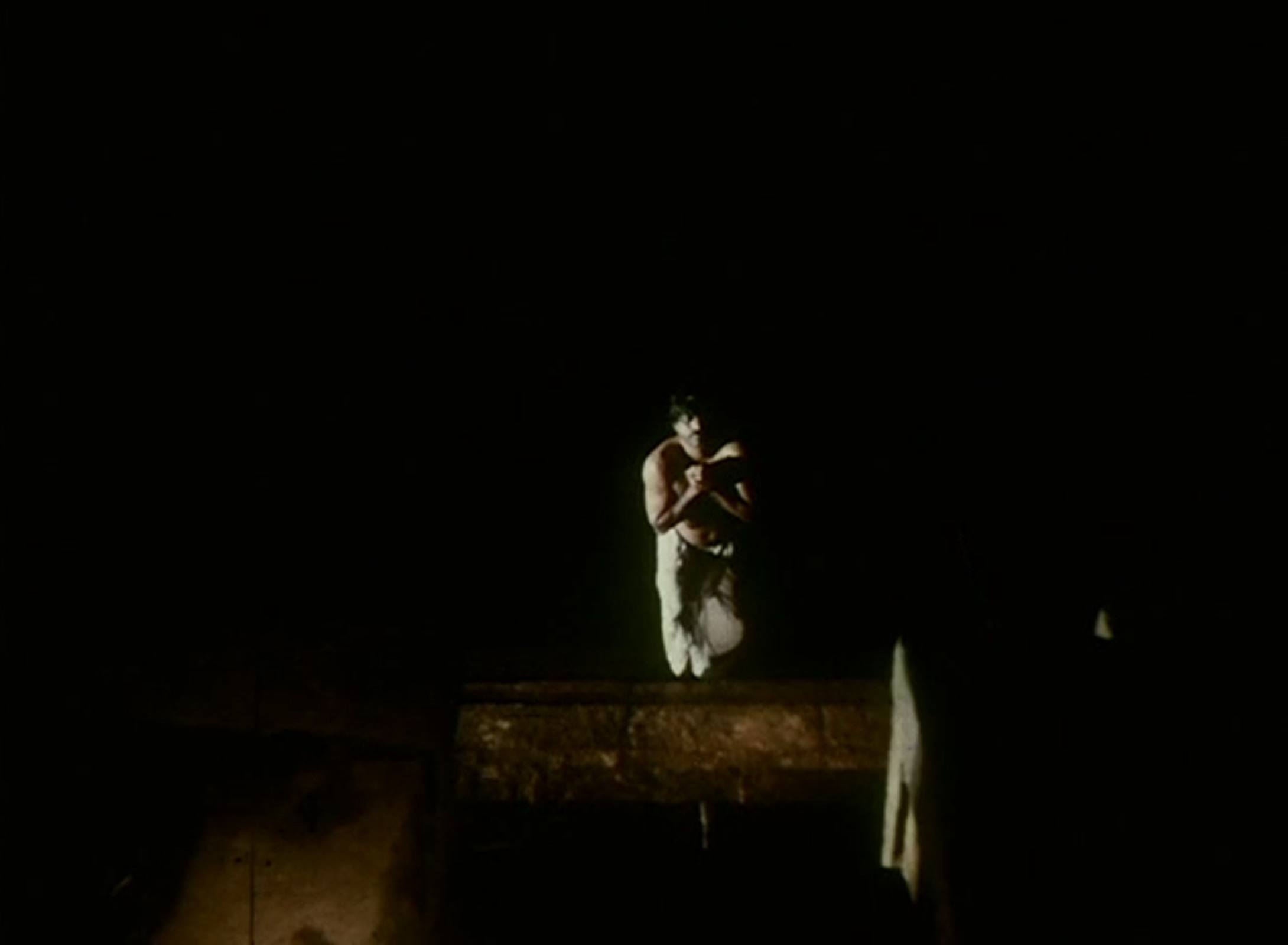
Gopalakrishnan’s psychological drama becomes increasingly bleak in the final act as Sridevi goes missing (did she run off with a secret lover?), Rajamma becomes seriously ill and is carted away for medical treatment and Janamma and her son abandon Unni and threaten legal action against him. All alone in the end, Unni appears to have a complete mental breakdown and becomes a paranoid recluse, refusing to leave the house. Finally a group of local villagers are hired to remove him from his fortress during the night and, in a sequence that mirrors the opening scene of the movie, Unni is chased through his house like a rat by men with flashlights. He is caught and tossed into the pond where rats are drowned (Is it punishment or a wake-up call?). In the ambiguous final shot, Unni appears to be praying for salvation…or is he pleading for an end to his misery?
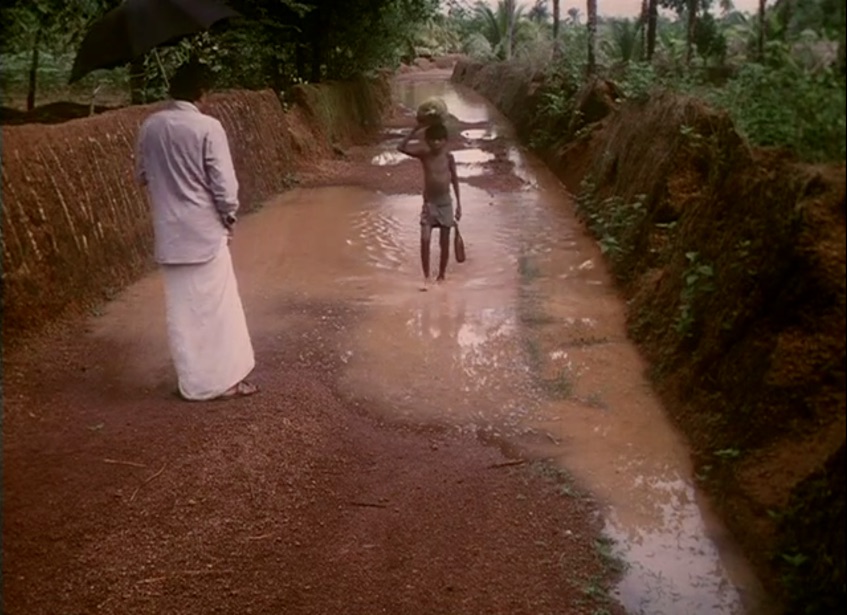
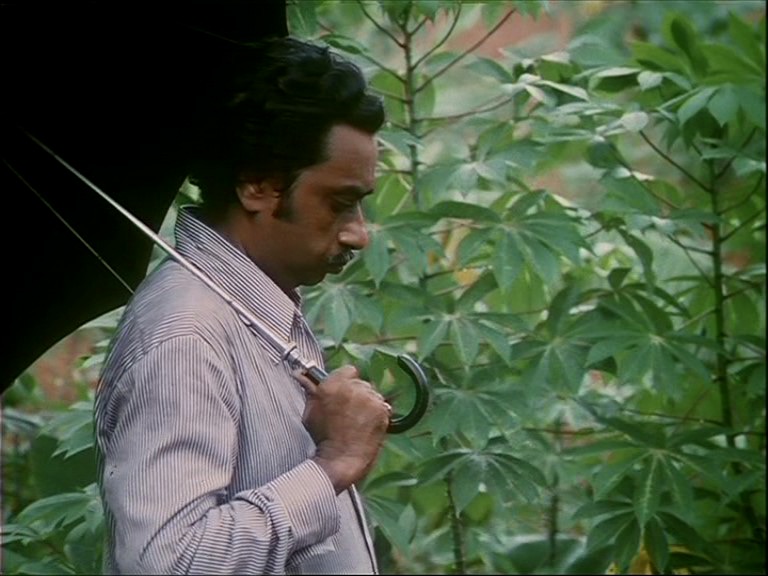
As unlikable and unsympathetic as Unni is, his character remains a fascinating enigma long after Rat Trap has ended. He rarely articulates his thoughts but we constantly witness his nervous responses to the world around him whether it is to avoid wading through puddles on a muddy back road or to flee a flirtatious woman who taunts him sexually. He is a self-absorbed cerebral being whose inability to act is a form of paralysis. It’s a remarkably evocative performance, accomplished mostly through Nair’s body language, facial close-ups and physical gestures.
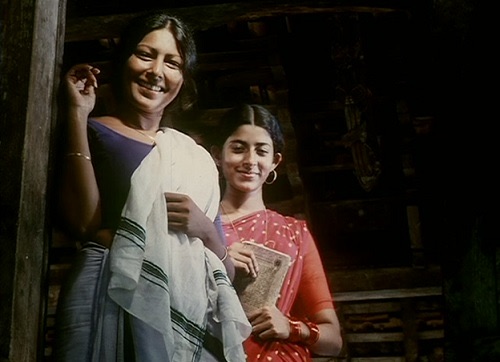
The supporting actors and their performances are equally memorable, especially Sharada as the submissive and tragic Rajamma. The scene where she overhears Unni rejecting another proposal of possible marriage from a potential suitor is particularly painful to witness.

Yet, even if Rat Trap was not notable for its excellent ensemble acting, the film would still be remarkable for its subtle, impressionistic camera movements that lend metaphorical weight to such close-up images as a locked door, the repetitive motions of a hot iron or a rat trapped in a cage. The sound design by P. Devadas is equally effective in conjuring up an ominous, doom-laden mood through the haunting use of natural and animal sounds (rain on the roof, crickets chirping, dogs howling or barking and bird cries).
Rat Trap, which was the third feature film by Adoor Gopalakrishnan, was well received at the Cannes Film Festival and was responsible for launching the director’s international career. A long time admirer of director Satyajit Ray, Gopalakrishnan is considered one of India’s most important directors of his generation even if his style is more experimental and contemplative than his mentor. His filmography includes both documentaries and feature films and he has won countless film awards over the years with Mathilukal (1990), the biographical drama Kathapurushan (1996) and Nizhalkkuthu (2002), reaping some of the greatest acclaim. Still, many film critics consider Rat Trap his masterpiece and it is a good entry point for curious cinephiles. Sight & Sound proclaimed it “a brilliant character study” and Tony Rayns of Time Out wrote “Gopalakrishnan constructs his film like a cinematic rondo, making every composition and every camera movement count.”
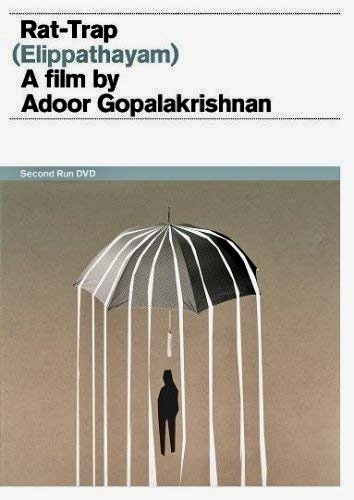
Rat Trap is not currently available on any format in the U.S. but in June 2008 Second Run Films in the U.K. released the film on DVD with some extra features including an interview with the director. You can still find copies of it for sale from online sellers but you would need an all-region blu-ray player to view it. There is also a very good print of the film streaming on Youtube, complete with English subtitles.
Other links of interest:
https://mubi.com/en/notebook/posts/notebook-primer-adoor-gopalakrishnan
https://adoorgopalakrishnan.com/fab_service/biography/
 Cinema Sojourns