

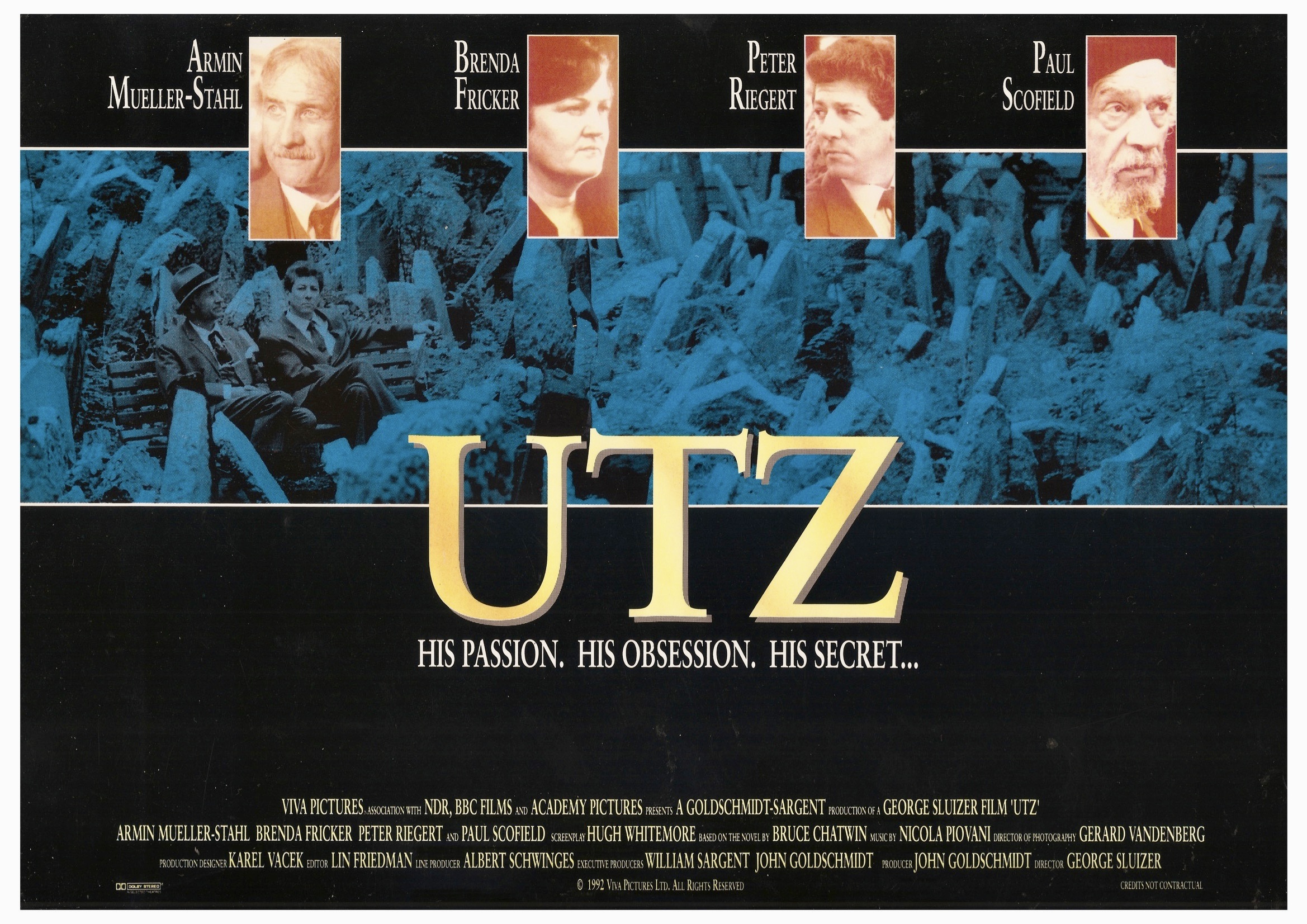
Often considered one of the most acclaimed and intriguing writers of the 20th century, Bruce Chatwin was more than just a novelist. He was also a journalist, anthropologist, and world traveler who is best known for his debut novel In Patagonia (1977), which he wrote after leaving his prestigious position as an art expert at Sotheby’s. Three of his novels have been adapted to the screen, including Cobra Verde (1987), based on his novel The Viceroy of Ouidah and directed by Werner Herzog with Klaus Kinski in the lead, On the Black Hill (1988), which was filmed on location in Wales by Andrew Grieve, and Utz (1992), which Chatwin once described as a “Middle European fairy-story”. Of these three film adaptations, Utz is often considered the most personal and intricately detailed of the lot because it reflects the author’s own interest in antiquities and art objects. The movie also transforms a highly eccentric story into an accessible portrait of an obsessive personality, one who has amassed a priceless collection of pottery, much of it devoted to ceramic figurines from the Meissen factory (Europe’s oldest porcelain manufacturer).
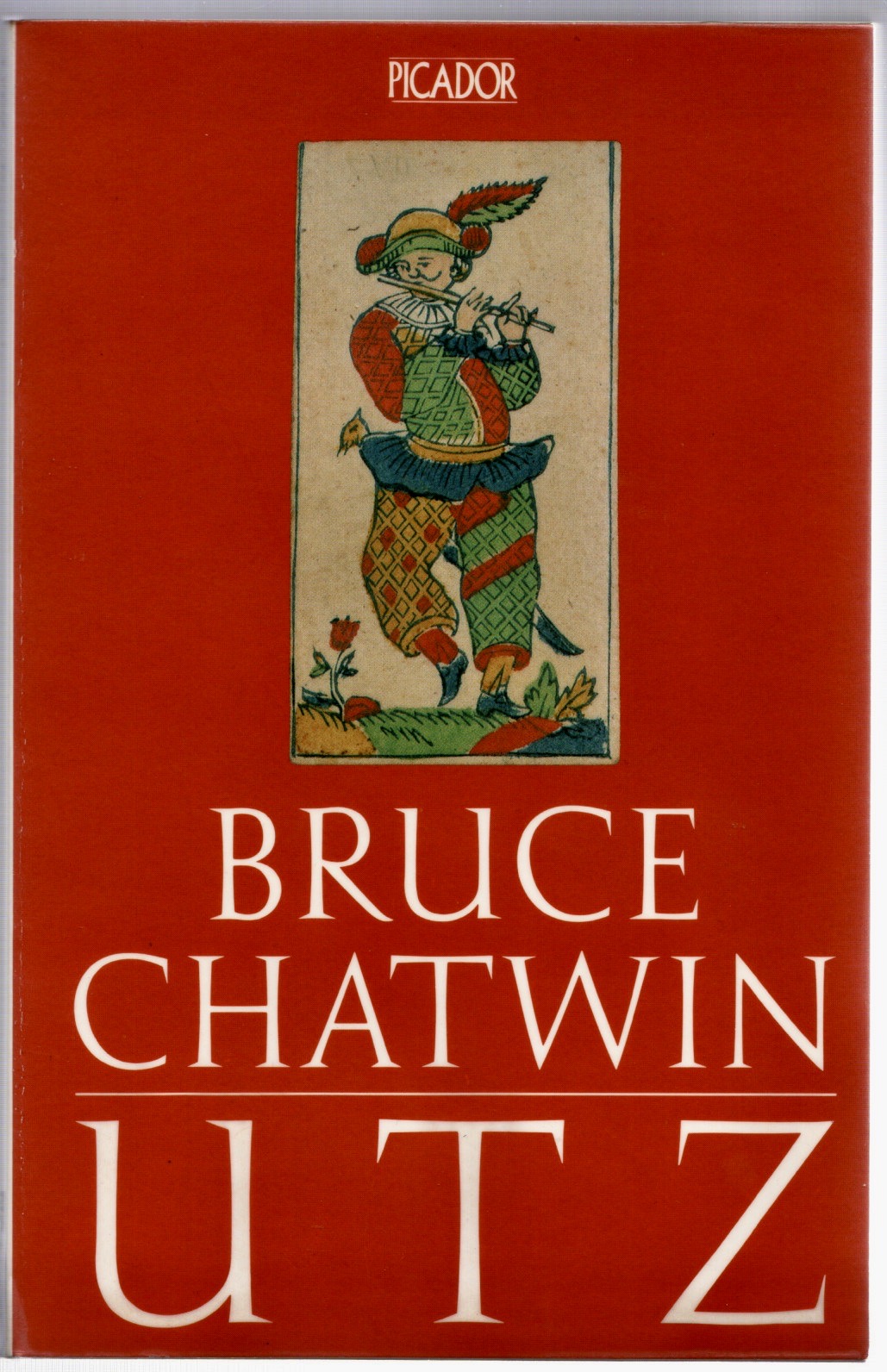
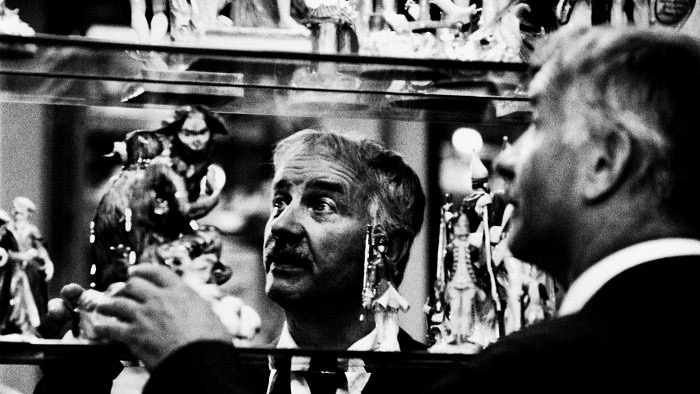
The film, directed by George Sluizer, opens with the Baron Kaspar Joachim von Utz (Armin Mueller-Stahl) at an auction where he is determined to outbid Marius Fisher (Peter Reigert), a New York City art dealer, for a rare porcelain figurine of a monkey musician, the last one needed to make his Meissen collection complete. Kaspar succeeds in his quest but the encounter with Fisher leads to a friendship over the years which is depicted in a series of flashbacks.

The other important people in Kaspar’s life are Marta (Brenda Flicker), his housekeeper, and Dr. Orlik (Paul Scofield), his closest friend and a fellow collector who is obsessed with gathering and studying examples of the ordinary house fly (“The fly I love because the fly is an anarchist,” he proclaims at one point). The trio reside in the city of Prague but life under the communist regime of Czechoslovakia is a constant threat to Kaspar’s life style. For one thing, being a wealthy Jewish man among party members is a liability and his expensive hobby is seen as decadent and self-serving. In fact, the only way he can continue to expand his collection is to smuggle each new porcelain piece he buys into the country to avoid confiscation by the authorities. Adding to the paranoid environment is the fact that Kaspar’s apartment is bugged with secret microphones so party members can eavesdrop on his conversations in case he is engaging in some kind of political subversion.
All of this would seem to indicate that Utz is a tense political drama but the Prague setting is mostly utilized as an atmospheric background and for occasional satiric jabs at communist bureaucracy. The overall tone of the film is actually playful in the manner of some far-fetched fable and there is a delicate comic touch to most of the interactions between the characters, especially Kaspar and Fisher, who is continually fascinated by the former’s endless pursuit of ceramics and women, particularly zagtif opera singers.
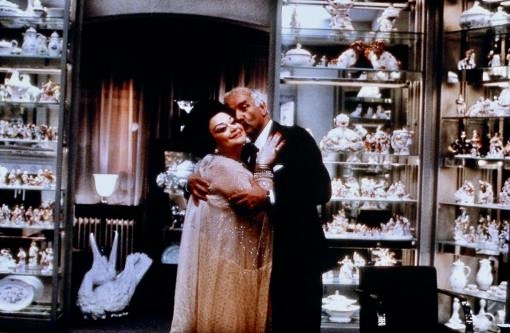
In the course of the narrative, we learn that Marta is actually the secret wife of Kaspar. When she was younger, the housekeeper was a bohemian baroness who was suspected of being a witch by the local villagers. When they converge on her property bent on murder, she barely escapes thanks to Kaspar who stops to give her a ride in his car. How their relationship evolves into a master/servant relationship is one of the secrets answered in the film. The other big mystery – the disappearance of Kaspar’s massive collection of porcelain figures after his death – is also revealed in the surprising finale.
Even though Chatwin wrote the story of Utz as a fiction, it was actually based on a real person, Rudolph Just, whom the author had met briefly in 1967. Just was a scholar and expert on artifacts of the Roman Empire during its heyday. He also created an astonishing private collection of objets d’art which included everything from stoneware, ivory and pewter to Chinese and Japanese porcelain and masterworks in brass and amber. Like the main character of Chatwin’s novel, Just was also viewed with suspicion by party members in Prague but unlike the story’s ending, Just’s collection didn’t vanish – nor was it destroyed. Much of it turned up later after his death, hidden away under beds and in laundry baskets in an apartment in Bratislava.
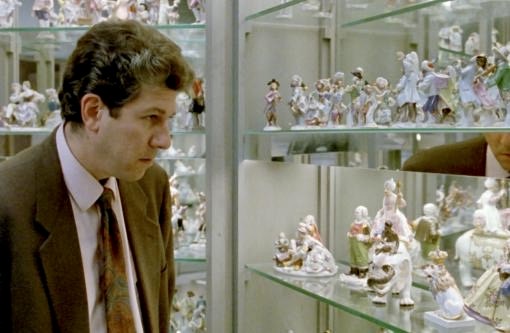
Filmed on location in Prague and the surrounding area, Utz is an international feature funded by production money from Germany, Italy and the U.K. The film is an often beguiling and fascinating character study but it raises a question about the obsessive nature of collecting. Is it beneficial or harmful in the long run? In the case of Kaspar, he appears to have become a slave to his collection, which mirrors his own oppressed political situation in Prague. Still, Kaspar’s inner world and the exquisite beauty of the porcelain figures can be intoxicating and director Sluizer often captures this in visually lyrical sequences like the one where Kaspar plays with his beloved figurines by candlelight as if they were chess board pieces. Other memorable scenes include a flashback sequence of the young Marta going for a swim in the buff with her pet goose and a melancholy episode of Kaspar trying to befriend a mysterious woman at a lavish spa in Switzerland.
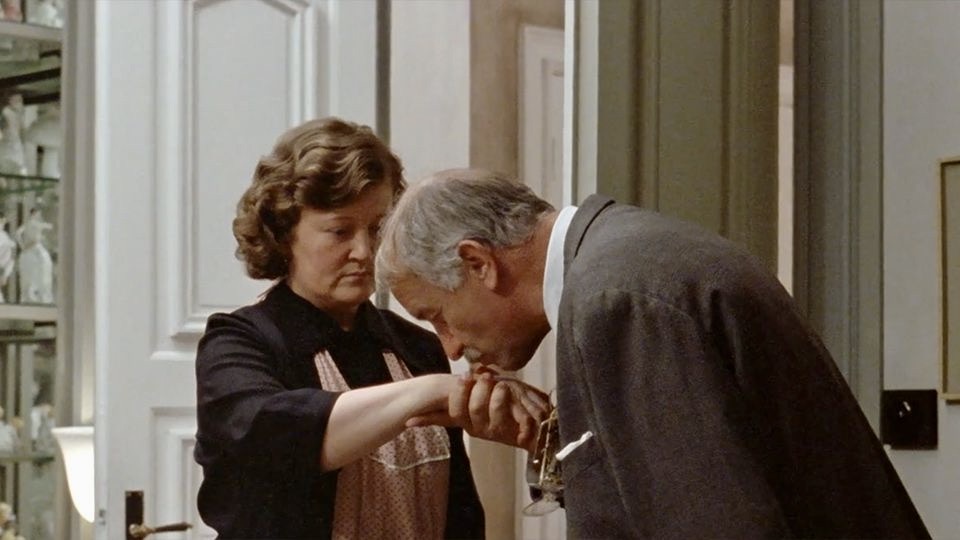
The four central roles in the film are impeccably cast and played to perfection. Mueller-Stahl (Shine, 1996), in the title role, succeeds in making his entitled and self-centered character almost whimsical and childlike despite his demeaning treatment of Marta, who remains faithful to him despite his endless affairs with other women. As the long-suffering wife/servant, Brenda Flicker (My Left Foot, 1989) has minimal dialogue but through body language and facial expressions she conveys frustration, anger and unconditional love for Utz, sometimes simultaneously. Peter Riegert brings his wry sense of humor to the role of the constantly bemused art dealer Marius and Paul Scofield, who is usually associated with serious Oscar-nominated roles like 1966’s A Man for All Seasons, is a comic delight as the eccentric Dr. Orlik.

When Utz opened theatrically in the U.S., it was virtually ignored by moviegoers but most film critics lavished praise on it. The New York Times proclaimed it, “Rapt and appealing, directed with courtly flair, UTZ succeeds in being every bit as peculiar and mischievous as the book om which it is based.” The Atlantic critic called it “a film of unhurried grace and wistful passion. A revelation.” The Boston Globe stated it was “a sophisticated, magical film” and Film Journal described it as ‘elegant, well-acted and rich in old world charm and character. It shimmers with an eloquent sense of time.” Even the movie’s star, Armin Mueller-Stahl later admitted to an interview, “I am the most proud of my role in UTZ , a very beautiful story, wonderfully directed by Dutchman George Sluizer”.
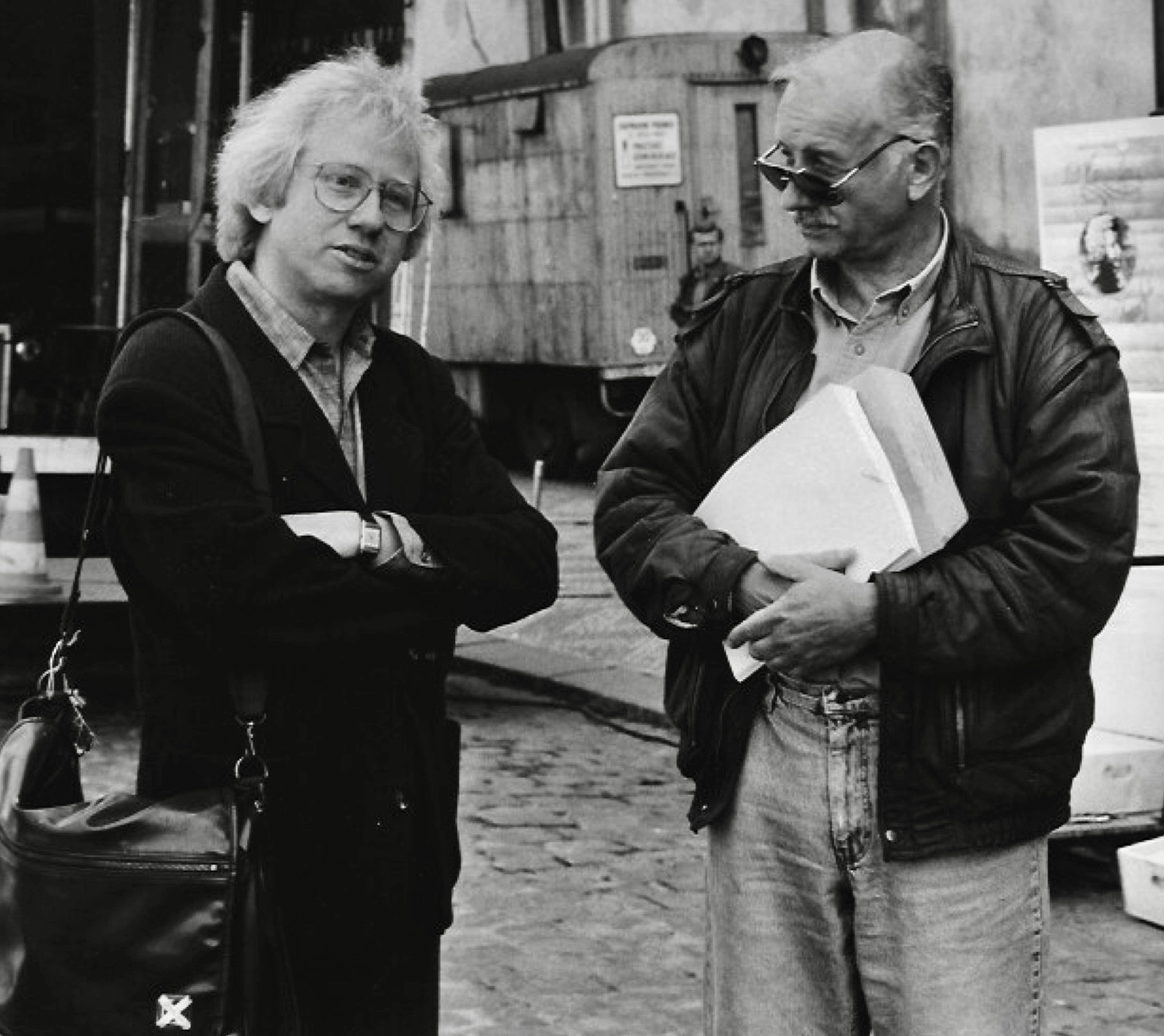
Utz was also nominated for four awards at the Berlin International Film Festival and won three of them including Best Actor (Armin Mueller-Stahl) and George Sluizer took the Prize of the Guild of German Art House Cinemas. Of course, Sluizer is best known to American audiences for Spoorloos (English title: The Vanishing, 1988), the chilling psychodrama which the director remade in 1993 with Jeff Bridges, Kiefer Sutherland and Sandra Bollock but discarded the original horrific finale for a happy ending! Sluizer’s final movie was Dark Blood (2012), a nuclear age thriller starring Judy Davis, Jonathan Pryce and River Phoenix in his last screen appearance.

Utz is not currently available for purchase on any format in the U.S. although it had been released on VHS by First Run Features back in 2007. If you own an all-region Blu-ray player, Bridge Entertainment in the Netherlands released a 14-disc retrospective entitled George Sluizer: Collected Works which includes Utz along with Crimetime (1996), The Vanishing, Twice a Woman (1979) and other works by the director. You can also stream a decent looking print of Utz on the Cave of Forgotten Films website.

Other links of interest:
https://www.umass.edu/defa/people/1079
https://www.theguardian.com/books/2001/dec/09/features.review2
https://www.dailyo.in/lifestyle/utz-by-bruce-chatwin-fatal-attraction-39709
https://www.screendaily.com/news/vanishing-director-george-sluizer-dies/5077789.article
 Cinema Sojourns