
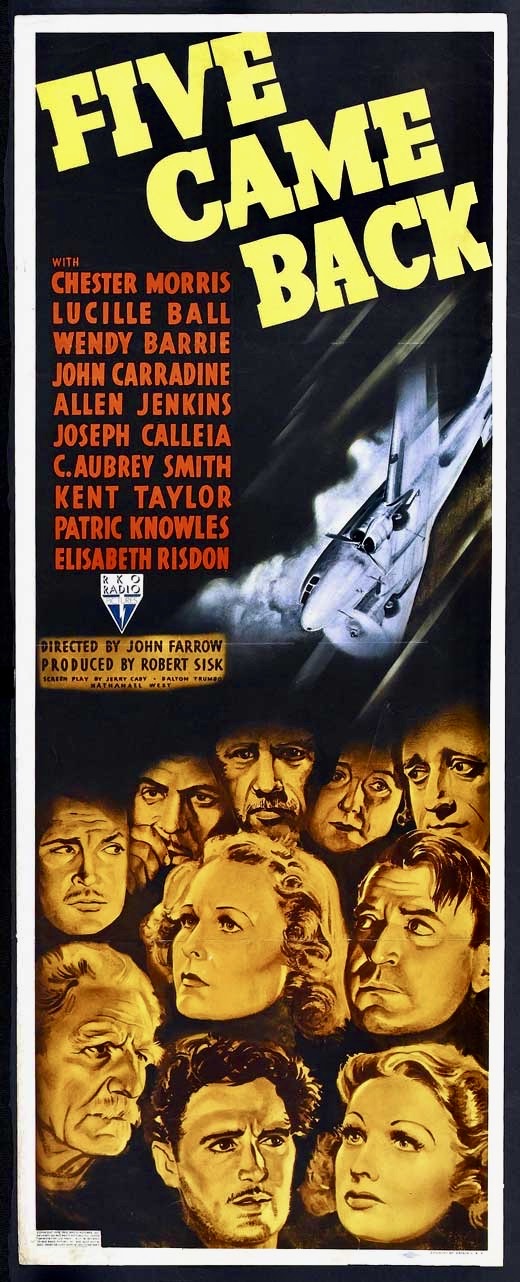
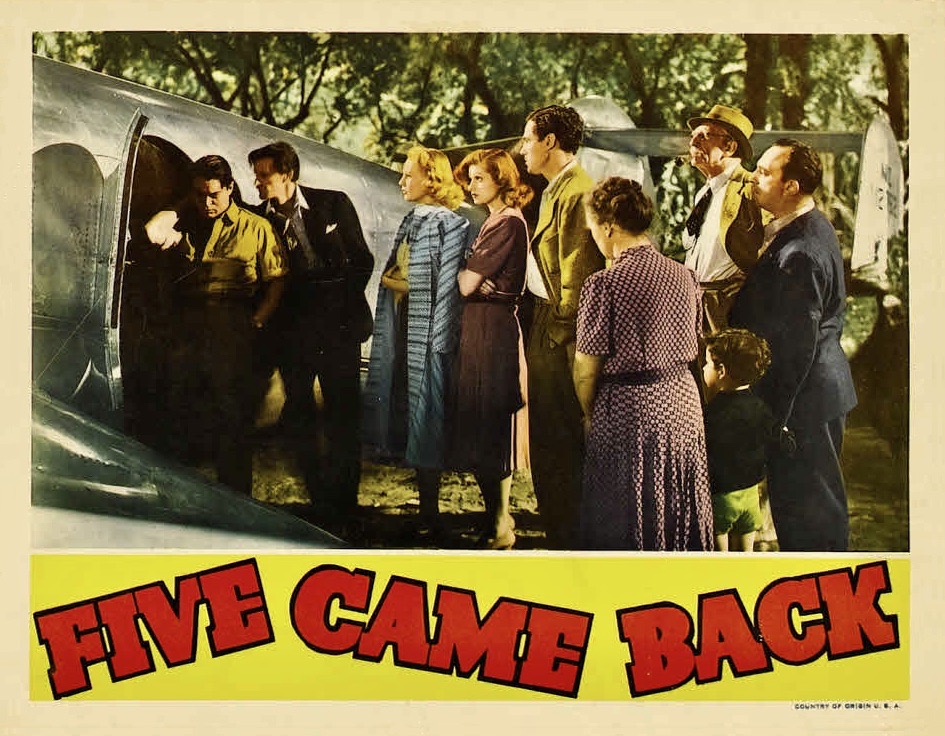
Long before airplane disaster films such as The High and the Mighty (1954) and Airport (1970) with their lavish budgets and all-star casts became the norm, this particular genre was the province of the B-movie. One of the best examples and possibly even the prototype for all future airplane disaster flicks was the 1939 RKO production, Five Came Back. Produced on a shoestring and distributed to theatres as a standard programmer, it turned out to be a surprise hit that quickly amassed an enthusiastic word-of-mouth campaign among moviegoers.
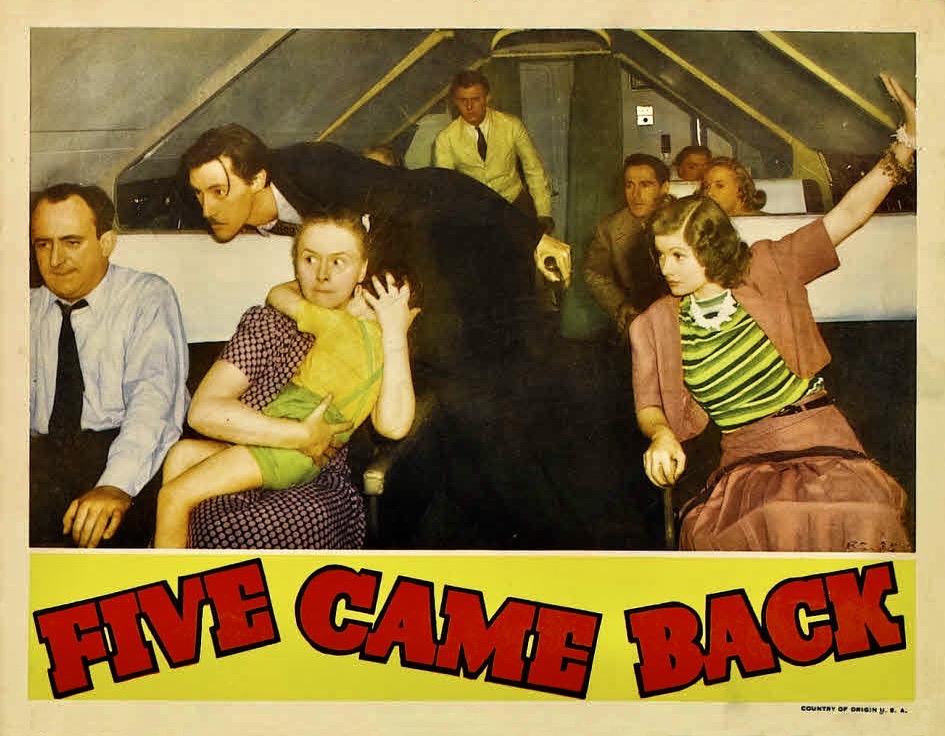
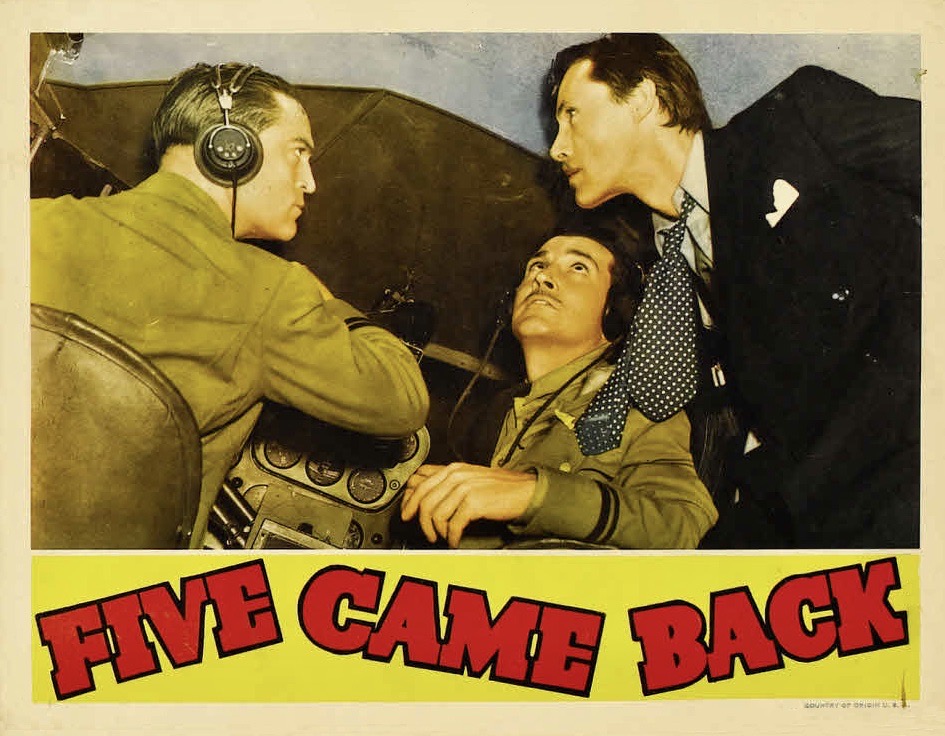
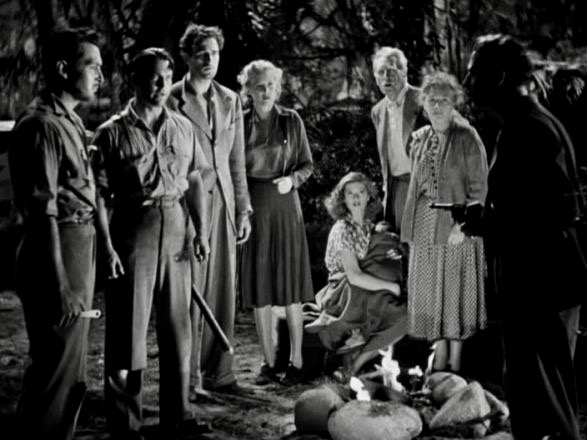
It is easy to see why since it has an irresistible hook for a premise: The Silver Queen, a small clipper plane, en route to Los Angeles from Panama with twelve people aboard strays off course and crashes in a remote part of the South American jungle where rescuers never think to look. It soon becomes apparent that the only hope for survival will be if the two pilots can repair the plane and fly it out of the jungle – a long shot at best and even then, it won’t be able to transport everyone. Four people will have to remain behind for a later rescue party. The survivors, a diverse mixture of characters from different walks of life, have to contend with this inevitable situation and the added stress of knowing that their time is running out. War drums from a nearby tribe of head hunters signal that the natives will soon attack the stranded passengers.
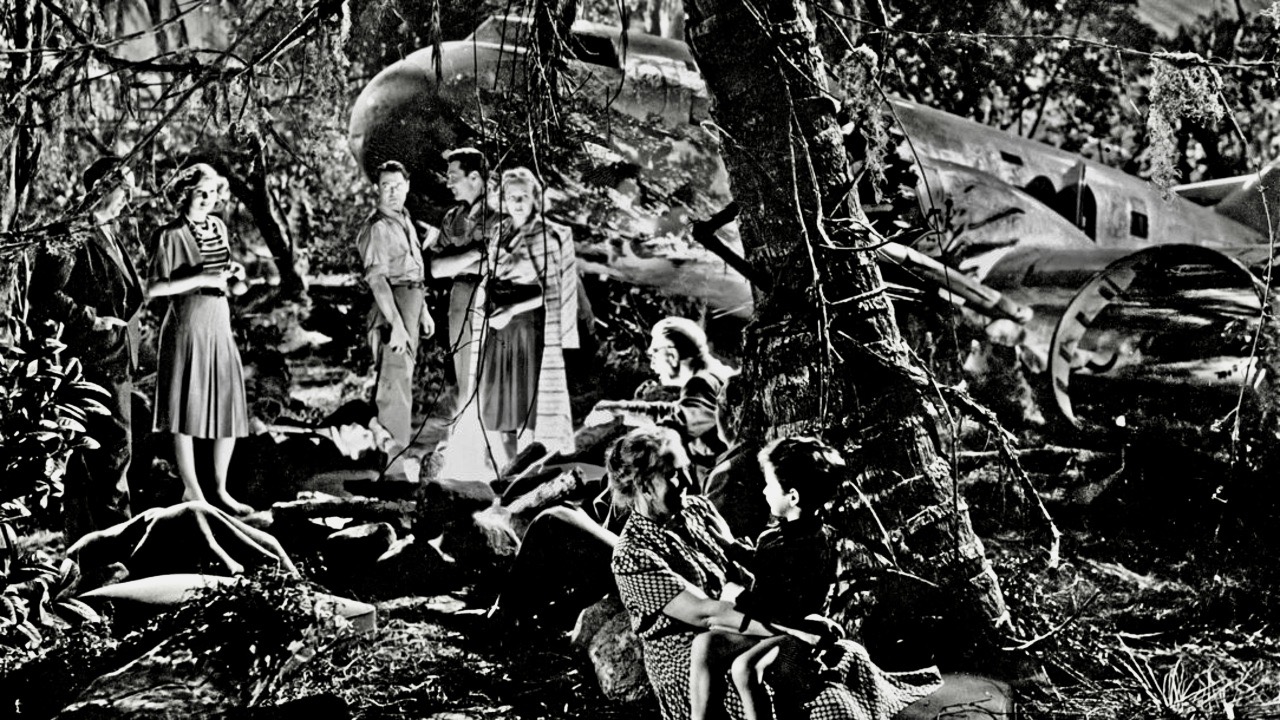
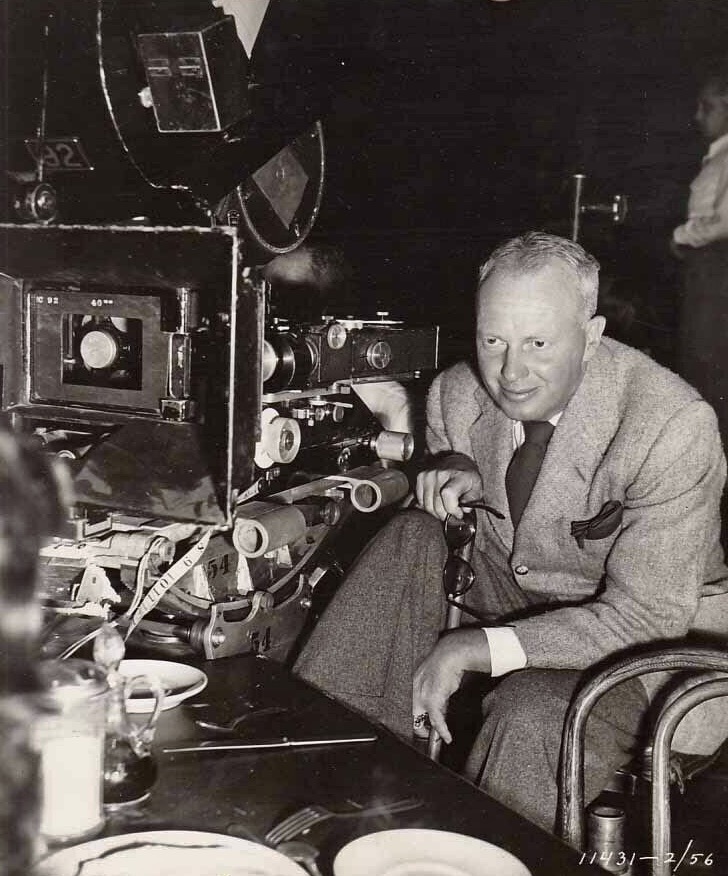
No one expected Five Came Back to be anything more than a clichéd and formulaic B-picture but director John Farrow turned it into something much more engaging and entertaining. He must have liked it because he also directed the 1956 remake, Back from Eternity. For one thing, there is not a wasted scene in the film’s brisk seventy-five minute running time. The soon-to-be-stranded characters are introduced quickly but in vivid little vignettes so that you have an immediate impression of who they are and their backstory.
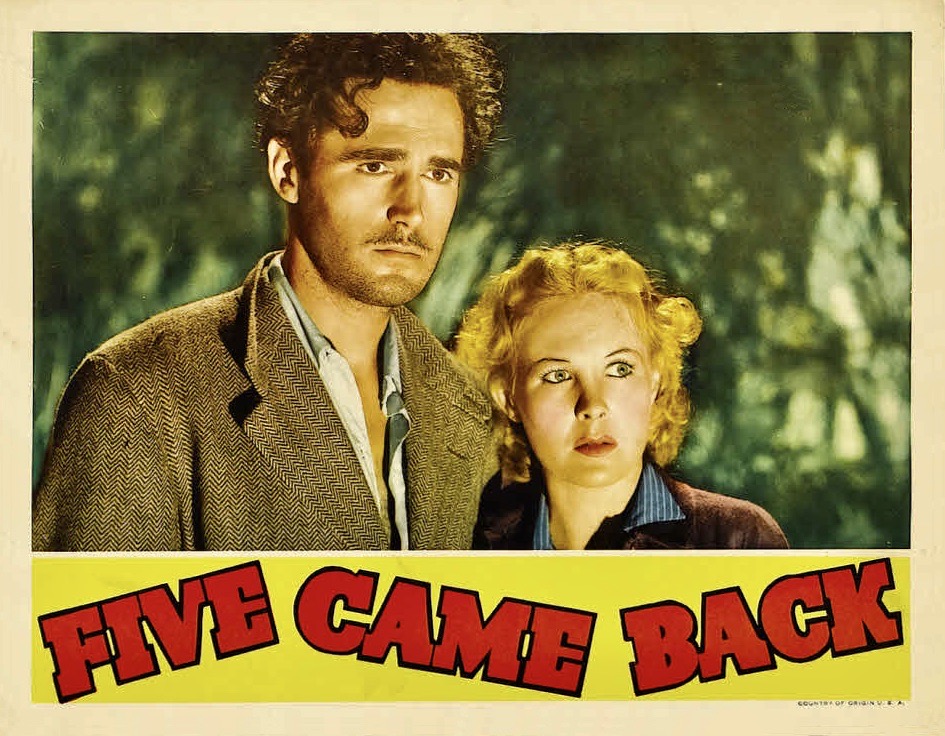
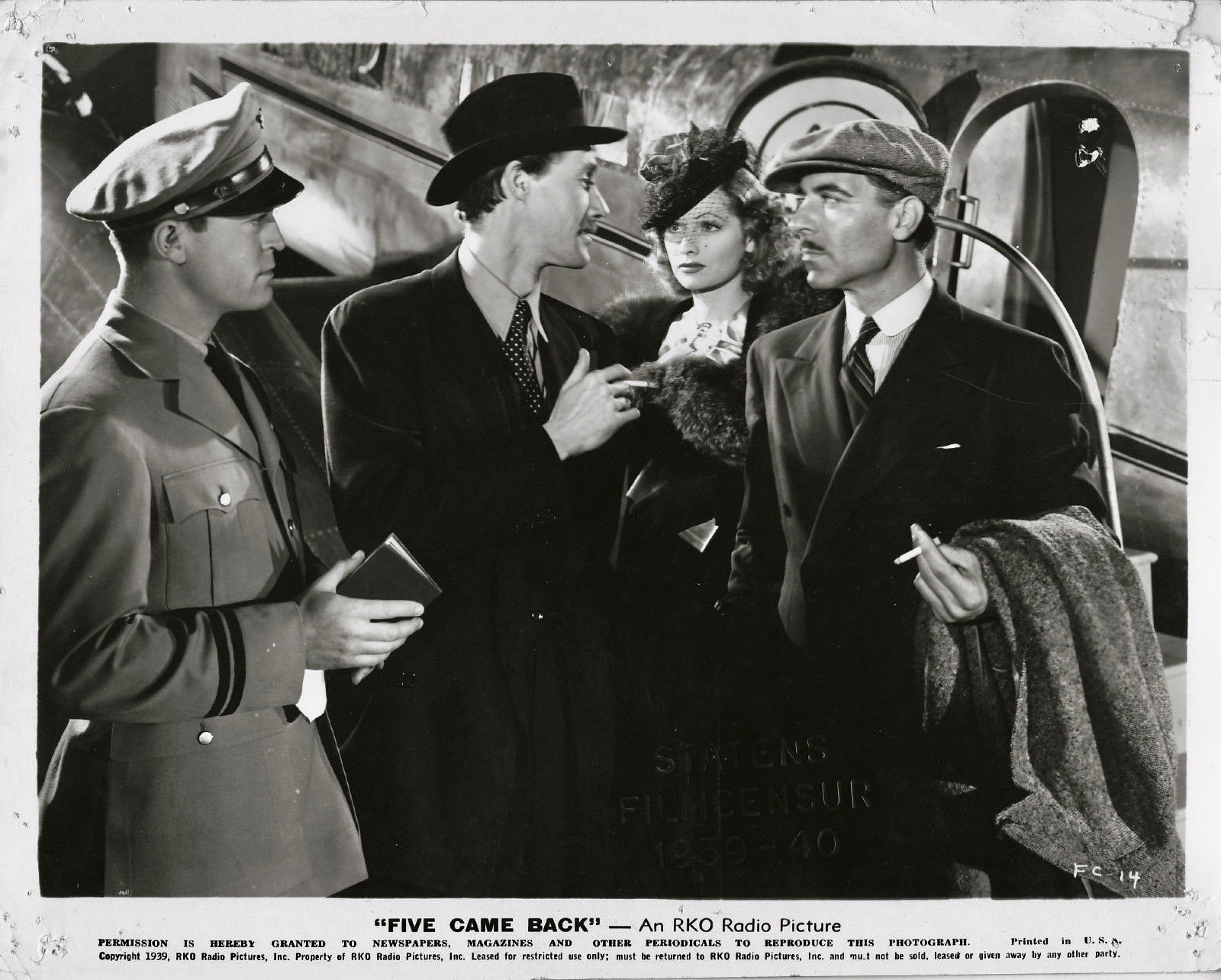
For instance, secretary Alice Melbourne (Wendy Barrie) is eloping with her employer Judson Ellis (Patric Knowles); Crimp (John Carradine), a law-enforcer, is escorting Vasquez (Joseph Calleia), a wanted murderer to justice; Peggy (Lucille Ball), a woman of questionable virtue, is running away from a sordid situation, etc. There is also a little boy on board and an elderly couple and part of the escalating tension hinges on that final moment when a select group of people get to fly to possible safety or remain behind to become souvenirs of the head hunters.
Another virtue of the film is the sharp dialogue written by Jerome Cady, Nathanael West and Dalton Trumbo. West, who is best known as the author of The Day of the Locust, Miss Lonelyhearts and several other acclaimed novellas, penned numerous screenplays for Fox, Republic, RKO and other studios but most of them were undistinguished B-movies. Trumbo, however, became one of Hollywood’s most acclaimed screenwriters and the year after he collaborated on Five Came Back, he won his first Oscar nomination for Best Writing/Screenplay for Kitty Foyle [1940]. Jerome Cady was no slacker either and would eventually earn an Oscar nomination for Best Writing/Original Screenplay for 1944’s Wing and a Prayer.
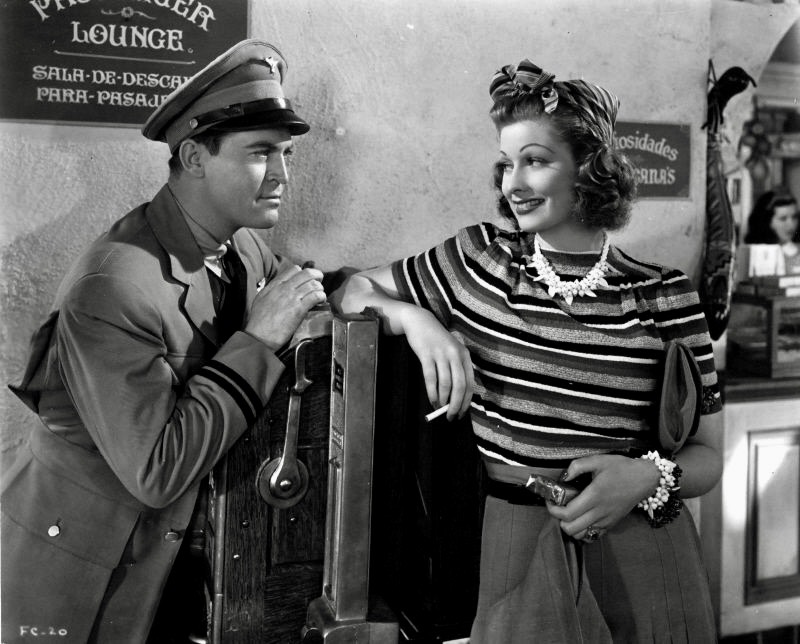
Still, it’s hard to know who contributed what to the script and dialogue. Regardless of that, the film crackles with a street-smart banter and sense of humor that harkens back to the Warner Bros. urban melodramas of the thirties. A case in point is the scene where Peggy, Ball’s character, and Bill (Chester Morris), one of the pilots, have their first conversation as Bill plays a slot machine in a Panama airport lounge.
Peggy: “That’s one racket you can’t win at.”
Bill: “How do you know?”
Peggy: “I used to know the man who makes them.”
Bill: “You should know how to beat them.”
Peggy: “I do. Don’t play ’em.”
For some of the cast members such as Wendy Barrie, Chester Morris, Joseph Calleia and C. Aubrey Smith, Five Came Back was made well past their career peaks but for others such as director John Farrow, Lucille Ball and John Carradine, it was merely a stepping stone to greater things. Ball, in particular, would emerge triumphant after being miscast and undervalued for years by both RKO and MGM when she became the star of one of the biggest hits in the history of television, I Love Lucy (1951-57). But she was still just a struggling contract player on the set of Five Came Back and the filming was more of an ordeal than pleasurable.
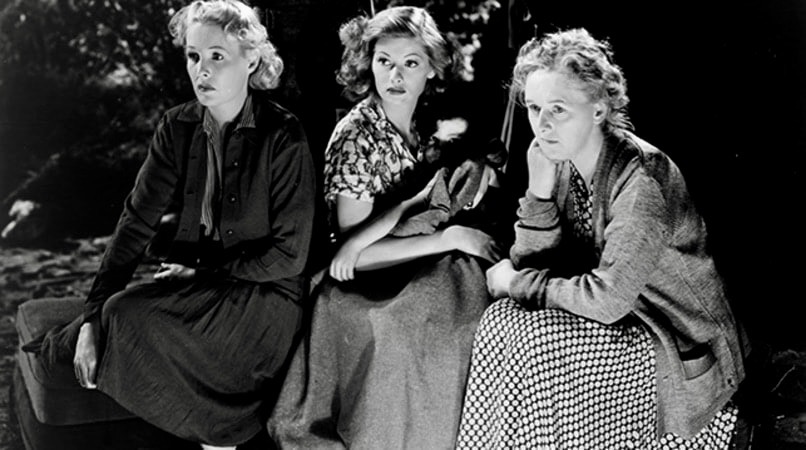
For one thing, Farrow had a reputation for being a tyrannical and often verbally abusive director and, during the shoot, Ball and her director clashed numerous times. According to Charles Higham in Lucy: The Real Life of Lucille Ball, “Rain delayed the production for several days, the actor John Carradine fell ill, and Farrow’s insistence on long rehearsals and lineups proved distracting to everyone. Despite the many irritations of the work – the problem of dealing with Farrow, fending off the crude advances of Chester Morris, and the physical work of the jungle locations – Lucy managed to cope. However, she was fretful and sickly during the weeks of production, and at one stage had an unpleasant shock: She was leaning against the trunk of a jungle tree imported to the sound stage, which had supposedly been carefully checked for any possible insect life, when two large black spiders crawled out of a hole and dropped on her head. She screamed uncontrollably, and had to be assisted off the set. Everybody laughed: she was furious.”
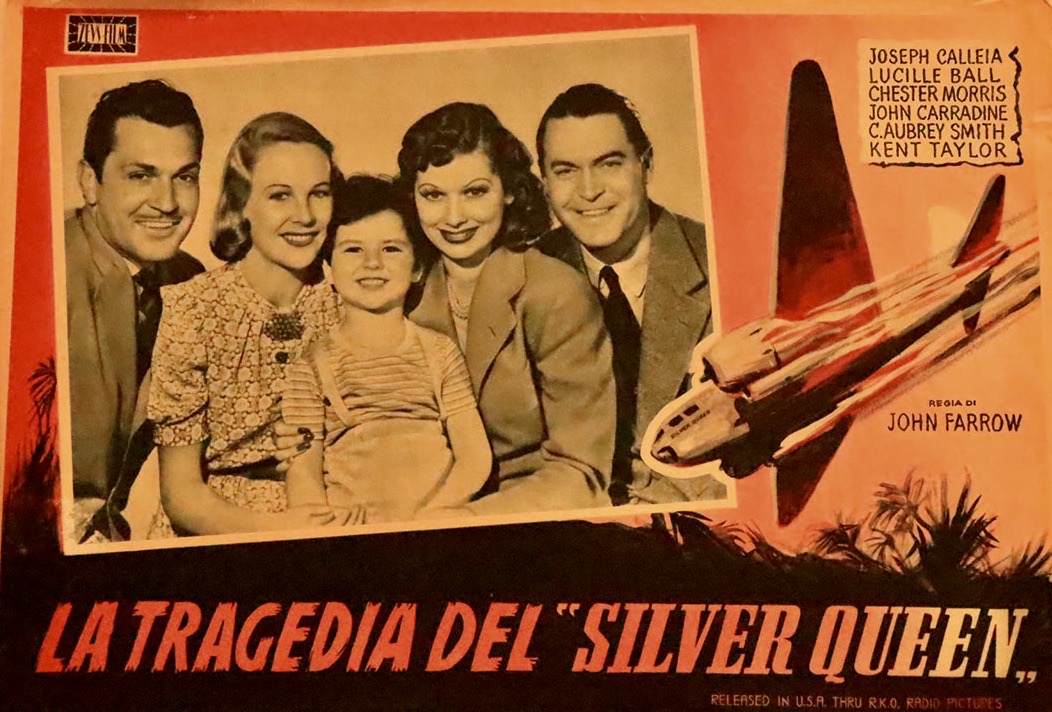
In the end, Ball had the last laugh since she was the one cast member most often singled out in reviews of Five Came Back. The picture was well-received also with the New York Times proclaiming it “a rousing salute to melodrama, suspenseful as a slow-burning fuse, exciting as a pinwheel, spectacularly explosive as an aerial bomb.”
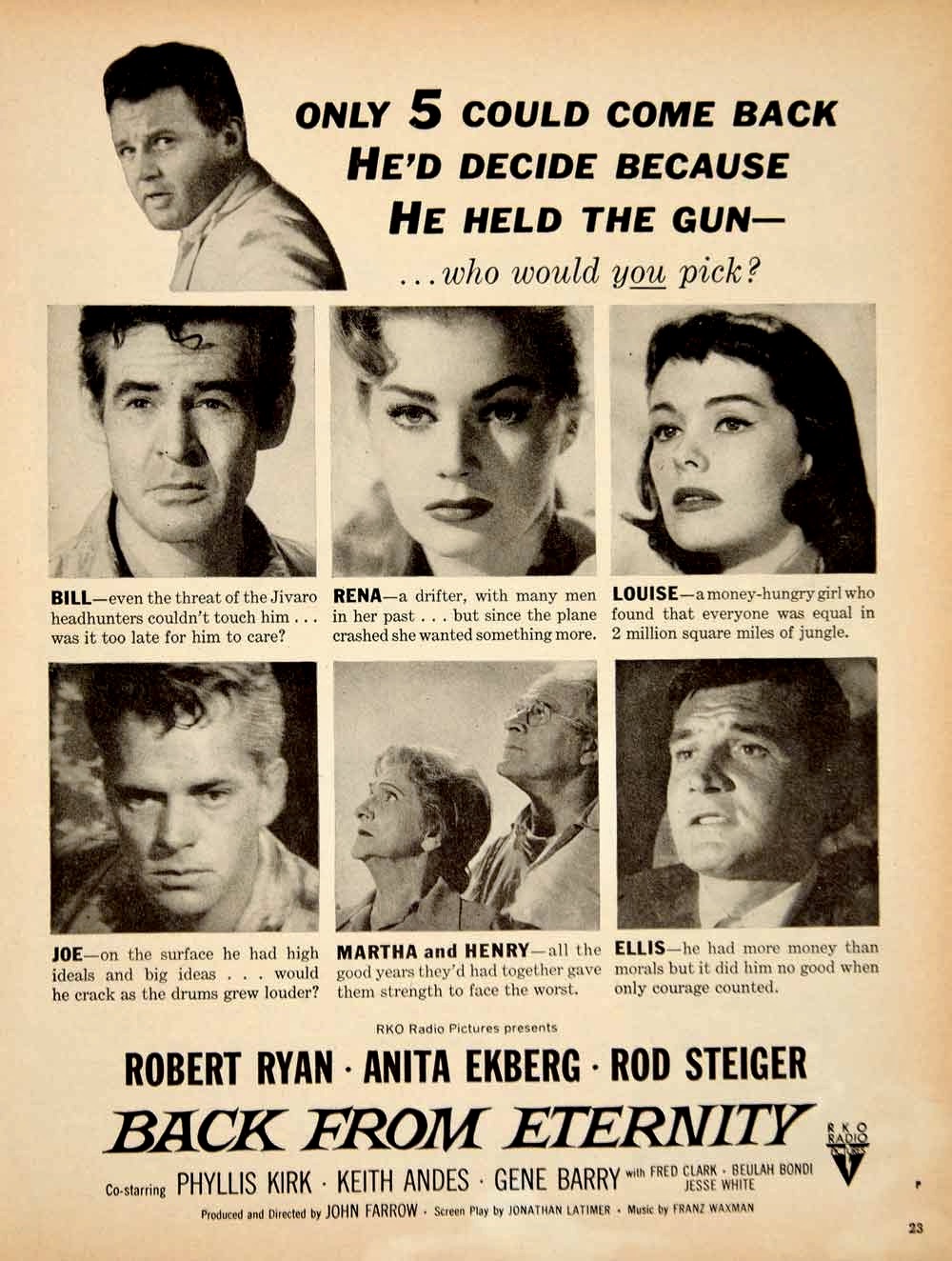
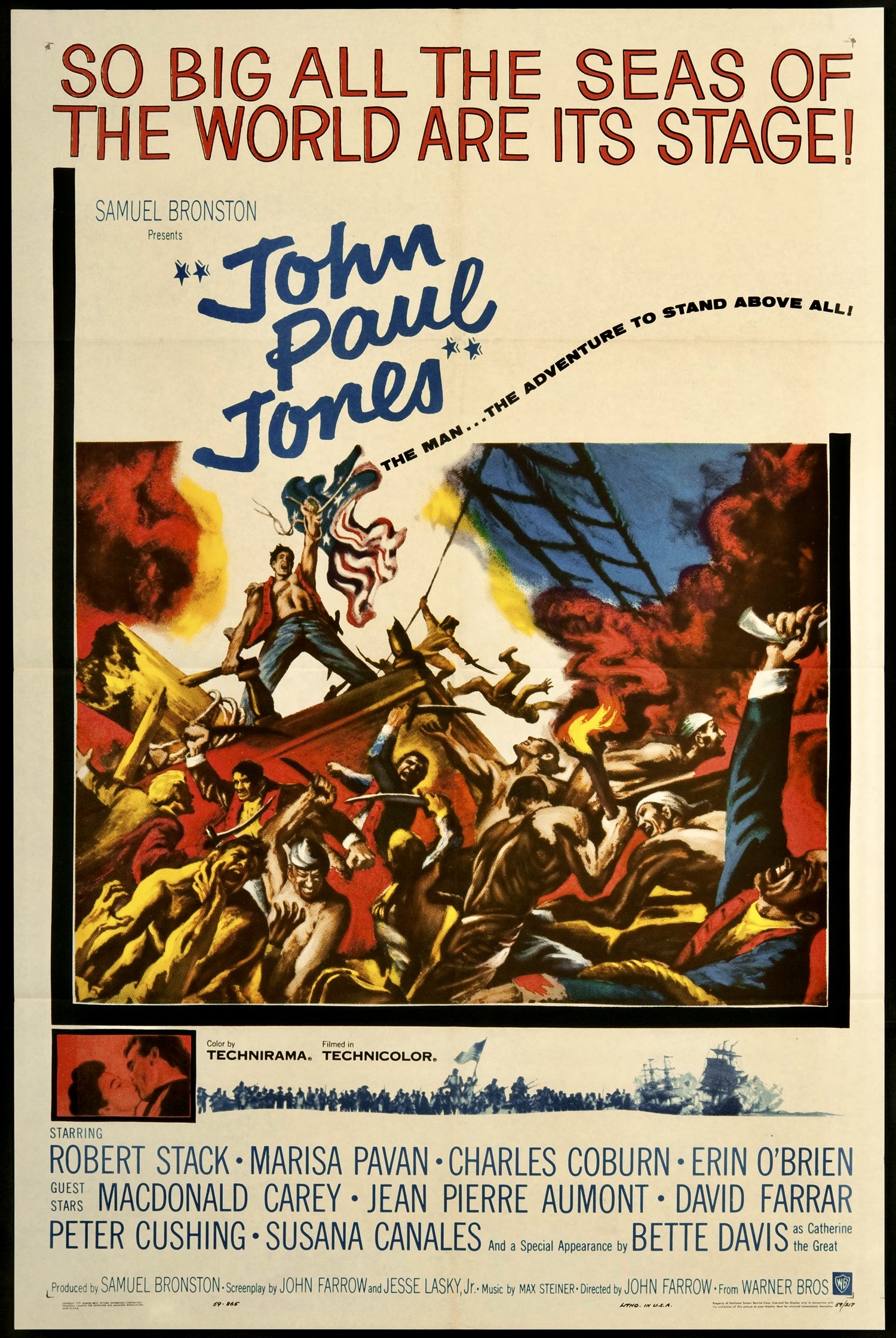
When Farrow remade Five Came Back under the title Back from Eternity for RKO in 1956, the studio was in dire financial straits and would soon cease operations in 1957. It is possible that Farrow and RKO hoped the remake would be a box office smash since the 1939 original had been a huge commercial success. The problem was that Back from Eternity was still essentially a B movie, filmed on the backlot with a fake jungle like the original version. It also had a longer running time and wasn’t filmed in Technicolor or Cinemascope like other movies of its era. Needless to say, Back to Eternity was not a hit with moviegoers but it is definitely worth a look for its cast alone, especially Robert Ryan as the alcoholic pilot, Rod Steiger in ‘Method Acting’ mode as a convicted murderer on his way to be executed and the exotic Anita Ekberg as a deported prostitute. Farrow would only direct two more feature films after this, the noir-like The Unholy Wife (1957) featuring the deadly triangle of Diana Dors, Rod Steiger, and Tom Tryon, and the biopic John Paul Jones (1959) starring Robert Stack in the title role and a cameo appearance by Bette Davis as Catherine the Great.
Some Additional Trivia:
– RKO acquired a Capeles C-12 aircraft built in 1928 for a Greek-American syndicate as the main prop in Five Came Back.
– In addition to the later film, co-star John Carradine appeared in eight other films in 1939, among them John Ford’s Stagecoach (one of Carradine’s best roles), Jesse James, directed by Henry King, and The Three Musketeers, a comedic version of the Dumas classic headlined by The Ritz Brothers and Don Ameche.
– Wendy Barrie’s association with gangster Bugsy Siegel (she was his mistress for a time) helped hasten the end of the actress’s Hollywood career. After appearing in Submarine Alert in 1943, she didn’t appear in movies again until her cameo role in George Cukor’s It Should Happen to You (1954).
– After Five Came Back, John Farrow would quickly graduate to bigger budgeted pictures with name casts such as A Bill of Divorcement (1940) with Maureen O’Hara and Adolphe Menjou, Wake Island, the Best Picture Oscar nominee of 1942, The Big Clock (1948), a first-rate suspense thriller starring Charles Laughton and Ray Milland and the underrated mystery Night Has a Thousand Eyes (1948) with Edward G. Robinson.
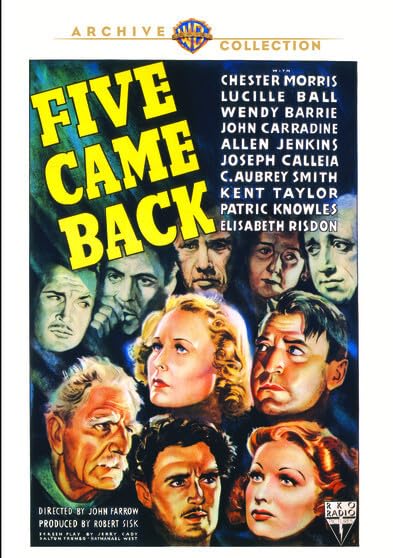
Five Came Back was released on DVD by the Warner Archive Collection in June 2015. The disc has no extra features but it is still your best option for viewing the film.
Other links of interest:
https://timenote.info/en/Wendy-Barrie
https://www.timelesstheater.com/chester-morris.html
 Cinema Sojourns