
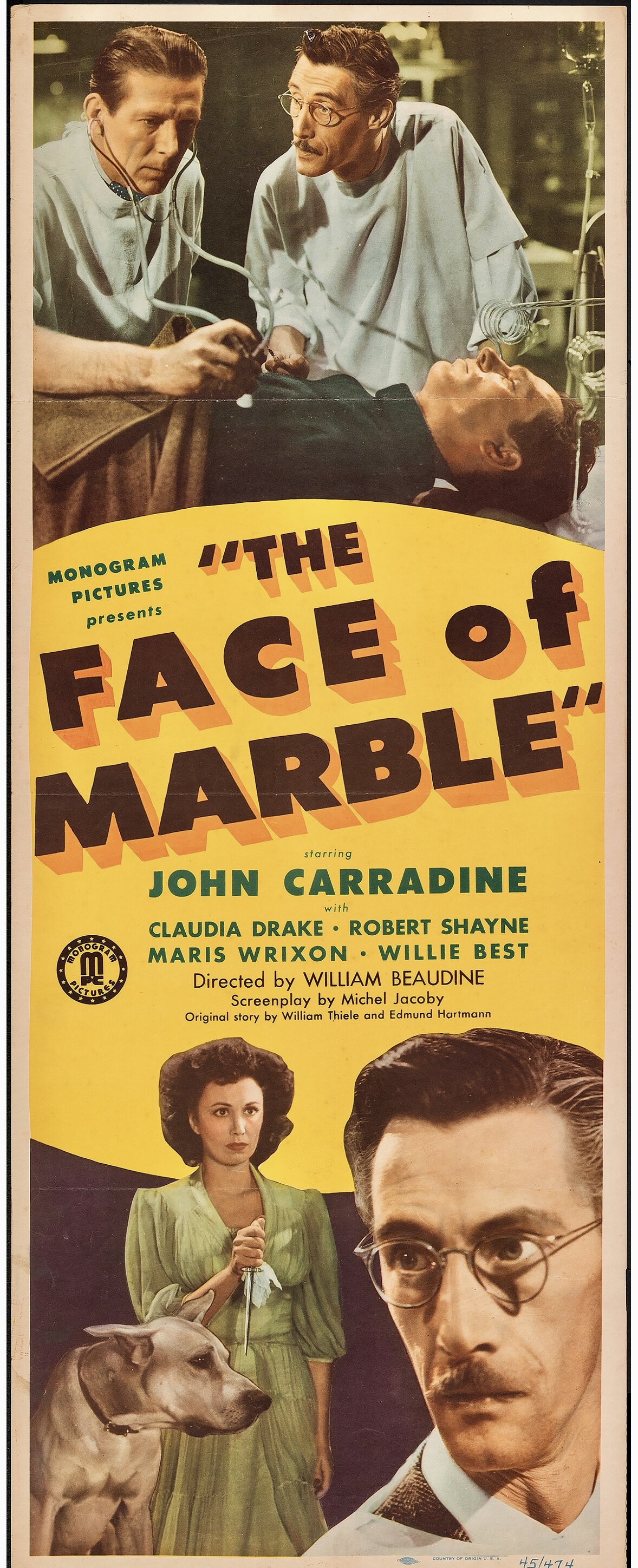
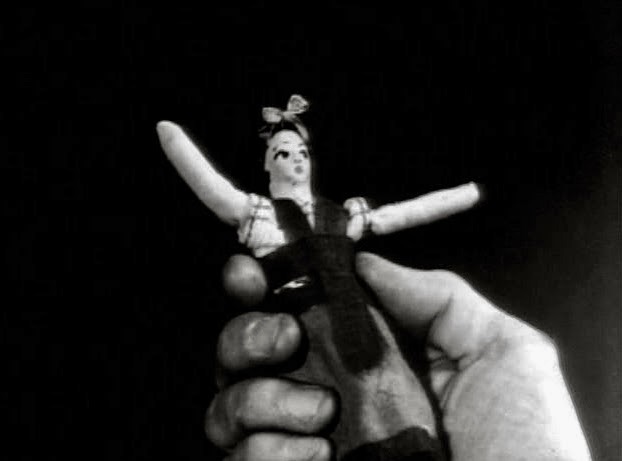
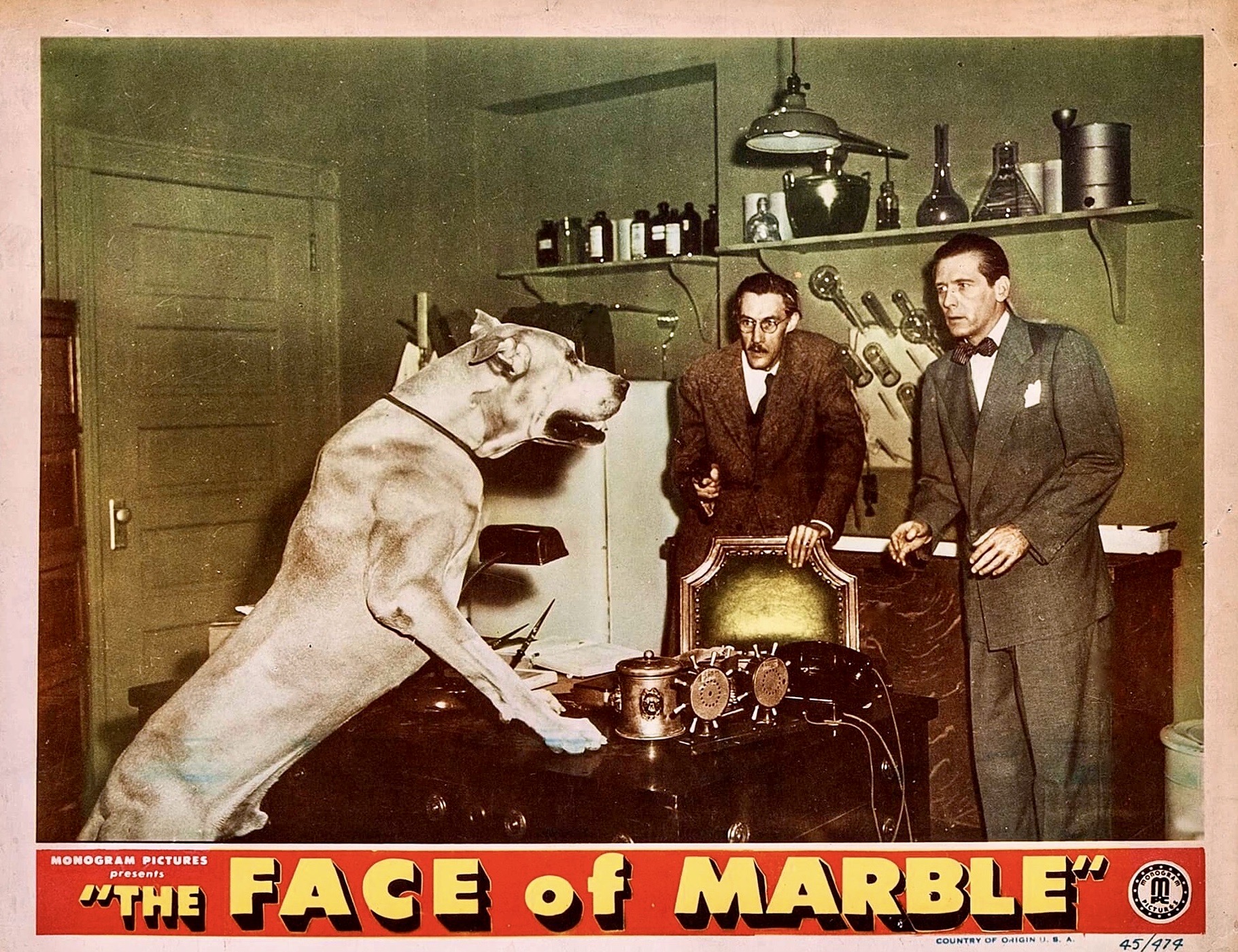
It’s not likely that a Poverty Row horror film like The Face of Marble (1946) will ever end up on anyone’s top ten list – unless the category is guilty pleasures – but that’s what distinguishes a movie like this from a title on the AFI approved list of great American classics. A cult movie rarely conforms to conventional standards of what’s good and what’s bad and that’s why The Face of Marble could be a more entertaining and challenging viewing experience than say, Ingmar Bergman’s Winter Light (1963). For one thing, you need a scorecard to keep track of the anything-goes-plot which ties together failed scientific experiments, reanimated corpses, a blood-drinking ghost dog that can walk through walls, a voodoo-practicing housekeeper and one woman’s hopeless, unrequited romantic obsession with her husband’s young assistant.
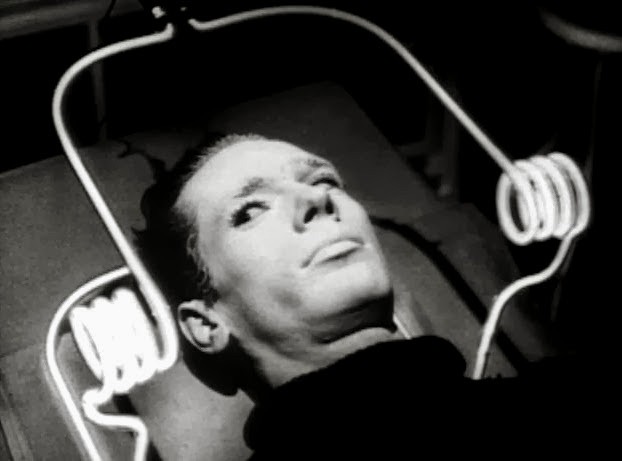
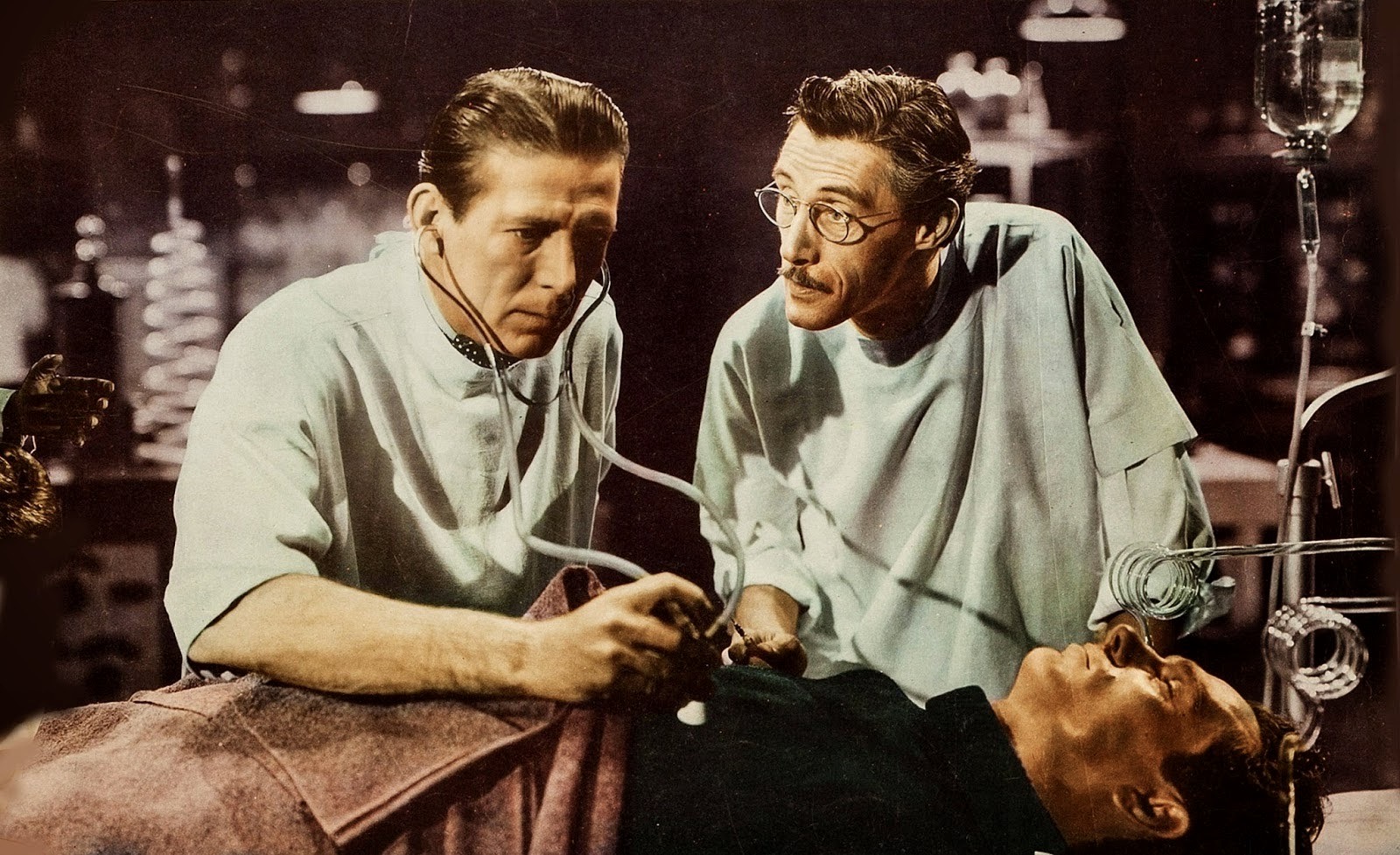
Unfolding with the illogical progression of a bad dream, The Face of Marble opens on a dark and stormy night as Professor Randolph (John Carradine) searches for a new guinea pig for his electro-chemical experiment, a procedure that has the potential to revive the recently deceased. Immediately you know he’s doomed to failure because mad scientists in horror films never succeed. But Dr. Randolph doesn’t know that and, along with fellow researcher Dr. David Cochran (Robert Shayne), tries to bring a drowned fisherman back to life, succeeding only in giving the cadaver a “face of marble” (a ghostly white makeup effect that Robert Blake must have copied for his character in David Lynch’s Lost Highway, 1997). Other guinea pigs follow including Brutus, the faithful family dog, who is transformed into a transparent being who starts preying on the local livestock.
With its dingy, claustrophobic sets and overwrought performances, The Face of Marble often looks and sounds like a bad play performed by the inmates of a mental institution. Take, for instance, the scene where David’s fiance Linda (Maris Wrixon) witnesses a ghostly visitation from Brutus. She freaks out, telling Dr. Randolph’s wife, Elaine (Claudia Drake), that she saw “a monster dog, he came in right through the closed window. He had a mad gleam in his eye, he was frothing at the mouth.” To which Elaine responds impassively, “Well, perhaps you’d rather sleep in my room, Linda.” How about calling the local exorcist? Nobody behaves sensibly in movies like The Face of Marble which is part of its loony charm.
At age 40 John Carradine was at a stage in his career where he would accept work in almost any film he was offered, which is why his filmography lists more than 300 movies! He made The Face of Marble after completing House of Dracula (1945), the Universal monster bash in which he played the title vampire, and followed this Monogram cheapie with the low-budget musical Down Missouri Way (1946), released by PRC (Producers Releasing Corporation), another poverty row studio. Carradine still had some prestigious roles in his future – Cecil B. DeMille’s The Ten Commandments (1956), Nicholas Ray’s The True Story of Jesse James (1957), John Ford’s The Last Hurrah (1958) – but the junk outnumbered the quality pictures as witnessed by titles like Sex Kittens Go to College (1960), Hillbillys in a Haunted House (1967) and Al Adamson’s Horror of the Blood Monsters aka Vampire Men of the Lost Planet (1970).

As for co-star Robert Shayne, he was near of the end of his contract with Warner Brothers which he signed in 1942 (the 1946 noir drama Nobody Lives Forever with John Garfield was Shayne’s last picture for WB). He went free lance after that but ended up working in low-budget films for Monogram, PRC, United Artists, AIP and television for almost the rest of his career. Like Carradine, Shayne wound up with several horror films on his resume like The Neanderthal Man (1953), Indestructible Man (1956), The Giant Claw (1957) and How to Make a Monster (1958).
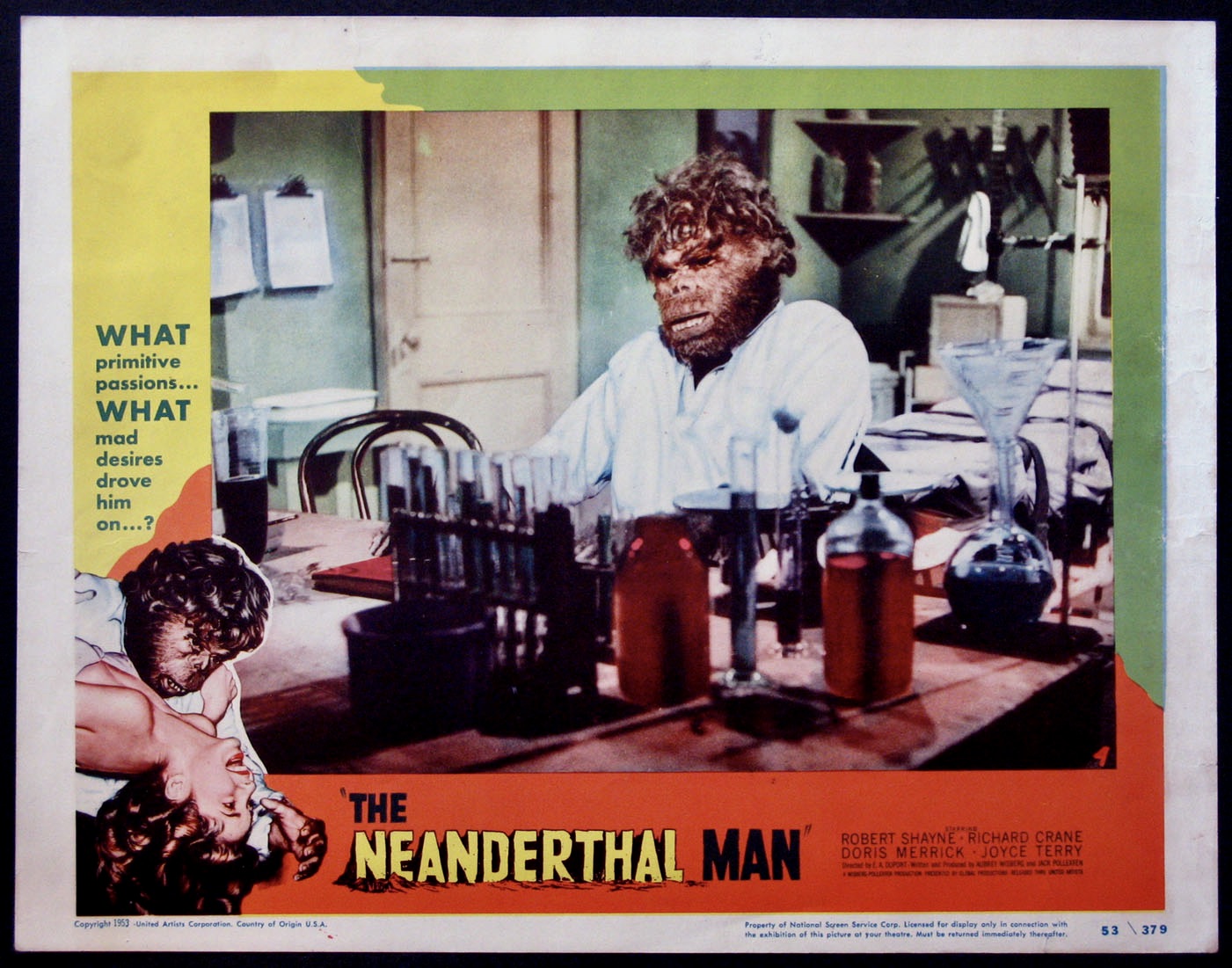
In Poverty Row Horrors! by Tom Weaver, Shayne recalled working on The Face of Marble and his impressions of workaholic actor John Carradine who would rehearse Shakespeare dialogue on the darkened set when all of the other crew and cast members broke for lunch. He also remembered seeing the film with an audience: “I went to see a preview of it over in South Los Angeles somewhere, with my wife and another couple. We were near the back of the theatre, and as this picture went along I hung my head, I was so embarrassed by it! Finally, when the thing was over, I got out into the lobby…Two young ladies came out and stood against an opposite wall, and they did a double take when they saw who I was. And one of them came over to me and said [wagging a finger], “Mr. Shayne, you ought to be ashamed to be in a picture like that!”
Even the Legion of Decency dumped on The Face of Marble, giving it a B rating with these comments, “encourages credence in voodooism and superstitious practices; suicide in plot solution.”
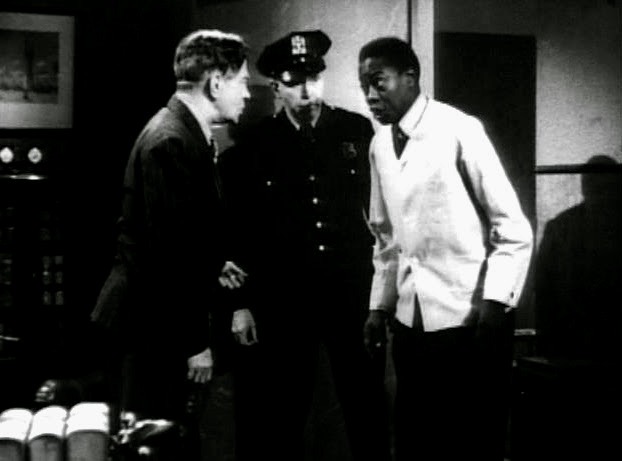
All of which makes The Face of Marble required viewing for horror movie die-hards and those willing to open their minds to the genuine delights of a poverty row quickie. The only downer is Willie Best’s appearance as the frightened black servant, a painful reminder of the racial stereotypes that were prevalent in Hollywood movies of this era.
One note of interest: the director, William Beaudine, entered films at the medium’s early beginnings, working with D.W. Griffith. Although he directed several notable silents such as Little Annie Rooney (1925) and Sparrows (1926), he primarily ended up working for cheapjack operations like PRC and Monogram Pictures. The famous story goes that Beaudine, working late one evening on a low-budget Western for Monogram, was ordered by an executive to speed up production due to product-hungry exhibitors. His famous retort, “You mean someone out there is actually waiting to see this?” has since become legendary.
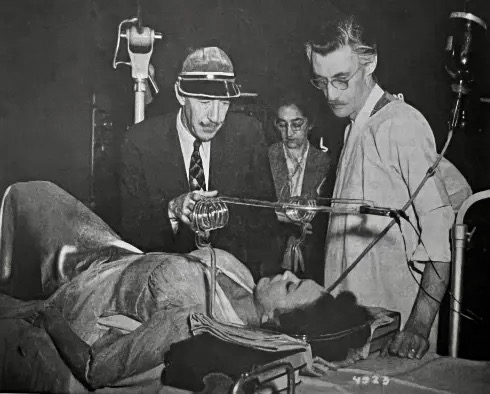
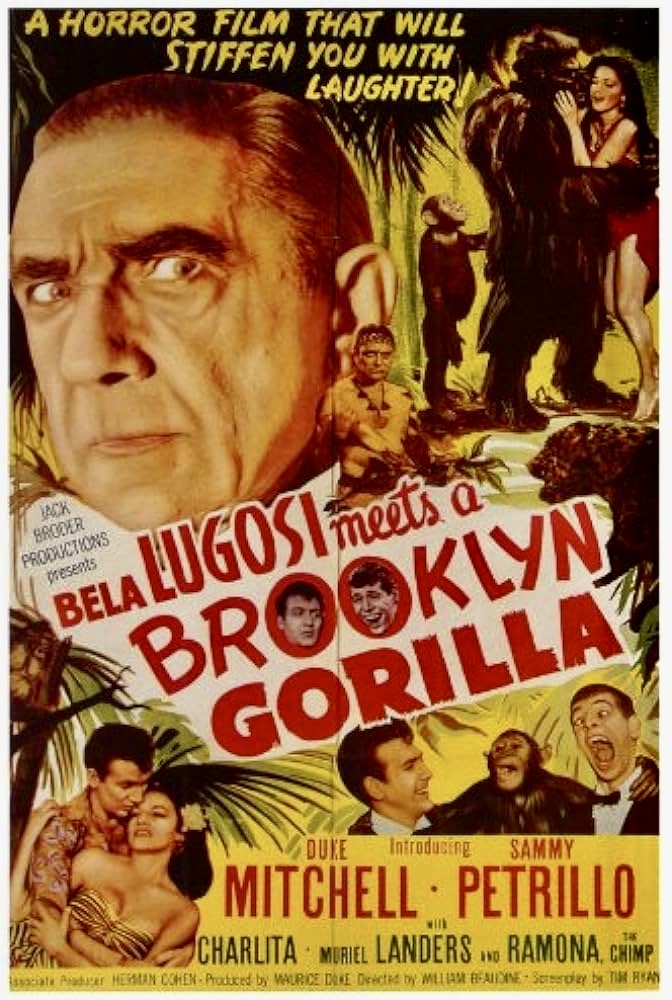
Other horror films directed by Beaudine include The Living Ghost (1942). The Ape Man (1943), Voodoo Man (1944), the infamous drive-in double feature of Billy the Kid Versus Dracula (1966) and Jesse James Meets Frankenstein’s Daughter (1966) and numerous horror-comedies like Ghosts on the Loose (1943), Spook Busters (1946) and Bela Lugosi Meets a Brooklyn Gorilla (1952),
The Face of Marble has been released in various formats over the years but probably the best presentation of the movie is featured on the now out-of-print DVD from Shout Factory entitled Timeless Horror. The disc also contains I Bury the Living (1958), The Four Skulls of Jonathan Drake (1959) and The Snake Woman (1961).

*This is a revised and expanded version of an article that originally appeared on the Turner Classic Movies website.
Other links of interest:
https://faroutmagazine.co.uk/the-only-director-to-have-made-over-300-movies/
https://timenote.info/en/John-Carradine
https://planninecrunch.blogspot.com/2019/04/bela-lugosi-and-monogram-9-book-review.html
 Cinema Sojourns