
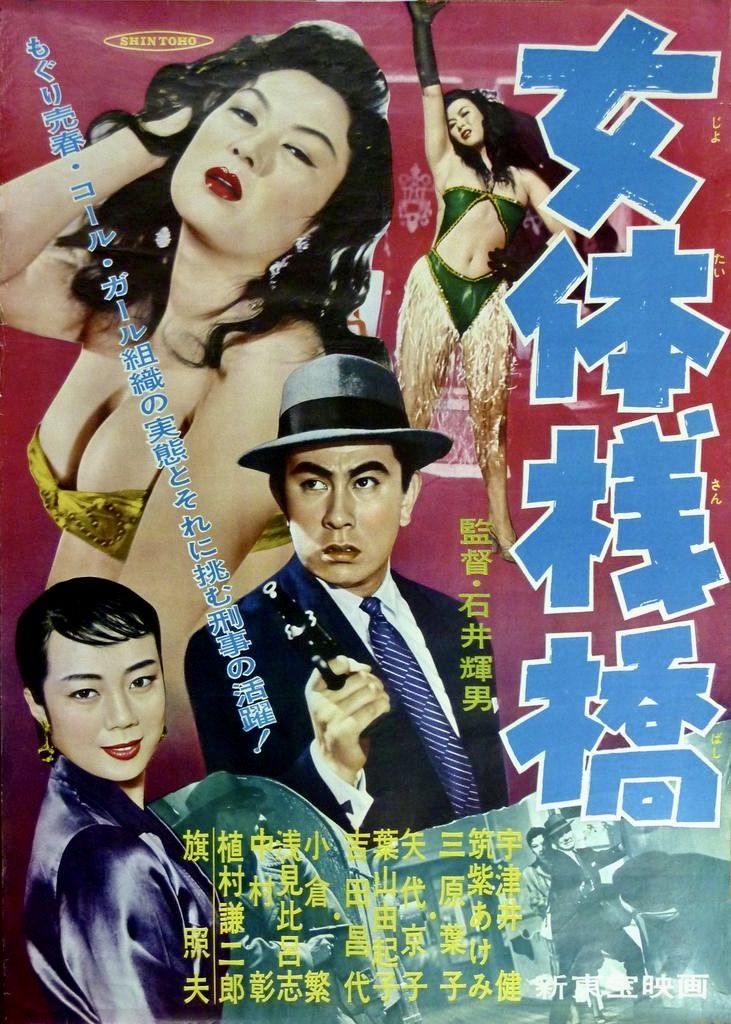
In January 1950 U.S. Senator Estes Kefauver launched an investigation into organized crime across America that exposed rampant corruption, racketeering and illegal practices being committed within public institutions across the country. Since these hearings were broadcast on television and the radio, the American public soon learned about various crime syndicates that were operating in specific cities and states. Movie studios in Hollywood also took note and began turning out numerous crime expose movies filmed in a semi-documentary fashion and often featuring an opening narration that used a real law official to warn against the situation being depicted. Among the more representative of these crime expose thrillers were Kansas City Confidential (1952), The Captive City (1952), Down Three Dark Streets (1954), The Phenix City Story (1955) and The Brothers Rico (1957). Without a doubt, this new trend in crime movies influenced filmmakers around the globe with countries as diverse as Germany, the U.K. and Japan creating their own variations on the formula. Nyotai Sanbashi (1958), which roughly translates as Pier of a Woman’s Body or Flesh Pier, is a particularly tantalizing down-and-dirty B-movie from Japanese director Teruo Ishii that mimics the expose approach of The Phenix City Story in its tale of mob-controlled businesses, sex trafficking and other criminal activities in Tokyo.
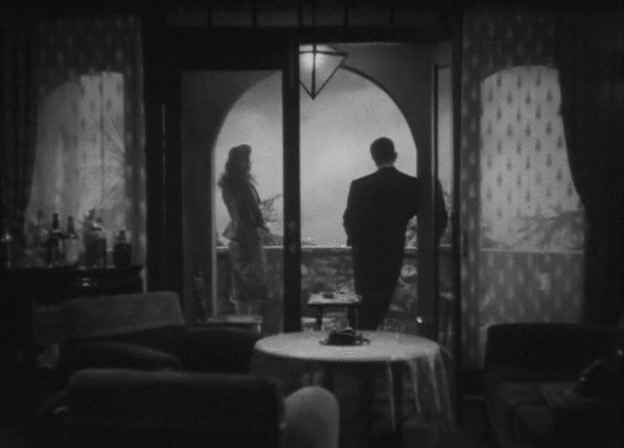
The film opens as a car travels down a busy street at night in Tokyo and the narrator proclaims, “New Broadway but this is no foreign land. This is the Ginza, Tokyo’s heart. Behind these bright lights, another world takes shape, one that is not Ginza…the ‘Tokyo Settlement’ [Toukyou Sokai, a small urban section of the city]. What happens here staggers the imagination. Roulette, all kinds of gambling, drugs and the crime they spawn and the buying and selling of women from all over the world…..”
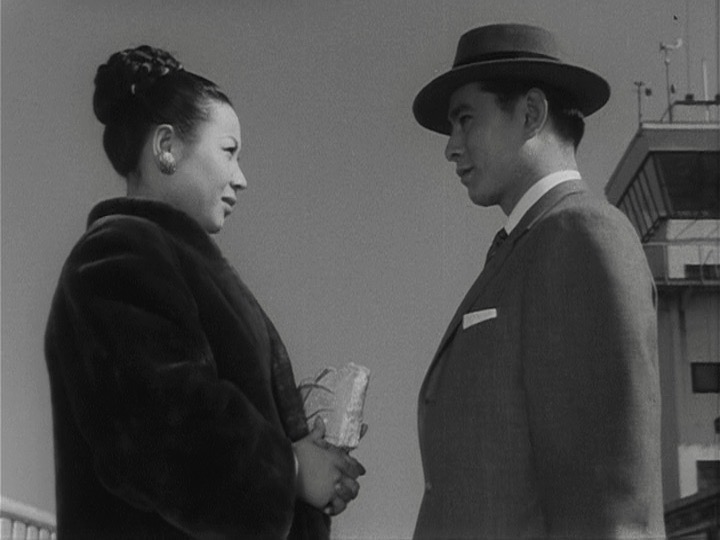
Keizo (Ken Utsui), who looks like a well-dressed businessman, returns to his parked car and finds a pink card promising an evening of fun with “blonde dolls.” He goes to the specified bar on the card and is approached by a shady character who seems to know everything about him. A large sum of money is exchanged and Keizo is guided to a room in the Tokyo Center Hotel. Instead of finding a willing female companion inside, he sees the corpse of a murdered prostitute in the bathtub.
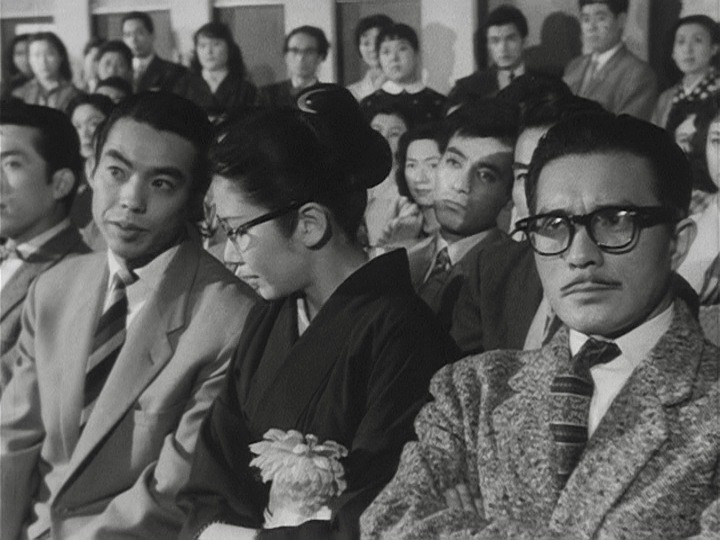
The subsequent police investigation reveals that the murder victim was planning to expose the call girl operation and was silenced by her bosses. Shortly afterwards, the bartender boyfriend of the victim and main murder suspect is also found murdered and Keizo is brought in to lead the investigation. He is given the fake background and identity of a corrupt businessman who was fired from his company for embezzlement. This enables Keizo to earn the trust of local mobsters and to move freely in this underworld of vice and crime.
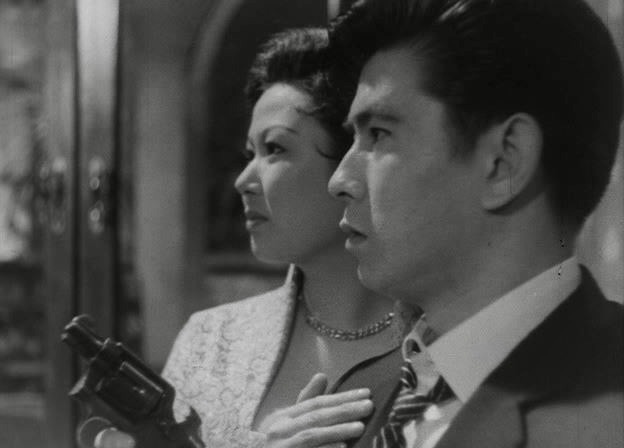
Keizo is soon introduced to Rose Rumi (Yoko Mihara), the new dancer at Club Arizona, who, like Keizo, is an undercover investigator and a previous romantic interest (in a possible homage to Casablanca). Together they attempt to bring down the American gangster Thompson (Harold Conway), his minions and an elaborate call girl operation that involves several fronts for sex trafficking, including a wedding broker business, models for hire, a fashion salon and the nightclub. An additional subplot introduces a detective team pairing an experienced veteran with Hayami (Hiroshi Asami), a young nookie, and Haruko (Akemi Tsukushi), an overzealous female reporter who follows Keizo’s progress in hopes of scoring a front page news story and his affection.
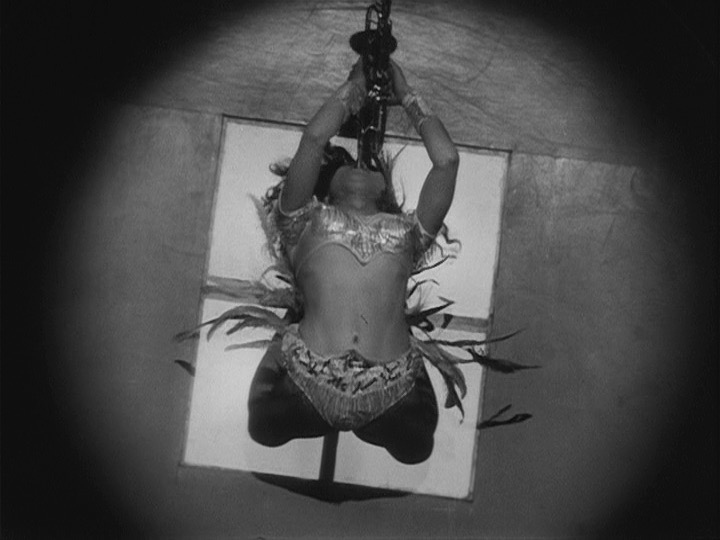
Director Ishii creates a breathlessly paced narrative that never wastes a second in its brief 73-minute running time. Combining a true crime expose melodrama with a covert romance and an exploitation thriller, Flesh Pier offers plenty of appeal for the film noir fan and connoisseurs of Japanese yakuza flicks. The striking black and white cinematography often employs hand held camera movements and unusual points of view to engage the viewer, especially during scenes at Bar Arizona where the dancers are more like striptease artists in risqué outfits. Cavorting to musical arrangements that sound heavily influenced by West Coast jazz musicians like Stan Getz and Art Pepper and tiki lounge favorite Martin Denny, the dancers all have a sure-fire gimmick; one of the most memorable performs acrobatic contortions (shot from overhead) while playing the trumpet. There is also an amusing sequence at a fashion studio where the female staff models skimpy negligees while smoking cigarettes and striking poses.
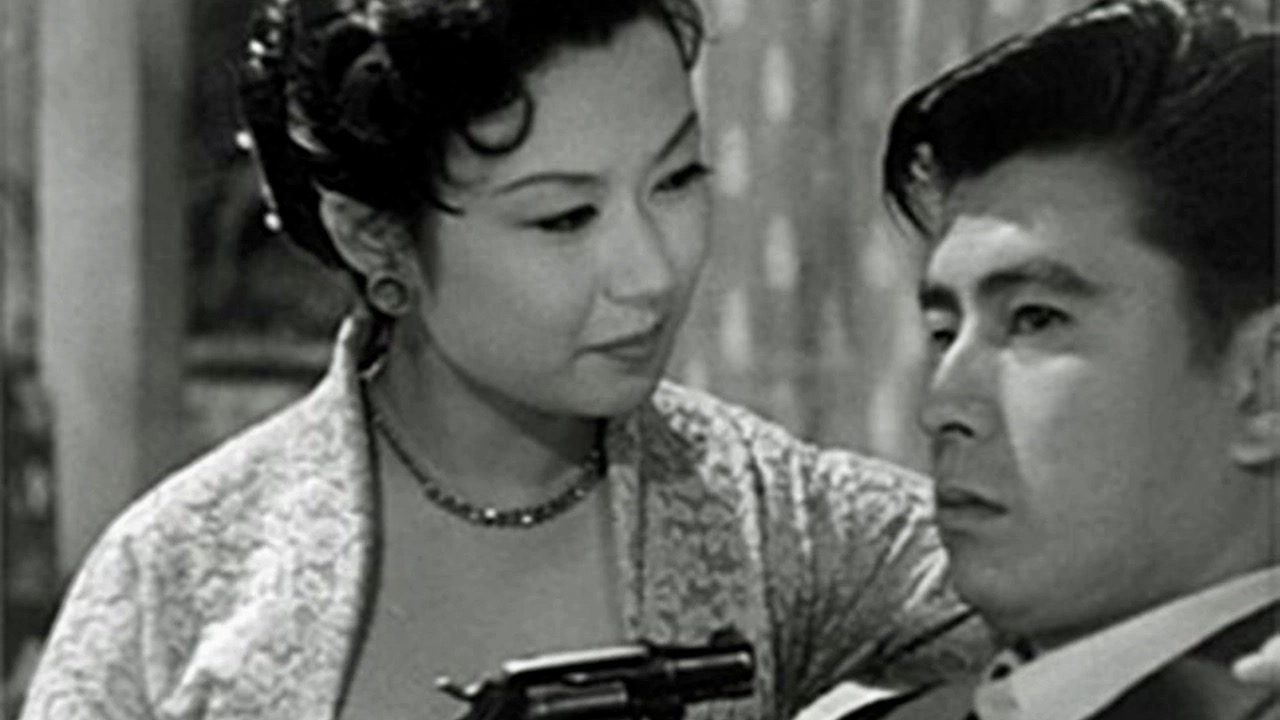
Sooner or later we know that Keizo and Rose’s true identities are going to be discovered and they will be targeted for death by the mob but their investigation brings the film to a rousing finale on a ship scheduled to sail to Macao. In the cargo hold is a group of fresh female recruits who have been hoodwinked into thinking they have been hired as “cultural ambassadors,” not prostitutes. Luckily, the police arrive in time to save the day but not before some of the more sympathetic characters come to a bad end such as Teruo (Teruo Hata), the nightclub piano player/singer, who is clearly in love with Rose.
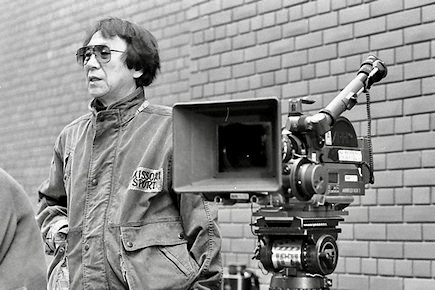
Flesh Pier offers plenty of sex appeal but is relatively tame compared to the more explicit entries in the softcore pinku-eiga genre that began to flourish in the mid-to-late sixties. Director Ishii would later specialize in these sexploitation dramas, creating his own subgenre known as Ero guro (erotic-grotesque) with such distinctive titles as Shogun’s Joy of Torture (1968), Orgies of Edo (1969) and Blind Beast vs. Dwarf (2001), his final feature.

Ishii’s early career, however, is as varied and prolific as that of American maverick Roger Corman, who made every kind of picture, from western to horror to muscleman epics. Ishii was equally versatile and first attracted attention for sci-fi action adventures like Supa Jaiantsu (1957), the first in a series of Super Giant movies, and film noir quickies like Sekushi Chitai (aka Sexy Line, 1961). He would later work in television on several fantasy-themed action productions like Atomic Rulers (1965) and help guide actor Ken Takakura toward stardom and box office success with a series of crime dramas starting with Abashiri Bangaichi (1965).
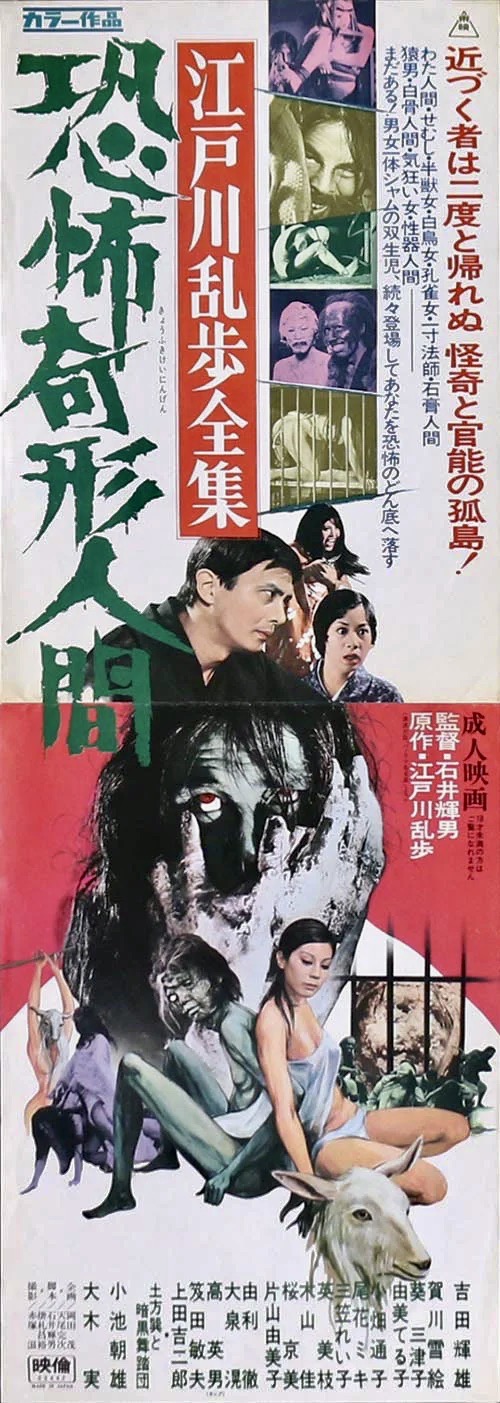
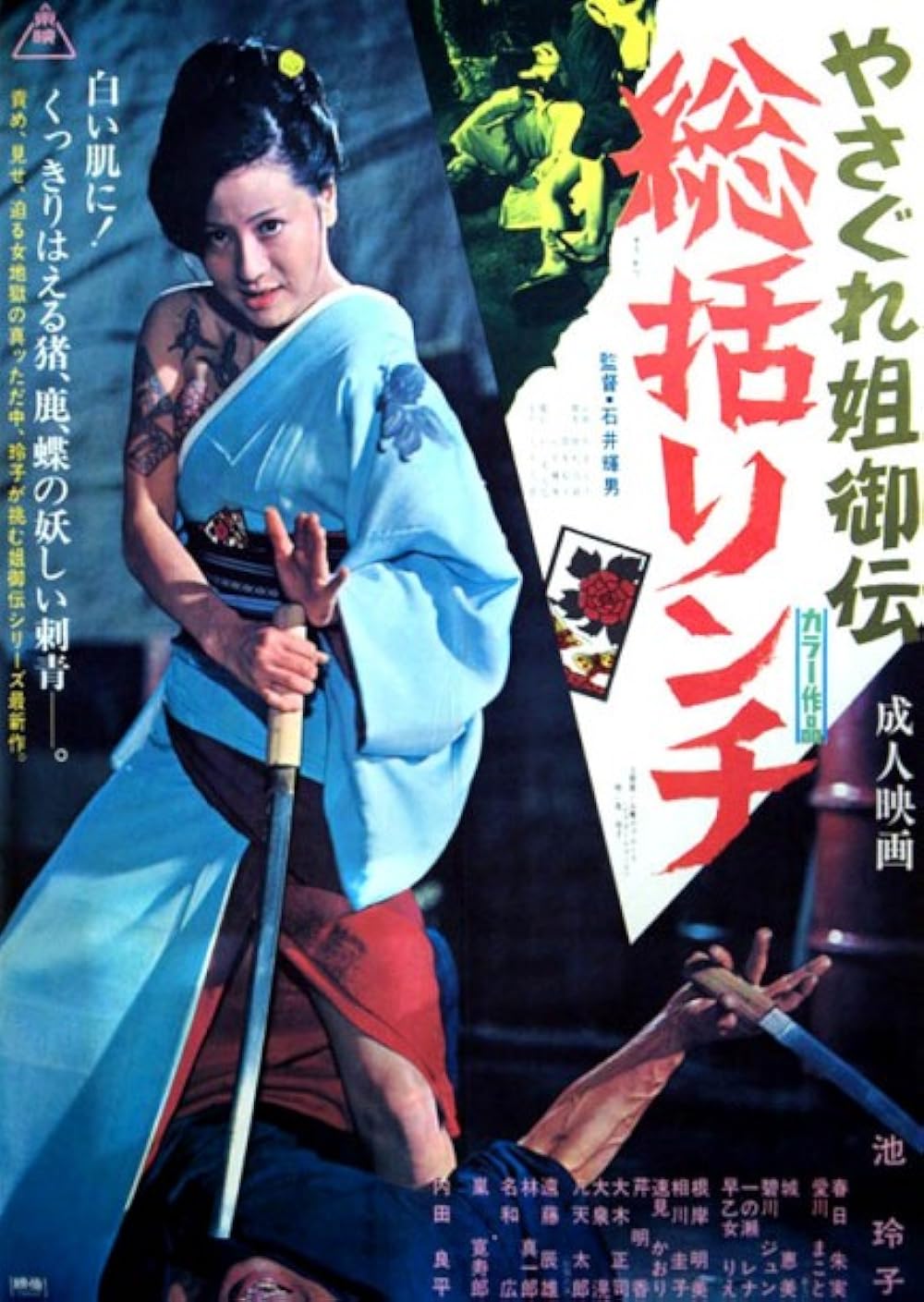
Most of Ishii’s filmography still remains unknown in the U.S. but adventurous horror fans know him for the surreal thriller Horrors of Malformed Men (1969), which resembles a drug-induced variation on 1932’s Island of Lost Souls, Blind Woman’s Curse (1970) starring cult favorite Meiko Kaji (Lady Snowblood) and Japanese Hell (1999), his gory reimagining of the 1960 supernatural classic Jigoku aka The Sinners of Hell. Thanks to a growing interest in these later horror films and the recent Blu-ray releases of some of his most popular work like Inferno of Torture (1969) and Female Yakuza Tale (1973), Ishii is starting to attract a new generation of movie lovers. Flesh Pier is an entertaining early effort from the director and perhaps it will get the Blu-ray treatment it deserves some day (I originally viewed a serviceable DVD-R of the film from the now defunct European Trash Cinema).
Other links of interest:
http://www.midnighteye.com/interviews/teruo-ishii
https://offscreen.com/view/teruo_ishii
https://www.arrowfilms.com/blog/features/how-teruo-ishii-became-japans-ero-guro-king/
 Cinema Sojourns