
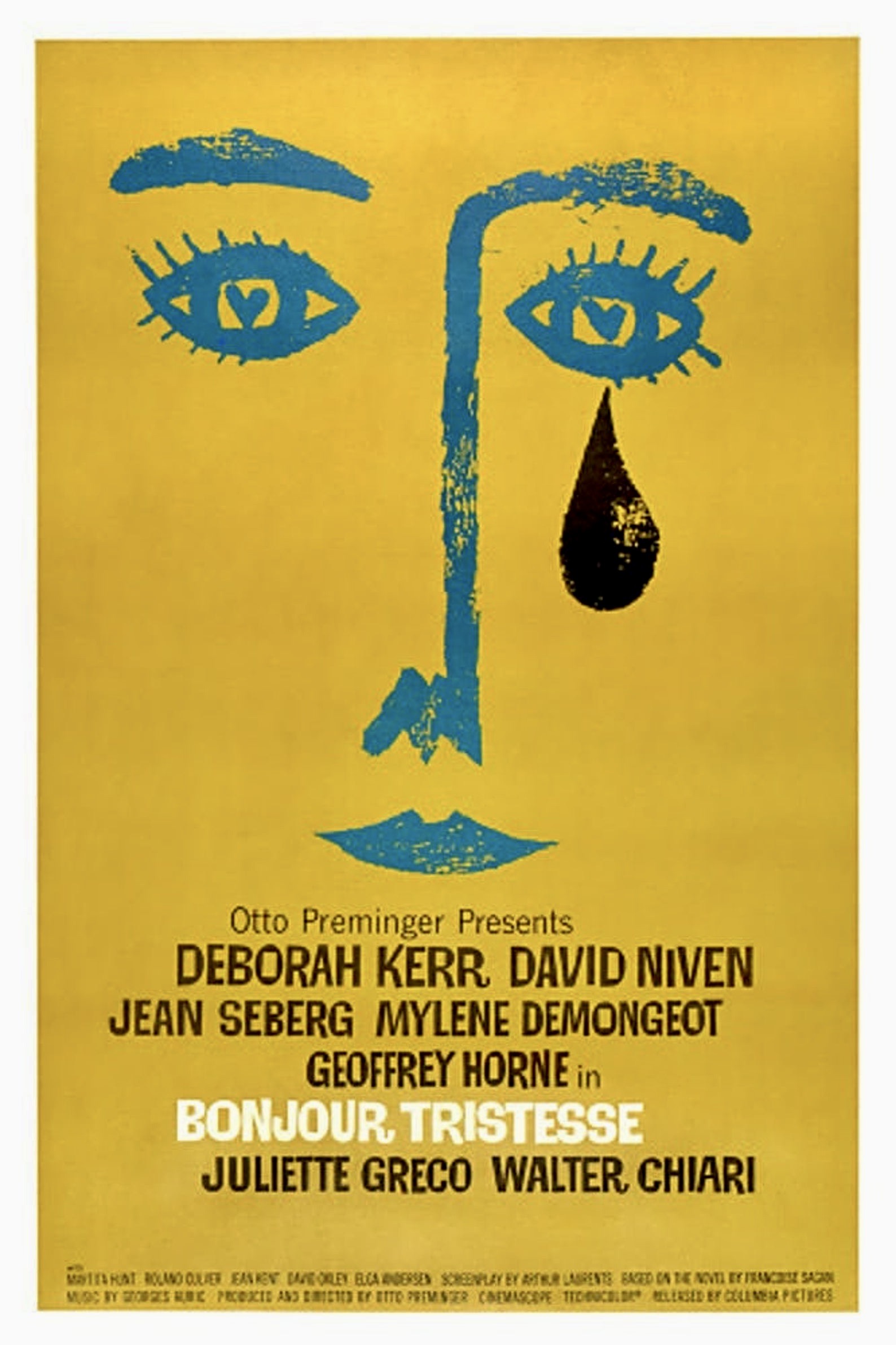
When Otto Preminger announced in 1957 that his next project would be Bonjour Tristesse, based on the best-selling novel by Francoise Sagan, and that it would star Jean Seberg, colleagues and fellow members of the film industry were astonished. After all, his previous film, Saint Joan (1957), which featured Seberg in her film debut, was probably the biggest critical and commercial disaster of Preminger’s career with most of the negative reviews focusing on the inexperienced newcomer whom Preminger had “discovered.” Was Bonjour Tristesse (1958) his attempt to prove to everyone that he was not wrong about Seberg and that her performance in his new movie would validate all the time and effort he had poured into making her an actress? The real reasons, of course, were more complicated than that.

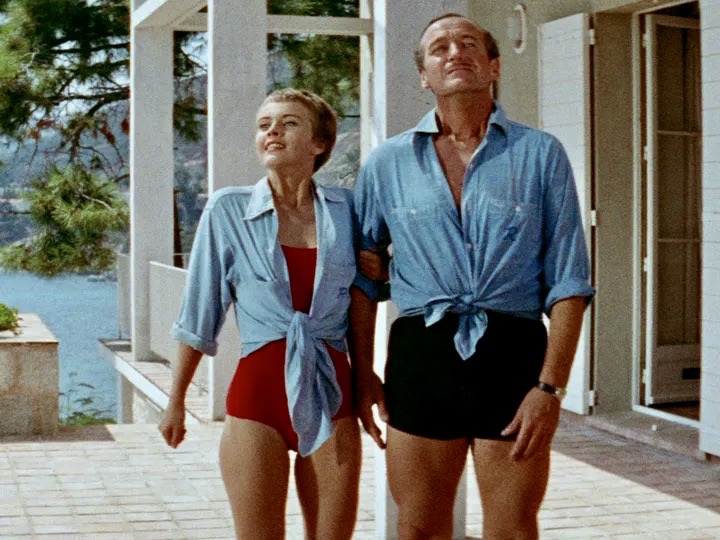
Preminger was completely captivated by Sagan’s novel when it first appeared in 1955 and immediately bought up the rights, planning to first produce it as a play and then as a film with playwright/scenarist S. N. Behrman adapting both versions. It was the story of Cecile (Jean Seberg), an amoral young girl, whose intense attachment to her bachelor father (David Niven) causes her to manipulate his love life resulting in the accidental death of a female rival.
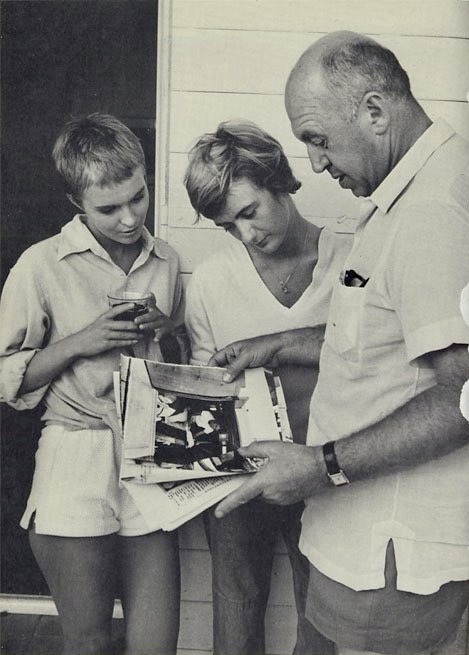
Preminger liked the novel’s cruelly cruel tone (it was told from the teenage Cecile’s point of view) and the Riviera setting where the idle rich spent their carefree summers. As the film’s production date approached, however, it was Arthur Laurents who was hired to write the screenplay. “When I first read Sagan’s book in French, I thought it was a hot fudge sundae that might well become a best seller, but I also thought it was a trick, and indeed it turned out to be her fifteen minutes,” the screenwriter recalled in Otto Preminger: The Man Who Would Be King by Foster Hirsch. “When I met her [Sagan], I thought she was cultivating an attitude. She was pretending to be jaded, which she was too young to be. She was of the moment – it was chic to be depraved at that moment – and at the time she was taken seriously. A lesbian who lived a very fast life, she was quite unattractive, and that always helps to be taken seriously.”

Laurents, who had penned the script for Alfred Hitchcock’s Rope (1948) and later the screenplay for West Side Story (1961), got along well with Preminger and didn’t encounter the explosive anger that some actors experienced while working with him. “I was recommended by Anatol Litvak, a friend of Otto’s for whom I had written Anastasia [1956],” Laurents recalled, “but I think the real reason Otto hired me was because he knew I had lived in Paris in the early 1950s and had known all these degenerate people Sagan writes about….He really left me on my own, with one basic instruction, that we are to be removed from the characters, who don’t have passionate emotions. Otto thought that kind of distance was ‘high style.’ From beginning to end he was terribly nice to me, and I found him amusing, cultured, and not too much of a director.”
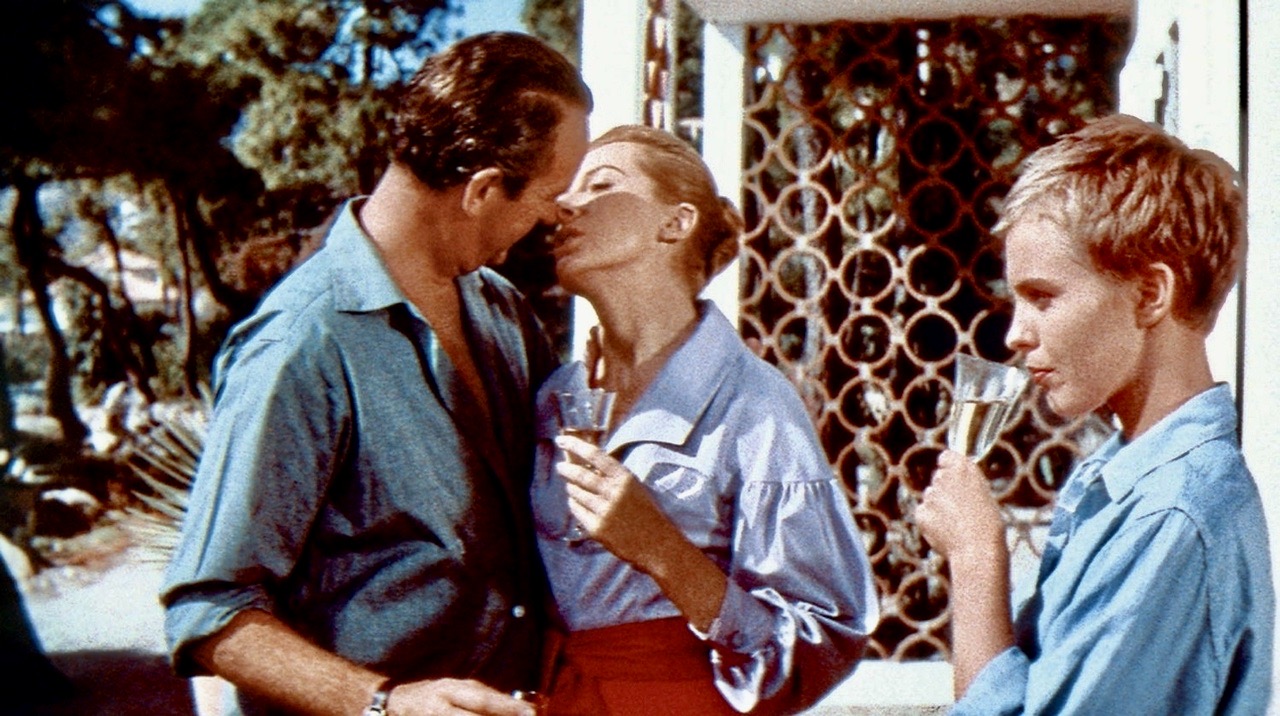
Laurents was puzzled, however, about some of Otto’s decisions. “Why had Otto cast English actors like David Niven and Deborah Kerr to play French characters? And then, in the midst of this chic atmosphere, there is Jean Seberg – Miss Iowa.” After Laurents met Seberg, he began to understand the relationship between the actress and the director. “She was lovely, but I felt she was “performing” as an innocent young American girl,” Laurents stated. “I was told that Otto liked to watch her take a bath. He turned on her when he found out she was sleeping with a French lawyer [Francois Moreuil, twenty-three, whom she was to marry on September 5, 1958]. He had thought she was a virgin, and he felt betrayed. He wanted to think of her as his virgin…Jean was posing, acting American innocence, and Otto had fallen hook, line, and sinker for this cornfield approach. He was besotted…Otto had fallen for a hooker, Gypsy Rose Lee, and now for a “virgin,” and they are flip sides of the same coin. After I turned in the script, I saw Saint Joan and I immediately called Otto: “Jean will sink me, you, and the picture.” Preminger’s response was that Jean will be a “triumph.”
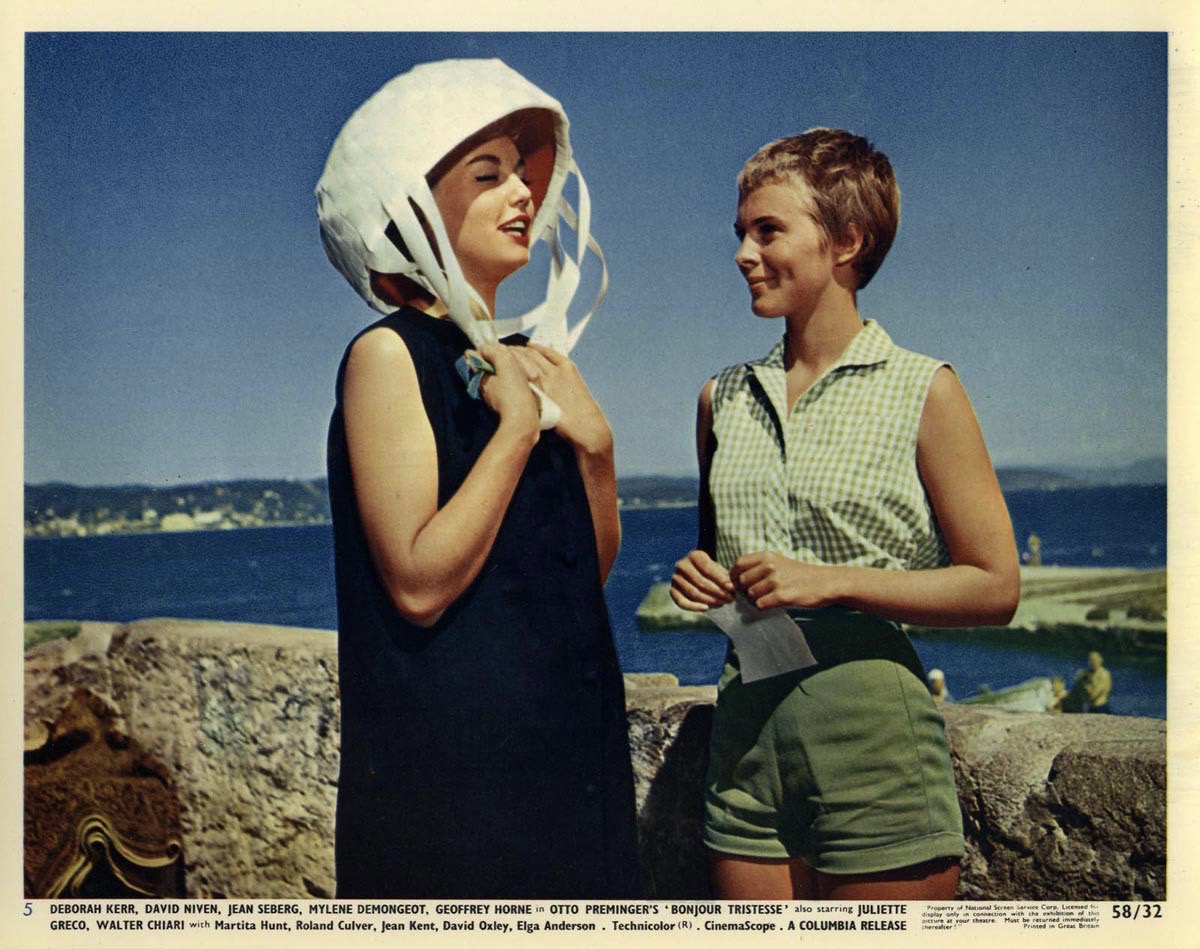
After the devastating reviews of Saint Joan appeared, Seberg had retreated to Nice to hide from the press and to prepare for the filming of Bonjour Tristesse in the nearby village of Le Lavandou. Mylene Demongeot, who plays Elsa, the mistress of David Niven, in Bonjour Tristesse, recalled her first impressions of Seberg in Played Out: The Jean Seberg Story by David Richards: “One day this adorable American arrived, brimming with gaiety and ambition. She had her typewriter and her ‘library’ with her and said she secretly wanted to be a writer. We laughed about that because her complete library consisted of The Portable Hemingway, The Portable Proust and The Portable Faulkner. She was so full of life and totally unselfconscious. She would walk around her apartment without a stitch on.”

Unlike Saint Joan, Seberg was not the sole focus of Bonjour Tristesse and shared equal screen time with David Niven and Deborah Kerr. Nevertheless, Seberg received the same abusive treatment from Preminger she had endured during the Saint Joan filming. Costume coordinator Hope Bryce recalled, “Her eyes would go blank, and when Otto saw that vacant look, he’d start to scream, telling her she had to concentrate. He would only get angry when he felt she wasn’t trying hard enough…When Otto would yell, Jean’s chin would jut out and she’d start to cry, but I felt that she seemed able to act only when she got mad or was upset.”
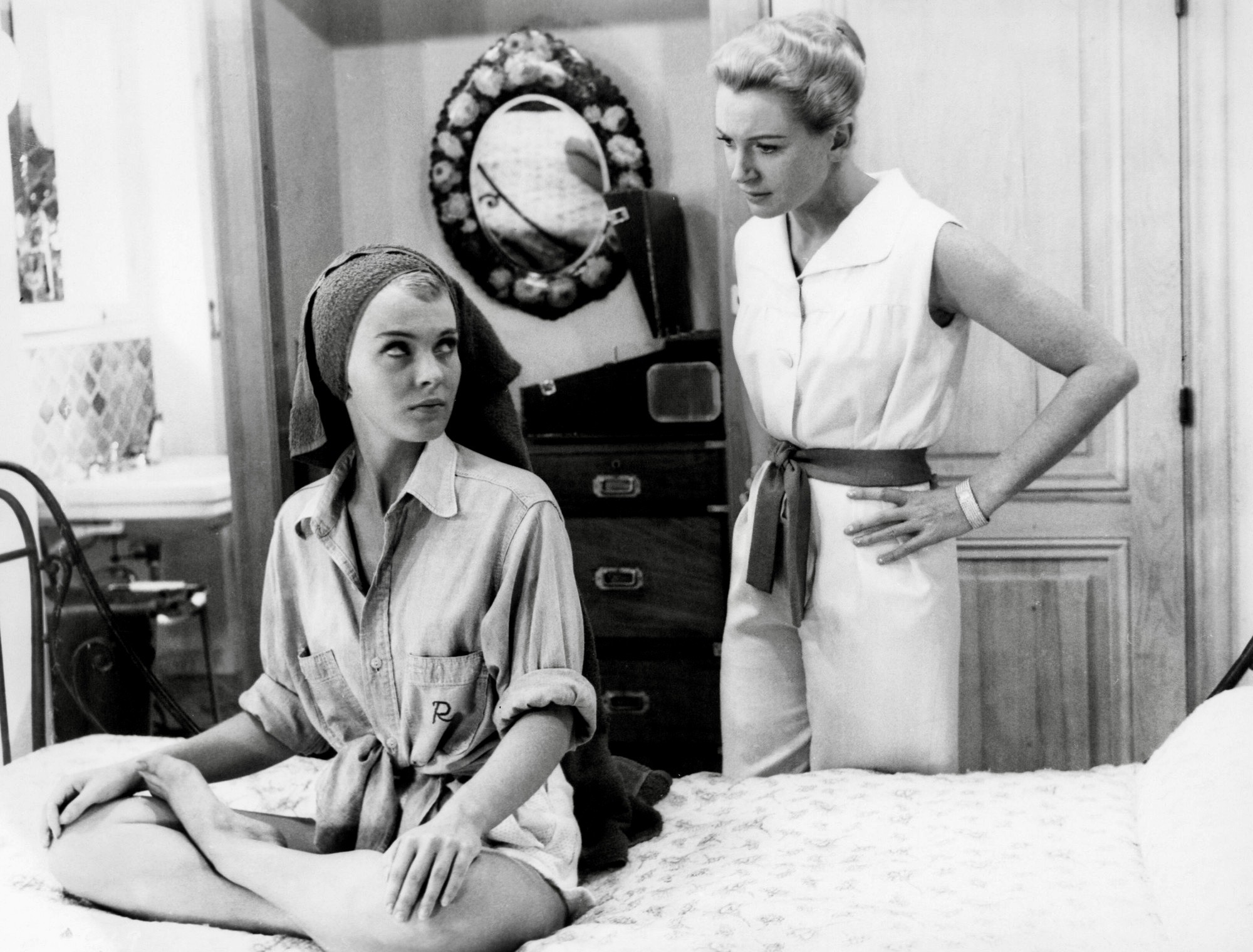
Geoffrey Horne, who enjoys a romantic liaison with Seberg in the film, offered his own observations of the filming: “Otto went berserk; he seemed to get pleasure in going nuts, and it was not an act. I never saw him be affectionate with Jean. He was not really a father figure for her, and though there were rumors, which I did not believe, he certainly was not her lover either….He was an Old Testament God figure who was never inappropriate with the beautiful women who were on the set.”
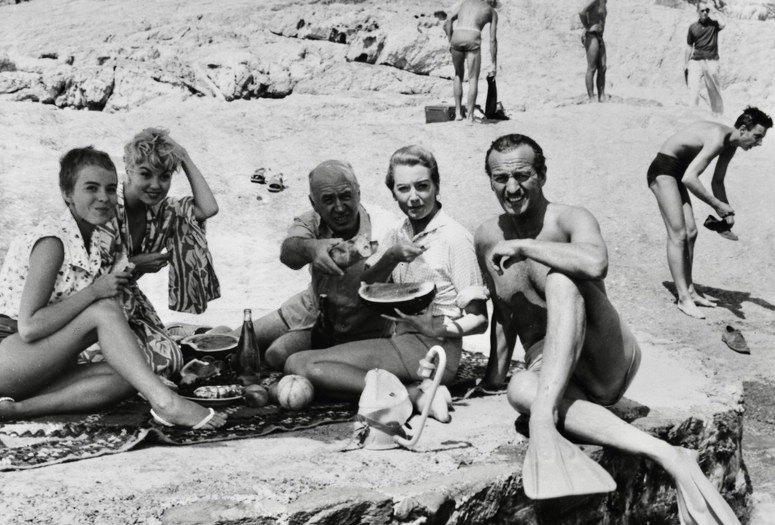
Deborah Kerr was particularly upset by Preminger’s behavior toward Seberg and offered the actress her support. “I told her not to let him “get at” her, and to do what she thought was right. “It’s going to be you up there – your face, your expression and your way of reading the lines – not the director’s,” Kerr recalled in David Richards’ Seberg biography. The actress would later regret not having the opportunity to work with Seberg again but shared this opinion: “I formed a very deep respect for the quiet strength with which she put up with all the extravagant publicity that had been forced on her by her discovery and the lashing she took from the critics. This strength was also apparent in her coping with Otto, who as a friend and social companion is a charming and witty person, but who turns into a demon when directing. At least he did on Bonjour Tristesse as far as Jean was concerned. I think any other woman would have collapsed in tears or just walked out. But she calmly took all the berating and achieved a very interesting and true Sagan-type heroine.”
For the final scene in Bonjour Tristesse, which was filmed in Shepperton studios outside London, Seberg was required to sit at a make-up table, gazing at herself as she applied cold cream to her face. The director wanted her to appear totally expressionless but also wanted the camera to capture tears welling up slowly in her eyes. The scene took all day to shoot and Seberg was exhausted at the end of it but it remains one of the most memorable moments in the movie. It appears in the framing device that opens and closes the film in present-day Paris and is shot in black and white.
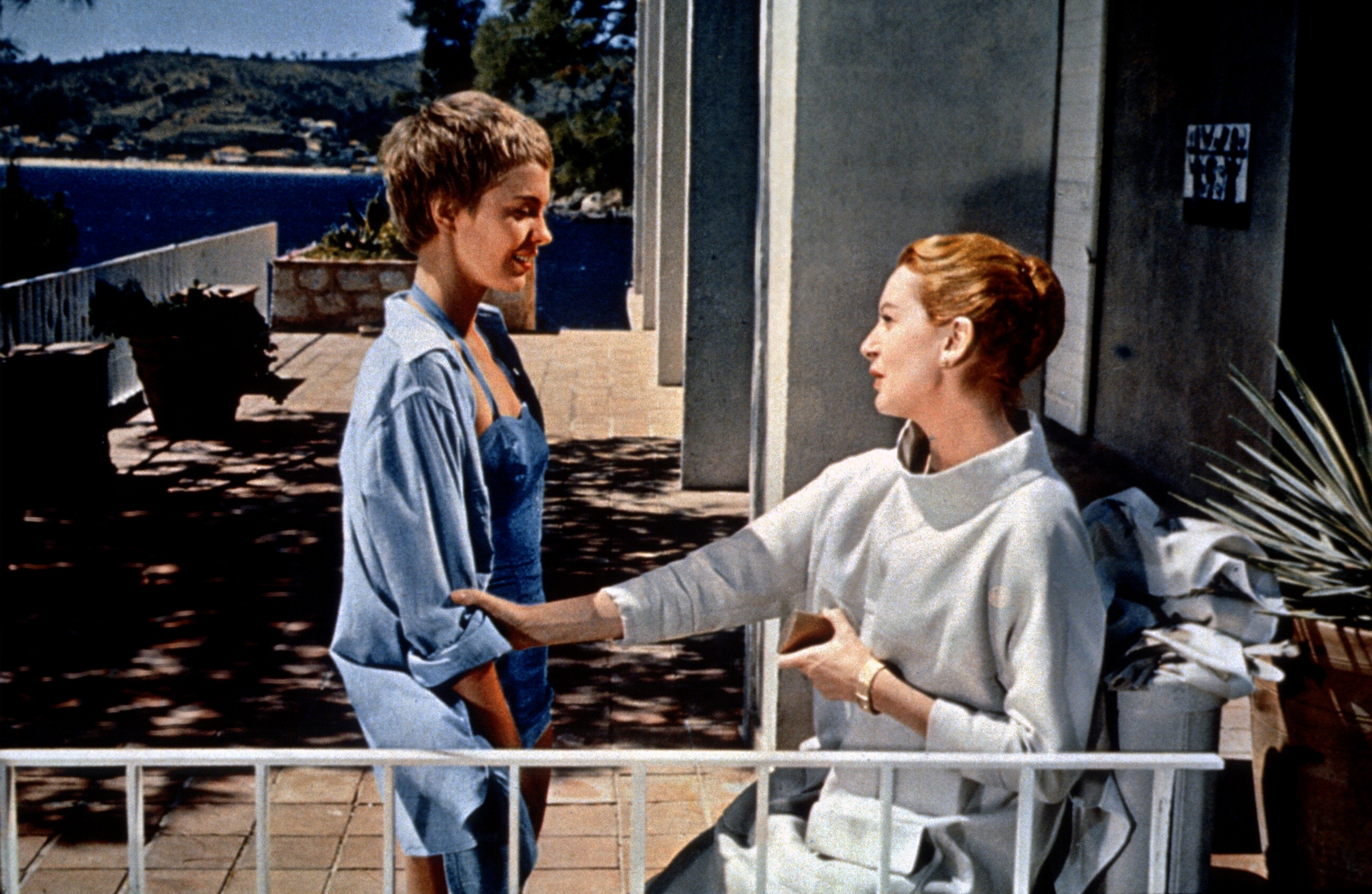
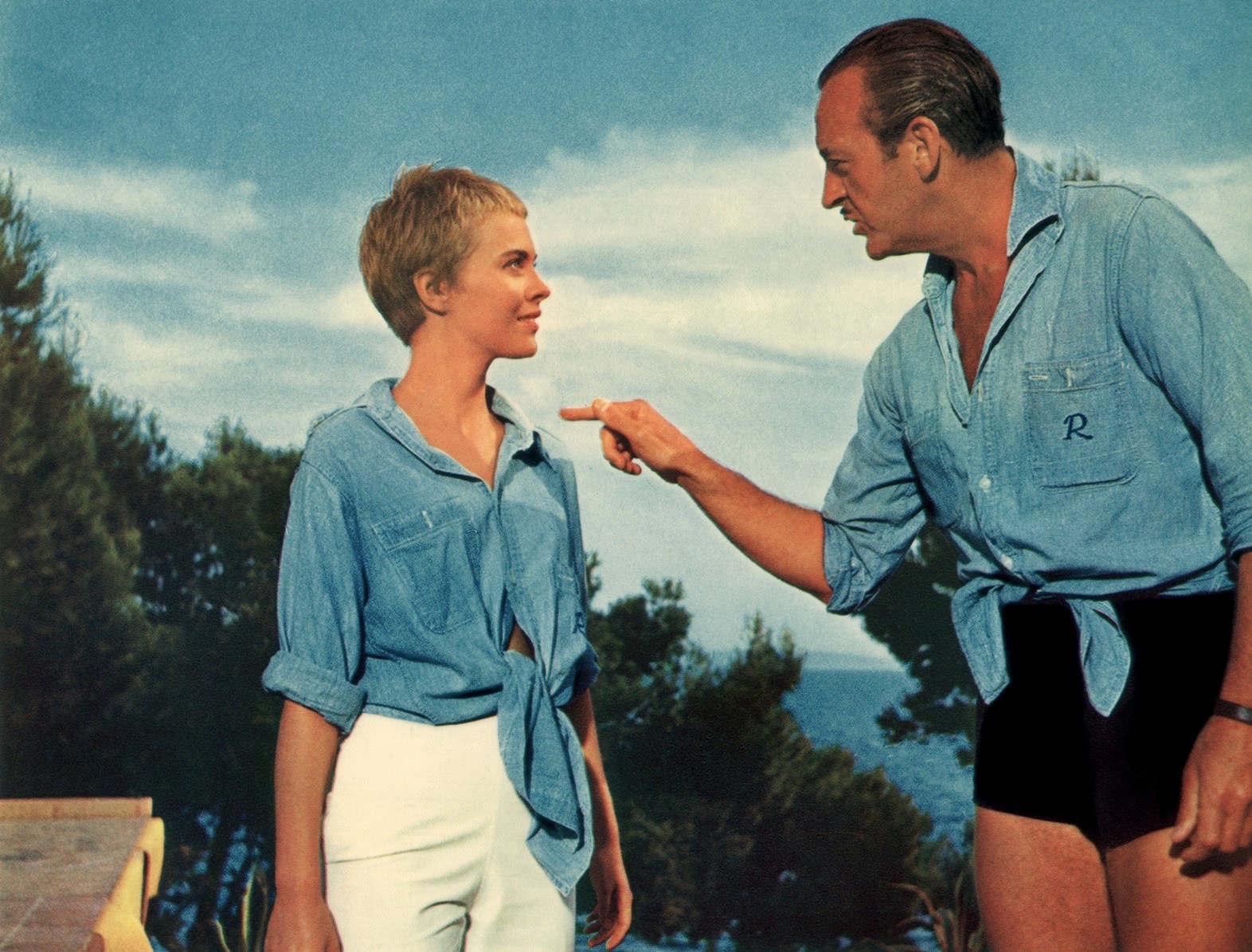
The rest of Bonjour Tristesse was photographed in glorious Technicolor with most of the Riviera sequences taking place at the three-story villa of the French publishing tycoon Pierre Lazareff. British production manager Martin Schute said, “Bonjour Tristesse was not a small movie. It was a major production of a best seller….and I had told Otto before filming that his projected budget of one and a half million was too low. We had a terrific row. But I was naive, because Otto could do what others couldn’t. He brought the film in exactly as he had budgeted it – not a penny more.”

When Bonjour Tristesse opened in the U.S., American critics were not much more receptive to it than they had been to Saint Joan and Jean Seberg was once again blamed for much of the failure. Arthur Knight in the Saturday Review wrote that Preminger “apparently has not succeeded in convincing Miss Seberg that she is an actress” and The New York Herald Tribune‘s William Zinsser stated that “Jean Seberg is about as far from a French nymph as milk is from Pernod.”

Yet, over the years, Bonjour Tristesse has enjoyed a major reassessment by such film scholars as David Thomson who recognize it as one of Preminger’s most unfairly maligned films and one which proves Seberg was brilliantly cast in it, delivering one of her finest performances. Thomson called the film “a rare picture of a spoiled child who infects the world with her malign selfishness. It is a very challenging part, and there are scenes of Seberg regarding herself in a mirror that take one straight back to the power of Preminger’s Angel Face…Far from heavy-handed, Preminger sometimes showed a lightness and a sympathy with the woman’s point of view that remind one of Max Ophuls.”
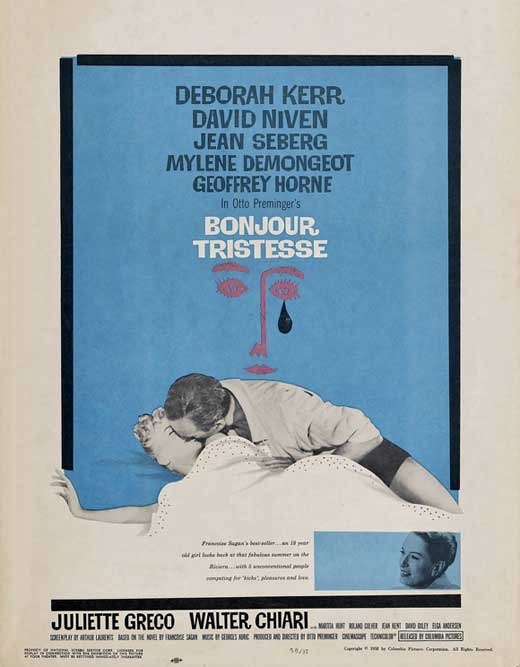
Certainly, at the time of its release, the movie was received with great acclaim in France. Francois Truffaut, a critic for Cahiers du cinema at the time, wrote, “Bonjour Tristesse is not France naively seen by an American, but France shown to Americans as they like to see it by a sharp and disdainful observer…when Jean Seberg is on the screen, which is all the time, you can’t look at anything else…Seberg, short blonde air on a pharaoh’s skull, wide-open eyes with a glint of boyish malice, carries the entire weight of this film on her tiny shoulders. It is Otto Preminger’s love poem to her.”
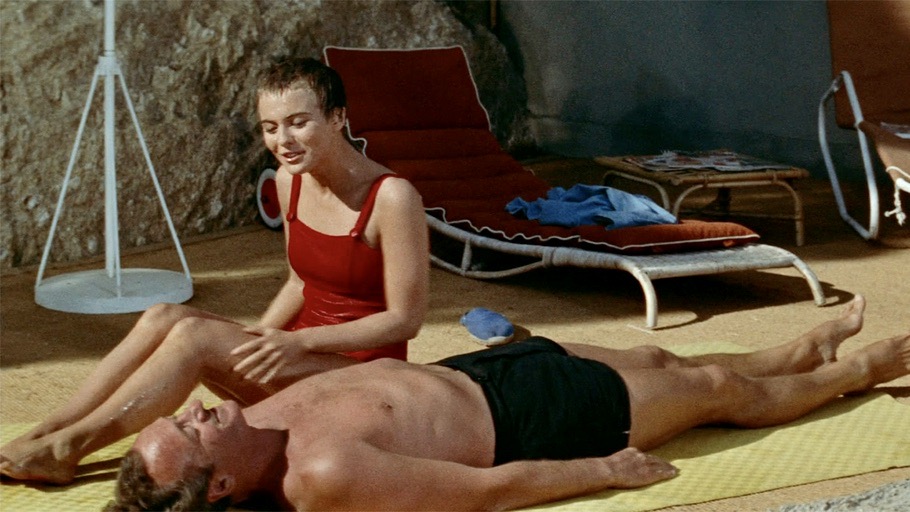
But the finest defense of Seberg’s performance comes from Foster Hirsch in his biography, Otto Preminger: The Man Who Would Be King when he writes, “In spite or perhaps precisely because of her flaws, if you love Jean Seberg, then you must love the film. Her performance, like Preminger’s direction, is by turns problematic and sublime. In a strange way Jean’s fragility as an actress – her constricted movements, her masked expression, her untrained yet distinctive voice, shivery and enchanting – mirrors Preminger’s own inconsistency, his sometimes imperfect mastery of his own gifts…Ultimately her performance as a remote beauty with a capacity for casual destructiveness is bewitching.”
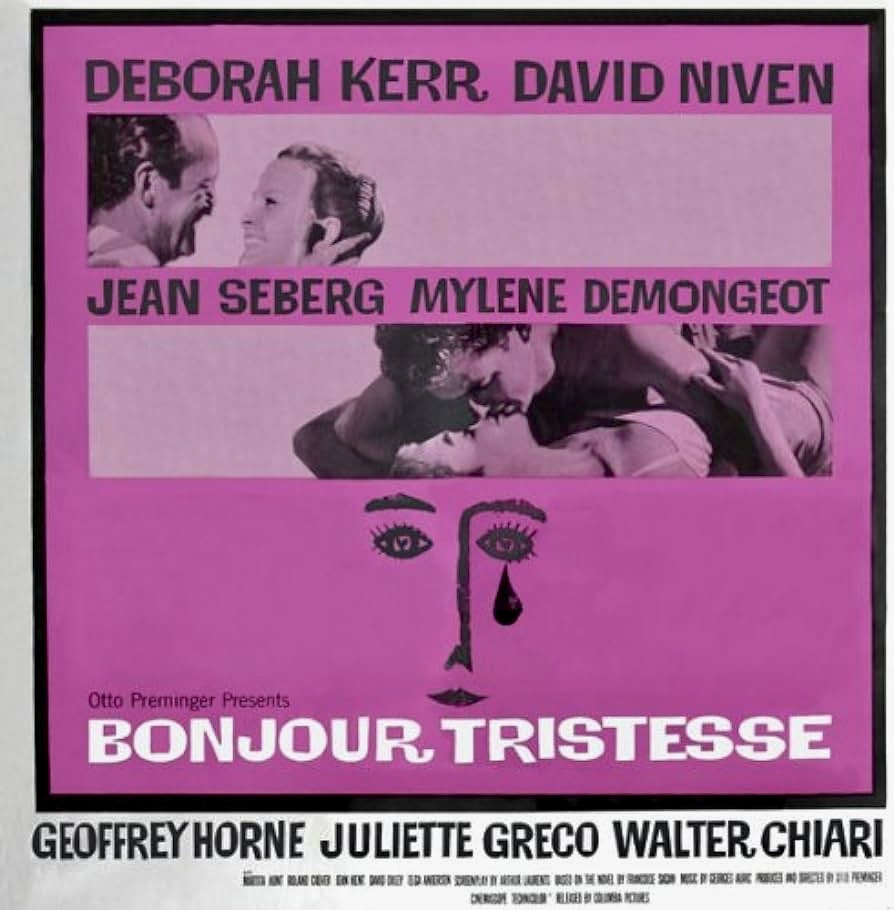
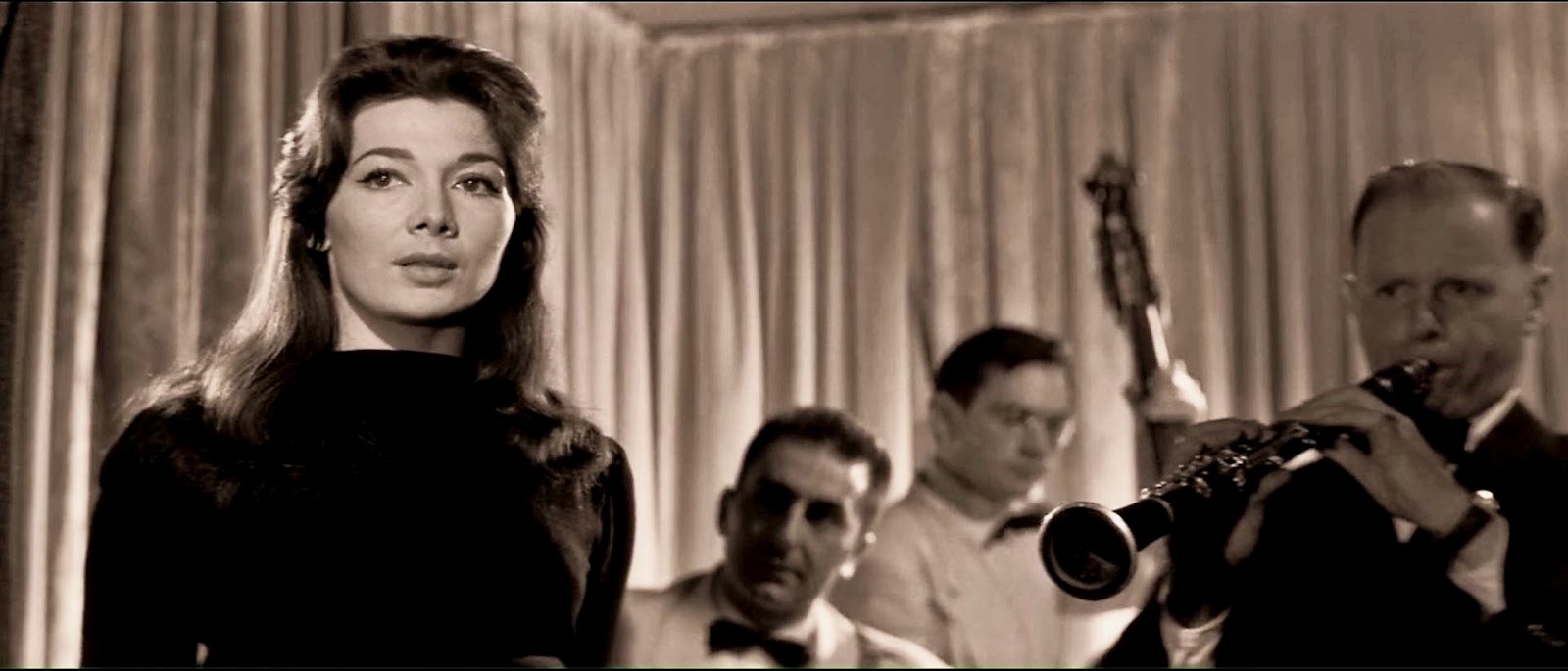
With filming locations in Paris, Saint-Tropez and along the Cote d’Azur, Bonjour Tristesse is a visually stunning film (the cinematography is by Georges Perinal, who won the Oscar for Best Cinematography for 1940’s The Thief of Bagdad) and the melancholy score by Georges Auric gives it an added emotional resonance. Other major attributes include the iconic title credits by Saul Bass, an appearance by French chanteuse Juliette Greco, who sings the title song, and a first-rate international supporting cast that includes Martita Hunt, Walter Chiari, Roland Culver and former Parisian model Elga Andersen.
It should be noted that when the screenplay for Bonjour Tristesse was first submitted for approval to the MPAA, it was rejected because it portrayed “gross illicit sex without compensating moral values.” The organization particularly objected to the portrayal of Raymond (David Niven), who openly cavorted with two mistresses and felt no guilt about it. In the end, the MPAA finally approved the film because they felt the ending exhibited “moral recognition” with Cecile confronting the damage she has caused.
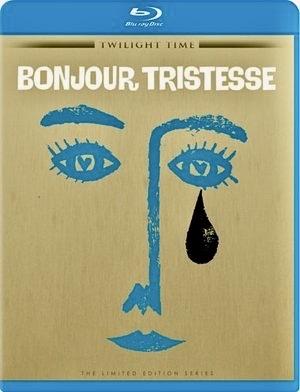
For many years, Bonjour Tristesse has been available on VHS and DVD but, for fans of the movie and collectors, the best purchase option is the Twilight Time Blu-ray release from November 2012 which includes a trailer, an isolated music track score and informative liner notes by Julie Kirgo.
Other links of interest:
https://www.newwavefilm.com/french-new-wave-encyclopedia/jean-seberg.shtml
https://www.thefamouspeople.com/profiles/otto-preminger-7791.php
https://variety.com/2020/music/obituaries-people-news/juliette-greco-dead-french-singer-1234780981/
 Cinema Sojourns